Emily Maguire and Charlotte Wood with Kate Mildenhall
I chose this session primarily because of Charlotte Wood, given I’d seen Emily Maguire the day before, but her presence was plus, as was having author Kate Mildenhall conduct the conversation. Here is the session’s description in the program:
Emily Maguire and Charlotte Wood have both written novels of cloisters – of monks and nuns and clerical power-broking. What is it about these reclusive places that makes for such potent and irresistible storytelling? In conversation with Kate Mildenhall.
Kate did a lovely acknowledgement of country, starting by saying we were honoured to be on this land. She thanked the Ngunnawal people for their care and recognised that the country always was and always will be theirs.
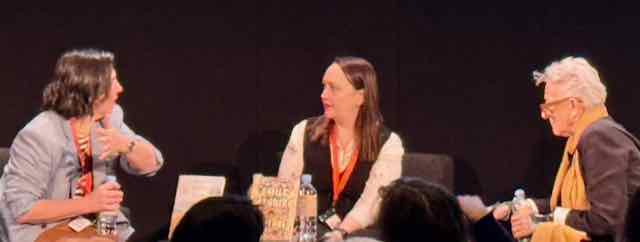
She then said that BeeJay Silcox deserved an A+ for the title of this session “Get thee to the Nunnery”, and did the usual introduction to the authors, Emily Maguire (and Rapture) and Charlotte Wood (and Stone Yard devotional), listing their books and achievements, which includes, of course, Charlotte being listed for this year’s Booker prize.
Kate introduced the conversation by saying that the two books were set more than 1000 years apart but both involved women – one young, one middle-aged – seeking monastic life albeit for different reasons, the former to live a life of the intellect and the latter to retreat from the world.
On their characters
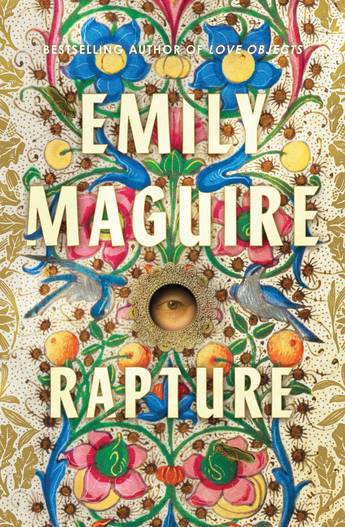
Emily explained that Agnes starts as child in Mainz, living with a widowed father who makes the shocking-for-the-time decision to keep his daughter. She consequently grows up listening to men. As a child of the era, she believes in God and constantly looks for signs of God.
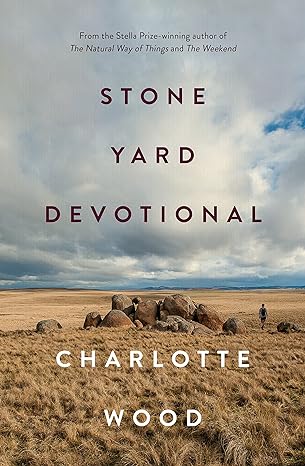
Charlotte’s character, on the other hand, is unnamed and about Charlotte’s age. Charlotte liked a reader’s description that her character had “unsubscribed from her life”. She had hit an unspecified “wall of despair” so leaves her life as an environmental activist, and goes to a convent to rest. There is also a sort of “homing instinct” because she returns to the region where she had grown up. She initially finds the nuns’ lives embarrassing, all this singing and praying, until she realises that this is the work. After a narrative gap, we turn the page and find she’s been living there for a few years.
On “the heat” or seed for their books
Emily was inspired a decade ago by the legend of a female pope, which was believed through the high Middle Ages. The story thrilled her. It is a great trickster narrative, and she is personally interested in the early church and early Christianity. She started the novel 10 years ago but didn’t have the skills to write it then.
Charlotte can’t remember the beginning, but she was interested in why would a contemporary woman become a Catholic nun. She shared some of her personal background with Catholicism. She had skedaddled from it as a young woman, for all the obvious reasons, but has remained interested. As she thought about her question regarding modern women becoming nuns, she came across the idea of retreat and she got that, the idea of leaving a chaotic world for one of order. Then the pandemic happened. It pulled the rug from under her. The 2019 fires and the pandemic felt like a biblical wave of catastrophe and made her realise that our certainties about our lives were a complete delusion. She had driven through the Monaro – where she had grown up – during pandemic. “Old stuff came up” and “brought unlike things together”, so she invented a nunnery on the Monaro.
On wrestling about faith, religion, church when writing these books
Emily had to buy wholeheartedly into Agnes’ world in which God is the answer to everything, the good and bad. She also plugged into her childhood when Jesus was her best friend. It was easy, but also complicated, to sink into that. She boiled her thinking down to one idea: What does personal faith have to do with organised religion? As Agnes gets entrenched into the life, she starts to question what are her wants versus God’s?
Charlotte doesn’t believe in God but also doesn’t sneer at people who do. She can’t make the step to believe, but dislikes the fundamentalist atheist’s view. Also, as a young person, she loved spectacle of the Catholic Church, the language, rhythm, poetry, metaphor, the imaginative world of Bible, the stories of saints (horror fiction, and crime, interjected Emily!)
On the suffering of women (physical, spiritual, emotional)
Charlotte referred to the church’s idea of the mortification of the flesh. In our you-can-have-everything world, she understands the appeal of asceticism as conveyed in Emily’s novel.
Emily spoke of the saints’ stories involving harm to women’s bodies. But women can also feel that the body is what they have control over, and can accept (or do) harm to it, because it’s the “last site of resistance”. Religion can see women’s bodies as bad, dirty but there are also ideas about cleansing. It’s not either-or.
On deep reading, the idea of “lectio divina” in both works
Charlotte described its use in her book – read, think, read the same again, think, then say what comes up – and Sister Bonaventure’s advice that if you don’t understand something hand it over to God. This idea of handing one’s confusion to God is both disturbing and a relief to her narrator.
Emily said there’s been a long tradition of this practice, which is not Bible study but repetitive reading and thinking. It surprises Agnes. Does this “copying”, as she sees it, this not questioning, mean anything? She is shut down when she tries to argue, but if God made her mind one that could argue isn’t that what she’s supposed to do? Yet, sometimes sitting with ideas offers clarity.
Charlotte suggested that this idea of obedience (versus wanting to argue) is a challenge for the ego in our egotistical world. Emily added that she loved the lectio divina section in Charlotte’s book. She had turned hardline atheist, after her deeply believing youth, but now she is more “I don’t know”.
On research
Charlotte talked about being asked to speak at a conference in Melbourne on “communicating monasticism” run by nuns and priests. She was very nervous, because she didn’t research nuns, didn’t even interview any. It’s all imagined. But the conference attendees were very warm because they saw that she was respectful about their chosen life. And, they asked incredible questions.
Kate commented on the freedom writers of fiction have in this regard, but said there was evidence of extraordinary research in Emily’s book, though it’s held lightly. Emily explained that to make Agnes’ world and choices real she needed to do the research, including very basic levels, such as what is a chair, were there roads, and bigger questions like why didn’t Agnes choose a convent and would she have done this. She talked about how the modesty in monasteries – versus in ordinary Middle Ages life – was a gift to her plot of a woman presenting herself as a man.
On plotting, whether it comes naturally or has to be worked at
For Charlotte the plot alleviates the boredom, provides a change in the rhythm. She wanted quietude, stillness, but also needed an energy spike. She told us about asking a still-life artist friend about how she gets her very still pictures to shimmer. The answer was that she breaks up surface, the texture of paint, making it a bit unstable, though the image remains static. Charlotte said using the diary form gave some narrative movement to her story, but then she included the mouse plague, and the return of the wild-child nun with the bones.
Emily used the journey taken Agnes by Brother Randolph, but also, the legend has built into it the risk of being uncovered. She has learnt that propulsion is in the craft – the language, the sentences. Every sentence must do something. Charlotte added that the voice is likewise critical. If the voice is strong, the reader will follow along. It’s propulsive. That’s the key.
On “devotion” being part of the artistic life
Emily said that you lean into your writing, you just do it (like religion), and constantly check whether you are getting the answer you expected. There is devotion to the art, a communion with the page.
Charlotte agreed saying most writers feel a sense of sacredness when doing their work. For her it’s a vocation, a calling, not a job. (It doesn’t pay like a job!) It taps into something bigger than the self, connects with something outside self. At times you can feel it’s coming through you. Not from God for her, but the unconscious, perhaps. She said that when you leave Catholicism there’s a big hole, a yearning. Writing, for her, fills that.
Q & A
On Rapture not looking down on women, while the character in Stone Yard devotional does: Emily described Agnes as a “pick-me” girl, an imposter. It’s a power move to keep women separate, but Agnes, who separates herself, also feels a loss. Charlotte agreed that her character is an outsider and “judgey”, feels separate. She has ego, but respects Sister Simone, who has rigour, versus the other women whom she sees as embarrassing little girls. Simone picks her as someone who finds obedience hard. Charlotte realises she often writes about women who have disagreements. She’s interested in power dynamics.
On whether Charlotte has a name for her character in her mind: No, partly because the character is partly Charlotte herself. She wanted to risk showing part of her real self (her feelings about her mother, her memories of the town). Also the form of book. Starting as a diary means she’s not going to name herself. Charlotte likes the interiority of that.
On Emily’s relationship with Agnes: yes, she misses her!
There was also a question to Charlotte from a Cooma person whose family had connections with Charlotte’s. They had all read the book, including the men, and found it real. She wanted to know how men had responded. Charlotte said there’d been intense responses, though fewer in number than she’d had for The weekend. People, both men and women, had particularly shared their feelings of grief.
Kate concluded by asking what Charlotte and Emily do when the touring is done, what they retreat to for contemplation: Emily said writing is meditation, it stills the internal chatter, and Charlotte agreed, saying “writing time is home”.
This was another engaging session, topped off by my having a great chat afterwards with Karen Viggers (my posts), who was also in the audience, about our favourite reads of the year.
Canberra Writers Festival, 2024
Get thee to the nunnery
The Arc Theatre, NFSA
Saturday 26 October 2024, 10-11am
 Whispering Gums
I can understand the pleasure of listening to writers talk about writing. But an hour on Catholicism would by 60 minutes lost I could never have back.
Thank you so much for this. I haven’t read Emily but having recently finished Charlotte’s Stone Yard Devotional, I found this really interesting.
Thanks Rach. I haven’t read Emily either but I’ve been told it’s great. The cover is gorgeous too. I loved Wood’s novel.
I have mentioned elsewhere that I can find The Weekend by her (CW) here, but now that I see it’s about grief (or, is it?), I might pause on that. It’s been such a persistent theme in my reading lately, whether in a personal relationship or about climate change and environmental and political losses, that I need to arrange a little more variety in my stacks. This concept of missing or upholding Catholicism for the performance elements, the mystical rituals, is something I’ve heard before. It’s interesting to contemplate what a difference there is between that situation and, say, a meeting of Friends in the Quaker scene, or the Muslim prayer cycles, wherever you are and whatever you’re doing.
Thanks Marcie … I really wouldn’t say this is ABOUT grief in the way you are thinking. It’s really about someone who feels the need to retreat from the world. Grief comes up but I never felt that was what this is about. It’s just one of the issues behind her decision.
But yes, that Catholicism thing. I grew up Protestant and she went to a Protestant service with a friend when she was a child and couldn’t believe the austerity (though I don’t think she used that word but that’s what she meant.)