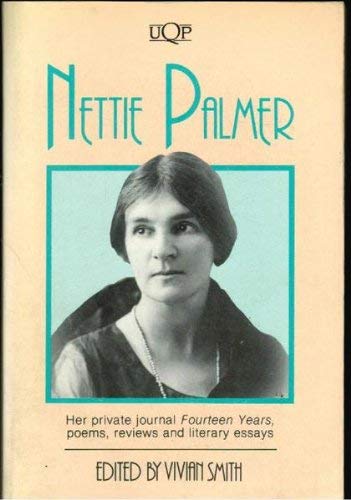
Nettie Palmer has appeared a few times before on this blog, and is likely to appear again, because she was such an active member of Australia’s early to mid-twentieth century literary community, and she was a keen supporter and promoter of Australian writing and writers. Three years ago, I wrote about an article she’d written in 1930 in which she discussed pleasing “advances” in the Australian novel. This post draws on an article she wrote for the Illustrated Tasmanian Mail, a couple of years earlier, on 15 August 1928.
The article seems to have been inspired by the novel competition the Bulletin ran that year. There were, according to Palmer, some 536 entries, which she suggests is “a matter for national astonishment”, given the effort it takes to write a novel.
While only few can win, she says, “the lift in the status of the Australian novel will be considerable”. She goes on to talk about the challenge the judges face, and suggests that, with all that reading to do, their minds are likely to be ‘attracted by what was “striking” rather than what was merely solid’. She says that Australia’s chief literary prize-winner to date had been “that rather esoteric writer, Katharine Susannah Prichard”, and identifies some of the prizes she had won – for The pioneers (1915, my review), a short story, and a play. Will she win again, Palmer wonders. She wouldn’t be surprised if she did, Palmer continues, because Prichard “has always added something fresh and original to our literary store”. As it turns out, Prichard did win this prize, for Coonardoo, but jointly with The house is built by the collaborative novelists known as M. Barnard Eldershaw.
However, I have digressed a little, as my point here is to share Palmer’s thoughts on the Australian novel. Her life’s work seems to have been, at least partly, to define the Australian novel. Anyhow, she comments that she had been “examining a great many Australian stories in magazines, journals, books and manuscripts” and one of the things that has struck her was “the immense variety of geographical angles from which Australia can be regarded”. She takes, as an example, the idea of “the north-west”. For a Victorian, this means “the Mallee country, with its acres cleared for wheat, running up to the irrigated country with Mildura and its fruits and close settlement of semi-urban, rather ‘American’ homes”, while in South Australia it means “the interior, near the transcontinental line, given up to sheep”. In Western Australia, on the other hand, it’s “the country used by H. E. Riemann in his book of short stories, Nor’-West o’ West, set in Broome and its hinterland”. And so on … This, she says, “is just to name one half-point of the compass”. She discusses this a little more, but then says the thing that I really wanted to share:
The point is … that the life and problems of various parts of Australia show immense contrasts, from pearling at Broome to legislating at Canberra. Our writers have the task of gradually revealing it all to us.
This is it, it seems to me, in a nutshell. At some fundamental level, an Australian novel – or any nationality’s novel for that matter – is one which reveals who we are, in all our richness and diversity. It is what, I think, Miles Franklin intended by endowing an award for a novel that conveys “Australian life in any of its phases”. For Palmer, and I suspect Franklin, there was an awareness of the role the arts can play in nation-building, which is understandable given their times. The thing is, we are still nation-building – maybe always will be – and so today, we have First Nations writers and migrant-background writers trying hard to reveal to us their view of Australia. For as long as society keeps changing, there is a role for writers to “reveal it all to us” – even while they also explore the universal – don’t you think?
PS: On Wednesday, Mr Gums and I start a 14-day outback Queensland tour. I may not manage to write Monday Musings on the next two Mondays, but we’ll see. Apologies in advance for this potential hiatus! Monday Musings will not be lost forever.
 Whispering Gums
Oooooh, enjoy your walkabout! Wear a hat and sunscreen.
About this post: I really, truly only have one idea of what “lift in the status” means in regards to Australian literature. In the history of books, novels were considered trashy. In fact, in America, there were staunch opponents of the novel being considered appropriate for libraries because they were designed for the exchange of information, not entertainment. What do you think Palmer meant when she said the “lift in the status”?
Yes, mum – oops, Melanie – I will!
Good question, and there might be some of that because I think that attitude to novels was common, but I believe she means that more Australians will appreciate their own literature, that the competition will bring more novels to the attention of Australians, because Australians were tending to turn to literature from “the mother country” England, and to some degree the USA, rather than to their own. She may also be hoping that competitions, like this, will result in more, better, novels being available for the public to read too.
“the life and problems of various parts of Australia show immense contrasts” strikes me as an odd phrase, ST: if she’d included a definite article I would’nt’ve wondered.
But ‘various parts’ ? I reckon she had some specific places in mind.
Interesting point MR – maybe, or is it just a different turn of phrase to how we might say it now? I’m not sure.
Hi Sue, Nettie Palmer was a prolific writer in regard to Australia Literature. I googled and there is a thesis by Robin Lucus on Nettie Palmer and Fourteen Years, at the The University of Melbournehttps://minerva-access.unimelb.edu.au › items. It is an interesting read not only about Nettie Palmer, but also about the promotion of Australian Literature and its acceptance in Australia.
Hi Sue, Nettie Palmer was a prolific writer in regard to Australia Literature. I googled and there is a thesis by Robin Lucus on Nettie Palmer and Fourteen Years, at the
The University of Melbournehttps://minerva-access.unimelb.edu.au › items. It is an interesting read not only about Nettie Palmer, but also about the promotion of Australian Literature and its acceptance in Australia.
Thanks Meg … I have UQP’s edition of 14 years. I will check this link out because over the years, as you know, I’ve been posting on this topic … as written about by Nettie and others. (Right now though I’m on the Atherton Tablelands so will check it out later.)
Enjoy!
Enjoy your trip!
Thanks Jennifer
I’ve just discovered thanks to a question by Lisa about Australians and the Spanish Civil War, that Nettie, Vance and their two daughters were actually there when fighting broke out. They were living in Montgat, a small village on the coast of Catalonia, to give Vance time to write his next book.
Apparently Aileen joined the Catalan Communist Party and then stayed behind as a volunteer in the British Medical Unit as a secretary whilst the rest of the family returned home. The Palmers then devoted themselves to giving anti-Fascist talks. Nettie then became the President of the Melbourne branch of the Spanish Relief Committee and wrote a pamphlet, Spain! The Spanish People Present their Case.
I’d be very keen to read Aileen’s letters home now that I know they exist!
(Not really on topic with your Musings, but curious how my Orwell/Spanish Civil War reading also led me to Nettie…)
Thanks Brona … you know I had read that about them but had completely forgotten it. Thanks for the reminder.
I really like what you’ve said here as a reflection on Nettie Palmer’s thoughts about the Australian novel.
“This is it, it seems to me, in a nutshell. At some fundamental level, an Australian novel – or any nationality’s novel for that matter – is one which reveals who we are, in all our richness and diversity.”
I’d heard of Palmer but didn’t know much her, so your post has been very interesting to read!
PS I hope you have lovely time on your Queensland tour – have fun!
536 does seem like a lot of novels to judge for a contest. Then again, I suppose with relevant technological progress, there’d be even more to marvel at today.