I love short stories but, as Jason Steger, Literary Editor of The Age and The Sydney Morning Herald, wrote in one of his recent weekly emails, not everyone does. Indeed, he writes:
I know quite a lot of people – people I would consider good readers of fiction – who find them unsatisfactory. Not enough meat to them. Not as satisfying as a novel. Always leaving you wanting more.
And he admits to shifting between the like-don’t like positions himself, before going to say that, “more often than not [with good short stories] you come away knowing precisely enough; you don’t need any more after the author has ended the story with perhaps a surprise, perhaps a neat tying together, or perhaps with ambiguity”. He offers other writers’ thoughts, including English novelist Elizabeth Bowen who wrote in her introduction to The Faber book of modern stories (1937) that “Poetic tautness and clarity are so essential to it [the short story] that it may be said to stand on the edge of prose.”
Bowen, he said, is particularly relevant to what he wanted to share, which was that Tasmanian poet and novelist Kathryn Lomer had won this year’s Furphy Literary Award. Worth $15,000 to the winner, the prize is named after Joseph Furphy, the author (using the pseudonym, Tom Collins), of the Australian classic, Such is life. Lomer’s winning story, “Nothing about kissing” (read it here), is set in Hobart’s MONA, and opens with the protagonist starting her cleaning shift. Steger quotes one of the judges, Stephanie Holt, who said the winning story “unfolds as layers of assured, erudite but often plainspoken reflection. Into these, the writer drops several crucial moments with such startling aplomb you want to stand and applaud.”
Selected recent short story collections
After this introduction, Steger notes that “despite publishers frequently saying that stories are tricky to sell, they still appear”, and then he lists some, noting that collections are more often published by smaller publishers, like Spineless Wonders and Puncher and Wattman. There are others of course, including the somewhat larger, but still independent publisher, UQP.
He gives a few recent examples, which I am including here, in alphabetical order, along with a few of my own. I have limited the list to those published since 2022 to convey a sense of current activity.
- Tony Birch, Dark as last night (UQP)
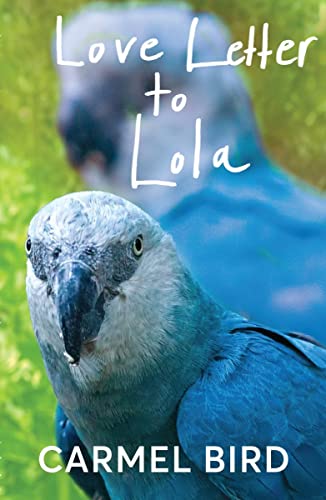
- Carmel Bird, Love letter to Lola (Spineless Wonders, my review)
- Georgia Blain, We all lived in Bondi then (Scribe, Brona’s review): posthumous publication of new stories written during 2012-2015
- Larry Buttrose, Everyone on Mars (Puncher and Wattman)
- Ceridwen Dovey, Only the astronauts (Penguin Books Australia, Brona’s review)
- Fiona McFarlane, Highway 13 (Brona’s review): “a suite of interlinked stories, received a rave review in this masthead” (Steger)
- Laura Jean McKay, Gunflower (Scribe)
- Catherine McNamara, The carnal fugues (Puncher and Wattman, on my TBR): recently shortlisted for the Prime Minister’s Literary Awards
- John Morrissey, Firelight stories (Text Publishing): First Nations speculative fiction
- John Richards, The Gorgon flower (UQP): Gothic-infused short stories
- Mykaela Saunders, Always will be (UQP): First Nations speculative fiction
- Su-May Tan, Lake Malibu (Spineless Wonders)
Anthologies are a specific type of collection, of course, in that they contain writings by different authors, but are worth including here too:
- Suzy Garcia (ed.), New Australian fiction 2023 (Kill Your Darlings)
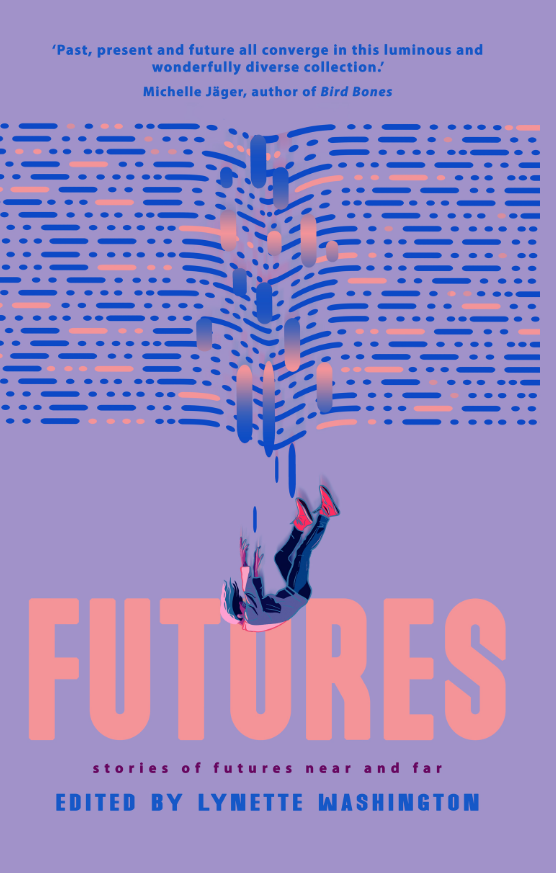
- Lynette Washington (ed), Futures: Stories of futures near and far: includes a story from Carmel Bird’s Love letter to Lola (Glimmer Press)
There are two broad types of anthologies, those selected from previously published stories, and those that result from a call for submissions and contain all new stories. The two above belong to the latter.
Not always, but often, short story collections and anthologies are themed or genre-linked. So, for example, Saunders’ collection comprises First Nations speculative fiction. Speculative fiction, in fact, seems to be a popular genre for short story writers, and currently they are grappling with some of the big issues like climate change and, for First Nations writers in particular, the experience of colonialism.
Ten years ago, ABR (the Australian Book Review) asked ten Australian short story writers to name some favourite short story collections and short stories. One of the ten was Carmel Bird. She introduced her selection with the comment that “I delight in the fact that the ‘short story’ is forever elastic”. She should know, as her own stories epitomise this elasticity, but she’s right because she’s not the only one. Recent stories that I’ve read have been exciting in the degree to which they push and stretch the form, from experiments with micro fiction to trying out different voices, including inanimate. If there’s one way to keep something interesting, it’s to mix it up a bit, and our short story writers are doing that. It’s exciting and encouraging.
Do you read short story collections or anthologies? If so we’d love to hear your favourites.
 Whispering Gums
Thankyou WG! I recently read and enjoyed Simon Van Booy’s ‘Tales of Accidental Genius’. I found it insightful, and a gentle and almost ‘healing’ kind of read.
Oh, I haven’t heard of him or that book TC, but something that’s insightful, gentle, healing sounds good to me. Thanks for answering my question.
That concept of elasticity really appeals to me. And I’ve always got a collection or two underway, which I slowly read alongside longer fiction. Recently I finished Disruption, a collection of futurist short stories by African writers (edited by Rachel Zadok with Karina Szczurek and Jason Mykl Snyman), published in 2021 by Short Story Day Africa in conjunction with Catalyst Press—I haven’t been able to locate a link for purchasing information, but it was a fascinating collection. Also, I’ve just added a Canadian collection, that’s arrived via ILL, to my stack by a writer whose work I discovered through a Best of compilation of Canadian writers (great way to “find” new-to-me writers), Allison Graves.
Thanks Marcie. I know you love short stories. I have read a couple of African short stories a year or so ago in a First Nations anthology. I’d like to read more.
I agree re “elastic” – a perfect word.
So many great short story writers: Chekhov, Tolstoy, PG Wodehouse, Stephen King, Alice Munro….so very, very many.
I never follow the wise advice to not read a collection or an anthology straight through which is probably a pity!
Yes, agree, Ian so many. As for that advice, I ignore it more often than not, particularly with collections, though often with anthologies too. If they are good, it’s hard not to, isn’t it!
You know I’m not a short story fan, though I do have a John Kinsella collection by my bed (it’s a long time since I last picked it up).
According to the Guardian Jason Steger is one of the 85 Nine journalists who’s volunteered for redundancy.
Yes, I thought Bill that this MM would not be your favourite. Is it the new John Kinsella short story collection? And have you liked what you’ve read.
I didn’t know that about Steger. I reckon that If you are middle-aged plus, and have some marketable skills, taking a redundancy is a no-brainer.
Hi Sue
I tried to post this as a comment but it wouldn’t let me. Not sure why – all is unchanged at my end.
thnx WG. Great post. I love Peter Goldsworthy’s early short stories, esp the ‘Bleak Rooms’ & ‘Little Deaths’ collections. He’s a master of the form – the stories stay with you in their elegance and their depth.
Thanks Sean … I have no idea why things happen the way they do in WP but in replying to the email notification, which is what I assume you’ve done, you have in fact replied to the comment. It’s a function apparently! (I think they say do right at the bottom of the email.)
Thanks for this. I haven’t read Peter Goldsworthy’s short stories but I do like his writing so I’ll try to check his stories out.
OK, it’s up now. I think you did it … I’m confused. Anyway, hope you’re well 🙂
I think his short stories (and Maestro) are better than later works. And his poems are just wondrous.
Haha Sean … I think you did it without knowing it… but maybe my replying posted it! Anyhow it got there …
I have been very keen to read Maestro … I think I’ve only read Three dog night, and that was before blogging.
🙂 thank you.
Maestro is well worth it. It’s not a long work and, to my mind, a classic.
Yes I think I discovered that it is, or is almost, a novella, which makes it even more appealing. I do love a good novella.
Quite right, Sue, a marvellous novella. It should be a film too. If you get to it, I hope you enjoy it. cheers
Oh dear, I thought I had replied to this, but obviously not. And now I cannot remember what pithy thing I had to say 🙂
Except I have read a few fabulous short story collections this year – thank you for highlighting them in your post. I would also add Everything Feels Like the End of the World from last year, which is one we might even tempt Bill to try thanks to its speculative fiction nature.
https://bronasbooks.com/2023/01/16/everything-feels-like-the-end-of-the-world-else-fitzgerald-awwshortstories/
I also suspect our weekly newsletter from Jason Steger will be coming to an end very shortly, after reading the redundancy news today.
I’ve done that too Brona … do we reply and it gets lost or do we just think about a reply and never put fingers to keyboard? We will never know.
I remember that collection and being interested in it … but time moves on. I read more collections and anthologies in 2022 but recently it’s been more individual stories.
And yes, though he isn’t the only one to do those emails so will they continue or will it all be cut back. Whatever, we’ll miss his knowledge and perspective, won’t we?
I love short story collections, although I did get a bit worn out on them when I was in my MFA program. Because of the nature of how a semester works, we were mostly workshopping short stories that other classmates had written. In that way, you do get tired of not seeing a fleshed-out narrative. On the other hand, I may have had that feeling because we were workshopping the stories, meaning they weren’t done. I do think that a short story is harder to get just right than a novel. Think about how people will say, “Oh a novel had a flabby middle section,” but they still enjoyed the book overall. No one’s saying “Oh, that short story had a flabby middle, but I really like that short story.” They just say it was bad. I tend to appreciate short stories that are around 30 pages long. Anything shorter than that, and I don’t think the story gets in enough to have an emotional impact. Otherwise, the author needs to focus on writing a short-short story, typically about two pages. Those are quite different and I think they tend to leave more of an image in my mind that has an emotional impact on me, as opposed to the story, characters, and plot having an impact. I also like anthology collections. For instance, on my bookshelf I have a anthology of science fiction. It moves through the decades and the ways in which science fiction changed, and each section starts with an introduction by the editor. I also have an American literature anthology, and an African American literature anthology. I think I’ve gotten rid of the rest of them. As soon as I finish my current book, which is really short, I will be starting Only the Astronauts!
Yes I was aware, Melanie, that you do read short stories which of why I ended going that way with the book to send you. I love thought point about a flabby middle. Funnily just as I like shorter novels I probably also like shorter stories I think because shorter novels are less likely to have that flabbiness and shorter short stories tend to stay tight to the form. That said I’m not talking preference for 2-pages though I can like them too.
In the U.S., one of our most celebrated short story writers is Lidia Davis. Some of her stories are a paragraph, but they have so much implied that you mentally back away and think, “WHOA.” Not everyone is good at them, but most writers think short stories are easier because they’re shorter than novels.
Oh I’ve heard of her, Melanie. I have read some flash and micro fiction. It can be amazing. I’ve heard authors say that but I’ve also heard some say the opposite though.