
Next week will be NAIDOC Week – with this year’s theme being “Keep the Fire Burning! Blak, Loud and Proud” – but I am jumping the gun a little with a post on a relevant publishing initiative that was announced earlier this year.
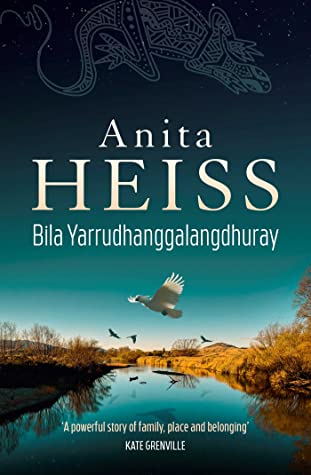
This initiative comes from publisher Simon & Schuster, and is that they have created a new First Nations imprint called Bundyi, which will be curated by Dr Anita Heiss, “a proud Wiradyuri woman and one of Australia’s most prolific and well-known authors”. Simon & Schuster published Heiss’s most recent novel, Bila Yarrudhanggalangdhuray (my review).
Bundyi is, the website says, a Wiradyuri word meaning “to share with me’” The aim is to “focus on cultivating First Nations talent in the industry by publishing First Nations authors, edited and designed by First Nations people”. Heiss, described as Publisher at Large, will be commissioning both fiction and non-fiction writing. She says that “the only way we will see First Nations people truly sovereign in this space, is to have us as publishers of our own stories”, and makes the point that Simon & Schuster understands “that the responsibility for change in the sector lies with the current mainstream publishers acting as mentors, and eventually moving over to allow us to learn, and to do what Australian publishing has needed for a long time: for us to have control over the way we are represented on the page, and in the national narrative”.
And they have started the way they mean to continue with the Bundyi logo being designed by a 100% Aboriginal-owned company, Iscariot media. The logo, which you can see at the link I’ve provided above, “represents the flow of the three rivers of Wiradyuri country – the Kilari, the Marrambidya and the Wambool – as well as the flow of creativity”.
What can we expect?
S&S’s page, linked above, says that the first titles in the imprint will be published this year, but doesn’t name them. However, in late May, through Canberra’s wonderful Meet The Author convenor, Colin Steele, who is also one of my major sources of literary news, I received a news item from Books+Publishing. It said that Bundyi had “acquired world rights to a new commercial novel by Larissa Behrendt”, and that the book was the result of a brainstorm between Behrendt and her good friend Anita Heiss. It is to be a First Nations take on Pride and prejudice!
Heiss said that “It didn’t take long for us to come up with the idea of Larissa, an Austen aficionado, writing a version of Pride and Prejudice through her lens, as a Euahlayai/Gamilaroi woman”. Behrendt added that “As a long-time friend and admirer of her work, I am beyond excited to be working with Anita on this project. I love Jane Austen, and the idea of translating the characters and story arcs through a First Nations lens is an idea that is close to my heart. Anita has been a trailblazer with new writing, and I am proud to be following in her footsteps.”
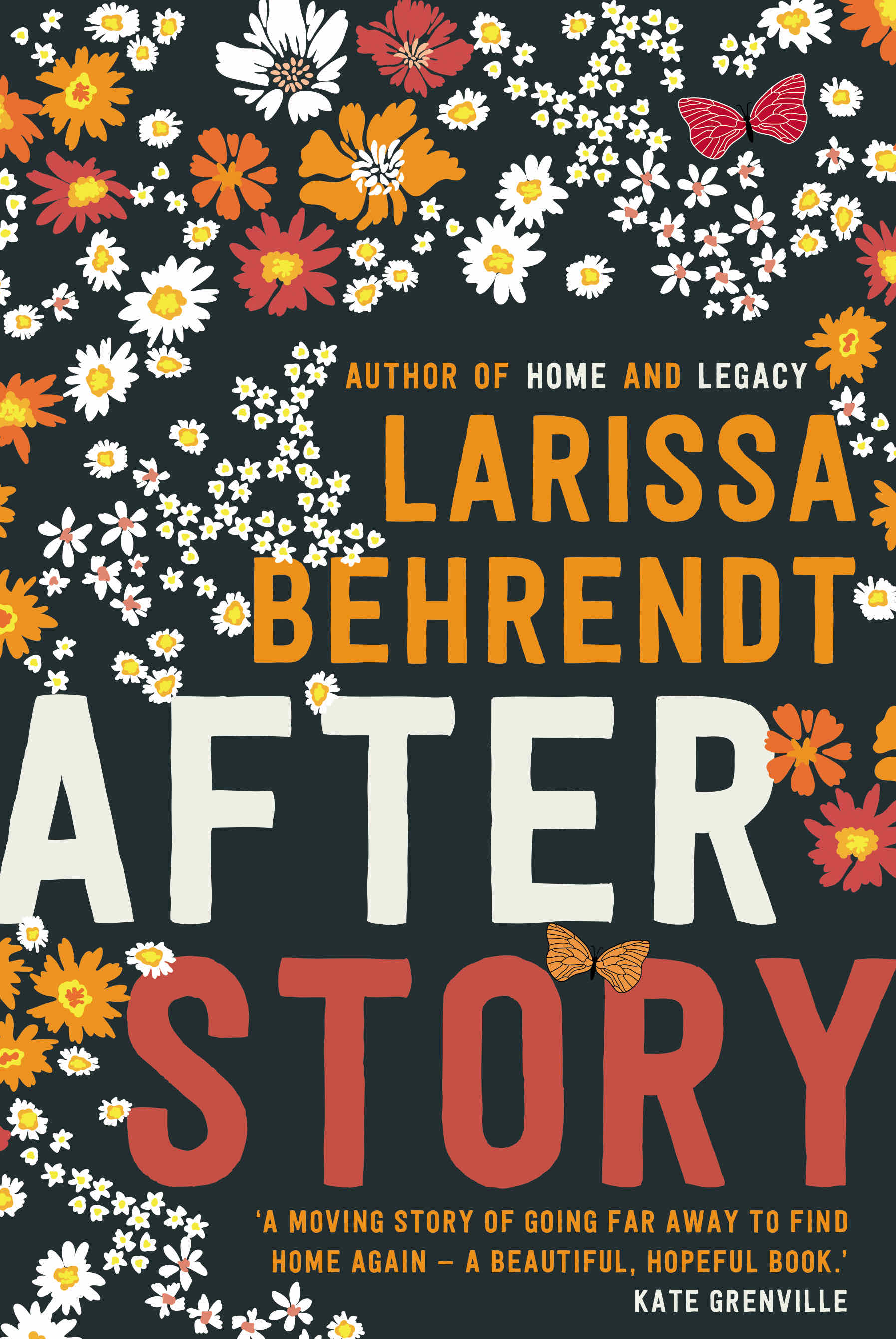
That Behrendt is a fan of Austen won’t be news to those who read her novel After story (my review) in which a woman takes her mother on a literary tour of England, so this will be interesting – even to someone like me who is not normally a fan of prequels, sequels and retellings. Behrendt has a seriously impressive cv. Not only is she an award-winning author, but she is a filmmaker and host of the program Speaking Out on ABC Radio, the Distinguished Professor at the Jumbunna Indigenous House of Learning at the University of Technology Sydney, a Fellow of the Academy of Social Sciences of Australia, a Fellow of the Australian Academy of the Humanities, a Foundation Fellow of the Australian Academy of Law – and more. We have to wait a bit for her book, though, as it’s not due to be published until 2026.
Meanwhile, Books+Publishing named two books which will be published by Bundyi before Behrendt’s – Stan Grant’s memoir Murriyang and Tasma Walton’s historical fiction novel, I am Nan’nert’garrook. These align with the imprint’s focus as listed on its homepage:
- Non-fiction: memoir, autobiography, biography, essays
- Commercial fiction: romance / chick lit, historical fiction, contemporary fiction.
This new imprint is exciting news for all of us interested in First Nations Australian writing. It may not, it seems, be focusing on the edgier end of town, but there is room for all, particularly if we want more Australians to read First Nations writing. If you are interested, I suggest you keep an eye on Bundyi’s homepage for further news. I plan to.
 Whispering Gums
Iscariot, though ? – what’s the need for so disturbing a piece of nomenclature ?
I don’t know exactly MR … the company is 25 years old and like many longstanding companies – EY for example – it seems to be framing itself now as IM. See its website: https://iscariotmedia.com
I can guess why they might have chosen the name – a sort of in-your-face or defiant name – and I can’t really judge them for that, but its inferences are complex aren’t they? I love that they have lasted 25 years.
thanks for sharing this news, I’m very happy to know about this new imprint. Looking forward to read its publications.
Thanks Denise … I’m really glad to share news like this if it hasn’t really got out there. I look forward to it too.
Bravo! What a great venture! Thanks, WG, for profiling it.
Thanks very much Treble Clef – it’s a great venture isn’t it!
Bundyi also have an instagram page, which is how I knew about the three books/authors they have lined up so far. Like you I am normally wary of Austen spin-offs, but Behrendt’s one does sound promising.
Thanks Brona … and yes I guess this book might fit more into the “retelling” genre rather than the fan-fiction one that I don’t greatly enjoy. We’ll see … fingers crossed for this book and the imprint overall.
So intriging: I’m hopeful that these will be globally available too. Given the publisher’s reach. (Though often imprints do not travel.)
True, Marcie, about imprints … but let’s hope.
S&S are I assume a multinational, and in it for the money. Still, I trust Heiss – and look forward to Behrendt’s take on JA, she’s a good writer – hopefully they will come up with a good line of books.
Lets not forget though that Magabala, Aboriginal owned and run, and a non-profit, are already out there doing a good job.
Thanks Bill … I nearly referred to my previous posts on FN publishing, in which I have of course featured Magabala. My point here is that the more publishers who take publishing FN writers seriously the better.
Of course money is important but I think it is also true that some publishers use profits from their bestselling imprints and authors to enable them to take risks with other authors and ventures. I hope though that they believe they can make money out of Bundyi because that augurs well for FN authors across the full range of writing?
Of course I look forward to Behrendt’s take on P&P.
I have been reading Miles Franklin’s essays about early Aust women writers. She makes a long and excellent comparison between ‘Helen Spence’ [MF’s life overlapped with Spence’s a fair bit, so that must have been how CHS was referred to] and JA. I’m not sure what to do with it, there must be a post in there somewhere.
Oh, that sounds really interesting Bill … I should know I guess, but where are these essays published?
A book: Laughter, not for a cage, A&R, 1956. Not ever reprinted as far as I can tell.
Thanks Bill … was it in your father’s collection or did you find it second hand?
There’s nothing written in it (except $20). Most likely I came across it somewhere – I don’t think I had it for my dissertation.
I haven’t been looking in second hand bookshops lately, because one of my two favourite ones for good Aussie lit closed, and the other one is not conveniently located. I should make the effort though.
What a great project. I could see them even selling their books via a subscription. I was wondering what you meant by “It may not, it seems, be focusing on the edgier end of town….” I’m not familiar with that phrase.
Yes, good idea Melanie. Not many publishers use that model do they … but it’s worth trying if you have a market you feel you can attract, which this could.
Thanks for the question. What I mean is that it seems they are focusing on the more commercial writers and not those First Nations writers who are pushing boundaries in terms of form, content and/or style, of which there are quite a few. Not a criticism as I believe there’s a place for all. Just an observation.