
And so my life settles into its new routine, bouncing between the land of the Wurundjeri Wandoon people of the Greater Kulin Nation (my part of Melbourne) and, where I am this weekend, my home in Ngunnawal/Ngambri country (or Canberra). Autumn is rapidly coming to an end, and it has been mostly a lovely one, weather-wise. But enough small talk, let’s get onto the meme … If you don’t know how the #SixDegrees meme works, please check host Kate’s blog – booksaremyfavouriteandbest.
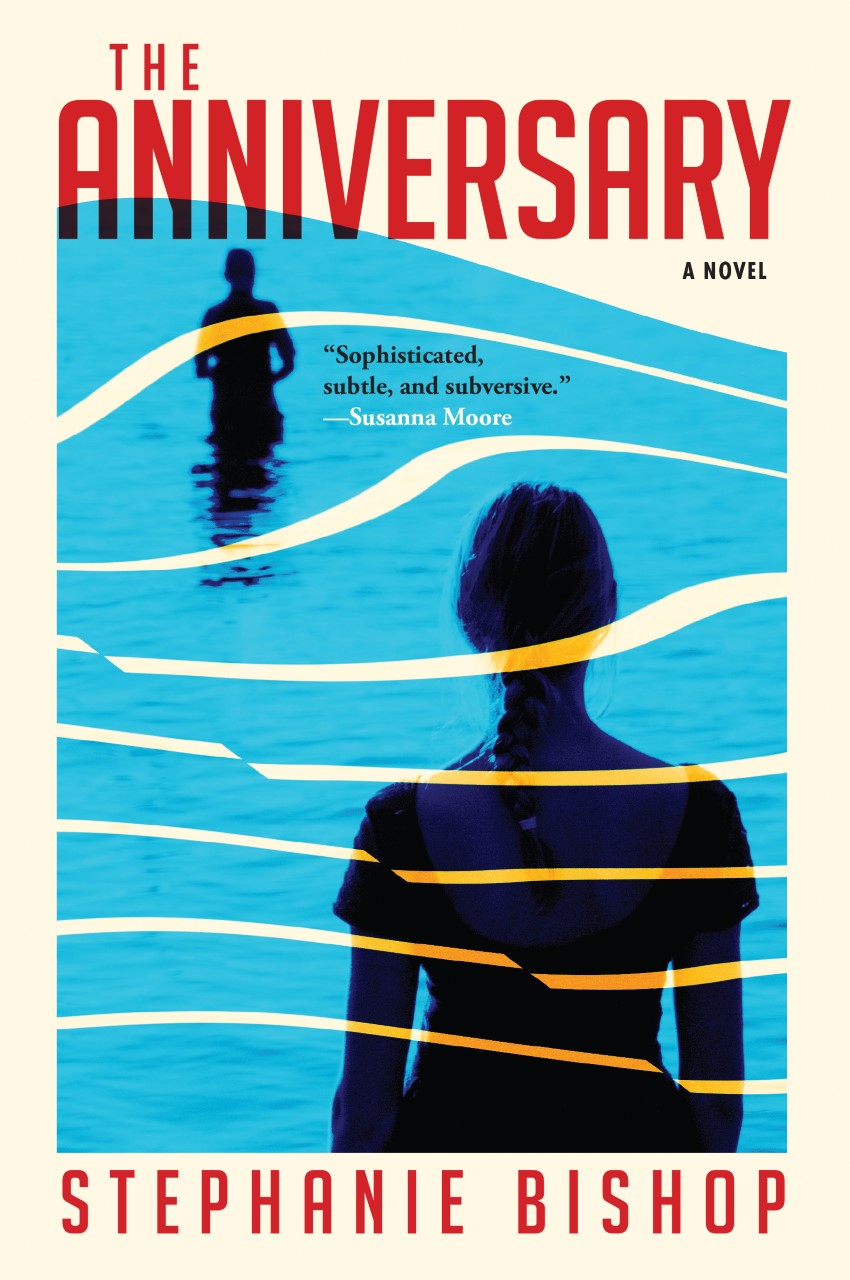
The first rule is that Kate sets our starting book. This month she set one of the books longlisted for the Stella Prize, Stephanie Bishop’s The anniversary. Kate opens her review of the novel by telling us the novel starts with an author taking her husband on a cruise to celebrate their anniversary, only to have something terrible happen …

There’s also a cruise in Rachel Matthews’ novel Never look desperate (my review), but it doesn’t open the novel and is not dramatic in the way like the one in Bishop’s novel. But it does offer an entertaining satire on cruise holidays and those who go on them. (Which is not to cast aspersions on cruises. I have never been on one, but those who know tell me that cruises can be great. You just have to find the style that matches your needs.)
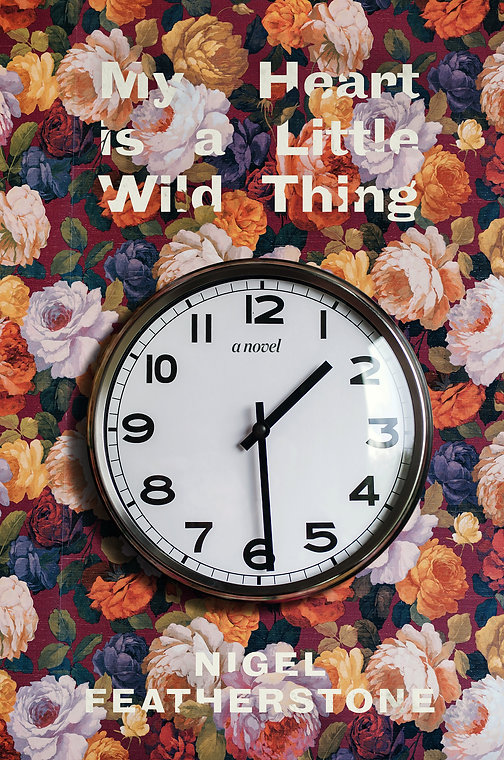
Matthews’ character who goes on the cruise, Goldie, has a prickly relationship with her son (though he is not on the cruise with her). Another novel in which a mother has a prickly relationship with her son, is local author Nigel Featherstone’s My heart is a little wild thing (my review). The novel opens dramatically with the son leaving his home in a distressed state the day after he’d “tried to kill his mother” – though it’s not as bad as it sounds!

Featherstone’s protagonist runs off to the Monaro where, through a quoll, he meets the first big love of his life. Another novel in which a quoll plays an important role is Robbie Arnott’s Limberlost (my review). Both books are linked not just through the quoll, however. Both also have sensitive male protagonists. Such men can be rare in contemporary literature, but I’ve come across a few.
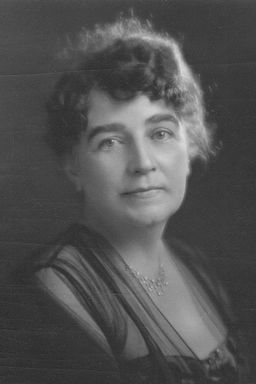
And here is where my chain stalled a bit, not because I had no ideas but because I wanted to travel out of Australia. Then the link came to me. Robbie Arnott’s title Limberlost reminded me of a favourite childhood book, Girl of the Limberlost by Gene Stratton Porter. I haven’t reviewed that here, but I have reviewed an article/essay by her called “The last Passenger Pigeon” (my review). It’s another dual link because Stratton Porter as a young child, like young Ned in Limberlost, lived close to and loved nature, albeit Ned’s relationship to nature is more complex, as he both uses and loves it at the same time.
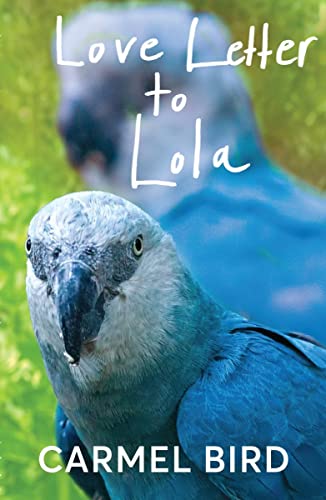
But, oh oh, although the Passenger Pigeon was an American bird, we are returning to Australia, and to Carmel Bird’s collection of short stories, Love letter to Lola (my review), because in this collection, which features several stories about extinct animals, we have, yes, a passenger pigeon. (Indeed Carmel Bird commented on my Stratton-Porter post because she was writing this story around the same time!)
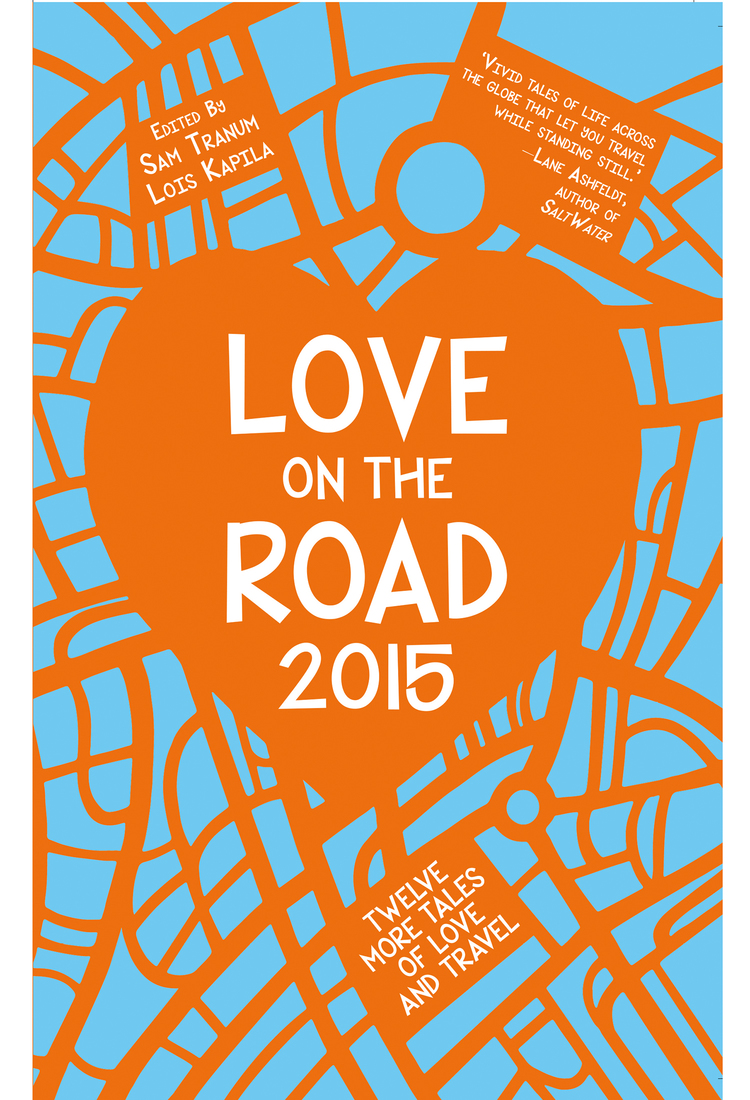
With a title like this, I had many options for my final link, and I’ve gone with an obvious one, that is, a book with the word “love” in the title. However, it too is a dual link because it is also a collection (well, an anthology) of short stories, and it takes us around the world, as does Bird with her various extinct creatures. The book is Love on the road 2015, edited by Sam Tranum and Lois Kapila (my review). As I wrote in my post, this collection takes us from Iran to the Philippines, from Zimbabwe to Costa Rica, from New Zealand to the USA – and we see love in all sorts of guises.
So, we stayed mostly in Australia, ostensibly, but in fact two books let us and our imaginations take flight to all parts of the world.
Picture Credit: Gene Stratton-Porter (Uploaded to Wikipedia, by gspmemorial; used under CC-BY-SA-4.0)
Now, the usual: have you read The anniversary and, regardless, what would you link to?
 Whispering Gums

How delightful it was to see the quoll as the link between two books. I love that kind of observation. And the word ‘quoll’ is such a great word. Rhymes with ‘droll’, for one thing. I searched for its origin and discovered it comes from the language of the guugu yimithirr people of Northern Queensland.
Then came the further pleasure of seeing Love Letter to Lola in the mix. Oh, the sad, sad stories of extinction of species.
They are sad stories Carmel but yours are a joy to read. I remember my surprise when you commented on my passenger pigeon post that you were writing a story about that pigeon. An amazing coincidence that seemed to me!
Coincidence is something that stops one in one’s tracks. Mystery. Why would you and I be both meditating on passenger pigeons at the same time? And why would we discover the fact?
I am in the middle of writing a novel, and I have been confronted by what seem to be a weirdly unfolding thread of coincidences which can seem to be, not just puzzling, but rather scary.
Haha Carmel, American friend would ask the same question. And I admit that while I don’t tend easily to flights of fancy, I’m not completely closed off either to other possibilities at work in how we connect and relate.
Oooh, I am intrigued!
Sorry, I forgot to agree with you re the word quoll. It’s a great word, and I love that rhyme with droll.
And as Lisa said, I’m intrigued about the weirdly unfolding thread of coincidences.
I will make my theme “bad things happening at sea”. Somehow all my authors are American, though not all their subjects. I list the book more or less in order of the gravity of the bad things.
Degree one will be The Corrections by Jonathan Franzen. A man falls overboard on a cruise, but is rescued.
Degree two is The Spectator Bird by Wallace Stegner. A Swedish immigrant returning home does of a heart attack, and is buried at sea.
Degree three is Two Years Before the Mast by Richard Henry Dana. A sailor falls from a mast and cannot be found.
Degree four is Crossing the Line by Alvin Kernan, a memoir of enlisted service in the US Navy during WW II. Apart from the casualties that occur in small or squadron-sized clusters, the USS Hornet is sunk in the Solomon Islands, with considerable loss of life.
Degree five is The European Discovery of America: The Southern Voyages by Samuel Eliot Morison. I include this chiefly for the account of Magellan’s voyage, which suffered terrible losses.
Last is Moby Dick by Herman Melville. In the end, the whale sinks the ship Pequod, leaving the narrator alone escaped to tell us.
Great idea George. I’ve read the first, and of course know of the Stegner and Melville, but the whole has a good flow.
PS here’s mine: https://anzlitlovers.com/2024/05/04/six-degrees-of-separation-from-the-anniversary/
Thanks Lisa.
I find a lot of weird coincidences in my reading (and sometimes others’ reading) and that is definitely fun.
I haven’t read any of these – surprised I never read Girl of the Limberlost although once when I was in Indiana for work I checked to see if I could detour to see Stratton-Porter’s cabin (it was too far away):
https://www.indianamuseum.org/historic-sites/gene-stratton-porter/
The closest I have come to pigeons, however, is Arthur Ransome or novels where the carrier pigeons save the day.
It’s never too late to read Girl, Staircase, though I suppose it would feel dated now. I’ve never been to Indiana but I’d go to her cabin if I could!
I agree with you re coincidences in reading. I love them.
Nice work–when I read “Limberlost” I immediately thought of the same book! I’ve been to one of Gene Stratton Porters homes–pictures here if interested https://hopewellslibraryoflife.wordpress.com/2015/08/03/literary-journeys-gene-stratton-porters-south-cabin-and-limberlost-site/
Thanks Lisa – I am interested! And have now looked at it … lovely. Enjoyed your post.
Yes, it can be difficult to find sensitive male protagonists. But insensitive ones are a dime a dozen! Once again, a really nice chain here.
Sorry Davida, I’ve just found this in spam. You are right about the insensitive ones. They are a dime a dozen. Thanks for your comment!
Limberlost is the only one I’ve read from your lovely chain but you’ve made me very curious about My Heart is a Little Wild Thing–I think I’ve only ‘met’ a quoll in Limberlost so far!
Haha Mallika. If you’d like to meet another quoll, then here’s your chance.
On to the TBR it goes 🙂
Good to hear Mallika !!
Never Look Desperate sounds fun! I really adored Limberlost so great to see it on there.
It’s a good read Cathy … enjoyable but with something to say too.
I remember being 16 and my violin instructor saying how awful cruises are, so that has stuck with me. However, I’ve always wanted to do a river cruise. Why go out to the middle of the ocean? Alas, they are extremely expensive.
Yes, a river cruise appeals more to me too though there are some cruises that hug Australia’s coast that I’m interested in also. I keep saying, when I’m older!! I’m probably that now. They are s expensive though (at least the sorts I’d like. I’m not interested in those big party-focused cruises)
No, the party cruises sound awful. I liked the idea of the river boat cruises because I think they also point out historical places or you can watch animals, etc.
Yes, true … you are closer to the land and so can see things all the time. Says she who did about 5 hours of a Rhine River cruise once! We saw castles!
I have never heard of a quoll before and had to look it up. What a cute, though sharp-toothed critter!
There are so many little Australian mammals and marsupials Stefanie that even we Australians haven’t heard of. I came across them in the 70s in Tasmania, seeing them live there but I didn’t know the bilby, for example, until the 1990s when the idea of the Easter Bilby became popular (as a way of increasing its visibility and aiding its conservation).
A lot of them are sharp-toothed.
Ohhh, how I loved Girl of the Limberlost when I was young. Well, still, but it has been many years since I reread it. Hmmmm….
Me too… My mum introduced me to it, and I introduced my daughter to it (and she loved it too!) It’s special in my life.