Eight years ago, I wrote a post about a new festival called Blak and Bright, which was described at the time as “the debut event of the Victorian Indigenous Literary Festival”. I am thrilled to find that eight years later, this festival is still going strong. So often festivals, and literary initiatives in general, appear on the scene, but soon falter. Not this one. Now formally named the Blak and Bright First Nations Literary Festival, it is held annually in Naarm (Melbourne). This year’s dates are March 14 to 17, making it a four-day event.
Their “mission statement”, to use my terminology, is simple and to the point:
We believe that Blak stories are for everyone.
The Festival, they say, is unique, “with over sixty First Nations artists front and centre”. It celebrates “the diverse expressions of First Nations writers and covers all genres from oral stories to epic novels and plays to poetry”. In 2024, they are offering new events, alongside favourite events from past Festivals. Most sessions are free and some will be live-streamed, so you can register to receive the link. This is why I am posting on it now – there is still time to register!
The theme for 2024 is Blak Futures Now, with the tagline reading “Stories, epics, poems, monologues, history, activism. Embrace the diversity of expression, paving the way for Blak futures now.” This year’s keynote address, State of the Nations, will be delivered on opening night by Goa-Gunggari-Wakka Wakka Murri woman from Queensland, Leah Purcell (whose versions of The drover’s wife I posted on in 2022). This session does have an admission fee, as do a few, mostly performance-oriented, sessions.
To whet your appetite, here are some of the sessions (all of them free, but bookings are essential):
- Yung, Blak and Bold: a festival regular, this year’s session is promoted as “get a glimpse into the minds of young writers who are shaping the future of Blak literature. With John Morrissey, Stone Motherless Cold, Susie Anderson and moderated by Neika Lehman”.
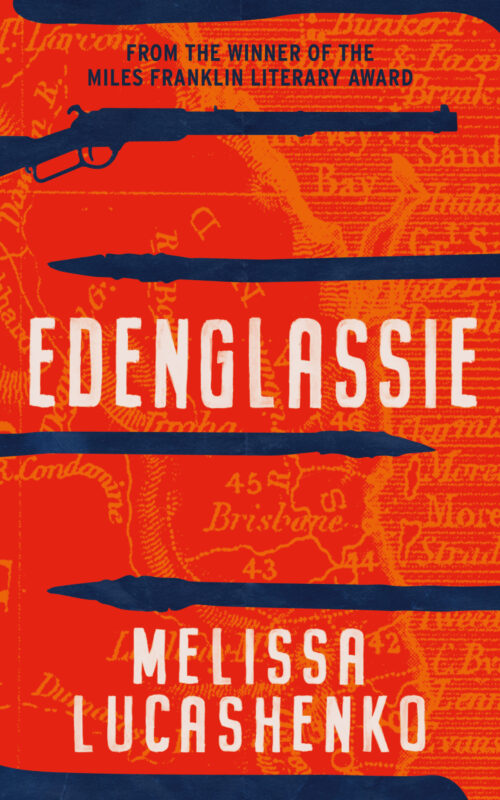
- Blak Book Club: another regular, with this year’s club discussing Melissa Lucashenko’s Edenglassie and Jane Harrison’s The visitors, moderated by Daniel Browning.
- YA Awesome: this session is just what its name implies, that is, it’s about writing “compelling narratives that young adult readers love to read”. It will feature some writers I don’t know, which is probably not surprising given my reading interests – Gary Lonesborough, Graham Akhurst, and Melanie Saward.
- Sistas Are Doin’ It: another regular, with this year’s women being Deborah Cheetham Fraillon, Helen Milroy, and Debra Dank (see my review of her book We come with this place). They will talk about how they write “while juggling the many roles Aboriginal women fulfil in their communities”,
These next sessions are also free but I want to list them separately because their topics cross over all the others! They are:
- Language Lives: the program describes it as follows, “What role do First Nations languages play in Australia’s creative outputs? You might be surprised. With Kim Scott, Kirli Saunders, and moderated by Philip Morrissey”. (I have written about a lecture Kim Scott gave on recovering languages.)
- Blak Imprints: I don’t know which imprints the participants will be discussing, but we all know how critical supportive publishers are for getting diverse/minority writers out there. In this session, Rachel Bin Salleh, Tisha Carter, and Yasmin Smith will “discuss the importance of First Nations imprints in publishing. What else is needed in the publishing ecology?”
- Who Can Critique Blak Work: I’d especially love to be at this one. We talk a lot about “own” story-writing, but I have raised a few times here the issue of critiquing the work of cultures very different from my own. How can I do it, or, in fact should I do it? What would it mean if I didn’t? The session is described as follows, “Should only Blak critics critique Blak work? What does the Blak lens bring to the process? With Bryan Andy, Daniel Browning, Declan Fry, Tristen Harwood and moderated by Davey Thompson”.
These are just a few of many sessions being offered. There are sessions on poetry and songwriting, there are readings, and more. Check out the program at this link if you are interested. You can see the names of all the artists, and the sessions they are appearing in, at this link.
Are you likely to attend – in person, or online?
 Whispering Gums
This sounds amazing; I’ll keep it in mind for next year (just happens this weekend is a tricky one)!
It does doesn’t it Marcie. I’ve registered but don’t think I’ll manage it.
Who Can Critique Blak Work?
They’re welcome to do it themselves!
But we read them too don’t we Lisa – like Heiss, Birch, Lucashenko et al.
I hosted FNLW/IndigLitWeek for 15 years and there are 128 reviews on my blog, flawed though they may be. (That’s not counting the reviews on the FNLit Page that link to other blogs such as yours.) I have read this argument about there being some exalted standard that only they can reach, and it reminds me of a certain activist who hectored a bunch of teachers at a conference with the demand that we ought not ever to teach *anything* about Indigenous Australians unless we had a doctorate in Aboriginal Studies.
Since the message is that we should ‘educate ourselves’ it seems to me that reading FN Lit is a good way to do that and to spread the word through reviews, but there are some strident voices who think that we ought not to have the temerity to do that. So why take on a task that’s likely to offend or generate abusive commentary on the blog? I’ve already experienced this, and I don’t tolerate it from anybody else.
There’s plenty else for me to read and review…
I hear you. There are always extremes at both ends of the spectrum in my opinion. Being a middle-grounder in most things, aka wishy
-washy, I tend to listen to the extremes but not take them to heart. The extremes can play a role in calibrating or just encouraging our thinking. My guess/hope is the panel will have a mix.
I’m not sure the issue is some exalted sense of critiquing but that it can be hard to critique what you don’t personally understand. A bit like historical fiction. We can miss messages, hints, metaphors, emotional responses even, because we are not of that world. That’s where I’ve been coming from when I’ve raised the issue on my blog.
That’s what I meant by ‘exalted’. We readers all bring different things to what we read, and we ‘miss’ some things and interpret some things in idiosyncratic ways and sometimes we get things just plain wrong. There is also a long continuum of expertise in reviewing today, from the most experienced and widely read, to the hyper-academic (e.g. the SRB review mentioned yesterday) to the well-read and well-informed but not expert or professional, to the chatty enthusiast to (a-hem) the intemperate emotional response. Compared to when the only reviews were written by professionals, no book or author IMO can expect today to be immune from reviewers not understanding the author’s intentions, cultural perspectives, theme, metaphors, symbolism etc. You write a book, you put it out there for people to read and you don’t get a leave pass to say who can and can’t share their response to it because they don’t meet your standard of background knowledge.
So theoretically, litbloggers like you and I can justify doing what we like. But the reality is that we don’t want to feel uncomfortable or anxious about what we do, we don’t want to hurt or offend a vulnerable group and we don’t want to invite hostile responses or abuse.
It’s easier to step aside.
Yes, I understand what you are saying about the theory versus reality. I often do feel like stepping aside but mostly give it a go (as I think you mostly do too?)
I’m taking a break from it. There’s nothing much that I’m keen to read at the moment, though Anita Heiss has one coming out later this year which may tempt me.
I have a few on my TBR, Including Edenglassie that I really want to read. I’ve just today given my American friend who is visiting (and lived in Japan for several years) Anita Heiss’ Barbed wire and cherry blossoms. I think she’ll enjoy it. We have a Japanese-American friend who was in an Californian internment camp in WW2.
You know that book about Australian Women’s War Fictions that I’m reading ? (I’ve reviewed Part 1 about the WW! novels). She has a whole chapter on novels about WW2 internment including Heiss’s novel.
Oh yes, thanks for telling me. I bought that for my Kindle (well, I use the Kindle app more now than the actual Kindle, but you know what I mean!)
I’m reading Part 2 at the moment but whether I finish in time for an Anzac Day post or not remains to be seen.
Knowing you, you will!
Hi Sue, interesting discussions, but I am in Queensland at the moment, so won’t be attending. I haven’t seen anything about this event other than your posting, so it might not attract many people.
Thanks Meg … it is probably mostly promoted to FN writers but I like knowing it’s happening. Enjoy Queensland.
Australian Blak writing is exciting and along perhaps with second generation migrant writing is the big hope for Aust Lit.
And BTW I am happy to criticise FN writers if I think they warrant it (eg, Tara June Winch). Literature needs criticism almost as much as it needs writers.
I don’t follow festivals, but I’m glad to hear this one is going strong.
I agree Bill to a degree. They are making exciting contributions to Australian writing.
And fair enough re criticising FN writers but for me it would depend on what basis that criticism is being made. I would have to be sure I wasn’t treading on areas out of my ken, like ways of thinking unfamiliar to my own.
I have a couple of questions. Firstly, do you know why they skip the “c” in Blak? Also, in Australia, how is the term Blak/Black used? In the U.S., if you capitalize the B, it denotes a culture, as in Black Culture, not just black skin. We see something similar with the deaf people. Deaf with a capitalized D means Deaf culturally, and deaf means medically can’t hear. When you asked, Should only Blak critics critique Blak work? it made me think of a conversation we had in Advanced Deaf Studies class. Deaf critics are few and far between, and part of the reason is the community is small enough, and so tightknit, that to criticize a fellow Deaf person’s work may be offensive. They don’t want to be ostracized.
Good question, Melanie. In Australia the use of Blak is probably a bit fluid, but most clearly it is being used to differentiate FN Australian culture. However it can be used to denote the people as well, and is probably most used by those who are politically engaged. I would right now only follow usage. In its absence I tend to use First Nations these days.
Your Deaf critics example is really interesting but sounds different to the main issues here which I think relate more to how can you critique works from a culture you don’t know. Encompassed in this is a sense, I’m guessing, that non-Blak critics can/could be condescending because abuse they miss meaning.
Melanie and Sue, I remembered reading this a couple of years ago and hunted it down again to share with you. It’s not definitive and some of the usage may have changed since then as well…
https://www.smh.com.au/national/blak-black-blackfulla-language-is-important-but-it-can-be-tricky-20210826-p58lzg.html
Thanks Brona , yes I think usage keeps changing doesn’t it, and it can be hard to keep up, which I think most of us want to do to be respectful.
Right, so can non-Deaf critics come in and evaluate art, writing, etc. even if they are not part of the culture because currently, the people within the culture don’t want to offend anyone in their small (relatively) group.
Good question. I think they “can” and should IF the Deaf creators want their work to be read (or seen or heard) outside their culture. I think all critics should try not to offend but should try to point out “issues”with the work as they see them – which is of course a minefield. I keep coming back to the advice I received Once which is that as a creator you need to be “egoless” . Easier said than done. And I think on the other side critics should be honest, kind, and open too. It should be a dialogue?
Like I would with any books set in a country I’ve never been to, a time period I’ve never lived in, or a topic I’m not very familiar with, I document my reading journey, what I may have learnt along the way, provocations, insights, curiosities etc. And as you know I like to research and read around like I did with The Famished Road recently when I’m clearly out of my depth and don’t understand.
There are also times, like when I read books by Gen Z writers (which I am doing atm), where I also acknowledge that I am not the target audience, but this is what I got out it reading the book.
Yes, that’s a good way of going about it, I think Brona. I think the thing to do is to, in some way, provide context for where we are coming from in what we write.
Context and respect are two great words to keep in our minds as we read and blog.
I usually keep the word honour in my mind as I blog – honouring not only my time with the book and what I got out of it, but trying to think about (often with research) and honour what the author was attempting to do, their writing style, their processes, intentions, motivations etc.
Yes, that’s good too Brona. (Sorry for the typos … my autocorrect regularly changes Brona to Brora! I usually notice it – I think!)
That’s okay, my phone does the same thing to me (which is why I still prefer to do most of my blogging with my laptop when I can).
Me too, but in the morning, with my breakfast in bed I’m on my iPad, like now.
That sounds like a lovely way to start a day 🙂
I like it – in my new downsized life!