Once again, I am combining my Nonfiction November weeks because this month has been very busy personally as well as blog-wise.(I did Week 1, on its own, and then combined Weeks 2 and 3).
Nonfiction November is hosted by several bloggers, each one managing one of the weeks. This year, Week 4 – Worldview Shapers is hosted by Rebekah at She seeks nonfiction, and Week 5 – New to my TBR, by Lisa at Hopewell’s Library of Life.
Worldview Shapers
This week the questions relate to the fact that
One of the greatest things about reading nonfiction is learning all kinds of things about our world which you never would have known without it. There’s the intriguing, the beautiful, the appalling, and the profound. What nonfiction book or books have impacted the way you see the world in a powerful way? Is there one book that made you rethink everything? Do you think there is a book that should be required reading for everyone?
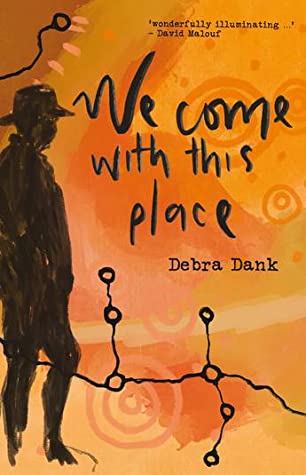
“Everyone” is a big call but I’m going to say it anyhow. I believe that, in the interests of truth-telling (or, is it, truth-receiving) that everyone in Australia should read more First Nations authors, fiction and non-fiction. I have read a few that I’d recommend, starting with this year’s standout read, Debra Danks’ We come with this place (my review), which I have already written about a couple of times this Nonfiction November. As I wrote in my last post, through it, I learnt new things about First Nations history and culture; I better understand this history and culture, particularly in terms of connection to Country; and, as a result, I can better explain and defend my support for First Nations’ people’s fight for fairness.
So, I thought I would add two more books on the topic that I have read in recent years, books that are readable, confronting but also generous in outlook, like Stan Grant’s Talking to my country (my review) and Anita Heiss’s Growing up Aboriginal in Australia (my review). I have read other First Nations nonfiction, but these two provide excellent introductions to the experience of living as a First Nations person in Australia.

Although written by an old-ish white man, my brother Ian Terry, I’d like to add to this list his book published this year, Uninnocent landscapes (my post, review to come), which is part of his truth-telling journey on the impact of colonialism on the Australian landscape, and thus, by extension, on First Nations Australians.
New to my TBR
Our instruction is obvious, to identify any nonfiction books that have made it onto our TBRs through the month (and noting the blogger who posted on that book).
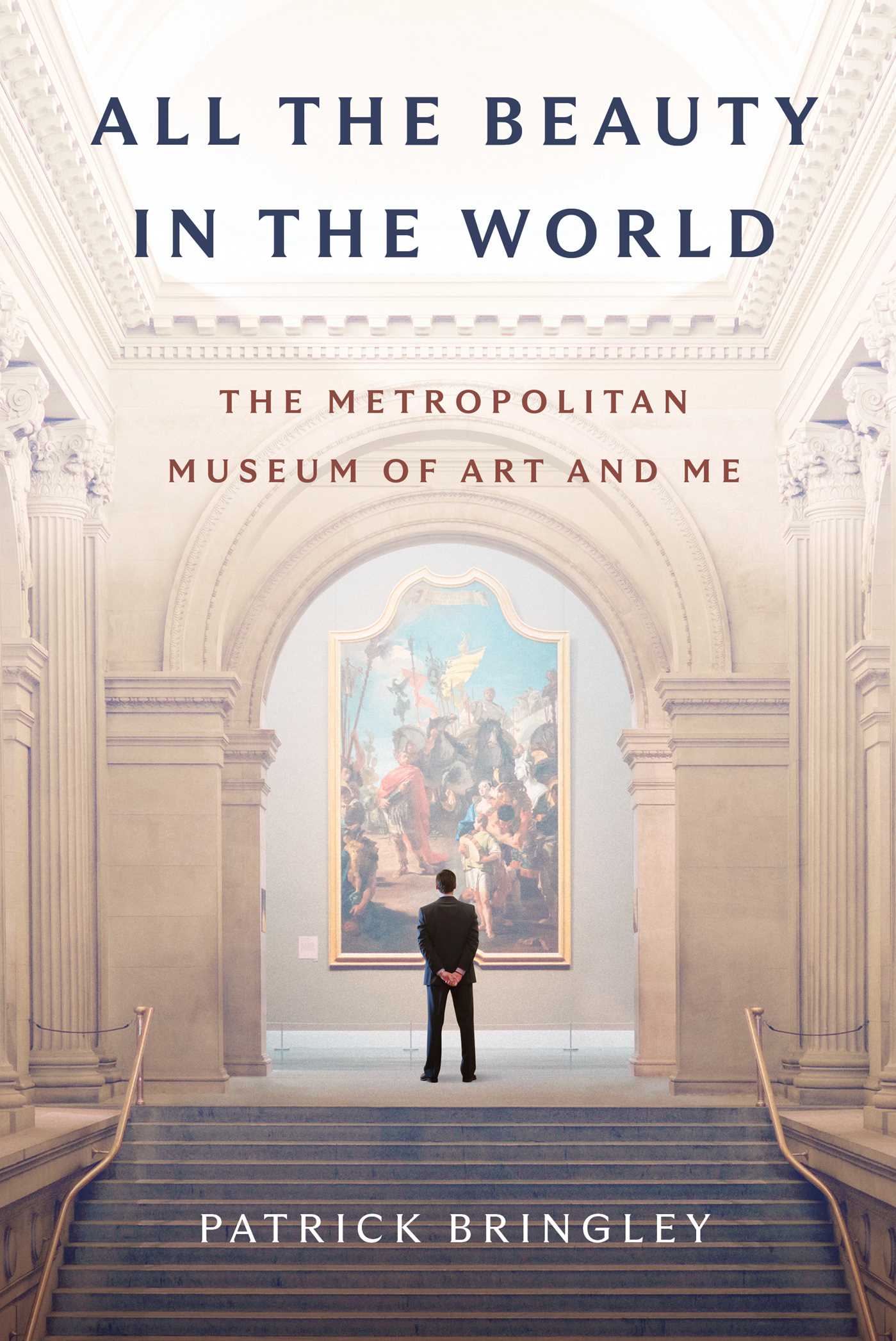
I’m sorry, but I tried very hard not to be tempted as I have a pile of nonfiction books already on my TBR and I’ve read so very few of them this year. I was intrigued though by Patrick Bringley’s All the beauty in the world: A museum guard’s adventures in life, loss and art posted by Frances (Volatile Rune). I love going to museums and galleries, and often wonder about those people who stand guard in the various rooms. Do they like their job? Are they interested in the collections they are guarding? How do they cope with being on their feet for so long? Bringley apparently answers these questions, and many more, including some I hadn’t thought of.
I am also hoping to read in the next few months two recent Aussie nonfiction books, Anna Funder’s Wifedom (which Brona has reviewed), and Richard Flanagan’s just published Question 7. I think that’s more than enough to keep me out of mischief.
A big thanks to the bloggers who ran Nonfiction November this year. I wasn’t as assiduous as I could have been, but I did appreciate reading the bloggers I did get to, and I enjoyed taking part on my own blog in the little way I did.
Any Worldshapers for you? Or, new nonfiction must-reads?
 Whispering Gums
I’ve just read Jonathan Shaw’s latest blog and immediately bought and dowloaded Debra Dank’s book. Moving on from that I cannot praise too highly David Marr’s Killing for Country (A Family Story) – it’s in part my families’ stories, too. Beyond that yesterday I finished Richard Flanagans Question 7 – his tale of Kenji Y in the early part of the book and the town where his father was a PoW in Japan are known to me – I lived there some 14 years but did not know it was where RF’s father was a slave labourer…it is a beautiful and tenderly written tribute to his parents and among other things -the way everything is somehow connected – even before we recognise that fact. And my wife has just purchased Wifedom. I’ve read three of Anna Funder’s books including All That I Am and Stasiland. Anyway, WG – Merry Xmas and thanks for a terrific year of your writing and to all your other readers whose comments I always enjoy. Jim
Thanks Jim, lovely to hear from you, as always. I look forward to Wifedom and Question 7. I’m sure you will like Dank’s book. It is one of the standouts of the year for me. And I will look out for David Marr’s book.
I hope you have a good Xmas break, and get lots of reading done in between good people times.
I read recently, can’t remember where, that as readers grow older they tend towards more non fiction books. Guess they realise there is so much more to learn. I don’t know. But I know I read much more NF than fiction as I have aged. Interesting thought.
I’ve heard that too Pam. I read quite a bit of nonfiction in my 20s, and then mostly fiction in my 30s and 40s, but since then I’ve mixed it up a bit more. I still love fiction but I also find myself hankering for some nonfiction, though I can’t quite put my finger on what that is.
Definitely worldshapers for me: “The Big Fat Surprise” by Nina Teicholz and “The Great Cholesterol Con” by (1) Malcolm Kendrick and (2) Anthony Colpo (yes, two books with the same title !). When I think about how many GPs I’ve had lecturing me about my fat intake over my more than some years, I grow extremely irritable – like extremely ! Before leaping onto my personal bandwagon and settling down, I shall say only that the common thesis here is so very sensible, logical and utterly credible that it shows us how awfully powerful is Big Pharma, to be able to have kept the wool pulled for so many years.
Why am I not surprised MR given your mention of Kendrick recently on your blog. My only comment is that these “sensible” theses change over time. When I was bringing my children up, the big issue was salt. Now the big issue is sugar. So, I have become very wary about any thesis that is black-and-white because human bodies are not black-and-white. I prefer to think case by case. The cholesterol and fat thesis is another one of course. At Reading Group this week we were talking about how we all turned to margarine in the 70s and 80s because it was supposed to be better for us than butter, and eggs were bad full stop. Now the tables have turned on these, somewhat at least, so that’s my word of caution. I don’t believe any one viewpoint, no matter how reasonable it sounds, because I’ve had so many reasonable sounding viewpoints presented before. Moderation in all things is, and always has been, my mantra.
PS I take your point of course about big pharma, about any “business” that has such power, but that doesn’t make it all bad. It just means caution is needed before we jump on bandwagons, don’t you think? People like Kendrick can be part of that caution, part of offering other sides to the story.
I’m absolutely with you regarding books by First Nations authors. Each year I now make it a rule that I choose one by an Australian indigenous author as my selection. There are so many wonderful books being written and published by First Nations people it’s hard to choose just one.
For 2024 I’ve had a hard time between Debra Dank’s book you mentioned and Jane Harrison’s ‘The Visitors’ but I think I’ll go with the latter. It’s such a surprising and refreshing take on the 1788 story we all grew up with and has some rich snippets of culture and history along with unexpected humour. I loved the unexpectedness of it.
Update to edit my comment above: I meant to say book selection for the book group I’m in.
Ha, thanks Denise, and I’ve just added it to my group’s suggestion list for next year.
I only had a few this time as well – I’ve just combed through the rest of the NonFic Nov posts to see if I’ve missed anything. I already had Debra Dank’s book on my wishlist, however seeing you and others talking about it has pushed it up the list to buy once Christmas and my birthday are out of the way … And thank you for taking part: I’ve loved seeing bloggers I know as well as new ones engaging with the challenge!
I do like this “month” Liz but having two loves in the same month – nonfiction and novellas – is so difficult isn’t it?
Yes!!
Nonfiction is a broad category. The last three books I read to the end were a history, a work of philosophy, and a collection of essays on theology, ergo all nonfiction, but having nothing in common as to subject or structure.
It is George. Last year, in one of the posts, maybe the one about what sort of nonfiction I like, I mentioned content (and form) – literary biography – and straight form – essays. Essays rarely come up in people’s discussions, but what I like about them is that they can cover so many subjects and from such different angles, subjects you may not read a whole book about.
I like essays too Sue – like short stories it is easy to read one then let it sit for a while before moving onto the next. Which reminds me I really want to read some Orwell essays over the summer too.
I like Orwell’s essays, as I think you know!
Indeed!
Pingback: Nonfiction November Week 5: New to my TBR | Adventures in reading, running and working from home
I went to the Chicago Art Institute where a security person chewed me out for stepping on some of the art. Well, why make something that you put on the floor, with, you know, the rest of the floor!?
Art on the floor is asking for trouble, Melanie! I reckon the security person should have been watching more closely if it wasn’t to be walked on. S/he probably felt guilty and took it out on you!
No need for her to go barky-dog mode on me! LOL.
Absolutely!
I likely would have chosen a book like this, too, in response to this question, because I know how ill-prepared my public school education left me for understanding the issues faced by First Nations and Indigenous peoples, so I figure a lot of others are in the same position. I’ve got a shelf on my GoodReads titled Worldchanging and it’s specifically for this kind of book, the kind that truly upset my understanding in all the best ways.
Oh what a great Goodreads shelf to have Marcie. I don’t really do much “organising” on GoodReads and sometimes forget to record anything there.
The thing I loved about We come with this place is how well it articulated for me things I “understood” but trouble clearly explaining. It will help me in future respond more confidently to naysayers because I have better language for it now.
The best books help us have better conversations, don’t they. Beginning with conversations with ourselves in our own minds (and, maybe hearts)!
Oh yes, beginning with conversations with ourselves.