The Winners of the the Prime Minister’s Literary Awards for 2023 were announced this evening.
The website says that 643 entries were received across six literary categories: fiction, non-fiction, young adult literature, children’s literature, poetry, and Australian history. Each shortlisted entry receives $5,000 with the winner of each category receiving $80,000. The awards are now being managed by Creative Australia, rather than by the Department of the Arts, which should provide the right arms’ length distance and avoid the problems of political interference which soured some of the early awards.
The event, which I attended in livestreamed form from the National Library, was slick but not superficial. Arts Minister Tony Burke inspired me once again, not only with his passion for the importance of the arts to Australia and his determination to entrench arts policy in government, but with his obvious personal engagement with arts across all forms. I’ve seen it before, and I saw it again. It’s a joy. As MC, Benjamin Law said, any Minister who takes poetry into the office has “got the vibe”.
Below is the shortlist for the three categories I am most interested in, with the winners marked in bold.
Fiction
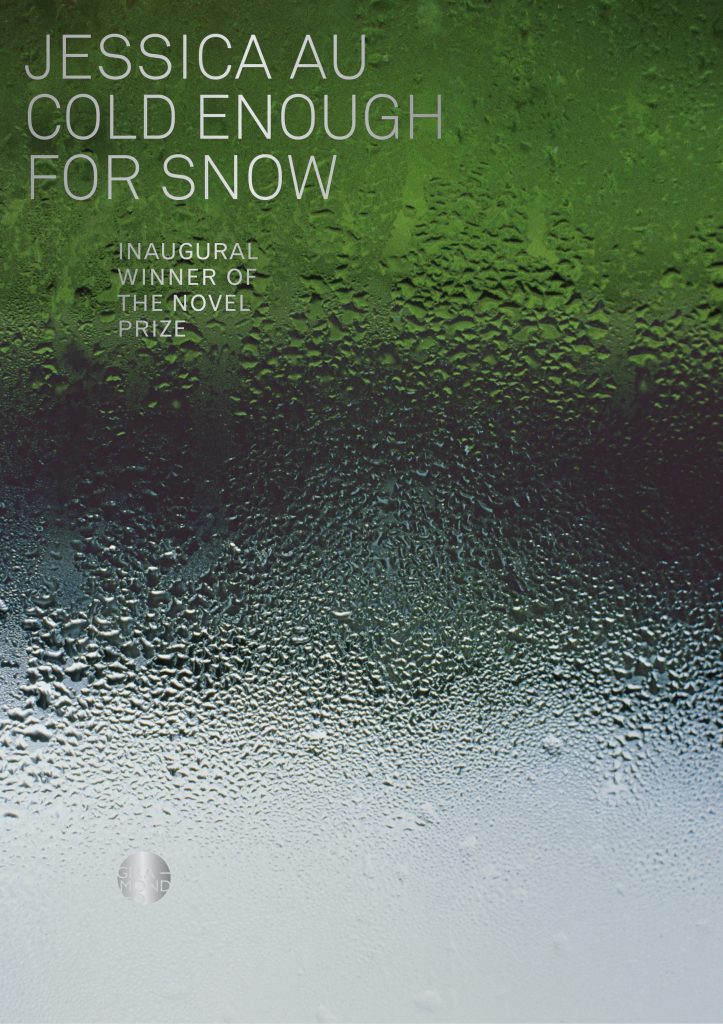
- Jessica Au, Cold enough for snow (my review)
- George Haddad, Losing face
- Yumna Kassab, The lovers
- Fiona McFarlane, The sun walks down
- Paddy O’Reilly, Other houses (Lisa’s review) (on my TBR)
Non-fiction

- Debra Dank, We come with this place (my review)
- Louisa Lim, Indelible city: Dispossession and defiance in Hong Kong
- Brigitta Olubus, Shirley Hazzard: A writing life
- Thom van Dooren, A world in a shell: Snail stories for a time of extinctions
- Sam Vincent, My father and other animals: How I took on the family farm (Vincent said that he “wants to change perceptions about what Australian farmers can do and be” particularly regarding their relationships with First Nations people)
Australian history
- Alan Atkinson, Elizabeth and John: The Macarthurs of Elizabeth Farm
- Rohan Lloyd, Saving the Reef: The human story behind one of Australia’s greatest environmental treasures
- Russell Marks, Black lives, white law: Locked up & locked out in Australia
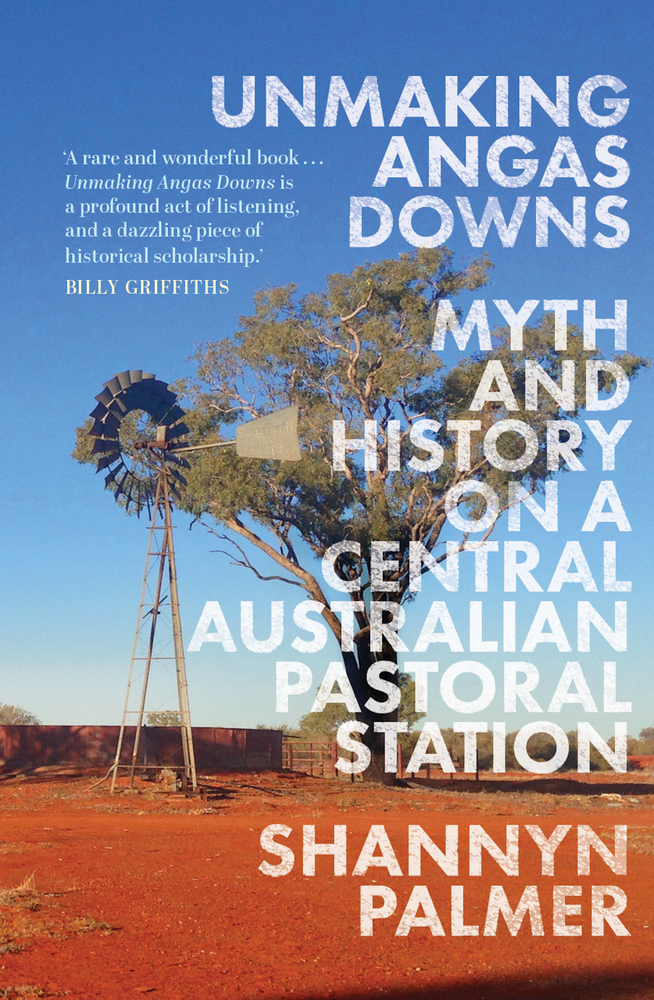
- Shannyn Palmer, Unmaking Angas Downs: Myth and history on a Central Australian pastoral station
- Lachlan Strahan, Justice in Kelly Country: The story of the cop who hunted Australia’s most notorious bushrangers
Other category winners …
- Poetry: Gavin Yuan Gau, At the altar of touch
- Young Adult fiction: Sarah Winifred Searle, The greatest thing (Searle said during her acceptance speech, referencing how challenging the world is to navigate, “admit you’re scared even if you don’t have answers”.)
- Children’s fiction: Jasmine Seymour, Open your heart to country
The complete shortlist with judges’ comments can be seen on the website. But I will say that the shortlist and the winners are impressively diverse, in who created the works and in their subject matter. So good to see.
Our lives are made more meaningful in the presence of a talented scribe. (Benjamin Law, closing the awards presentations)
Thoughts?
 Whispering Gums
Disappointment. Another Sad Girl Story, another win for an over-rated book.
I wanted Paddy O’Reilly to win.
Sorry Lisa! I said to Len when it was announced, ‘Lisa is going to be disappointed, “another sad girl story” is what she’ll say’!! I see it as a bit more than a “sad girl story” though there is an element of sadness to it. Sadness is not quite the right word I think, but nor is melancholy. Maybe it’s yearning? It’s a hard book to grasp for me – it’s slippery, which makes it a bit about life and relationships. As I think I wrote in my post it’s sort of about mutability, and I think her coming to understand that that’s what life is about. But, tomorrow I might say it very differently.
Did you see that Tony Burke mentioned Paddy O’Reilly’s book. I’m really going to try to get my reading group to do it next year. I tried this year, but with Tony Burke’s imprimatur, I might have a better chance!
I didn’t watch it. I meant to, but I forgot, and now I’m not sorry.
TBH the best of them offer a bit more than a Sad Girl Story, but at the end of the day, what I remember about it was a nicely written story of a dreary journey undertaken by two dreary people. I wouldn’t waste my time having a coffee with either of them. I have tried but I do not understand why that book has cleaned up every prize in sight.
Whereas what I remember about Other Houses, which I read in April last year, so over 18 months ago, was Lily and Janks’ struggle to manage when they are ‘working poor’. Their modest ambitions, and how easily it all falls apart. As a work of literature, it had something important to say about how inequitable our society is, and how working hard often doesn’t get people anywhere. Yet despite it all, they somehow keep a sense of humour, and I would enjoy spending time with them.
I hope, I really hope, that Paddy doesn’t get discouraged. She is like Stephen Orr, one of our best, wisest and most interesting writers, who gets passed over time and time again.
I don’t imagine she’ll be discouraged though I don’t know how she makes a living and what other recognition she has. Tony Burke made the point that we are doing very well these days with improving diversity in our literature except in one area, class. And this is when he mentioned Other people’s houses. I thought, sounds like a Labor stalwart – and good for him. But he’s right. The realist – class-focused – novels of the first half of the century seem to have disappeared as middle class concerns, took over. And now we are keen on other areas of diversity but not the working person. He was inspiring because you could tell he was speaking from a deep place of believing in the value of the arts.
For me their story contained an element of recognition for the two women and I found there was some consolation in that. That seeking and seeing countered the sense of melancholy for me. But I think a lot of my favourite people are sad much of the time, sadness often fuelling their efforts to strive for change, so maybe it’s just a Sad Girl book after all. Heh
Yes, well said Marcie. I agree that “the seeking and seeing”, the ruminating, are what stood out for me. And like you, I think, I don’t mind melancholy or sadness because these do tend to accompany thinking and caring. Happiness can tend to be oblivious, can’t it.
I liked the Jessica Au story but like Sue said, it was slippery. I have the book My Father and Other Animals. Bought recently but still unread. Thanks for the info.
Thanks Pam … I’ve been interested in reading the Vincent sine I heard about it, and his little speech tonight just enhanced that desire.
I’d love to read My Father and Other Animals; and oh dear, I still haven’t got to Cold Enough for Snow which I’d bookmarked at least a year ago I think.
One day, eh Mallika?! I’d like to read the Vincent too.
More interested in the exchange between you and Lisa. My worthless input is that it so bloody often happens that one award for {whatever} leads to another, and award awarders decide not to be outsiders. Often.
*chuckle*
Haha, MR, often but not always. The PM’s Literary Award has more often than some gone quite out on a limb, as has Stella (which of course is a multi-form award). However, I do prefer awards to be spread around because I’m uncomfortable with the idea of “best” in the arts.
I have now added more titles to my tbr list.
Good on Tony Burke.
Exactly Forestwood.