I love novellas and have written on and reviewed novellas almost since this blog started, because I love the form, but I have only tinkered around the edges of Novellas in November (run by Cathy of 746 Books and Rebecca of Bookish Beck). Last year, I wrote a Monday Musings on Classic Australian novellas and the year before I did one on Supporting Novellas (here in Australia). Otherwise, I have written a few novella reviews for the month. But I have not focused on the weekly themes suggested by Cathy and Beck. I may not again, because I might become a bit repetitive, but I’m going to start at least.
However, this has been a very strange reading year for me, so I won’t have a lot to say, which is probably good, as it means my posts will be short for you to read! For Week 1, which just runs from 1 to 5 November, the theme is “My year in novellas”. It asks us to write about novellas we’ve read since last November.
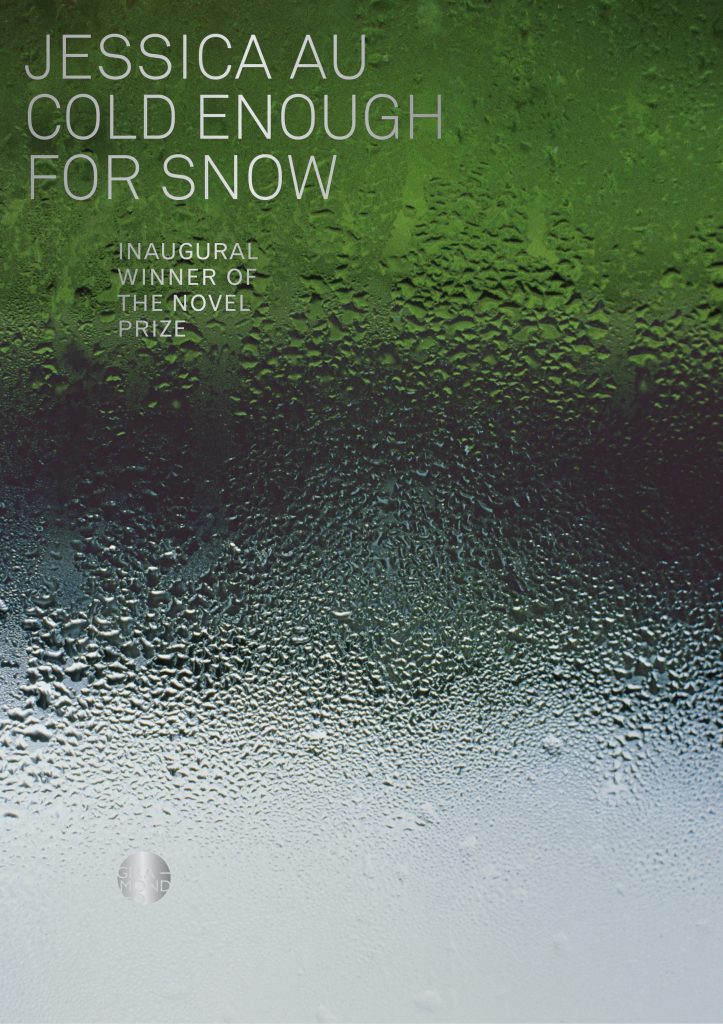
Well, I’ve only read one, and that was Jessica Au’s quiet, meditative, award-winning Cold enough for snow (my review). It was the inaugural Novel Prize winner, and also won the Victorian Premier’s Literary Awards prize for fiction (as well as being the overall winner). It’s been shortlisted for more prizes, including, most recently the Prime Minister’s Literary Awards fiction prize. It’s one of those books that’s perfect for the novella form, because it’s an intense, concentrated book rather than a plot-driven page-turner. It says a lot that it has held its own so well in the “novel” world – in terms of awards and overall critical reception – despite its short length. (See publisher Giramondo’s site for its awards to date.)
Cold enough for snow tells the story of a mother-daughter trip to Japan, but its focus is not the trip. Told from the daughter’s point-of-view, it tells about a relationship that is characterised by closeness and distance, by tender caring and frustration, by needs that aren’t always satisfied perhaps because they can’t always be, by a desire to connect. For me it was about the paradoxical nature and mutability of life. But everyone who reads this book – as in my reading group – seems to see something different because it speaks so closely to our individual experiences of life and close relationships. The Prime Minister’s Literary Award judges capture this well in their comment (see the Giramondo site above) that it is “intricately structured and with a flow and reach that, like all remarkable writing, is without boundaries”. “Without boundaries” is a good description …
Au’s book might have been my only novella review in the last twelve months, but all has not been quiet on the novella front. Back in July I wrote a Monday Musings about support for “short novels” from various points of view over the first half of the 20th century – that I found in Trove. And, just a few days ago I wrote about the winners of the new 20/40 novella prize being run by Finlay Lloyd publishers. I plan to read these two winners for this year’s Novellas in November.
Written for Novellas in November 2023
 Whispering Gums
” “Without boundaries” is a good description … ”
Why ?
Ah sorry, MR. I hoped it would be clear, but maybe I’m too obscure. It relates to the point I had just made about different readers getting different things from the book depending on their own experiences. I think describing it as having a “reach … without boundaries” captures that idea perfectly. Does that make sense?
Not ‘obscure’ .. I suspect I am just being me (=picky): if you’d said “reach without any fences” I would’ve got it immediately. To me boundaries are things ‘way off in the distance – probably coming from being a cricket fan !!!!
I apologise for my thickicity. [grin]
We all read differently … and it’s useful to me, MR, to hear how others read what I write. I wonder what the reviewer meant? Still I can’t imagine using fences in the context … they sound too solid!
In retrospect, I did myself a disservice by listening to the Au as an audiobook, rather than reading it – from memory it had a reflective/ meditative quality that needs time.
I think you are right Kate. I can’t imagine enjoying this in audio form.
I really loved Cold enough for Snow, so I’m glad it resonated strongly with you as well. It’s interesting how everyone seems to find something a little different in that novella (or views it from a different angle). The sign of a great book, I think!
Exactly Jacqui. I think it is.
It might have been your review that caught my attention so that when I saw this on the shelves of the northern library branch I frequent I snapped it up straight away (but I didn’t leave a comment on your review, so I’m not sure about that). How curious that the members in your group each took away something slightly different from the story. I wonder if that’s because of the author’s grace and capacity to strike a balance between the universal and the personal or whether it’s that she hadn’t fully crystalised some aspects of the story herself, or, maybe, somewhere in between. Regardless, I loved reading it.
On another note, did you see [Yoga with] Adriene’s Bride of Plankenstein. Ahhhh, have I thanked you recently for introducing me to her? lol
Starting at the end Marcie, no I’m travelling at the moment. I’ll make sure I check it out. She’s done Halloween ones before but this sounds perfect. And not you haven’t thanked me RECENTLY so I accept your thanks AGAIN.
As for Au, good questions … I suspect it could be somewhere in between because fully crystallising all aspects might have destroyed the overall sense of enquiry the book has?
I hadn’t hear of this one, it sounds very interesting though.
It is a little treasure Cathy!
Well, if you can only read one novella for the year, then Au’s is a pretty darn good one to have as that ONE 🙂
I reckon! Thanks Brona.
Cold Enough for Snow sounds really good!
It is, Jinjer!
I think I’ve mentioned on here before that. I love novellas, but they just aren’t for sale in an accessible way. You never see them just on a shelf at a brand-new bookstore. I think the issue is that they want to charge the same amount for a novella or a book of poetry as they do a big, fat novel. At least in America, we want our money’s worth. And “money’s worth” doesn’t mean it’s really good, it means more! bigger! better! in the US.