Susan Glaspell, A jury of her peers (#Review)

One of my retirement activities is to co-ordinate a little band of volunteer indexers at the National Film and Sound Archive. Not only do we do useful work for the Archive, but we get to socialise a little with our peers, meaning we talk about what we are watching, listening to, and reading. Recently, one of the team sent me a short story to read. He “raved” about it, he wrote in the accompanying email. Well, I have now read it and I’m mighty impressed too. It’s by an American writer and appeared in one of the those annual best short stories volumes, this one for 1917.

Susan Glaspell

The author of the story, as you will have worked out from the post title, is Susan Glaspell (1876-1948). I had never heard of her, but fortunately she has a decent-sized Wikipedia page which you can read, but I’ll give a brief summary here. She was a playwright, novelist, journalist and actress. Indeed, she and her husband founded America’s first modern theatre company, the Provincetown Players. Wikipedia then says, and I’ll quote because why try to paraphrase it:

First known for her short stories (fifty were published), Glaspell also wrote nine novels, fifteen plays, and a biography. Often set in her native Midwest, these semi-autobiographical tales typically explore contemporary social issues, such as gender, ethics, and dissent, while featuring deep, sympathetic characters who make principled stands. Her 1930 play Alison’s House earned her the Pulitzer Prize for Drama.

Wikipedia has much more to say but essentially, like many women writers, her star faded, partly Wikipedia says, because her “strong and independent female protagonists were less popular in the post-war era, which stressed female domesticity”. However, from the 1970s on – we all know about this revival don’t we – she started to regain traction. Now, she is recognised as a “pioneering feminist writer and America’s first important modern female playwright”.

All this might clue you in to why I so enjoyed her story.

“A jury of her peers”

Kindle ed.

“A jury of her peers” is quite a long short story, but it engrosses from the beginning because of how Glaspell slowly unfolds the story, incisively developing, as she goes, a number of ideas that still speak to us today. We readers work out fairly quickly what has likely gone on, but our fascination lies in how the two women protagonists come to their understanding of the matter, how they try to resist what they have intuitively guessed, and what they decide to do about it. Overlaying this are the assumptions made about them (and about women in general) by the men involved, which adds a social dimension to the moral one. It’s a wonderfully complex story. It’s no accident that the main action takes place in that women’s domain, the humble kitchen.

The story, according to Wikipedia again, was loosely based on the 1900 murder of a man called John Hossack which Glaspell covered while working as a journalist. She originally wrote it in 1916 as a one-act play, Trifles, for the Provincetown Players, before turning it into a short story. Later, it was adapted for an episode of that 1950s TV series, Alfred Hitchcock Presents, and into a 30-minute film by Sally Heckel in 1980.

The plot is simple. A farmer, John Wright, has been murdered, and his wife, the diminutively named Minnie, taken into custody, the day before the story’s action takes place. The story opens with Sheriff Peters and the county attorney Mr Henderson picking up the Wrights’ neighbour, farmer Mr Hale, who had called in the death the day before. Their aim is to visit the scene to look for evidence that might explain what had happened, that might provide a motive. In the buggy is the sheriff’s wife Mrs Peters who is coming along to collect some clothes for Minnie. At the last minute, Mrs Hale is asked to join them, at the request of Mrs Peters who appears to need some support in her sad task.

So, this band of five arrive at the Wrights’ “lonesome-looking place” and, while the men go in search of their evidence, the women remain in the kitchen-living area to get those items Minnie had asked for. As they do, they start to notice things around them – providing insight into Minnie’s life and state of mind – and slowly they piece together an understanding of what had happened. These two women don’t know each other well, so they are cautious with each other, sometimes moving “closer together” in solidarity, particularly when the men appear at intervals and invariably belittle women’s skills and knowledge, but other times drawing apart, uncertainly feeling each other out as they simultaneously feel out their own thoughts and feelings.

The practical farmer’s wife Mrs Hale increasingly senses what sort of life Minnie had led, and feels guilty, criminal even, about never having visited her, but she is uncertain about how the timid-seeming, law-abiding Sheriff’s wife is reacting. However, every now and then she catches in Mrs Peters “a look of seeing into things, of seeing through a thing to something else”. Eventually, they connect, “in a steady burning look in which there was no evasion, no flinching”.

It is so beautifully done, with barely a wasted word or description, with every interaction carrying weight, with perfect use of metaphor (involving birds, cages, and knots) and irony. It reminded me, just a little, of Pat Barker’s The women of Troy (my review), another story in which men underestimate women, to their detriment (though they may not always know it). And so, in this story, a number of issues are explored, including morality and natural justice versus the law; gender and men’s superior, condescending dismissal of women’s skills and knowledge; neighbourliness and guilt; and female solidarity.

“A jury of her peers” is a subversive crime story, one that wowed me, for its subject matter, particularly given the time it was written, and for its sure, unflinching writing. I’m impressed that it was chosen for an annual best anthology by a man – but perhaps that’s me being condescending now. Whatever! I would love to read more Glaspell.

Susan Glaspell
“A jury of her peers” (orig. pub. in Every Week, 5 March 1917)
in Edward J. O’Brien (ed.), The best short stories of 1917 and The yearbook of the American short story
Boston: Small, Maynard and Company, 2014
pp. 256-282
Available online at Hathitrust
Monday musings on Australian literature: Spineless Wonders

For a small, specialist, independent publisher, Spineless Wonders has appeared on my blog more times than you might expect, sometimes in passing, sometimes as the publisher of an author I’ve reviewed, and a few times in posts on publishing and publishers. All that, I’ve decided, has earned them their own post.

The first – and main – time I mentioned Spineless Wonders specifically was back in 2013 in a Monday Musings on Specialist Presses, in which they were one of five presses I chose to introduce. I said then that I thought they’d been established around 2011 – and I added an aside that I wished all organisations would include at least some history on their websites. Well, they have now confirmed on their About page that they were indeed founded in 2011 by Bronwyn Mehan.

Who is Bronwyn Mehan?

Like other keen Aussie litbloggers, I know the names of several publishing company CEOs (or directors or managers, or whatever they are called), particularly at the small presses, but Bronwyn Mehan is not one of them. So, I went searching, and didn’t find much, but there was something on SPN, the website for the Small Press Network. Her entry there is not extensive, but it tells us a few things. It says, not surprisingly, that she “looks for innovative ways to connect Australian authors with new audiences, collaborating with artists and organisations engaged in multi-media and performing arts”. “New” audiences is so important to those of us who believe in the value of the arts, isn’t it?

Anyhow, it also said that in 2018, she spent a month in New York as part of a Publishing Fellowship researching trends in multi-platform publishing. She has also been a peer assessor for the Australia Council Literature Board and in 2021 she took part in the Australia Council’s (now Creative Australia) Future Form program. As far as I can tell it’s a “leadership program” intended to help small to medium arts organisations “transform and innovate their core business model”. And that’s about it, except that I did read elsewhere that she also writes – short and long fiction, and poetry.

What is Spineless Wonders doing?

At the time of my 2013 post, they described themselves as being “devoted to short, quality fiction produced by Australian writers … [to] brief fiction in all its forms – short story, novella, sudden fiction and prose poetry”. And, as I explained, their name referred to the fact that they delivered their publications “to readers via  smart phones and laptops”, but they did (and do) also in print and audio forms. Since, then, however they have expanded further, to, in their words, “a short story production company working collaboratively with authors and artists across many disciplines to get short fiction out into the world – everywhere”.

What does this mean? These initiatives, from their About page, give you an idea:

  • Performed Fiction: Since 2014, they have produced something they call Little Fictions (originally known as Spineless Wonders Presents… a short evening of tall stories). They describe this as a “unique literary event” involving short stories being read by actors to a live audience. Inspired perhaps by poetry readings? In 2017, the City of Sydney invited them to produce a series of these for their Late Night Library program. Ongoing funding from this has apparently enabled them to create something they call Off the Page, which is a multi-media platform for performed short fiction. Sounds wonderful to me.
  • Storybombing: In 2016, they formed an interdisciplinary artists’ collective called #Storybombing, which aims “to find innovative ways to activate public spaces with short Australian fiction curated and produced” by themselves. Examples of the initiatives include stories spraypainted onto pavements, installed in retro pushbutton phones, or projected onto buildings. They say you can find examples on their #storybombing tab, but I see there’s nothing there since 2020 so maybe this is a victim of COVID.
  • Microflix: In 2018, they established the Microflix Awards and Festival, which aimed “to encourage more Australian filmmakers to use work by Australian authors, to reward excellence and creativity in film adaptations and to champion the importance of the writer, and the original text, in the filmmaking process”. Sounds great as short stories make perfect starting points for film. Just look, for example, at how many short stories by Somerset Maugham have been adapted to film. However, around 2021, this initiative ended, but they note on their website that they had partnered with SF3 to continue to encourage collaboration between writers and filmmakers.

What these initiatives tell me is that Spineless Wonders is an innovative company with a clear goal to support short (including micro and flash) fiction. It’s also clear that this is not easy, but that the company is active, flexible, and willing to pivot where they can to achieve their goal. The goal is clearly the thing.

If you look on their home page, you will see in their side-bar other activities and initiatives, like their Es-Press imprint, their work In Translation, and their Audio Lounge. It’s inspired and ambitious, though looking at the dates when things have happened, I suspect these things happen somewhat in fits and starts, but they are clearly exploring every angle they can to get creators works to readers, listeners, and viewers.

You will also see a link to Opportunities and Awards. These include a current call for “startling stories set in Sydney’s past” for Imaginative Recreation – Sydney. There are talks and masterclasses to help creators “invent stories drawn from the archives”, and submissions are due by midnight 17 December 2023. This is where you will also find the Carmel Bird Digital Literary Award, but it seems to be in abeyance at the moment. It was funded by the Copyright Agency. They did run again this year, though, their Slinkies Competition for writers under 30. This results in an anthology, and Slinkies 2023 can be pre-ordered now.

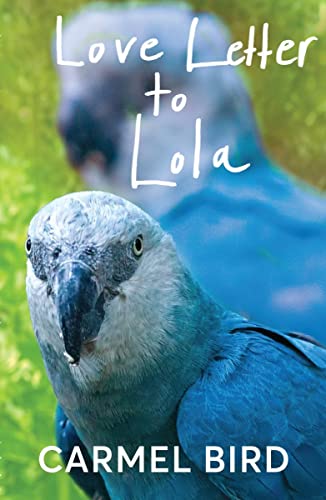
Meanwhile, though, Spineless Wonders continues to publish short stories, of which I’ve reviewed a few – two collections by Carmel Bird (The dead aviatrix and, most recently, Love letter to Lola) and the anthology The great unknown edited by Angela Meyer.

And, their YouTube channel has some current content, which provides another opportunity to get to know them.

My point overall, though, is that here is a publishing company working in a challenging form – short fiction – in a way that is inventive and always looking for new ways of reaching people. And, twelve years after being founded, they are still here.