I started my recent post on Shelley Burr’s crime novel Ripper with a statement that crime novels are often written in series and that I am not a big series fan. Ripper looked at the start to be a standalone novel, but a few chapters in the protagonist from her first novel Wake appears. From then on, his voice is irregularly alternated with the novel’s main voice. But, more on that anon.

When I started reading Ripper, then, and thought it was going to be a standalone novel, I considered starting my post with singing the praises of standalones, but then, finding it wasn’t as it seemed, I shelved that issue for another day – like today. I did a little browser searching on the topic and found some useful discussions. They included ideas I’d considered, but some new ones too.
This topic is not specifically Australian, but there are many Australian crime novelists, and most of the ones I know, which is a smidgeon of what’s out there, write series. Crime is not the only genre in which series are common, of course, but it’s the one I’m using to exemplify the issue.
Here is a small selection of Australian crime, mostly authors I have reviewed or would like to read:
- Garry Disher: the Peninsular Crimes and the Hirsch novels (my review of Bitter Wash Road)
- Sulari Gentil: the Rowland Sinclair historical fiction/crime novels (the first of which I gave to my Mum for her last hospital stay)
- Chris Hammer: the Martin Scarsden, and the Ivan Lucic and Nell Buchanan novels (some of which I’ve given to Mr Gums and Daughter Gums)
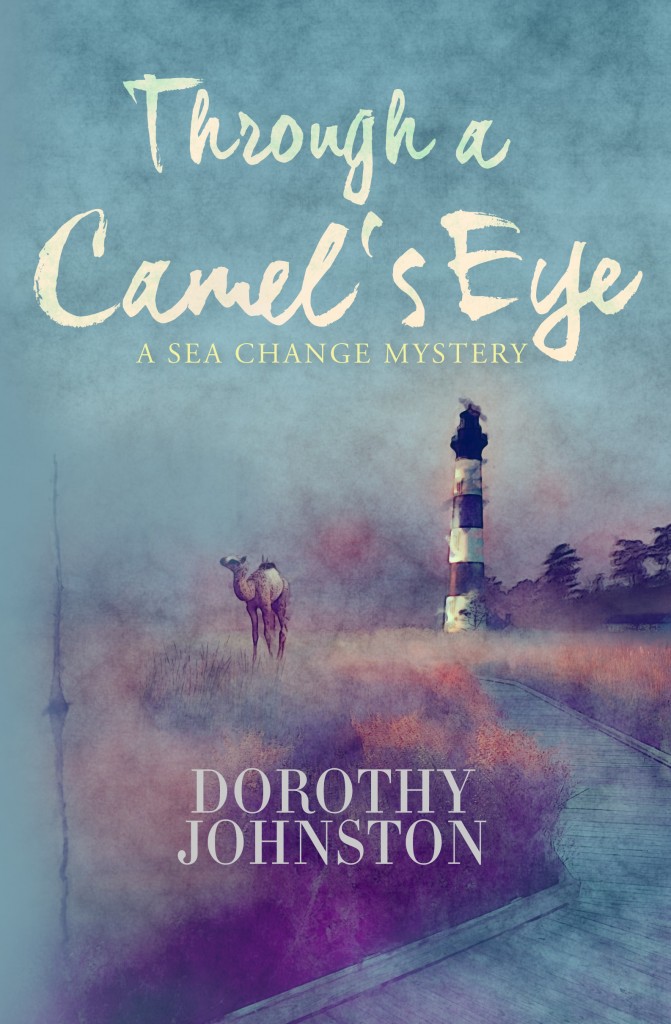
- Dorothy Johnston: the Sandra Mahoney novels and the Sea-Change mysteries (my review of Through a camel’s eye)
- Dermal McTiernan: Cormac Reilly novels (my Meet the Author post)
- Angela Savage: the Jayne Keeney novels (my review of The dying beach)
- Peter Temple: the Jack Irish and the Broken Shore novels (my review of Truth)
- Emma Viskic: the Caleb Zelic novels (my review of Resurrection Bay)
I have also read some Australian stand-alone crime – Emily O’Grady’s The yellow house and Emily Maguire’s An isolated incident, being examples. These are more likely to be promoted as “literary crime” as against “genre crime”, though the distinction is loose and not necessarily helpful.
Anyhow, here are some ideas on the subject…
On series
My non-preference for series is based on a few things, the main one being that I read to hear different voices in different settings about different people, places and ideas. Series novels tend to be set in the same place and milieu, with some continuing characters. Another reason is that I like to be challenged by different approaches to story-telling a story, but series novels tend to follow a formula. It might be a good formula, the writing and characterisation might be great, but it risks becoming familiar rather than challenging or exciting.
These reasons relate in fact to what the Kill Zone named as the single biggest advantage to a series, for both writer and reader. Series, they say, provide “comfort food for the imagination”. However, they also recognise the risk that series can become formulaic.
Another issue for me is the amount of backstory that novels in series tend to include. I guess that’s for readers who start a series in the middle, but if you have read the previous novels, it can be irritating. The Kill Zone suggests that this backstory aspect is a challenge for writers too: “How much backstory does the author include in subsequent books without boring the dedicated series fan or confusing the mid-series pick-up reader?” Good question. The Career Authors site looks at it this way: “You want to make sure,” it says, “that each series title is a potential standalone, so that you can tell readers you don’t have to read my books in order!”
British crime writer Carol Wyer writes about the work involved in writing a series. She says:
You’ll need to know your characters inside out, especially those who will appear in each book, and you must continue their personal stories, weaving them in between each storyline and… you need a theme, one that permeates each book and links them all. It must be something that hooks your readers, so they will want to read the next book, maybe another overriding storyline or simply reader investment in each of your main characters.
She has “notebooks and manilla files” for every character, recording their likes and dislikes, how they pronounce things, and so on. The Career Authors site also describes in some detail what writing a series involves for an author. You can’t kill the main character off, for example!
Still, says Wyer, “the rewards are huge” because authors are usually bereft when they end a book and have to “say goodbye to the characters”. With a series they don’t have to!
On standalone
I’ve already implied why I like standalone novels. The Kill Zone, looking at it particularly from the series author’s point of view, says that “the advantage of writing a standalone … is it can bring on a breath of fresh air for you and the reader”. A standalone, that is, lets a writer explore or experiment with new approaches, techniques, subjects, and it lets the reader see new talents in a loved writer. However, the Kill Zone warns writers to not stray so far from their norm that their fans won’t recognise them.
On a Kindle discussion board, I found the warning that “standalone genre novels can be harder to sell”.
Happy mediums
Series vs Standalone looks like an either-or situation, but, is there a happy medium? Well, yes, there is. One is the approach that Shelley Burr took in Ripper. It is set in a different location, and has a different main protagonist, but the protagonist from her first novel plays a subsidiary investigating role from another location. The Kill Zone, in fact, suggests something like this when it recommends that authors could “touch on something” in their new book that had “appeared in a previous series”.
The other idea, one that has a foot firmly planted in both camps is the “trilogy”. While she didn’t frame it in terms of this debate, Dervla McTiernan, in the meet-the-author event I attended, said about writing her Cormac Reilly trilogy, that she didn’t want to write a long procedural series, because they tend to be episodic without overall narrative arcs. She wanted to challenge her character Cormac; she wanted him to have a narrative arc which would see him changed by the end. That said, she did admit that Cormac might re-appear some time in the future!
Some sources
I found a few discussions on the internet that made some good points regarding the series vs stand-alone debate. The main ones were the Kill Zone blog (a joint blog), Carol Wyer, and Career Authors.
I’d love to hear your thoughts, whether you are author or reader. Do you prefer one or the other, or don’t you care? Over to you …
 Whispering Gums
I read/listen to a lot of crime, though I don’t often review it. I think I like series. I enjoyed McTiernan and Viskic, loved Temple’s Jack Irish (and his Melbourne).
Ian Rankin’s Rebus is probably my favourite foreigner. But it is always a pleasure in picking up whatever the library has on a given day to come across a detective I’ve met before (though preferably not the formulaic American pathologists etc).
I can imagine Bill that if you listen to a lot of books while driving series would work very well, the way I’m happy to enjoy television series – comfort food for the imagination. After all, when you are driving you should not, I presume, be listening to something that takes too much of your attention?
I’ve never read a Rebus, but I did watch the TV series! Same with Jack Irish.
I have enjoyed the Bones books about the forensic pathologist because that author actually did the job, and her insight is incredible. That being said, her novellas are much stronger than the full-length novels, which tend to include a subplot that may as well be a different book.
Sue, all the Valdemar fantasy books I read tend to come in trilogies, which leaves space for characters to show up again and say hello. However, since all the main characters basically did the same journey, it could definitely be repetitive.
Thanks for all this Melanie … interesting point re the trilogies. I guess like any form of writing, there’s not guarantee in any approach that the author will pull it off, is there.
At one stage of my life when I was very miserable, around thirty years ago, I found myself reading all of Patricia Cornwell’s Kay Scarpetta novels. (Cornwell is an American crime writer, and her central character is a female medical examiner). I would go to the local 24-hour service station in the middle of the night to buy the next book, knowing it would help to get me through the night. I think the reason people like reading series is the comforting familiarity and (partial) predictability they offer (a bit like watching soap operas). At the time I wasn’t looking for literary artistry, just for a good yarn that required little effort on my part.
Thanks Teresa, that “comfort” factor is probably the main draw card of series I expect. You and Bill make the point, I think, that series can be good for certain purposes – for times when easy reading is what you need or is the most appropriate. Those times can be mental (depression or misery, exhaustion, just needing a mental break) or physical (like driving or other tasks for which you can’t have your attention completely distracted.)
Deciding to read a series a not is very much a mood thing for me. I’m not too keen on long drawn ones where one has to read each entry to enjoy the next but duologies or trilogies are ok sometimes. With crime fic may be ones where there are looser connections are better. I do enjoy books which not necessarily series but tell one the stories of some other characters or minor ones while we get updates on major characters from the prior book like Eva Rice’s The Lost Art of Keeping Secrets and The Misinterpretation of Tara Jupp.
Thanks for all this Mallika. I understand the mood thing.
The situation you describe liking reminds me a bit of connected short stories, but in novel form. I could enjoy that.
The only author I recognise is Peter Temple (thanks to his early Miles Franklin nomination); I’m sure if I were to make a similar list of Canadian authors, they would feel very prominent in this context and like reading the telephone book from yours! Heheh (Which is not to say, of course, that I don’t want to read about your mystery writers!) I do love a series, especially when I’m feeling at loose ends. Earlier this year I gulped all the Alyssa Cole romance novels, which are light and silly and just what I needed. (They are also companion novels, so each considers another character, which is probably a kind of “series” that you would really enjoy too. appreciating multiple pov’s as you do.) With crime, i enjoy a standalone novel every bit as much when it’s by a trusted author; but I’ve been disappointed by some standalones, when they were whimsical choices, so I tend not to start there with an author I don’t already know/enjoy.
I know exactly what you mean, Marcie, re lists like this from not your own country. Perhaps for that reason I should have included Jane Harper as I think she may be more broadly known?
Your point about, essentially, the mood reading value of series – the comfort factor- is I guess partly why they are so popular. Companion novels – yes that would interest me more.
Interesting point re not starting with a standalone. I understand – it probably relates to that issue (the Kill Zone) that these novels can be the author playing with something different from what they’ve proven to work – and maybe the playing doesn’t always work!
Tsk tsk, ST ! – no mention of Jane Harper !! And I had almost just (lookit that ! – two side by side !) finished raving about her ..
“Series novels tend to be set in the same place and milieu”: if you call Australia the same place and milieu, then she does. Otherwise no she don’t.
I love series novels. That is, if I’ve fallen for the protagonist/s. My favourite British crime series, of which I’m involved at this moment in the most recent, The Camera Man, is by the extraordinary Peter Grainger and features a small, middle-aged ex-cop experimenting with private eye-ness. Riveting. BRILLIANT !
Everyone talks about Jane Harper MR, so I don’t need to do I? I did think of her, but I haven’t read her and don’t really plan to! Sorry. I did watch and enjoy The Dry though. However, perhaps I could have mentioned her in the my text!
I haven’t heard of Peter Grainger – sounds like a good one for a TV series?
Hope not: I loathe movies made from books I love – just look at the horrible shit the ABC made of Jack Irish !!
There’s only one crime series that I’ve stuck with and that’s by the Canadian author Louise Penny. She’s a good illustration of author who uses the principles you shared from Carol Wyer. Each title has its own theme but there was also a storyline that ran through the first eight books and increased in intensity as we went along.
The books almost all involve a small village in Quebec so we get to know the characters very well. However, that is also one of its weaknesses – Penny has introduced a very irritating “character” in the form of a duck. We are meant to find it amusing but in the last book I read, it was extremely tedious
Thanks for this detail Karen. I have friends who like Penny, but I hadn’t heard of the duck.
The duck drove me crazy in the most recent book in the series.
Oh dear … it sounds a bit weird really
It was probably charming when it was first introduced as a character but now the novelty has worn off
LOL It will surprise you that I can make a contribution to your series list: Australian author Malla Nunn who was born in Swaziland (which borders South Africa), has written the Detective Emmanuel Cooper series, beginning with A Beautiful Place to Die, in 2008. (There were four I think.)
The reason this series was so interesting to me was that she set the series during apartheid, exploring the moral ambiguities of working for law enforcement in an evil system.
Hmm… I replied to this on my phone but it doesn’t seem to have come through.
But, haha, I think I said, nothing much surprises me about readers! After all, we are supposed to be flexible aren’t we, even if we have strong preferences?!
I’ve heard of Malla Nunn, including from you I think, but haven’t read her. I will keep her in mind given your recommendation.
I think she’s wonderful:)
She recently wrote a YA novel too called Sugar Queens, and “I don’t read YA” but I read that one too.
Haha, there you go, flexible! I’m the same about YA.
I like the character development that often happens over a series, like in the Mary Russell series or the one by Elizabeth George that I enjoyed until the moment she blew it all up for readers with her book Why He Shot Her. Some mystery series novels, like TV shows, “jump the shark.”
sorry, it was What Came Before He Shot Her. I paraphrased, but then looked up the title.
Like Jeanne (above) I like the character development that happens over a series. You see that in Disher’s Hirsch series and also in Icelandic author Arnaldur Indriðason’s long-running Reykjavik series … I read every single one of them, in order of publication, between early 2000s and 2014 and loved following the bigger story arc of the lead character’s life (broken marriage, daughter who goes on to become a drug addict, son who suffers depression, finding new love etc etc)
BUT I also like standalones because you don’t have to commit to reading more than one book by the author.
Thank you for mentioning my Queenscliff series and including a cover image for ‘Through a Camel’s Eye’. If I engage with the main characters of a series, then I enjoy reading more about them, and I enjoy extending my knowledge of the settings too. One thing I did find with the Queenscliff books, which may seem surprising since they’re set in a small coastal town, that it’s easy to vary the subjects and locations and there’s a surprising amount to write about.
Outside of crime fiction, I think of only a few examples of novels that retain the same characters. Some of Trollope’s do. William Faulkner had his Snopeses, Sartorises, and McCaslins. Henry James let a character or two into more than one novel.
I don’t know who established the expectation that fictional detectives would keep on detecting. Was it Agatha Christie? In the US, Raymond Chandler took Philip Marlowe through quite a series of novels, from the 1930s through the 1950s. John D. McDonald may have been concerned to ensure that his fans would recognize the next Travis McGee mystery, for the titles were all of the form “The [adjective] [color] [noun]”–say, “The Puffy Black Eye”. Ross MacDonald, a more interesting novelist, wrote a series around the detective Lew Archer, I think superior to Chandler’s novels, and certainly to John D. McDonald’s. MacDonald’s and Chandler’s novels are set in and around Los Angeles.
The cultural historian Jacques Barzun was fond of Rex Stout’s Nero Wolfe mysteries. Nero Wolfe was said to live in Manhattan, and the few of the novels I read never got very far out of town. (Barzun taught at Columbia University, which also is in Manhattan.)
Oh thanks George. I know some of these American authors , chandler and stout, but not Ross MacDonald. (Though Lew Archer rings a bit of a bell.)
Good question about who came up with that expectation. I bet someone has written about this.
Good point, George, but lots of children’s and adolescent fiction has continuing characters, and on through to SF and Fantasy – Sookie Stackhouse is a favourite, though sadly the last was 2013. What was the earliest? Hornblower maybe.
Thanks Bill, fair points. I think it’s still interesting to think about where it started for crime? And of course, an early one would be Sherlock Holmes? But, I’ve gone to Wikipedia and in the English genre, it says this
“Detective fiction in the English-speaking world is considered to have begun in 1841 with the publication of Poe’s “The Murders in the Rue Morgue”, featuring “the first fictional detective, the eccentric and brilliant C. Auguste Dupin”. When the character first appeared, the word detective had not yet been used in English; however, the character’s name, “Dupin”, originated from the English word dupe or deception. Poe devised a “plot formula that’s been successful ever since, give or take a few shifting variables.” Poe followed with further Auguste Dupin tales: “The Mystery of Marie Rogêt” in 1842 and “The Purloined Letter” in 1844.”
So, Auguste Dupin, by Poe?
You probably won’t be surprised to learn that my few serial crime reads are what I call ‘cosy crime’ AND historical fiction. There’s the comfort factor, there’s the spending time with characters who almost feel like friends and then there’s the learning a little something about a time period before my time.
The only one I can think of that doesn’t fit that bill, is the Thursday Murder Club books by Richard Osman. With them it’s the gentle humour that keeps me invested.
Thanks Brona … the comfort factor seems to be the main reason readers like series it’s become clear. Which hasn’t surprised me.