Monday musings on Australian literature: Novelistic re-imaginings

Years ago I read a Guardian article titled “Top 10 novels inspired by Shakespeare”. Written by Sally O’Reilly, it started with “Shakespeare famously customised existing plots when writing his plays, and added to them an acute perception of human experience which gave them universal significance.” I thought, then, that it might be fun to share a few Australian novels that customise or are inspired by existing plots from well-known works. There are many, of course, because it is a popular thing to do, so I just plan to get the ball rolling from some of the books I’ve reviewed here, and then throw it to the rest of you to share those you’ve read, Australian and otherwise.
Janette Turner Hospital, Orpheus lost

When I started thinking about this topic, I immediately thought of relevant books I’ve read over the last couple of decades, like Jane Smiley’s One thousand acres (Shakespeare’s King Lear), Lloyd Jones’ Mr Pip (Dickens’ Great expectations), and, of course, Jean Rhys’ The wide Sargasso Sea (Charlotte Bronte’s Jane Eyre). None of these are Australian, however, but they might clue you into the challenge I had in titling this post, because “re-imaginings” come in many forms. Examples include retelling a story from a different perspective, setting the story in a different place and time, and providing prequels or sequels to a story. Some stick closely to the original story and characters while others are more in the “loosely inspired” or “loosely based on” category. The variations are endless.

Why do writers do this? There’s probably a different answer for every writer, but some reasons do seem to recur. One is the desire to tell a story from a different perspective, such as, for example, a feminist one to redress the problematic views of an earlier time. Another is to bring a story that the writer thinks has something important to say to a modern audience. We don’t always know exactly why writers decide to do this, but, like most readers, I like to have a guess.

And yet, I have to admit that I tend to be anxious about them. Do I know the original, and if not, should I read it first? What if I don’t want to read it first? Should I still read the re-imagining. If I do know the original, will I remember it well enough to understand the author’s intentions? More often than not, it works out fine, whether I’ve read the original or not – but I never learn my lesson, and next time, I go through it all again.

Mirandi Riwoe, The fish girl

Anyhow, here is a random few that I’ve reviewed on my blog. I’m listing them alphabetically by author. I did consider trying to categorise them – but decided that would take me down a rabbit-hole!

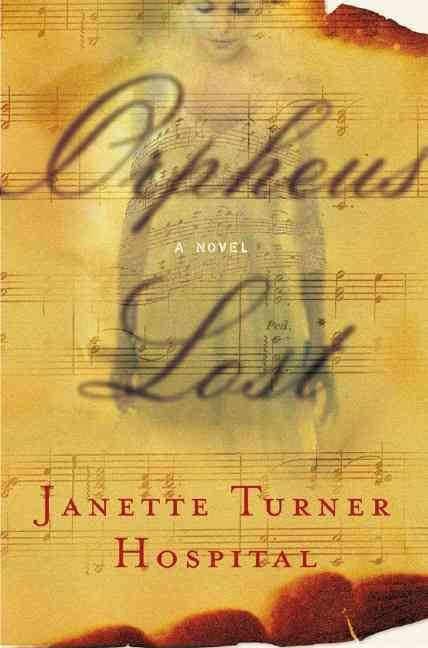
  • Janet Turner Hospital’s Orpheus lost (2007) (my review): reimagines the Orpheus story, with a feminist perspective, making the woman the would-be rescuer.
  • David Malouf’s Ransom (2009) (my review): re-visions the section of the Iliad in which Priam visits Achilles to ask for his son’s body back. Malouf said he wanted to suggest a new kind of human, non-heroic consciousness, by having Priam “do something extraordinary”.
  • Mirandi Riwoe’s The fish girl (2018) (my review): a “post-colonial response” to Somerset Maugham’s short story “The four Dutchmen”. She gives the girl a backstory, and explores it from the perspective of the colonised, particularly colonised young women. She shows that young women were pawns in both the hands of colonial powers and of their own men.
  • Roslyn Russell’s Maria returns: Barbados to Mansfield Park (2014) (my review): an imagined sequel to Jane Austen’s Mansfield Park, in which Russell redeems the banished adulteress Maria Bertram and “runs with” the hints regarding slavery in Austen’s novel.
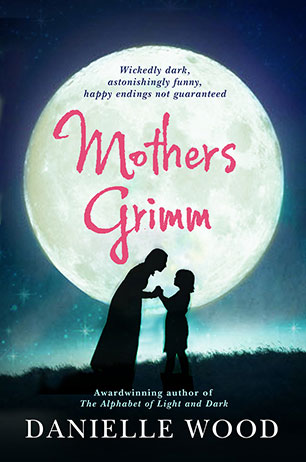
  • Danielle Wood’s Mothers Grimm (2014) (my review): re-visions some Grimm Brothers’ fairytales – “Rapunzel“, “Hansel and Gretel“, “Sleeping Beauty“, and “The Goose Girl“ – to reflect on and question contemporary motherhood.

Geraldine Brooks’ March (2006), which I read before blogging, is another well-known Australian example. She takes the absent father from Little women, Mr March, and creates story about him, focusing on his role in the Civil War.
Danielle Wood, Mothers Grimm, book cover

Not surprisingly, classics (in both senses of the words), myths and fairy-tales feature strongly in these re-imaginings because they provide a springboard that doesn’t have to be explained to the reader. The exception, in my list, is Riwoe’s The fish girl which takes a Somerset Maugham short story. Maugham is well-known, of course, but not necessarily the short story used here. We could, however, call it the exception that proves the rule, in that in the end these works do need to stand on their own, with the original work adding depth for those who know it, rather than being a prerequisite.

What do you think? And, have you read novelistic re-imaginings? Do you like them, and why or why not? We’d love to hear from you.
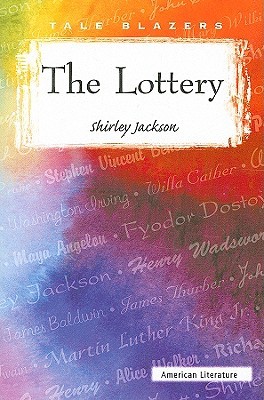
Six degrees of separation, FROM The lottery TO …

Another month has gone, and we in Canberra, New South Wales and Victoria are still in lockdown. However, with vaccinations proceeding apace, the end is in sight, we hope. On the plus side, it is spring, and the blossoms are out – and daylight savings starts this weekend which I love. I know that for some of you, though, it is autumn. I hope you are having a good one. Meanwhile, let’s get onto our Six Degrees of Separation meme, which, as most of you know, is run by Kate. Check her blog – booksaremyfavouriteandbest – to see how it works.

We start, of course, with the book chosen by Kate except that this month it is a short story, Shirley Jackson’s much studied, much anthologised “The lottery”. And, because it is a short story, I did manage to read it (my post).

My first link is an obvious one, another short story with a shocking ending, Kate Chopin’s “Désirèe’s baby” (my review). I’m a big Chopin fan, which started when I read her novel The awakening. Anyhow, our starting short story and this one make powerful statements about human cruelty, and both, coincidentally, start by describing lovely days!

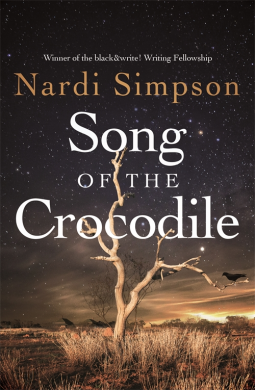
Chopin’s story involves a baby and racism. Another book in which a baby is unwittingly related to brutal, racist behaviour is Nardi Simpson’s Song of the crocodile (my review). It’s a novel by a First Nations Australian, so its ambit extends beyond Chopin’s, but it is this baby who grows up and forces this novel’s shocking denouement.

Book cover

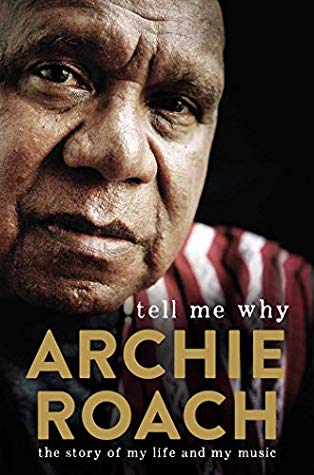
For my next link, I thought I’d move away from grimness, except I then realised that this next book also has racism at its core! However, my link is on the author’s career, because Nardi Simpson had an established singing career before she became a novelist. The author of the book I’m linking to is also a well-recognised First Nations singer, but his book is a memoir, Archie Roach’s Tell me why: The story of my life and my music (my review).

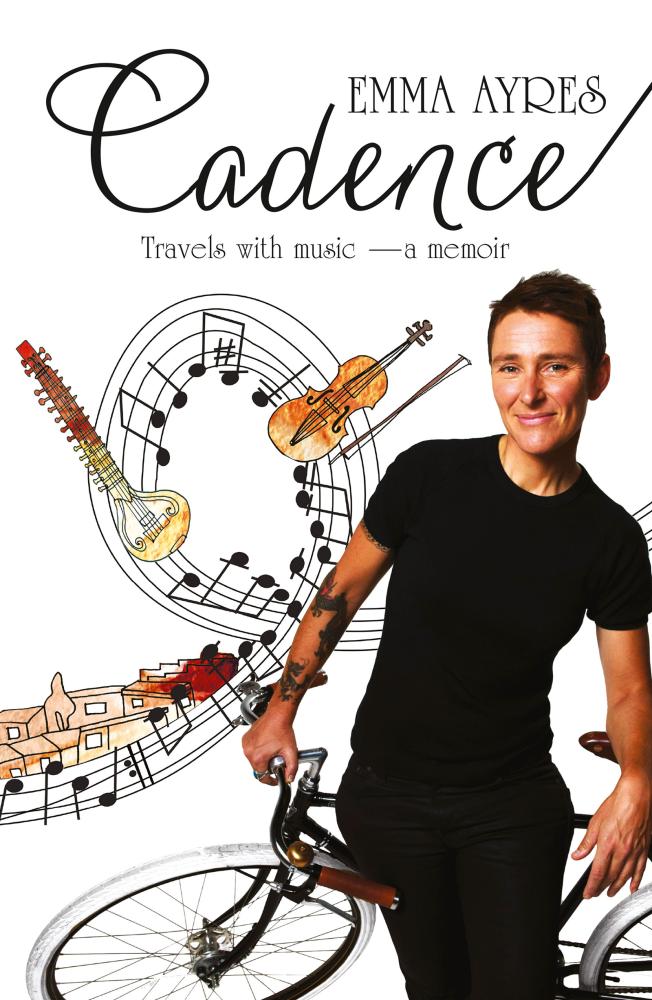
Emma Ayres, Cadence

I’m sticking with musical memoirs for my next link. It is a travel memoir by a musician who, bravely to my mind, cycled across Europe and Asia, from England to Hong Kong, with her violin. The book is Emma Ayres’ Cadence: Travels with music (my review).

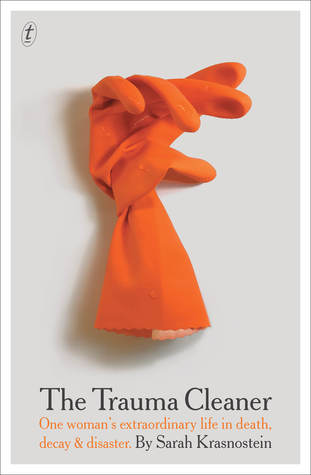
Sarah Krasnostein, The trauma cleaner

Most Australians know Emma Ayres, as she was a much-loved presenter some years ago on ABC Classic FM. Most of us also know that, after she left that job, she went to Kabul and soon after that transitioned to Eddie Ayres. He wrote about this process in his book Danger music. However, I haven’t read that, but I have read Sarah Krasnostein’s The trauma cleaner (my review), an award-winning biography of a transgender woman, Sandra Pankhurst.

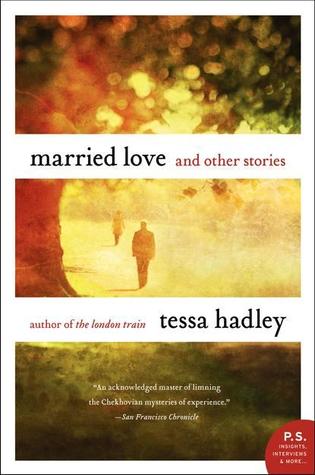
Now, what to end on? I think a short story might be apposite, and there is one that I read back in my first year of blogging that might fit the bill, though, back then, I gave less attention to my short story reviews than I do now. The story is Tessa Hadley’s “Friendly fire” (my post). I’m linking on the protagonists who are two middle-aged women cleaners in an industrial warehouse, Pam who owns the cleaning business and her friend Shelley who is helping her out for the day. The main focus is Shelley, and her thoughts about life and family, particularly about her son who is in the military in Afghanistan, which might give you a clue about the story’s title. I read it online, but it has been published in a collection called Married love, hence the cover I’ve used.

So, this month I have at least come full circle in terms of form. We have also travelled quite a bit, given one of the links is a a travel memoir, and we have, I’ve realised, met a few cleaners, as Nardi Simpson’s novel involves house cleaners and washerwomen. Perhaps, I’m giving myself a hint!

Now, the usual: Have you read “The lottery”? And, regardless, what would you link to it?

Shirley Jackson, The lottery (#Review)

As a lover of short stories, I have wanted to read Shirley Jackson’s “The lottery” for some time. With Kate selecting it as October’s Six Degrees starting work, now seemed the perfect time!

Shirley Jackson (1916-1965) pops up on blogosphere with some consistency, and is clearly well-regarded. Her career spanned two decades and, during that time, as the thorough Wikipedia article says, she wrote six novels, two memoirs, and more than 200 short stories. Her debut novel, The road through the wall, and “The lottery”, were both published in 1948, though she had had short stories published over the preceding decade.

It was “The lottery”, however, which established her reputation – particularly as a master of horror stories. Wikipedia says it resulted in over 300 letters from readers, many “outraged at its conjuring of a dark aspect of human nature”. In the San Francisco Chronicle of July 22, 1948, Jackson responded to persistent queries from her readers about her intentions:

“Explaining just what I had hoped the story to say is very difficult. I suppose I hoped, by setting a particularly brutal ancient rite in the present and in my own village, to shock the story’s readers with a graphic dramatization of the pointless violence and general inhumanity in their own lives.”

Many of you probably know the story, but, just in case, I’m not going to “spoil” it beyond that. I will, however, make a few comments.

I’ll start with Wikipedia’s succinct synopsis: it is about ‘a fictional small town which observes an annual rite known as “the lottery”, in which a member of the community is selected by chance’. It’s a great read, because the build-up is so good and the ending so powerful. If you were not forewarned, you’d have no idea you were reading a “horror” story, because there’s nothing Gothic about the setting, no eeriness, no overt build up of fear even. Instead, there’s the coming together of this village’s 300 people coming for this annual event. It’s summer, “the flowers were blossoming profusely and the grass was richly green”. Idyllic, in other words, or, so we are set up to see it is (or, could be?)

The children are described, then the men and women. It all seems benign, though there are tiny hints of something else, that you may not notice if you’re not expecting it. The emcee of “the lottery” is the ironically named Mr. Summers, who has the “time and energy to devote to civic [my emph] duties”. Many of the names in the story sound normal, but they also carry symbolic weight – Graves, Adams, Delacroix (pointedly, as it turns out, perverted to Dellacroy by the townspeople).

Anyhow, there is a long discussion of the “black box” that is used for the lottery, but, although it is “black”, it sounds quaint and unimportant. No great care is taken of it between lotteries. There’s a bit of camaraderie and joking between the townspeople; there’s confirmation of the formalities; but, slowly tension builds. Mr Summers and the first man to draw from the black box, grin at each other “humorlessly and nervously”. We are now half way through the story, and there’s nervousness among the attendees.

Then, plopped in here, is a little discussion about some villages – because this is not just this village’s tradition – having given up, or talking of giving up, the lottery. However, Old Man Warner (another interesting name), who has been through 77 lotteries, doesn’t approve of change. He sees “nothing but trouble in that”. When you know the end, you wonder what sort of person he is! Certainly not the archetypal dear old man, grandpa to everyone! Meanwhile, anxiety slowly builds, with another townsperson saying to her son, “I wish they’d hurry”.

The “winner”, when identified, doesn’t behave like a winner, which provides another dark hint, but which causes our aforementioned Old Man Warner to pronounce that “people ain’t the way they used to be”.

The final line of the story is shocking, but by then you have worked out what winning means, so it adds an extra layer to the story’s meaning (as you’d expect in a good short story).

You can find in Wikipedia, and elsewhere on the web, all sorts of critical reactions and theories about what it means, but I’d like to return to Jackson’s comment that she intended a “graphic dramatisation of the pointless violence and general inhumanity“. Why do the townspeople accept “the lottery”? What makes some villages give up the ritual and others not? Why do some in this town act with relish and others not? It recalls, for me, Christos Tsiolkas’ The slap. Yes, it’s a novel and a very different story, but I saw it as being fundamentally about the violence that seems to be be lying too near the surface of our so-called civilised society. I’ll leave it at that, but it makes me think, plus ça change.

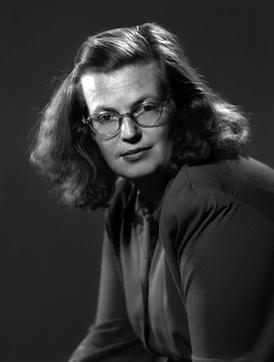
Image credit: Shirley Jackson, New York City. 1940s. Contact: photography@magnumphotos.com. Low resolution version from Wikipedia, used under Fair Use.

Shirley Jackson
“The lottery”
First published in The New Yorker, June 26, 1948

Avalailable online at The New Yorker.