Monday musings on Australian literature: Recovering Australia’s Indigenous languages (2)

2021 National NAIDOC logo.

Yesterday was the start of Lisa’s (ANZLitLovers) 2021 Indigenous Literature Week which coincides of course with NAIDOC Week, and, again, I’ve decided to contribute this week’s Monday Musings to the cause. The topic I’ve chosen, the reclamation of First Nations languages, was partly inspired by last week’s Monday Musings on Eliza Hamilton Duncan, but also follows up a post I wrote early last year on the topic.

According to academic Elizabeth Webby, Dunlop was the “first Australian poet to transcribe and translate Indigenous songs, and [w]as among the earliest to try to increase white readers’ awareness of Indigenous culture”. Dunlop also created vocabularies of the local language. Consequently, her work, like that of other colonials, is helping language reclamation projects around Australia. Of course, if settlers hadn’t stolen land and destroyed culture, and hadn’t actively suppressed language, in the first place, this arduous work would not be needed.

Each year NAIDOC week has a theme, and 2021’s is “Heal country, heal our nation” which, the website says, “calls for all of us to continue to seek greater protections for our lands, our waters, our sacred sites and our cultural heritage from exploitation, desecration, and destruction.” Given the significant role played by language in maintaining culture, a post on language reclamation is, I think, relevant to this theme.

‘The living voices of our past giving strength to our future’

This heading is the goal of a 2013-established organisation, First Languages Australia. They are working, they say, to “a future where Aboriginal language communities and Torres Strait Islander language communities have full command of their languages and can use them as much as they wish to.” This is just one organisation working on the goal.

Another is Living Languages, founded in 2004 under another name. They describe their purpose as “to support the sustainability of Indigenous languages and Indigenous peoples’ ownership of their language documentation and revitalisation.”

It is difficult to assess the magnitude of the challenge because so much is lost, but Living Languages says that some 250-400 languages were spoken across Australia, or up to 700 and 800 if you include language varieties and dialects. However, they say, Australia has been “identified as one of five language endangerment hotspots worldwide, with only around 13 languages being passed on to children today”.

As I wrote in my previous post, First Nations communities vary in their attitude to sharing language outside their communities. This statement by the Kaurna people on the University of Adelaide’s language courses webpage clearly states their position:

Kaurna language and culture is the property of the Kaurna community. Users of this site are urged to use the language with respect. This means making every effort to get the pronunciation, spelling and grammar right.

Kaurna people reserve the right to monitor the use of the language in public. Users of this site should consult with Kaurna people about use of the language in the public domain.

Random projects and activities

There’s no way I could document all the projects – big and small – that are happening around Australia, so I’m going to share three (adding to those I mentioned in last year’s post) which exemplify the sorts of things that are happening.

Eidsvold State School Wakka Wakka program

Located in Queensland’s North Burnett Region, this school has developed, says the Teach Queensland website, a “unique language program” that engages the whole school with the local community and in learning the local Aboriginal language, Wakka Wakka. The local First Nations people support this program:

After several years of planning and consultation with Traditional Owner groups, the Wakka Wakka Corporation and the community, Eidsvold State School encourages all students and staff to speak to each other in Wakka Wakka using short phrases.

Mawng Ngaralk language website

Mawng is spoken in the western part of Arnhem Land in the Northern Territory. The site tells us that Warruwi School runs a Mawng language program and supports the 2014-established Warruwi Language Centre which runs other Mawng language activities. Do check out this website, because it contains a dictionary and many, many videos in which local speakers share their knowledge in ways that both document vocabulary and pronunciation, and show how the language is used in song and dance.

Paper and Talk workshop

This was a two-week workshop held in 2019, led by Monash University, in collaboration with Living Languages and AIATSIS. Its aim was “to help revive languages from five Aboriginal communities”: Anaiwan (NSW), Wakka Wakka (QLD), Yorta Yorta (VIC), Ngunnawal (ACT) and Wergaia (VIC). The workshop gave language researchers from these communities “the opportunity and skills to access archives and transform them into usable language resources”. They were, for example, introduced to resources, like an 1800s surveyors’ notebook, in which language were documented by early settlers (like Dunlop).

What about irretrievably lost languages?

Maïa Ponsonnet, who researches Aboriginal languages, though is not Indigenous herself, makes the point that “while there are very good reasons to deplore the loss of small languages, assuming this loss condemns cultural identity may be unhelpful and reductive to those who have already shifted away from their heritage language”. In her article in The Conversation she argues that reclaiming languages is important, but that over-focus on it can be hurtful and, in some circumstances, politically damaging for those whose languages are lost. Language, her research is showing, is “plastic”. Post-colonial languages like Kriol can be “shaped by culture”, she writes. “Even when language is replaced, culture can continue”.

Thoughts, anyone?

Click here here to see all my previous ILW/NAIDOC Week-related Monday Musings.
Six degrees of separation, FROM Eats shoots and leaves TO …

Now we come to July, and we Aussies have one month of winter under our belt. Woo hoo! But, enough weather report, onto our Six Degrees of Separation meme. If you don’t know how it works, please check out meme host Kate’s blog – booksaremyfavouriteandbest.

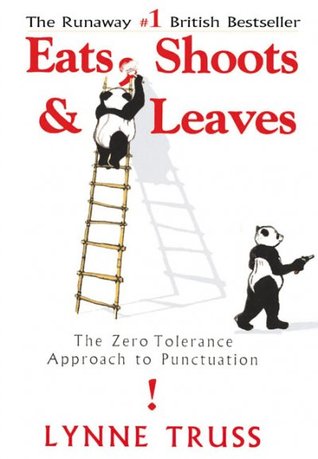
The first rule, as most of you know, is that Kate sets our starting book – and this month it’s a book I’ve read, albeit long before blogging. It’s Lynne Truss’s Eats shoots and leaves, whose subtitle, “The zero tolerance approach to punctuation”, tells you its subject.

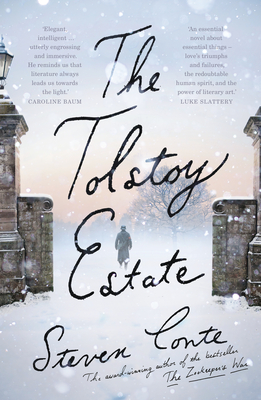
As always, I had many thoughts about where to go with this, but I couldn’t resist using Truss’s dedication, which is: “to the memory of the striking Bolshevik printers of St Petersburg who, in 1905, demanded to be paid the same rate for punctuation marks as for letters, and thereby directly precipitated the first Russian Revolution”. This gave me the opportunity to link to my latest review, Steven Conte’s The Tolstoy Estate (my review), sinceone of the main characters, Katerina, was a Bolshevik supporter of the Russian Revolutions.

Izzeldin Abuelaish, I shall not hate

I love humane people who rise above the enmities that surround them to do the right thing. Conte’s doctor, Paul Bauer, is a fictional one, but a real one is Dr Izzeldin Abulaish who, in his book, I shall not hate (my review) tells of the killing of three of his daughters by Israeli Defence Force shells in January 2009 during a 23-day attack on Gaza, and his decision to not hate but to work for harmony in Palestine and Israel.

Sara Dowse, As the lonely bly

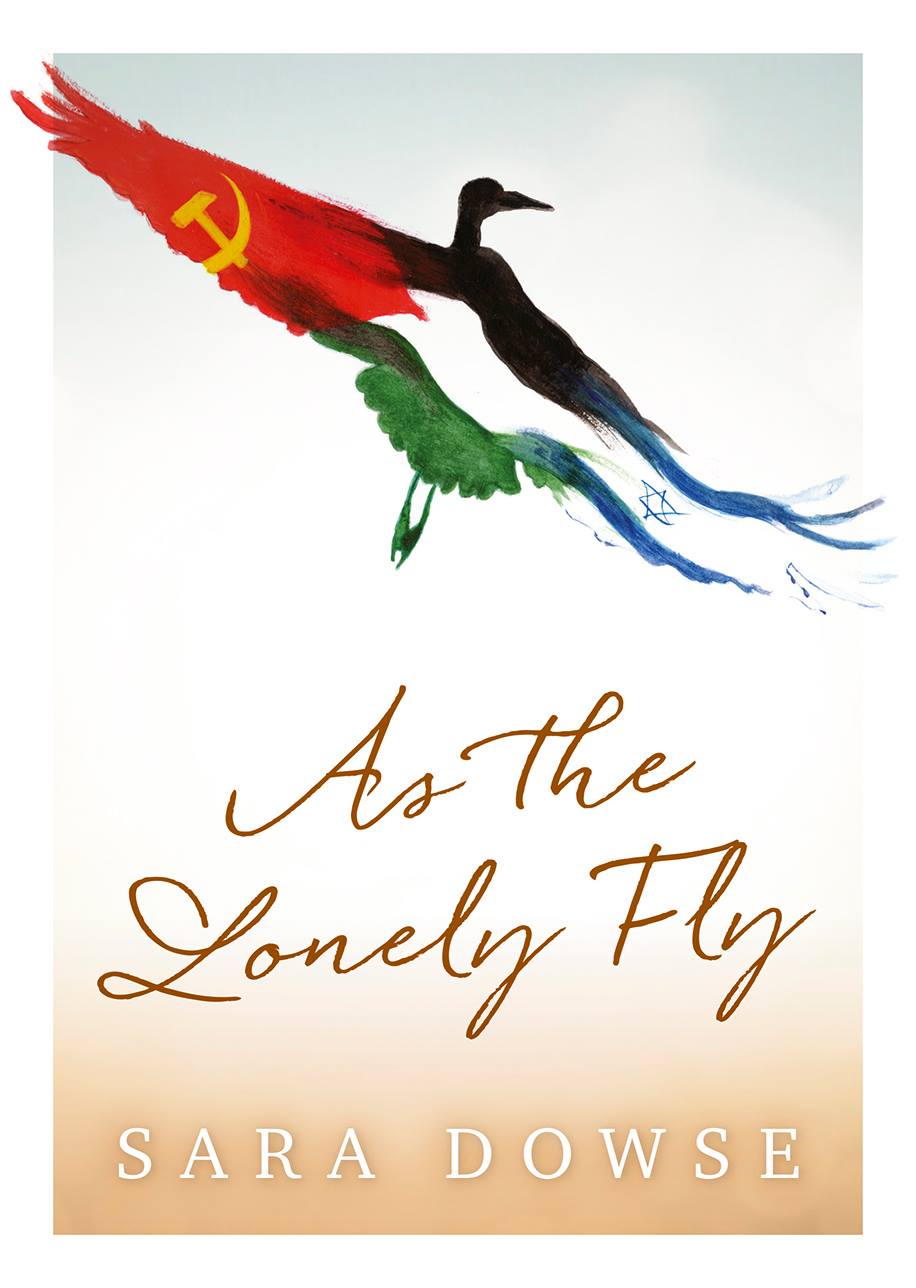
A novel which explores the twentieth century history of Israel and Palestine, looking at the early idealism and the later failures, and arguing for empathy and humanity, is Sara Dowse’s As the lonely fly (my review).

Sara Dowse Schemetime

Now I’m going to do something I rarely do in this meme, which is to link to another book by the same author, to a book that will move us away from politics to the arts. The book is Sara Dowse’s Schemetime (my review). It’s about an Australian filmmaker who goes to LA wanting to make a career in the film industry.

Book cover

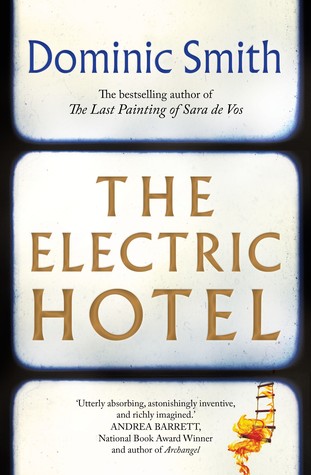
The natural link for this is Dominic Smith’s recent historical fiction, The electric hotel (my review). It is about the early decades of the film industry, when entrepreneurs were developing cinematograph technology and touting it around the world.

Cover for Amor Towles A gentleman in Moscow

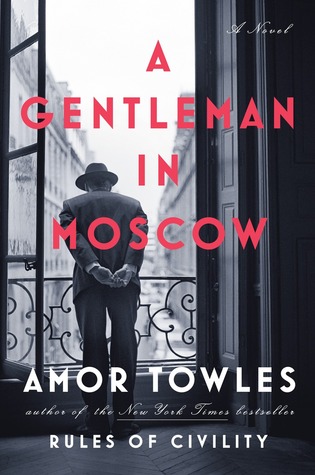
The main character in Smith’s book is silent film pioneer Claude Ballard, and when the novel opens he is an old man who as been living in LA’s Knickerbocker Hotel for over thirty years. Remind you of anything? It reminded me of Amor Towles A gentleman in Moscow (my review), which is about “pre-revolutionary” Count Rostov who lives (is, technically imprisoned) for decades in Moscow’s grand hotel, Metropol.

This doesn’t link naturally back to Lynne Truss, but it does to my first link The Tolstoy Estate! Yasnaya Polyana is not a grand hotel, but it is a real place used as a setting for a novel, and Bolshevik Katerina was originally an aristocrat like our count.

So, besides that little bit of circularity, where have we been? All over the place – Russia, Israel and Palestine, America, all over the world, and back to Russia. And, reversing my usual pattern, four of my selections are by men, and two by women (the same woman, actually.)

Now, the usual: Have you read Eats shoots and leaves? And, regardless, what would you link to?

Steven Conte, The Tolstoy Estate (#BookReview)

Steven Conte burst on the scene in 2008 when he won the inaugural Prime Minister’s Literary Award with his 2007-published debut novel, The zookeeper’s war. I always intended to read it but somehow it never happened. Jump to 2020, and Conte’s second novel, The Tolstoy Estate, was published. That’s a big gap, but what he’s produced is a well-researched, carefully-crafted, thoroughly absorbing novel.

What intrigues me more than this gap, however, is that both his novels are set during World War 2, and both deal with Germany in the war. The zookeeper’s war is about how the Berlin Zoo’s owner and his Australian wife managed to keep it going through the war. I wonder what it is about war and Germany that attracts Conte? Or, is it just coincidence?

So many paths to follow

The Tolstoy Estate’s plot is not complicated. Most of the story takes place over the six week period – November-December 1941 – during which a German army medical unit established and ran a hospital in Yasnaya Polyana, Tolstoy’s estate, near Tula, south of Moscow. Arriving at the estate, the Germans, including doctor Paul Bauer, meet the site’s curator, Katerina Trubetzkaya, who is, not surprisingly, hostile. A relationship develops between Paul and Katerina, against a backdrop of deteriorating conditions both on the war-front and in the unit, as its commanding officer Metz’s behaviour becomes increasingly erratic.

Sounds straightforward enough? Yes, but as one of my reading group members said, the novel has so many paths to follow, so many ideas to think about, that it’s impossible to follow them all. I agree, so, here, I will focus on just a couple of them.

I’ll start, however, with a few comments about the style and structure. The novel is primarily told in third person through the perspective of Paul, so our understanding of what happens, our assessment of the characters and their relationships, come through his thoughts and feelings. Fortunately, he is quickly established as a humane, considered person, so we can trust him, as much as we can trust anyone.

SORT OF SPOILER (though not the ending)

Half-way through the novel we jump to 1967, and a letter from Katerina to Paul. This introduces a second chronology which covers nearly a decade from then. Most of it, until the last chapter, is conveyed though a few letters between the two, interspersed with the main wartime narrative.

Why does Conte do this? This is the question I always ask when an author plays with their narrative structure like this. My usual thought is that the author wants to de-emphasise the plot to encourage us to think about something else, but then the question is, what? I suspect that this is partly the case here, and I’ll talk about the “what” soon. Regardless of the “what”, however, the impact of revealing that Katerina and Paul have survived the war, is to slow us down. It encourages us to focus on the development of their relationship against the backdrop of this cruel war, rather than rushing to turn the pages to see what happens next.

As for the paths, the “whats”, there are many. The Tolstoy Estate is about war of course. The history part of this novel is true, in that Tolstoy’s estate was indeed occupied by the Germans for a military hospital, so there is that. And, there’s the exploration, through our two protagonists, of two unappealing regimes, Nazism and Stalinism. I could write more about the nuances of that, but I won’t. Then, there’s its evocation of how humans behave during war, of how some will and some won’t behave with humanity across the enemy divide. We see this in many war novels, so I won’t dwell on that, either, except to say that I liked Conte’s appreciation of the continuum of humanity’s behaviour from the worst to the best. One of the questions on Steven Conte’s website concerns whether we can forgive what we come to understand. I’ll leave that one with you too!

Love is an excellent motivator (Katerina)

Now, though, I want to turn to two paths that particularly interested me – love and literature. Let’s do love first. The Tolstoy Estate is a love story. Both our protagonists have lost their spouses, meaning both are currently free but have experienced love before. However, they are also, of course, technically, enemies, belonging to opposing regimes, both of which can be brutal to those who cross the line. This tests their love.

Love is not one-dimensional, as Conte knows, so he sets their love against other sorts of love, including master-race proponent Metz’s dutiful but ultimately sexless marriage because of the “physiological costs imposed by sexual congress”; the Soviet Government’s conservative, sexist attitude to romantic relationships, evidenced in its reaction to Katerina’s novel; a German officer’s homosexuality that brings about his demise; the bawdy conversations and behaviour of many soldiers. There’s also Bauer’s brief but pointed reference to the soldiers he treats:

Loves or is loved“, he thought constantly as he amputated, concerned less about the truth of the incantation than its usefulness to keeping him alert.

War and love, by definition, make strange bed-fellows. War heightens emotions of all sorts, and forces those who love to think seriously about it, as Paul and Katerina do. Paul’s bawdy but romantic colleague Molineux says that Paul and Katerina’s bond “transcends race, it transcends law”, and yet both Paul and Katerina are aware that the practicalities of love can spoil even a strong bond – which provides the perfect link to the literature path …

Writers document, great men do (Metz)

Contemplating the value and practice of literature underpins the novel, with Tolstoy’s War and peace, of course, providing the pivot. It links to the love path, because Paul and Katerina frequently consider Tolstoy’s evocation of love in the novel. In a letter to Katerina, Paul writes that War and peace reminded him

that love doesn’t always conquer but that, arguably, it’s better that way – that thwarted love is stronger, more enduring than the domesticated kind.

But, beyond love in Tolstoy, Conte’s characters also think about the value of literature. Again, here is Paul in a letter to Katerina, telling her that War and peace had restored his faith in

doing good in the world; because if, as Tolstoy argued, we are all specks in a vast world-historical drama, including those who think they’re in charge, it follows that everyone’s actions are potentially significant, that the humblest person can influence events as much as any general, emperor of tsar.

This counteracts Metz’s argument to Katerina early in the novel that

with his rifle our humblest “Landser” shapes the world in a way your Tolstoy never did.

The old “pen is mightier than the sword” discussion I suppose, but oh so engagingly told!

There are also discussions about the craft of writing – some of which reflect wryly on Conte’s interest, such as Katerina’s research focus being narratology.

But I will end with Katerina’s concern about the fading of the novel in the later 20th century:

Everything fades, I suppose, certainly everything made by human hands, and yet I can’t help feeling bereft to witness this diminution of the novel, which for all its inadequacies has trained us to see the world from others’ points of view. To borrow a Stalinist idiom, the novel is a machine, a noisy, violent thing whose product, oddly enough, is often human understanding, perhaps even a kind of love.

Love … and the novel. A good place to end my post on this compelling and intelligent novel.

Lisa (ANZLitLovers) also loved this novel.

Steven Conte
The Tolstoy Estate
Sydney: Fourth Estate, 2020
410pp.
ISBN: 9781460758823