A bit of a fun post this week that I hope will engage you, regardless of where you live or what you read. This post is a sort of companion to one I wrote back in 2017 on Memorable Australian characters. I’ve had this post in mind ever since then, but have kept putting it off because – well – how many truly memorable fictional families are there in Australian literature? I have a few which I’ll share below, but first I thought to whet your appetite with some non-Australian ones like, of course, Jane Austen’s Bennets and Louisa May Alcott’s March family.
What makes a memorable family? Is it the relationship between the members? Is it the liveliness or some other strong characteristic of certain members? Is it the family’s ability to rise above misfortune or tragedy? Is it the chemistry of the family as a whole? Or is it all in the writing?
So, here is my list, presented alphabetically by the family’s name …
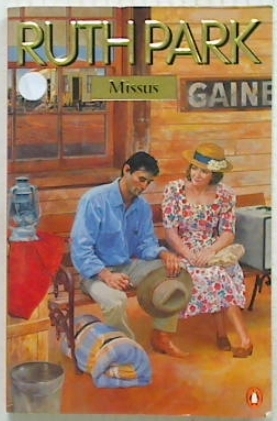
The Darcys: When I thought about this topic, Ruth Park’s Darcy family was uppermost in my mind. It comprises parents, daughters, a son-in-law and more as the books progress. I first read The harp in the south (1948) and its sequel Poor man’s orange (1949) in my mid-teens and I loved them because of the warmth of the family – they were real, they disagreed with each other, they struggled to make ends meet, but they fundamentally loved and supported each other. I also loved that nearly four decades later, in 1985, Ruth Park wrote a prequel, Missus (my review), in which she tells how the parents, Mumma and Hughie, met and got together. The thing about these books is that not only do they contain the story of an engaging family, but they tell an important story about early to mid-twentieth century Australia.
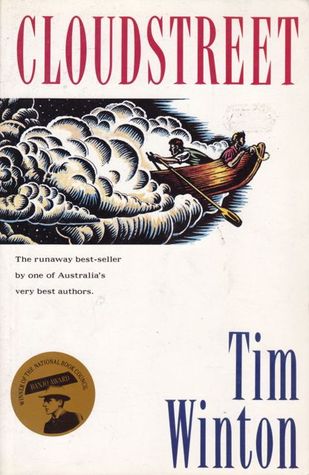
The Lambs and the Pickles: Winton’s two families, like the Darcys, have become classics of Australian literature – as is the house in which they live together, the titular Cloudstreet (1991). Park’s novels are very much about the Aussie battler, and so, in a way, is Cloudstreet, except that it’s a book of a different time and a different literary sensibility. Winton uses his families to confront us with our assumptions about who we are. Wikipedia quotes Australian picture-book author, Mem Fox, as saying “If you have not read Cloudstreet, your life is diminished . . . if you have not met these characters, this generous community, these tragedies, the humour. It is so wonderful.” Can’t say much better than that. For some, Cloudstreet is our GAN.
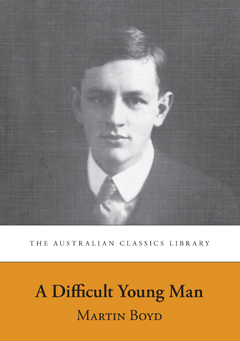
The Langtons: This family does not, I suspect, jump immediately into people’s minds, but Martin Boyd’s Langton Tetralogy, which started with The cardboard crown in 1952, and finished a decade later with When blackbirds sing (Lisa’s review), offers a fascinating insight into a very different sort of family to the Darcys, Lambs, and Pickles. The Langtons are well-to-do and are based on Boyd’s own, somewhat eccentric, intellectual and artistic family. They, the Langtons, think little of whizzing over to England when life is unsatisfying in Australia. I have read the second novel, A difficult young man (my review), and would happily read more. Wikipedia quotes academic Gillian Dooley on why these books may not as well-read today:
“Boyd’s subject matter is no doubt the principal reason for his neglect. By any standards, his prose is strong and luminous and his novels are beautifully crafted and immensely readable. But the late twentieth century had little patience with the scandals and vicissitudes of Anglo-Australian aristocratic families, with no apparent connections with convicts, sealers or whalers, or the indigenous people. Boyd was admittedly something of a good old-fashioned snob.”
Like Lisa, and I believe Dooley, I think Boyd’s novels are worth reading for their writing, their wit – and for their insights into a different place, time and people. I don’t agree with what seems to be a fairly common notion that the well-to-do are neither valid nor interesting to read about – particularly if the writing is of high calibre.
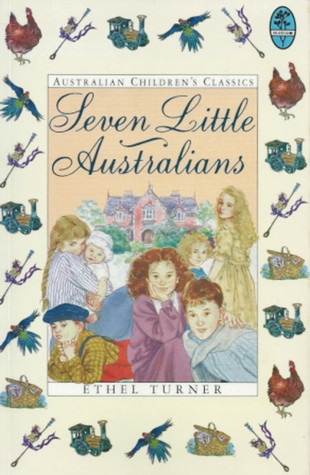
The Woolcots: If you don’t know who the Woolcots are, you are probably not Australian! They are Ethel Turner’s family in her Seven little Australians series. These are children’s books so the family focus here is on the seven children, their relationships with each other, and what they get up to. Apparently, according to Wikipedia, Seven little Australians, the first in the series which was published in 1894, was an instant hit in Australia and overseas. Here is some praise from Rockhampton’s Morning Bulletin (7 November 1894) which suggests why it was popular:
Because there is no preaching, or homilies on the evils of wrong-doing, children will read the book more readily, and they will be dullards who will escape the moral tone of it. Our authoress gives us nice descriptions of Australian scenery, all the more attractive that they are truthful and not over-coloured. Old hands, we dare-say, will pick holes in the book, but on the whole it is truthfully realistic.
So that’s my (very) little eclectic list. I know there are others but my aim is not to be comprehensive but to start a discussion about some of the “classic” families in literature and why we like them.
Now, over to you. Who are your most memorable families, Australian or otherwise, and why?



 Whispering Gums