Monday musings on Australian literature: Ten Year Anniversary, with a Giveaway

Today (well, yesterday actually, except yesterday wasn’t a Monday) marks the 10-year anniversary of my Monday Musings series. When I came up with the idea, and wrote the first post back on 9 August 2010, I couldn’t have imagined that I’d be here ten years later still blogging, let alone still posting weekly Monday Musings.

My aim, as I wrote in that first post, was very simple – to promote Australian literature.

Some highlights

I have published over 500 Monday Musings posts, across a wide variety of topics – all of course relating to Australian literature in some way.

Miles Franklin

Miles Franklin, c. 1940s (Presumed Public Domain, via Wikipedia)

My first post was titled, simply, Making a start, and in it I shared five random facts about Australian literature. The first real post – 5 to get you started – came the next week, and here I shared five novels that I thought might attract newbies to Australian literature. Would I choose different ones now? Probably, but I still think my list from 2010 isn’t bad.

In terms of number of all-time hits, my top five Monday Musings posts are:

Interesting, eh. These, however, are not the posts that have engendered the most comments. Those top five are:

I have tried to mix up the sorts of topics I’ve covered in Monday Musings, but there have have some threads, such as:

I said, in my first post, that Monday Musings would “explore in more depth all sorts of writers, works and issues relating to literature in Australia. It will be rather serendipitous.” And this is how it has panned out. I have written on themes and motifs, forms and genres, individual writers, awards, issues, and, dear to my heart, on Australia’s literary history (inspired mostly by Trove. What a wonder – and help – that has proved to be.)

Keeping this series going has been challenging at times – coming up with the topics, and finding the time to research and write them, hasn’t always been easy. Many of the posts haven’t received the time and thought they deserve, but I’ve hoped that getting topics on the (web)page has some value.

Overall, Monday Musings posts have faired very well in my comment stats, which confirms that many of you are big supporters of this series. For this, I am hugely grateful. I love that so many people read the posts, and that so many of these posts stimulate discussion. That is the best fun for a blogger – and I learn so much from you all too. I feel very lucky. So …

To mark this anniversary

As I did for my tenth blogiversary, I’d like to do two book giveaways – one to an Australian-based reader and another to a non-Australian-based one. The book I send to each winner will be a surprise, making this a bit of a lucky dip.

The rules. Express your interest in the comments below, noting whether your postal address is Australian or not. Although this is not mandatory for the giveaway, I’d love to know whether you have a favourite Monday Musings post or whether there’s a topic you’d like to see covered in a future Monday Musings (though I don’t promise to do it!)

The winners. Late on August 17 (in my AEST-zone), I’ll draw from each list using a random number generator, and will announce the winners in that night’s Monday Musings (that is, next week’s MM post). If you win, you will need to provide me with your mailing address (privately) as specified in the announcement post. If you don’t, I’ll redraw, as I want someone to win.

Meanwhile, a huge thanks to you all for reading my blog – and particularly for supporting Monday Musings over all these years. You make it worthwhile. I look forward to sharing more with you – for another ten years? Watch this space …


Melbourne Writers Festival 2020: Let me be brief

MWF logoI won’t get to many Melbourne Writers Festival events, because those of most interest to me clash with other commitments and responsibilities. This is a shame given this year’s extensive digital program would enable me to attend my first ever MWF. Never mind, there will be other years. Nonetheless, I was thrilled to find a session on short stories at a time I could attend, so attend I did.

Let me be brief (Sunday 9 August 5-6pm)

The session was moderated by Wheeler Centre Programming Manager Veronica Sullivan who knew the books well. She managed the 45 minutes or so tightly but with intelligence and warmth. The panel comprised three writers of recently published short story collections: Yumna Kassab (The house of Youssef), Jo Lennan (In the time of foxes), and Elizabeth Tan (Smart ovens for lonely people). I’m sorry to say that despite liking short stories, I haven’t read any of their books.

Sullivan started by asking each writer about her collection, targeting her questions to what she saw as significant aspects of those collections.

Introducing the writers

Yumna Kassab
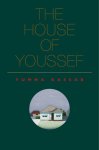
Book coverSullivan introduced The house of Youssef as comprising “spare and sharp” stories about a Lebanese community in Sydney, exploring “the way generations differences play out … the gaps … that make mutual understanding so challenging.” Kassab agreed her stories are about community and family. It’s unavoidable that there will be tensions between generations in any community, she said, but these are exacerbated in migrant communities because of the added layer of different cultural expectations. She’s become increasingly interested in this issue.

Sullivan wanted to know what drew her to these sorts of moments in the very short story form that she mostly uses. Kassab said it wasn’t her initial plan. She thought she’d need to be more dramatic, but found this form appropriate for exploring relationships. She’s always liked short stories. She said – provocatively perhaps – “the novel is a fleshier version of the short story”. She feels the form is well suited to delivering the message she wants to deliver – delivering a strong message is clearly important to her.

Jo Lennan
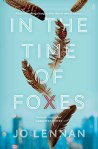
Book coverIntroducing Lennan’s collection, Sullivan described it as having an international outlook. It has a wide geographic spread, featuring characters taken out of their comfort zones. Lennan observed that mobility has become familiar over the last decades. It seems easy, but is in fact complicated, as she shows in her title story, “In the time of foxes”. It’s about a young filmmaker in London with a young toddler. Her mother is developing dementia back home, and, there’s a fox in the backyard to deal with. She has to face “giving up” her childhood home. Lennan’s point is that living abroad offers immense opportunities but can be accompanied by immense cost. The time has come for this character to pay that cost. (This cost, as many of my generation knows, is also paid by those left at home – particularly with COVID-19, for example, keeping grandparents away from their overseas grandchildren!)

Sullivan asked her to explain the fox motif which recurs through the collection – sometimes real, sometimes simply referenced. Lennan responded that foxes have spread throughout the world and have adapted to various environments, creating so many parallels with human mobility. They are also, she said, survivors and shapeshifters. However, she’s suspicious of themes in short story collections. Hmm, having just read Emily Paull’s Well-behaved women (my review), which does have a unifying idea, I don’t think overall themes are necessarily bad! Anyhow, she said that in her collection, the fox motif was “never a straight-jacket”.

Lennan also said that, despite this overall animal motif, the book is very much about human relationships, because they are the stuff of short fiction, of fiction in general. In her collection, relationships sometimes go disastrously, but in many stories there is a turn-up at the end. In one, for example, the protagonist doesn’t get what he wants but is changed, becoming a larger and better person at the end.

Elizabeth Tan

Book coverSullivan introduced Tan by noting that her stories, which include animal protagonists, unsettle readers expectations and assumptions. She asked how this approach allows her to explore perceptions. Tan spoke from personal experience when she observed that people can look at characters – like her cats and mermaids – and assume they don’t have interiority or inner life, that they are just a sidekick to another’s life. She likes exploring how these characters are unexpectedly resilient, and suggested they could mirror how she moves through life. As a young Asian woman, she often feels underestimated. But, she is not always sure if how she thinks the world is seeing her is how it actually is, but how do you know? She quoted Chimamanda Ngozi Adichie’s statement that “the problem with stereotypes is not that they are untrue, but that they are incomplete”.

Sullivan asked Tan about the surreal and humorous or satirical aspects of her stories, wondering what responses she was looking for. Tan said that she didn’t set out to be funny, but hoped people find her stories funny. Friendship, she said, can be defined by laughter, by empathy in sharing silly things and humour about them.

Choosing the short story form

Sullivan wanted – naturally, given the “theme” of the session – to discuss the short story form: what drew the writers to the form, how they attack its particularities, and how they consider aspects like structure and characterisation.

Many of Kassab’s stories are very short. Why, wondered Sullivan? Kassab said she didn’t really make a choice, that for her the voice of the character is the important thing. It’s this, and the idea, that dictates the structure, and word choices. She didn’t set out to write the collection. She likes shortness, believing that she can deliver a greater message that can get lost in larger work. She also said that it is easier to experiment – with technique, structure, voices – in shorter work. Such experimentation is harder to sustain in a novel.

Lennan’s stories are longer and more disparate. They have a depth of characterisation, with a sense, said Sullivan, that they start before the story and continue after it. Lennan agreed with Kassab that short stories provide scope for experimentation. She said she “inevitably” writes longer short stories, which facilitates the deep characterisation that people want in a novel. It’s having her cake and eating it too, she said! She’d been working on a novel but realised that her best writing was in her WhatsApp chats with friends! Short stories are more immediate, and felt the right way to bring immediacy and freshness to her writing.

Tan is different because her first book was a novel. However, she agreed with Lennan that brevity offers freshness, and with Kassab about the flexibility possible with short stories. You can be more playful, she said. Sometimes she gets reader feedback wishing a story was longer, but she likes that you can explore a particular moment without having to build an entire world. She said that reality is fragmented, without a lovely shape. Short stories can capture fleeting moments. Tan suggested that the desire for longer stories is a desire for conclusiveness that life can’t offer. Sullivan concurred, suggesting that short stories leave a space for readers wanting more, for anticipation. I agree. Short stories frequently leave you wondering whether you’ve “got it”, but I think this is often the author inviting us to explore.

Sullivan asked the three what advice they’d give writers regarding writing short stories. Lennan said do both, novels and short stories in tandem, arguing that few visual artists work on one piece at a time. Kassab agreed, saying writers are creative people. Ideas change, and interests change, so try different things and be prepared to throw preferences out the window. Tan also agreed, saying you don’t have to choose. Rubik (on my TBR) was going to be short stories, but the same characters kept popping up.

Sullivan suggested that the idea of conforming to set forms comes from the publishing industry. There was some discussion about this, with a general feeling that the narrow definitions are breaking down. Kassab didn’t set out to write a short story collection. It just happened. She suggested that you create the work first and let the marketers try to categorise it! There was also discussion about contemporary attention spans versus that of older generations, and that short stories might better suit the more fragmented way we consume media these days. I know this is often bandied about, but I’m not completely convinced. I’d have to see the research!

I liked Lennan’s response to this attention span argument. She proposed that in some ways they ask more of a reader. Readers have to keep reinvesting in characters, from story to story. The writer has a responsibility to make it a worthy transition for for the reader. The collection needs to work as a whole. She recognises that reading fiction right now – besides beach reads – is a big ask of people. You need to think about what you want for your reader – catharsis, to move them, to present a provocative twist, for example?

Naming favourites

The session ended with that favourite festival question about the writers’ current favourites.
Kassab: This is her year of South American writers. She’s loving Jorges (great thinker about literature and ideas) and Bolaño (great experimenter).

Lennan: Chekhov (his “clear-sighted and sympathetic portrayal of humanity”, which is timeless); Tatyana Tolstaya’s On the golden porch; and the Australians Tegan Bennett Daylight (Six bedrooms, my review) and Christos Tsiolkas (Merciless gods).

Tan: Tom Cho’s Look who’s morphing (TBR) and Julie Koh’s Portable curiosities. Both show you can write about anything you want, you can make stuff happen. Also Emily Paull’s Well-behaved women, and Wayne Marshall’s Shirl (which makes her laugh).

A great session, which offered, to me anyhow, some short story gold.

Lisa (ANZLitLovers) is also posting on the Festival, as is Theresa (Theresa Smith Writes).

Bill curates: Jane Austen and the information highway

Bill curates is an occasional series where I delve into Sue’s vast archive, stretching back to May 2009, and choose a post for us to revisit.

Jane Austen comes up over and over in Sue’s posts, and as I’m as fascinated by her as Sue is, that suits me fine. Here though we are not looking at Austen’s wonderful writing but mining her for evidence of the way information was disseminated at the beginning of the nineteenth century.
_______________________

My original post titled: “The information highway, Jane Austen style”

The Times 1785 (must be public domain!)

Did you know there was an information highway in Jane Austen’s day? Well, there was – and it was forged by roads and newspapers.  This is the springboard for Dr Gillian Russell‘s talk, Everything Open: Newspapers in Jane Austen’s Fiction and Letters, which she gave to the Canberra group of  Jane Austen Society of Australia this weekend. She argued that the increase in the publication and distribution of newspapers in the late eighteenth century contributed to the development of a new style of nation – and in support of this quoted Henry Tilney’s statement to Catherine Morland in Northanger Abbey:

Dear Miss Morland, consider the dreadful nature of the suspicions you have entertained. What are you judging from? … Does our education prepare us for such atrocities? … Could they be perpetrated without being known, in a country like this, where social and literary intercourse is on such a footing, where every man is surrounded by a neighbourhood of voluntary spies, and where roads and newspapers lay everything open? Dearest Miss Morland, what ideas have you been admitting?

Dr Russell argued that this provides evidence that newspapers – supported by the roads which made transport of the papers easier and faster (because this was also the era of the Turnpike trusts) – were at the centre of a new style of openness and transparency in Austen’s time.

But, to provide some context. Jane Austen was born in 1775 – and the 1770s, Russell said, was the beginning of the heyday of newspapers. In 1790, some 60 newspaper titles were published in England; by 1821 there were 135. Newspapers comprised just four pages – the first page was primarily advertisements, the second page reported political (and war) news, while the third and fourth pages contained miscellaneous news, often more domestic in nature. Formal access to these newspapers, though, was gender and class-based. Men – of the gentry or middle-class – comprised the majority of subscribers. However, she argued – pretty convincingly, using the writings of Jane Austen, William Cowperand Leigh Hunt – that once newspapers were in the home, they were readily available for women to read. She described how newspapers were passed on from those who could afford them to friends, neighbours, relations. And Austen reflects this in her novels: the Dashwood women, in Sense and sensibility, received their papers from their generous landlord, Sir John Middleton; and Mr Price, Fanny’s rather impoverished father in Mansfield Park, likewise received his papers secondhand from a neighbour, signalling his lower position in the social pecking order. The fact that the Musgrove men in Persuasion read the paper while the foppish Sir Walter Eliot didn’t conveys a lot about the sorts of men they were. Anyone who’s read Persuasion will know that Sir Walter Eliot is not the one we admire!

Russell’s argument is that, while most historians study newspapers in order to understand the politics of their times, these early newspapers epitomise what Samuel Johnson called “intelligence”, which he defined as the commerce of information – that is, the way information moved around society and the role information played in that society. Austen’s writing shows how newspapers brought people together through sharing information: they promulgated domestic/family information regarding births, deaths, marriages, elopements and such, and, during the Napoleonic wars, they published naval information of critical interest to families at home such as who was promoted to what rank, who was on what ship and where the ships were. By publishing information of mainly domestic interest, newspapers validated families’ position in society. Mrs Bennet’s concern, in Pride and prejudice, about the inadequate reporting of Lydia’s marriage, for example, indicates her recognition of the importance of such reporting to establishing (or reflecting) the family’s social standing. Through this process, Russell said, newspapers played a significant role in nation-building, particularly in establishing the middling order as a bigger “player” in the life of the nation.

And, just as we have today, there was a complex information infrastructure in place to support this “commerce of information”. Papers were read by men in clubs, taverns and coffee houses. They were moved quickly from city to country via the roads and complex networks of tradespeople (one rural subscriber for example picked up his paper from the butcher). Reading rooms were an important feature of resort towns (a bit, perhaps, like the Internet Cafes of today?)

In other words, during Austen’s time newspapers became a more central part of the daily lives of the middle classes and the gentry. Papers were major bearers of domestic news and in this way, argued Russell, mirrored what Jane Austen’s novels did – that is, they conveyed information about the way the world worked and in so doing demonstrated that all forms of information exchange (domestic and political) had a public meaning. In this new world, as Henry Tilney said, everything was laid open, transparent.  Except, and here’s the rub, men were still the gatekeepers…

____________________

Bill’s choice this time brought me up with a start. When I wrote this in 2009, newspapers were still, if I remember correctly, significant sources of news for most news-hungry people. But, the last 11 years have seen that landscape change considerably. For my parents, the newspaper was critical for keeping up with personal information like births, deaths and marriages. Reading such news would result in letters or phone calls of congratulation or condolence. What is happening to this information? Does anyone care anymore? And, what about those legally required public notices?

What would Jane make of today’s information highway? And, more to the point, what do YOU make of it? 

Emily Paull, Well-behaved women (#BookReview)

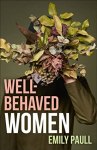
Book coverWell-behaved women is a debut collection of short stories by Western Australian writer Emily Paull. It is one of those collections that has a unique title, and what a perfect – and teasing – title it is for a collection of stories focused on women.
It has, you won’t be surprised to hear, the usual mothers, grandmothers, sisters and wives, but there are also teachers and students, writers, a step-father and step-daughter, and a vagrant woman. They span all ages. Most of the stories are told first person, with a few third person ones, and in nearly all the narrator or protagonist is, of course, female.

The collection starts with a bang, with a story described on the back page, so I’m not spoiling it, as “a world champion free-diver disappears during routine training” (“The sea also waits”). It’s the ideal opener because it’s about a woman who has chosen a dangerous sport because it’s – dangerous. She’s a woman whose “devil-may-care coastal ways” seem to disgust seemingly better behaved women with their painted nails and carefully tanned skin. It sets up the collection well as one likely to explore the nuances of women’s lives and the consequences of their decisions – oops, behaviour.

And so, from this first story on, Paull interrogates women’s lives from diverse angles. The stories read, mostly, like lovely little slices of life rather than as dramatic stories with twists. I like these sorts of stories, provided they ring true to life, because I’m curious about the choices people make. Paull has probably pored over these stories, honing them to the essential, but what we see is writing that looks easy. It flows well, and the stories show rather than tell, leaving readers to draw their conclusions. There’s nothing particularly inventive about the style or structure. Paull uses foreshadowing and flashbacks, traditionally, but judicially, to move her narratives along. The end result is a collection of accessible, well-crafted stories about relatable characters in, mostly, Western Australian settings.

The second story, “Miss Lovegrove”, has a young female drama student talking about her teacher. This teacher feels the need to tell her students the realities of life – “you will most likely never be on television at all during your careers, which will be short” – and she teaches our narrator a very cruel lesson. She is certainly not a well-behaved woman. Is she brutal? (Yes.) Is she bitter? (Probably.) Is she doing her young student a favour as she intimates? (We need to decide.) Fortunately, the next story, “Crying in public”, is gentler. It’s about the first real heart-break and a grandmother’s wisdom. Unlike “Miss Lovegrove”, Grandma wants to nurture her charge through the pain of the real world. This idea neatly links the two stories. There is, in fact, careful crafting in the order of the stories, with subtle links connecting one story to the next. I enjoyed identifying what I thought were the links!

Anyhow, other stories tell of friends found and lost, of coming out, of grief. In some, the stories could be any of us – an old high school flame returning to see if she can recover a past love (“Down south”), a sister grieving over her terminally ill sister (“Sister, madly, deeply”), a young woman discombobulated by her grandparents’ death (“Nana’s house”), a woman trying to fit the the image of the perfect wife (“The settlement”). But some are a little more dramatic, such as that about a woman whose backyard is found to hold a human skeleton (“From under the ground”), or the warm-hearted story about a vagrant woman caught in a bushfire (“The things we rescued”), or the tragic coming out story (“Picnic at Green’s Pool”).

What I most liked about the stories – even those that were more dramatic in flavour – is that the people are believable. Their emotions and reactions, in the main, are those of “normal”, flawed human beings. They make mistakes, like the young woman who leads on a colleague she’s not really interested in (“Nana’s house). They eat too much or too little, in a struggle to be themselves (“Dora”). And so on. You could see this as a feminist book. The title certainly suggests there’s an element of this in Paull’s thinking – but the book is not stridently so. The title is more wry, than barbed.

While most of the stories are average short story length, one, “Font de Gracia”, is a little longer. Its premise is a rather typical teacher-student affair, but it is well handled and resolved, without didacticism. It has some lovely writing, such as this description of mother-daughter tension:

Joana snatched up her bag without breaking eye contact with her mother. Their anger was like the pull between magnets.

It’s hard to pick favourites, but I did like the last two. “Versions of herself” is about a prickly 90-year-old in a retirement village – no, not in aged care or a nursing home, but independently living in a retirement village. It’s one of the broken-heart stories. Shirley Carruthers is not the most likeable woman around, but Paull, as she does with all her characters, encourages us to see and feel beneath the surface, to understand the whys. The point for me is that we don’t have to like everyone, but we can be kind.

The final story, “The woman at the Writers Festival”, concludes the collection beautifully, with a cheeky exploration of the writing life – particularly its challenges for women – and it does have a twist.

Well-behaved women, then, is a tight, engaging collection of stories about ordinary women, and the messiness of life. Rather than offer answers, it challenges readers to think about these messes, and consider what could be done to tidy them up a bit – next time around. Another good read from the people at Margaret River Press.

Challenge logoEmily Paull
Well-behaved women
Withcliffe: Margaret River Press, 2019
242pp.
ISBN: 9780648652113

(Review copy courtesy Margaret River Press)

Monday musings on Australian literature: Supermarket mini-collectables

Have you ever got caught up in those knicky-knacky promotional plastic toy campaigns that supermarkets often run to encourage you to buy at their store? You know, as in “spend $x and get a free y” with, usually, a new one every week for z weeks, encouraging you to get them all. I’m sure you know the deal …

Well, I was rather interested to read in various outlets recently, including Books & Publishing and news.com.au, that

Stikeez are gone and now Coles have announced their new range of mini collectables will be 24 pocket-sized books from the famous Treehouse series.

Now, that’s a much better idea.

Book coverIf you are not Australian, and not parents, grandparents or teachers of young children, you may not know about “the famous Treehouse series”. It started with the book, The 13-storey treehouse, written by Andy Griffiths and illustrated by Terry Denton. This book won the Australian Book Industry Association Awards (ABIA) Book of the Year for Older Children in 2012. Since then, this pair has produced 8 more books in the series, each book adding another 13 storeys to the treehouse, so The 26-storey treehouse (2012), The 39-story treehouse (2013), up to last year’s, or 2019’s, The 117-storey treehouse.

According to news.com.au, Griffiths and Denton “have collaborated with Coles” to produce a special set of 24 pocket-sized books for “the supermarket giant’s latest collectable campaign”. Griffiths says of this special “little” series that many of them

… will feature favourite characters from over the years and give them a chance to really shine.

There will be a couple of feature tours, one through the treehouse, some new episodes, including an elephant on a bicycle which is a sneak peek of a character you will see later in the year when the 130-Storey Treehouse comes out.

Given the huge success of the series – more than 10 million copies sold in Australia, 80 children’s choice awards and 10 ABIA Awards – this collectables campaign would, you’d have to think, be a bit of a winner for Coles. Described as a “world-first collectable campaign”, it aims, said Coles CEO Lisa Ronson, “to encourage a lifelong love of books”.

Of course it’s hard not to be cynical, when you read things like:

We all remember the excitement that Little Shop [a previous mini-collectables campaign] created for customers of all ages and we really wanted to create that same level of excitement for reading – because we know that enjoying books on a regular basis leads to improved literacy skills, better educational outcomes and happier children.

But, you know, it is about Australian books, reading and literacy, so perhaps it’s a case of “the ends justifying the means”?

Coinciding with the launch of this new campaign Coles is also running a competition inviting Australian residents (aged 3 to 18) to create their own picture book. There will be prizes and it will be judged by Griffiths. Coles “will donate a book to the Indigenous Literacy Foundation” for every entry. This is not to be sneezed at, and is, hopefully, a case where the combination of financial and social justice goals can generate a positive outcome. Let’s hope it does.

Do you know The tree-house series? What do you think about this sort of marketing-focused initiative – a cynical ploy, or a genuine attempt to do good while increasing business? And, what about the creators? Is it a good thing for them?

Six degrees of separation, FROM How to do nothing TO …

I am so glad to see that two thirds of winter is officially over. It’s been a horrible year, for all of us really, so a bit of warmth and spring rebirth (here down under) would be very welcome, eh? Meanwhile, I’ll entertain myself with things like the Six Degrees of Separation meme.  If you don’t know this meme and how it works, please check out meme host Kate’s blog – booksaremyfavouriteandbest.

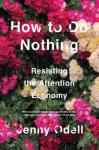
Book coverAugust’s starting book is yet another I haven’t read. Indeed, not only have I not read it, I’ve never heard of it or its author, which is not surprising because, as far as I can tell, it’s a sort of critique of how capitalist forces are driving us all more and more to perform, produce, to be forever doing something, or, as one GoodReads reviewer wrote, on “on how the attention economy and hustle culture is affecting our lives”. The book is Jennifer Odell’s How to do nothing: Resisting the attention economy.
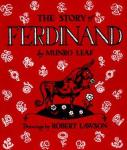
Book coverNow, I’m going to break with my usual practice and start with a book I’ve read but not reviewed on my blog, because this book is the. perfect. book. about. doing. nothing. What’s more, it was published in 1936, so this idea is not new, folks! The book is Munro Leaf’s now classic children’s book, The story of Ferdinand. Why don’t you take a moment to stop and smell the flowers before you read on!
Book cover

My next link is a bit of a leap, because it’s not about a bull, nor about doing nothing, and nor is it set in Spain, but it is about a BIG animal, a mammoth in fact. Yes, my next link is to my most recent review, Chris Flynn’s Mammoth (my review).

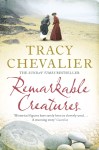
Tracy Chevalier, Remarkable creaturesTracy Chevalier’s Remarkable creatures (my review) is an obvious next link, because it is about fossils, albeit not narrated by fossils. However, it is historical fiction about the early nineteenth century fossil collector, Mary Anning who lived in Lyme. I didn’t love the book, but I must say that the story it told – the historical truth contained within it – has stayed with me.
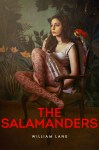
Book coverKeeping with the nature theme, and a coastal setting, I’m going to take us to  William Lane’s The salamanders (my review), part of which is set on the New South Wales coast. While this book is not about fossils, salamander fossils do date back to the Middle Jurassic period in England (and Kyrgyzstan), which is, of course, part of the broader Jurassic period to which Mary Anning’s finds belong.

David Mitchell, The thousand autumns of Jacob de PoetThe story of The salamanders is founded in an artist’s colony, and all the relationships and dysfunctions that such groups can generate. In a very loose link, I’m taking us to David Mitchell’s The thousand autumns of Jacob de Zoet (my review) which concerns a different sort of colony, this one a colony of traders and their slaves on Dejima Island, Nagasaki, Japan. The traders work for the Dutch East India Company, and, as you can imagine, relationships are challenging.

Amitav Ghosh, River of smokeAnother book which deals with European trading in the East Asian region – this time by Britain’s East India Company – is Amitav Ghosh’s River of smoke (my review), the second book in his Ibis trilogy. It is set mostly in Canton in the late 1830s, and explores the lead up to the first Opium War. Hmm, are we back to smelling flowers?

So, a much more travelled chain than usual this month, with visits all over the world, but particularly to  Spain, America, England, Japan and China – as well as Australia. Unusually, too, almost all of this month’s authors are men. What was I thinking?

Now the usual: Have you read How to do nothing? And, regardless, what would you link to?