It’s been nearly three weeks since my second COVID-19 post, because, after all, if there’s one thing you can say about living in these times, it’s that the days just roll one into the other with not a lot of differentiation. You have to work hard, sometimes, to remember just what day it is. At least, we Gums do. However, we haven’t been totally inactive, and I do have some things to share, so here goes …
First, a disappointing thing. As the lock-down continues, more and more events are being cancelled. We have now been notified that three concerts of our six-concert Musica Viva season have been cancelled, and two or is it three of our Canberra Theatre subscription package have also been cancelled. More of these may still be cancelled. Excitingly, however, one Canberra Theatre show, so far, has been able to be moved to later in the year. Woo hoo. Any win is cause for celebration!
I realise that if these cancellations are our biggest disappointments, we have nothing to complain about. I also realise that in being happy for our Chief Minister to be cautious about easing restrictions, I also have nothing to complain about. The lives of others are not so easy …
The lives of others
Like Tolstoy’s unhappy families, every family’s experience of COVID-19 is a bit different. My brother, for example, having been here helping with elder care for a month, had to go into two weeks’ quarantine upon his return to Hobart a fortnight ago. Holed up in a two-room suite – it could have been worse – in Wrest Point Motor Inn, he entertained the family with daily epistles. Those epistles will be donated to the local museum for future historians (remember that video conversation between Frank Bongiorno and Chris Wallace I shared in my last COVID-19 post?) Fortunately, Ian has many solitary interests and is not uncomfortable being alone, so he managed the quarantine as well as anyone. It was gratifying, however, to know that as well as friends and family checking in on him, the government and the Red Cross did too.
Another person experiencing COVID-19 a bit differently is my Californian friend, Carolyn, with whom I have been corresponding weekly since we left California in late 1993. Her personal situation, like ours, is not difficult, but she is a high school language teacher – and that has not been so easy. With the end of their school year in sight, there has been much uncertainty and confusion regarding teaching and assessment. What would the IB administrators do, for example? Should students be graded or just marked as pass or fail. How would that affect college enrolments? Minds changed as circumstances changed! The big problem is – and this might surprise you when I tell you she lives in Orange County – that her school does not serve a wealthy area. This means that a good proportion of her students do not have internet access at home. It also means that many students need to take on the care of younger siblings because their parents need to work. However, my friend, like many of us, has become a Zoom-pert, and is developing a range of teaching strategies to do the best for her students. For many teachers, this time has been one of intense work and emotions, as well as of demanding self-education. I admire them immensely.
These lives are nowhere near as tough as many are confronting, but they are just two different experiences I’ve been close to.
Literary and cultural stuff
First, some booklists. I know there are many, many out there but here are two that might interest:
 Pandemics: An essential reading list: I know some people don’t want to read gloom and doom books, but others of us are intrigued by what novelists have had to say. This list, sent to me by the above-named Carolyn, is an excellent one. Organised chronologically, it starts in England with Daniel Defoe’s A journal of the plague year (1722) and ends in Zambia with Namwali Sherpell’s The old drift (2019).
- Comfort books: For those wanting some “gentle reads for difficult times”, this book pile pic posted by Brisbane’s Avid Reader bookshop will provide a start!
And then, there’s this little piece, sent to me by Carolyn again, about Ernest Hemingway experiencing isolation! You will see that they tried their own socially distanced drink parties!
Then, a couple of online events/activities:
- Terror Australis Readers and Writers Festival – a festival based in the Huon area of Tasmania – has responded to the pandemic with a Facebook “event’ called Booklove Tuesdays. It occurs each Tuesday at 7pm on their Facebook page, and involves author chats (text and video), readings and giveaways. I popped into one a couple of weeks ago, in which Dorothy Johnston (see my reviews) took part. It was rather delightful.
- National Portrait Gallery’s The amazing face: The National Portrait Gallery released this week their course/program on the art of portraiture. It comprises 14 lessons/sessions, each based around a different portrait. The program is describes as follows: “How is a portrait created? What makes one great? How exactly does this genre of art convey character and personality? Learn about some inspiring Australians and discover how portraiture works through text, video and audio, alongside activities to boost your creativity and resourcefulness.” I’ve looked at the first one, featuring Howard Arkley’s portrait of Nick Cave. It’s clearly positioned to serve a range of interests, including teachers and students, those who’d like to do portraiture, and those interested in the portrait as an art form. Well worth a look if, like me, you like portraits.
As for me, my reading has been very slow – even slower than in “normal times”. This is disappointing, but such is life. However, my reading group is continuing to meet, this month via Zoom, having tried the more low-key WhatsApp last month. Being a thorough lot, we had two practices with Skype and one with Zoom before deciding that Zoom – despite its 40-minute limit for free accounts – was the way to go. The practices were worth it. All 12 attended our actual Zoom meeting, and everyone managed to have their microphones and video cameras working. Go team! We discussed Melissa Lucashenko’s Too much lip (my review), which, although universally liked, still generated an in-depth discussion that lasted over an hour. The only thing missing was the wine and cake!
Finally, there’s nothing like colourful plants to raise the spirits.


Meanwhile, as I’ve asked before, how are you faring?
 So, back in 1927 the Advocate took on this issue of supporting local writers. The article refers to the plebiscite, and says of the winning prose writer, Marcus Clarke:
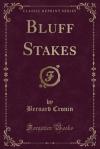 The Advocate also suggests Bernard Cronin, describing him as “amongst the leaders of Australian fiction”, and naming two of his popular works, Red Dawson and Salvage. I have devoted
 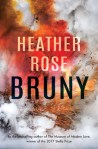 If The yield (
 Heather Rose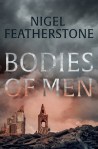
 The
The  Underneath this is the current Book of the Month, with a link to more information suited to reading groups, complete with discussion questions and “if you like this book…” suggestions. Check out
 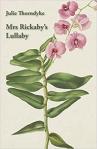 Quaint title, eh? I really didn’t know what to expect when I accepted this book for review, but accept I did because the publisher is a quality little press and because the author, Julie Thorndyke, although unknown to me, has a track record as a writer, particularly of tanka. Mrs Rickaby’s lullaby, however, is her first novel.
 Julie Thorndyke
 And the winner, from around 170 books submitted, is Jess Hill’s See what you made me do: Power, control and domestic abuse. It is the fourth non-fiction book to win the award in eight years, confirming yet again Stella’s aim to be broad in the forms it encompasses. The previous three were Vicki Laveau-Harvie’s The erratics (2019,
  Jess Hill’s winner’s speech was articulate, convincing, engaging and oh so passionate about her subject and the book. Commissioned by Aviva Tuffield, it was some four years or so in the making, and was clearly (and not surprisingly) a very demanding book to write. Although I’m interested in its subject, I had not necessarily planned to read the book, but now I feel I must!
 Bill King, King of the Outback: Tales from an off-road adventurer (2012): stories from the founder of AAT Kings tour company.
 These books range from the popular to the serious. I’ve only heard of a few of them, and only have a couple in my TBR pile, Paul Daley’s Canberra and Marcia Langton’s Welcome to country.
 Dear parents of primary age children! Monday April 6th at 4pm Australian EST its time for Heather Rose Reads. We’ll begin with the first book in the acclaimed children’s series I co-author under the pen name Angelica Banks. Book 1 is Finding Serendipity for children aged 8 – 12 (grades 3 -6). If you have primary school children this is my way of helping you have a break for a little while on Mondays, Wednesdays and Fridays. I’ll also post the readings on YouTube if you’re in a different time zone. See you and your children here on Facebook Live 4pm this Monday April 6th … it’s going to be fun.
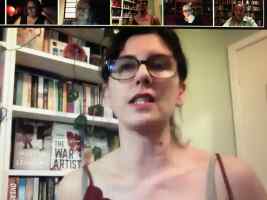
 Writing War: A Panel Discussion: Still upcoming – Monday 20 April – but I’m sharing it now in case any of you are interested in attending. It features Nigel Featherstone (whose
  Tara June Winch’s novel, The yield, follows her impressive – and David Unaipon award-winning – debut novel Swallow the air
  Whispering Gums