And still it continues, and by this I mean my unbroken record this year of not having read the Six Degrees of Separation meme starting book. Who is to blame for this parlous state of affairs? Not me, of course – haha – but our meme leader Kate! I forgive her, though, and direct you to her blog – booksaremyfavouriteandbest – for the meme’s rules. Fortunately, you can trust that I’ve read my selections in the chain.
 So, this month’s starting book is Will Eaves’ Murmur. Not only have I not read it, but I had never heard of it. It is apparently inspired by the life of the mathematician Alan Turing, who among other things was instrumentally involved in Britain’s cypher-breaking work at Bletchley Park during World War 2.
It’s a bit of a stretch, perhaps, but from here I’m going to link to Lesley Lebkowicz’s historical fiction verse novel, The Petrov poems (my review). It tells the story of the Petrovs, who were Russian spies operating in Canberra during the earlier years of the Cold War. Early in his career, Vladimir Petrov was a cypher clerk!
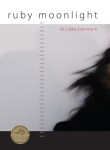 My next link moves to form, not content. It’s Ali Cobby Eckermann’s verse novel, Ruby Moonlight (my review), which is, in fact, another historical fiction work, though not based on “real people. It’s about an Aboriginal teenage girl, Ruby Moonlight, whose family is massacred by white settlers, and who, in her lonely wanderings, meets another lonely person, Miner Jack.
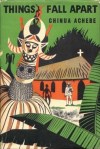
Ruby Moonlight’s subtitle is “a novel of the impact of colonisation in mid-north South Australia around 1880”. Another novel about the impact of colonisation, but this one set in Africa, is the modern classic, Chinua Achebe’s Things fall apart (my review). It’s rather different from Eckermann’s book, but it also offers a thoughtful rather than simplistic exploration of how colonialism can play out.
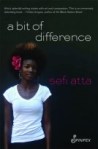 Chinua Achebe is Nigerian – though he wrote in English. Another Nigerian writer I’ve reviewed here, and who also writes in English, is Sefi Atta with her novel A bit of difference (my review). It is set in England, though, and its subject matter is very different. Its protagonist is an accountant at an international charitable foundation. Her job is to audit the organisations that receive its grants.
 Grants provide the link to my next novel, Toni Jordan’s chick lit novel, Fall girl (my review). It’s about a young woman con artist trying to extract grant money from a young man representing his wealthy family’s trust. (Though, as is the way of cons, all is not as it seems.)
 Now, if you are a reader who keeps an eye on the publishing environment, you’ve probably seen the discussions in recent years about book covers featuring women’s backs or headless women (of which Fall girl, in fact, has both). I’ve reviewed a couple of other novels featuring the backs of women, but I also have one featuring a man’s back, so rather than perpetuate anonymous women, I’m choosing the man! Hence, I give you Amor Towles’ A gentleman in Moscow (my review)!
I had fun with this challenge, partly because it took me a little more time than usual to get it going. However, I love that we’ve been to England, Australia, Nigeria and Russia. Four of my six writers are women – not unusual for my chain – and three are writers of colour, which pleases me.
Have you read Murmur? Would you recommend it, and, regardless, what would you link to?
 Whispering Gums