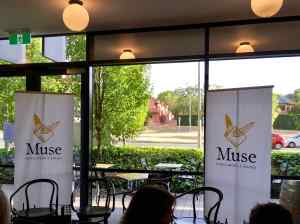
Festival Muse 2018: Turn me on

Muse Festival

Woo hoo, Muse, which is one of my favourite places in Canberra, is running its second Muse Festival this long weekend in Canberra. As last year, Mr Gums and I went to the opening event, Turn me on, last night -and it was different but also good. Different because last year’s opener, Women of the Press Gallery, was a panel discussion, while Turn me on comprised separate, short, roughly 10-minute talks by five speakers on the given topic, which was how they got turned on to politics or to the passion they have for their field of work. Muse was looking, in particular, for “the lightbulb moments and hidden drivers” behind the speakers’ passions for what they do.

Turn me on

The speakers were a varied bunch, but they had at least one thing in common – they’re “prominent locals”:

  • Michael Brissenden, political journalist and foreign correspondent for the ABC since 1987
  • Zoya Patel, founder of Feminartsy
  • Roland Peelman, director of the Canberra International Music Festival
  • Elizabeth Lee, Liberal MLA in Canberra’s Legislative Assembly
  • Jacob White, staffer for Federal Labor MP Andrew Leigh, and co-ordinator last year of the Australian Marriage Equality group’s postal survey campaign in the ACT

Michael Brissenden

Of the five speakers, Brissenden had the longest-standing Canberra cred having been born here in the 1960s, to parents who were part of the first big wave of academics coming to the ANU in the 1950s-1960s. He provided us with an entertaining picture of a Canberra very different to the one we know now, back when it was “six suburbs in search of a city”. There were few restaurants, so people made their own fun: they had parties. You would, he said, have historian Manning Clark “banging on” in one corner of a room, and poets AD Hope and David Campbell doing the same in another. What fun, eh? You needed, he said, a sense of humour to enjoy Canberra then.

He shared a couple of songs written by his father, RF Brissenden – “Canberra Blues” and “Gough and Johnny were lovers” (with its line “never trust a cur [Kerr]”) commenting on the 1975 dismissal. Being interested in politics, he said, was unavoidable in his house. Canberra is still a small place and can be suffocating at times. But it is also full of inspiring, intelligent people. No wonder, he said, they, like himself, keep coming back. (We know what he means.)

Zoya Patel
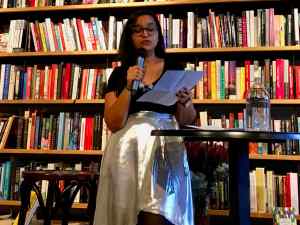
Zoya Patel, Festival Muse

Patel cut right to the chase. What turns me on, she said, is feminism. She then joked that there was a time – her early dating days – when her strong attachment to feminism was a turn off! Clearly though, the dates who reacted like that didn’t last, because her commitment to feminism remained strong.

She gave us a brief history of her trajectory as a feminist. She talked of her upbringing within a Fiji-Indian culture, where it was not considered normal for girls to have strong ideas, particularly political ones, and her staring to write, at the age of 15, for local feminist magazine, Lip Magazine. She spoke of how she’d been told that feminism was irrelevant, that women had won what they’d campaigned for. As a second-wave feminist from the 1970s, I remember being horrified by this attitude in the 1980s and ’90s, and am thrilled to see feminism on the rise again and in hands like Patel’s.

She talked about tipping-points that have kept her strong – such as encountering online trolling when she took Lip Magazine online – and about founding the cleverly named Feminartsy. She sees feminism as being about sisterhood, saying that “as many we are strong”. She’s pleased that feminism has gone from turn off to turn on!

Roland Peelman

Peelman, whom we had enjoyed earlier this week when he gave the pre-concert talk at Musica Viva, felt a little uncertain about his place in the group. He was not a politician, he said, but a musician, and not an Australian or a Canberran, but a Belgian. However, the thing about Peelman, who was also the artistic director of The Song Company for 25 years, is that he’s an engaging speaker.

He talked about attending a secular university in Ghent, which is still today a centre of positivist philosophy. This has informed his life he said. And, in one of those synchronicities we often talk about, he spoke of being on the barricades against missiles in Western Europe in the early 1980s. Regular readers here will remember our recent discussion about the Cold War on my review of Diana Blackwood’s Chaconne.

Peelman talked about the difference between Australia’s adversarial 2-party political system and the Belgian situation where government is made after the election (as has happened in Germany over recent months!) Talking to him afterwards, I suggested that the 2-party system may be breaking down with voters (here and elsewhere) increasingly voting for small parties. Peelman likes this form of “messy” democracy.

Finally, he talked about the politics of a small arts organisation (like The Song Company) battling big bureaucracy, and how they can survive despite the naysayers. Small arts companies do not work well within the constructs of economic rationalism. Music, he said, builds from community. And that’s as political as he’d get he said!

Elizabeth Lee

Local Liberal politician, Lee, started by noting how much we have in common despite our (political) differences.

What turned her on to politics or what encouraged her to chase a political career, she said, was her father. Korean-born, she grew up as the eldest of an all-girl family, so her father, she said, was a feminist from start. He told her that she was the needle, and her sisters the thread. She explained that her moving to Canberra to do Law at 18 years old was unusual for an Asian at that time. It means, though, that she has lived all her adult life here.

Lee then talked about how she went from not being interested in politics at university to working as a lawyer and getting involved in the Law Society, where she realised that she liked organising. Soon after, when she started work as a lecturer at the ANU, she joined the Liberal Party – because she agreed with the classic Liberal values which focus on “individual freedom and responsibility”. She described losing the 2012 election, and her father helping her see that politics seemed to be where she could contribute the most. She stood again in 2016 and won.

She also shared some disturbing examples of racist and sexist attacks she has faced, but said that she is committed to her (unsought for) leadership role as an Asian female politician.

Jacob White

Like Patel, White quickly identified the factors that led him to his political passion. He said an interest in process is something you are born with, and also that as the middle child of a family of five (with two older sisters and two younger) he got early practice as an agitator!

He also remembers being aware of the injustice of his Nana’s struggles. She was a single mum who had brought up 5 children including one with severe Down Syndrome. He described his early experience of activism, writing to local politicians when he was just 8 years old about lantana choking a play area – and succeeding in getting it removed. Finally, he talked about realising, when he was 11 or 12, that women were not for him, and soon seeing the injustices gay people lived with.

White said he was very involved in student politics, and from this experience came to work for Andrew Leigh. However, when they were all caught off-guard by the marriage equality postal vote, he took leave from this job to manage the campaign in Canberra.

He spoke about being from a small industrial town near Wollongong, with a father “in the steelworks”, and mother “at the RSL”. You don’t have to have a political background to do what he does he said, because “everyone’s life is inherently political.”

All in all, an engaging session, not the least because I got to hear and see some of Canberra’s new, young leaders, as well as seeing that some of the older hands still have things to offer!! Win-win, I’d say.

Oh, and the opening party drinks and canapes were great too – as you’d expect from Muse.

Thanks to Muse (particularly Dan and Paul) for another great event. As I’ve said before, what a great addition they’ve made to Canberra’s literary and arts scene.

Angharad at Tinted Edges has also posted on Festival Muse.

NOTE: Check the Muse link above for more Festival events.
Stella Prize 2018 Shortlist announced

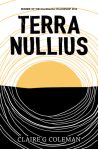
Claire G Coleman, Terra nulliusAs you probably know, the Stella Prize is the award I particularly like to follow, though I don’t always post on the Longlist and the Shortlist as I am this year. The Longlist was announced on 8 February (my post), and the shortlist was announced, yesterday, International Women’s Day, as has, appropriately, become tradition.

Here is the shortlist:

  • The enlightenment of the Greengage tree, by Shokoofeh Azar (Wild Dingo Press)
  • Terra nullius, by Claire G Coleman (Hachette)
  • The life to come, by Michelle de Kretser (A&U)
  • An uncertain grace, by Krissy Kneen (Text)
  • The fish girl, by Mirandi Riwoe (Seizure)
  • Tracker, by Alexis Wright (Giramondo)

Interestingly, as has happened in the past, the proportion of non-fiction to fiction in the longlist has not carried through to the shortlist. Five of the twelve-strong longlist were non-fiction works, while just one of the six books in the shortlist is. And unfortunately, it’s not the one I’ve read! Seriously, though, I am glad to see Alexis Wright’s Tracker, which is about the Aboriginal leader, political thinker and entrepreneur Tracker Tilmouth, on the list. However, this pattern suggests that it is difficult to judge fiction against non-fiction and that the Stella Prize’s goal of offering one award irrespective of form or genre is perhaps harder to achieve that it sounds? In a sense I can understand it. If the award is about excellence in Australian writing, and if excellence includes some sense of innovation, then it is likely that such definition of “excellence” is more likely in fiction. (By the way, innovation to me can include experimenting/innovating in style, form, genre, structure, content, so it’s not impossible in non-fiction, just more constrained – perhaps?)

Anyhow, what do I think about the list? Well, firstly, I’m pleased so see that the list accommodates diversity. I’m also pleased to see that my pick, Terra nullius (which I’ll be reading soon) is on the list, and that The fish girl which I bought because of its long-listing is also on the list. I even mailed a copy to my American friend for her birthday this week. And, I’m not surprised to see The life to come and An uncertain grace on the list, given the quality of these writers and the buzz about their books. I’m disappointed, though, that the book I’m reading now, Sofie Laguna’s The choke, is not on the list – not because I believe it should be as I haven’t read enough of the books to make that assessment, but because it’s one I would have read when the winner is announced! Oh well … c’est la vie. Fortunately, I’m enjoying The choke so my reading time is certainly not wasted!

The winner receives $50,000, and each shortlisted author receives $3000, as well as a three-week writing retreat on the Victorian coast. It’s a lovely generous prize. The winner will be announced on 12 April.

Now, I’ll get back to my reading … but if you have any comments on the list, I’d love to hear them.

A lovely night out … at the theatre

You know the year has really started when the concerts and shows start up again – and for us they’ve started with a bang. We had three events in four days: A Pacifist’s Guide to the War on Cancer (Playhouse) on Saturday night, The Weight of Light (Street Theatre) late Sunday afternoon, and the first Musica Viva concert (Llewellyn Hall) on Tuesday night. This post, though, will just discuss the middle one, because it’s Australian, having been written by local author Nigel Featherstone who has featured on this blog several times. I’m not, however, an experienced theatre reviewer. I don’t have the language, and as a reader, I find it challenging seeing something only once, and not being able to go back to check something out, as you can with a book!

The Weight of Light

I’ve been surprised in recent years to discover how many Australian novelists are also librettists. David Malouf, Peter Goldsworthy, Dorothy Porter (ok a poet but also a verse novelist), and Louis Nowra immediately spring to mind – and now, local novelist and short story writer Nigel Featherstone can also claim this title. Described as a song cycle, The Weight of Light had its origins in a residency the very peaceful, non-warlike Featherstone had at the Australian Defence Force Academy in late 2013. I remember it well because he wrote about it on his blog. It all came to a head in 2014, when time came for him to do a presentation on his three months. He wrote:

I already had the questions – What is a man?  Who is a good man?  Who is a good being? – but I didn’t have the stories, or anything remotely resembling stories.  Bearing in mind that my intention in doing the residency wasn’t to write about war as such; I’m disinterested in guns, and the infinitely complex political contexts require a much bigger brain than mine.  I was interested in the small moments, the hidden fears and thoughts and dreams.

So there, in 2014, he had an idea in mind about soldiers. Then, later that year, as Featherstone tells it, Paul Scott-Williams from the Goulburn Regional Conservatorium met Nigel and told him that he wanted to create “an original song cycle”. He felt that “art song did not have much of an Australian tradition”, and wanted to do something about it, starting with Nigel as librettist. From there, the project slowly grew. Nigel has documented the process on his blog. The end result was the highly moving performance we saw on Sunday afternoon.

How to describe it? We entered the lovely Street Theatre to be faced with a minimally lit stage, comprising a minimal set. There were two large crisscrossed beams, a wire wending across the stage like a fence, brown fabric on the floor emulating a river, and, to the right, a grand piano. The show started with Alan Hicks on piano, with singing starting up soon after from somewhere backstage. The voice, coming from baritone Michael Lampard, turned out to be a mother calling her soldier-son home to the farm.

From here Lampard, with Hicks at the piano, took us on a journey, through fourteen songs, in which the soldier faces a tragedy at home which recalls to his mind a secret tragedy that had occurred during his tour (that’s a weird word really, isn’t it, for a military posting) of Afghanistan. It’s a dark story, a grim one at times, as the soldier confronts a number of challenges in his life. But, it’s also a beautiful show. If that makes sense.

This was the whole package – words, music, performance, set and lighting. Lampard’s vocal range was impressive, enabling him to differentiate characters (his mother, father, girlfriend) as they interacted with him. The lighting remained dark throughout, in keeping with the theme, though placement and levels did vary with the mood. The set was in that modern minimalist style in which a few objects are used to convey different ideas or places at different times – in this case, both the field of war and the fields of a farm. The two large semi-reclined crossed beams also, I thought, conveyed an idea of the cross, which, at one of the darker points in the performance, our soldier seemed to shoulder, recalling Christ’s journey to Calvary.

And then there was James Humberstone’s music. It included elements, we felt, of art-song, opera and church music, and was completely involving – both the sound of it and the performance of it, which included both Lampard and Hicks bowing the piano strings to create a mournful atmosphere. Other effects included paper being laid across the strings creating a fluttery, buzzing effect, and Hicks hitting the strings with small mallets. None of these were tricks for tricks’ sake, but enhanced the meaning or mood of the story.

I found these demos below on SoundCloud. They’re from earlier in the development when the program was still called Homesong, but they give an idea of the range we heard, from the sweetly lyrical to the more sombre, minimalist pieces.

I would love to be able to share some of the words with you, but not having the libretto and having only seen the performance once, that’s not possible. I did find it hard to hear them all with so much going on, but I loved the poetry of them, the use of repetition, and the imagery – of birds in particular. In the second last song, I think it was, our soldier needs to make a decision. Can he be strong, or will he give up? “Be brave enough to stay” is the call to him. The program ends, happily, on a note of hope.

Mr Gums, two acquaintances and I enjoyed, at the end, sharing notes on the performance, combining our various impressions. We all felt we’d experienced something special. I’d say Paul Scott-Williams has got what he wanted – a quality contribution to Australia’s art-song repertoire, with a story that’s right up to the moment in its concerns. I hope it gets more outings.

The Weight of Light
Words by Nigel Featherstone
Music by James Humberstone
The Street Theatre, 4 March 2018, 4pm

Monday musings on Australian literature: Young Writers Awards

Yesterday’s post on young writer Ben Smith Noble’s prize-winning short story, “The sands of time” inspired today’s post. I’ve written about several prizes over the years – the big ones, and the more targeted ones – but not prizes for Young Writers. It’s a tricky topic to write about. There’s the definition of “young” and there’s the fact that there are many “small” prizes offered (that is offered within small spheres like a school or other contained group). My focus here is to pick out some of the bigger – more encompassing – prizes, and also to show some of the variety in the prizes being offered.

These prizes range from those offered for a piece of work submitted for competition to awards for published writing. The more adult young writers prizes (if that makes sense) define young writers as those under 35 or 30 years of age, while other prizes can be offered for age ranges. I’ll list a selection of awards, in alphabetical order.

Per Capita Young Writers’ Prize

I nearly didn’t include this prize because their website is so minimal. It says, for example, to “Click below to see winning entries from this year and previous years” but I could see nothing “below” to click on. However, it’s an intriguing award that’s been going for a few years, it seems, so I decided to include it. It is for Australians aged 25 years and under, and is “designed to encourage young people to think about the major public policy challenges facing Australia.” Weighty matter! The judging criteria includes, as well as the more usual ones of originality and writing quality, “the potential public benefit of the ideas put forward.” In 2014 the winner received $3,000 plus some sort of international travel. You can read a 2017 prize-winner on the writer Michael Dello-Iacovo’s website.

Scribe Nonfiction Prize for Young Writers (Nonfiction)

Established in 2013, this prize is seen as a development award aimed at fostering “talented writers aged 30 and under writing longform work.” Writer submit  entries of between 5,000 and 10,000 words “across all nonfiction genres, including memoir, journalism, essay, and creative nonfiction.” The winner receives cash ($3000 in 2017), mentorship and some Scribe books. Shortlisted writers receive some Scribe books, but also feedback on their entry and the opportunity to attend a masterclass. Pretty good eh? The prize makes their aim of fostering talent real.

SLQ Young Writers Award (Short Story)

An annual short story award, around 20 years old, for Queensland writers aged between 15 and 25. Prizes are offered in two age categories: aged 18 – 25 (short stories up to 2,500 words); aged 15 – 17 (short stories up to 1,500 words). In each of these, there is one winner and one runner-up, and four highly commended entries. Past winners include Benjamin Law, Tara June Winch and Romy Ash. You can read all the past winning, runner-up and highly commended stories online.

Sydney Morning Herald Best Young Australian Novelists (Fiction)

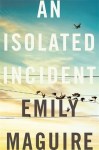
Emily Maguire, An isolated incidentEstablished in 1997 by former literary editor Susan Wyndham, this award which aims to recognise “emerging talent” is made to writers who were 35 years or under when their book was published. It’s become a well-regarded award and is quite a feather in a writer’s cap to be called a Sydney Morning Herald Best Young Australian Novelist. More than one writer is named each year. An example is Emily Maguire who won the award in 2010 (Smoke in the room) and 2013 (Fishing for tigers). She went on in 2017 to be shortlisted for the Stella Prize, the Miles Franklin Literary Award and the Ned Kelly Award for An isolated incident (my review). You can see a list of the winners over the first 20 years, 1997 to 2016, online.

John Marsden & Hachette Australia Prize for Young Writers (Fiction, Nonfiction and Poetry)

Named for and supported by one of Australia’s most successful writers for youth, John Marsden, this prize is “an annual developmental award open exclusively to Australian secondary school students.” This award is made in three categories: fiction, nonfiction and poetry. Winners receive cash ($500 in 2017), a selection of Hachette YA books, publication of their work on the Express Media website and their names printed in the youth literary journal Voiceworks. You can read the winning 2017 works online.

Young Tasmanian Writers’ Prize

Tasmania 40 South Issue 78Run jointly by Forty South Publishing and the Tasmanian Association for Teachers of English, this is a literary competition for Tasmanian high school students, in two age categories, Senior Section (Years 10 to 12) and Junior Section (Years 7 to 9). They do, it appears, provide a theme/themes, as this entry form for 2018 shows. The winners in the two sections receive $300 and their story published in Tasmania 40° South, and the runners-up receive a $30 bookshop voucher. This is the one, as you’ve probably realised, won by Ben Noble Smith.

Young Writers’ Award (Picture Book and Short Story)

As far as I can tell this is a brand new award which started in 2017 and for which the first winner will be announced this week. It’s been established by the Redgum Book Club and is geared to children aged between 9 and 13 years of age, to “develop their writing skills and find their unique voice through storytelling.” They want it to be an accessible activity that can be  incorporated into a school’s writing program, so they provide a Teacher’s Toolbox on their site. There are two categories: picture book (up to 250 words plus illustrations) and short story (800 to 1000 words). Winners will receive a $250 Redgum book voucher, and the shortlisted writers a $150 voucher.

And there are many more awards – including other state-based awards and at least one for indigenous youth. For information about these and others, please visit a wonderful post by teacher and writer Melinda Tognini on her blog Treefall Writing.

I had no idea there was this variety around. I’d love to know if you have had any experience of young writers’ awards or know of any not listed here? (If you are not Australian please share any you know of from your country.)

Ben Smith Noble, The sands of time (#Review)

Tasmania 40 South Issue 78Ben Smith Noble is the second young writer I have reviewed here, the first being Leah A with her 10 silly poems by a ten year old (my review) which came to my attention via Son Gums. Ben Smith Noble’s short story “The sands of time”, on the other hand, came to me from Mother Gums via Brother Gums who lives in Tasmania and knows the young writer. Indeed, I believe I’ve met him too, but that was nearly ten years ago, when he was probably around 6!

Many moons have passed since then and it appears that Ben Smith Noble is becoming quite the writer. “The sands of time”, which unfortunately is not available on-line, won the Junior Section (Years 7-9) of the 2015 Young Tasmanian Writers Prize – and what a delightful story it is. It’s a time-travel story about a man who dies suddenly and mysteriously finds himself in a coffin that had been used in England in 1122, during the time of the Crusades. What happens next, as I’m sure you’ve guessed, is that he finds himself in the Holy Land in 1098 “standing between two armies that had a very certain view on who was right”:

The hot sands swirled around Mr Smith as the two armies gave a roar and started moving towards each other at a speed that suggested the sides shared an intense hatred for each other, and further suggested to the out-of-place Tasmanian the idea of being impaled on a lance or scimitar.

He dearly wished he was somewhere else. Heaven for example.

In the next paragraph, things are getting dangerous: “An arrow drifted by in what seemed slow motion, and hit a nice young man who would probably have got along well with his killer had his killer not been holding a bow”.

Mr Smith is not impressed, and starts to run:

He wasn’t sure where he was going, but he was sure anywhere would be better than here.

However, he soon finds an English knight and a Saracen warrior approaching him on horseback from different directions, so he does the only sensible thing he can think of. He calls, “Stop!” The denouement, from this point, is beautifully and succinctly told, and conveys a message about war – something that “happens when people with small brains get big ideas” – that is pure and sensible. It’s an entertaining read.

What is impressive about the story is Noble’s grasp of language, of rhythm and pace, of voice, and of structuring a plot. We are told in the first paragraph that Mr Smith had “a guilty love of Doctor Who” which sets up the time-travel idea, but we are also told in the same paragraph that he likes “staying in the here and now”, and hadn’t, in fact, been anywhere further than Burnie. In other words, he’s a simple, ordinary man, and Noble sets this up effectively in the first paragraph. He also establishes his light tone in this paragraph, and sustains it through to the end. The story made me laugh – at the right times – and yet it has a serious message that’s relevant today. I don’t have a benchmark for what young writers are capable of these days, but this story would not embarrass its creator in adult company.

A search of the Tasmania 40° South revealed that Ben Smith Noble won the Senior Section (Years 10-12) prize last year, with a story titled “Napoleon, or, the musings of Mr Pink”. Clearly someone to watch. You heard it here first, folks!

Ben Smith Noble
“The sands of time”
in Tasmania 40° South, Issue 78?, pp. 85-86

Six degrees of separation, FROM The beauty myth TO …

Wah, it’s now the start of autumn here down under. I love, love, love autumn (and not just because my birthday occurs during it) but it does mean that winter’s next and I hate, hate, hate that! We do, however, have fun things to entertain us when things get glum like, for example, The Six Degrees of Separation meme. It is currently hosted by Kate (booksaremyfavouriteandbest) – and if you are not familiar with how it works, please click the link on Kate’s blog-name. She explains it all.  Meanwhile, this month’s book is one that I should have read when it came out, given my interests, but didn’t, Naomi Wolf’s The beauty myth. As always though, I’ve read all the linked books.

Naomi Wolf, The beauty mythNow, when I said I should have read The beauty myth, given my interests, but didn’t, I mean that I have been interested for a long time – since I read Germaine Greer’s The female eunuch back in the 1970s – in the way western culture, specifically, objectifies women. Wolf’s The beauty myth, which was praised by Greer, looks, among other things, at the way women are pressured to conform to set notions of beauty, and are exploited as a result.

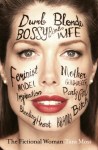
A more recent – and Australian – book-cum-memoir which looks, among other things, at the way women are pressured to meet societal standards of beauty is Tara Moss’s The Fictional woman (my review). Her thesis is that women are subject to an inordinate number of fictions that contradict reality, and that this helps perpetuate ongoing inequalities for women in myriad ways. Despite having some long bows, this book – written in 2014 – is spot on in terms of what is now, finally, coming to the fore. It’s distressing that so many writers (among others) have been saying the same things about this issue for SO long, but here we are, in 2018, still in a patriarchal society which thinks it’s ok to objectify and thus control women. Unbelievable.

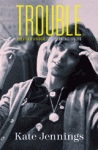
Kate Jennings, Trouble, bookcover

Another memoir by a feminist is Kate Jennings’ Trouble: Evolution of a radical (my review). It’s a different sort of memoir, a “fragmented autobiography” she calls it. It comprises a compilation of Jennings’ writings selected and ordered by her to show how she has come to be the person she is, to believe the things she does. It’s an engrossing book that includes fiction (poetry and prose) and non-fiction (including interviews) written over a couple of decades.

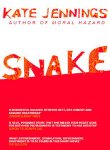
And, it includes excerpts from her own semi-autobiographical novella, Snake (my review), which I have also reviewed here. Snake is a coming-of-age story set in rural Australia, and tells of Girlie and Boy, and their parents Rex and Irene. It’s not a happy childhood, and in fact the book was described by the Sydney Morning Herald as a “domestic dystopia”. The snake title provides a clever motif encompassing such ideas as temptation, deceit and danger.

Winterson, Oranges are not the only fruit, book coverThere are several books I could link from here, including Jill Ker Conway’s memoir The road from Coorain and Francesca Rendle-Short’s fiction-cum-memoir, Bite your tongue, but I’d like to leave the Australian continent at least once in this journey. Consequently, I’m choosing another autobiographical novel about a difficult childhood, Jeanette Winterson’s Oranges are not the only fruit (my review). Unlike Snake though, the orange motif is far less clear but seems to relate, in part at least, to closed-mindedness. At the end of the novel, pineapples appear, which may suggest change.

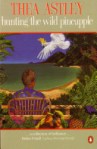
Thea Astley, Hunting the wild pineapplePineapples bring us back to Australia and a book with pineapples in the title, Thea Astley’s Hunting the wild pineapple (my review of the short story from this collection). It is set on a pineapple farm in a place called Mango, and deals, among other things, with the power wielded by white men over others – in particular, women (reminding me of where this month’s meme started) and migrants. And now …

Dymphna Cusack, Jungfrau

For my last book, I’m going to link on names – from author Thea Astley to character Thea in Dymphna Cusack’s Jungfrau (my review). Coincidentally, this book returns to another thread in this meme, the coming-of-age one (though perhaps, as Diana Blackwood suggested in the comments on my review of her novel Chaconne, it’s more a “wising-up” one.) Set in 1930s Sydney, it concerns three young women, Thea, Eve and Marc, and revolves particularly around Thea’s affair with her married professor. Hmmm … I think we are back to the idea of the unbalanced power relationship between men and women. I’ll leave it there…

This month, again, we haven’t travelled far, only visiting the same countries as last month – the USA, England and Australia. We’ve stayed in the last 100 years and with women writers only. I must diversify a little more next month.

And now, have you read The beauty myth? And whether or not you have, what would you link to? 

Carmel Bird, The dead aviatrix: Eight short stories (#BookReview)

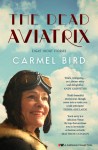
Carmel Bird, Dead aviatrix

Carmel Bird, whose latest short story collection, The dead aviatrix: Eight short stories, I’m reviewing here, has to be the consummate writer. She can turn her hand to fiction and nonfiction, to short and long form writing, to formal and more informal voices, and to both serious and witty or satiric tones. She’s also an editor/anthologist in addition to being a writer. And now she’s experimenting with a digital platform. So, when she hesitantly offered me The dead aviatrix to read and review, there was only one answer, yes.

Her hesitation related to its e-book form. She feared that we Gums’ people aren’t much interested in ebooks, but, she wrote, “they are a growing part of the literary landscape”. Then, using a very Bird-like expression, she continued, “so maybe one day you will write a bit about them, and if and when you do, The Dead Aviatrix will be idling on the tarmac.” Well, how could I resist, even if I had wanted to, an aviatrix idling on the tarmac? And anyhow, as you know, I do read and write about e-books. Annabel Smith’s The ark (my review) is a good example, but I’ve reviewed several e-books here including Dorothy Johnston’s Eight pieces on prostitution (my review).

Like Dorothy Johnston’s book, which was a digital publishing initiative of the Australian Society of Authors, The dead aviatrix is the first Capsule Collection, a new platform by digital publisher Spineless Wonders. Subsequent titles in the series will, the book’s “About” says, include works “selected from The Carmel Bird Digital Literary Award”. You clearly can’t keep a good writer down. I love that this doyenne of the Australian literary scene is still exploring and experimenting.

However, it’s all well and good to explore and experiment with form, delivery platform, and so on, but in the end you need to produce the goods, and this Bird has done with her eight stories. I should say, before discussing them, that all have been published before – in publications like Southerly, Island Magazine, and Review of Australian Fiction.

So now, at last, the stories themselves. They are a wonderful lot. Bird regularly makes me laugh, and she does so again here. It’s not empty laughter though, because her targets are serious. It’s just that she frequently presents her ideas with a cheeky, often satirical approach.

The first story is “The dead aviatrix and the Stratemeyer Syndicate”. It’s written in the sort of style Bird used in Fair game, her memoir of Tasmania (my review). By this I mean it digresses or, as she says, becomes “productively sidetracked”. However, as “The dead aviatrix” is “a publishing story”, the opening digression about the prolific Edward Stratemeyer – creator of a childhood favourite of mine The Bobbsey Twins – is relevant in a way (of course!). Actually, it’s very relevant because she finds a quote about an aviatrix in a Stratemeyer book, and uses it to springboard her story. Oh, she’s a character! The tone of the story, like several in the book, is chatty. She talks directly to us, the reader, leading us along, often lulling us into a false sense of security. In this case, it’s a little satire on the publishing industry – on proofs going astray, on distracted publishing interns – but along the way it invokes or references all sorts of ideas, including the Australian aviatrix Nancy Bird Walton who “unlike the great and mysterious Amelia … did not disappear in the skies.” Sometimes it is hard to keep up with Bird (our Bird, I mean!) but I love trying. This story is, partly, about the art of writing stories.

The second story, “The Whirligigge of time brings its revenges”, draws from a Shakespeare quote, and is also a publishing story, this one more satirical about first and second novels, the notion of “literary” novels, awards, and not using agents. Again, it has a similar, chatty story-telling tone. Here’s an example:

The history of this novel (The Heat of Summer) is the real subject of my tale. That, and the wheel of fortune and the quirks of fate. The book takes its first inspiration from Camus’ famous L’Etranger, and its content is drawn from the aforementioned history of Joseph Tice Gellibrand, the disappearing Attorney-General of Van Diemen’s Land. Well, you can see that what Frankie was doing here was risky. It was what is often described as literary fiction.

There’s more delicious satire about publishers and their slush piles, but I’ll finish with a quote about promotion:

The media hype for The Heat of Summer is huge, what with the glamour of Frankie’s Paris life, and the deep fascination with gothic Australian bush stuff and so forth. Based around the tragic life of her ancestor. Smash hit. Frankie turned out to be a publicist’s dream, having, as well as the attributes I have alluded to, long legs, a face that could sell cosmetics and airline tickets, and an engaging lisp.

Delicious isn’t it?

And so the stories continue, addressing issues like missing children (“Cold case”), dying towns and New Age shops (“Cactus”), shallow suburbanites and their prejudices (“The matter of the mosque”), surrogacy (“Surrogate”), and species extinction (“Letter to Lola” and “The tale of the last unicorn”). All the stories could be lessons in writing – in tone, in varying form, in how to make words and language work for you, in being absurd without being absurd (if you know what I mean), in addressing serious matters with a light but pointed touch. I enjoyed every one.

While several stories are written in the chatty, satirical tone of the first two. Not all are. “Dear Lola” takes the form of a love letter from a Spix’s Macaw to his lost mate. It’s sad, and pointed, but the whole idea of a bird writing to its lover gives it a whimsical touch too. “The matter of the mosque”, on the other hand, is written in little scenes, comprising mostly dialogue between two mothers in which it’s clear that whether to use hairspray or mousse is more important than opening their minds to different ways of being. Bird’s control of language and narrative here, together with her use of repetition and recurring ideas or images, makes this a little gem.

Now, I know many of you aren’t short story readers, because you want to get lost in character. These stories won’t give you that. However, what a mind, what ideas, what fun and, ultimately, what heart, you miss by ignoring a book like this. It’s only available in e-format and costs a whopping $4.99! Why not give it a go?

AWW Badge 2018Carmel Bird
The dead aviatrix: Eight short stories
Spineless Wonders, 2017
50pp.
ISBN (e-version): 9781925052343

(Review copy courtesy the author, but available from Spineless Wonders)