It’s a new year and I’ve committed, for the moment at least, to continuing with the Six Degrees meme which is currently hosted by Kate (booksaremyfavouriteandbest). For details about the meme, please click the link on Kate’s blog-name. Meanwhile, on with the challenge. This month we start with a book that I have, in fact, read, Alexander McCall Smith’s No. 1 Ladies Detective Agency – and, as always, I’ve read all the linked books too, though some before I started blogging.
 Most of you will know that light, crime books are not my usual fare. However, there was a time when reading the latest book from this series was something my parents, mother-in-law, husband and I did on our annual coast holiday. When those holidays ceased, somehow the impetus to read the books ceased too. While it lasted, though, it was a lot of fun to share a reading interest, and ponder the warmth and practical problem-solving of Precious Ramotswe.
 For my first link, I’m going with a book by another non-African writer setting stories there, Catherine McNamara’s Pelt and other stories (my review). McNamara is an Australian expat writer currently living, I believe, in Italy, but she also lived and worked for some time in Africa. Several stories in this collection, as the cover might suggest, are set in Africa, particularly West Africa. But they are definitely not warm and fuzzy like McCall Smith’s Botswanan set stories!
 And since we rarely visit Africa here, let’s stay there for the next link, and look at Chinua Achebe’s Things fall apart (my review), a classic that I finally managed to read in 2016. It’s set in a small village in Nigeria, and deals with the impact of change in Africa – the missionaries, colonialism – by presenting a variety of reactions and behaviours. He shows western colonialism to be arrogant and oblivious to the culture being overtaken, but also sees aspects of African culture which made it vulnerable.
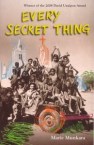 My next link takes us from Africa to Australia, but stays with the idea of missionaries and their role in the colonialism project. The book is Marie Munkara’s Every secret thing (my review). She uses humour to explore her theme, telling stories in which the Bush Mob use every bit of ingenuity they can muster to resist the incursion into their life and culture by the Mission Mob. As with Things fall apart the power imbalance is too strong, but the Bush Mob manages nonetheless to strike some blows for its side.
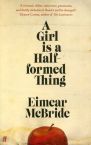 At this point I had a few options for linking, including staying with the colonialism theme in Australia, and I was highly tempted. However, I suddenly realised that my previous two books had “thing” or “things” in the title, and that I’ve read another book whose title includes this word, Eimear McBride’s A girl is a half-formed thing (my review). It had to be – not only because it was an irresistible connection but because it enabled me to shift gear for this link, and thus the next one.
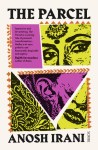 If you’ve read McBride’s book, you will know it is a tough read about a young girl who feels alone and unsupported in her family, for understandable reasons – but she doesn’t deserve what happens to her. It reminded me of a book I read this year which had a similar gut-wrenching impact on me, and whose protagonist, while different, feels unsupported by her family and, increasingly, an outsider within her community. The book is Anosh Irani’s The parcel (my review) about the transgendered Madhu in Mumbai’s red-light district.
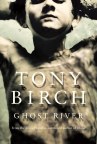 For my last link, I’m sticking with the idea of outsiders, and returning to an indigenous Australian writer. The book is Tony Birch’s Ghost River (my review). It tells of the friendship between two young boys, Ren and Sonny, and their involvement with a group of homeless men living by the river and about to be “dispossessed” of their spot by plans to build a freeway. These men, though, are not the only outsiders in the book. Sonny, who is from a disadvantaged background, is also an outsider. Birch demonstrates that once you are an outsider, everything is just that much harder. It’s a double whammy.
So, this month we’ve travelled from Africa to Australia, then popped over to Ireland before returning to Australia via India. Our writers, though, have been even more multicultural – two indigenous Australian writers, an Indian-born Canadian writer, an expat-Australian writer living in Italy, an Irish writer born in England, and an African writer. What a fascinating bunch, eh?
And now, have you read The No. 1 Ladies’ Detective Agency? And whether or not you have, what would you link to?




 Whispering Gums