Monday musings on Australian literature: The Hope Prize

I came across the beautifully named Hope Prize over the weekend via some online service. Was it Twitter? Was it Facebook? Perhaps even Instagram though I think not, but I really can’t recollect. Such is our online lives, eh?

Anyhow, the Hope Prize, was, according to the website, established by the Brotherhood of St Laurence “thanks to the generosity of the late Prudence Myer and the support of her family*, to encourage writing that transcends stereotypes of ‘the poor’ and reflects the resilience we know that people show in the face of poverty and testing times.” The Prize is supported by publisher Simon and Schuster and Readings bookshop.

So, what is the prize for? Well, it is subtitled the Brotherhood of St Laurence Short Story Competition. I understood from the site where I first read about it, that it’s geared to amateur writing. The competition rules say that entries “must be the original work of the applicant” and “must not have been published, broadcast, or won a monetary prize in any competition”. The applicant must also be a resident of Australia, and the story must be between 2,000 and 5,000 words.
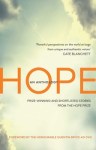
Hope prize short stories book coverThe judges for the inaugural prize, whose winners have just been announced, were Australian actor Cate Blanchett, novelist Kate Grenville, and ex-Governor General Quentin Bryce. What a lovely panel (albeit an all-female one. Perhaps it would be good to include a token male next year! Sorry, couldn’t resist that.) Anyhow, the website says that “they were impressed with the very high standard of writing and reported that all the finalists revealed powerful perspectives on the world at large, and displayed unique, unpretentious and authentic voices.” According to an article in the Sydney Morning Herald (SMH), a collection, which will include the winning and commended stories, will be published by Simon & Schuster on November 9. Sounds like a gift worth buying and giving.

But now, the winners:

  • First Prize, $5,000: Catherine Moffat for “Better Homes and Gardens”
  • Second Prize, $3,000: Eloise Young for “555 to Reservoir”
  • Third Prize, $2,000: Katherine Hayes for “Queen St”
  • Young Writer winner, $500: Eleanor George for “Colours”

There were also six highly commended stories.

… an entirely different perspective …

The abovementioned SMH article says that the winning story, “Better Homes and Gardens”, is “narrated by a young girl who lives in her father’s car with her little sister and describes her trying to stay afloat at school”. Cate Blanchett says of this story that

I suddenly saw the world from an entirely different perspective … It’s language and perspective on the world that in middle class society we take for granted. I felt like my entire world had been turned upside down.

She says that the stories did not confirm stereotypes and were “utterly illuminating”.

Quentin Bryce says that the stories, which present the perspectives of refugees, asylum seekers and homeless people, gave her a real understanding of the isolation experienced by many Australians every day. SMH quotes her as saying:

I was reading those stories again and thinking about what this publication is about; about poverty and disadvantage and the compassion you really feel very deeply. It gives you an awareness of how easily life can change.

And finally to return to Blanchett, she is, SMH says, “a firm believer that great works of art and literature can be catalysts for change”. I have to agree, and love her passion and support for projects like these.

Hope: an anthology will be available in trade paperback and format, and royalties are being donated to the prize. You can order via the Simon and Schuster site, or presumably buy from shops like Readings, after November 9.

What an encouraging initiative this is – one which encourages the arts while also working to raise awareness of social justice – and what a great example of what philanthropy can do.

* I’m not sure if this has been organised through the Myer Foundation, but the Myers, through four generations now, are among Australia’s most signifiant philanthropists in the arts, social welfare and the environment. Prudence Myer was married to Kenneth Myer, whom I met eons ago through his active support of the National Library of Australia.
Josephine Rowe, A loving, faithful animal (Review)

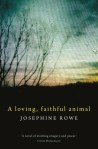
Josephine Rowe, A loving faithful animal

How many novels have you read featuring the Vietnam War? I’ve not read many I must say, but last year I did review Charles Hall’s Summer’s gone, and now this year I’ve read Josephine Rowe’s A loving, faithful animal. It’s a debut novel but, from its form, you can tell that Rowe is an accomplished short story writer. I have in fact read one of her short stories – from her collection, Tarcutta Wake. Unusually for me, I didn’t review it at the time. I think this is because I planned to read the whole collection, but that hasn’t happened (yet, anyhow), which is clearly my loss.

So, before I discuss the content of this novel, I should explain what I mean by my comment regarding short stories and its form. For a start, it’s a multi-voice novel. On its own, this is not unusual, but here the voices are also in different persons, which is not unheard of either, really. However, added to this is the fact that the chapters (or “stories”), particularly “Breakwall”, could be read as stand-alone pieces. To make the novel out of these pieces, they are linked via character, and there’s an overall chronological narrative arc to them, but they also remain little jewels in themselves. There’s real skill here, in the way Rowe juggles her voices, perspectives, stories to create a very satisfying whole.

Now, to discuss the novel itself. It comprises six stories, starting in second person with Ruby, whom we come to realise is the younger daughter of the book’s central family. It then progresses through four stories told from different third person limited perspectives – Ruby’s mother Evelyn, her father Jack, her uncle and father’s brother Les or Tetch, and her sister Lani – before returning to Ruby’s second person voice to conclude. The story is one of a family broken by the father’s ongoing trauma (PTSD) following his Vietnam War experience. It’s a devastating story showing how such trauma can play out, resulting in domestic violence, dividing loyalties and causing splits in families.

… she did not drive away …

The novel opens on New Year’s Eve, around 1990. The family has struggled on for some time. Jack has been unable to retain good employment, going in and out of rehab, with Evelyn always drawing him back, wanting their relationship and the family to work. But, every time she takes him back, she loses something too, particularly in terms of the respect of her elder daughter. As the novel opens, it’s New Year’s Eve, and Jack has gone, for good this time it seems, after something unspeakably brutal – the full details are never, fortunately, given – has happened to the family’s pet dog, Belle, the titular “loving faithful animal”. Except, as you’d expect, there’s more to the title than this. Evelyn, too, is “a loving faithful animal”, as in her way is Ruby and, perhaps we could also argue, Jack’s half-brother, Les/Tetch. He had escaped the war by “getting rid of his own fingers” and now hovers on the edge of the family, wanting to keep an eye on them, wanting his brother to be okay, but wanting too some family for himself.

What I enjoyed most about this book, besides its tackling this important subject, is its empathetic but unsentimental portrayal of its characters. Evelyn’s loyalty (her faithfulness) is shown to be both admirable and stupid. We see the catch-22, damned-if-you-do-damned-if-you-don’t nature of her situation, with the added element of a young girl having made her bed, that is, having married against her parents’ advice, and now having to lie in it:

But she could never quite bring herself to. Run out on him like that. And it was never as simple as money. It was never as simple as pride, because she’s not sure she’s never had much of that either. Or if she does, it hasn’t turned out to be worth much, not when it comes right down to it. (II “The Coastal Years”)

Life is cruel, particularly when stubbornness and lack of forgiveness face off against each other. Anyhow, we also ache for Jack who can’t escape his past, and nor “get a handle on” the future, so leaves rather than inflict more cruelty. We see and understand Lani’s decision to reject it all and escape into a future on her own, while Ruby stays determinedly loyal. Every decision though comes at a cost.

It’s not an easy book to read, and not just because of the subject matter. Rowe is not the sort of writer who wants to tell a simple narrative. She wants to convey emotions, psychology, motivations, not just actions, because these are the stuff of life. And this requires a particular sort of writing which, for Rowe here, is a sort of minimalist, sometimes disjointed, sometimes lyrical style:

This is Exhibit A in the Museum of Possible Futures, the life that might have rolled out smooth as a bolt of satin, if she had just swung her slender legs up into that beautiful car and driven as fast as she could in the opposite direction, leaving the man with the camera far behind. Your father, he could keep the photograph.

But she did not drive away. Instead she sold the car and spent every night of her life trying to lead your father out of the jungle, out of the mud, away from the cracks of invisible rifles, strange lights through the trees. (I “A Loving, Faithful Animal”)

There’s more of course – isn’t there always? – including little running motifs involving cicadas and panthers, and Tetch whom I’ve barely mentioned, but I’ll close here. This is the sort of book that I’d love to see in next year’s awards shortlists, for its writing and for its fierce, authentic evocation of the lasting effects of war. I wonder if I will.

Lisa (ANZLitLovers) was also impressed by the book.

AWW Logo 2016

Josephine Rowe
A loving, faithful animal
St Lucia: UQP, 2016
200pp.
ISBN: 9780702253966

Six degrees of separation, FROM Never let me go TO The paper house

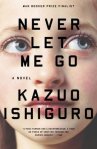
I rather enjoyed playing Kate’s #6Degrees “meme” last month so, while I don’t expect to play every month, November’s starting book, Kazuo Ishiguro’s Never let me go, was far too tempting to let go! Once again, read on to see why …

ishiguroneverletmegoI read Kazuo Ishiguro’s dystopian Never let me go before I started blogging, and have only reviewed one of his works since then. I’m thrilled, therefore, to have an opportunity to record that although I haven’t read all of his books, I have read most of them, because I enjoy his writing immensely. I particularly like his tone, which often comprises a sort of matter-of-fact, almost emotionless description of things which, we come to realise, are pretty unpleasant. And these things are usually told to us by narrators who, themselves, don’t recognise the truth of what they are seeing/describing (or certainly don’t recognise it fully). They are, in other words, often unreliable.

Kazuo Ishiguro

Kazuo Ishiguro, 2005 (Courtesy: Mariusz Kubik CC-BY-SA 3.0)

I rather like unreliable narrators, partly, I’m sure, because most of us aren’t wonderfully reliable at narrating our lives. We see our own stories from our own perspective and, if we ever see the fuller picture, it’s often in retrospect, don’t you think? So, for my next book I’m going to choose the only Ishiguro book I’ve reviewed here, Nocturnes: Five stories of music and nightfall (my review). This is a collection of short stories, some of them linked. In all of them, as I wrote in my post, “the narrator is either unreliable or in some other way not completely across what is going on. This is the Ishiguro stamp … as is the overall tone of things not being quite right, of potential not being quite achieved, of people still looking for an elusive something but not necessarily knowing quite what that is.”

Emma Ayres, CadenceNow, I could link to another book with an unreliable narrator, but that would get boring, so instead I’ll go with content. As the full title of Nocturnes suggests, the book features music and musicians in most of the stories, with the last story being titled “Cellists”. That reminded me of Emma Ayres’* memoir Cadence: Travels with music (my review) about her bicycle trip from England to Hong Kong. It’s a thoughtful, engaging book in which she reflects on her life as a musician, and her desire, violist that she was, to be a cellist! See the neat link!

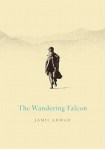
Jamil Ahmad Wandering falcon coverOf course, as well as talking about her two main loves, cycling and music, she talks about the places she rides through. One that she fell in love with, despite all the warnings she’d received while planning her trip, was Pakistan, where she was treated with kindness and generosity almost without fail. Her experience of Pakistan brought to mind a book I read for the Man Asian Prize Shadow Jury in 2011, a book that I can’t forget, in fact, Jamil Ahmad’s Wandering falcon (my review). It is set in the decades before the rise of the Taliban and explores life in the multi-tribal region on the borders of Pakistan, Afghanistan and Iran. It highlights what happens when political borders cross tribal lands. The writing evokes the unforgiving landscape and the often brutal justice beautifully. While I don’t remember the details now, its overall impression and theme have stayed with me.

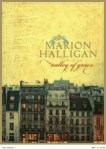
Marion Halligan Valley of grace

For my next book, I’m not going to link by content or tone, but by author. You see, Jamil Ahmad was a late bloomer. He was born in 1933, but Wandering falcon, his first book, was not published until 2011 (though apparently he wrote the stories in the 1970s). I’ve written a post on late bloomers, so I’m going to choose one of those, but which one? Well, I reckon Marion Halligan, for three reasons: she lives in my city, I love her books, and she’s a stalwart supporter of the arts in the ACT. The last book of hers that I’ve read, though I have a couple on the TBR pile, was Valley of grace (my review). It’s set in Paris, where Halligan lived for several years. It’s a beautiful book and is, as I wrote in my post, Halligan’s “meditation on children – who they are, what they mean to us”.

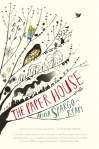
Anna Spargo-Ryan, The paper-houseSo, where to from here? This journey from Kazuo Ishiguro’s Never let me go (which, interestingly, is about children/young adults) has not been plotted in advance. For my final book, I have a few options: I could stick with an author connection, or return to a content link, or launch into something new. Something new? Yes, why not? I’m thinking book designer, because Valley of grace is really beautiful to hold and to read. It was designed by Sandy Cull, an award-winning book designer who also designed a book I read very recently, Anna Spargo-Ryan’s The paper house (my review). Not only is this book’s cover gorgeous, but its interior design is important, particularly in the increasing use of white space later in the book to convey the main character’s heightening mental illness. (There is a content link with this book, too, as it turns out, because The paper house is about parents and children.)

And, there you have it … another fun, for me anyhow, Six Degrees of Separation Meme. I’m surprised, in a way, where I ended up, because Never let me go is a dystopian novel, and I do read such novels, but somehow I led myself off in another direction! I only have myself to blame.

Anyhow, if you’ve read Never let me go, what book would you choose to link from it?

* Since writing this book, Emma Ayres has transitioned to Eddie Ayres. I’ve used the female pronoun here because he wrote this book as a woman.