Leah A, Ten silly poems by a ten year old (Review)

Leah A, Ten silly poems by a ten year oldPREFACE AND DISCLOSURE: As some of you know Son Gums is a primary school teacher. One of the programs he likes to run with his class is “the Passion Project”. Part of the theory behind this project is that kids don’t always get to do in class the things that really interest them so, over one 10-week term in the school-year, each student chooses a project s/he is passionate about to work on. Some time is allocated in class each week, and the rest is done at home. At the end of term, the students present what they’ve produced or created, which I understand can (and has) included games, computer programs, websites, artworks, live or animated films/videos, novels and cookbooks. This year, one girl wrote, illustrated and then published on Amazon a book of ten poems. I have bought and read the book and been given permission to write about it here.

NOW, THE FUN PART, THE BOOK: I titled my brief Amazon comment/review, “Edward Lear watch out”, because this gorgeous little (in size, not value) book reveals a lively, cheeky mind just like, I imagine, Edward Lear’s was. And like Edward Lear, Leah (hmm, I didn’t notice that homophone until now) is both writer and illustrator. Her ten silly poems are written in a variety of styles, including Lear’s favourite, the limerick.

The first two poems are not limericks, however, but 8-line rhyming couplets about her parents. They reminded me of when our children (one being, of course, Leah’s teacher) were growing up and showing an interest in writing. I decided then that I needed to let go of my ego and be prepared for my less endearing qualities to be revealed to all. Leah’s parents have clearly realised they must do the same, if they are to encourage her talent. Mum gets away with it this time, but Dad doesn’t come out quite so well:

You’re very handsome and oh so cool
Even though you sleep and drool.
(from “Dad”)

Lucky Mum eh?

Several of the poems are about animals and their adventures, usually involving food. “Lightning”, with its nicely controlled a-b-c-b rhyme, tells of the secret behind this horse’s speed (“All his speed and fastness/Was due to eating sauerkraut”)! Isaac the dog, on the other hand, finds that he needs to be a little careful about what he decides to “bite, bite, bite”. Like many of the poems, “Isaac” also uses the a-b-c-b rhyming pattern, but here Leah changes the form a little by ending most of the stanzas with the refrain “bite, bite, bite”. This use of a refrain comprising repeated words enhances the poem’s mood of silliness, but Leah also has the confidence to break the pattern in the middle of the poem, before taking it up again, to provide a needed change of pace. She’s not afraid, in other words, to mix it up a bit.
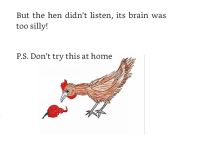
Leah A, Ten Silly Poems, hen imageMost of the poems are narrative, and tell humorous little stories, as you’d expect of the nonsense verse tradition within which Leah is writing. “Carolina Reaper”, for example, tells of a birthday girl who ignores the advice of a Mexican restaurant waiter, to her detriment, while the two delightful “Turbo Turtle” poems play with the commonly held assumption that turtles are slow.

Turbo Turtle, Turbo Turtle
How fast can you go?
Compared to me a cheetah
Is oh so very slow.
(from “Turbo Turtle”)

Occasionally the rhythm falters, but this is offset by the sure sense of story, the cheeky sense of humour, a clever use of language, not to mention the delightful illustrations. And anyhow, what can you expect when you have to write, illustrate and publish a book in ten weeks! Ten silly poems by a ten year old is not only an entertaining read but an impressive achievement. If you have a mind to support young authors, and you have a Kindle (or the Kindle app on your tablet), you might like to buy a copy for yourself at the Amazon link below. At AUD1.31, it’s a steal.

awwchallenge2016A, Leah
(Illus. by Leah A)
Ten silly poems by a ten year old
2016
26pp.
ASIN: B01LY4LZ1J

Available at Amazon (Kindle only) for the amazing price of AUD1.31
Six degrees of separation, FROM Extremely loud and incredibly close TO The women’s pages

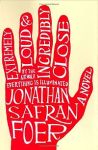
I have never played this #6Degrees “meme” before but when Kate (BookasAreMyFavouriteAndBest) announced that Jonathan Safran Foer’s Extremely loud and incredibly close (her response) would be the October starter, I knew I had to do it. Read on to see why …

Jonathan Safran Foer, Extremely loud and incredibly closeI have read Extremely loud and incredibly close and as I recollect I enjoyed it. I don’t remember the details now, but I did think that Foer managed well that fine line between warmth and sentimentality. However, the book is memorable to me for another reason, which stems from the fact that one of my online reading groups discussed it. A member of that group had great trouble with the title. It is, after all, not only a bit of a mouthful, but rather abstract, with nothing that you can particularly hang your memory on. Anyhow, in one email my online-bookgroup friend described it as “Foer’s Amazingly and Suddenly (I’m sorry I can’t keep that title straight)”. Every time I think of Foer, I think of her and smile! Hello, Susan!

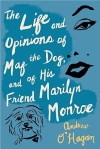
Andrew O'Hagan Book CoverAnd this makes me think of other books with long or hard to remember titles. One I’ve reviewed here is Andrew O’Hagan’s The life and opinions of  Maf the dog and of his friend Marilyn Monroe (my review). This book entertained me at the time because of the way it plays with reality, art and the imagination. Maf, the dog, suggests that “we are what we imagine we are: reality itself is the true fiction.” I love this paradoxical way of viewing ourselves, of seeing the artifice in “reality”. However, the point is that while I usually remember Foer’s title, I always have trouble with this one. I had to do a keyword search on my blog to get it exactly. All I knew was that it had “dog” and “Marilyn” in it!

But now, where to go? I could move to a book whose cover design comprises mostly words. There are a few of those around. But I really can’t go past another “life and opinions” book, Laurence Sterne’s The life and opinions of Tristram Shandy, gentleman. It’s been many a decade since I read this book – back in my university days – but its tongue-in-cheek-take-the-reader-along-for-a-ride style, its purporting to be what it isn’t, that is, a biography, was an eye-opener to my young literature-student self. It also introduced me to the picaresque style of novel. This is a style I always look a bit askance at, and yet usually enjoy when I get down to it, because it tends to be satirical – and I’m never averse to a bit of satire.

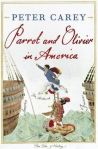
Peter Carey, Parrot and Olivier in AmericaAn Aussie example of the picaresque – though it’s not set in Australia – is Peter Carey’s Parrot and Olivier in America (my review). The object of Carey’s satire, that “great American experiment, democracy”, seems rather apposite given the current presidential race shenanigans. Donald Trump represents the very values and attitudes – the unquestioning belief in capitalism – which Carey satirises. Another issue Carey questions in this novel is whether “high” art and “total” democracy are mutually exclusive? Do you let the majority decide what art they will support and fund? If or when you do, what art will they choose, he ponders.

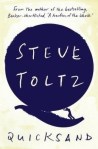
Steve Toltz, Quicksand, soverArt, the making of it, is also one of Steve Toltz’s targets in his satirical novel Quicksand (my review) but his angle is slightly different. Part of it is the way people plunder the lives of others to make art, and part is an exploration of why we make art. Is life easier with or without art is one of his questions. Protagonist Liam at one stage desires a life “unencumbered by art” whereas art teacher Morell suggests we make art to understand who we are and why we’re here. In the end, though, like many good satires, there’s no simple answer.

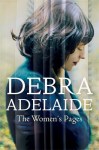
Debra Adelaide, The women's pagesBut, shock, horror, my first five books are all by men, even though women writers comprise well over 50% of my reading. How did this happen? I’m not sure, but I can’t end without one woman writer! Debra Adelaide’s protagonist, Dove, in The women’s pages (my review) is, like Liam in Quicksand, writing a novel – but Adelaide’s is not a satirical novel. It’s a more personal drama about the urge to write fiction (create art, in other words), about how fiction might illuminate life’s meanings, and about how we tell and use stories.

I’ve come a long way from Jonathan Safran Foer’s Extremely loud and incredibly close, a 9/11 story, and yet not so far really, because both books – Foer’s and Adelaide’s – are about grief and loss, and both, one indirectly the other directly, are about how art might play a role in resolving the tragedies that confront us. That seems to make a rather nice circle, albeit comprising 6° not 360°!

If you’d like to read other responses to this “meme” check out Lisa’s (ANZLitLovers) and Jenny Ackland’s (Seraglio).

Monday musings on Australian literature: Australian Arts, mid-1960s style

Hodge and Whitehurst, Nation and PeopleLast week’s Monday Musings discussed my high school history book, Nation and people, published in 1967. I don’t plan to labour this book, but I would like to share its chapter on the Arts.

The authors, Brian Hodge and Allen Whitehurst, dedicate 8 pages to “The Arts” which is pretty good, I think, for a school history book. The chapter is divided into sections: Slow growth of Australian culture; Poetry; Drama; The novel; Music; and Painting. There are gaps here – nothing on film or sculpture, for example – but what can you do in 8 pages after all!

They start by arguing that “a distinctive Australian cultural tradition has been slow to grow”. Now, before you jump at me and say “But, but, but, what about indigenous culture?”, they do mention this, albeit with the paternalism that was typical of the time:

True culture is probably the product of a deep and intimate relationship with one’s country, something that occurs over centuries. The original owners of the land, the aborigines, certainly evolved an individual culture that was part of the spiritual core of their existence. Although nothing was written they formulated their legends to explain to the young the marvels of the universe, they composed and sang their simple and sometimes haunting melodies, they carved in primitive fashion, they danced superbly.

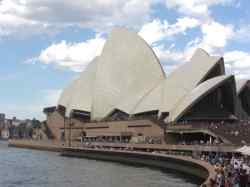
Sydney Opera HouseThere’s a lot that’s wrong with this statement from our 21st century eyes, but at least they recognise the “original owners” and the fact that culture comes from “a deep and intimate relationship with one’s country”. They then go on to describe how the early settlers tended to rely on “the old culture” and that even the balladists telling stories about the new land used “the tunes of their forefathers”. However, they say, “a vigorous development in all the arts” happened after the second world war “coinciding with remarkable economic progress”. Government increased its patronage of the arts, and “in Sydney”, they write, “there is being constructed an Opera House which architectural histories describe as a major achievement of architecture in the twentieth century”. It sure was.

Poetry

I’m just going to briefly share their points on poetry and the novel, given these are the topics most relevant to my blog. Regarding poetry, they point particularly to Judith Wright and AD Hope whose poetry “has been distinguished by a vigour and their imagery noted for its immediacy of impact”. How I wish I could be so succinct! Seriously though, I like their assessment of Wright, that she has “perhaps more poignantly than any other poet”

expressed the nation’s new-found spiritual awareness of its past … Her poetry is the deep expression of the feelings of women: to love, to old age, to decay, to the past, to war, to the future. JB Priestley, prominent English novelist, dramatist and critic, has claimed that Judith Wright is one of the best poets writing in English today.

How fabulous, even though their reference to “the feelings of women” does sound a little reductive?

As for  AD Hope, he too, they say, has “been highly acclaimed by overseas critics”. See that cultural cringe? Clearly, the fact that overseas critics praise Wright and Hope proves their worth! Anyhow, they describe him as “a satirist concerned with Man and his frailties.” (Note the uppercase Man to imply both genders but they can’t avoid the “his”). They quote Hope as describing “Australia as a place ‘where second-hand Europeans pullulate timidly on the edge of alien shores’.” They also say:

In no way does he resemble Wright. Rather he has consciously tried to lead Australian poetry away from a preoccupation with its environment, a savage reaction to the school of Australian poetry that concentrated on gum trees, koalas, kookaburras, kangaroos and boomerangs. His satire has an acidity, a near tragic note and a technical mastery new to Australian poetry.

They name a few other poets, including Douglas Stewart (a favourite from my schooldays), David Campbell, and Gwen Harwood whom they describe as “perhaps one of the most promising contemporaries … whose poetry is deeply personal, with original and compelling imagery”. They were right. She did become important, and one of Australia’s most significant poetry prizes is named for her.

The novel

I’d like to talk about drama, music and painting, but I don’t have the time and energy for that right now, so I’ll move onto “the novel”, which, interestingly, receives far less space than poetry and drama.

They start by saying that “during the 1930s Australian novelists tended to concentrate on the family saga, digging into Australia’s past to reveal the rise of egalitarianism.” They name Miles Franklin’s All that swagger (1933) and the unknown-to-me Landtakers (1934) by Brian Penton. They say that their novels are about pioneers who, as they “gained wealth … seemed to die spiritually.” We can read Landtakers at Project Gutenberg Australia. I’m surprised that they don’t mention works by Katharine Susannah Prichard, M. Barnard Eldershaw, and the other women who made quite a splash in the 1920s-40s. Some of their work was in this “pioneer” mould, but some also turned to the urban landscape, particularly Marjorie Barnard and Flora Eldershaw.

Anyhow, they go on to say that “the writing of historical novels of this pattern continued in the 1940s” but that developments occurred in the 1950s, heralded particularly by Patrick White’s Voss in 1957. They quote an unnamed critic saying:

White has opened up in a startling way the range of Australian fiction, not only by his experiments in form and language (which are sufficiently striking in themselves) but by conceiving and acting out the dramas of his characters in an imaginative world with one more dimension than our novelists have genuinely recognised as existing.

Fascinating, but a little mystifying. “One more dimension”. Is that the telepathic communication experience between Voss and Laura? And “genuinely recognised”? What does that exactly mean? However, I do like their suggestion that the result has been “a turning away from the violence of nature to a deeper study of man himself, with his depths of hidden passion and violence”. They quote Xavier Herbert, Morris West and Hal Porter as writing books reflecting this development.

Points to ponder

At the end of each chapter, Hodge and Whitehurst include some discussion questions. I can’t resist sharing those for this chapter:

Do you consider the Arts important for man? Why?
Do you think the Arts could be an important source for historians? Why?
Which of the Arts are most important in your family?
Do you believe future generations of Australians will regret the enormous expense of the Sydney Opera House?
Do you think Australians yet regard culture as an integral part of their existence

You don’t have to answer them all!

Mike Ladd, Invisible mending (Review)

Mike Ladd, Invisible mendingI think … how all our best art is free; as complex as that, as simple as that. (Gaudi and the light)

I rather liked this statement from Mike Ladd’s collection Invisible mending, even though I’m not totally sure what he means! Does he mean freely available, that is, we don’t have to pay to access it? Or does he mean it frees the spirit, takes us away from ourselves? Either way, he has a point, though perhaps “best” might be arguable in the first sense.

But now, that ongoing conundrum: how to review a collection, particularly a rather strange collection comprising poetry, short stories, memoir, essays and photographs, too. The two common choices are to summarise the range of the stories – like, you know, the stories take us from Adelaide to Japan to Chile and tell us about broken relationships, environmental destruction and living with dementia – or to pick a few stories (as I did with Cassie Flanagan Willanski’s Here where we live) and discuss them. Neither approach is completely satisfactory, but what can you do?

Interior, La Sagrada Familia

In the forest, La Sagrada Familia

Overall, I enjoyed the collection, though I did have a couple of quibbles, which I’ll get out of the way now, before I talk about what interested me. One of these quibbles relates to a pet hate, the use of “utilise” rather than “use”. In “Gaudi and the light”, Ladd writes that Gaudi “utilised spirals, honeycombs, the planoid surfaces of magnolia leaves”. There are some who argue that “utilise” adds another layer to “use”, meaning “put to good purpose”, but unfortunately its over-use spoils any special meaning it “might” have for me. Also in “Gaudi and the light” is this sentence:

There had always been an aestheticism within him: his reverence of nature combined with an early drive towards utopian socialism, ongoing vegetarianism and a sometimes dangerous tendency to fast.

He goes on to talk about Gaudi embracing “a Franciscan concept of holy poverty”. Did he mean “aestheticism” or “asceticism”? Actually, my quibbles are all in this story, because my third one is surely a typo: “in the shadows was an agonising crucifixion figure, the body a taught bow”. Taut, methinks? Maybe this story was rushed, which is a bit of a shame because Gaudi’s life is intriguing and Ladd reminded me of the wonderful time we had seeing his work and learning about him when we visited Barcelona three years ago.

There is a lot in this collection to enjoy, including, for me, learning about pantun poetry. I know about Japanese haiku and tanka, but had never heard of “pantun”. Ladd discusses them in his travel essay, “Pantuns in the orchard” which describes his stay in Malaysia with his wife who was working on an art project. There are different types of pantuns he tells us but his favourite is the “tunggal” which comprises four iambic lines with an abab rhyme. Like haiku, pantun is strict about content as well as form: the first two lines “draw their imagery from the outside world” while the last two lines “turn inward toward human relationships and psychology”. Ladd includes a collection of his, in the piece called “A book of hours at Rimbun Dahan”. I’ll share a couple that tickled me:

I start the great four-bladed ceiling fan.
Seconds later, a gecko drops to the floor,
stunned. Yes, the world’s like that,
We all hang on as long as we can.

AND

Under the mosquito net, settling to sleep
you feel safe from the world’s attacks.
Then you hear the needling, invisible whine
of that one mosquito inside the net: the mind.

These don’t have the traditional rhyme pattern, but they work for me.

Superficially, the book looks like a disparate collection, in form and content, but running underneath are some recurring ideas addressing contemporary concerns (such as human rights at home and abroad, and the environment) and family (including the dementia-related death of his father, and the return of a travelling son).  The story “A neighbour’s photo” tells of the loneliness and uncertainty of a 14-year-old Sudanese who has migrated to Australia with his 18-year-old brother. In the poem “Learn to speak our language”, the narrator turns the statement on its head by suggesting the complainer might learn Kauna or Pitjanjatjarra. Sometimes the politics is more stark, as in the short “Gasoline flowers” in which four self-immolators, starting with Mohamed Bouazizi, are likened to flowers.

Nearly halfway through the book is a little series of pieces about health, the narrator’s own experience in hospital and his father’s with dementia. He captures well that eerie world – a hospital – in “The edge of the lake”. He describes the strange camaraderie that can occur in a hospital ward as four men experience their illness. He writes of his experience of surgery:

Though my legs are cut to blazes, I’m enjoying myself. I feel cradled, it all makes glowing sense to me: the hospital system with its rituals and meals and machines, its steel surface and pecking orders.

I know what he means. It’s a weird, weird world – with its own time and laws – and yet it can feel cocooning, with the outside world far away. Sadder though are the pieces about his father, the man with dementia who is “aghast at the rate the world is leaving him” (“My father at the clothesline”).

One of the longest pieces in the book is “Traffik”. It features the unnamed Student and Middleman, as well as a named Japanese man, Morii, and is about the illegal smuggling of orang-utans. I don’t think I’ve read a fiction piece on this topic before. I liked the complexity of Ladd’s story, the careful way he develops it and the fact that our Student smuggler and orang-utan buying Morii are not simplistic stereotypes of the “parts” they play.

Two other pieces I particularly enjoyed were the story about indigenous pensioner “Ken” and the memoir “Gaps” about parents catching up with their son who has returned from a trip to Columbia. I loved the wordplay on gaps – generation gap, the gaps in knowledge you experience when you return from being away for awhile, and gaps in the hearts of people who may never know that their family members drowned on the Siev X.

There was more that I enjoyed too, including the pointed “Skiing in Dubai” and the satirical “Radio News”, but I’ll finish here.

The back cover describes the collection as “based loosely on the ideas of scarring and healing”. As you can probably tell from the pieces I’ve shared, it is certainly about that. However, it is also about the business of being an artist, and so I’ll close with the last lines of the poem “Back again”:

Our magpie (we call it ours)
tries its run of notes, falters, and repeats;
like our writing and art careers.

Well, perhaps there was the odd falter in this collection but that didn’t stop me being impressed by the versatility and passion of Mike Ladd, and enjoying my time with him. Oh, and it has a beautiful cover, too.

Mike Ladd
(with photographs by Cathy Brooks)
Invisible mending
Mile End: Wakefield Press, 2016
127pp.
ISBN: 9781743054079

(Review copy courtesy Wakefield Press)