Monday musings on Australian literature: Australian literature in China

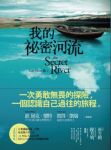
GrenvilleSecretRiverChineseNow I admit, right up, that this post is very much a toe-in-the-water sort of post. I know very little about the topic, but what I’ve come across I’ve found interesting and decided to share it. The thing is, we Aussies – those of us born here of Anglo parentage anyhow – tend to be monolingual. We also live in a fairly insular place, being an island ‘n all. Consequently, few of us I think know much about how well or far our literature travels. Occasionally, an Aussie book will do very well – say, Anna Funder’s non-fiction book Stasiland (my review) or Kate Grenville’s novel The secret river – and we’ll hear that it’s been translated into multiple languages. But mostly we tend to be fairly oblivious of these off-shore happenings.

I was therefore intrigued when, a few weeks ago, I found an article in Trove titled “Chinese interest in our literature” from a 1994 edition of The Canberra Times. It was written by Robert Hefner who was, as I recollect, the paper’s literary editor of the day. Hefner commences with:

I first met Chinese author, teacher and translator Li Yao six years ago [ie around 1988] when he was visiting Canberra with author Rodney Hall. Li had just met Patrick White, whose novel The Tree of Man he had translated into Chinese.

Wow, I thought, Hall and White are serious writers – that is, they don’t produce page-turners or simple plot-driven stories. How fascinating – how wonderful too – that our northern neighbours are interested in our literature at that level. Hefner was writing the article because Li was back in Australia for the Melbourne Writers Festival. He’d discovered that since that last meeting, Li had translated 15 more books, 8 of them Australian. These included Brian Castro’s Birds of passage, Patrick White’s Flaws in the glass, Nicholas Jose’s Avenue of eternal peace [a big seller in China], a short story collection, and Geoffrey Bolton’s A history of Australia. Hefner quotes Li, then associate professor in the Department of English at the International Business Management Institute in Beijing:

Translations of Australian books in China are welcomed by students and general readers, especially Patrick White. I translated A fringe of leaves and it sold 10,000 copies in Beijing. That’s a best-seller, even compared with Chinese authors.

Wow, again. Patrick White a best-seller in China? Who’d have thought?

Li told Hefner things were changing in China, that “people, especially young people” were “looking for something new”, wanting to “know another world, especially a world so far away as Australia”. They were also interested, he said, in how “China is seen through foreign eyes”. Consequently, his most recent translation was Alex Miller’s Miles Franklin Award-winning novel The Ancestor Game, which is about early Chinese immigration to Australia. Li* hadn’t decided whom he’d translate next, but was “considering Tim Winton, David Malouf or Rodney Hall”.

Alexis Wright Carpentaria in ChineseThat was 1994. Was it a flash in the pan I wondered? I did some very scientific research, that is, I “googled”. And I found all sorts of things, such as the China Australia Literary Forum. It met in 2011, and involved “ten prominent Chinese writers” visiting Sydney for “in-depth discussions with Australian authors, and those involved in the translation and reception of their works”. The Australian writers they met included Judith Beveridge, Kim Cheng Boey, Lisa Gorton, Ivor Indyk, Gail Jones, Nicholas Jose, Julia Leigh, Shane Maloney, John Mateer, Michael Wilding, Ouyang Yu and Alexis Wright. The forum resulted, the report goes on to say, in the translation of Alexis Wright’s Carpentaria (my review), which was launched in 2012 at the Australian Embassy in China. Nobel Prize winner Mo Yan wrote the introduction to the translation, and guess who did the translation? Yep, Li Yao.

A second China Australia Literary Forum took place in 2013, this time in Beijing. Eight Australian authors attended, including JM Coetzee. The eight Chinese involved included Mo Yan.

Apparently though, Australian literature had been read in China long before these last few decades. Back in the 1920s four Australian poets, including Mary Gilmore and Roderick Quinn were read. Ouyang Yu (whose Diary of a naked official I’ve reviewed here) is reported as having read a poem by Adam Lindsay Gordon in 1927. (All this came from a 2011 article in JSTOR which is not available freely on the web.) This article disproves the previously held view that translated Australian literature hadn’t been available in China before 1949. Indeed Ouyang Yu has written a paper about the reception of OzLit in China from 1906 to 2008. It’s an interesting survey article which looks at the history of Australian literature in China, including the interest in and value of different forms such as poetry, popular writing, literary fiction, and so on. He concludes by saying that Australian writers are now receiving Chinese awards. In 2009, for example, “Alex Miller became the first Australian writer to receive a Chinese literary award for his novel The landscape of farewell”.

I won’t go on, because I think I’ve made my point about Chinese interest in Australian literature. Quite coincidentally, I discovered a (now expired) call for entries from the Australian Association for Literary Translation for its AALITRA Translation Prize. This prize “aims to acknowledge the wealth of literary translation skills present in the Australian community” and awards prizes for translation of a selected prose text and of a selected poem. Each year a different language is chosen, and in 2016 the language is Chinese!

This is all wonderful for Australian literature, but what about the reverse? How much effort do Australians put into reading translated literature from other countries. If my record is anything to go by, not as much as I’d like – or should!

* I found a 2010 article in The Australian about Li Yao’s introduction to English-language literature. It was in the late 1960s, during the Cultural Revolution, and he read, “under the covers” at night, books like Jane Austen’s Pride and prejudice! This little comment reminds us too that availability of Australian (or any non-Chinese) literature in China hasn’t had the simple trajectory my post might imply!

Modern short stories, 1929-style

Pock, Modern short storiesAs I continue to clear out my aunt’s house, I keep finding little treasures. Most I move on. There are only so many little treasures, after all, that you can dwell on, let alone keep, but an old book of short stories? Of course, that captured my attention. Titled Modern short stories, it was my aunt’s school text around 1947. It edition date is actually 1929, and it belongs to a series of books, The Kings* treasures of literature, which was edited by Sir A T Quiller Couch*. Modern short stories was edited by Guy N. Pocock, who was “a novelist and educationist” according to the Wikipedia entry for his son Tom!

It contains twelve short stories, but I haven’t yet read them. I’m writing this post for other reasons. One is that my aunt wrote in the front of the book “Katherine Mansfield wrote good short stories”! Presumably the recommendation of her Methodist Ladies College teacher. Mansfield is not included in the anthology, although a couple of women (unknown to me) are. The book also has “Questions and suggestions” for each story at the back. The first story is “The lost god” by John Russell. Heard of him? I haven’t. Anyhow, one of the questions/suggestions for this story is:

“Good God!” breathed Bartlett. “He couldn’t get out!”

Explain this.

I think I’ll have to read this. In my search to find out who John Russell was I found a 2013 post on a blog called Pulp Flakes which describes itself as being about “Pulp magazines, authors and their stories. Adventure and Detective pulps”. According to the blogger, this story, written in 1917, was made into a film, The sea god. The blogger says that the story is “about an explorer who becomes a god. A standard pulp trope, you might say, and yet this has an unexpected ending. Or is it a beginning?”. One of the commenters calls it “one of the best short stories ever written”!

But, enough of that digression. I want to move on to my main reason for writing this post, Pocock’s introduction. Pocock commences by pondering how many short stories find their way into print. “Cataracts … come pouring out, monthly, weekly, daily, even hourly, from the American and English Press”, he says. And there are many others which are rejected. Of the thousands published, he asks, “how extraordinarily few are really worth the reading and writing – how extraordinarily few can be called great!” This, however, is not as extraordinary as it would appear, he continues, because “a great short story is a very difficult artistic achievement”. Of course, the stories he has chosen for this anthology are, he reassures us, “very good indeed”.

And so, in his introduction, he shares his ideas about “what constitutes a really good short story”. I’m going to dot point them:

  • it must be a story, that is, he says, there must be a plot – “however slight” (I like this qualification) – by which he means “some kind of development and crisis”. Otherwise, he suggests, it will be a sketch, a little snapshot from life or imagination”. To explain this, he describes going to “the ‘Pictures'”. (Interesting, given that going to the movies was still a fairly new thing at this time.) A sketch, he says, is like Pathé’s Gazette or Scenes from wild life, which are “just scenes”, while a short story is like Deadwood Dick or The adventures of Sherlock Holmes, because these comprise “a more or less artistic arrangement of scenes and situations developing to a climax”. What fascinates me about this is that he was clearly gearing his thoughts to young people – school students – by relating short stories to something they might know and enjoy. He was, in other words, “an educationist” as Wikipedia says.
  • it must be short, though there are, he admits, such things as “long short stories … a kind of literary dachshund”! Love it. Generally, though, they should be “brief and to the point”, ranging from a few hundred to two or three thousand words. In a short story, he continues, “there must be no padding out, no word-spinning. Every epithet, every phrase, every sentence should bear in some way upon the plot, character or atmosphere”. I think this is one of the reasons short stories are a joy to read. You really have to think closely about every thing the author writes.
  • if it’s an action story, the narrative must be rapid. This doesn’t have to be “breathless”, he says, but the sequence of events needs to be “swift and sustained”. And if it’s a more subtle, psychological story, the narrative still needs to move “rapidly”. There cannot be “loitering about and explaining the situation”. This is why short stories can be a challenge to read. If things aren’t explained, you really have to read all those words carefully – see the above point – to work out what’s going on!
  • we expect a consistent tone he says. He then discusses tone, such as how pathos is maintained or different sorts of humour injected, but he doesn’t really expand further on our “expectation”. I think he’s right, though. It’s the consistency of tone that tends to drive a short story on and give it much of its punch. When I think of my favourite short stories, it’s often not so much the actual story I remember as the feeling I’m left with, and this is usually created by the tone.

He then becomes a bit descriptive. He talks about “stories of Imagination”. The imagination can be “fanciful” taking us into “a world that lies beyond our everyday experience”, or “scientific” which may be beyond our experience but not beyond “possibility”. Stories, too, can convey an atmosphere of mystery (that is, be strange or haunting) or a sense of remoteness (that is, of happening, far away or long ago). “It is Style”, he says, “that works this magic; the personality of the author coming through”. I think I see “style” being broader than this – as also incorporating tone, pacing, characterisation etc – but perhaps I am misreading him.

Finally, he refers to characters, saying that

Their tongue betrayeth them. Either they are the real thing, or they are the author dressed up in borrowed and unfamiliar garb, which will deceive nobody.

The stories in this anthology, he says, are convincing – even those that are “most fanciful” – a qualification which suggests to me that he is a little wary of the “fanciful”? Then again, as one who tends to be wary of the “fanciful” myself, I understand where he’d coming from!

I’d love to hear what short story writers and fans think of his assessments.

* Kings has no apostrophe on the title page, and Quiller Couch is not hyphenated, though Wikipedia hyphenates it.

Mark Twain, A presidential candidate (Review)

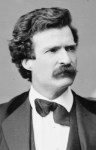
Mark Twain, by Matthew Brady, 1871 (Public Domain in the US, via Wikipedia)

Mark Twain, by Matthew Brady, 1871 (Public Domain in the US, via Wikipedia)

Towards the end of his life, Mark Twain wrote, the Library of America (LOA) says,

The political and commercial morals of the United States are not merely food for laughter, they are an entire banquet.

I’m not sure the US had/has a monopoly on this. However, let me get to the point. LOA published Twain’s column, “A presidential candidate”, back in 2012 but, given the current political shenanigans in the USA (no offence to my American readers intended), I couldn’t resist sharing it with you today. It’s very, very brief, so my post will be too. In fact, I suggest you ignore my post, and just click on the link below to read it yourself.

Sometimes, I think, we forget – at least I do – how little things have changed really. Just read Twain’s opening:

I have pretty much made up my mind to run for President. What the country wants is a candidate who cannot be injured by investigation of his past history, so that the enemies of the party will be unable to rake up anything against him that nobody ever heard of before. If you know the worst about a candidate, to begin with, every attempt to spring things on him will be checkmated. Now I am going to enter the field with an open record. I am going to own up in advance to all the wickedness I have done …

And he then proceeds to own up to a wide range of rather bizarre “wickedness” as you would expect from Twain, wickedness like running “a rheumatic grandfather” up a tree in the middle of a night because he snored, and burying a dead aunt under a tree to fertilise his vine. He also ran away, he says, at the battle of Gettysburg. His friends try to excuse him, he writes, on the basis that he was trying to emulate George Washington at Valley Forge, but no, he says, the reason is that he was scared. He’d like his country to be saved but would prefer someone else to save it. Indeed, he writes,

My invariable practice in war has been to bring out of every fight two­-thirds more men than when I went in. This seems to me to be Napoleonic in its grandeur.

I like his style! He also discusses his financial views and what he would do with poor people, but you can read those for yourself.

LOA tells us that the piece was written the year before the presidential race between Republican James A. Garfield and Democrat Winfield Scott Hancock. Twain supported Garfield. As American readers would know, Garfield won, but was assassinated before he finished his first year.

But that’s another story. Twain’s “A presidential candidate” is an entertaining piece of political satire in which Twain suggests that all he need do to be a valid candidate is to make known upfront his “wrongdoings”. What sort of man he is, he implies, is far less relevant. Indeed, Twain once wrote that “an honest man in politics shines more there than he would elsewhere”. If Twain is at all representative of his times, it makes me think that not as much has changed in the last hundred or so years regarding our attitudes to politics and politicians as current commentators think.

Mark Twain
“A presidential candidate”
The Library of America
Originally published as Mark Twain as a presidential candidate, 1879
Available: Online

Monday musings on Australian literature: Contemporary thoughts on Elizabeth Harrower

Contemporary is an odd word isn’t it? I like using it, but worry about ambiguity, given it can mean either “living or occurring at the same time” or “belonging to or occurring in the present”. So, when I say “contemporary thoughts on Elizabeth Harrower”, how do you know which meaning I intend? Well, to put your minds at rest, in this instance I’m intending the former.

Elizabeth Harrower, A few days in the countryMany of you know who Harrower is, but for those who don’t, she’s an Australian writer who was active in the 1950s to 1970s, and then largely disappeared from view. She was born in 1928 and is still alive. Four of her five novels were published in the 1950s to 1960s. The fifth novel, In certain circles, was written in the late 1960s to early 1970s, but not published until 2014, because she withdrew it from publication at the time. Her short story collection, A few days in the country, and other stories, was published last year, but includes stories dating back to the 1960s. (I have reviewed three of her books.)

So, she was an unknown to many of us when her books started appearing in Text Publishing’s Classics series. What a find she’s been, but what, I wondered, was thought about her in her heyday, and where did she fit in that literary world. To Trove, therefore, I went – and found the snippets I’m sharing today.

The first comes from “Your bookshelf” by Joyce Halstead in The Australian Women’s Weekly in 1961. Halstead writes briefly about Harrower’s third novel, The catherine wheel, which was published in 1960. She describes the plot, and concludes with her assessment:

An intense, probing study of human relationships, intricately and interestingly resolved, and deserving of high literary praise.

That certainly accords with my experience of Harrower’s writing, though I haven’t read this one – yet.

Elizabeth Harrower The watch towerNext comes another article from The Australian Women’s Weekly, this time in 1966. (Why was this very literary writer mainly featuring in a women’s magazine?) The article is titled “Op art? … Commas caused full stop” and is about her fourth novel, The watch tower. It conveys a lovely sense of Harrower’s down-to-earthness:

We mentioned the publishers’ description of her as “one of Australia’s most sensitive and psychologically perceptive novelists.”

“You know, you shouldn’t blame writers for what other people say about them,” said Miss Harrower.

She says that she had never studied psychology, and that:

“Because I am interested in people, it doesn’t mean that I go around consciously analysing them … Sometimes it is years afterwards that you remember an occurrence which, when it happened, just flowed past you.”

She then describes “having words” with her publisher (for whom, in fact, she worked herself, because writers, she said, need to have a job unless they are “a Morris West or have a private income”):

“When the publishers sent me the proofs I found they had altered all my ‘whichs’ to ‘thats’ and had taken out a lot of commas. I didn’t like it — so I changed them all back.”

I love this. I much prefer “whichs” to “thats”, regardless of what grammarians say about nonrestrictive and restrictive clauses, and I’m inclined to use more commas than less, despite modern style!

My city’s newspaper, The Canberra Times, also wrote about The watch tower, in early 1967. The reviewer, John Laird, admires Harrower’s writing, saying she:

employs a style distinguished by its sensitivity and subtlety, and displays considerable ability in capturing the flow of thoughts, emotions, and sense-impressions in the minds of her two main women characters.

But, he concludes that

What is not so convincing is the portrait of Laura’s misogynic husband. To me he seems a specially concocted figure, largely an embodiment of the malevolent and destructive forces that constantly menace the women characters in Elizabeth Harrower’s novel world.

I wonder how many women would find him “not so convincing”? Seems like Mr Laird wants to underplay the gender aspect of the “malevolent and destructive forces” menacing the women?

The next two articles* also come from The Canberra Times. One, in 1967, announces that Harrower (along with George Johnston and Thomas Keneally) had won a 12-month Commonwealth Literary Fund Fellowship, which is, I expect, the Fellowship that led to In certain circles, the one she withdrew from publication.

Second time around …

The other article comes from 1979, and we are now getting into re-issues of her work. The article, written by Lyn Frost, is titled “Fine Australian writing new and rediscovered”. It announces a new imprint, Sirius Quality Paperbacks, by Angus and Robertson. “The first six books”, Frost writes, “are by women and some have been out of print for far too long. Teachers of Australian literature must be grateful for their appearance.” I sure hope they were! The authors include Henry Handel Richardson, Eleanor Dark, Christina Stead and, of course, Elizabeth Harrower. In fact, the six books include two of Harrower’s, The Catherine wheel and The long prospect (which Stead called Harrower’s “masterpiece”). Frost is impressed by Harrower’s writing, saying:

I can’t think how I’ve missed reading Harrower’s perceptive work before this.

How embarrassing is it that this was exactly the response many of us had over 30 years later when Text started republishing her!

Then, along similar lines, comes critic Peter Pierce in 1988 reviewing Murray Bail’s The Faber book of contemporary Australian short stories in The Canberra Times (again). It’s a “real” review which discusses the anthology at some depth, including reference, naturally, to some of the works included. One is Elizabeth Harrower’s “The cost of things” (which also appears in A few days in the country, and other stories). Pierce describes Harrower as “Too little celebrated and too long silent in Australian literature”. (I had to laugh at Pierce’s comment that the anthology is “misleadingly titled” but that “Bail is unapologetic about including stories written nearly half a century ago”. “Contemporary” by any other name!)

There are other brief references to Harrower – including to her being a National Book Council Award judge in 1981 – but I’ll conclude with another article from The Canberra Times. It’s one of those weekly new-paperback-releases columns, and this particular week’s bunch, in 1995, included Harrower’s The long prospect (ETT Imprint). Columnist (and local English teacher) Veronica Sen calls it a “determinedly unsentimental novel”, and says that it treats “suburban small-mindedness and the pain of growing up … with panache”.

If you haven’t read Harrower yet, I hope my post has pushed you a little further in her direction.

* The Canberra Times has been digitised, to date, by the NLA, up to 1995, whereas the Sydney Morning Herald, for example, has been digitised to 1954. Disparities like this are primarily due to what permissions are granted by the respective rights holders.