Monday musings on Australian literature: AWW Reading Bingo Challenge

I did have another post planned for today, but it can wait – indeed, it might be better written if it waited – because I’d like to tell you about a special sub-challenge in this year’s Australian Women Writers (AWW) Challenge. A Reading Bingo.

awwchallenge2016If, like me, you are not really up on blogger challenge culture, you may not know what a Reading Bingo is. You may not want to know, either, but I figure it never hurts to share knowledge about what’s going on in the lit-blogosphere.  The AWW Challenge’s Bingo was created by Kelly of Orange Pekoe Reviews, who has done them before. Her idea was to inject a little fun into the Challenge, and perhaps encourage a different set of readers to join in. So, here is how it works … You

  • Choose one (or both) of the two Bingo Cards created for challenge. (Each card contains 9 boxes suggesting different topics or categories of books – written on course by Australian women writers – that you might like to read.)
  • Read a book in each of the categories on the card (or cards) you’ve chosen, until you complete the card – between 1 January 2016 and 31 October 2016.
  • Review each book you read on a blog or GoodReads or other reviewing site.
  • Write a wrap up post on your blog and post a link to it  – or post links to your GoodReads (or other) reviews – on the Bingo post on the AWW Challenge site.

There will be prizes. Currently, we have prizes for Australian residents, but we are hoping to organise prizes for overseas readers as well.

You can find all the details about the Bingo challenge online here, but here are the categories to get you thinking:

Bingo Card One:

  • A book with a mystery
  • A book by someone under thirty
  • A book that’s more than 10 years old
  • A book by an indigenous author
  • FREE SQUARE
  • A bestseller
  • A book set in the outback
  • A short story collection
  • A book published this year.

Bingo Card Two:

  • A book set in your favourite town or city
  • A forgotten classic
  • A book you heard about online
  • A funny book
  • FREE SQUARE
  • A book by someone of a different ethnicity to you
  • The first book by a favourite author
  • A book with poems
  • A book of non-fiction

So, if you are taking part in the challenge now, or would like to take part, this might be a way of helping you mix up your reading and explore some areas of writing that you don’t usually read. Or, it could encourage you to get to some books on your TBR that you just need that little bit of extra impetus to pick up. I have just the book for the Forgotten Classic box, one that I’ve picked up and put down may times over the last decade. This might very well be its time!

I guess this is all a bit whimsical. I’m not sure it will change my reading practices much, except for that classic, because I’m pretty confident that I read enough variety that books will naturally fill the spots! It will be interesting to see.

Do any of these categories speak to your TBR? (You can answer with non-Aussie women’s books if you like!)

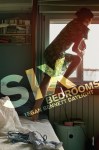
Tegan Bennett Daylight, Six bedrooms (Review)

Tegan Bennett Daylight, Six bedroomsI have just read Tegan Bennett Daylight’s collection of short stories, Six bedrooms, in my quest to read at least some of the Stella Prize shortlist before the announcement of the winner on the 19th of this month. I haven’t read Daylight before – she has written three novels, among other things – so I was glad for the added incentive to read her now. It helped, of course, that Brother Gums and family gave me the book for my birthday!

So, Six bedrooms. It’s a collection of 10 short stories, seven of which have been published previously in literary journals and anthologies. Eight are written in first person, and the other two in third. While the stories are all complete within themselves, as you’d expect, one character, Tasha, appears in four of them, the first, fourth, seventh and tenth. Evenly spaced out in other words, providing a nice sense of continuity and a sort of narrative framework for the whole. That, briefly, is the form of the book, but let’s get now to the content.

Most of the stories could be described as coming-of-age stories, as most of the protagonists are in their teens or early twenties. If you define coming-of-age broadly – that is, as a time of growth, transition and establishing identity – almost all the stories could be described as that. In the last story, “Together alone”, for example, Tasha is 36 years old, but while she’s certainly more “together” than her first appearance at 15 years old, she still has unresolved issues in her life, mainly to do with a missing brother and an ex-husband. This brings me to the epigraph. It’s by Tim Winton, and says “… the past is in us, not behind us. Things are never over.” A truism, you might say, but in this world where “closure” seems to be the thing, it’s worth remembering.

Although only the four Tasha stories are linked by character, there are several themes that recur in the book, besides the coming-of-age one. One is closely related to coming-of-age – the idea of the misfit. How many of us felt we were misfits, had that excruciating sense of feeling out of step with everyone else, only to discover later that those who looked so together felt the same! Tasha, in her first appearance in the book’s opening story “Like a virgin”, goes to a party with her friend Judy. She’s 15 years old, and feels ashamed because they showed everyone else how unable they were to deal with a party. Jane, the younger of two sisters in “Trouble”, feels lonely and awkward, a poor copy of her sister, and despises herself. And so on. Rose in “J’aime Rose”, though, has a different take. She calls herself a misfit, then soon after argues that she isn’t because she “didn’t have the courage”. For her a misfit is one who stands out through, say, “triple-pierced ears” or “a radical devotion to a singer or a style”. A rose by any other name I’d say! Anyhow, misfit or not, Rose, like many of the book’s protagonists, is lonely and unconfident, which leads her, like those other protagonists, to behave selfishly or even spitefully at times. The thing is that it’s all so believable! Unfortunately.

Other recurrent themes or motifs include missing people (parents, in particular, but also siblings, who disappear or die) which can exacerbate outsiderness, lack of sexual confidence, and friendships that survive or don’t under the weight of adolescent self-obsession and inexperience. Tasha and Judy remain friends through the jealousies and little lies to the last story when they are in the thirties, while Sarah and Fern in “Other animals” can’t survive a terrible difference in experience that Sarah doesn’t understand until way later. Daylight captures beautifully here the naive narrator who describes what she sees without having the maturity to understand the shadows beneath.

I enjoyed all the stories, but some stood out more than others. The Tasha stories for example. Daylight doesn’t broadcast the continuity, but provides hints – the name of the friend, the alcoholic but loving mother, the brother – that clue you in to the fact these stories are about the same person.

I also particularly enjoyed the title story, “Six bedrooms”, one of the non-previously-published stories in the book. The six bedrooms refer to a share-house. After all, you couldn’t really have a book about adolescents and young adults without one share-house story! The narrator here is 19-year-old Claire. Daylight builds the story with tight, effective narrative control. The residents of five bedrooms are introduced in the first couple of pages leaving us to wonder about the sixth. We learn about him four pages in. And Claire tells us that she has a friend in the house, with whom she’d moved from a previous house, but it’s clear the friendship is not strong. That too is left hanging, unexplained, until later in the story when we realise there are other perspectives besides Claire’s. Gradually, the relationships and their tensions are developed as Claire tries to find her own way and place. She befriends William, the resident of the sixth bedroom, but it never quite goes the way she’d like:

William sat on the one single chair. I smiled at him but it was as though the smile missed him, went over his head.

AND

I waited for him to touch me. I left my hand lying beside him so he could pick it up, but his hands were busy. He was itchy, and he needed to smoke …

AND

I invented a persona for myself: I was a girlfriend. Almost.

The problem is that she, like other narrators in the book, is naive, and there are things about William that she, in her naiveté, missed completely. Her pain of feeling stupid and alone is palpable.

Ultimately, Six bedrooms is about youth’s painful lessons. Its power lies in the way it captures the small (and not so small) excruciating moments in our lives when we know things aren’t right, but we don’t know how to right them. There are no dramatic resolutions or big light bulb moments, but there are glimmers of a forward momentum in many of the characters’ lives, such as Tasha realising in “Together alone” that “I might have been harder to live with than I thought”. Mostly, though, it’s about accepting that “awkwardness and trouble are part of being alive’’ (“Trouble”), that things are, indeed, never quite over. Another good Stella shortlist choice.

awwchallenge2016Tegan Bennett Daylight
Six bedrooms
North Sydney: Vintage Books, 2015
215pp.
ISBN: 9780857989130

Miles Franklin Award 2016 Longlist

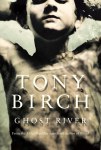
Tony Birch, Ghost riverI don’t always post the Miles Franklin Award Longlist, but having posted on the award in this week’s Monday Musings, I feel I’m on a roll! The longlist was announced the day after my post, so I thought I’d give it a couple of days before I bombarded you again!

Here is the list:

  • Tony Birch’s Ghost River (my review)
  • Stephen Daisley’s Coming rain
  • Peggy Frew’s Hope farm
  • Myfanwy Jones’ Leap
  • Mireille Juchau’s The world without us
  • Stephen Orr’s The hands: An Australian pastoral (my review)
  • AS Patrić’s Black rock white city
  • Lucy Treloar’s Salt Creek
  • Charlotte Wood’s The natural way of things

Some random observations:

  • Five of the nine longlisted books are by women writers. The Guardian, in its announcement of the award, wrote that “In 2009, the award came under fire for an all-male shortlist, but since then Miles Franklin longlists have comprised 41 women and 33 men.” This 2009 shortlist, together with a very poor showing for women over the history of the awards up to 2011, was a factor that led to the creation of the Stella Prize. Tara Moss wrote on her blog, back in 2011, that “Since the Miles Franklin Award began in 1957, a woman has won 13 times. Four times this woman was Thea Astley, but twice she shared the award. Since 2001 two women have won, from the pool of 10 awards.” Since then, as The Guardian says, women have fared significantly better, but that doesn’t mean vigilance isn’t still needed. No-one wants women to win on anything except merit. Recent pushes therefore are not about some sort of affirmative action, but about consciousness raising to ensure that biases – conscious or otherwise – don’t affect women’s writing being published in the first place or being taken seriously at awards’ time*.
  • Although on average I read more books by women than by men, I’ve only read two of the longlist and both are by men – proving that I’m not as one-sided as I might sometimes look!
  • Three of five books by women – those by Frew, Juchau and Wood – have also been shortlisted for the Stella Prize.
  • Lucy Treloar’s Salt Creek is a debut novel.

The shortlist will be announced in May, and the winner in June. As far as I can tell, no specific dates beyond that have been published, certainly not on any official sites.

* Oh, and I fully appreciate that women aren’t the only group of writers who could benefit by consciousness-raising. Indigenous writers, writers from other diverse backgrounds, experimental writers – all don’t feature well enough our major awards.

Monday musings on Australian literature: Miles Franklin Award, the first decade (1958-1967)

Miles Franklin

Miles Franklin, c. 1940s (Presumed Public Domain, via Wikipedia)

This month we expect to see the announcement of the Miles Franklin Award longlist. While it’s no longer Australia’s richest literary prize, it is still the best-known and, if you can measure such things, our most prestigious. It is managed by a Trustee using the estate left for that purpose by author Miles Franklin. It was first awarded in 1958 for a novel published in 1957. Until the late 1980s, the award was dated for the year of publication, not the year of granting the award as now.

Given that we are now in April and interest in the award will be hotting up again, I decided to potter around Trove and see what commentators and/or authors thought about it in its first decade. (See the Award’s official site if you’d like to see a complete list of winners.) My intention is not to give a potted history or a thorough analysis of the award’s early days but to share some interesting snippets which provide some insights into the life and times … Ready? Here goes …

Politics and the award

Where there’s kudos to be had, you’ll usually find a politician. It’s not surprising, therefore, that the first prize, worth £500, was given by the Prime Minister of the day, R.G. Menzies. That first winner was – fittingly, really – Patrick White’s Voss. I say fitting because White is also our first (and only to date) Nobel Prize Winner for Literature. Anyhow, The Canberra Times of 3 April reported on the ceremony:

Mr. Menzies said the novel in Australia was reaching maturity in a “turbulent activity of blossoming world literature.”

He said with the small encouragement being given by the Commonwealth literary board, “a career of art and literature” was an increasing possibility.

What do you think “turbulent activity of blossoming world literature” means? And, did careers in “art and literature” become more possible? I think the “Commonwealth literary board” refers to the Commonwealth Literary Fund, which underwent some changes in Menzies’ time.

In 1959, the award was won by Randolph Stow’s To the islands. Once again, there was a political response, albeit an indirect one. The Canberra Times of 24 April reported on Mr. Haylen (Labor MP for Parkes) speaking in the House of Representatives during the debate on the Universities Commission Bill:

He said it was a sorry state of affairs that of the 17 books that had been considered for the Miles Franklin award for 1958, only five had been printed in Australia.

The winning novel had been printed in England.

He said further assistance should go towards the establishment of a subsidised university printing press, similar to the Oxford and Cambridge University presses in England.

Fascinating. I have written before on the wonderful work done by our university presses. He also said the Commonwealth Government should support the establishment of a chair of Australian literature in every Australian university.

A posthumous award

The third book to receive the award was Vance Palmer’s The big fellow. Lisa (ANZLitLovers) has read it as part of her Miles Franklin reading project. She feels it’s not up to the standard of the first two winners, and wonders whether it was one of those lifetime achievement awards. Certainly, the Palmers were significant supporters of and contributors to Australia’s life of letters in the 1930s to 1950s.

The award was accepted by Palmer’s wife Nettie at the Adelaide Festival of the Arts, quite a contrast to the first award ceremony being “a literary gathering in the Rural Bank building” in Sydney.

Multiple wins

Patrick White Terrace

Patrick White Terrace, National Library of Australia

Several writers have won the award more than once, with two writers – Thea Astley and Tim Winton – winning four times. By the end of the award’s first decade, two writers had won it twice – Patrick White and yes, Thea Astley. In addition to his Voss win, White won the 1961 award with Riders in the chariot, and Astley won the 1962 and 1965 awards with The well dressed explorer and Slow natives.

The Canberra Times of 21 April quotes the judges on White’s Riders in the chariot:

 After reading, and re-reading this book, we have no hesitation in saying that it is a great novel, a novel that moves us to admiration for the creative impulse that has produced it. Its philosophy may not be original, but its people, their environment, and their actions are indisputably so.

They also describe what they believe to be its message, asking “is it not legitimate to expect a message from a work of this poetic and philosophical cast?” Yes, I think it is!

On Thea Astley’s second win, The slow natives, The Canberra Times of 22 April quoted the judges as saying that she was “A brilliant novelist with an inimitable style of her own”. But it was this in newspaper’s report that I found particularly interesting:

Most of the novels were well worth reading, and it was noted with interest that more writers than usual dealt with urban or country town themes, fewer with the outback and the aboriginal problem. There was more satire, more wit, and a considerable flavour of sophistication.

Noted by the judges I presume. Fewer dealt with “the outback and the aboriginal problem”. What to say to that except that it’s probably good to see writers moving onto more town and city themes than the outback, given where most people live, and, presuming that most of the writers were white, it’s also probably a positive thing that there were fewer books about “the aboriginal problem”! The thing about reading these older newspaper reports is the insight they provide into past attitudes.

The lesser-knowns

As always with awards, there are wins, like Vance Palmer’s, that haven’t remained in the public eye. I’ll share two others from the first decade. First is George Turner who shared the 1963 award with the better known Sumner Locke Elliot. Turner’s novel was The cupboard under the stairs. Once again Lisa comes to our aid with a review (and she liked this one better!). The Canberra Times wrote an article on 13 July a couple of months after the announcement. There is a reason for this belatedness. Apparently at the time of winning the award “it was impossible to obtain a copy in Australia”. Indeed, they say, “the first printing sold out so quickly that no copies ever reached Canberra”. This makes me think of MP Mr Haylen, and his desire for university presses, because Trove shows that Turner’s novel was first published in England. At least we don’t have that problem now!

The Canberra Times liked the book, which is about a farmer’s nervous breakdown. It has some faults they say, but overall “it is a compelling story, and as a study of madness it explores ground rarely covered in Australian literature.” Madness. That’s language we wouldn’t use now, isn’t it?

The other is Peter Mathers Trap, which, yes, Lisa has also reviewed. She found it hard going, but how wonderful that we have a review available online. Bloggers provide such an important service when they review older books! Thanks Lisa. Anyhow, according to The Canberra Times of 21 April, Mathers was living in London when his win was announced, and expressed surprise that he had won. Its story is pessimistic, Lisa says, pitting Melbourne’s slums and pubs against “glittering” society, and its main character, Jack Trap, is of mixed background, including indigenous Australian. Most reviewers, it seems, saw it as satire. However, Mathers, The Canberra Times says, “preferred not to call the novel a ‘satire’, but a ‘comic novel’ in the tradition of Irish writers from the 18th century down to Flan O’Brien, who died recently.” Hmm, an Australian Flan O’Brien. That has piqued my interest – in addition to the fact that I hadn’t heard of Mathers before (besides seeing him in Miles Franklin lists, that is).

… and finally

I did not specifically look for articles in The Canberra Times! It just so happens the most interesting articles that popped up in response to my search terms came from it. A comment on the quality of The Canberra Times or something to do with what papers have been digitised?

Delicious descriptions from Elizabeth Harrower’s Circles

Elizabeth Harrower, In certain circlesIn my recent review of Elizabeth Harrower’s In certain circles, I focused on the book’s form and overall themes, and warned that I’d produce a Delicious Descriptions to share some of her writing. So, here it is, organised by headings to keep it simple …

Gender

I didn’t focus on gender in my review, but this is Harrower, and it is one of her ongoing concerns. It was in The watch tower, where the powerlessness of neglected young women put them in danger’s way, psychological and physical, and it’s here, in this novel, where women’s choices are constrained by expectations and conventions.

I’ll just share one scene. It occurs when Zoe responds to Lily who doesn’t believe Zoe understands how some women put children first. Zoe feels she understands only too well:

‘What I do understand is that at any point in a woman’s life she may come across something like a cement pyramid in the middle of the road. Another person. People. She’s capable of sitting there, convinced that it would be impossible to forsake her position, till it becomes a private Thermopylae. This sort of block was probably designed for the survival of our species, but the cost’s high. What makes men superior is that they don’t – on the whole – stop functioning forever because of another person. They lack this built-in handicap, and are they lucky!’

Zoe is finally seeing the light – though where she sees this “built-in handicap” originating is not clear! She admits elsewhere that she’s been complicit in her dismantlement, that she’d “agreed to be devalued”, but she’s also aware that there are other drivers. It’s part of the complexity of this novel that nothing, including gender, is black-and-white.

Emotional states

Harrower captures her characters’ emotional states with breathtaking economy. Since they’re short I’ll give you a few examples.

Zoe, soon after meeting Stephen:

He despised her. An invisible hand dragged a steel rake across her body.

My, that’s visceral isn’t it?

Here is Anna during a conversation with Russell. By this time their unstated feelings for each other are starting to affect their ability to relate naturally:

Speaking in a tone of enormous objectivity, looking straight ahead, Anna felt her skeleton waver secretly, as though it were seaweed pressed about by movements of deepest seas, invisible on the glittering surface.

You feel the effort it takes her, here, to keep strong. I also love this description of Anna after the crisis:

Anna was stared at. As though by choice, she left her face undefended, and her trustfulness was felt by others as a gift of purest generosity, as a sort of honour.

By contrast, here is her brother Stephen around the same time, finally confronting the waste of his and Zoe’s relationship:

Like someone kidnapped and dragged across a frontier into a place where the language and laws were wholly unknown, he glanced about with a mix of desperation and bafflement.

Place

While the interior is Harrower’s focus, she can write exteriors beautifully, usually to reflect, or contrast, her characters’ emotions.

Anna, widowed not so long ago and wiser in affairs of the heart, talks to Zoe about time being short. Zoe, in the early rosy years of her marriage, doesn’t understand her, thinking:

This was the wrong moment for pensive utterances–a gorgeous, glowing evening with the beach down there suddenly deserted and the sand turning cool and white, and the calm harbour a bay of light, and the trees beatified by the late sunlight.

Blissful – and yet methinks the “cool and white” could also intimate the chill around the corner?

And here are Zoe and Stephen, after fifteen years of marriage:

They went along the beach and swam in Russell’s pool before anyone was awake. The sun rose swiftly and built a shifting honeycomb of light on the green floor of the pool. The early morning had a glassy fragility, and Zoe felt the link between herself and Stephen to have that same extreme fragility and transparency; a breath could shatter it. Stephen churned through the water. She shivered and pulled on her towelling coat, prudently absent from past and future.

I mean, really, that last sentence. It’s a kicker isn’t it?

This was not an easy post to write, not because it was hard to find good examples to share but because it was hard to choose from so many delicious descriptions. All I can say is that I hope those I’ve chosen are good enough to inspire you to read this book, if you haven’t already.