Stella Prize 2016 Longlist

The announcement of the Stella Prize Longlist is a red-letter day for the Australian Women Writers Challenge … and also for me of course. So, today, I share the list with you. The shortlist will be announced on March 10.

The judges look good to me: writer Emily Maguire, memoirist/essayist Alice Pung, author/academic Brenda Walker, literary critic/author Geordie Williamson, and bookseller/founder of the Indigenous Literacy Foundation Suzy Wilson.

Alice Robinson, Anchor Point

Anyhow, here is the longlist:

  • The women’s pages by Debra Adelaide (Pan Macmillan) (I’ll be reading this soon)
  • The other side of the world by Stephanie Bishop (Hachette)
  • Panthers and the Museum of Fire by Jen Craig (Spineless Wonders)
  • Six bedrooms by Tegan Bennett Daylight (Random House)
  • Hope Farm by Peggy Frew (Scribe)
  • A few days in the country: And other stories by Elizabeth Harrower (Text) (on my TBR, and now higher in my priority list)
  • A guide to Berlin by Gail Jones (Random House)
  • The world without us by Mireille Juchau (Bloomsbury)
  • A short history of Richard Kline by Amanda Lohrey (Black Inc)
  • Anchor point by Alice Robinson (Affirm Press) (my review)
  • The natural way of things by Charlotte Wood (Allen & Unwin)
  • Small acts of disappearance: Essays on hunger by Fiona Wright (Giramondo)

As is usual for the Stella, the list include novels, short story collections (a few in fact) and non-fiction … And as is usual, I have most on my radar. I have read the first three Stella Prize winners: Carrie Tiffany’s Mateship with birds, Clare Wright’s The forgotten rebels of Eureka and Emily Bittos’s The strays. All have been excellent reads, which augurs well for my enjoyment of this year – although as we have been hearing lately past practice is no predictor of the future!

I’m sorry that this is a basic post … I am holidaying for a few days in a gorgeous Aussie country town, and am without my normal computing facilities. The iPad us not conducive to long post writing. Phew, do I hear you say?

Monday musings on Australian literature: National Libraries Day (UK)

Caroline of Book Word blog has written a wonderful post about National Libraries Day in the UK, which took place just this last weekend, on Saturday, 6th February. Caroline provides three witnesses to argue for the value of libraries:

  • Peter Balaba, Head Librarian, Nakaseke Community Library, Uganda, who talks about the outreach programs they provide in a book-poor region.
  • novelist Zadie Smith who tried, but failed, to save Kensal Rise Library in London and who notes the government’s shameful behaviour, saying that “it’s always difficult to explain to people with money what it’s like to have very little”.
  • novelist Ali Smith who last year published Public library and other stories, which is so titled not because there’s a story titled “Public library” (there isn’t) but because interspersed through it are “comments from other bookish people about the importance of libraries”. Love this.

ALIA Library Lovers Day 2016 GraphicYou’re probably wondering why I’m telling this story in my Monday musings on Australian literature post series. Well, firstly it’s because I thought it was a great initiative and wondered whether we have anything like this here in Australia.  I found that we do have something similar: ALIA (Australian Library and Information Association)’s nomination of Valentine’s Day as ALIA Library Lovers Day. They suggest a bunch of activities that libraries can use to promote library love (including using the social media hashtag #librarylove) and they have merchandise for sale. There’s a 2015 wrap up page which suggests that only a few assorted libraries around Australia took up the idea but those which did seemed to have got into the swing of it. What I didn’t find on their site is any sort of overall statement about the day – its genesis and history, its goals, its long term plans. Clearly it is about encouraging people to use their libraries, but is there a stronger, more coordinated political agenda?

I searched a little more and found an online article on a site called Infotoday. The article, written in 2011 it seems, says this:

As with many great ideas, the genesis of LLD is lost in time, but here in NSW we launched our first LLD in 2006, claiming Feb. 14 for library lovers and renaming it in honor of their passion. To celebrate, public libraries across NSW gave away more than 50,000 “love libraries” wristbands in green, blue, and orange and invited their clients to wear their hearts on their wrists. In 2007, the campaign went national under the auspices of the Australian Library and Information Association (ALIA) and Public Libraries Australia (PLA) as their first combined advocacy event. (Today Australia, tomorrow the world!)

So it sounds like it’s been going for around 10 years now. The article describes some of the activities that have happened over the years, and concludes that LLD has been

an enduring and unqualified success story for NSW public libraries. Staff members love to get involved by dressing in red and pink, decorating their libraries, baking, and choosing and reviewing books. And the community members welcome the opportunity to thank library staff, enjoy a chocolate or two, and share their love of books and reading.

Again, it doesn’t say how they define or measure success of the program, but it sounds pretty localised and low key (not to mention rather female oriented. Aren’t there any male librarians? Not that men can’t enjoy baking or dressing in red and pink, but …!) Still, I’m glad there’s something promotional happening.

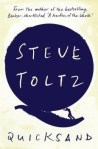
My other reason for writing this post is that it gives me an opportunity to share a couple of quotes from Steve Toltz’s Quicksand, which I reviewed last week. Here’s our anti-hero looking for a book:

The salesgirl at the third bookstore I tried suggested the local branch of the public library. I know what you’re thinking bailiffs: What is this, 1996? I raced through the streets as if through a time tunnel, to the bland underwhelming brick building behind the train station. My heart sank when I came across an island desk with twenty computer terminals, leather couches and espresso machines, but upon asking the librarian directed me to the appropriate shelf. It was there …

Not very positive really, but the second reference is worse:

After half an hour drive, the van halted and the door opened onto an abandoned-looking prison courtyard reminiscent of a library on Sunday.

Hmm … I guess it’s a good thing that Toltz notices libraries enough to satirise them, but if his is a common attitude it’s a worry.

Are you aware of a library promotion “day” in your neck of the woods? And, if so, do you take part?

George G. Foster, The eating-houses (Review)

Some of you will know that Mr Gums and I love to eat out. So, when I saw a Library of America (LOA) Story of the Week titled “The eating-houses” by one George G Foster appear in my in-box at the end of last year, I knew I had to read it. I just had to find the time to slip it in. I eventually did, and here I am.

The first thing to say about it is that those of us who thought our era of conspicuous dining-out was a new thing are wrong. Foster writes in the opening paragraph of his article that:

We once undertook to count these establishments in the lower part of the City, but got surfeited on the smell of fried grease before we got half through the first street, and were obliged to go home in a cab. We believe, however, that there can’t be less than a hundred of them within half a mile radius of the Exchange. They are too important a “slice” [see publication details below to understand this reference] of New York to be overlooked …

This reminded me of my return last year to the little suburban shopping centre of my teen years – Wahroonga, in Sydney. I looked across the street, from where I was standing, to the local supermarket on the corner and ran my eyes down from it to the other corner. Just a short distance. And it was wall-to-wall cafes with nary another business in between. That was just that little side of that street. There were a couple of cafes on my side, and around both corners, and across the other street as well. Amazeballs as the young would say! Clearly Mr Gums and I are not alone in our predilection for eating out.

Anyhow, back to Foster. You might have gathered from my excerpt that he was not much in favour of these establishments, and you’d be right. He satirises them, and their denizens, pretty mercilessly. He clearly thinks home-cooked meals are  better – “the fare is generally bad enough — not nearly equal to that which the cook at Home above Bleecker* saves for the beggars”. He ridicules their lack of style and taste:

It is really wonderful how men of refined tastes and pampered habits, who at home are as fastidious as luxury and a delicate appetite can make them, find it in their hearts—or stomachs either—to gorge such disgusting masses of stringy meat and tepid vegetables, and to go about their business again under the fond delusion that they have dined.

He categorises the three main styles of eating-houses – satirically referencing the great Swedish botanist and taxonomist Linnæus – and satirises the diners. He describes a journalist ordering “rosegoose”: “when goose leaps suddenly in front of a poet of the Press, who ordered it probably through a commendable preference for a brother of the quill”.

At the cheap Sweenyorum “sixpenny eating-house” style of place, you only get a spoken menu which, he says, “does away with lying in print, to which bills of fare as well as newspapers are too much addicted”. Still, beware here, he advises, of added extras, or your sixpenny cut will suddenly be “seven shillin'”! Just order “a small plate of roast beef mixed, (this means mashed turnips and potatoes in equal quantities)”, add some bread perhaps, and a glass of free water. Then you will “pay one shilling for the whole, and go about your business like a refreshed and sensible man”.

He briefly mentions the cake and coffee shops which are open all night, and therefore frequented by journalists, firemen, and the like. He reserves special praise for the latter:

They are generally far more moderate than politicians and less noisy than gentlemen. At the first tingle of the fire-bell they leap like crouching greyhounds, and are in an instant darting through the street towards their respective engine-houses—whence they emerge dragging their ponderous machines behind them, ready to work like Titans all night and all day, exposing themselves to every peril of life and limb, and performing incredible feats of daring strength, to save the property of people who know nothing about them, care nothing for them, and perhaps will scarcely take the trouble to thank them.

Oh dear – I do hope their “plate of biscuits with a lump of butter in the belly for three cents, and a cup of coffee for as much more” provided them with enough sustenance! And did you note the reference to politicians?

His final paragraph is reserved for the “expensive and aristocratic restaurant of which Delmonico’s is the only complete specimen in the United States”. I was rather intrigued by this because he argues that, at a place like this, you will get

a dinner which is not merely a quantity of food deposited in the stomach, but is in every sense and to all the senses a great work of art.

“A great work of art” is how many of our top chefs like to see their food today. Paying large sums for food like this seems, in one sense, insensitive. And yet, does art have to last forever, or can it be enjoyed in the moment before we move on? I’m still pondering this.

The interesting thing is, as LOA’s notes tell us, that Foster’s “preference for high-society haunts like Delmonico’s ultimately caused his downfall”. He was imprisoned for forging cheques, and spent 9 months in prison the year before he died. His obituary in the New York Times described him as

a remarkable example of the worthlessness of a brilliant talent unguided by a moral purpose, or a decent regard for the proprieties of civilized society.

Do consider reading this article. It’s short and entertaining – and is a fascinating piece of 19th century social history.

George G. Foster
“The eating-houses”
First published: In New York in slices, by an Experience Carver, 1849.
Available: Online at the Library of America

* A residential area of New York.

Steve Toltz, Quicksand (Review)

Steve Toltz, Quicksand, soverAldo Benjamin, the anti-hero of Quicksand, accuses wannabe-writer-friend Liam of having “such little imagination”. You could not, however, accuse the novel’s author, Steve Toltz, of this. Quicksand reads a bit like a 19th century satirical novel transplanted into the 21st century. It is big in size (though not as big as his first, A fraction of the whole), broad in subject matter, and full of colourful characters. It’s wild, imaginative, and darkly funny. It’s the sort of novel that you can tackle from different angles depending on what interests you most. Religion, god and fate? Tick. Life and death? Tick. Love and friendship? Tick. Social commentary? Tick. Art (broadly), artists and the making of art? Tick.

“Bad luck is my pathology” (Aldo)

Before I tell you what interested me, though, a little about the plot. Quicksand is the story of Aldo Benjamin, told partly by his friend, Liam Wilder, and partly by himself. Meeting at high school, Aldo and Liam remain friends until the book closes when they are in their early to mid 40s. Together they reveal the ups and downs – mostly downs – of Aldo’s life as he tries to make his way against what he sees as the tide of fate or bad luck. The novel opens when they are in their early 40s and Aldo, a wheelchair-bound paraplegic, has just been released from prison. We don’t know how long he’s been in the wheelchair or how that came to be, and we don’t know why he’d been in prison. These come out in the course of the novel, which flashes back in chapter 2 to their schooldays and then moves between the past and present to tell the story. We also discover in the opening chapter that Liam is trying to restart his writing career by writing Aldo’s story, much to Aldo’s resigned disgust: “I’m nobody’s muse”, he says. Ironically, though, not only is he Liam’s muse but he’d also been one for his musician wife, Stella, and photographer lover, Mimi.

Aldo, “The King of Unforced Errors” as Liam calls him or a sufferer of “clinical frustration” as Aldo sees it, gets into all sorts of strife. He is regularly bailed out by friends (who cover “the full suite of professional services” such as policeman Liam, Doc Castles, his old school teacher Mr Morrell) and lovers. Nothing much works for him, particularly not his various get-rich-quick business ideas, like the device that was supposed to detect the presence of peanuts in food, or clothing for obese toddlers, or tanning salon taxis, or maternity clothes for goths (“a demographic with an 85% abortion rate”). Moreover, his marriage fails, his child dies, his multiple suicide attempts are unsuccessful, and, to rub salt into his wounds, he ends up in the two places he most fears, prison and hospital. As Liam says in response to Aldo’s question about why write his story:

Because you’ll inspire people. To count their blessings.

I love this sort of writing, this dark humour. It’s full-on to read because lines like this frequently fall over each other, sentence after sentence, leaving you wanting to stop and smell the roses for a minute. Still, I was hooked by page 5 when Aldo presents to Liam a long list of our 21st century insecurities, pretensions and self-deceptions, including

‘You know how people are worried their kid’s going to turn to them and say, What did you do to the biosphere, Daddy?

AND

‘And you know how there’s no replacement cycle too short for today’s consumer?’

AND

‘You know how while we’re enjoying reading dystopian fiction, for half our population this society is dystopia?’

These go on for three pages. Wonderful satire. No matter how superior we might feel about most of the pronouncements, there’s bound to be one or two that get us where it hurts! Toltz looks unblinkingly at our lives and shines them right back at us in the most direct, no-punches-pulled way. It made me laugh – but ruefully, if not guiltily at times – almost every page.

“To troubleshoot the human spirit” (Liam)

The other aspect I enjoyed was the thread about art, artists and art-making. The major focus of this is Liam’s novel about Aldo’s life. After years of failure and giving up, Liam finally decides that Aldo is his “natural subject”. Writing about him, Liam tells Aldo, would be “to troubleshoot the human spirit”. It would, he thinks, throw him “into a head-on collision with the meaning of fate, humanity’s sure, but Aldo’s strange specific one too”. Aldo and Liam discuss Liam’s progress frequently, with Aldo always ready with an astute comment or criticism. “Does my character in your book”, Aldo asks, “need to be more consistent than my character in real life?” “No,” says Liam, though in fact many readers do, I find, prefer it to be so!

Liam is not the only creator in the novel. Aldo’s musician wife Stella plunders Aldo’s life for her songs, and then there’s the art teacher from Liam and Aldo’s school, and the artists in the artists’ residence where Aldo lives for a time. Through all these the novel interrogates why we make art, what art is about. Early on, before he starts his Aldo novel and after years of failure, Liam decides to give up writing. He says

I had settled into a life I had always feared but secretly desired, a life uninterrupted and unencumbered by art.

Chapter 2, though, begins with art teacher Morrell’s statement that:

We make art because being alive is a hostage situation in which our abductors are silent and we cannot even intuit their demands.

Art is not, however, presented as something that is easy or even always right. Toltz’s artists struggle to achieve, are frequently self-obsessed, and unapologetically mine their friends and family for material, all the while, thinks Aldo at least, having a good time. “Their brains are all pleasure centres and no circumference”, he tells the court. They are not, in other words, unilaterally lauded, but this is, of course, ironic, if not subversive, since what we are reading is a novel, a work of art itself. The wheels within wheels in this novel – the ironies, the paradoxes, the self-reflexivity – sometimes make your head spin, but in the end, there is an end, and it’s a surprisingly positive one.

And here, I’ll end! This novel is so full of funny lines, so full of ideas, so full of biting commentary, that it’s hard to know when to stop so, as EM Forster* wishes novelists could do, I think I’ll just end, not because I’m bored which is the reason he gives, but because I might as well.

Lisa at ANZLitLovers also enjoyed it.

Steve Toltz
Quicksand
Hamish Hamilton, 2015
435pp.
ISBN: 9781926428680

* Aspects of the novel, by EM Forster

Monday musings on Australian literature: New Australian releases for 2016

With the first month of 2016 already gone, I thought it was time I had a look around to see what new works are in the pipeline this year from our Aussie authors. This is a serendipitous list, partly because tracking down this information isn’t easy and partly because I’m more interested in providing a flavour than in being comprehensive. My main aim is simply to tantalise us all a little, so below you’ll find novels, short stories, poetry, essays and non-fiction. See what you think:

  • Larissa Behrendt’s Finding Eliza: Power and Colonial Storytelling (January 2016, University of Queensland Press) is a non-fiction work inspired by the story of Eliza Fraser, who was apparently captured by the Butchulla people after she was shipwrecked on their island in 1836. Fraser’s story has been fictionalised before. Behrendt springboards from Eliza’s story to explore how indigenous people in Australia and elsewhere have been portrayed in their colonisers’ stories.
  • David Brooks’ Napoleon’s roads (February 2016, University of Queensland Press) is the fourth collection of short stories from this writer, who is a poet and prose writer.
  • Maxine Beneba Clarke’s The hate race (August 2016, Hachette Australia) is a memoir by the author of the award-winning short story collection, Foreign soil. It’s the second of a three book deal she has with Hachette, the third one being a novel.
  • Helen Garner’s Everywhere I look (March 2016, Text Publishing) is a collection of essays. I’ve reviewed here a few books by Garner, including a novel, Cosmo Cosmolino, a book of short stories, Postcards from Surfers, and a non-fiction work, This house of grief, but I haven’t read any of her essay collections. This might be the one.
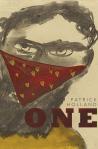
  • Patrick Holland, OnePatrick Holland’s One (April 2016, Transit Lounge) is an historical fiction about Australia’s last bushrangers. Known for his minimalist writing, Holland has written several works, including The Mary Smokes boys and Navigatio, both of which were shortlisted for various awards.
  • Fiona McFarlane’s The high places (February 2016, Hamish Hamilton) is a collection of short stories from the author of the multiply-shortlisted The night guest, which I reviewed last year.
  • Michelle Michau-Crawford’s Leaving Elvis (February 2016, University of Western Australia Publishing) is a debut collection of mostly, but not totally, linked short stories. Michau-Crawford is new to me but she won the Australian Book Review’s Elizabeth Jolley Short Story Prize in 2013, so this collection sounds worth checking out.
  • Meg and Tom Keneally’s The Soldier’s Curse (March 2016, Random House) is the first in The Monserrat Series (a new crime series). I wouldn’t normally include a crime book in a list like this because crime is not in my sphere of interest, but I’m including this one because it’s by Tom Keneally, who as you probably know is the Booker prize-winning author of Schindler’s ark, a Miles Franklin winning author, to name just a couple of accolades. And, also because it’s a collaborative novel with his daughter.
  • Ellen van Neerven’s Comfort food (May 2016, University of Queensland Press) is a book of poetry by the author of the award-winning Heat and light and the short story Sweetest thing, both of which I’ve reviewed.
  • Terri-Ann White’s Desert writing: Stories from country (February 2016, University of Western Australia Publishing) is something a little different. It’s a collection edited by White, comprising stories that resulted from writers’ workshops held with indigenous people in remote communities.
  • Dominique Wilson’s That devil’s madness (February 2016, Transit Lounge) is a novel set in Algeria. It tells story of a photojournalist who, while covering current politics decides to also retrace the steps of her grandfather a century earlier. Wilson was a founding editor of the now defunct but much lamented literary journal Wet Ink. (For an advance review of this book, check out Lisa’s at ANZLitLovers.)
  • Arnold Zable’s The fighter (April 2016, Text Publishing) is a biography of Henry Nissen, a boy from Melbourne’s Carlton who became a champion boxer but who now devotes his spare time to helping disaffected people on the streets. It’s also about his mother and her decline into mental illness. I’ve read a few of Zable’s novels, including The sea of many returns which I reviewed early in this blog’s life.

Steven Amsterdam, Ashley Hay, Toni Jordan and Hannah Kent, some of whose earlier books I have reviewed here, also have books coming out this year … Meanwhile, Text Publishing is continuing to put out its classics, and Fremantle Press is starting a Treasures series celebrating its 40 years of publishing. Nice to see backlists (or older works) continuing to get second lives.

Do any of these inspire or you? Or are there books coming up in your region or area of interest that you are keen to read.