Neomad: A Yijala Yala Project

First up, I have to admit that I’m rather challenged when it comes to e-book apps. I did love The Wasteland app which I reviewed a couple of years ago, but it was clearly designed for a, let us say, more staid demographic. Neomad, “a futuristic fantasy” in three episodes, is another matter. Consequently, my aim here is less to review it as a work and more to talk about what seems to be an exciting collaborative project involving 30 young people from Roebourne in the Pilbara, comic artist Sutu and filmmaker Benjamin Dukroz.

We hear so much negativity about indigenous communities in outback Australia that it’s easy to feel the situation is hopeless. However, while we should not forget for a minute that the situation for many indigenous Australians is still dire, things are happening. Not enough, but nonetheless something, and these things can surely be seen as models for further action.
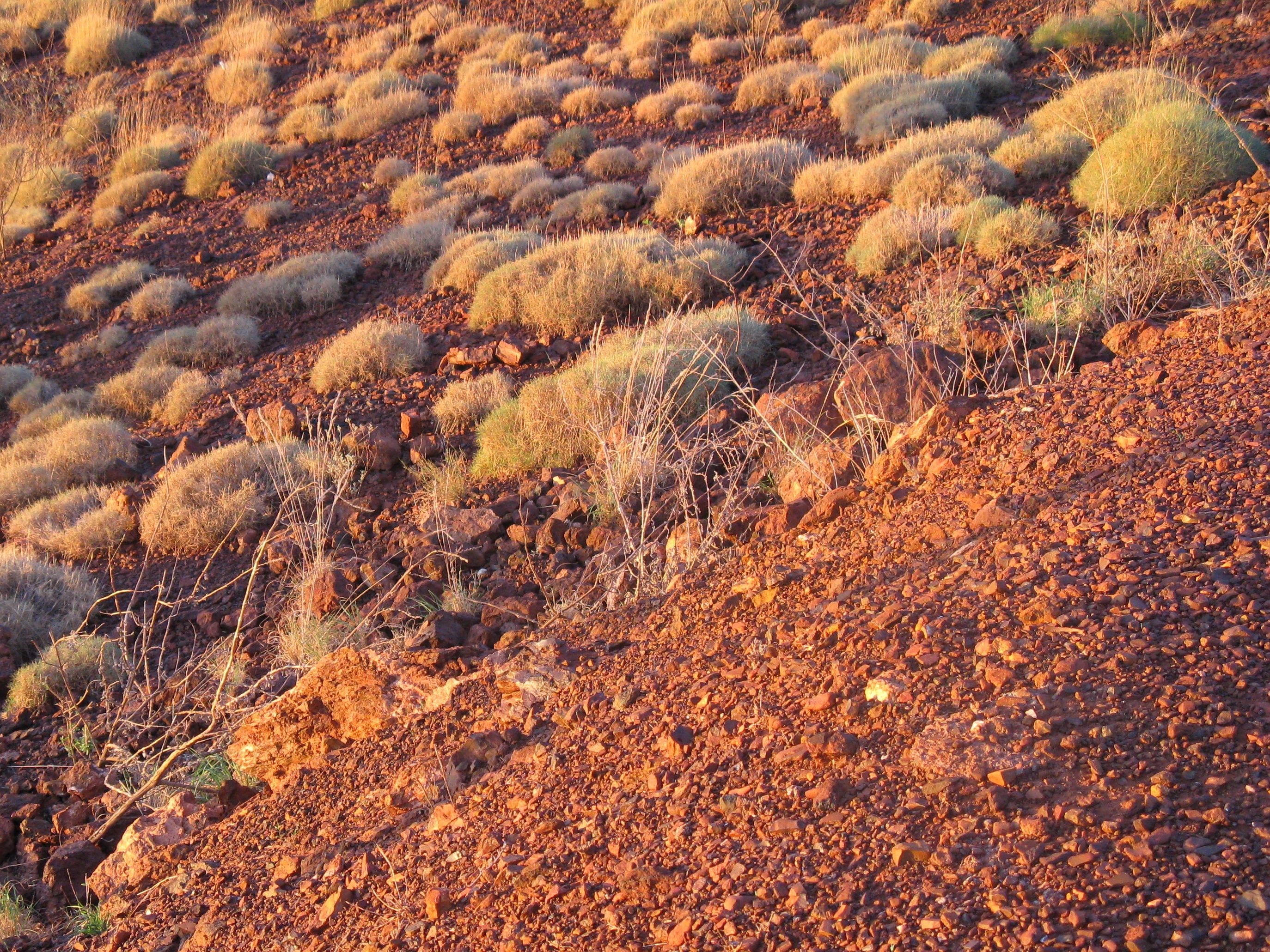
Pilbara landscape, Newman, WA

Pilbara landscape, Newman, WA

So, back to Neomad. Produced as part of the Yijala Yala Project, it’s currently available free from iTunes (or the Apple App store), so I decided to have a look. It’s colourful and infectious. The Facebook site calls it “an interactive digital comic”. Late last year it won Best Game – Multimedia Production in the 2013 ATOM (Association of Teachers of Media) Awards. So what is it? A game? A book? What’s in a name did I hear you say? Fair enough. Let’s not get bogged down in categorisation right now, except to say that it’s an example of what is apparently being described as “interactive fiction”.

Ignoring the categorisation issue, though, the ATOM site is useful for the neat little summary it provides of the story:

Set over three episodes, NEOMAD follows the story of the Love Punks and Satellite Sisters, techno savvy young heroes from a futuristic Roebourne in the Pilbara region of WA, who speed through the desert full of spy bots, magic crystals and fallen rocket boosters branded with a mysterious petroglyph.

The app itself says it is “based on real characters, places and stories that connect people to their country”. This becomes evident when you click “Play” on the Home page, as it starts with a lovely live-action sequence set somewhere in the Pilbara, involving a group of indigenous boys. They are the Love Punks and they feature in Episode 1. They tell us “When you see a star fall at night be sure to welcome it to the land for the star brings new life”. The story is set in 2076 and sees the Love Punks chasing a space robot (oops, space bot) across the sky, only to find, when it crashes to earth, that it bears the image of an ancient petroglyph. What does this mean? Episode 2 begins with quite a different live-action sequence involving indigenous girls, The Satellite Sisters, learning about the importance of their ancestors. Like Episode 1, this sequence progresses into an animated comic, which you can read as text or click on the speech bubbles to hear the characters speak the words.

As an interactive-game-challenged person I wasn’t always sure how much was on each “page”. For example, on some pages extra “things” pop up when you tap to “turn” the page. I presume that you can’t miss anything important, that no matter where or how often you tap or swipe, the app won’t take you to the next “page” until you’ve seen everything on the current page. However, I did find it disconcerting, as pages vary in layout so you never know what might be there behind the clicks! I expect this is not a problem for the people to whom the app is targeted though!

There’s an Extras section, comprising short live-action movies providing background to the project. We hear the kids talk about the meaning – one Satellite Sister tell us “that film is about the Satellite Sisters looking after the country” – and the process, such as how they learnt to use PhotoShop to colour the animation. There is also a “junk percussion” music video in which the Love Punks perform music using found objects such as corrugated iron, old drums and metal bars. I love it!

What is exciting about this project is that, amongst all the glitz and colour, it reaffirms the importance of country. As the name – Neo (new) Mad (nomad) – suggests, it marries respect for tradition with acceptance of change, looking for the points where they coincide:

“You boys need to respect these men and their robots. They’re all part of our community and they’re all looking after our ngurr, our country.”

“Sorry Nanna Tootie.”

This is kids telling a story in their language for other kids – and it is good fun. If you have young children around – and even if you don’t – do check it out. Meanwhile, thanks to E. Teacherlord, as our daughter calls her brother, for introducing me to the Love Punks and Satellite Sisters.
Adelaide Festival Awards for Literature, 2014

As you know, I don’t report on every literary award announced throughout the year in Australia. There are way too many. But I did want to announce the Adelaide Festival Awards for Literature, partly because they are only awarded biennially. They were established in 1986. The fact that they are awarded biennially means of course that they draw on a larger pool than most of our literary awards.

Ten awards/fellowships were made this year, some of them for works and/or authors I don’t know, but here they are:

  • Premier’s Award: Frank Moorhouse, Cold light (my review). Coincidentally the first book in Moorhouse’s Edith trilogy, of which Cold light is the final book, won the 1994 Adelaide Festival Award. Cold light also won the Queensland Literary Prize last year.
  • Nonfiction: Kate Richards, Madness: A memoir. Richards’ memoir about living with psychosis for 10 years was also shortlisted for the 2013 Queensland Literary Awards Nonfiction prize.
  • Children’s literature: Catherine Jinks, A very unusual pursuit. Jinks is an established, multiple award-winning author of adult and children’s fiction in multiple genres, including science fiction and crime.
  • Young adult fiction: Vikki Wakefield, Friday Brown. Wakefield apparently won this award in 2012, also.
  • John Bray Poetry Award: Lisa Jacobson, The sunlit zone. This book was shortlisted last year for the inaugural Stella Prize. I have this book – a speculative fiction verse novel – in my sights. According to Wikipedia, the late John Bray was a lawyer, academic and published poet, and also served as Chief Justice of the Supreme Court of South Australia.
  • Wakefield Press Unpublished Manuscript Award: Cassie Flanagan-Willanski, Here where we live. I recently reviewed the winner of this prize at the 2012 Festival, Margaret Merrilees’ The first week.
  • Jill Blewett Playwright’s Award: Phillip Kavanagh, Replay. The late Jill Blewett was a playwright. She was married to Labor politician, Neal Blewett, and tragically died when she was electrocuted. In 2012, Kavanagh won the Patrick White Playwright’s Award.
  • Barbara Hanrahan Fellowship: Jennifer Mills, Common Monsters. I haven’t read Mills yet, though I have her well-regarded Gone in my pile. She has won several awards for her short stories, and in 2012 was named one of Sydney Morning Herald’s Best Young Australian Novelists. I must get to that book! The late Barbara Hanrahan, author and artist, wrote the gorgeously evocative autobiographical novel, The scent of eucalyptus, which I’ve reviewed here.
  • Max Fatchen Fellowship: Catherine Norton (pseudonym for Helen Dinmoe), Falling. The late Max Fatchen was a journalist and children’s writer. The fellowship is, consequently, for writers for young people.
  • Tangkanungku Pintyanthi Fellowship for South Australian Aboriginal and Torres Strait Islander writers: Ali Cobby Eckermann, Hopes crossing. Cobby Eckermann is an established indigenous Australian novelist and poet. She was a member of the stolen generation. She met her birth mother when she was 34, and started to connect with her culture from this time. This is the first time this award has been offered, and I understand that Tangkanungku Pintyanthi, from the Kaurna language, means ‘writing from the heart’.

Most of these authors are clearly well-established, but that doesn’t mean of course that they are flush with money.  Congratulations to them all, established or not. May their awards make a difference to their writing lives.

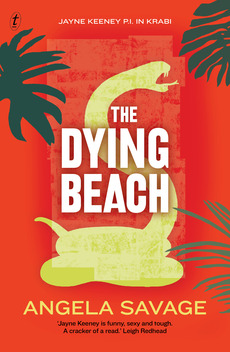
Angela Savage, The dying beach (Review)

Angela Savage, The dying beach

Courtesy: Text Publishing

When I received Angela Savage’s novel The dying beach out of the blue last year as a review copy, I didn’t put it high in my list of reading priorities. I had – and still have – a pile of books waiting patiently, and I rarely (never say never) read crime novels. However, two things changed my mind. One is that Christos Tsiolkas dedicated Barracuda to Savage, and the other is that this year, for the first time, I will visit Thailand, which is the novel’s setting. So, I read it!

The dying beach is apparently Savage’s third Jayne Keeney novel. Jayne is a Private Investigator, an expat Australian living in Bangkok. Like many female PIs, she’s gutsy, hard-living, resourceful, somewhat of an outsider, and rather inclined to bristle if her independence is questioned. (Perhaps this latter is not confined to female PIs, but can be said of many women working for a living in a male dominated environment.) In this, her third outing, she’s holidaying in Krabi with her new (I believe) business and romantic partner, Rajiv, an expat Indian. They are a bit of an odd couple, but we all know about opposites attracting:

Jayne had never imagined she could find love with a man five years her junior, whose background was so different from her own. But Rajiv gave her a whole new way of viewing the world. As if he’d walked into her life and drawn back the curtain, revealing a window she hadn’t even known was there.

I love that image of “revealing a window she hadn’t even known was there”. Savage’s writing is pretty direct, keeping a good pace appropriate to its genre, but that doesn’t mean that it lacks lovely descriptions and turns of phrase. Indeed, the language is one of the delights of the book. Without disturbing her pacing, Savage regularly surprises with telling descriptions. This, for example, gives you a perfect picture of Jayne in full flight:

She was like an appliance without an off switch that kept accelerating under pressure until it threatened to short circuit.

The novel opens with a sort of prologue in which Sigrid, who doesn’t play an ongoing role in the novel, finds a body floating in the water at Princess Beach. Sigrid is surprised to discover that it’s the tour guide Pla whom she’d spoken to only that week. She notices some bruises around the neck suggesting Pla “did not die gently”. The novel proper then starts at Chapter 1 with Rajiv and Jayne in bed. It’s here (in the chapter not the bed!) that Savage provides us with the necessary background to their relationship, to where it stands at this point, and implies tensions that may play out in the future – as indeed they do. There is, in other words, a love story to this crime novel. At the end of this chapter they front up to the counter at Barracuda (surely a little homage to Christos Tsiolkas) Tours planning to book a tour with the “exceptional guide” they’d had a couple of days previously – the unlucky Pla, of course. And so the scene is set for their holiday to become another job, albeit unpaid, something that bothers the practical Rajiv but not our justice-seeking heroine.

I’m not going to write a lot more about the story, because it’s the sort of book people read for plot and surprises, and I don’t want to give them away. I will say though that it offers lovely insights into Thai character and culture. It is also unashamedly political with its plot revolving around the conflict between economic development and environmental degradation. The title itself refers to the fact that mass shrimp-farming results in the destruction of mangrove forests which in turn causes the beaches to “die”.

Savage also presents a critique of Australia, when she has Jayne contemplate why she is living in Thailand:

Truth was Jayne had long felt an outsider among her peers. Since her final year of high school, in fact, when she spent six tantalising months on a student exchange in France. When she returned home, her passion for the outside world met with a lack of interest, if not downright hostility – as though it was disloyal to find anywhere as attractive as Australia. […] For all that Australians like to boast about the national larrikin spirit, in reality only irreverence was tolerated. Unconventionality was not.

It’s a little didactic, but ouch! There is, unfortunately, some truth in this.

The final point I’d like to make relates to its narrative style. Having read several complex novels recently, that is, books with shifting points of view and intricate chronologies, I rather enjoyed reading something more straightforward. I say this, however, comparatively speaking, because The dying beach does not have a simple, linear chronology. Not only are there a few flashback chapters interspersed strategically through the book, but occasionally the narrative focus shifts from Jayne and her cohort to a couple of characters who appear to be implicated in at least some of the murders. The voice is essentially third person omniscient, though sometimes we seem to shift inside a character’s head. Savage does it well, and I enjoyed the change after the intensity of my recent reads.

The dying beach is a compelling page-turner that also makes some points about cultural difference and tolerance, the challenge of tourism, and the complexity of environmental management in developing countries. It achieves this without, to the best of my admittedly limited knowledge, deviating dramatically from the conventions of its genre. And that is a good thing, because the result is the sort of novel that could appeal to a cross-over audience. The challenge, though, is how to get readers, like me for example, to cross over.

awwchallenge2014Angela Savage
The dying beach
Melbourne: Text Publishing, 2013
339pp.
Cover design: WH Chong
ISBN: 9781921922497

(Review copy supplied by Text Publishing)

Monday musings on Australian literature: Confronting Australian novels

Recently I wrote a post about reading difficult novels and proposed categories for different sorts of “difficulties”. One of those categories was “emotionally confronting”, but I realise now that a better category would have been “emotionally and/or intellectually confronting”. By intellectually confronting I don’t mean challenging in terms of style, language, structure, but in terms of ideas. Many books which confront us with difficult ideas can, of course, evoke an emotional response in us, but I didn’t explore that in my original post. However, having just read Tsiolkas’ Barracuda (my review) I now plan to.

An intellectually confronting book is, I’d say, one that shocks us out of our complacency. This is what Christos Tsiolkas wants to do. In a conversation with Heather Taylor Johnson in Meanjin‘s Canberra issue, he expressed his concern that:

We are reading for confirmation of ourselves rather than to challenge ourselves and I think that is a real danger.

And said, in response to a question regarding mixed reactions to The slap, that

I want to pose questions that are unsettling or troubling.

He certainly does that. I’d love to hear what you think about novels that confront you – that unsettle your mind, shake your world view, disturb your core. Meanwhile, I’m going talk about some of the authors whose novels have surprised or challenged me over the last 2-3 decades.

Thea Astley could hardly, I think, be said to write to confirm ourselves. Her books face head on the ugliness in our culture – between white and black, rich and poor, city and country. The first book of hers that I read, the ironically titled A kindness cup, deals with racism and violence in a country town. The multiple effects of rain shadow (my review) explores the impact on a group of people of a violent episode on Palm Island. Interestingly, given my recent post on the subject, one of the voices telling the story is indigenous. Drylands is concerned with the impoverishment of the spirit as she sees it in late 20th century Australia. I wonder what she’d think now! One of her characters in The multiple effects of rainshadow says:

There must be a million readers out there who crave boredom! Who love the dangling participle! Who wallow in truisms and fatuous theorisings! … Slap in your popular aphorisms, buddy, but don’t make ‘em think!

Helen Garner has to be one of our bravest writers. Her nonfiction books, The first stone and Joe Cinque’s consolation, and her novel, The spare room, in particular, demonstrate her willingness to explore ideas that may be unpalatable, that run against the status quo. Somehow, she’s managed to confront the resultant criticism – which she’s faced since her first critically acclaimed but also slammed first novel, Monkey grip –  and keep on going. I’ve said it before – and will probably say it again – I don’t always agree with Garner, but I like that she confronts us with ideas that we need to think about in our dealings with others. Whether you agree with her take on the Ormond College sexual harassment case or whether you relate to her frustration with her terminally-illl friend, you have to admit that she doesn’t let us get away with “soft” thinking.

Elizabeth Jolley unsettled readers from the beginning with her willingness to expose the soul’s darkness in ordinary people and to have them enact that darkness in often shocking ways. It was Weekly’s ruthless action at the end of The newspaper of Claremont Street, the second or third Jolley book I read, that sold me. Really! I soon learnt not to be surprised by anything her characters thought or did. Jolley is more about the interior, the psyche, than the other writers I’m mentioning here but she’s no less confronting to our comfort.

Andrew McGahan‘s first two novels Praise and 1988 are examples of Grunge Lit or Generation X literature. I found them, particularly Praise, confronting because of the nihilism, hopelessness of the characters. They have no goals, they immerse themselves in sex, drugs and alcohol rather than “honest work”.  According to Wikipedia, Grunge Lit, a term not necessarily accepted by those it’s been applied to, did not last long. But, in these two books, McGahan did present Australian readers with something that made us sit up and take note – not just for the writing, but for the unappealing lifestyles he presented.

Kim Scott‘s That deadman dance (my review) is an historical novel, so we could perhaps tell ourselves that things are different now, but any honest reader would realise that Bobby’s statement in the novel that –

We learned your words and songs and stories, and never knew you didn’t want to hear ours

– continues to have ramifications today, and that, in fact, we are still not very good at hearing their story. Scott is just one of several contemporary indigenous writers, such as Alexis Wright, Melissa Lucashenko and Jeanine Leane, who are starting to confront us with their story, with their perspective of what living in Australia today is like for those who have been disenfranchised.

Christos Tsiolkas needs little introduction if you’ve been reading my recent posts. He has been shocking readers pretty much since his first novel, Loaded, which I’m embarrassed to say that I haven’t read. I did, though, hear about it! His books are firmly urban/suburban and tend to be set within immigrant subcultures. As far as I understand, most if not all traverse similar subject matter, the cultural conflict, social mobility, sexual identity confusion, racism, that often lead to aggression if not actual violence. His language is raw, and unapologetic, but his characters are real. You may not like them all, you may feel you aren’t like them or that you don’t know people like them, but they seem to be part of contemporary Australia, an Australia in which ridicule of and violence against people who are different seems to be getting worse. At least, I fear it’s not getting better. Tsiolkas wants us to think about this, to not sit in our comfortable middle-class suburban homes and worry about nothing more than our generally self-serving concerns.

Australian feminist, Anne Summers, said in a lecture that “I found [Helen Garner’s] The First Stone to be brave and honest and quite confronting–the hallmarks of a very good book.” I think she’s right. There’s nothing wrong with reading books that reflect ourselves and explore our concerns, but surely our reading has the most value when we are shaken out of the familiar and made to face other worlds and different ideas.

Now, over to you …