Gillian Mears, Foal’s bread (Review)

Gillian Mears' Foal's bread

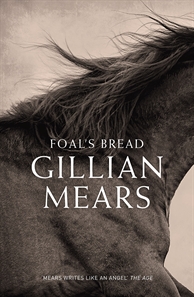
Foal's bread cover (Courtesy: Allen & Unwin)

Foal’s bread is Gillian Mears’ first novel in around 16 years, though she has published short stories in the interim. This is a shame because she is a beautiful writer, particularly when she writes about the place she knows best, the farms of the New South Wales north coast.

Foal’s bread is about the Nancarrow family. Most of it takes place between 1926 and around 1950, as it follows the fortunes of Noah (Noey/Noh), her husband Roley (Rowley), and the extended family with which they live. Their main business is dairying, but their passion is the sport of horse high jumping. At the beginning of the novel, Roley is an Australian high jump champion and Noey a young 14 year-old girl with promise. They meet, marry (early in the novel, so no spoilers here) and start working hard to achieve their dream of having their own high jumping team. Hope on, Hope ever, is their motto. That’s the broad plot; the story is far more complex.

This is an archetypal story of strong country people coping (or not) with “luckiness and unluckiness” in life. In its depiction of hardship, stoicism and the will to survive in rural families, it reminded me – in tone if not in story – of Geoff Page’s The scarringThe hardship may come from different quarters, but in both there is a sense of forces out of one’s control combining with things of the characters’ own making. That mix – of characters’ judgement or behaviour clashing with luck (usually bad) – tends to make for a good story, in the right hands. It’s a bit Shakespearean in a way, the clash of character with “the elements”.
Australian Women Writers Challenge 2012 Badge

Australian Women Writers Challenge (Design: Book'dout - Shelleyrae)

In Foal’s bread, the “bad luck” has many sources, some human and some natural, such as incest, lightning strikes, giving birth to a disabled child, war and drought. How the characters cope with the trials confronting them is the core of the novel. Unfortunately, more often than not, they don’t cope very well. Why? Mainly due to their very human failings. Noey and Roley, whose marriage commences with great love and big dreams, don’t know how to communicate when calamity hits. Noey’s mother-in-law, Minna, lets her jealousy (“of the happiness she’d never seen before”) get the better of her and prefers to increase the tension between her son and his wife rather than to ameliorate it.

By now you’ll be thinking this sounds like a miserable story, and in some ways it is. But it’s not all darkness. While the novel has an almost elegiac tone, its movement is towards light. It has a three-part structure. There’s a very short Preamble which sets a tone of harshness and brutality with its references to incest, bushfires, floods, and animal cruelty.”Watch out you don’t cry” we are warned. Then there is the bulk of the novel in which the story of Noey and Roley is played out. This is followed by a Coda, set some 50 years later, in which we learn that “the old voices remain … funny, flinty, relentless”. These voices are carried into the future by Lainey, the strong, resourceful daughter of Roley and Noey, “her mother’s daughter through and through”.

A strong story, but what gives this novel its real power is the writing. Mears mixes the rough, ungrammatical country-speak of the era with glorious, rhythmical language describing the magpies, butcherbirds, trees, creeks and hills of One Tree Farm. The “one tree” is a jacaranda, and it features throughout the novel. It could almost be, dare I say it, a character. Early in the novel, when all is full of hope, it quivers “to create the feeling of a big bosomed woman wanting to waltz”. Later, as things start to collapse, it loses its leaves, but at the end “the old tree lives on … like a huge purple cloud hiding the rooflines”.

And then, of course, there are the horses. Reading this book reminded me a little of reading Tim Winton’s Breath. Mears does for horse high-jumping what Winton did for surfing. She made me feel the joy and beauty of the jump, of pushing oneself to achieve just that little bit more in a risky sport, of having a dream that keeps you going, of doing “the impossible”. Mears, like Winton, knows her subject inside out, and you feel it in her writing.

I fear I haven’t done the book justice. I’ve not really described its complex plot. I’ve named only a few of its large cast of colourful characters. It’s an ambitious book with big themes and a big style. Not everyone loves it. Some find the dialogue tricky or some descriptions overdone; some think the ending is disappointing; some think it’s stereotypical in places. I think none of these things. I’d love to know what you – if you’ve read it – think!

Gillian Mears
Foal’s bread
Sydney: Allen & Unwin, 2011
370pp.
ISBN: 9781742376295

(Uncorrected proof copy received from Lisa of ANZLitLovers in a blog giveaway)

Monday musings on Australian literature: Guest post from Tony of Tony’s Book World

As with most of my guest posters to date, I came across Tony (of Tony’s Book World) not long after I commenced blogging. He stood out like a beacon because he was a non-Aussie blogger who had read a significant amount of Australian literature, including Patrick White no less. If you check his blog, you will find that he even has a page listing his favourite Australian fiction. He (so far, anyhow) doesn’t have any other nationally focused pages. How could I not ask him to write a guest post here! Thanks Tony, it’s been great getting to know you through blogging. Not only have I enjoyed getting to know my own literature through other eyes but you’ve introduced me to some writers – like Dawn Powell – that I know will be up my alley.

Tony has chosen for his topic one of the grand dames of Australian literature …

Henry Handel Richardson and The Fortunes of Richard Mahony

English:

Henry Handel Richardson, 1945, by Coster (Presumed Public Domain, via Wikipedia)

It is terrific and I am grateful to Sue for having this opportunity to guest write in “Whispering Gums”. It took me long enough to figure out that a Whispering Gum is a tree, an Australian (eucalyptus?) tree.

I have never been to Australia. In fact I live about as far on Earth from Australia as you can get in Minneapolis, Minnesota, US, where most of our trees are either oaks or pine trees. Yet over the years I’ve developed a passion for Australian literature starting with Christina Stead and Patrick White (whom I consider probably the greatest novelist ever, just to give you an idea where I’m coming from). My appreciation of Australian literature has continued through the years with many writers including such recent writers as Tim Winton, M. J. Hyland, and Joan London.

Today I want to write about the “The Fortunes of Richard Mahony” trilogy by Henry Handel Richardson which I consider the high point of Australian literature along with Patrick White’s novels. Henry Handel Richardson was the male pseudonym of woman writer Ethel Florence Lindesay Richardson who lived from 1870 to 1946. I read this entire trilogy back in 1991 and 1992, and it was one of my most moving reading experiences.

Each of her (Henry Handel Richardson’s) novels is an effort to understand and to make us understand the complexities of a human situation, and this is in itself an invigorating and sometimes subversive exercise in following truth along unexpected paths. — Karen MacLeod, Henry Handel Richardson (1985)

Richardson later wrote that the character of Richard Mahony was based on her own physician father. What makes this trilogy so moving is the complexity and unsparing honesty that Richardson brings to the character of Richard Mahony. Just as perceptive parents know their own children, faults and all, better than anyone else in the world, children as they grow up observe their parents closely. Most children love their parents, but that does not mean they aren’t aware of their faults. From your own children, you can run but you can’t hide. Richardson gives the reader the full portrait of Richard Mahony entirely free of sentimentality. In fact Richardson said that so much had been written about the great successes among the Australian people, she wanted to give a picture of one of the many failures, and so we have this story of the slow decline of Richard Mahony.

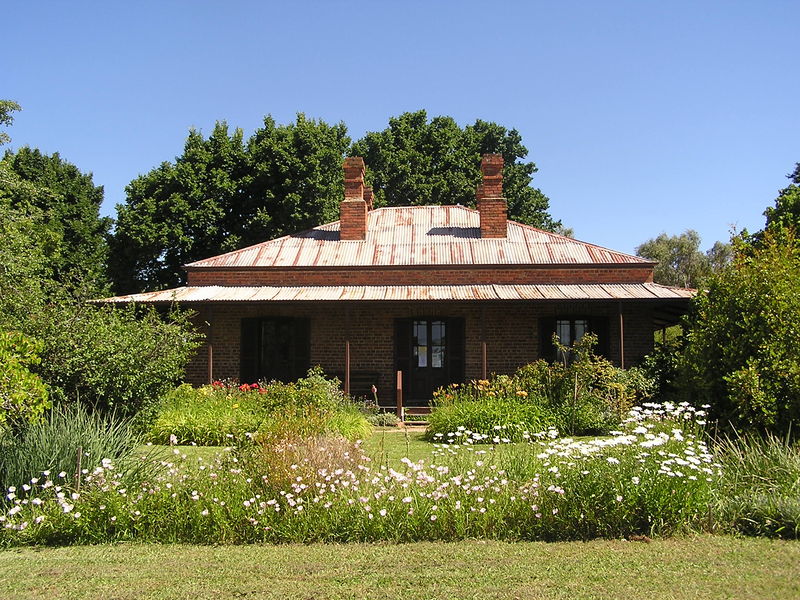
Lake View House, Chiltern

Lake View House, Chiltern, where Richardson lived when young (By Golden Wattle, via Wikipedia, using CC-BY-SA 2.5)

The first volume of the trilogy, “Australia Felix” begins at the goldfields near Melbourne in 1852. Richard is a young man just arrived from Dublin, Ireland and he is running the Diggers Emporium on the goldfields. He is more interested in reading philosophy than drinking and socializing, and most of his neighbors dislike him, thinking he is arrogant. He does meet fifteen year-old Polly whom he marries. Polly, later known as Mary, becomes a strong female figure in the trilogy. After losing his store due to accidentally selling spoiled flour, Richard takes up his original profession as a doctor

In the second volume, “The Way Home” Richard and Mary go back to the British Isles, this time to Glasgow, but soon Richard decides they can never be successful there and the couple returns to Australia and locate in the goldfields in Ballarat where he establishes a practice as a doctor. Here they finally have a daughter.

When the first two volumes of The Fortunes of Richard Mahony were originally published, there was little fanfare and few sales. All that changed when the third volume, “Ultima Thule”, was published in 1929. It was greeted with a chorus of praise from the critics, had good sales, and overnight Richardson became famous. Readers finally latched on to the tragedy of Richard Mahony and his family.

As the story in the trilogy continues, a strange thing happens. As I mentioned before, Richardson’s portrayal of Richard Mahony is honest and unsparing. Yet the reader is sympathetic and cares more about what happens to this man because of his faults and failures, not in spite of them. Richardson presents a total human being defects and all, and this complete blunt account gives the trilogy its power. Richardson applies these same forthright techniques to the wife Mary and the daughter.

Another distinctive feature of the trilogy is the style of the writing. Richardson’s writing has a visceral natural quality that puts you in to whatever scene she is depicting. I still remember some of the intense goldfield scenes vividly. There are similarities in her style to that of Patrick White, and I can’t help but think that White had read The Fortunes of Richard Mahony carefully sometime before writing his own novels.

One of Richardson’s literary heroes was Leo Tolstoy. “This is not a novel, it is a world”, wrote W. D. Howells of Tolstoy’s War and Peace, and the same line applies to The Fortunes of Richard Mahony. All of life is in these pages. As an unknown English critic said of The Fortunes of Richard Mahony, it is “one of the great inexorable books of the world’’.

The book Henry Handel Richardson – A Study by Nettie Palmer (1950) was very helpful to me in writing this article.

Why did Jane Austen?

What is it about Jane Austen? We all know the basic dichotomy. You know, the division between those who dismiss her as being slight, inconsequential, fluffy, chicklit and those who read her again and again swearing that each time they do they find something new to enjoy and appreciate. But, do you know about the dissensions that rage amongst the ranks of the latter? I often wonder how a writer so loved and admired can engender such huge and ongoing debates amongst those very ones who love and admire her!

English: Fanny sewing (detail from File:Mp-Bro...

Fanny sewing in Mansfield Park (Illus. Brock, Public Domain, via Wikipedia)

Here are some of the issues Janeites debate ad infinitum:

  • Fanny should have married Henry Crawford, not Edmund (Mansfield Park)
  • Marianne and Colonel Brandon could never be happy (Sense and sensibility)
  • Emma’s relationship with Mr Knightley is too “incestuous” to be acceptable (Emma)
  • Fanny is a weak and boring heroine (Mansfield Park)
  • Henry Tilney didn’t really love Catherine but married her out of honour for his father’s poor treatment of her (Northanger Abbey)
You would think, wouldn’t you, that fans of her books, those who read them multiple times, would agree at least on basic plotting and characterisation? But not so.
Why is this? That is, how can readers disagree with Austen and yet love her? Well, I would argue that it’s her wit and humour, her comedy – and the fact that her comedy is pointed, wicked even, but not bitter. Mr Collins (of Pride and prejudice), for example, is one of her silliest, most comic creations. He’s a snob, he’s tactless, he’s boring, but does he get his come-uppance? No. He ends as he always was, sublimely unaware of his failings – and fortunately (for him) married to the tolerant, sensible Charlotte. Then there’s Mr Wickham, the villain of the same novel. Far from getting his come-uppance for his dastardly deed – other than being stuck in a marriage with a silly girl – he receives help from the families he wronged:
Though Darcy could never receive him at Pemberley, yet, for Elizabeth’s sake, he assisted him farther in his profession.
Perhaps I should rephrase this. It probably is a come-uppance for Wickham to be stuck with the silly Lydia. Likewise, for Maria Bertram (in Mansfield Park) to end up as she did:
It ended in Mrs. Norris’s resolving to quit Mansfield and devote herself to her unfortunate Maria, and in an establishment being formed for them in another country, remote and private, where, shut up together with little society, on one side no affection, on the other no judgment, it may be reasonably supposed that their tempers became their mutual punishment.
But these punishments are mild by comparison with what happened to “villains” in most novels of the 18th and 19th centuries. This comes about because Austen’s characters exhibit a psychological realism that is somewhat unusual for the time. Her characters aren’t archetypes. They are fully realised creations who move and act in a comprehensible way. We’ve all known (or been!) an over-emotional Marianne, a proud and reserved but reliable Darcy, a silly boy-chasing Lydia, a mine-is-bigger-than-yours John Thorpe, a too-willing-to-judge Elizabeth Bennet. To so accurately render humanity was Jane Austen’s aim, as she most clearly expressed in Northanger Abbey when she described a novel as something
in which the greatest powers of the mind are displayed, in which the most thorough knowledge of human nature, the happiest delineation of its varieties, the liveliest effusions of wit and humour, are conveyed to the world in the best–chosen language.
And this is why we Janeites keep reading – and arguing about – her.

Delicious descriptions from Down Under: Jahnavi Barua on reading

In my recent review of Jahnavi Barua’s Rebirth I quoted the following line: “No, I will not buy a book today. I will try and live in my life instead”. I really wanted, though, to quote the entire preceding paragraph, but it didn’t really suit the direction of my review. And so, instead, I’m posting it today.

The protagonist, Kaberi, is in a bookshop (as you will have guessed):

I begin with the As and work my way down the bookshelves. I stop at C; I have not read Disgrace yet and would have liked to have browsed through it but somehow today my heart is not in it. Still, I wander down the aisle looking at the familiar names; I am compelled to stop at K, Kawabata. I caress the spine of the book as if stroking the hand of an old and beloved friend. I cannot forget the girl in his book, The sound of the mountain. Her relationship with her father-in-law haunts me; is it possible that there can be only friendship between a man and a woman unrelated by blood? I had been so deeply unsettled by the book when I first read it; your father had only laughed. He said I had lived so little in the real world that the fictional appeared so significant to me.

I love this paragraph for so many reasons. Let me count the ways! No, let’s not be quite so mechanical but I will say that I like it for personal and structural reasons. Personal because I’ve read and loved the two books she describes, and because I can relate to her need to caress a loved book and her being unsettled by a great book.  And structural because this paragraph contains several clues to character and even plot in the book … but I won’t give those away (beyond of course what you’ve already gleaned from this piece of text itself).

Monday musings on Australian literature: Judging a book by its cover

“Don’t judge a book by its cover” is one of those mantras that we’ve all heard. It’s a pretty valid one too – literally and metaphorically – but that doesn’t mean that we can’t enjoy looking at bookcovers and handling beautifully produced books, does it? At least that’s how I see it as a reader. For sellers, it’s a different matter. For them, there is everything to be gained and nothing to be lost in having beautiful looking and feeling books on their shelves. They know that even a nerdy reader like me will be attracted by a gorgeously produced book, will want to pick it up and fondle it and, if content matches the form, will then go ahead and buy it.

I am not going to go into the art and economics of book design here, but there is some new thinking afoot with the rise of the ebook. Publishers are starting to think again about form (and content, of course!). If you are interested in the topic, read this Guardian article by Kathryn Hughes.

Monday Musings though is about Australian literature and so I’m just going to talk about a few Australian book designers. This will be completely serendipitous because, while I do love to handle a beautiful book, I’m one of those readers who tends to be oblivious to the hard work of those behind its production. So, here goes, with apologies to all those wonderful designers I’ve overlooked.

Dean Gorissen

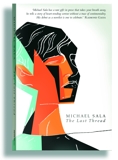
Michael Sala The last thread bookcover

The last thread (Courtesy: Affirm Press)

I discovered Gorissen only recently through the books he has designed for Affirm Press. I’ve reviewed three books in the Long Story Short Series and Michael Sala’s The last thread, all of which were designed by Gorissen. On his blog he has announced that he received a Bronze award in New York’s 3×3 Illustration Annual for the Long Story Short series and that the last three books in this series – the three I reviewed – won Gold in the Illustrators Australia Awards for 2012. What can I say? These are beautiful books – just a little smaller than the usual paperback which makes them nice to hold and tote around, and with intriguing cover designs that make you think.

On his blog Dean says this about designing his cover for The last thread:

It’s an inspiring often disturbing book and its challenge to me was to try and bring out the qualities of loneliness, sorrow, hope and ultimate strength of Michael’s story

Sandy Cull (gogoGinkgo)

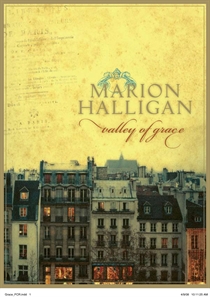
Valley of Grace book cover (Courtesy: Allen & Unwin)

One of my favourite recent(ish) paperbacks – to read and hold – is Marion Halligan‘s Valley of Grace. It’s one of those books that falls open beautifully, making it easy to read. Its font type and size is – yes – easy to read. It has a rich, yellow cover that almost glitters, and yet is subtle at the same time. And, it has flaps, like a hardback. In other words, lovely to hold and read.

Cull, who has twice won the APA Best Designed Book of the Year award, worked for Penguin for many years, before setting up her own company, gogoGinkgo, in 2005. In 2010 she started a blog, aboutbookdesign, to “chinwag about designing for the publishing industry in Australia”. It’s worth a peek. Oh, and she judged the Illustrators Australia Awards in 2011, for which Dean Gorissen designed the “call for entries”.

WH Chong

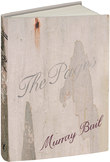
Murray Bail, The pages

The pages (Courtesy: Text Publishing)

My third example of a book I like is a hardback.  I tend to prefer paperbacks, mainly because they are smaller and lighter to carry. You won’t be surprised to hear, then, that my favourite hardbacks, from a design point of view, tend to be short books. Murray Bail‘s The pages is such a book. The cover was designed by WH Chong, who apparently works regularly with Susan Miller, an “internal designer”. Chong is a long time designer with Text Publishing, and he too, like Cull, writes a blog, called Culture Mulcher. And, like Gorissen and Cull, he has won awards for his covers. One of his awards was for John Marsden’s Hamlet. You might like to read his comments about it on this Book Design blog.

Anyhow, back to The pages. I like it because the cover is subtle and understated, which works well for this spare book about a man’s attempt to write a new philosophy. It has rough cut pages. At least some of the pages are, which works well because they give the book a lovely tactility without making it too tricky to open and turn the pages …

… which brings me to my reader’s manifesto about book design. A book must function well as a book. I do wish more publishers would think about that when they choose binding, paper edges, paper type, and font type and size.

There’s so much more to explore about book design – and particularly about how designers are meeting current challenges, not only those presented by the e-book phenomenon but also by the demand for sustainability. Meanwhile, though, you know what I’m going to ask! How important is book design to you, and what are your favourite books from a design perspective?

Jahnavi Barua, Rebirth (Review for the Shadow Man Asian Literary Prize, 2011)

Shadow Man Asian Literary Prize 2011 Badge

Image by Matt Todd of A Novel Approach

What a shame Jahnavi Barua‘s novel, Rebirth, is, to the best of my knowledge, available “for sale in the Indian Subcontinent only” (backcover). Our Shadow Man Asian team had real problems tracking this one down, but I’m very glad we did manage to obtain some copies, eventually, because this is a beautiful book.

The title, Rebirth, might give you a sense of its subject matter – but, then again, it mightn’t! The novel – novella really – is a first person monologue by a mother to her unborn child. The child is waiting to be born – not reborn – but there is a sense that for the mother, Kaberi, a rebirth might be in the offing as she explores the state of her shaky arranged marriage, and of some tricky or unresolved relationships with family and friends.

While set in India – in Bangalore and Guwahati (in the troubled province of Assam) – this novel does not have the noise and energy that often accompanies stories from the subcontinent. It’s quiet and contemplative. Moreover, while it is imbued with gorgeous descriptions of the plants and landscapes of India, and while it refers to the ongoing political unrest in Assam, it is not specifically Indian in theme. Its story is universal, that of the desire for love between husband and wife, and of the love of a mother for her child. And here is the difficult part, because it is hard to describe this largely plotless novel without making it sound twee or mawkish, but somehow it is not that at all. Barua manages to find a voice for Kaberi that is tender but matter of fact, that is tentative but also confident. The progression is chronological, commencing with her husband leaving her for another woman at the beginning of the novel just as she discovers she is pregnant (after many years of trying). She doesn’t tell him – or her family and friends – for some long time as she considers her life. In the opening paragraphs we are given a picture of her as somewhat passive and inward-looking. Before her husband left, she says she

had been partial to the large soft sofa in front of the television, from where I had a good view of the screen, but from where I also looked inwards, into the heart of the house. I did not see much of the sky or buildings clustered around our own, but all that, anyway, did not cross my mind very often, so focused was I on your father and myself and the home we had fashioned together.

Ah, we think … a person ripe for “rebirth”. And yes she is, but it is slow and undramatic as she gradually, by meeting friends, remembering her old childhood friend who’d died in a bombed bus in Assam, and reflecting on her marriage past and present, comes to a better understanding of who she is. Early in the novel she, a keen reader, says:

I will not buy a book today. I will try and live in my life instead.

As the novel progresses, we find that she is, in fact, stronger and more directed than we (and, more to the point, even she) had realised. She has, for example, written a book and organised for her friend Preetha to illustrate it. This is no simple thing, but her husband, “whose public manners were always nice”, knows nothing of this. Ah, we wonder, what is she saying about his private manners, the way he treats her? We learn, through more stories in the next few pages, that what she hasn’t received from him is tenderness and love. But we also receive a clear sense of strength growing in her:

I demand love. Now, especially now, at least now.

This comes about a quarter of the way through the novel … the rest explores, in the same quiet tone, how things fall out for Kaberi, how she confronts her fears and insecurities. Things do happen – her father dies and she returns home to Guwahati, she eventually tells her husband, family and friends about her pregnancy. You can’t hide that forever after all! In other words, there is a plot of sorts, but the story is mostly an internal one and the ending is appropriately open albeit also with some sense of things resolved.

A little over halfway though the novel Kaberi says:

Birds wheel around slowly in the cloudless sky. Seemingly aimless, but I know better; little happens in nature accidentally.

And, I’d say, little happens accidentally in the writing of this book. It has been carefully and subtly structured to lay the foundations for Kaberi’s growth, and this makes it an absolute pleasure to read.

For other reviews by the Shadow Man Asian team, please click on my Man Asian Literary Prize page.

Jahnavi Barua
Rebirth
New Delhi: Penguin Books, 2010
203pp.
ISBN: 9780143414551

(Review copy supplied by Penguin Books via Lisa of ANZLitLovers)

Shadow Man Asian Literary Prize 2011 Update

Shadow Man Asian Literary Prize 2011 Badge

Image by Matt Todd of A Novel Approach

The observant among you will have noticed that I haven’t done a Man Asian Literary Prize weekly round-up of reviews and news for a couple of weeks now. This is because our reviews have slowed down now to a crawl and hardly warrant a weekly post from me. The most recent reviews posted have been:

  • Jahnavi Barua’s Rebirth by Matt, of A Novel Approach and Lisa, of ANZLitLovers, both of whom are positive about the book.
  • Kyung-Sook Shin’s Please look after mom by Fay, of Read Ramble. She’s written a rather passionate defence of the book, addressing the negatives put forward by some reviewers. This is probably the most controversial of the shortlisted books …

While I stopped posting regular roundups, I have been updating my page of reviews* as new reviews have (dribbled) come in. Please check it out whenever you wand to find team members’ reviews of the longlisted books. Some of our reviewers have been very assiduous, reading and reviewing most if not all of the books. As for me? I am currently reading two of the books and hope to review them before …

We make our shadow winner announcement. We plan to do this a few days before March 15, which is when the official announcement will be made.

Watch this space …

* Shortlisted books are indicated by an asterisk in this page.

Monday musings on Australian literature: Favourite first (Australian) lines

This is a bit of a copout, I know, but I’m travelling this week and don’t have a lot of time to write a seriously considered post. So, I’ve decided to simply do a list – of some of my favourite first lines from Australian literature. Like most readers I think, I do love a good first line, and the way it can get you into the story from the get-go. We all know the famous ones from books like Pride and prejudice, Moby Dick, A tale of two citiesAnna Karenina but these books haven’t cornered the market on great first lines. Here are some of my favourites from Australian works (in alphabetical order by author):

“I’m losing my nouns”, she admitted. (from Thea Astley‘s Coda)

“I’ve never sailed the Amazon.” (from Thea Astley’s Drylands)

No one knew or cared where the Newspaper of Claremont Street went in her spare time. (from Elizabeth Jolley‘s The newspaper of Claremont Street)

What have you brought me Hester? (from Elizabeth Jolley’s The well)

The sea has many voices. (from David Malouf‘s Ransom)

Breed ’em tough, the old man says … (from Geoff Page‘s verse novel, The scarring)

There was movement at the station, for the word had passed around/That the colt from old Regret had got away … (from Banjo Paterson‘s poem, “The man from Snowy River)

“There is a man here, miss, asking for your uncle,” said Rose. (from Patrick White‘s Voss)

What makes a great first line? Here are some of the features that grab me – though not every great first line has all of these:

  • Is brief or spare (though there are some good long ones like A tale of two cities)
  • Reads well, particularly in terms of rhythm
  • Surprises me, shocks me or makes me laugh
  • Is puzzling or mysterious
  • Contains wordplay or intriguing imagery

There are practical things good first lines may do too, such as give an idea of what the novel is about and/or its theme/s (even if this isn’t immediately clear), set the tone and, perhaps, introduce the main (or, a significant) character. But these are additional benefits. I don’t think they are essential to grabbing the first-time reader.

How important is a first line to you? Guy Dammann, writing in The Guardian bookblog argues they are critical:

They say you should never judge a book by its cover, but they didn’t say anything about opening lines, which are surely fair game. For it seems to me that if the author can’t take the trouble, or hasn’t got the nous, to sculpt those words from which all the rest flow, then they probably won’t have taken the trouble in all those other key moments of the text when the interpretative pressure is at its highest, when the duty to capture a whole fictional world in a single breath is at its most pressing. Screw up the opening, screw up the book.

Do you have favourite first lines? I’d love to hear them – and your reasons if you’d like to share that too.

On the literary road: Omeo, Omeo, wherefore art thou Omeo?

The Omeo Plains near Benambra from Mount Blowhard

Omeo Plains (Released into Public Domain, by John O’Neill, via Wikipedia)

Ok, that’s a pretty weak beginning I know, but hands up if you’ve ever heard of Omeo in Victoria, Australia? I must say that I hadn’t until recently when I started planning our latest foray into Victoria. We decided to  travel to Melbourne via the Great Alpine Road, in Victoria’s High Country … and in that gorgeous region we found a very pretty little town called  Omeo.

And so, I checked my literary guide* and I discovered some interesting literary connections for the town. It was part of the big Gold Rush of the 1850s, and the area features in novels by Rolf Boldrewood and Henry Kingsley. I’m a bit embarrassed that I really hadn’t been aware of Kingsley until a year or so ago, but Omeo features in his best-known novel, The recollections of Geoffrey Hamlyn (1859), and in another of his novels The Hillyars and the Burtons (1865). This latter novel apparently incorporates a story inspired by the Omeo Disaster of 1854 in which a number of diggers rushed over the Great Dividing Range from Beechworth searching for gold. It was not successful, however, and some of the diggers did not survive their return trip.

Boldrewood is a better known writer, primarily for his novel, Robbery under arms. It is another novel of his, though, Nevermore (1892), that features this area, which he saw as wild and lawless. In this novel he recreates three real events that rather support his assessment – the murder of Cornelius Green, the Ned Kelly Gang cattle rustling, and the Tichborne Claimant affair. All of these had connections with Omeo. Cornelius Green was a gold-buyer who was hatchetted to death by two bushrangers in 1859. The Tichborne claimant, who made a fake claim on a fortune and a title in England, had worked around Omeo in the 1850s. It was a well-known case at the time in both England and Australia. And the Kellys, well, if you don’t know them, click the link to Wikipedia and all will be revealed!

By 1900 Omeo had become far more respectable and was recognised for the beauty that we saw on our visit. Poet Bill Wye wrote:

There’s a wild charm in the mountains that is not met elsewhere,
Free as the vagrant winds, and pure as snow
There are songs in fountains, bubbling in the hills up there,
That echo the name of ‘Omeo’…

Not great poetry perhaps, but you get the picture, as you do in the following which was included by one RH Croll in his 1928 book on bushwalking:

As I came over Livingstone
The day was like a flame,
But suddenly I saw below,
Far and far and far below,
The shining roofs of Omeo
And said its singing name.

Ah, Omeo, Omeo, methinks you deserve better poets than these!

*Peter Pierce (ed)
The Oxford Literary Guide to Australia
Oxford: Oxford University Press, 1983 (rev ed)
501pp.
ISBN: 0195536223

Michael Sala and truthful fictions

Michael Sala The last thread bookcover

The last thread (Courtesy: Affirm Press)

Michael Sala doesn’t actually use the term “truthful fictions”. That was a character in Jessica Anderson’s Tirra Lirra by the river. But he could have.

Yesterday I heard Sala interviewed on ABC Radio National‘s Life Matters about his debut novel The last thread, which I reviewed last week. Presenter Natasha Mitchell commenced by mentioning the transitions, secrets and traumas that characterise Michaelis/Michael’s life in the novel. She asked why he had chosen the fictional, rather than memoir, route. He responded that he had started writing his story in first person but got swamped by emotions, and then he read J.M. Coetzee’s autobiographical novel*. He realised, he said, that he could write about the child he used to be “as if he were someone else”. (I love hearing how writers – as I also reported in my Jessica Anderson post – learn from other writers.)

This is fair enough I think. There are those who like a “memoir”, as it were, to be a “memoir”, but in our post-postmodern world in which we know that truth is a slippery beast at best, what difference does it really make? How important is it to be able to say Michael Sala did this, felt that, experienced such-and-such versus, for example, how does a child navigate abuse and how does such a child translate those experiences into functional adulthood? How important are questions of fact against exploration of these emotional “truths”?

In other words do we need to know the “facts” to understand the truths? I’m thinking now of Kate Jennings. I’ve reviewed two of her books here, her autobiographical novel, Snake, and her autobiography of sorts, Trouble: Evolution of a radical. Snake is a novella that chronicles Girlie’s life in a complicated family. We know it mirrors much of Jennings’s “real” childhood but we can’t be sure what are the facts and what are scenes created to convey her emotional truths. Trouble, described as an “unconventional autobiography”, is a collection of Jennings’ writings – journalistic articles, poems and excerpts from novels – that have been put together in such a way as to convey something about her life. We may not be able to glean from these slippery books a lot of citable “facts” but both tell us a lot about who Jennings is, about where she came from and what she believes.

All this of course begs the more fundamental question of how factual memoir is anyhow? But that is something I’ll leave – for the time being anyhow. Meanwhile, there’s a scene in Sala’s autobiographical fiction in which his mother discusses his problematical father with her sister:

“He’s a wonderful man,” Elfje says. “We’ve become great friends. Oh, he makes me laugh!”
“That’s one side of him,” Mum says.
“Yes, yes, we all have versions of events, stories to tell.”
“Stories?” Mum says. “Is that what you think they are?”
(from The lost thread, by Michael Sala)

Therein lies the rub. Whatever we read, memoir or fiction, we surely must always be aware that it is “one side” we are getting. Could it be, says she provocatively, that something labelled fiction is a more honest recognition of this fact?

* Coetzee has written more than one work of autobiographical fiction but Sala wasn’t clear which he’d read. I’m assuming he at least read the first one titled Boyhood: Scenes from a provincial life.