This week’s Monday Musings is one I’ve been waiting to post ever since I saw the announcement a month ago. This time of year is so busy and I have my traditional little suite of posts that I wanted to keep to, so this post had to wait.
The announcement, as you have guessed from the post title, concerned the appointment of Parramatta’s first (or inaugural) Laureate for Literature. For those of you unfamiliar with Australia, or, with Sydney in particular, Parramatta is a suburb of western Sydney. It’s a big suburb, or, as Wikipedia describes it, “a big CBD”. It was home to the Dharug People for at least 30,000 years before the colonists started settling it in 1788, and was the setting for First Nations author Julie Janson’s historical novel Benevolence (my review). Set in colonial times, the ironically titled Benevolence opens in 1816, when a young motherless girl is handed over by her trusting father to the British to be taught English at the Parramatta Native Institution.
Parramatta is also the second location of a non-profit organisation called the Story Factory, whose aim is to “help Indigenous and disadvantaged school-aged children (generally 7 to 17 years old) to develop their writing and storytelling skills”. It started in Redfern in 2012, with the Parramatta site opening in 2018. Perhaps, though, I’ll leave this for another Monday Musings.
All this, however, is simply to set the scene for sharing the announcement made on 4 December 2023 that local Parramatta author, Yumna Kassab, had been made the inaugural Parramatta Laureate in Literature. This role is the result of a partnership between the Sydney Review of Books literary journal, the City of Parramatta, and Western Sydney University’s Writing and Society Research Centre. Their aim was to “select a highly regarded writer with links to the Parramatta region”, and who is “making an outstanding contribution to literature”. The expectation is for this person to “help animate a vision for the future of Parramatta as it cements its position as the true heart of global Sydney”. I’m not sure about the “true heart of global Sydney”. That’s perhaps a bit of a reach that other parts of Sydney might quibble about, but I love their vision of a laureate in literature as able to make a meaningful difference to a place.
The announcement goes on to say that Kassab ‘will receive a stipend of $50,000 to write what she describes as “a dictionary of Parramatta”, grounded in the city’s complex histories and diverse communities’. She will also run some writing workshops with local participants, and “advocate publicly for writing cultures”.
You can read the announcement at the link I’ve provided above, but I will just highlight two things. One is the comment by the Editor of the Sydney Review of Books, Dr James Jiang, that “She brings to the role exceptional talent, and the cosmopolitan sensibility and civic-mindedness that are hallmarks of the city’s culture and ambitions”. And the other is that, reading between the lines, I understand that applications for the role were called for, and that applicants were asked to suggest projects they would undertake. The announcement also shares the rest of the shortlist, which comprised Gary Dixon, Eda Gunaydin, Bilal Hafda, Fiona Murphy and Vivian Pham.
Who is Yumna Kassab?
Some of you will know of Kassab as, although she’s relatively new on the literary scene, she has garnered some excellent critical attention. According to various sites, including GoodReads and Giramondo which published her first book, she was born and raised in Western Sydney, and completed most of her schooling in Parramatta, “except for two formative years when she lived in Lebanon with her family”. She studied medical science at Macquarie University and neuroscience at Sydney University.
She has written four works of fiction:
- The house of Youssef (short story collection, 2019, Giramondo): listed for the Victorian Premier’s Literary Award, Queensland Literary Award, NSW Premier’s Literary Award, Readings Prize, and The Stella Prize (kimbofo’s review)
- Australiana (novel, 2022, Ultimo)
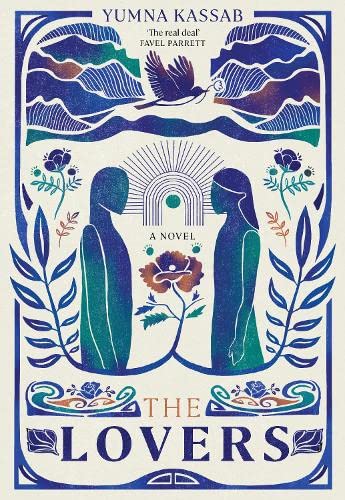
- The lovers (novel, 2023, Ultimo): shortlisted for the Miles Franklin Literary Award, the Prime Minister’s Literary Award for Fiction, and the Victorian Premier’s Award for Fiction
- Politica (novel, 2024, Ultimo)
She has also written for newspapers and journals, including The Saturday Paper, Meanjin, Griffith Review, Kill Your Darlings, and the Sydney Review of Books.
Kassab’s themes seem to be family and relationships; and migration, class, and othering. Critics describe her work with terms like “unsparing”, “unnerving”, “poetic”, “unobtrusive realism”. Promoting her latest book, Politica, which is due out this month, Ultimo calls it “a powerful new novel that asks again if it’s possible to ever measure the personal cost of war.” Oh my … how relevant is that.
My question for you: Does a city or place (not a whole country) near you have a Laureate for Literature? If so, I’d love to hear your thoughts.
 I won’t get to many Melbourne Writers Festival events, because those of most interest to me clash with other commitments and responsibilities. This is a shame given this year’s extensive digital program would enable me to attend my first ever MWF. Never mind, there will be other years. Nonetheless, I was thrilled to find a session on short stories at a time I could attend, so attend I did.
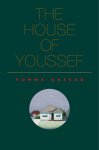 Sullivan introduced The house of Youssef as comprising “spare and sharp” stories about a Lebanese community in Sydney, exploring “the way generations differences play out … the gaps … that make mutual understanding so challenging.” Kassab agreed her stories are about community and family. It’s unavoidable that there will be tensions between generations in any community, she said, but these are exacerbated in migrant communities because of the added layer of different cultural expectations. She’s become increasingly interested in this issue.
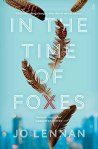 Introducing Lennan’s collection, Sullivan described it as having an international outlook. It has a wide geographic spread, featuring characters taken out of their comfort zones. Lennan observed that mobility has become familiar over the last decades. It seems easy, but is in fact complicated, as she shows in her title story, “In the time of foxes”. It’s about a young filmmaker in London with a young toddler. Her mother is developing dementia back home, and, there’s a fox in the backyard to deal with. She has to face “giving up” her childhood home. Lennan’s point is that living abroad offers immense opportunities but can be accompanied by immense cost. The time has come for this character to pay that cost. (This cost, as many of my generation knows, is also paid by those left at home – particularly with COVID-19, for example, keeping grandparents away from their overseas grandchildren!)
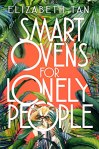 Sullivan introduced Tan by noting that her stories, which include animal protagonists, unsettle readers expectations and assumptions. She asked how this approach allows her to explore perceptions. Tan spoke from personal experience when she observed that people can look at characters – like her cats and mermaids – and assume they don’t have interiority or inner life, that they are just a sidekick to another’s life. She likes exploring how these characters are unexpectedly resilient, and suggested they could mirror how she moves through life. As a young Asian woman, she often feels underestimated. But, she is not always sure if how she thinks the world is seeing her is how it actually is, but how do you know? She quoted Chimamanda Ngozi Adichie’s statement that “the problem with stereotypes is not that they are untrue, but that they are incomplete”.
 Whispering Gums