Hal Porter, Francis Silver (#Review, #1962 Club)

Introducing my first review for the 1962 Year Club – Shirley Hazzard’s “The picnic” – I said I had read two short stories and might post on the second one. I am doing so now but, stupidly, I left the book back in Canberra and here I am in Melbourne, so my post will be limited, and without the usual quotes to convey Porter’s writing style. But, it was this, or not at all, because by the time we return home, I will be onto other things. I am cross though, because Kerryn Goldsworthy did write a useful introduction, which, if I remember correctly, placed Porter as part of a change in short story writing from the more realist school that had held on strongly since Lawson.

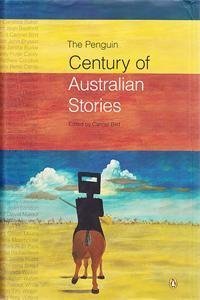
Like Hazzard’s story, “Francis Silver” appears in the Carmel Bird edited anthology, The Penguin century of Australian stories.

Who was Hal Porter?
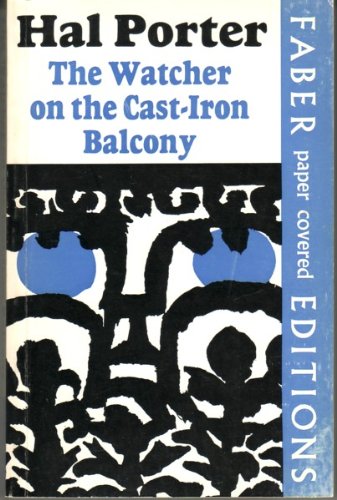
Porter (1911-1984) was an Australian novelist, playwright, poet and short story writer. His first autobiography, The watcher on the cast-iron balcony (1963), is regarded as a classic.

The Wikipedia article, linked on his name, is relatively brief, but there is a more thorough biographical entry for him in the Australian dictionary of biography (ADB). Written by literary critic and academic, Peter Pierce, it tells us that he had many occupations, including teaching (on-and-off at many schools), librarian, and shorter term jobs like window-dresser and sheep-station cook. But, cutting to the chase, it also reveals Porter as a problematic figure, because of his pederast behaviour. Peter Pierce writes, for example, that, around 1940, he had “an affair” with a male student at the school where he taught, “an indiscretion that went unpunished”. Those were the days, I suppose. This “affair” – should we grace it with that description? – is apparently fictionalised in his short story “The dream”.

Pierce also writes that, in her 1993 book, Hal Porter: Man of many parts, Porter’s biographer, Mary Lord was, “even-handed in judging an old friend and sensational in revealing Porter’s paedophilia, in particular his sexual relations with one of her sons.” Hard to understand. Moreover, Pierce says that Porter’s third autobiography, The extra (1975),

ventilated many of Porter’s prejudices — against Jews, ‘foreigners’ and Aborigines. The counterpart of Porter’s grace, charm and cultivation was an intense snobbery that, for instance, saw him elevate his father’s occupation from engine-driver to engineer. His facility at winning friends was matched by ceaseless demands on their patience.

So, a difficult man, and one I thought twice about sharing here. However, I read the story, liked it, and as it doesn’t smell of these difficult issues, I am covering it in the uncomfortable spirit of separating the work from its creator. Peter Pierce described him in his 2012 ADB entry as “one of the finest of all Australia’s authors of short stories and a pioneer of the first flowering of autobiographical writing in this country”. (This piece by the late academic Noel Rowe explores the Porter issue in depth.)

“Francis Silver”

“Francis Silver” is a first-person story in which an older man tells of fulfilling a deathbed request from his mother who had died at the age of 41 when he was 18. All through his childhood, he had heard about a man called Francis Silver, who, his mother had implied, had been not only a beau, but an alternative potential husband to the country-living man she did marry, the narrator’s seemingly long-suffering father.

Through our narrator’s childhood, his mother had shared with him an album of postcards sent to her by Francis Silver. Along with sharing this album, she had told stories about this man which suggested he was a worldly, debonair man, who loved the theatre. Her wish was for him to give the postcard album to Silver – but, on no account, was he to also give the lock of her hair that she had kept in an envelope with Francis Silver’s name on it. He was to burn that.

Francis Silver, his mother told him, had worked in a picture-framing shop, and that is where our narrator finds him – but what he finds doesn’t gel at all with the stories his mother had told. The story, then, is about memory, illusion and reality, and the boy’s recognition of the difference. In his own romantic fantasy, he had decided to ignore his mother’s second request and give Francis Silver (whose name works as a mantra in the story, hence my using it in full for each reference here) the lock of hair too. But, as he confronts reality, he changes his mind. The closing sentence vividly conveys his decision in an act that encompasses layers of meaning and feeling.

The father is a less developed figure, because the son was in his lively mother’s thrall, but the sense we get is of a man who loves his wife, and who tolerates her flights of fancy, feeling comfortable, it seems, that she chose – and remains with – him. He seems to recognise (or trust) that Francis Silver is one of those escape fantasies people have to help them cope with the tedium of life, the fantasy that, should it get too hard, there were, or perhaps even are, other options. The narrator, as a boy, doesn’t understand these nuances.

There was a strong autobiographical element, I understand, to Porter’s writing. From the little I read for this post, I am aware that there are such elements in this story. For example, Porter’s beloved mother died when he was 18 years old, as does the narrator’s mother in this story. How much else might be autobiographical though, I don’t know.

Anyhow, just to finish … in the end, the narrator resolves the differences he confronts and is generous to his father for whom Francis Silver had seemed an imagined (if not, as it turns out, real) rival. Our narrator has also learned something about the imagined, illusory past, and its relationship to present realities. A tight, neat, engrossing story.

* Read for the 1962 reading week run by Karen (Kaggsy’s Bookish Rambling) and Simon (Stuck in a Book).
Hal Porter
“Francis Silver” (orig. pub. in Hal Porter, A bachelor’s children, 1962)
in Carmel Bird (ed.), The Penguin century of Australian stories
Camberwell: Penguin Books, 2006 (first ed. 2000)
pp. 186-197

Shirley Hazzard, The picnic (#Review, #1962 Club)

As I have done for most “year” reading weeks*, I decided for 1962 to read a short story by an Australian author. I read two, in fact, and may post on the second one later.

Today’s story, though, is Shirley Hazzard’s “The picnic” which I found in an anthology edited by Carmel Bird, The Penguin century of Australian stories. It was my mother’s book, which Daughter (or Granddaughter to her) Gums gave her for Christmas 2006. I’m glad she kept it when she downsized. Shirley Hazzard is a writer I’ve loved. I have read three of her books, including the novels, Transit of Venus and The great fire, but all of this was long before blogging. I have mentioned her on the blog many times for different reasons, but an early one was in my Monday Musings on expat novelists back in 2010.

Who was Shirley Hazzard?

Hazzard (1931-2016) is difficult to pin down, and can hardly be called Australian given she left Australia in 1947 when she 16, returned here briefly, but left here for good when she was 20. Wikipedia calls her an Australian-born American novelist. As I wrote in my expat post, Hazzard didn’t like to be thought of in terms of nationality. However, she did set some of her writing in Australia, and did win the Miles Franklin Award in 2004 with her novel The great fire, against some stiff competition.

According to Wikipedia, she wrote her first short story, “Woollahra Road”, in 1960, while she was living in Italy, and it was published by The New Yorker magazine the following year. This means, of course, that “The picnic”, first published in 1962, comes from early in her writing career. Her first book, Cliffs of fall, was published in 1963. It was a collection of previously published stories, including this one. Her first novel, The evening of the holiday, was published in 1966, and her second, The bay of noon, was published in 1970, but it was her third novel, The transit of Venus, published in 1980, that established her.

She is known for the quality, particularly the clarity, of her prose, which, it has been suggested, was partly due to her love of poetry

“The picnic”

It didn’t take long for me to discover that “The picnic” is the second story of a linked pair, which were both published in The New Yorker in 1962. Together they tell of an affair between the married Clem and a younger woman, Nettie, his wife May’s cousin. The first story, “A place in the country”, concerns the end of the affair, while in “The picnic” the ex-lovers meet again, eight years later. They are left alone by May, probably deliberately thinks Clem, while she plays with their youngest son down the hillside.

This is a character-driven slice-of-life story in which not a lot happens in terms of action but which offers much insight into human nature – and into that grandest passion of all, love.

In 2020, The Guardian ran a review of Shirley Hazzard’s Collected stories, edited by Hazzard biographer Brigitta Olubas. Reviewer Stephanie Merritt writes that “Hazzard’s recurring themes here – enlarged upon in her novels – are love, self-knowledge and disappointment”. From my memory of Transit of Venus in particular, this rings true. And, it is certainly played out in “The picnic”.

So, love, albeit a failed love, is presumably played out in the first story, but in this story it is still present in its complicated messiness. The two ex-lovers look at each other uncomfortably. Self-knowledge is part of it, but it’s not easily achieved for Clem for whom self-deception has also powerful sway. There’s resignation about love – “an indignity, a reducing thing” which he sees can be a “form of insanity” – and about marriage, which involves “a sort of perseverance, and persistent understanding”. There’s also a male arrogance. He didn’t, he realises, “know much about her [Nettie’s] life these past few years – which alone showed there couldn’t be much to learn”. By the end of his reverie, he comes to some self-understanding, despite earlier denials, about his true feelings and about the decision he’d made. Whether the reader agrees or not, he feels he has “grown”.

Nettie’s reveries tread a roughly similar path. There’s not a lot of regret to start with. She sees he is nearly fifty, and with “a fretful, touchy air”. She sees his self-deceptions, and his caution, and yet her feelings, like his, are conflicted. For her, too, love is a complicated thing:

… one couldn’t cope with love. (In her experience, at any rate, it always got out of hand).

What I haven’t conveyed here, because you have to read it all to see and enjoy it, is the delicious way Hazzard conveys their internal to-ing and fro-ing, through irony and other contradictions. They say nothing to each other, but in their thoughts and observations, while they rationalise what happened and why it was right, they reveal their true feelings. Love and disappointment or disillusion live side by side, never quite resolved.

The story is told third person but from shifting perspectives. First Clem, followed by Nettie, reflect on their situation at some length. Then, in a surprise switch, the short last paragraph moves to May, whose feelings neither of them had seriously considered in all their internal ponderings. But Hazzard makes sure we see them. This technique reminded me of Kevin Brophy’s very different short story “Hillside” which does a similarly powerful switch of perspective in the last paragraph. In both cases, concluding with the perspective of someone who is both outsider but very much affected by the situation just nails it.

Not only did I enjoy this story, but I’m very glad to finally have Hazzard reviewed on my blog.

* Read for the 1962 reading week run by Karen (Kaggsy’s Bookish Rambling) and Simon (Stuck in a Book). This week’s Monday Musings was devoted to the year.

Shirley Hazzard
“The picnic” (orig. pub. The New Yorker, 16 June 1962)
in Carmel Bird (ed.), The Penguin century of Australian short stories
Camberwell: Penguin Books, 2006 (first ed. 2000)
pp. 178-185

Monday musings on Australian literature: 1962 in fiction

Once again it’s Karen’s (Kaggsy’s Bookish Rambling) and Simon’s (Stuck in a Book) “Year Club” week. This time the year is 1962, and it runs from today, 16th to 22nd October. As has become my practice, I am devoting my Monday Musings to the week.

The 1960s was an exciting decade for those of us who lived it. Change was in the air, and we truly thought we were making a fairer society. (Little did we know.) Wikipedia describes it thus:

Known as the “countercultural decade” in the United States and other Western countries, the Sixties is noted for its counterculture. There was a revolution in social norms, including clothing, music (such as the Altamont Free Concert), drugs, dress, sexuality, formalities, civil rights, precepts of military duty, and schooling.

I was in primary school in 1962, and my life was simple and stable. It wasn’t until the mid to late 60s that I became caught up in the excitement in the air. This is not only because I was a bit older, I think, but because the momentum was still building in the early part of the decade. However, there were hints of change in my 1962 research. But, let’s start with the books …

I found books published across all forms, but given my focus is fiction and I want to keep things a bit tight here, I’m just sharing a selection of 1962-published novels:

  • James Aldridge, A captive in the land
  • Thea Astley, The well dressed explorer (Lisa’s review)
  • Elizabeth Backhouse, Death of a clown
  • Martin Boyd, When blackbirds sing (Lisa’s review)
  • Patricia Carlon, Danger in the dark
  • Gavin Casey, Amid the plenty
  • Nancy Cato, But still the stream
  • Jon Cleary, The country of marriage
  • Robert S. Close, She’s my lovely
  • Frank Clune and P.R. Stephenson, The pirates of the brig Cyprus
  • Kenneth Cook, Chain of darkness
  • Dymphna Cusack, Picnic races
  • David Forrest (pseud. for David Denholm), The hollow woodheap
  • Catherine Gaskin, I know my love (Brona’s review)
  • Stuart Gore, Down the golden mile
  • Helen Heney, The leaping blaze
  • George Johnston, The far road
  • Elizabeth Kata, Someone will conquer them
  • Eric Lambert, Ballarat
  • Joan Lindsay, Time without clocks (Brona’s review)
  • David Martin, The young wife
  • John Naish, The cruel field
  • John O’Grady, Gone fishin’
  • Nancy Phelan, The river and the brook
  • Criena Rohan (pseud. for Deirdre Cash), The delinquent
  • Donald Stuart, Yaralie
  • Geoff Taylor, Dreamboat
  • Ron Tullipan, March into morning
  • George Turner, The cupboard under the stairs (Lisa’s review)
  • Arthur Upfield, The will of the tribe

Children’s literature was going strongly at the time, with books published by authors still remembered as writers of our children’s classics, such as Nan Chauncy, Ruth Park, Ivan Southall, P.L. Travers, and Patricia Wrightson.

There were very few literary awards at the time. The ALS Gold Medal went to Vincent Buckley’s Masters in Israel, and for the first time since I started taking part in the Year Club, the Miles Franklin Award was in existence. It was shared by the Thea Astley and George Turner novels listed above. There was also, though Wikipedia doesn’t list it, the ACTU Dame Mary Gilmore Award, but I plan a special post on it, so watch this space.

Writers born this year are mostly still around though I haven’t reviewed many: Matthew Condon, Alison Croggon (my post on her memoir), Luke Davies, and Craig Sherborne. Deaths included the novelist Jean Devanny and poet Mary Gilmore. The librarian Nita Kibble (for whom the Nita B Kibble Awards – now seemingly in abeyance – were named) died this year, as did the critic HM Green.

The state of the art

Of course, I checked Trove to see what newspapers were saying about Australian literature, and fiction in particular, and will just share two threads I found.

First Nations Australians

With the devastating loss of The Voice referendum here last weekend, I would like to start with some First Nations (or Aboriginal) Australians that came up in my Trove travels, which mainly involved references to writers including Aboriginal characters in their books. One was Helen Heney (1907-1990) whose father was the first Australian-born editor of the Sydney Morning Herald. Heney wrote several novels – plus social commentary, translation and a biography – but the one published in 1962 was The leaping blaze. It is set in a station in western New South Wales, which is now in the hands of the latest generation, the “spinster” Evangeline Wade. The Canberra Times’ reviewer (January 5, 1963) explains that Evangeline has been frustrated through her life, and now wants power over others. Part of her plan is to create an “aboriginal station on her property as. an experiment”, but this plan, says our reviewer, is “motivated more by a desire to gain further power than it is to further native welfare”. Unfortunately, our reviewer continues, the novel lacks a clear focus, which 

is a pity because Miss Heney is essentially a writer of ideas. She is not just telling a story. / She is obviously out to give her views on a number of sociological problems but the canvas is too large for anything more than a casual sketching of them.

The other novel I want to share is Yaralie by Donald Stuart (1913- 1982) which tells “the story of the daughter of a white father and a half-caste mother, and the people among whom they live”. The Nepean Times’ reviewer (October 11) writes:

Told with a good deal of warmth, the story is set in a native settlement in north-west Australia during the depression and deals with the ever-present problem concerning the treatment of the aborigines in a white Australia.

Donald Stuart is new to me, but seems worth following up. His work is sure to be dated now we have First Nations people telling their own stories, but he’s part of a tradition. Wikipedia says

Stuart attempts to view the world from the Aboriginal point of view, making him one of the few Australian writers, along with anthropologists such as T.G.H. StrehlowCharles Pearcy MountfordRonald Berndt and Catherine Berndt, to even attempt to come close to a personal knowledge of Aboriginal people.

Realist literature and The Australasian Book Society

The main thread I found through Trove, however, concerned communist writers and realist literature. This emphasis might be partly due to the fact that Trove’s content in this period is somewhat skewed as the Australian Communist Party’s newspaper, Tribune, has been digitised, because, like The Canberra Times, they have given permission despite still being under copyright. 

However, before I searched Trove, I had already noticed the significant number of authors in the list who were Communists – often members of the Communist  Party of Australia (CPA) – or Communist-sympathisers, so the slant may be real to some degree! Anyhow, what these writers tended to write were realist (or social realist) novels, the preferred genre for Communist writers. 

It was clear from several articles that these social realist writers felt under-appreciated at home. The Tribune regularly reported on the success of Australian social realist writers overseas. On January 17, the Tribune wrote that CPA-member Dorothy Hewett’s realist 1959 novel, Bobbin Up, about women in a spinning factory, was “becoming a novel of world repute” with translations being published, or to be published, in the German Democratic Republic, Rumania, Hungary and, very likely, the Netherlands. 

And on February 7, under the heading “Success despite critics”, the Tribune advised that another book by an Australian Communist author was garnering interest overseas ‘despite class-prejudiced criticisms by Australian daily press “experts”.’ Progressive authors like Katharine Prichard, Frank Hardy, Dorothy Hewett, and Mona Brand were being published overseas, it said, and now they’d heard Judah Waten’s Shares in murder, “a murder story that is different because of its social exposure content” was to be serialised in New Berlin Illustrated, and published in book form in Germany, Czechoslovakia, and, they expected, the Soviet Union.  

It is this very Judah Waten who, in another article, is scathing about Australia’s literary darlings of the time. On March 28, again in the Tribune, he wrote:

In Australia today the writers who are acclaimed in the daily press, win awards and prizes are those distinguished for the obscurity of their prose, their irrational characters, their dream symbolism, parallels to ancient myths, feudal attitudes and pornography.

Who are these writers? Patrick White? Hal Porter? Thea Astley too perhaps?

I also noticed that many of the books praised in the Tribune were published by the Australasian Book Society, so I went hunting, and found a seminar was held about it in 2021.  The seminar promo described the Society as

a mid-twentieth-century, book-club style, cooperative publisher with a subscription model that promised four books a year to members and distribution through unions, industry associations, education organisations and the communities of the organised left in Australia, including the communist party. It sought to find readers who did not read literature and to develop writers who did not yet write it.

Fascinating. In 1962, this Society celebrated its 10th anniversary … but, like the Dame Mary Gilmore Prize, I think it deserves its own post.

Meanwhile, just to show that not all my research ended up at the Tribune, I’ll close with a review from The Canberra Times of Ron Tullipan’s novel March into morning, which was published by the Australasian Book Society in 1962, and won the Dame Mary Gilmore prize. It tells the story of a man “who started life as a ward of the State and was hired out to a slave-driving cocky, whose only interest in him was how to exploit him”. Writing on September 29, reviewer G.C.P. says it

may sound like one of those hopeless novels whose authors are only concerned to spit into Authority’s eye and point out wickedness in high places. / Fortunately, it is not, and reads more like an honest piece of reporting.

G.C.P. assesses its strengths and weaknesses, and concludes that “it is not great literature, [but] it is a very readable book”. Judah Waten would probably see this as damning it with faint praise! 

Sources

  • 1962 in Australian Literature (Wikipedia
  • Joy Hooton and Harry Heseltine, Annals of Australian literature, 2nd ed. OUP, 1992 (with Bill’s help)

Previous Monday Musings for the “years”: 1929, 1936, 1954 and 1940.

Do you plan to take part in the 1962 Club – and if so how?

Myra Morris, The inspiration (#Review, #1940 Club)

As I have done for some previous “year” reading weeks*, I decided for 1940 to read a short story by an Australian author. After a bit of searching I settled on Myra Morris, and her story “Inspiration”, because … let me explain.

My last two Australian contributions for these reading weeks were works by men – Bernard Cronin and Frederic Manning – so this time I wanted to choose one of our women writers. I found a few in Trove, but the one that caught my eye was by Myra Morris, because she was already known to me: in my Monday Musings for the 1929 year, and back in 2012 in another Monday Musings where she was listed by Colin Roderick in his Twenty Australian novelists. She also has an entry in the ADB. Clearly she had some sort of career at least, even if she is not well remembered now.

Who was Myra Morris?

ADB‘s article, written by D.J. Jordan in 1986, gives her dates as 1893 to 1966. She was born in the Mallee town of Boort, in western Victoria, to an English father and Australian mother. Her literary abilities were encouraged by her mother and an English teacher at Rochester Brigidine Convent, and she had verse published in the Bulletin. From 1930 she was part of Melbourne’s literary, journalistic and artistic circles, and “was active in founding and organising the Melbourne branch of P.E.N. International”. Her circle of friends, it appears, included Katharine Susannah Prichard.

While she wrote book reviews, novels and essays, her favourite form was, apparently, short stories. She was published in newspapers, and her short stories have been anthologised, but there is only one published collection of her stories, The township (1947). Translations of her work were published in Germany, Austria and Switzerland.

Jordan writes that she:

has been acclaimed as one of Australia’s best short-story writers. Her clear pictures of life in country and town contain a wide range of characters and reveal her tolerance and understanding of humanity in its struggles. Like her novels, her stories combine earthy realism, poetic imagery and a broad humour. Sometimes her plots are marred by the demands of the popular market, but her often beaten-down and defeated people always contrast with her lyrical evocation of landscapes. 

“The inspiration”

I picked “The inspiration” primarily because it was by Myra Morris, but I was also attracted to it because it’s set in Melbourne and its protagonist is a musician. Both of these interest me. The plot centres on violinist, Toni Pellagrini, who, as you can tell by his name, is of Italian background. Every afternoon, he plays in a 5-piece ensemble in the cafe at “Howie’s emporium”. It’s when he is happiest, we are told. When he is playing, he is “a different creature entirely from the little dark, harassed person who at other times sorted out vegetables in his father’s fruit shop”. You sense the immigrant life. Indeed, at one point Toni realises that without his music he could be seen as “a fat, oily little Dago”.

Toni is ambitious. He wants to play somewhere better than the cafe, in Kirchner’s Orchestra for example. At the cafe, however, the customers are “indifferent”, and offer only “inconsequential applause”. They are more interested in their chatter, in being seen, than in the music. You know the scene. Toni’s distress starts to affect his playing, so much that the other players notice, until one day a young girl appears. She provides him with the needed inspiration (hence the title). She listens with an “absorbed gaze” and breaks into “furious clapping” when the music ends. Toni has his mojo back. Then, they hear that the famous Kirchner is looking for players and is at the cafe. But, as they begin to play, the girl is not there, and Toni is unable play well anymore without her, his inspiration …

What happens next is largely predictable – except that Morris adds a delightful little twist that doesn’t spoil the expected ending but adds an unexpected layer.

Like Jordan, the Oxford companion to Australian literature particularly praises Morris’ short stories, saying that “her talent for domestic realism and naturalistic description, especially of rural environments, is best suited to the short story”. “The inspiration” is not one of these stories – it is urban set, and is not domestic – but its immigrant milieu (both in Toni’s family and the gypsy-inspired ensemble in which he plays) and its resolution suggest a writer interested in capturing the breadth of Australian life as she saw it.

* Read for the 1940 reading week run by Karen (Kaggsy’s Bookish Rambling) and Simon (Stuck in a Book). This week’s Monday Musings was devoted to the year.

Myra Morris
“Inspiration”
Published in Weekly Times (2 March 1940)
Available online via Trove

Monday musings on Australian literature: 1940 in fiction

As many of you know by now, Karen (Kaggsy’s Bookish Rambling) and Simon (Stuck in a Book) run “reading weeks” in which they nominate a year from which “everyone reads, enjoys, posts and shares wonderful books and discoveries from the year in question”. The current year is 1940, and it runs from today, 10-16 April. As has become my practice, I am devoting a Monday Musings to the week.

1940 is a bit of a landmark year in Australian literature because it was the year that our significant literary journal, Meanjin, was first published – in Brisbane, by Clem Christesen. Its name comes from the Turrbal word for the spike of land where the city of Brisbane is located.

My research located books published across all forms, but my focus is fiction, so here is a selection of 1940-published novels:

  • E.C. Allen, Old Eugowra
  • Martin Boyd, Nuns in jeopardy
  • Roy Connolly, Southern saga
  • Frank Dalby Davison, The woman at the mill (short stories)
  • Dulcie Deamer, Holiday
  • Arthur Gask, The house on the fens and The tragedy of the silver moon
  • Beatrice Grimshaw, South Sea Sarah; Murder in paradise: Two complete novels
  • Michael Innes, The secret vanguard; There came both mist and snow; and The comedy of errors
  • Bertha A. Johnstone, Stream of years
  • Josephine Knowles, Leaves in the wind
  • Will Lawson, Red Morgan rides
  • Eric Lowe, Framed in hardwood
  • Nevil Shute, Landfall: A channel story and An old captivity (both of which I read in my teens)
  • Helen Simpson, Maid no more (see my post on Helen Simpson)
  • Christina Stead, The man who loved children (Lisa’s review)
  • F.J. Thwaites, Whispers in Tahiti
  • Arthur W. Upfield, Bushranger of the skies
  • Franks Walford, The indiscretions of Iole
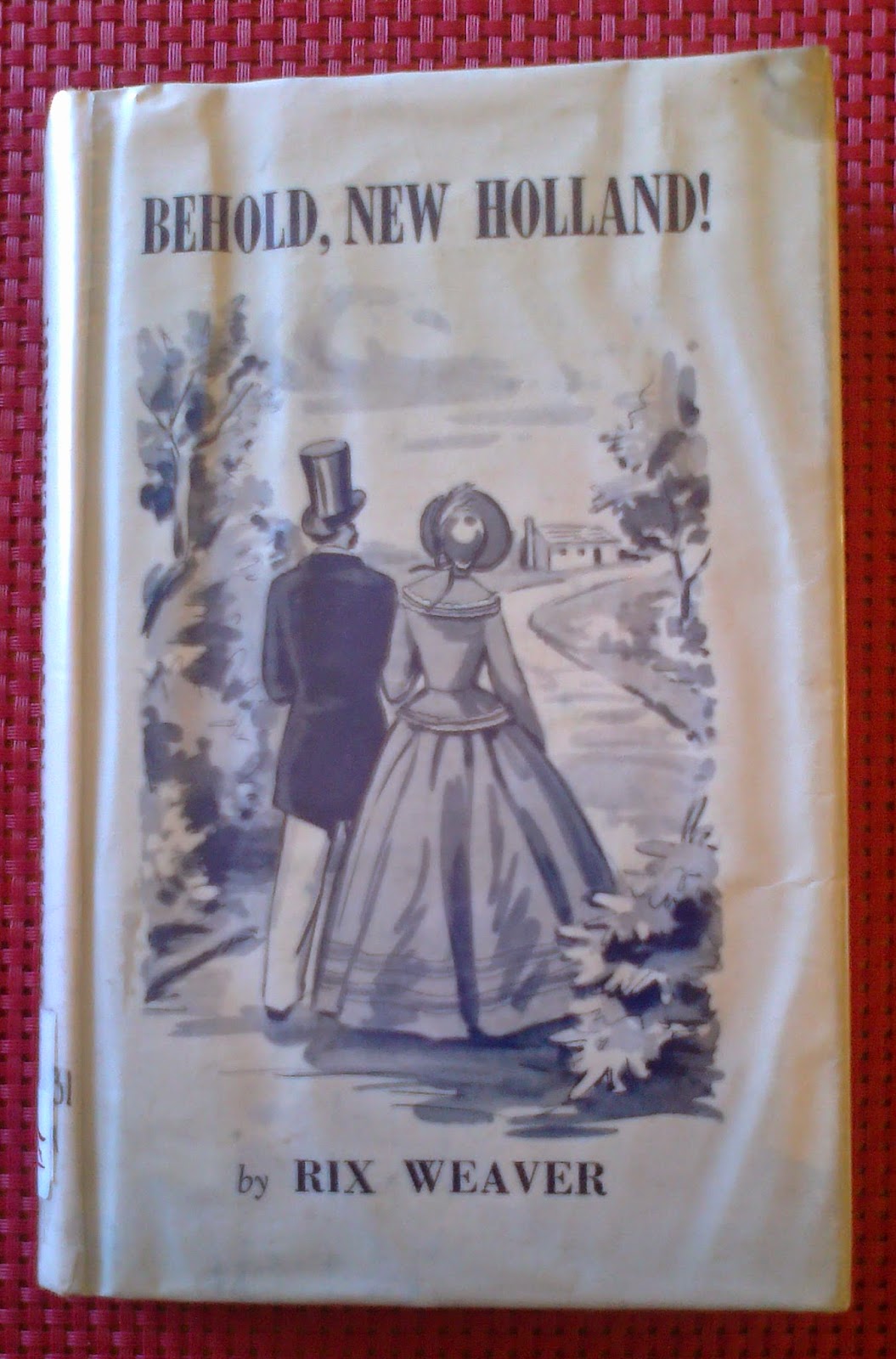
  • Rix Weaver, Behold, New Holland (A Darned Good Read’s review)

Children’s literature was going strongly at the time, with books published by four authors still remembered as writers of our children’s classics, Mary Grant Bruce, May Gibbs, P.L. Travers, and Dorothy Wall.

I wasn’t going to focus on poetry and drama, but Bill, who checked my list against the Annals for me (as my copy is in Canberra, thanks Bill) added that Katharine Susannah Prichard’s play Brumby Innes also appeared in 1940.

There were very few literary awards at the time. The ALS Gold Medal went to William Baylebridge’s poetry collection, This vital flesh, though it was announced in 1941. The award actually announced in 1940 was for the 1939 winner, Xavier Herbert’s Capricornia, so I think I can also mention it here.

Writers born this year include some favourites, whom I’ve reviewed here, Carmel Bird, Marion Halligan and Geoff Page. J.M. Coetzee who migrated to Australia partway through his literary career was also born in 1940.

The state of the art

Of course, I checked Trove to see what newspapers were saying about Australian literature, and fiction in particular. In the last “year” I did, 1929, I found great enthusiasm to support and promote Australian literature, and this was still evident to some degree in 1940. It was war-time, but interestingly that didn’t feature heavily in the book-related articles I found.

“Fictional magazines” banned

One news item that did reference the war was reported by many papers in April. It concerned the Federal government’s decision to ban the importation of “fiction magazines from non-sterling countries”. The stated aim was “to conserve our overseas’ credit” (Queanbeyan Age, 23/4/1940), with The Forbes Advocate (16/4/1940) reporting that “it is estimated that this will save £100,000 a year in dollar exchange”. Exceptions to this ban were, as Adelaide’s The Advertiser (2/4/1940) reported, “magazines dealing with current news topics or technical and instructional publications”. Many newspapers added brief commentary to their reporting. The Advertiser, for example, commented that these banned recreational magazines had “little or no literary value” and that some had already been banned “because of their false accentuation of sex, horror and crime”. But, the point made by many, and I’ll quote The Advertiser again, was the benefit to Australian writers and illustrators:

Besides its wartime value in conserving dollar exchange, the restriction of imported fiction will, it is hoped, create a wider home market for Australian writers and illustrators.

And thus Australian stories for Australians! The Forbes Advocate took the argument further, arguing that ‘”Made in Australia” on nearly everything required in the Commonwealth would bring abounding prosperity’ – and make this continent, “mighty”.

Australianness

Some reviewers commented on the “Australianness” of Australian novels they reviewed. Tasmanian Bertha A. Johnstone’s immigrant story, Stream of years, was described by her home state’s Mercury (6/4/1940) as “truly Australian and truly good” while Adelaide’s The Advertiser (28/5/1940) says of one of its denizen’s debuts, Josephine Knowles’ Leaves in the wind:

A FIRST novel by an Australian writer, apart from its intrinsic value, is of importance because of the proof that it furnishes that literary talent in this country is not stagnant.

The Argus (28/10/1940), on the other hand, reviewing Rix Weaver’s pioneer fiction, Behold New Holland, concludes that “Miss Weaver has wisely avoided any aggressive Australianism. She makes it a romance of pioneering adventure, vividly told, that would appeal to an English or an American reader”.

Many of these 1940-published novels were set in the bush, or in exotic locations further afield. Indeed, Echuca’s The Riverine Herald (24/6/1940), writes that one of Australia’s “most prolific” writers, Will Lawson, had ‘”gone bush” at Tahmoor (N.S.W.)’ in order to “complete his newest novel without any city distractions”. The novel was Red Morgan rides, a bushranging story.

What about the city?

I did find, however, one reference to the city-versus-bush issue. The article, in Sydney’s The Daily Telegraph (7/4/1940), written by one Sam Walpole, was pointedly headed “Let’s buy a yearbook for our authors”, and commences:

IT is remarkable how little impression seems to have been made on Australian authors by a curious fact recorded in the Commonwealth Year Book —that nearly two-thirds of the population of Australia live in towns. A foreigner would hardly suspect this fact from some stories, a collection short stories by ten Australian writers, mostly of the elder school.

The collection was “Some stories, by ten Australian writers”, and includes some writers we’ve come across before like J. H. M. Abbott and G. B. Lancaster. Walpole continues:

There are some lively pieces in the book — and some, less lively — but only one story (by Ethel Turner, about a hot day in Sydney) makes any serious attempt to describe the urban life which millions of Australians lead. It is odd that so many of our writers either escape into fantasy, or cling in spirit to the days when a steer ripped up Macpherson at the Cooraminta Yard. These days it is more likely that a taxi ripped up Macpherson in Pitt Street. It is time we had an O. Henry to chronicle the pangs and pleasures of Marrickvllle or Balmain, a W. Burnett to write about the Sydney underworld, a Sinclair Lewis to show our more smugly prosperous citizens how ludicrous they really are.

So, we go from those supporting the banning of “fictional magazines” (which primarily came from America) to a yearning for more relevant writing like that being produced in America! A good place to end, I think, this little survey of 1940.

Additional sources:

  • 1940 in Australian Literature (Wikipedia)
  • Joy Hooton and Harry Heseltine, Annals of Australian literature, 2nd ed. OUP, 1992 (with Bill’s help)

Previous Monday Musings for the “years”: 1929, 1936 and 1954.

Meanwhile, do you plan to take part in the 1940 Club – and if so how?

Elizabeth von Arnim, Expiation (#BookReview #1929 Club)

I cannot remember when I last laughed out loud – a lot – when reading a book. The book that broke the drought is Elizabeth von Arnim’s Expiation. Even in her darkest, grimmest novel, Vera (my review), Von Arnim managed to make me splutter several times, albeit ruefully. Expiation, though, caused no such qualms.

I have loved Elizabeth von Arnim since I read Elizabeth and her German Garden in the early 1990s when Virago started publishing her. I went on to read several more of her books over the next few years, but then had a big gap until this year, when I read Vera. It reminded me how much I enjoy her. So, when I saw she had one published in 1929, I selected it for Karen and Simon’s 1929 Club. I finished it more or less on time, but the last couple of weeks have been so busy that I didn’t get to post it until now.

The edition I found was published by Persephone. They describe publishing it as first for them, because “it’s a novel by a well-known writer that has been entirely overlooked”. While most of Von Arnim’s books are in print with other publishers, Expiation, which they were now publishing ninety years after its first appearance, had been ignored. Why, they ask? Good question. I admit that, not having seen it around, I did fear it might be lesser.

Persephone offers some reasons. Firstly, the title “is not very catchy”. True, it’s not. They also suggest that its adultery theme would have been “faintly shocking” in 1929, and further that, although we now read it as a satire, at the time “the characters and their milieu may have seemed rather tame”. Would the satire have been missed? Anyhow, they quote from the novel’s opening chapter, which describes the novel’s central family and the London suburb they live in:

That important south London suburb appreciated the Botts, so financially sound, so continuously increasing in prosperity. They were its backbone. They subscribed, presided, spoke, opened.

This last sentence, Persephone says, “was what deliciously and instantly convinced us that this was a book for us”. I am so glad they did because from the first few pages I could tell it was a book for me too. It truly is delicious.

So now, the book. As you’ve gathered, the plot centres around adultery, which is made clear in the opening chapter. Milly has just been widowed, and her wealthy husband, Ernest Bott, has only left her £1,000 of his £100,000. The rest he has left to a charity for fallen women, with the cryptic note that “My wife will know why”. She does, of course, but thought she had got away with it. What is remarkable about this book, which chronicles how both Milly and the Botts react to the situation, is that we remain sympathetic to Milly. She’s a sinner, she knows she’s a sinner, but she wants to expiate. How, is the question?

The Botts, meanwhile, don’t know what to do. They do not want scandal to ruin their good name, and, anyhow, the male Botts in general rather like round, plump Milly versus their “bony” wives. Moreover, they are not known for meanness: “The family had always behaved well and generously in regard to money, and it would never do for Titford to suspect them of meanness.” Hmmm, a bit of appearance-versus-reality going on here. So, having decided, Jane-Austen-Sense-and-sensibility-style, not to give Milly some of their money, they agree to take her into their homes, in turn, until it all dies down, after which she can go live with Old Mrs Bott, who is perfectly happy to have her. Old Mrs Bott is the voice of reason in the novel. Experience has taught her

that in the end it all wouldn’t have mattered a bit what Ernest had meant or what Milly had done, and that they might just as well have been kind and happy together on this particular afternoon, as indeed on all their few afternoons, and together comfortably eaten the nice soup and sandwiches.

However, a spanner is thrown in their works when the shocked and mortified Milly disappears the day after the funeral. To say more about the plot would give too much away – even though the plot is not the main thing about this book.

What Von Arnim does through this plot is take us on a journey through humanity. Milly’s attempts at expiation often fall flat, either because she doesn’t manage to do what she plans or because others don’t behave towards her as she expects, even wants, them to do. For example, on one occasion, she has “no doubt at all that here at last she was in the very arms of expiation” and yet it comes “to her so disconcertingly, with a smile on its face”. Can this really be expiation? Milly’s not sure. One of the book’s ironies – and points – is, in fact, that the greatest sinner, technically, is among the kindest in reality.

The thing I like about Von Arnim is her generosity. It is on display throughout this novel as Milly, seeking expiation (but also to survive) moves between people she knows, from her previously sinning sister and her obliviously self-centred lover to the various Botts who range from the puritanical and pompous to the warm and lively. Most of these characters, like Austen’s, may come from a narrow realm of society but they represent a much wider spectrum of human behaviour. Like Austen, too, Von Arnim’s targets are not just the personal – greed, selfishness, narrow-mindedness, silliness, pride, self-importance, ignorance, and so on – but the societal, particularly gender, marriage and money. “Too much worldly prosperity”, she writes for example, “deadens people’s souls”.

So, in Expiation, Von Arnim skewers human nature and her society much like Jane Austen does. Sometimes the situations may be a little dated as they can also be in Austen, but human nature itself doesn’t change much – and this is so knowingly, so inclusively, and so generously, on display. There are some less than stellar people here, of course, but as in Austen, they are treated with respect for their humanness by the author, while also being exposed for exactly who they are. I’m going to – with difficulty – choose just a couple for you, one touching on the theme of sinning and morality, and the other on money.

Here is the eldest Bott, Alec, trying to avoid hosting Milly first, because of his wife’s puritanical approach to life:

He stopped, an undefined idea possessing his mind that Milly might be purer after having passed through the sieve of other visits, and more fit to stay with his wife …

Von Arnim’s language – so fresh and funny. And here is another Bott, Fred, telling his sons they will be helping Milly:

“Do you mean financially?” inquired Percy, his eyes still on his paper.
“Kindness,” said Fred.
“Kindness! Well, that’s cheap, anyhow,” said Dick.
“And easy,” said Percy, turning the pages. “I always liked Aunt Milly.”

Finally, I will leave you with one more bon mot from Old Mrs Bott who reflects, at one point during the novel:

It seemed as if these poor children had no sense whatever of proportion. They wasted their short time in making much of what was little, and little of what was much.

With a wit and a sense of humanity that is a joy to read, Expiation encourages us to think about what is important to living both a good life, and a kind and fair one.

Elizabeth von Arnim
Expiation
London: Persephone Books, 2019 (orig. pub. 1929)
314pp.
ISBN: 9781906462536

Frederic Manning, The middle parts of fortune, Ch. 1 (#Review, #1929 Club)

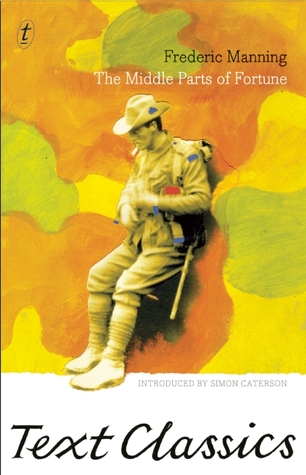
I had identified two novels for my 1929 read, M. Barnard Eldershaw’s A house is built and another. With Lisa also considering A house is built, I decided to go for the other. I started it, and am loving it, but I won’t finish it in time, so I thought I’d check my Australian anthologies for a 1929 offering, and found one. In the Macquarie PEN anthology of Australian literature is the first chapter of a book I’d been unaware of until I wrote my 1929 Monday Musings post this week. The book is The middle parts of fortune: Somme and Ancre, 1916, by Frederic Manning.

It particularly caught my attention because the title sounds more like a nonfiction book. So, I checked it. Yes, it is fiction, I clarified, and has an interesting history. I’ll start, though, with the author…

Frederic Manning (1882-1935) was born in Sydney. An apparently sickly child, he was educated at home, and when a teenager he formed a close friendship with Rev. Arthur Galton, who was secretary to the Governor of New South Wales. When Galton returned to England in 1898, Manning went with him, but returned to Australia in 1900. However, he returned to England in 1903 – when he was 21 – and there he remained. He produced all his writing from there, but the Australian Dictionary of Biography (linked on his name) claims him as Australian.

That’s all very well – for us to say now – but at the time of his death, according to Nicole Moore who wrote his entry in the Anthology, he was “largely unknown in Australia”. And yet, she continues, “his novel, The middle parts of fortune: Somme and Ancre, 1916 (1929) is cited around the world as one of the most significant and memorable novels of the First World War”. Indeed, she writes, it is “often grouped” with Ernest Hemingway’s Farewell to arms and Erich Remarque’s All quiet on the western front.

Manning served in the war from October 1915, first as Private (no. 19022) and later as a second lieutenant, though apparently the officer’s life did not suit him. He drank, and resigned his commission in February 1918. Wikipedia explains explains that, with increasing demand through the 1920s for writing about the war, and his having published some poems and a biography, he was encouraged to write a novel about his wartime experiences – and so The middle parts of fortune was born.

The story does not end here, however. The first edition was published privately and anonymously, under subscription, says Moore. Soon after, in 1930, an expurgated edition was published under the title Her privates we, with the author now identified as Private 19022. This version, Moore says, “removed the soldiers’ expletives that strongly punctuate the text”. Acceptable, apparently, for the private edition, but not for the public one! Wikipedia says that Manning was first credited as the author, posthumously in 1943, but the original text wasn’t widely published until 1977.

Wikipedia identifies the book’s admirers as including Ernest Hemingway, Arnold Bennett, Ezra Pound, and T. E. Lawrence. Lawrence is quoted as saying of The Middle Parts of Fortune that “your book be famous for as long as the war is cared for – and perhaps longer, for there is more than soldiering in it. You have been exactly fair to everyone, of all ranks: and all your people are alive”, while Ernest Hemingway called it “the finest and noblest novel to come out of World War I”. How could I have not known it?

Now, the book … Wikipedia says that each chapter begins with a quote from Shakespeare – answering a question I had, because Chapter 1 so starts. The source of the quote, however, is not cited, but a quick internet search revealed it to come from Act III, Scene 2 of Henry IV Part 2:

By my troth, I care not; a man can die but once;
we owe God a death. … and let it go which way it will,
he that dies this year is quit for the next.

It basically says that we can only die once, and that we’ll all die one day – so, we may as well accept our fate? A soldier’s creed?

Before I say briefly discuss the first chapter, I’ll add that Nicole Moore says that the protagonist’s nationality is not “made explicit” which is “in keeping with the novel’s deflation of military hierarchies and nationalism”. She goes on to say that it explores “the effect of war on reason and selfhood” and is thus “an existentialist study of the extremes of human experience”.

I’ve read several novels, over the years, about World War 1, including – to share another Australian one – David Malouf’s Fly away Peter. It too powerfully evokes the terrible impact of that war.

So, Manning’s Chapter 1 introduces us to a soldier stumbling back to the trenches after some action during which many men had been lost. Soon, he – named Bourne, we learn – is joined by a couple of Scottish soldiers – not from his battalion – and then an officer from his. The rest of the excerpt chronicles his moving through a “battered trench” to join his compatriots in their dugout, before setting off again to meet their captain and retire to their tents in the ironically, but truthfully, named “Happy Valley”.

The tone is one of desperate resignation. Faces are blank (despite “living eyes moving restlessly” in them); no energy is wasted in unnecessary talk; and whiskey is a necessary support after “the shock and violence of the attack, the perilous instant”. The description of their progress from the dugout to the camp above ground beautifully exemplifies the writing:

they saw nothing except the sides of the trench, whitish with chalk in places, and the steel helmet and lifting swaying shoulders of the man in front, or the frantic uplifted arms of the shattered trees, and the sky with clouds broken in places, through which opened the inaccessible peace of the stars.

The “frantic uplifted arms of the shattered trees” and the “inaccessible peace of the stars” conveys it all – and this is only Chapter1.

If you would like to know more about this novel, you can check Lisa’s blog, as she knew of this book and reviewed it back in 2015!

Read for the 1929 reading week run by Karen (Kaggsy’s Bookish Rambling) and Simon (Stuck in a Book).

Frederic Manning
The middle parts of fortune: Somme and Ancre, 1916 (1929)
in Macquarie PEN anthology of Australian literature (ed. Nicholas Jose)
Crows Nest: Allen & Unwin, 2009
pp. 365-369
ISBN: 9781741754407

Monday musings on Australian literature: 1929 in fiction

As many of you know by now, Karen (Kaggsy’s Bookish Rambling) and Simon (Stuck in a Book) run “reading weeks” in which they nominate a year from which “everyone reads, enjoys, posts and shares wonderful books and discoveries from the year in question”. The current year is 1929, and it runs from today, 24 October to 30 October. For the third time now, I have decided to devote a Monday Musings to the week (my previous two being 1936 and 1954).

1929 is a meaningful year for me, because that was the year my dear mum was born. It was, however, meaningful more universally too, given, as most of you will know, the Wall Street Crash came late in the year and ushered in the Great Depression. But, of course, this happened at end of 1929, so won’t be reflected in the books published that year.

My research located books published across all forms, but my focus is fiction, so here is a selection of 1929-published novels:

  • Arthur H. Adams, Lola of the chocolate and A man’s life
  • Martin Boyd, Dearest idol
  • Bernard Cronin, Toad
  • John Bead Dalley, Max Flambard
  • Jean Devanny, Riven
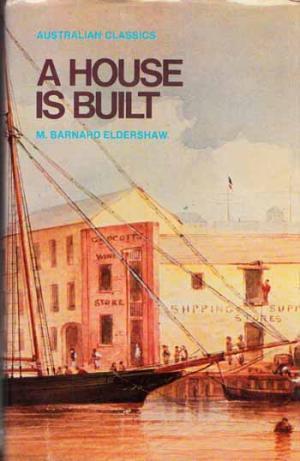
  • M. Barnard Eldershaw, A house is built (John Boland’s review)
  • Arthur Gask, The lonely house
  • Mary Gaunt, The lawless frontier
  • William Hay, Strabane of the Mulberry Hills: the story of a Tasmanian lake in 1841
  • Fred Howard, Return ticket
  • Jack McLaren, A diver went down
  • Frederic Manning, The middle parts of fortune: Somme and Ancre, 1916 (Lisa’s review)
  • Myra Morris, Enchantment
  • Katharine Susannah Prichard, Coonardoo (Posts by Lisa and me)
  • Effie Sandery, Sunset Hill
  • Henry Handel Richardson, Ultima Thule (Brona’s review)
  • Alice Grant Rosman, Visitors to Hugo
  • James Tucker (as Giacomo di Rosenberg), Ralph Rashleigh (Bill’s review)
  • Arthur W. Upfield, The Barrakee mystery
  • Arthur Wright, Gaming for gold
Book cover

By the late 1920s, there was quite a flowering in women’s writing, which continued through the 1930s. This is reflected in the above list, which includes Jean Devanny, Marjorie Barnard and Flora Eldershaw (writing collaboratively as M. Barnard Eldershaw), Mary Gaunt, Katharine Susannah Prichard and the already-established Henry Handel Richardson. Effie Sandery (Elizabeth Powell), Myra Morris and Alice Grant Rosman also appear in the list, but are new to me.

There were very few literary awards at the time, but two that were established in 1928, made awards in 1929: the ALS Gold Medal went to Henry Handel Richardson’s Ultima Thule and The Bulletin’s (unpublished) Novel Competition was won by Vance Palmer’s The passage.

Writers born this year included poet Peter Porter, and novelists Kenneth Cook, Catherine Gaskin, Ray Mathew, and Glen Tomasetti (though she was better known as a singer-songwriter and activist). Deaths included Barbara Baynton, who continues to be the subject of some of my most popular posts.

The state of the art

Of course, I checked Trove to see what newspapers of the time were saying about Australian literature, and fiction in particular.

One of the things that shone through the newspaper articles I read was great enthusiasm to support and promote Australian literature. The papers reported on the meetings of many organisations, including the Australian Literature Society (which originated the ALS Gold Medal), the Queensland Authors’ and Artists’ Association, the Henry Lawson Literary Society of Sydney, and The Royal Australian Historical Society. The papers noted the issues they raised, and what guest speakers discussed. These included:

  • holdings of Australian literature in school, university and public libraries. There was clearly concern about either lack of good holdings and/or lack of promotion of those holdings. Brisbane’s The Telegraph (8 February), for example, reported that the University of Queensland had approved the purchase of books by Australian authors for the University library from the proceeds of Authors’ Week. Further south, Tasmania’s Mercury (6 December) reported that the Australian Natives’ Association* had decided to write to the Launceston Public Library committee, asking them to set aside a section of their library for “works of all descriptions by Australian authors” and to so identify them.
  • support for Australian literature. A couple of papers reported that organisations had expressed appreciation for the support given to Australian literature by newspapers. Melbourne’s Argus (19 March) quoted a speaker at the Australian Literature Society saying that “the best newspapers of the Commonwealth were making a definite attempt to create a literary tradition, and the standard of professional writing was high, despite the fact that writers appeared to be paid in inverse ratio to their qualities” [my emph]. The Sydney Morning Herald (11 June) repeated similar praise from the Henry Lawson Literary Society which said that “opportunities for Australian writers had been greatly extended by the interest displayed by Australian newspapers and journals prominent among which were the Sydney Morning Herald and the Bulletin. On the other hand, Melbourne’s The Age (16 March) wrote of Australian Literature Society’s point that “more is required of the public than a passive loyalty”, while the above quoted Argus wrote of the public’s “indifference”.
  • lectures on Australian literature. Papers also reported on various lectures given on Australian literature. The Australian Worker (28 August) promoted a series of three to be given by author, editor and critic A.G. Stephens. It was organised by the University Extension Board “in response to numerous requests for lectures on literary subjects”. His topics were Australian Poetry, Australian Humor, and Australian Literature.

This is just a small taste of the sorts of discussions of Australian literature that occurred throughout the year. The final recurring issue I want to share concerned the quality of Australian literature – to date.

Book cover

Journalist Firmin McKinnon had strong views about Australian literature, and I have reported on him before. Then, 1934, he was still speaking about what he was arguing in 1929, which was how “behind” Australian literature was compared with the settler societies like Canada and South Africa. Brisbane’s The Telegraph (6 August) reported on a lecture he gave, in which he pronounced that:

Australian novelists have failed in the main because they have no definite attitude towards life that is worth writing about, because many of the characters are unreal, and because they have failed to interpret the great soul of the real Australia.

He did, however, praise two novels from my list above. One was John Dalley’s Max Flambard, which he described as

the best novel yet produced of Sydney and suburban life, failing only because he had given his novel a tinge of satire which detracts from a true interpretation, and depicts snobbery as the dominating feature of suburban life.

Oh dear, we can’t be satirical about Australia? But, he saves his best praise for the one he sees as “the greatest Australian novel”:

“A House is Built,” by Miss Eldershaw and Miss Barnard. … while it may be too long and too particularised for the average reader, it was a story of the reconstruction of the past, covering the history of Sydney for half a century.

Overall, though, he argues that Australian literature to date was lacking a “definite constructive outlook towards life”. McKinnon was firmly of the opinion, as The Queenslander (6 June) reported on an earlier address, that

some writers unfortunately wallowed in the realism of misery, forgetting that misery was not a dominant feature of Australian life, but light-hearted optimism and courage.

Australian writers “must”, he told the meeting, “tell a story true to Australian life”. I think I’ll leave you with that little thought!

Additional sources:

* Natives, here, meaning “white” Australian-born, not First Nations people, an appropriation issue that was commented on by later historians.

Meanwhile, do you plan to take part in the 1929 Club?

Bernard Cronin, The last train (#Review, #1954Club )

Bernard Cronin (1884-1968) has featured in this blog a couple of times, but most significantly in a Monday Musings which specifically featured him. He was a British-born Australian writer who, in his heyday in the 1920s to 40s, was among Australia’s top 10 most popular novelists. And yet, along with many others of his ilk, he has slipped from view. However, I did find a short story of his published in 1954 so decided this was my opportunity to check him out.

The reason I wrote my Monday Musings on Cronin was because in 1920 he founded (with Gertrude Hart) the Old Derelicts’ Club, which later became the Society of Australian Authors, but I have mentioned him in other posts too. For example, in one post, I noted that in 1927, Tasmania’s Advocate newspaper had named Cronin as being “amongst the leaders of Australian fiction”. And, in my post on Capel Boake I shared that he had written collaboratively with Doris Boake Kerr (aka Capel Boake) under the pseudonym of Stephen Grey. In fact, he used a few pseudonyms, another being Eric North, which he used for his science fiction. Cronin wrote across multiple forms (publishing over twenty novels as well as short stories, plays, poems and children’s stories) and genres (including historical fiction, adventure stories, metropolitan crime fiction, romances, and science fiction and fantasy).

Wikipedia’s article on him includes a “partial” list of his works, with the earliest being The flame from 1916, and the latest novel being Nobody stops me from 1960. What the list tells us is that his most active period occurred between 1920 and 1950, so the story from 1954 that I read comes late in his career.

I had initially chosen a different story, “Carmody’s lark”, which was published in late 1954 in several newspapers, but belatedly discovered that one paper had printed it in 1951! Wah! Fortunately, I found another, “The last train”, that, as far as I can tell, was first published in newspapers in 1954. They are very different stories, the former being a character piece about a lonely suburban railway worker whose friends notice a change in behaviour and think he’s finally found a woman, while the latter is a more traditional suspense story set, coincidentally, on a surburban train. Both convey subtle wordplays in the their titles.

“The last train” picks up that conversation-with-a-stranger-on-a-train motif, a conversation that will change the life of the protagonist. It’s midnight, and a “nondescript little man in sports coat and baggy slacks” rushes onto the train at Ringwood in the outer suburbs of Melbourne heading for the Dandenongs. There’s a broken light in the carriage so it’s (appropriately) dim. He thinks he’s alone until he notices “a man in a rather comical misfit of hat and light raincoat”. He’s “slumped forward with his elbows on his knees, staring at him”.

Now, our “little man” has had a rather dramatic night. The story continues …

there was nothing in the least sinister in the indolent down-at-heel looks of his solitary companion. He seemed, indeed, exactly the type preyed on by the garrulous; and the newcomer, who was shuddering deliciously with a sense of rare importance, instinctively shifted over to the corner immediately opposite him.

You have probably worked out already that all is not as our “little man”, as he is repeatedly described, thinks. The story builds slowly, starting with a bit of general chat that, if you are looking for it, already contains little hints of menace. But, our “little man” blunders on, ostensibly uncertain at first but in fact keen to tell of his experience that night, while the “other man” listens, gently encouraging him on. Too late does our “little man” realise the truth of the matter, but the story ends there, leaving it to the reader to imagine the rest from the clues given.

Lest you be thinking, it is not the same story as Patricia Highsmith’s 1950 novel, Strangers on a train (adapted by Hitchcock into a film of the same name). And it is not like Christie’s earlier 1934 novel, Murder on the Orient Express. However, it is a well-told, if traditional, suspense story, that is typical, I’d say, of 1950s popular crime fiction and perfect for a newspaper readership. (Whatever happened to the inclusion of short stories in newspapers?)

And that, I think, is the best I can do for Karen and Simon’s #1954Club.

Bernard Cronin
“The last train”
in Maryborough Chronicle (Maryborough, Qld)
22 November 1954
Available online

Monday musings on Australian literature: 1954 in fiction

Some of you know that Karen (Kaggsy’s Bookish Rambling) and Simon (Stuck in a Book) run “reading weeks” in which they choose, somewhat randomly, a year from which “everyone reads, enjoys, posts and shares wonderful books and discoveries from the year in question”. The next one is 1954, and is happening this week, 18-24 April.

I’ve taken part a couple of times, the first time being the 1936 Club for which I also wrote a Monday Musings. I’ve decided to do this again for 1954.

By 1954, World War 2 was over, and the now infamous baby-boom was well underway. Australia was welcoming migrants from war-torn Europe and life was, generally, looking good. However, the war was still close, and the Cold War was being well felt. The war featured heavily in popular literature, but writers were also looking at who we were as Australians, and at our near neighbours.

My research located a variety of books published that year across all forms, but to keep this simple, I am going to focus on fiction. Here is a selection:

  • Jon Cleary, The climate of courage
  • Dale Collins, Storm over Samoa
  • L.H. Evers, Pattern of conquest
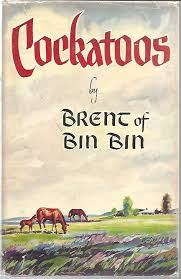
  • Miles Franklin (as “Brent of Bin Bin”), Cockatoos (Bill’s review)
  • Catherine Gaskin, Sara Dane
  • Nourma Handford, Coward’s kiss
  • T.A.G. Hungerford, Sowers of the wind: A novel of the occupation of Japan
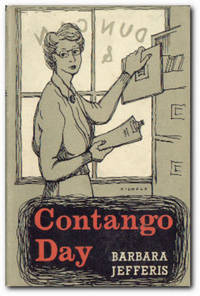
  • Barbara Jefferis, Contango Day
  • Eric Lambert, The veterans and The five bright stars
  • Henry George Lamond, The manx star
  • Eve Langley, White topee (Bill on The pea pickers and White topee)
  • Kenneth Mackenzie (as “Seaforth” Mackenzie), The refuge
  • Alan Moorehead, A summer night
  • Tom Ronan, Vision splendid
  • Arthur Upfield, Death of a lake
  • Judah Waten, The unbending
  • Don Whitington, Treasure upon the earth

Many of these authors have been forgotten, while others, like Alan Moorehead, are more remembered for their non-fiction work. Some, like Jon Cleary and Arthur Upfield, were successful writers of popular fiction, and are still remembered, albeit probably little read. Women are less evident here, than they were in 1936.

However, this list also includes some significant “literary” writers, like Miles Franklin, Eve Langley and Judah Waten, and others who are remembered today for awards established in their names, T.A.G. Hungerford and Barbara Jefferis. I like the sound of Jefferis’ debut novel. It was set during a single day in Sydney about Miss Doxy, a confidential filing and records clerk. The Barbara Jefferis Award was endowed by her husband in 2007 to commemorate her. 

There were very few literary awards at the time. One that did exist, the Australian Literature Society Gold Medal, was awarded in 1954 to poet Mary Gilmore for her collection Fourteen men.

Writers born this year included two poets, Kevin Hart and Dorothy Porter, and the novelist Kerry Greenwood. Deaths included, significantly, Miles Franklin.

Overland magazine, to which I often refer, was established in 1954 by Stephen Murray-Smith and Eric Lambert, who had also co-founded, with Frank Hardy, Melbourne’s Realist Writers’ Association.

The state of the art

Of course, I checked Trove to see what newspapers of the time were saying about Australian literature, and the fiction in particular.

Some specific issues

A recurring issue was the cost of books in Australia. A brief article in Adelaide’s Advertiser (January 25) reports on a visit to Australia by Desmond Flower of the large British publisher Cassell & Co. Flower said that English publishing costs had dropped slightly because of reductions in the price of cloth and paper, and the cost of printing was also likely to fall which should bring book prices down in England, “and consequently Australia”. (As an aside, he also noted that book business in Australia had trebled since 1939, which represented a greater increase than anywhere else in the Empire.)

Another discussion concerned the Little Golden Books, and Americanisation of Australian culture. (Nothing new, eh?) Jill Hellyer writing in the Tribune (July 21) argues not only that these cheap books had “pushed Australian authors even further from their precarious position”, when there are excellent Australian books available, but that the books were “full of loose phrases, bad grammar and cheap American slang”. She admits some in the series are good, but is particularly scathing about the Disney versions of classic children’s stories. There was a riposte, in the Tribune (August 11) from a “West Australian mother” who argued that “it is possible to select, from among these books, ones that can be good and useful for our children”. She didn’t mind ‘reading the words “sidewalk” or “cookies” because it provided her the “opportunity to explain this is how people talk in America”. From her point of view, these understandings help us get to know other people and cultures. However, while she disagreed with Hellyer’s specific cultural concerns, she agreed that “some [Golden Books] are very unpleasing, notably the ones based on Walt Disney’s films that were mentioned by the author of the article”.

Censorship was also discussed. The highly-respected Australian librarian John Metcalfe was quoted in Sydney’s The Daily Telegraph (August 10) as arguing against proposals (from both the right and the left) to extend censorship. The particular target was comic strips and books believed undesirable for children. Censorship, he said, is against the “liberal tradition” and was a “negative approach to the problem”. The Children’s Book Council, he said, “shows that a positive approach can be made in encouraging children to tackle a better type of literature.”

Similarly, a commentator in Wagga Waga’s Daily Advertiser (September 2) expressed concern about plans to extend censorship. Accepting that there there was a “a plethora of cheap and sexy trash on the market” and “an emphasis in some publications on crime and violence”, and agreeing that these can present “a danger to the younger generation and the lesser intellects [defined how?] among the adults”, this commentator believed that “a ban on ‘obscene’ literature is too dangerous to be countenanced”, and goes on to argue the case. There must be other ways, our commentator says, because

Once books are banned or burned, freedom is on the way out.

Some specific books

I could write screeds on reviews of particular books – even though I only read a tiny percentage of the articles I retrieved in Trove – but that’s not practicable, so, I’ll just share a few.

Brent of Bin Bin’s Cockatoos was much approved – and was also recognised by then as the work of Miles Franklin. IM (Ian Mair?) summarising the year’s books in Melbourne’s The Age (December 11) wrote “In the year’s fiction, first must come The Cockatoos … Like all her novels of country life, it has a wonderful feeling for place and period”. Earlier in the year, the writer of the Books Received column in Townsville’s Bulletin (April 18), wrote:

The theme is the universal one of the conflict between the artist and the practical majority who do not take the arts seriously, but the novel is also another Brent of Bin Bin’s memorable recreations of place and period in Australian country life. It is concerned particularly with the problem if the “exodists” — the restless young Australians who fifty years ago sought art of adventure, and in so doing suffered uprooting and exile. 

Oh dear – “the practical majority who do not take the arts seriously”!

There’s superlative praise for popular writers of the time like Jon Cleary and EV Timms. T.A.G. Hungerford‘s Sowers of the wind was also much liked. Interestingly, Wikipedia says that this novel won the 1949 Sydney Morning Herald prize for literature but was held back by publisher Angus & Robertson until 1954 “because it dealt with the economic and sexual exploitation of the Japanese after the War by Australian occupation forces”.

But I’ll save my last discussion for Eve Langley’s White topee. There were many reviews for this book, which continues the story of Steve from The pea pickers, but most seemed to be variations on a theme, which is to say, they praised its creativity but expressed some uncertainty too. Langley remains a challenging author for many, but her contemporary reviewers did value what she offered.

The Newcastle Sun’s (August 5) reviewer perhaps puts it best, opening with

It is impossible to judge White Topee by Eve Langley according to the established standards as the author has embarked upon the adventure of writing in a way that is completely original and individual.

The review uses headings like “poetic passages”, “heady style”, and “impressionistic”, but also gets Langley:

There are so many strands in this study of the country that the author’s impressions come tumbling with enough dazzling rapidity to suggest eccentricity, but the work on closer examination is revealed to be composite and, the result of shrewd observation and searching frankness.

M.P. in Queensland Country Life (August 5) is more measured, writing that it “could have been an outstanding book” but “is full of ego”. M.P. admires much in Langley’s passion and the writing:

Her love of Australia is deep and emotionally strong, and on the too rare occasions when Eve Langley forgets the poets and calls on her own descriptive powers she gives passages that, with their beauty and strength, are pure classics.

M.P. concludes that when Langley “extricates herself from the morass of sentimentality and confusion of mind she will write a book that is truly great”.

R.J.S., reviewing in Cairns Post (August 14) admired the book. S/he starts by saying “it has brilliant descriptive passages and much originality of thought but lacks a plot and is not a novel when judged by the usual standards”. S/he make a strong case for the work’s value:

To date no one has interpreted Australia and its people as Miss Langley has done in “White Topee.”

R.J.S. advises that the novel “cannot be skipped through” and suggests that “the careful reading it deserves will disclose that the writer has opened a new furrow in the field of Australian literature”.

I’ll leave White topee there, and will conclude my introduction to 1954 in Australian fiction with popular non-fiction author, Colin Simpson, who is quoted in Grafton’s Daily Examiner (December 23) as saying:

If one person in three would make one of his or her Christmas gifts a book by an Australian author, that could sufficiently enlarge the market to make authorship economic for more than just a few of us. The effect on our national literature could be very considerable.

Plus ça change?

Additional sources:

Meanwhile, do you plan to take part in the 1954 Club?