Merlinda Bobis, Fish-hair woman (Review)

Merlinda Bobis Fish-hair woman

Courtesy: Spinifex Press

How do you classify a book like Fish-hair woman by Filipino-Australian writer, Merlinda Bobis? Darned if I know, but I’ll have a go. It’s part war story, murder mystery, political thriller, romance, and historical epic. It draws on the magical realist tradition of writers like Isabel Allende, but overarching all this, it is a book about stories – about the stories we cleave to ourselves and the stories we tell others, the stories that convey the truth and the ones that hide it, the stories that change with time and those that never change.

But enough preamble, let’s get to the action. The book is set in the Philippines, with the core story taking place in a village called Iraya in 1987. It is a time of civil unrest: government soldiers fight communist insurgents (the historical New People’s Army), with privately-controlled armies added to the mix. The villagers are caught in the middle, struggling to survive under

violence dressed as salvation. What hopeful word, the sibilants a gentle hush: salvacion. The soldiers and the rebels spoke of this same cause, even as they remained in opposite camps and our village festered in between.

The central characters are Estrella, the fish-hair woman who uses her 12-metres-long hair like a net to retrieve the dead from the river (“trawl another victim of our senseless war”); her older “sister”, Pilar, who joins the communist insurgents; and Tony, the Australian journalist whom both had loved. These relationships are complicated by the fact that Estrella, whose mother died at the birth, is the illegitimate daughter of the most powerful man in the village, Mayor Kiko Estraderos (aka Doctor Alvarado), the man who runs the private army.

While the main action occurs in 1987, the time-frame moves between 1977, 1987 and 1997, with the story being mostly told from the perspective of 1997. By this time Pilar and Tony are among the dead or disappeared and Tony’s 19-year-old son Luke has been lured to the Philippines, on the pretext that his father is alive, by Kiko who wishes to “sanitise history and facilitate his return to politics”.

It’s a multi-layered story of political unrest, complicated village loyalties, and familial and romantic love. It is told in first person and third person, with changing points of view.  Sometimes we see through Estrella’s eyes, sometimes Luke’s, sometimes an omnipotent narrator’s or another character’s, and occasionally through newspaper clippings. Woven through it are recurring images and smells – the sweet lemongrass tainted by the corpse-laden river, the fireflies that light the dead so they can be found, and Estrella’s long hair that magically grows each time she senses violence and pain.
Australian Women Writers Challenge 2012 Badge

Australian Women Writers Challenge (Design: Book’dout – Shelleyrae)

This is one of those books that requires you to go with the flow. Its structure mimics the way we layer stories, the way we weave history and myth, stories and memories, so that at any one time we may or may not know where we are or who we are. Estrella, the fish-hair woman, and Stella, Doctor Kiko’s daughter, for example, are different facets of the same person, each with different stories.

There are simpler characters, too. One is Pay Inyo, the village gravedigger. He reminded me a little of the grandfather in Lianke’s Dream of Ding Village. He’s the peaceful man, the wise one who urges a humane path, who says it’s about perspective, “about how and from where you look … how far … and what you will to see”. But even he is unsure about the story:

But who is the hero in this story? Pay Inyo is not sure anymore, nor is he sure about what the story is in the first place. There are too many stories weaving into each other, only to unweave themselves at each telling, so that each story can claim prominence. Stories are such jealous things. The past and the present, ay, what wayward strands.

There were times, as I read, when I thought that Bobis may have created a few too many “wayward strands”. Some stories may not have been critical to tell, but her voice is so compelling and the language so expressive that I didn’t really begrudge her these, because by then I was well and truly along for the ride.

This is a novel set during war and yet it is not really about war. It is about people, “those whom we love and hate”, about how we use and manipulate stories to “save” or ” kill”, and, as Pay Inyo would like us to see, about collective grieving, collective responsibility:

This is the wake of the world: each of us standing around a pool that we have collected for centuries. We are looking in with our little pails … We try to find only what is ours. We wring our hands. Ay, how to go home with only my undiluted pail of grief? To wash my rice with or my babies, to drink? But the water is my dead kin, an enemy, a beloved, a stranger, a friend, someone who loved me or broke my heart. How to tell them apart? How to cleave water from water?

For all the sadness and brutality in this book, it has a big heart. And its message is clear. We are all in this together. How much better if we see it sooner rather than later.

Merlinda Bobis
Fish-hair woman
North Melbourne: Spinifex Press, 2011
303pp
ISBN: 1876756977

(Review copy supplied by Spinifex Press)
Monday musings on Australian literature: Some novels about the second world war

As I am still immersed in things paternal – and as my father served in the second world war – I thought that this week I’d take the easy way out again and list some of my favourite Australian novels about that war. Although I call myself a pacifist, I don’t shy away from war novels. The main reason is because in war we see humanity under duress and, through that, we see the best and worst of human behaviour. I love how the best war novels throw up the “truths” that I love to find in literature.

I’m going to list just 5 – though I’ve read more than that – in the order that I’ve read them. I’ve chosen these 5 not necessarily because I think they are the best (though I have enjoyed them all) but for the different perspectives they offer on the experience of war. (Note: the dates after the titles are not the dates I read them but when they were first published! Just so you know!)

Nevil Shute‘s A town like Alice (1950)

Nevil Shute was one of my favourite authors when I was a teen though when I read him now I see that he’s not as good a writer as my other teen passion, Jane Austen! Nonetheless, he was a good storyteller and many of his novels were adapted for film, including A town like Alice. It’s primarily a post-war romance, but the two characters, English rose Jean and rough diamond Aussie Joe meet when they are prisoners of war in Malaya, a story which is told in flashback. It’s a pretty stereotypical romance but the war, the English-Australian cross cultural story, and the Australian outback setting captured my teen heart.

Arnold Zable‘s Cafe Scheherezade (2001)

Café Scheherazade is set in, and based on, the real cafe of the same name. It was, from its establishment in 1958 to its demise in 2008, a significant meeting place for Jewish refugees who came to Melbourne post war. The novel tells the stories of the Cafe’s patrons – their lives in Europe, and how and why they came to Australia. It taught me something I hadn’t known before – that many Jewish refugees came to Australia via Shanghai. Zable’s prose is beautiful, and though the stories, as you can imagine, contain much tragedy, the final message comprises those universals of courage, endurance, love and even laughter.

Markus Zusak’s The book thief (2005)

Zusak’s The book thief is one of those rare books that pulls off telling a terrible story with humour. Its subject is an ordinary German family which fosters a young girl, and then hides, to their great risk, a young Jewish man. It’s a deadly serious book about bravery and cowardice, about kindness and cruelty – and yet it has, much of the time anyhow, a rather whimsical tone.

Hans Bergner’s Between sky and sea (1946)

Hans Bergner, Between sea and sky

Bergner tells the opposite story to that told by Zusak. His characters are Jewish refugees fleeing Nazi occupied Poland on a boat – but no-one will let them land, no-one will take them in, the way the Hubermanns took in Leisl and Max in The book thief. It explores the impact of this, as the reality becomes clear to the boat’s occupants. It’s a pretty devastating story.

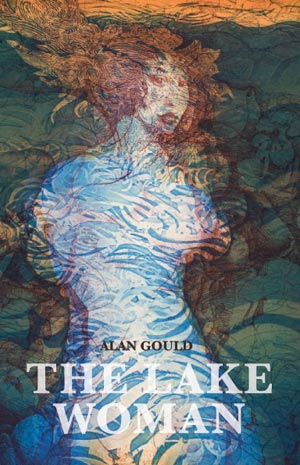
Alan Gould‘s The lakewoman (2010)

I started with a romance and I’m ending with a romance, but that’s where the similarity between the two books ends. Shute’s book has a pretty traditional trajectory – boy meets girl, boy loses girl, boy gets girl, more or less – against the backdrop of the war and early post war period. Gould’s story is far more complex – more realistic about life and character, with a touch of the mystical thrown in. Gould argues that his is not really a war novel because it’s not about the war. To a large degree that’s true, but in a sense it’s true of many books set in war. War is the setting, but the themes are often something bigger (universals about human behaviour) and smaller (about how particular people behave under stress). One of the issues Gould explores is how the promise of a person’s life can be thrown, not only by the things that happen to them but by the decisions they make as a result. And in war, a lot of things can happen to a person!

I’ve limited myself to 5 so am sure to have missed some favourites of yours. I’d love to hear whether you read war novels, Australian or otherwise and, if so, what your favourites are. If you don’t read them, you can tell us that too!

Alan Gould, The lakewoman: A romance

Alan Gould, The lakewoman

Book cover (Courtesy: Australian Scholarly Publishing P/L)

I’m a little embarrassed to say that until The lakewoman was shortlisted in the 2010 Prime Minister’s Literary Awards, I only knew of Alan Gould as a poet. Turns out, though, that he has written several novels, of which this one is his most recent. It is, ostensibly, a war novel, in that much of it is set in or around World War 2, but it is not in fact about the war.

It’s an intriguing book that slides literally and metaphorically between the solidity of the earth and the fluidity of water, between pragmatism and magic (or enchantment). It tells the story of Alec Dearborn, an Australian grazier’s son who was born in 1918. He goes to Cambridge in England and, when the war starts, decides to join up with the British Army rather than return home. The novel starts with his having landed in a lake, after parachuting from a plane for the D-Day Invasion. He is drowning, dragged down by his weapons bag and parachute, but is rescued by – yes – a lady in a lake. Ha! Now you see why it is called a “romance” because, while it contains “a” romance, it also hearkens back to the “romances” of yore, like the Arthurian legend. Here is the set up, pp. 2-3:

As he vomited he also wondered why this sudden young Mamzelle happened to be present at the exact, unlikely spot in France where his foolish body had come to earth. It was a question that would usefully occupy his mind later, when he was behind the wire with the austere leisure to brood on the magic that settled into his life following this, his fluky rescue. Magic? He was not a fellow given to outlandish notions, and would interrogate the dubious word, looking for its sense, not in mumbo jumbo, but as some friable quantity existing within the very crevices of everyday occasions.

In this passage, we see how carefully Gould has laid out his novel. He introduces us to the ideas of coincidence (fluke) and magic versus the everyday business of living, and he uses foreshadowing to distract us from plot issues (what will happen next) towards more interior ones (what is the meaning of what happens). As the novel progresses, this fellow who is not given “to outlandish notions” finds himself drawn, almost telepathically (it seems), to his rescuer. She , Viva, rather like the Arthurian lady-in-the-lake, frames the rest of his life, one way or another.

What happens on the surface of the novel is fairly matter-of-fact. Alec’s life runs its course in a mostly unremarkable way. One of the central questions of the book is that which Alec poses to his sister, Bell, a little while after he returns to Australia:

What I can’t work out is […] Well, how a person knows whether the existence he’s been given has been of value to anyone else.

This is Alec’s conundrum. He does not fulfil the traditional expectations of a grazier’s son (“Dearborn”, after all), despite his “prospects” : he’s intelligent, sensitive, and physically capable (“the dynamism in balance with the dreaminess”). Much of this failure stems from his being “disarmed” on June 6, 1944, by Viva. There are some lovely, appropriate wordplays in the novel, and one of these centres on the idea of disarming/arming, which works beautifully against the novel’s military background:

‘If you think about me, then, when you are gone, I will be arming you still,’ she assured him, mysteriously.

Soon after he leaves her, he ponders what has occurred:

‘I feel distress at having relinquished you,’ he supplied on consideration. For it was distress, he recognised, to be walking away from this sudden new claim on his life. ‘It is this that has disarmed me, I reckon,’ he explained for her.

I will be arming you, she reminded.

It is difficult with this WordPress theme to get the formatting right: this last statement by her is in italics in the novel and suggests either his memory of her words or an actual telepathic communication. Which one it is, is one of the lasting ambiguities of the novel. Italics are used throughout the novel for “communications” like this and for interior monologues/reflections, usually Alec’s, since this is a third person narrative, told mostly from Alec’s point of view.

By now you may be thinking that this novel is a fantasy, even a romantic fantasy, but not so. Neither is it magical realist. It’s simply that there is a sense that slightly mystical things may be happening, things that make sense psychologically but that also convey another plane of human thought and behaviour. It reminded me, at times, of Patrick White‘s Voss, but to suggest more than that would be to do it a disservice because it is not at all derivative. Rather, it is simply that the story focuses on a dimension of experience that can’t always be logically explained but that is nonetheless very real. Gould has, I think, pulled this dichotomy off, by careful manipulation of tone: through language that is poetic but not overdone; a pacing that is meditatively slow at the beginning and pragmatically faster at the end; evocative chapter titles (such as “To Fling the Lovely Foolish Body”, “Had You Down Dead”); the occasional light touch (“‘You are the invasion?’, she asked”); and timing that foreshadows just enough to make sure we stay focused on the ideas and not the facts.

And for me, the main idea (the one that provides an “undercurrent” to all the others) is that of completing the self, which is something Alec struggles  to do. In the end though:

…the joy, the completion was her presence, and the talk was strangely superfluous. Yet by convention they did talk from some region of the mind where the words did not especially matter but the proximity of the person created an entirety of being.

This is a rather melancholic, but by no means sentimental, book – and it moved me deeply.

Alan Gould
The lakewoman
North Melbourne: Arcadia, 2009
296pp.
ISBN: 9781921509346

Monday musings on Australian literature: Literary Folk

Jason and Chloe Roweth perform

Local folkies Chloe and Jason Roweth, in the Trocadero venue, 2011

As I attended my 13th or 14th (losing count now), National Folk Festival* this Easter weekend, I started to think about the relationship between folk music and literature. Some folk music is purely instrumental – think Celtic fiddling and bluegrass picking, for example – but, as a reader, it’s the storytelling side of folk that most draws me in. From traditional English folk songs to bush ballads, from the love songs of singer-songwriters to protest music, folkies tell stories that are sad, romantic, tragic, funny or angry, so  I thought that for today’s Monday Musings I’d write about a very select few Aussie folk musicians whose stories I’ve enjoyed.

Eric Bogle (b. 1944)

Bogle, though Scottish born, is now one of the grand old men of Australian folk. His most famous song is the antiwar song “And the band played Waltzing Matilda“. Another antiwar song, “No man’s land” (also known as “The green fields of France”) was, he told us at this year’s Festival, described by Tony Blair as his favourite war poem. Here’s the last verse:

And I can’t help but wonder, now Willie McBride
Do all those who lie here know why they died?
Did you really believe them when they told you ‘The Cause’?
Did you really believe that this war would end wars?
Well the suffering, the sorrow, the glory, the shame
The killing, the dying, it was all done in vain,
For Willie McBride, it all happened again,
And again, and again, and again, and again.

Not all Bogle’s songs, by any means, are about war, but this seemed a particularly appropriate one for today’s Monday Musings which happens to fall on ANZAC Day.

Margret RoadKnight (b. 1943)

If Bogle is one of the grand old men of Australian folk, Margret Roadknight is a grand old dame. Each year I think I won’t go see her this time because I saw her last year and there are no many to see, but I usually find myself gravitating yet again to one of her concerts, and I’m never disappointed. The woman just keeps on keeping on the way folkies – like Bogle, Pete Seeger (with whom she’s performed), Joan Baez and ilk – do. She sings her own compositions and those of others. Like most folkies she tells stories about her songs, about why she wrote them or sings them. She’s a social justice activist, but the lyrics I’ll excerpt today come from her “big” hit of the 1970s, “Girls in our town” (written by Bob Hudson):

Girls in our town get no help from their men
No one can let them be sixteen again
Things might get better but it’s hard to say when
If they only had someone to talk to…

The Fagans

If Eric is the grand … well you get the drift … the Fagans have to be Australia’s royal family of folk. It’s a rare festival that you don’t find them together, and/or subsets thereof, performing. They regularly appear in the Union Concert so you can guess that a major theme for them is justice for workers. But, just to be perverse, I’m going to give you an excerpt from Kate Fagan’s plaintive depression era waltz, “Old station sisters”:

Another year passed, we were sweethearts by then,
The government came and they called up our men
To work in the cities, the factories and mines,
The country had no time for dancing.
With three younger sisters, parents to feed
And land that was broken from drought and disease,
Well he had no choice …

Jason and Chloe Roweth

Husband-and-wife team, Jason and Chloe Roweth are folklorists. They research and present Australian folklore, as well as perform original songs. For this year’s festival, which encompassed ANZAC Day, they reprised their show The riderless horse about the First World War. It is the result of significant research into the letters and diaries, not to mention the music and poems, of the era – and finds a good, if traditional, balance, between humour, tragedy and patriotism. The focus is the humanity of war – rather than the history and the deeds. One of the themes that runs through any stories of Australians at war is their anti-authoritarian/egalitarian stance (which was often at loggerheads with the British way of doing things). Here is an excerpt from “The army song”:

Now they give us chicken, they say it is the best,
But we get the neck and the arsehole.
The officers get the rest…

You need to have a laugh every now and then, or you’d be crying…

William Barton at the National Folk Festival, 2011

William Barton, in the Budawang, 2011

The Song Company and William Barton

The Song Company (with indigenous musician-didgeridoo player William Barton) is, really, the “odd man out” in this line-up – but they demonstrate what a wonderfully broad church the NFF is. The Song Company is a classically trained a capella group which, as their website describes, “is equally at home in medieval songs and chants, 16th-century polyphony, 20th-century classics and [which] creates innovative programs that cross the old divide between high-art and low-brow and old/new”. I’ve seen them in a few of these guises and enjoy their eclecticism (not to mention the quality of their execution). What they presented at the NFF was, I think, a version of their show Kalkadunga** Man which they toured with Barton a couple of years ago. Their program included an evocative piece, which Barton called a favourite, “Out there on the dry creek bed”, but I can’t find any lyrics online to excerpt for you. They also performed one of the best known (in white Australia) traditional Aboriginal songs, the “Maranoa Lullaby”:

Mumma warrunno
Murra wathunno,
Mumma warrunno
Murra wathunno.

You can hear a clip from a very scratchy 1950 recording sung by Australia’s first recognised classical indigenous singer, Harold Blair. This recording was among the first chosen for Sounds of Australia (the National Registry of Recorded Sound) developed and maintained by the National Film and Sound Archive …

… of course there’s more, but this seems a fitting way to conclude my little intro to the literary aspects of Folk.

*Folk is defined broadly … as I think it should be … by the National Folk Festival.
** Kalkadunga being the indigenous people from the Mt Isa region of NW Queensland.

Arnold Jansen op de Haar, King of Tuzla

Translated works always represent a challenge. There is something slightly disconcerting about knowing that you are not reading the actual words of the author, but someone else’s interpretation of them. There’s been some discussion of this around the blogs and in the media this year, partly because of the publication of Why translation matters by award winning literary translator Edith Grossman.

Ramona Koval, of Radio National‘s The Bookshow, interviewed Edith Grossman earlier this year. Koval introduced the interview with:

According to Edith Grossman, translation is a strange craft, generally appreciated by writers, undervalued by publishers, trivialised by academics, and practically ignored by reviewers.

Well, maybe translators are ignored by professional reviewers, but I’ve often seen the issue discussed in blogs and online bookgroups. We are keenly aware of the translator’s role and have been known to compare translations. Anyhow, to continue… The Wikipedia article on Grossman includes a quote from a speech she made in 2003:

Fidelity is our noble purpose, but it does not have much, if anything, to do with what is called literal meaning. A translation can be faithful to tone and intention, to meaning. It can rarely be faithful to words or syntax, for these are peculiar to specific languages and are not transferable.

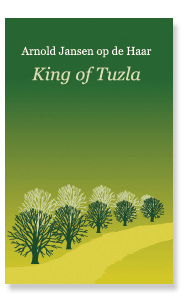
Arnold Jansen op de Haar, King of Tuzla bookcover

Book cover (Courtesy: Holland Park Press)

This brings me nicely to Arnold Hansen op de Haar’s King of Tuzla. I found it a strangely compelling book. I can’t say I loved it, and at the beginning I nearly gave it up, but it’s short and so I decided to push on. However, more of that anon. First a brief plot. It tells the story of a young Dutch army officer, Tijmen, who finds himself in the middle of the Bosnian War as part of a UN unit, and tracks his experience of the war and his feelings about it. Interspersed between his story are little “cameo” stories about various civilians and the impact of the war on them. In fact, the novel starts with one such cameo, the Muslim Galib who had been a civil servant but had lost his job due to the war and was now a farmer. These cameos do not become part of the main narrative.

The book is divided into 5 parts. The first three parts are essentially chronological, while the last two are told after the war, in flashback, some of it through Tijmen’s journal entries. Overall I liked the structure of the book. The early chronological sequence, the interspersed cameos that gave “life” (albeit often horrific) to the matter-of-factness of the military detail, and the change in pace and perspective in the last two parts give the book interest by layering meaning.

The characterisation of Tijmen and his fellow officers is effective. Tijmen himself is an intriguing character: a bit of a loner, interested in the arts (reading, ballet, iceskating), ambitious (but “Eleven years later and still he had got nowhere”), and a little proud (the King of Tuzla, the Duke of Sapna, is how he sees himself during the conflict). I must say, though, that I don’t quite know why the book has been described as a coming-of-age novel. He is an adult when the novel starts and, while he is a little naive in the ways of the world, I saw no coming-of-age focus.

The trouble is that the book is a bit of a plod to read at times, and I wonder whether this is to do with the translation. So, here’s the rub: do I place my concerns at the author’s or the translator’s feet? Part of the problem is the flow. It felt clipped and jerky, but not in a way that seemed like it was done for effect. And at times, the sentences just plodded on one after another, like a boring history text. Maybe all this was intended, but I found it hard going. In addition, there are errors, such as “the colonel still lay there snorting” (“Snoring” seems more likely) and some awkward expressions, such as “It was some minutes before Eddy was able to extricate himself from the situation with some difficulty”. Is this a translation problem? “With some difficulty” seems redundant, and makes the sentence clunky to read.

There are, however, also some lovely images and gorgeous rhythms. I particularly liked this, for example (despite the errant, to me, semi-colon after “popes”):

This was the area where the different population groups overlapped like different geological strata. It was the land of popes; the mullahs and rabbis, the Christians, the Muslims, the Jews and the gypsies. The land of the long hot summers and the long severe winters, of rakija, walnuts and prunes and the land of the centuries-old struggle between the Turks, Hungarians, Austrians and Germans…

And this poignant description of Tijmen’s flat:

Eight years in the same flat, where time’s mechanism had jammed. No-one had been loved there.

In the end, figuratively speaking as we learn this two-thirds of the way through the book, the war is too much for Tijmen and he leaves the army. The book concludes with some nicely structured words beautifully conveying what he had earlier described as “this uselessness, this futility, human helplessness”. (Wouldn’t it be better with another “this” before human?) This may not be the best war novel I’ve read, but it has its power.

This book has received some varied reviews. You may like to read a couple: Stu at winston’s dad and Lisa at ANZLitLovers.

Arnold Jansen op de Haar
(Trans. by Paul Vincent)
King of Tuzla
London: Holland Park Press, 2010
(Orig. pub. 1999)
199pp.
ISBN: 9781907320064

(Review copy supplied by Holland Park Press)

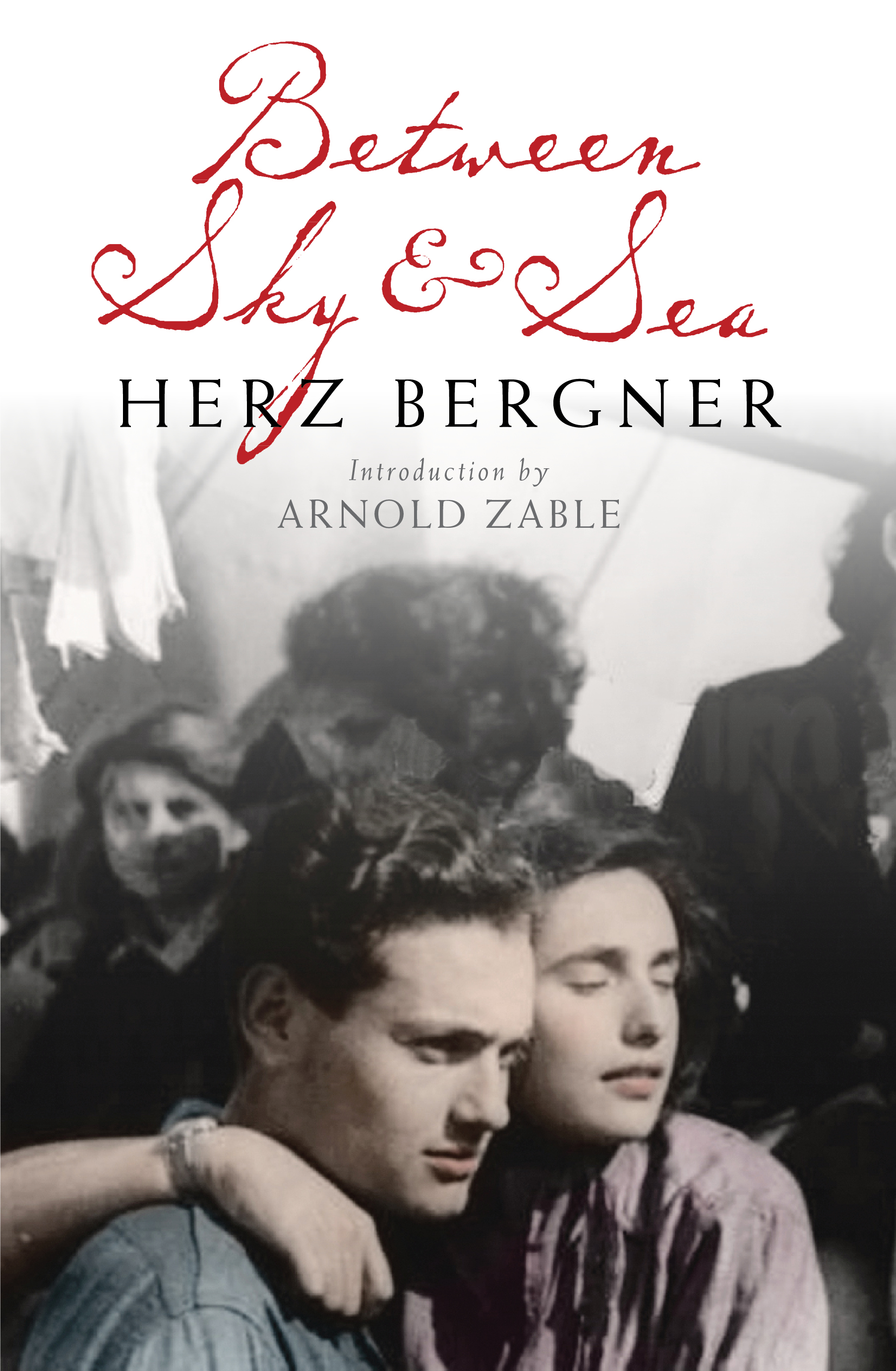
Herz Bergner, Between sky and sea

Hans Bergner, Between sea and sky
Book cover (Courtesy: Text Publishing)

Do you read introductions to novels? And, if you do, do you read them before or after you read the novel itself? I read them, but always afterwards because I like to come to  novels as objectively as I can. And so, this is what I did with Herz Bergner’s  Between sky and sea which won the Australian Literature Society’s Gold Medal for Book of the Year in 1948. I’d never heard of it. (Well, I wasn’t around then, but still …!) However, this year Text Publishing has republished it, which is a pretty savvy decision because, as Arnold Zable suggests in the introduction, it has some resonances for contemporary Australia – but more on that anon. Zable also tells us that while Bergner, a Polish Jew who emigrated to Australia in 1938, wrote the book in Yiddish, it was first published in English, having been translated by another Australian Jewish novelist, Judah Waten.

The novel has a straightforward plot. It tells the story of a group of Jewish refugees from the Nazi invasion of Poland who are passengers on an old Greek freighter bound for Australia where they hope for a new life. (Australians, at least, will see the contemporary resonances now. Think SIEV X, for example). There is, though, an older resonance which Bergner presumably knew – that of the MS St Louis which tried to find a home for Jewish refugees in 1939 after they were turned away from Cuba (and which later inspired the book Voyage of the damned, so titled because, as many of you know I’m sure, they continued to be turned away as they went from port to port). These resonances and more are all referred to in the Introduction. Knowing readers will pick many of them up, but isn’t that the fun of reading? To pick them up yourself? So, read the book, I say, and then the rather fine Introduction.

Anyhow, back to the book. As I was reading it, I couldn’t help also thinking of that allegorical boat trip, the Ship of Fools. This is not that allegory – they are not fools, and the boat does have a captain, but as I read the novel I felt that awful sense of a world out of control that the allegory represents.

If this book were a film, it would be described as having an ensemble cast, because it has no identifiable heroes or heroines, no real anti-heroes either. Rather, it has a bunch of people who are thrown together by circumstance but who have little in common other than that they are Jewish refugees. Their backgrounds are diverse and they vary in their practice of Judaism (if they practise it at all). They include Nathan and Ida (who lost their respective spouses and children while escaping the invasion), the know-it-all Fabyash and his family, the flirty but mostly kind-hearted Bronya and her stolid overweight husband Marcus, Mrs Hudess and her two daughters (whose only remaining possession is one doll), and several others. As you might expect with such a set up, the novel explores the increasing tensions – the arguments, the pettinesses alongside the kindnesses – that occur as supplies of food and water dwindle and people get sick, while the journey goes on and on without an end in sight:

They were ashamed to lift their heads, to look each other in the face, and for two reasons. Because Fabyash had sunk so low that he had stolen food from a child, and because Mrs Hudess, who was regarded as such a refined person, had burst forth with the language of the coarsest market vendor. To what depths suffering can bring a person.

The strength of the novel is, in fact, its characterisation. Despite its almost non-existent plot (though there is a climax that I won’t give away), the novel maintains our interest because its characters are real in the way they relate to each other and their circumstances. We know these people, we are these people. In this regard it is a little different from those Holocaust novels – many of which also deal with “ordinary” people – that work on a larger-than-life heroism-betrayal scale.

Towards the end of his introduction, Zable quotes Waten regarding the translation. Waten apparently translated it with Bergner by his side, and says that Bergner was “very odd because he wanted every word translated, and if the number of words came out fewer in English he wasn’t very happy. He never really mastered the English language”. This makes a bit of sense because there are times when the novel feels a little – well – wordy. This never becomes a big problem, however, because Bergner’s imagery (mostly simile and analogy) tends to be fresh and is often two-edged:

A soft haze shimmered in the summer air, caressing their faces like spider webs. [on Nathan and Ida’s escape from Warsaw]

and

For a moment the moon shone through, glittering like a lance, and then it was quickly hidden again.

and

… at midday when the sun was ripe and full like a great golden pear that hung heavily from the centre of the sky.

I enjoy writing like this that contains layers of meaning that make you think a little before you move on. The language is not particularly complex, but Bergner has a habit of inserting a word or phrase that undercuts your expectation and keeps you reading.

The themes are both particular and universal – particular because they specifically depict the anti-Semitism that was rife during World War 2 (to the extent that even the crew on the boat treat the passengers as less than human), and universal because they explore the various ways humans behave under stress. The overriding theme – the biggie, in fact – is the way we continue to turn away other. The irony is that even when we are the other – such as the Jews on this boat – we find otherness amongst ourselves to turn away (until a bigger calamity forces us to reconnect). Will we ever change? I fear not. In fact, that’s what makes the universal, universal, isn’t it?

It is encouraging to see publishers like Sydney University Press and Text Publishing – not to mention of course Penguin –  reissuing long out-of-print Australian classics. I hope it pays off, not only because I like to see forgotten Australian classics brought to life again but because, as in this book, the messages conveyed by these classics can be as valid today as they were when they were first written.

Herz Bergner (trans. by Judah Waten)
Between sky and sea
Melbourne: Text Publishing, 2010 (first ed. 1946)
215pp.
ISBN: 9781921656316

(Review copy supplied by Text Publishing)

Markus Zusak, The book thief

In one moment, there was great kindness and great cruelty, and I saw it as the perfect story of our humans are. (Zusak on the Random House website)

Zusak could hardly have chosen, for The book thief, a better setting to explore the best and worst of humanity than Germany during the Holocaust. The book reminds me a little of Ursula Hegi’s Stones from the river which also deals with a small German town during the war and the hiding of Jews, though Hegi’s book has a much wider canvas, covering a few decades.

The novel, which is narrated by Death, tells the story of a young girl Liesel (the book thief) who is left with a foster family in a small German town in the lead up to and during World War II. Liesel is treated well by her foster parents, Hans and Rosa Hubermann, and makes friends with people in the neighbourhood including Rudy Steiner, a boy her own age. Not long into the novel, the Hubermann household is also joined by Max, a 24 year old Jewish man whom they hide. From here we follow the family and the neighbourhood as they live through the war. The characters – and there are many of them – are well drawn.

It’s a clever, memorable book. The use of Death as a narrator and its structure, which seems both old world (the chapter titles ‘featuring….’) and post-modern (the inclusion of the illustrated stories, the little bold-type assertions like ‘A small threat from Viktor Chemmel to Rudy Steiner’, ‘He survived like this’), give it a fresh tone which impel the reader on. This tone has a veneer of whimsy while at the same time being deadly serious.

There is a bit of foreshadowing but it’s handled well. It tells us our narrator is omnipotent and warns us that bad things are going to happen (and we know they will anyhow). I don’t usually mind foreshadowing – and agree with Death who says:

Of course, I’m being rude. I’m spoiling the ending, not only of the entire book, but of this particular piece of it. I have given you two events in advance, because I don’t have much interest in building mystery. Mystery bores me. It chores me.

The star of the book for me is its language. It’s superficially simplistic but is really quite sophisticated. There are some wonderful images – ‘pimples were gathered in peer groups on his face’; ‘they were going to Dachau to concentrate’; ‘rumour of sunshine’; ‘the sky began to charcoal towards light’ – but these are not overdone.

Zusak effectively handles the fact that the characters are German and would be speaking German through the occasional use of German words and phrases. And he lightly translates most of this German for us,  such as ‘”Keine Ahnung’, Rudy said, clinging to the ladder. He had no idea.'” Again, there isn’t too much of this but just enough.

The repetition of the curses – “Saumensch”, “Saukerl”, “Jesus Mary and Joseph” – give it a light touch, as do things like the “Keine Ahnung … He had no idea” above and the gruesome humour of “they were going to Dachau to concentrate”. Again, none of this is overdone. Not too funny, but definite touches of humour. There are those who say you can’t “do” humour and the Holocaust, but I don’t agree: this book is a perfect example of why I don’t.

There is also poetry to the language – with this poetry coming as much through the rhythm, as through imagery:

In the morning he would return to the basement.
A voiceless human.
The Jewish rat, back to his hole.

[and]

She didn’t need an answer.
Everything was good.
But it was awful, too.

[and]

Why him?
Why Hans Huberman and not Alex Steiner.
He had a point.

[and]

Their drivers were Hitlers, and Hubermanns, and Maxes, killers, Dillers and Steiners.

And then there is the frequency of ‘3s’. For example:

  • The Hubermanns lived at 33 Himmel Street (and 33 was the age Jesus Christ was when he died – relevant?);
  • the common curse was ‘Jesus, Mary and Joseph’;
  • a lot of the rhythms (such as the examples above) come in threes.
  • it is third time unlucky for Hans Hubermann
  • “The Word Shaker” written by Max story starts with “three important details about his life”.

The threes just keep coming. Three is a pretty magical number: the trinity; mind, body and spirit; past, present and future. The concept of “three” is found in most religions and represents, at its simplest, unity.

The novel seems to have two main themes. One is the power of words – to help and to hinder. I loved this, describing Leisel’s surviving the bombing: “the words WHO had saved her life”. The personification of words here, at the end of the novel, is really effective. Words sustain her through most of the book, but there was a point when she nearly gave up on them, as when she tears up a book in the mayor’s house after having seen Max in the Dachau march:

Soon there was nothing but scraps of words littered between her legs and all around her. The words. Why did they have to exist? Without them, there wouldn’t be any of this. Without words, the Führer was nothing. There would be no limping prisoners, no need for consolation or worldly tricks to make us feel better.

What good were the words.

BUT the other theme is the one that ends the book: what it means to be human. Death says:

I wanted to explain that I am constantly overestimating and underestimating the human race – that rarely do I ever estimate it. I wanted to ask her how the same thing could be so ugly and so glorious, its words so damning and brilliant … tell her the only truth I truly know … I am haunted by humans.

In other words, Zusak, in this book, encapsulates humanity – its best and its worst – and does it through using ordinary people living in/coping with extraordinary times. His message is simply that humans are capable of wondrous things and of heinous things. No astonishing truth really – we all know it – but he shows how closely these can co-exist and how fine the line often is.

Markus Zusak
The book thief
Sydney: Picador, 2005
584pp.
ISBN:033036426X

Imre Kertèsz, Fateless (or Fatelessness)

[WARNING: SPOILERS, of sorts]

Let’s get the first thing clear. I like holocaust literature – not because I enjoy the subject matter but because in it I find the most elemental, universal truths about humanity. Depending on the book, this literature contains various combinations of bravery and cowardice, cruelty and kindness, love and hate, self-sacrifice, self-preservation and betrayal, resilience and resignation, and  well, all those qualities that make up humanity and its converse, inhumanity. I have by no means read all that is out there but here are some that have moved me: Anne Frank’s The diary of a young girl (of course) and Anne Holm’s I am David, from my youth, and then books like Martin Amis’ Time’s arrow, Bernhard Schlink’s The reader, Marcus Zusak’s The book thief, and Ursula Hegi’s Stones from the river. There are gaps, though, in my reading, such as Thomas Keneally’s Schindler’s ark (I did see the film), the works of Primo Levi, and Elie Wiesel’s Night. I have, however, just added Imre Kertèsz’s Fateless to my list of books read.

Kertèsz, 2007 (Photo by Csaba Segesvari, from Wikipedia under GNU Free Documentation License 1.2)

Kertèsz adds a new spin to the universal truths explored by these books – it’s what he describes (in my 1992 translation anyhow) as “stubbornness” which seems to me to mean “resilience” or a determination to survive, and even to have, if possible, little wins against the system.

Anyhow, first the plot. The novel takes place over the last year of the war and concerns Gyorgy Koves, a 14-year old Hungarian Jew, who, one day, is suddenly called off a bus, along with all other Jews on the bus and transported to Auschwitz, and then Buchenwald, Zeitz and back to Buchenwald, before returning home at war’s end. It chronicles his experiences, his thinking, and the impact on him of his experience. He begins as the archetypal naive narrator…but by the end, though his tone has changed little, he is no longer naive. This is rather beautifully achieved as we see his youthful application of logic being changed into something more cynical and survival focused.

Gyorgy speaks with a strange sense of detachment borne, to start with, of an apparent unawareness of what exactly was happening to him and a disbelief that anything untoward would happen. And so, in the beginning, as events unfold he describes them as “natural” because of course, when they got to Auschwitz, it was sensible to inspect each person to see who was physically fit and capable of working. He didn’t know then what would happen to those not found physically fit. The horror gradually builds as reality sets in and he goes about making it through each day – through his share of beatings, the reduced food rations, and all the other deprivations that make up concentration camp life. In the first part of the book he uses the term “naturally” to mean some sort of normal logic but by the end it comes to mean, as he explains to a journalist who asks him why he keeps using the word for things that aren’t natural, that these things were natural in a concentration camp.

Early on in his captivity he says that they approached their life (and work) “with the best of intentions” but they soon discover that these “best of intentions” do not bring about any kindness from their overseers, and so his attitude to getting on, to surviving starts to change. As he starts to physically weaken, become emaciated and develop infections, he observes that “my body was still there. I was thoroughly familiar with it, only somehow I myself no longer lived inside it”. Always dispassionate, always matter-of-fact, while describing the most heart-rending things.

Towards the end, he is placed in a hospital ward and there he is treated better and, even, with a certain amount of kindness. This in its way is as shocking to him as the cruel beatings he experienced at Zeitz. He can see no logic, “no reason for its being, nothing rational or familiar”. He can only understand kindness in terms of the giver receiving “some pleasure” from it or having some “personal need” satisfied. Never is there any sense that altruism might come into play. His view of “justice” is based very much on survival. He says, when he is spared, “everything happened according to the rules of justice … I was able to accept a situation more easily when it concerned someone else’s bad luck rather than my own … This was the lesson I learned”.

And so, in the end he returns home, and finds it hard to explain to people just what happened and how he now views life. He describes getting through his time as “taking one step after another”, focusing just on the moment. He implies that if he had known his fate he would have focused on time passing – a far more soul-destroying activity than concentrating on getting through each day “step by step”. This brings us to the fate/fateless bit. He says at the end that:

if there is a fate, there is no freedom … if, on the other hand, there is freedom, then there is no fate. That is … that is, we ourselves are fate.

I find this a little hard to grasp but he seems to be saying that we are free to make our own choices, even in a concentration camp – we are not fated but make our own fate. He was and is not prepared to accept any other approach to life. But life will not be easy:

I am here, and I know full well that I have to accept the prize of being allowed to live … I have to continue my uncontinuable life … There is no impossibility that cannot be overcome (survived?).

And yet, at the very end of the book, he says “and even back there [in the concentration camp], in the shadow of the chimneys, there was something resembling happiness”. Wow! This is an astonishing book – it charts horrors with a calmness that is quite shocking, and it is particularly shocking not because Gyorgy is unfeeling but because he can’t quite grasp what is happening to him. This is the fundamental irony of the book, and the fundamental truth of a naive narrator: we the reader know exactly how it is even as Gyorgy tries to make sense of it using logic and reason. I must read this book again – and preferably the newer more highly regarded 2004 translation by Tom Wilkinson.

(Translated by Christopher C. Wilson and Katharina M. Wilson)