On the literary (and linguistic) road in Japan: 1, Central Honshu

Given this is primarily a litblog, I like my travel posts to have some literary or, at least, linguistic interest. And so in this first post about our current trip to Japan, literary and linguistic observations and thoughts will be my focus.

Linguistic challenges

Japanese language has a pitch-accent system which can provide particular challenges for English-speaking foreigners who try to use some Japanese words when communicating. For example:

  • Kaki: Oyster or Persimmon, depending on, to me, a very slight difference in intonation
  • Sake: Salmon or, well, Sake, with the same proviso as above
  • Hana: Flower, Nose or a Girl’s name with, I think, no variation in pronunciation. So, when you see a shop, as we did the other day, called Hana No Hana (‘no’ denoting ‘possession’), you wonder whether it means ‘Hana’s Flower’ or’ Hana’s Nose’ or ‘Flower’s Nose’ or, Flower’s Flower’, or … well, you can see where I’m going can’t you? You can have fun playing word games with Japanese people.

Japlish
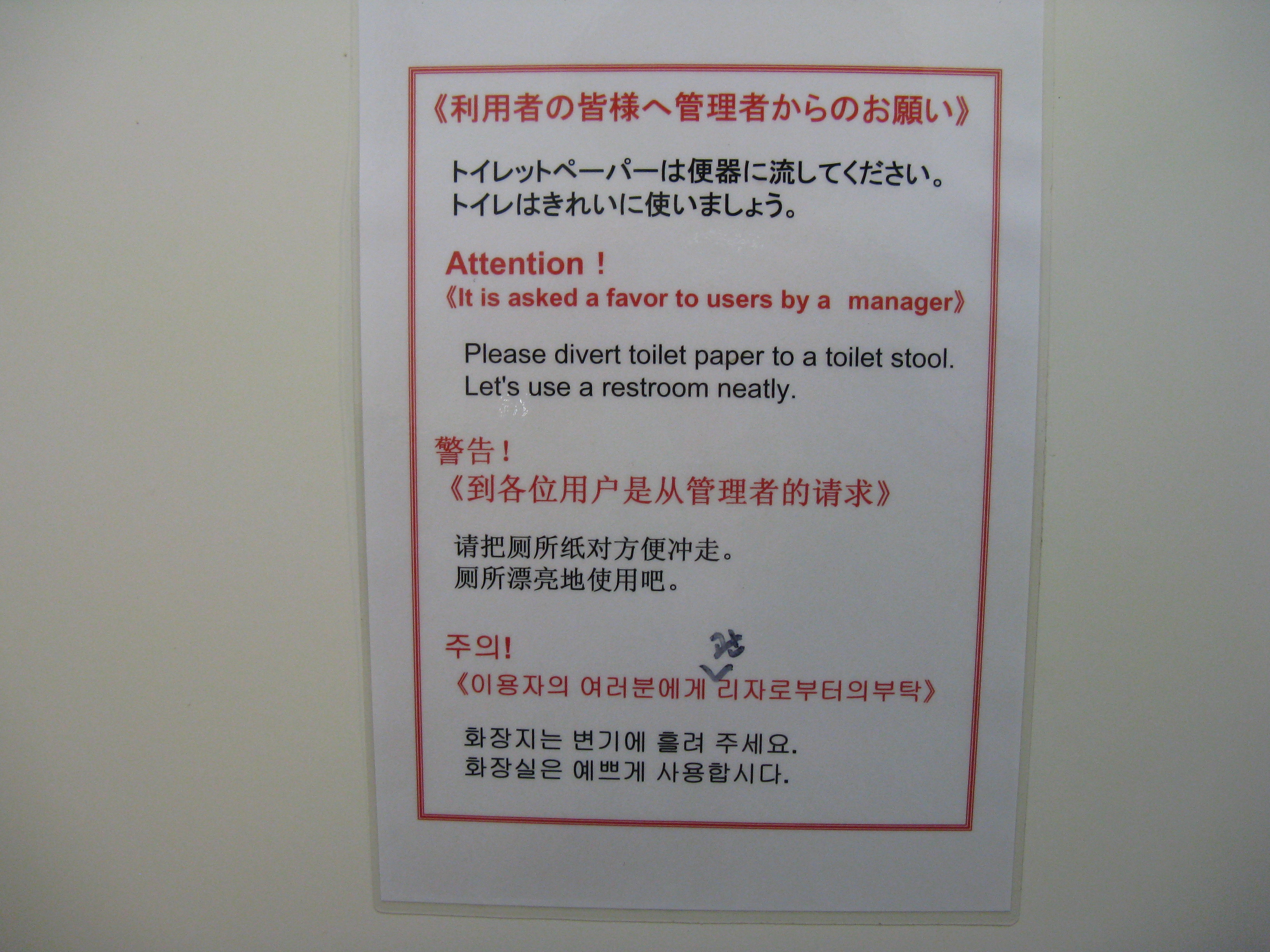
Sign in toilet, Japan

Sign in toilet, Japan

English-speaking foreigners, as you probably know, love to “catch” Japanese out in their English usage … and so for fun I’ll share just a couple that we’ve come across to date with you. But, please note that these are shared in a sense of fun not ridicule. After all, most Japanese know more English than I do Japanese, and at least they try.

  • On a special English menu in an izakaya that I shall leave unidentified to protect the innocent:

It is necessary to enjoy oneself over meal after it acknowledges though it is thought that the mistake of the word is somewhat found in the menu.

  • Inside a toilet door. For some reason, hotels and tourist venues often feel the need to tell you what to do with your used toilet paper. This one is particularly (unconsciously, we presume) entertaining:

Attention!
(It is asked a favour to users by a manager)
Please divert toilet paper to a toilet stool. Let’s use a restroom neatly.

Literature

I like to read Japanese writers, and have reviewed a couple on this blog to date, but here I’ll share something different.

A little haiku written by the poet Koyabashi Issa (1763-1827), one of Japan’s four haiku masters. It was inspired by a frog mating battle at Gansho-in Temple in the lovely little town of Obuse, and was written to encourage his sickly son. (Unfortunately, his son died a month later. In fact, Issa was pre-deceased by all his children and his wife).

Yase-gaeru,
Makeru na! Issa,
Kore ni ari.

It roughly translates to:

Skinny Frog,
Don’t give up! Issa
Is here.

English traveller-explorer Isabella Lucy Bird‘s* letters, titled Unbeaten tracks in Japan, published in 1880 about her trip to Japan. I downloaded an eBook version and have been dipping into it during our trip. In Letter XVIII she talks about her travels in the alpine region of Central/Western Honshu through which we travelled a day or so ago. Here is an excerpt:

It is an enchanting region of beauty, industry, and comfort, mountain girdled, and watered by the bright Matsuka. Everywhere there are prosperous and beautiful farming villages, with large houses with carved beams and ponderous tiled roofs, each standing in its own grounds, buried among persimmons [kaki, remember!] and pomegranates, with flower-gardens under trellised vines, and privacy secured by high, closely-clipped screens of pomegranate and cryptomeria.

She then names a number of villages, including the gorgeous Takayama which we have now visited on two occasions. She describes the farms as “exquisitely trim and neat”, and nothing has changed today.

I was also struck by a comment on food from the same letter. When she asked her hosts whether they drank milk from their cow, she learnt that they didn’t, that they thought it was “most disgusting” the way foreigners put into their tea something “with such a strong smell and taste”. Tea is of course a significant part of Japanese culture, but from a country which eats the oddest things to our western minds – salmon nose anyone? – this did make me laugh. Each to her own, as they say!

And here ends, my first little travel piece. More to come (probably).

*In the interests of full disclosure, I must add that according to Wikipedia, her first adventure was to Australia but she apparently didn’t like it.
Monday musings on Australian literature: Some Australian travel writing

At luggage carousels one can question travelling (Donald Horne, The intelligent tourist)

Having just returned from our trip to Hong Kong, I thought this would be a good opportunity to post about some Australian travel writing. Hmm … good idea, but where to start? The first problem is that while I usually enjoy travel literature when I read it, I don’t read it often. And the second one is the focus: should I post on Australians writing about travel or on anyone writing about travel in Australia? I’ve decided on the former, which means that while the writers will be Australian, their subjects will not necessarily be so. Travel writers, as you probably know, are a varied lot: some only write travel, but many are novelists, journalists and other sorts of writers who have, for some reason, written travel books.

To keep it simple, I’ve chosen 3 fairly recent examples that represent different types of travel writing.

1. Robyn Davidson‘s Tracks (1995)

Robyn Davidson has to be the Australian travel writer most contemporary Australians would first think of when asked. Tracks is Davidson’s first travel book and it chronicles her 1,700-mile trek across the central and west Australian deserts using camels. It resulted in her being dubbed “The camel lady”. It also resulted in her developing a fascination for deserts and nomadic life, and in 2006 she wrote an essay titled “No fixed address” for the Quarterly Essay. Her book is an example of what I would call adventure travel literature. There are many more examples of this type – from walkers, sailors, mountaineers and so on.

2. Thomas Keneally‘s The place where souls are born (1992)

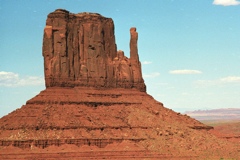
Monument Valley

In Monument Valley, one of the areas that inspired Keneally

Australian novelist Keneally’s book is about the American southwest. It is one of my favourite pieces of travel writing because I lived (and travelled) in the area for three years and fell in love with it, and because Keneally writes about it so evocatively. He matches criticism with reverence, and shares the area’s history and culture with us alongside his own personal reaction to it. What more  do we want in travel writing? This book is from Jan Morris‘s Destinations series. Keneally says he considered Sudan (“that bitter, lovely republic”) and Australia before settling on the Southwest. He sees the Southwest the same way I do, as being different (“the space of enormous elevations of mountains, of canyons deep enough to make the brain creep and waver”) from Australia but also similar. He says:

An Australian has to keep on referring to the snow and the heights to remind himself that this is not some town in western New South Wales. It is as if similar passions have run through the earth’s crust and core and made an organic link between the two places.

I’d put this in the category of traditional travel literature – it’s both descriptive and reflective of place and people, and it shows what is individual to the place in question while also revealing the universals. He concludes the book with:

But, in the spirit of the book, it is the chanting [from the Pueblo] we fix on, going away with it more or less in our ears. I take to the road strangely assured that someone is singing for us, celebrating matters we have got out of the way of celebrating for ourselves. The eternity of things. Even of our own spirits.

3. Don Watson‘s American journeys (2008)

Don Watson has impeccable writing credentials. Not only has he written about cant, jargon and weasel words in Death sentence and Watson’s dictionary of weasel words but, with American journeys, which covers his travels in America, post-Hurricane Katrina, he won the Age Book of the Year and the Walkley Award for best non-fiction book. “To journey in America,” he says, “is to journey in language”. While the book is a little repetitive at times – because the same issues keep cropping up as he travels – it captures the paradox that is America. He sees how its wonderful can-do-ism is offset by a focus on individualism that refuses to see that sometimes individualism needs to be over-ridden for the common good, that there are some things that government should do to ensure that all its citizens are well cared for.  Katrina ably demonstrated this. Watson says:

… if it is true that private businesses are efficient because it is in their nature to seek and maximise profit – which is to say their self-interest – then the pursuit of the public interest is not in their nature, and one may as well look to a rattlesnake for kindness as to corporations for the rebuilding of a city full of people. It is pointless; and it follows that it’s just as pointless to imagine that a country governed by the principle of private interest is capable of fixing problems in the public interest – be they local, like New Orleans; national, like poverty; or global, like the environment or peace …

He goes on to say that while American churches, corporations and the nation as a whole

do good and selfless works at home and abroad, it is also true that, in these days of culture wars, the idea of government being the principal agent of such works is faded. That is what New Orleans revealed …

Watson’s book is in a category I’d call socio-political travel literature. This sort of writing tries to understand how a society works, what makes it what it is.

The travel writing I like best:

  • is generous towards its subject matter, that is, it doesn’t whitewash the negatives but neither does it refuse to understand them
  • uses language that captures my imagination
  • has a sense of humour (though not necessarily laugh-out-loud funny)
  • illuminates place and people – that is, it looks beyond the clichés

In his book The intelligent tourist, Donald Horne (known to most Australians as the author of The lucky country and The education of young Donald), suggests that tourists “give up sight-seeing for sight-experiencing“.  This sense of “experience” is what I look for in travel writing – as well as in my own travelling.

Do you have favourite pieces of travel writing?

John M. Duncan, A Virginia barbecue

Now for something different from the Library of America – a little 3-page excerpt, titled “A Virginia Barbecue”, from Scotsman John M. Duncan’s Travels through part of the United States and Canada in 1818 and 1819, which was published in 1823. In it, Duncan describes a barbecue to which he was invited by Bushrod (what a name, eh?) Washington, who was apparently a favourite nephew of (the) George.

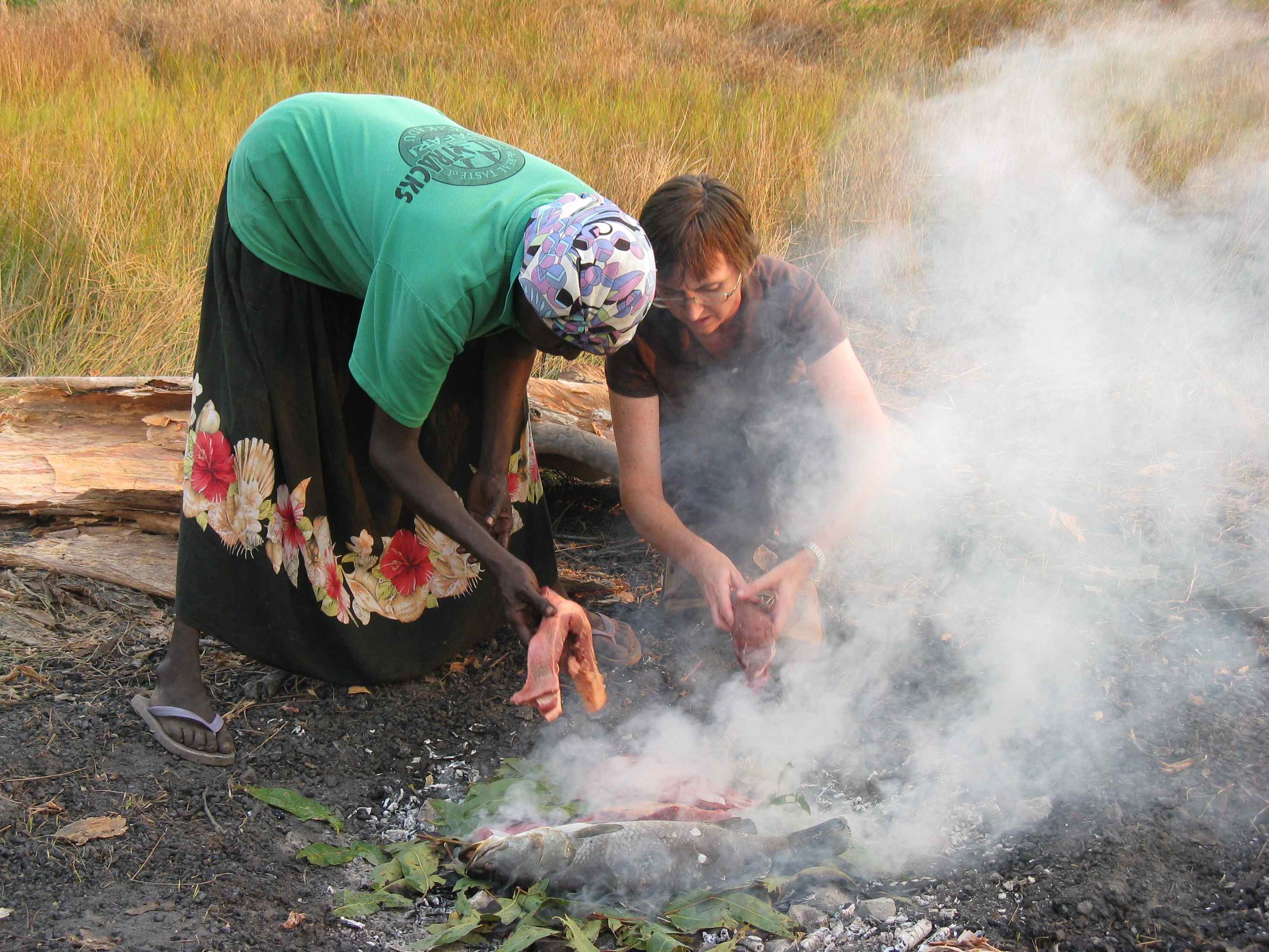
Ground oven cooking, Kakadu

The original barbecue: Ground oven cooking in Kakadu National Park (Photographer: Me)

I wanted to read this for a number of reasons: I like to read about food; I like travel writing; I lived in Virgnia for two years; and I wanted to see what he meant by “barbecue”. The thing about “barbecue” is that in my experience Americans mean something different by it than we downunder do. In the brief introductory notes to Duncan’s piece, Library of America informs us that by the middle of the 19th century regional differences were appearing and that “debates about the best meat (pork for the South, beef for Texans), the proper smoke (cool or hot), the best sauce (thick and tomatoey in the Mexican manner or vinegar-steeped with hot peppers in the manner of the Atlantic seaboard), and the appropriate accompaniments were already beginning to rage”. Duncan, however, was a bit early for this debate so he simply describes what he sees:

The meat to be barbecued is split open and pierced with two long slender rods, upon which it is suspended across the mouth of the pits, and turned from side to side till it is thoroughly broiled. The hickory tree gives, it is said, a much stronger heat than coals, and when it is kindled is almost without smoke.

And, anyhow, he is not specifically interested in describing the cooking itself but in conveying the whole experience. From our 21st century point of view, he seems completely unconscious of the disparity between the black workers slaving over the barbecues and the guests (presumably all white) dancing, eating and drinking. This is not totally surprising, given the period, although William Wilberforce, back in England, would have been full throttle on his abolitionist campaign. Here are some of the ways Duncan describes the black workers:

…a whole colony of black servants …

Servants? Or, slaves?

… black men, women and children, were busied with various processes of sylvan cookery…

“Sylvan” is, to me anyhow, a rather poetic word for forest connoting a sense of romantic idyll that is somewhat belied by the reality of the situation.

Leaving the busy negroes at their tasks – a scene by the way which suggested a tolerable idea of an encampment of Indians preparing for a feast after the spoils of the chase.

A more socially or politically aware writer would probably, even at that time, have seen the irony in this comparison, but I don’t think Duncan did. I’m not trying to play politically correct revisionist games here, but rather reflect on how writing like this can convey meaning that was not necessarily intended at the time. Such writing – in the way it documents practices and attitudes – can be a real mine for researchers!

Duncan then describes the dancing – mainly cotillion – and the dining arrangements. I found it a little confusing when he wrote that “few except those who wish to dance choose the first course; watchfulness to anticipate the wants of the ladies, prevent those who sit down with them from accomplishing much themselves”. That is, they don’t get to eat much. Being “too little acquainted with the tactics of a barbecue, and somewhat too well inclined to eat”, he joins this first course. I had to read this a couple of times before I realised (at least I think I’m right) that “first course” actually means “first sitting”. It appears that when the ladies arise, all are expected to “vacate their seats”. The “new levy succeeds” (that is, as I read it, the next sitting) and many of these diners contrive to sit through the next “signal” to rise, thereby managing to get a good feed!

He also describes the drinking but makes it clear that while there was “jollity”, he saw no “intemperance”. He specifically states that this is so for the members of the judiciary, such as Judge Washington, who were present. Duncan makes such a point of this that I wondered whether he “protesteth too much”. I’m guessing though that it’s more a case of having his eye on his market: there was a strong temperance movement in early 19th century Virginia.

This piece is included in an anthology titled American food writing: An anthology with classic recipes. It would be fascinating to read more…

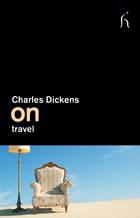
Charles Dickens, On travel

Charles Dickens, On travel

On travel bookcover (Hesperus Press, via LibraryThing)

In the 3rd essay in Hesperus Press’s lovely little volume On travel, which comprises a selection of Dickens’ travel essays, Dickens (1812-1870) makes a reference to Laurence Sterne’s character Yorick. In one of those lovely bits of reading synchronicity, Hungry Like the Wolf posted last week on Laurence Sterne’s A sentimental journey through France and Italy which features said Yorick. In it Yorick lists various types of travellers including Idle travellers, Vain travellers, and Sentimental travellers. Yorick’s type that best suits Dickens would, I think, be his Inquisitive type. However, I think Yorick needed another category to describe a traveller like Dickens: the Observant traveller. (Hmm…I wrote this before checking out the Introduction by Pete Orford. In the first para he praises Dickens’ “talent of observation”. Great minds, and all that!)

There are 6 essays in this slim but rather gorgeously produced volume – don’t you love the allusion to the “armchair traveller” on the cover?:

  • The last cab driver and the first omnibus cab (1836)
  • The passage out (1841)
  • By Verona, Mantua and Milan, across the Pass of the Simplon into Switzerland (1843)
  • A flight (1851)
  • The Calais Night Mail (1863)
  • Some account of an extraordinary traveller (1850)

Reading these reminds me yet again why I love Dickens. I enjoy his acute observation of humankind and his sense of humour. He makes me laugh. Regularly. And then there is his versatile use of the English language. The man can write.

Four of the essays describe train and boat travel, including to America, and to and through Europe. His descriptions of the actual experience of travel and of the various passengers (such as the Compact Enchantress, Monied Interest and the Demented Traveller) he meets on the way are highly evocative. You feel you are on the trains and boats with him because he captures that sense of being tossed about in the sea and of rushing in a train through landscapes and – “bang” (his word) – through stations. But it’s not all sensory – as engaging as that is. There is satire here too – against others, and against himself. For example, in “The Calais Night Mail” he sends up his own love-hate relationship with Calais as well as the behaviour of an English traveller who “thinks it a quite unaccountable thing that they don’t keep ‘London time’ on a French railway”. (It was ever thus, eh?)

The thing about his writing is its diversity – he mixes up his rhythm; he uses allusions, irony and metaphor; he plays with tense and punctuation; and he uses repetition, to name just a few of the “tricks” in his writer’s bag. Just look at the variety in the following examples.

A wickedly satirical description of a man who was transported twice to Australia:

If Mr Barker can be fairly said to have had any weakness in his earlier years, it was an amiable one – love, love in its most comprehensive form – a love of ladies, liquids and pocket handkerchiefs. It was no selfish feeling; it was not confined to his own possessions… (“The last cab driver and the first omnibus cab”)

On a rough crossing to Calais:

I am bumped rolled gurgled washed and pitched into Calais Harbour… (“The Calais Night Mail”)

A description of the Demented Traveller:

Faculties of second Englishman entirely absorbed in hurry. Plunges into the carriage, blind. Calls out of the window concerning his luggage, deaf. (“A flight”)

And then this little pointed comment written in 1863 but alluding to an earlier trip in 1843:

and I recognise the extremely explosive steamer in which I ascended the Mississippi when the American civil war was not, and only its causes were. (“The Calais Night Mail”)

Dickens was, as we realise from the last essay in the collection, more than aware of the horrors of slavery, not to mention the plight of “the fast-declining Indians”. His willingness to express such awareness did not always endear him to Americans but, as Pete Orford writes in the Introduction, Dickens was equally prepared to be satirical of home as abroad.

These essays provide a fascinating insight into how Dickens viewed his world and the people in it, and present wonderful exemplars of his writing. They also demonstrate how widely travelled he was, which, by broadening his understanding of humanity, must have fed his fictional muse too. Orford concludes his Introduction with some lines from the last essay. I can’t really think of a better way to end this than to repeat some of them too. Dickens wrote:

The more man knows of man, the better for the common brotherhood among us all. (“Some account of an extraordinary traveller”)

Some of Dickens’ words and allusions (though there are “notes” in this edition) may be a little obscure now, and some sentence structures are a little complicated to our modern eyes, but if you have any interest in Dickens or travel writing in general, you will enjoy this. I certainly did.

Charles Dickens
On travel
Hesperus Press, 2010
91pp.
ISBN: 9781843916123
(Review copy supplied by Hesperus Press via the LibraryThing Early Reviewers Program)

NOTE: I must apologise for once again hitting the Publish button too early and sending some half-finished gobbledy-gook to your various readers and email accounts. I should either take Tony’s advice and draft in Word or adopt Farnoosh’s recent “Slow down” admonition (to herself), because clearly I’m not getting it right at present! I beg your forgiveness.

P.T. Barnum, In France

P.T. Barnum, by Matthew Brady

P.T. Barnum (Presumed Public Domain. By Matthew Brady, via Wikipedia)

When I saw that this week’s Library of America story was by P.T. Barnum, I knew I had to read it. Like most people I’ve heard of Barnum and his travelling shows, but had never read anything by him.

“In France” is not a short story, as most of the Library of America offerings are, but an excerpt from his 1869 memoir Struggles and triumphs. The whole memoir can be read online at the Internet Archive, here. While “In France” is the title of Chapter 12 in the memoir, the Library of America has not selected the whole chapter. Rather, they have published the middle of it, focusing on the story of how Barnum managed to present “General Tom Pouce” (ie Thumb), wearing his famed Napoleon Bonaparte costume, to the anti-Bonapartist King Louis Philippe. This was 1844, and Stratton (Tom Thumb) was just 6 years old!

You don’t read this for the writing. As memoir, or as travel writing, it is pretty prosaic. He doesn’t do much reflection – at least in this excerpt. You do not get a sense of how he felt about what he was doing, and you certainly get no idea of how his “exhibit”, General Tom Thumb, felt about being dressed up in costumes and paraded. However, it is interesting for its insights into Barnum’s modus operandi – particularly his economic and diplomatic nous. He knew how to work the system, though we are given the impression that he was a hard but not a dishonest negotiator. There is a funny little story running through this excerpt about the licence fee he needed to pay for exhibiting “natural curiosities”. Barnum felt the fee (25%) was too high and succeeded in negotiating a lower one, partly because the official involved did not believe that Barnum would make much money. When it came time for renewal, the official realised his mistake but was once again (legally) finessed by Barnum who argued that Tom Thumb should not be seen as a “natural curiosity” but as a “theatrical” performance (which incurred a much lower 11% tax)!

He also talks about how he worked his promotion – and makes this delightful comment on the French versus the English:

Thus, before I opened the exhibition all Paris knew that General Tom Thumb was in the city. The French are exceedingly impressible; and what in London is only excitement, in Paris becomes furor.

I don’t know when merchandising associated with the arts/performance first took off, but in Paris in 1844 it was in full flight. Barnum writes that:

Statuettes of ‘Tom Pouce’ appeared in all the windows, in plaster, Parian, sugar and chocolate; songs were written about him and his lithograph was seen everywhere. A fine café on one of the boulevards took the name of ‘Tom Pouce’ …

While this merchandising, generated by others for their own benefit, clearly also served Barnum well, there’s no mention of his licensing Tom Thumb’s image for promotional purposes. I can’t help thinking that the master showman missed an opportunity here!

Like the previous Library of America offering this is a short piece: it’s well worth reading for our “historical” if not “natural” curiosity!