Monday musings on Australian literature: Trove treasures (15), What Australia read in 1945

Help Books Clker.com
(Courtesy OCAL, via clker.com)

Another post in my Monday Musings subseries called Trove Treasures, in which I share stories or comments, serious or funny, that I come across during my Trove travels. 

Today’s story is longer than those I have mostly shared, but given it’s an annual recap of 1945, exactly 80 years ago, I’ve decided to share it. The article, “What we read in 1945” (29 December 1945), was written by Ian Mair* who may have been The Argus’ Literary Editor at the time, given his was the byline for the Argus’ Weekend Magazine Literary Supplement.

The first part of the article contains the titles of books by Australian writers – across various forms, including novels, short stories, poetry, and essays – published in Australia in 1945. Before these, however, he says this:

What must surely be from all reports the most important book of the year by an Australian, Christina Stead’s For love alone [my review], published in America, has been out some months, yet has not been seen in Australia, and is not likely to be seen here for some months yet.

Harumph. Indeed, he introduces his article with the comment that it had been an “odd” year for the Australian book world because importers had been “unable to get anything like the numbers required of the books they have ordered” and instead, “have had to half-fill their shops with whatever material of second rate interest the English trade cared to send them”. Nonetheless, trade had boomed, and Australian publishers and printers had “prospered”.

Do read the article yourself if you are interested, as I’m just going to share some of the authors and titles he names, and some of the issues he raises.
1946 Cheshire ed.

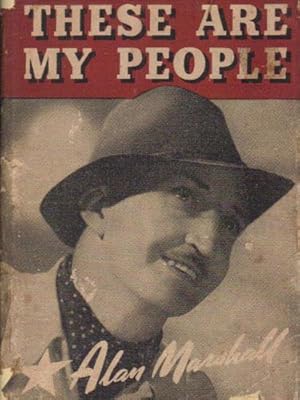
So, he makes a big call saying that “the most beautiful piece of Australian writing of the year”, in book form, was Alan Marshall’s nonfiction These are my people. Marshall was 42 when it was published, and it seems to have been his first book. Despite some reservations, Mair says that “it will very likely be still read years hence, and not only because it is the first book of a young writer who is obviously going places”. Well, Australians will know that Marshall did indeed go places, with his 1955 autobiography, I can jump puddles, becoming an Australian classic.

Mair also names two other nonfiction works as making “the two most important contributions to our literature” for “the light they throw on the Australian scene, and the different ways we have reacted to it imaginatively”. They are Sid Baker’s The Australian language, which is “more than philological” and is “by a true writer”, and Bernard Smith’s history of Australian art titled Place, taste and tradition. It is ‘less “literary” in feeling’ but offers new ideas “that everywhere illuminate Australian literature and life”.

All well and good, but I am more interested in fiction. After mentioning Marshall’s nonfiction work, he names James Aldridge’s war novel The sea eagle. It won, in 1945, the John Llewellyn Rhys Prize, which I’d never heard of, but was a British Commonwealth Prize that lasted from 1942 to 2010. Anyhow, Mair says it was a second book, and “still full of promise”, but less original than Marshall’s book. Mair felt it was too influenced by Hemingway. Its “prose and outlook are mannered … But Aldridge himself can imagine and write; he only needs time off to inspect the behaviour of people in general (not just soldiers), under less fantastic circumstances than those that environ his stories”. He was prolific, if Wikipedia is anything to go by.

I found this interesting but, reading on, I came across authors we Australian literature lovers know better. He says:

A year in which Katharine Susannah Prichard, Norman Lindsay, and Elinor [Eleanor] Dark put out novels should have been good.

Should? He was disappointed, describing them all as “deficient in basic thinking out”:
1944 Angus and Robertson ed.

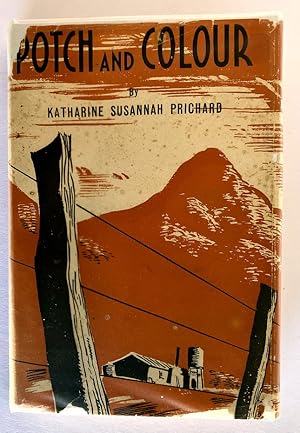
Miss Prichard’s Potch and Colour (Prichard biographer, Nathan Hobby’s review) fell between her professions that they were either legend or simple slabs of life. Lindsay’s Cousin from Fiji worked over his favourite theme of flaming youth among puritans in a way that added nothing to it – and in literature if you don’t go forward you go back. Mrs. Dark’s Little company (Marcie’s review) was a tremendously solemn, vague argument that might be going on to this day for all the book showed.

I did like his point that “in literature, if you don’t go forward you go back”. Anyhow, fortunately for Mair, it was a good year for short stories – including Douglas Stewart’s collection Girl with the red hair – and for poetry. I should clarify that Prichard’s Potch and colour was also a short story collection.

Mair names more books, including essays, books of criticism, and biography, which you can read about in the article! I want to end on some comments he made about publishing in general. He says:

… considering the number of books bought during a year when money was plentiful, and so many consumers’ foods were scarce, Australian authors didn’t make much hay.

The problem was that the Australian market was small “for an author who really puts work into his [of course] writing”, but if Australian authors publish overseas – like Stead, for example – their books don’t reach their “fellow Australians at all” or reaches them “very late”. He names other authors, besides Stead, who publish overseas, like Henry Handel Richardson, Eleanor Dark and Kylie Tennant.

He says that “American publishers have surrendered the whole Australian market to the English book trade” and that English publishers are only interested in publishing an Australian book if “it will also sell reasonably well in England”. The end result is that “it is quite on the cards that an Australian novel published in what may well be as things are, its best possible market, that is, the United States, will not reach Australia at all”. If, however, an author does publish first in Australia, chances are American publishers will shy away, because it is no longer new – and it is “almost certain that an English publisher will reject it”. Catch 22 eh?

Some of this plight, he says, was being discussed by the Tariff Board, booksellers, publishers, and authors themselves. But, he moved on to his next point, which concerned something authors and publishers could do to potentially ‘improve matters”. This was, like Australia’s “exporters of tinned goods”, to “package things a bit better”. He said:

Australian dust-jackets, bindings, lay-outs, type faces, and printing are – generally speaking – awful. Dust-jackets are almost always completely without character, and usually in hideous colours. Even our most experienced publishers usually contrive to ruin the binding of a book with either ugly lettering on the spine, dirty use of gold-leaf, or even the title repeated in the front cover. And so on.

And this wasn’t all. He turned to the editing. Authors could write good or bad books, but no-one, he says, speaking to authors, would take them seriously if their “proofs are badly read” or their “grammar is rocky”, if they repeat themselves “unnecessarily”, or if they waste their adjectives on the first paragraph of the first page. A good publishing house should fix these – or,

in every capital city there are a number of newspaper sub-editors, able men, who could “clean up” and “tighten” many a book by a high-ranking Australian author or authoress in such a way that, though we may be ashamed of what in our books appears as lack of culture, we need no longer blush for our sheer illiteracy. I recommend this for all books, even for those morally-offensive pretentious ones of which there have been a few this year.

Moral delinquency is an awful spectacle indeed at any time; it is doubly so when it has egg on its chin.

He didn’t pull his punches, our Mr Mair. This article was, it turned out, a little treasure.

What say you?

* According to AustLit, Ian Mair (1907-1993) was a “librarian, lecturer, writer and critic”.
Monday Musings on Australian literature: Diverse publishing

With the idea and practice of diversity under attack in more than one place around this world of ours, it’s encouraging to see publishers continuing to support the need for more diversity in their output.

I’ve written several Monday Musings about diversity in publishing, including these, listed from the most recent to the earliest:

  • Bundyi (2024): on a new First Nations imprint, being curated by Dr Anita Heiss, and under the auspices of Simon & Schuster
  • Canberra Writers Festival 2023: 2, Celebrating the classics (2023): on a panel discussion about UQP’s First Nations Classics initiative
  • First Nations Classics (2022): introducing UQP’s First Nations Classics initiative.
  • Magabala Books (2022): spotlight on this First Nations publisher, which was established in 1984.
  • Diversity and memoir (2021): on the issue that people from diverse backgrounds are expected to write memoirs about their experience rather than free to write on their choice of subject.
  • Multicultural NSW Award (2019): on this award that celebrates the publishing of books dealing with or furthering our understanding of migrant experience, cultural diversity or multiculturalism in Australia
  • Who is publishing the interesting books (2014): looks at what “interesting”means from a number of angles including diverse writers

Of course I’ve written posts on diversity from other angles – such as on festivals, or listing books by diverse writers – and I have reviewed many books by diverse writers.

I was inspired to write this post by another publishing initiative in this space, Allen & Unwin’s Joan Press. It was created, in fact, in 2020, but I only cam across it recently. Curated by Nakkiah Lui, a Gamilaroi and Torres Strait Islander woman, and a writer, actor and director, it describes itself as “Radical, inclusive, rebellious”. Its simple home page says:

Joan publishes books across all genres and forms. Each Joan title creates space for voices that get pushed to the fringes; voices that challenge and interrogate the world around them. Named after Lui’s grandmother, Joan Press recognises that storytelling is both the legacy and the future of any community, and aims to be a home for stories and storytellers who are redefining the mainstream in a way that is radical, inclusive and bold.

As far as I can tell, Joan has so far published three books:

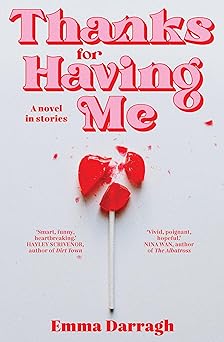
  • Emma Darragh, Thanks for having me (2024), Joan Press’s first fiction title, described as comprising “interwoven stories about three generations of women in one family as they navigate girlhood, motherhood and selfhood, perfect for fans of Jennifer Egan, Meg Mason and Paige Clark”. 
  • Sarah Firth, Eventually everything connects (2023), a work of graphic non-fiction, described as  a delicious mix of daily life, science, philosophy, pop culture, daydreams and irreverent humour”
  • Madison Godfrey, Dress rehearsals (2023), described as “A memoir made of poetry, Dress Rehearsals documents a decade of performing womanhood in a non-binary body”.

Unlike some of the publisher sites I’ve visited recently, Joan does seem to be currently still accepting submissions.

And a little extra …

Related to the issue of diversity in publishing is that of diversity in the publishing workforce. In March and April of 2022, a survey was conducted of diversity and inclusion in the Australian publishing industry. You can read about it here 9where there are links to further details including the full report, but the summary drawn was that

The publishing industry in Australia is highly educated, driven by women and has strong LGBTQ+ representation, yet struggles to reflect Australia’s cultural and social diversity, according to the first survey examining diversity in Australian publishing.

The summary said that the survey yielded “important insights that will help to push for change in the sector”. Some of you may remember this survey, because it got quite a bit of coverage at the time. But what has happened since? That has been hard to find, as my search on the subject produced a page or more of hits on the 2022 survey, but a page or so in, I found a Books + Publishing article from February 2024, titled “APA [Australian Publishers Assoication] releases diversity and inclusion plan” and stating that APA had released ‘a diversity and inclusion plan “to guide and support industry progress over the next two years”‘. The article lists eight recommendations for publishers to work on, and provides a link to the plan.

I also find an announcement from August 2024 that Hachette Australia and Media Diversity Australia (MDA) “are excited to announce a significant partnership, with Hachette becoming the inaugural book publisher member of MDA. This collaboration also marks the launch of the Hachette x MDA Publishing Traineeship, aimed at championing diversity and inclusivity within the publishing industry”. Besides this traineeship, membership of MDA apparently gives Hachette “access to a suite of valuable services, including the MDA TalentHub to reach a more diverse talent pool; participation in advocacy initiatives and industry roundtables; and customised Diversity, Equity, and Inclusion training and guidance”.

Too early to see how all this is playing out, but it’s surely positive.

Any thoughts? Do you seek writing my diverse authors, and if so, how easy is it to find?

Monday musings on Australian literature: Vale SPN or?

Late last year I went looking for the 2024 winner of the Small Press Network’s Book of the Year (BOTY) Award, originally called the MUBA (Most Underrated Book Award). It is/was an annual award highlighting ‘authorial and publishing excellence by small and independent publishers’, and is/was open to any book released by an SPN member during the previous calendar year. It aimed to provide some of the recognition and promotional opportunities for publishers and authors that the big awards facilitate. I didn’t always post on this award but I always checked it out.

But, I was surprised and disappointed to find no mention of the 2024 award. Instead I found articles suggesting that the sponsoring organisation, the Small Press Network, was on the brink of collapse.

I wrote a post back in 2011, on SPUNC (or, Small Press Underground Networking Community) as it was initially called until – as with their award – they renamed it to something with a little more gravitas, to the inoffensive SPN! It was formed in Melbourne in 2006 and its aim was “to promote independent publishing and support the principle of diversity within the publishing industry as a vital component of Australian literary culture”. It seemed to be a wonderful organisation, with an information-rich website (no longer available as far as I can tell) and an active Facebook page (but inactive since March last year.)

So, what happened? Unfortunately, most of the information sources, like Books+Publishing and ArtsHub, are paywalled, but I did glean some information from ArtsHub. On 22 October 2024, Thuy On penned a news report headlined “Small Press Network to terminate unless new board is formed” followed by the news that the organisation was at risk of ceasing operations within the month. The full article is paywalled. However, the article’s publicly available intro said that SPN had emailed its members and supporters that the current Board would be wound up, but there was an option for the community to reform a new Board. Failing that the organisation would cease to exist. SPN’s email apparently cited “numerous reasons” for all this, but those are presumably hidden behind the paywall.

Coming soon from Anna Solding’s MidnightSun

Around the same time, on 17 October, writer, author advocate and presenter, Anna Featherstone wrote a brief blog post titled “Australia’s Small Press Network (SPN) to shutter”. She writes that she’s loved attending SPN conferences over the years “for some incredible nuggets of wisdom and plenty of publishing and book stats” so was sad to hear that it was “officially winding down”. “Totally understandable”, she writes, “but still a loss for the local publishing industry who aren’t the Big Five”. She then quotes SPN’s then board chair, Anna Solding, as saying the the Board had “worked hard to find feasible ways to make SPN financially tenable again but have not found any viable way to achieve this”. Featherstone concludes her post with links to her highlights posts from the 2021, 2022 and 2023 conferences.

The next piece of information I found was also at ArtsHub. Dated 13 December and written by George Dunford, a writer and digital content expert, its headline is “The future of Australian small press”. It continues that the pausing of the SPN was seen by many as “a death knell for independent publishing” but that it had a new Board and “looks set to again champion small press in 2025”. It says that former SPN General Manager Tim Coronel had said that SPN ‘saw “a big membership boost during COVID” as many writers thought it would be a great time to start self-publishing’ … and then we go behind the pay wall. Doh!

So, with the website gone and Facebook inactive, I can find out nothing more, but I do hope it survives, that it revives those sites, and offers its BOTY award again.

Does anyone know anything more?

Monday musings on Australian literature: The Miles Franklin Rights Project

Some months ago, I became aware of The Miles Franklin Rights Project, and of course, it piqued my interest, so I flagged it for a future Monday Musings. The project apparently commenced in early 2021, and is still continuing. Before I describe the project, though, I need to explain for non-Aussie readers here that the Miles Franklin Award, though no longer Australia’s most valuable award in monetary terms (albeit is still generous), is arguably our most prestigious literary award. It is also one of our oldest, having been first awarded in 1957. That first winner was Patrick White’s Voss.

So now, the project …

It is led by Dr Airlie Lawson, who is “a literary sociologist and cartographer, a Visiting Fellow at the ANU’s College of Arts and Social Sciences, and the Postdoctoral Fellow on Untapped: the Australian Literary Heritage Project (on which I posted earlier this year) at the University of Melbourne”. The project intrigues me because it asks some questions that are dear my heart. Here is how it is introduced on the AustLit website, which is funding the project:

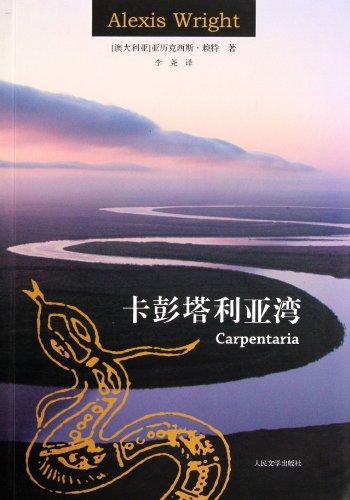
Alexis Wright Carpentaria in Chinese
Chinese edition of Carpentaria

Over the last 21 years, the Miles Franklin Literary Award has been won by many acclaimed Australian novels including Alexis Wright’s Carpentaria, Michelle de Krester’s Questions of Travel, Tara June Winch’s The Yield, Peter Temple’s Truth and Tim Winton’s Dirt Music. But which of these novels has been published internationally—where and in what languages? And shortlisted titles—have they had international success? Is there a discernable gender difference? Associations between publishers? What about change over time? How might we find out?

The site goes on to say that

Globally, publishers and agents report a strong association between literary awards and prizes in international interest in a novel and, subsequently, the licensing of the publishing rights internationally.

The problem is that there’s been little research into what impact awards and prizes have had on rights transactions. A prerequisite for such research, really, is “a comprehensive set of international editions” of Miles Franklin Award winners, but this has not been easy to find. Consequently, the aim of this project is “to create such a list—and to create an efficient, accurate international edition identification model that can be used for other AustLit projects”. They are focusing on the novels which won or were shortlisted for the award from 2000 to 2020. This list, which comprises 22 winners and 93 shortlisted titles, will provide, they hope, a basis from which the global impact and value of this award can be explored.

As you can imagine, it’s not easy tracking down the editions, but they are starting with two major international book databases: WorldCat (library-supplied data) and GoodReads (crowdsourced). As you would expect from an academic project, the information obtained from these databases, and elsewhere, is then checked against multiple sources, including authors, agents and publishers.

You can read about the project on the AustLit website. In fact, this website was my major source for this post, but I did find information about a paper given (via Zoom) by Airlie Lawson in May this year. The paper was titled “How Global is Australian Literature in the 21st century? A story of gender, genre and the international literary field”. The talks’ description says that the “paper draws primarily on data produced for the Conditions of Access (COA) project*, supplemented by data from the industry report Success Story (Crosby et al) and AustLit’s The Miles Franklin Rights Project. Specifically, it draws on data relating to what the COA project models as international rights ‘transactions’ for adult novels first published in print between 2000-2020″. The description also says this:

Analysis of this data reveals several rather different accounts of international access over a twenty-year period, but all have one element in comment: in contrast with the domestic field, they tell a positive story for women authors. 

Interesting, but not wholly surprising, because anecdotally-speaking, at least, my sense is that many of our women writers are finding their way to overseas readers. We are seeing it in posts by international bloggers, for a start. Presumably Lawson explored why this might be the case. The point she makes here is not comparing our women with our men authors overseas, but our women authors overseas versus them at home.

I also found a Q&A with Lawson. The first question concerned the inspiration for the project, and Lawson responded that

There’s been a lot of discussion in Australia about literary prizes in recent years—the cost of entering, the type of books more likely [to] win them, their proliferation—but there’s no question that a prize win can boost copy sales. I wanted to find out if there was a similar effect on international rights licensing.

Anecdotally, she said, Australian industry professionals claim some do have an influence, and her own research has supported this, but there’s no “reliable comprehensive data set of international editions” to enable this to be properly proved (or not). On why she chose the Miles Franklin Award as her basis, she said that

  • it is often described as Australia’s “most prestigious literary award”;
  • it’s long running (though they are starting with a 21-year period); and
  • it stipulates Australian content, so “examining the international publication records for works associated with it can tell us something about how Australian literary culture is valued internationally”.

As for who the research is for, it’s broad: it’s for other researchers (of course), students, readers, book clubs, and publishers.

Certainly, as a reader and book-club member, I am fascinated by the publishing environment within which authors work, and what can help them reach more readers. Moreover, as one who loves to read works from overseas writers, I am also keen to see overseas readers read our writers. Consequently, I love the idea of this project.

Does such research interest you – and why, if it does?

* The Conditions of Access project is another Airlie Lawson project. Its aim was, said the talk’s description, “to better understand, from a data-driven and conceptual perspective, where, when and why Australian novels have travelled in the early years of the twenty-first century”.

Monday musings on Australian literature: Untapped (The Australian Literary Heritage Project)

I have Lisa (ANZLitLovers) to thank for this Monday Musings because, commenting on my recent Margaret Barbalet post, she mentioned this Untapped project, which, embarrassingly, was unknown to me. Then, seeing our discussion, novelist Dorothy Johnston joined in, and offered to send me some information, which she did. So, I now have a copy of the launch announcement press release. This eased my embarrassment a little, as the project was announced two months ago, on 18 November 2021, and was launched on 6 December (at this gala event). Easy to miss, says she, at such a busy time of year!

Yes, yes, but what is it, I hear you all saying? Essentially, Untapped aims “to identify Australia’s lost literary treasures and bring them back to life”. In other words, it’s about bringing to the fore again those books that have been published in the past but are now out-of-print. The books are produced in eBook format, and are available for borrowing from libraries and purchase from several eBooksellers.

I like that it’s “a collaboration between authors, libraries and researchers”, and that “it creates a new income source for Australian authors, who currently have few options for getting their out-of-print titles available in libraries”. The project has some significant partners, including the Australian Society of Authors, National State and Territory Libraries, the Australian Library and Information Association and Ligature Press. 

What a visionary and practical project. I am particularly thrilled about it because it ties in somewhat with our reframing this year of the Australian Women Writers Challenge (AWW) to focus on forgotten and past women writers. The two activities don’t completely align: the new AWW is focusing on works published fifty or more years ago, whereas Untapped focuses on books that have gone out of print, and many of these are far more recent than 50 years old.

On the Untapped website, linked above, they have clearly outlined the steps:

  1. Identify missing books: it seems that the current collection comprises 161 books, which they describe as an “inclusive and diverse selection of lost books in need of rescue”.
  2. Find the authors and obtain the rights: this, I imagine, would have been particularly time consuming, tracking down the appropriate people to deal with – authors, estates and/or literary agents.
  3. Digitise the works: this involved scanning, then using OCR to convert the text, followed by careful proof-reading and scan quality checking. For this proofreading they focused on “hiring arts workers affected by COVID”. Then there’s all the work involved in (digital) publication, including design, metadata, royalty accounting, and uploading onto the library lending and other platforms.
  4. Promote the collection: this is where the libraries come into their own, promoting the collection in their various ways, and ensuring payment to the authors. Dorothy Johnston mentioned in her comment on my post that “we’re hoping to generate some publicity through the Geelong Regional Libraries this year”. She’d love to find any other “current or past writers living in or writing about Geelong” who might be covered by the collection. If you live in Geelong, keep an eye out for this.
  5. Collect the data and crunch the numbers: like any good project, its managers will analyse the sales and loan data. Their aim is “to understand the value of out-of-print rights to authors, the value of libraries’ book promotion efforts, and the relationship between library lending and sales”. They will feed this data, they say, “into public policy discussions about how we can best support Australian authors and literary culture”. They also hope the project might encourage new interest from commercial publishers. This research aspect is led by Rebecca Giblin, Associate Professor of Law, University of Melbourne.

As I understand it, the initial project involves this collection of 161 books, and the research will be based on this, but having created the infrastructure, they plan to “keep rescuing lost literary treasures” for as long as they have the resources to do so. The books will also be lodged at the National Library as part of its e-deposit scheme, ensuring that they’ll be available “for as long as libraries exist”.

It’s a great initiative that will spotlight work from beloved Australian authors and provide new access to those works. (Olivia Lanchester, CEO, Australian Society of Authors from Press Release)

The books

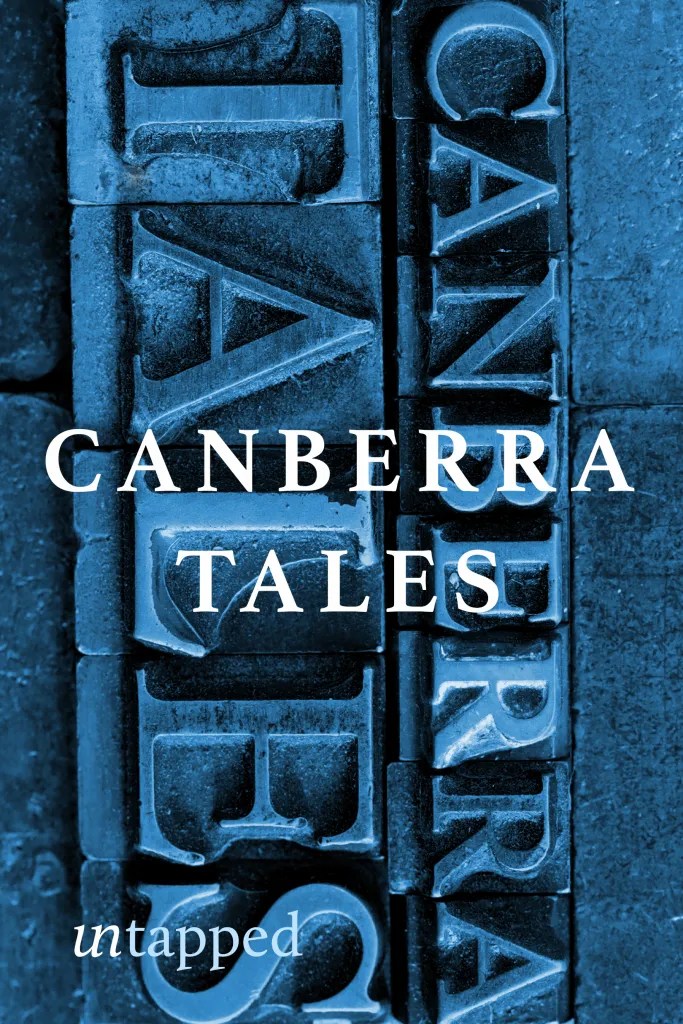
When Lisa mentioned the project, it was to say she’d bought Margaret Barbalet’s non-fiction book, Low gutter girl: The forgotten world of state wards, South Australia, 1887–1940. So, curious, I checked the site out, and bought Canberra tales, the anthology of short stories by Canberra’s Seven Writers (Margaret Barbalet, Sara Dowse, Suzanne Edgar, Marian Eldridge, Marion Halligan, Dorothy Horsfield, Dorothy Johnston) .

However, Lisa’s purchase should tell you something interesting about the collection, which is that it contains not only fiction. It includes a wide range of genres and forms, including novels, histories, memoirs, and poetry. The project also wanted a diverse collection, so there are works by First Nations author Anita Heiss, Greek-born Vogel/The Australian award winning author Jim Sakkas, and Lebanese-born writer and academic Abbas El-Zein, to name a few. Their books are all 21st century, but, there are also significantly older books, like Katharine Susannah Prichard’s Intimate strangers (1937) and M. Barnard Eldershaw’s Tomorrow and tomorrow and tomorrow (1947).

I thought, of course, to check my own library, the ACT Library Service, and found an announcement on their website. Not surprisingly, they draw attention to a Canberra connection, as Johnston would like to do in Geelong:

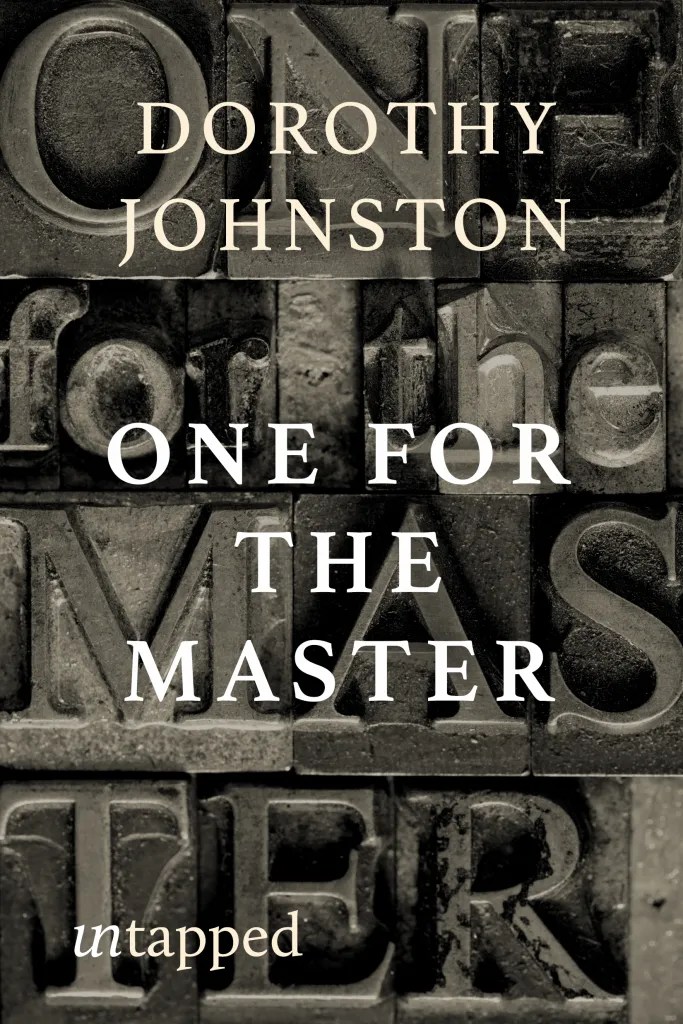
The books include some with a connection to Canberra, through the author or substantial Canberra-related content. For example: The golden dress by Marion Halligan, One for the master by Dorothy Johnston, The moth hunters by Josephine Flood, The schoonermaster’s dance by Alan Gould, and others.

I should add that all of Canberra’s Seven Writers are included.

So, a wonderful project. The question is, will it achieve its goal of ensuring the long tail of authors’ works stay available in a world where money not culture rules?

Monday musings on Australian literature: Allen & Unwin’s House of Books

I have written a few posts over the years on the publishing of Australian classics, including one in 2014 in which I mentioned Allen & Unwin’s Australian Classics series. That series seems to have disappeared, but the publisher does have another initiative, House of Books.

Here is what Allen & Unwin say about this series (or, imprint):

The House of Books aims to bring Australia’s cultural and literary heritage to a broad audience by creating affordable print and ebook editions of the nation’s most significant and enduring writers and their work. The fiction, non-fiction, plays and poetry of generations of Australian writers published before the advent of ebooks will now be available to new readers, alongside a selection of more recently published books.

The House of Books is an eloquent collection of Australia’s finest literary achievements, and the digital revolution is helping bring us all closer to the books and writers of Australia’s literary tradition.

The House of Books makes accessible a library of authors and their books at affordable prices to a whole new readership. Some books have long been out of print, some have recently slipped into oblivion but the House of Books should be the first stop for all readers of Australian fiction and non-fiction.

I can’t find out much about the history of all this, because the books listed on their House of Books page all seem to have been “published” over 2012, 2 years before I wrote my post referencing the now apparently defunct Australian Classics series in 2014. Does “House of Books” now include rebadged “Australian Classics”. Seems likely.

What makes this imprint interesting is that it uses a slightly different publishing model. All books, they say, “will be available simultaneously as ebooks and print editions (using POD  – print on demand technology)”. This means, of course, that bookshops don’t have to carry expensive stock of book titles likely to have low throughput.

So, I decided to test out whether these books – around 90 of them and all, as far as my random checks can tell, published eight years ago now – are still available. First, I went to Readings (online), because it is mentioned on the page as a source. I searched for a few of the titles and they all said “This item is not currently in-stock, but it’s available to order online.” So, I ordered a Thea Astley print version, and, well, so far, so good! I haven’t got it yet, but, fingers crossed it will arrive.

Book coverI then checked Booktopia, which is also listed on the page as a source. I searched for Eleanor Dark’s Prelude to Christopher. They provided this message: “This product is printed on demand when you place your order, and is not refundable if you change your mind or are unhappy with the contents. Please only order if you are certain this is the correct product, or contact our customer service team for more information”. Readings didn’t say this, but I’m presuming their copy will be POD too.
The prices seem to range mostly from $14.99 to $19.99, though some are more expensive.

House of Books books

But now, what you’ve been waiting for – if you haven’t clicked on the link above already – that is, something about the books available. They are listed in a strange order – alphabetical by title, with all book titles starting with “A” appearing under “A”, and “The” titles under “T”. Really? For me, the best order would be by author, so I could see, for example, all the Astleys they have, all the Cusacks, and so on. Also, very few of the book descriptions include original publication date which pedantic me would really like to know!

Book coverWhinge aside, the list is an exciting albeit serendipitous one, including many books barely remembered these days. There are, for example, Kylie Tennant’s memoir The man on the headland, and her autobiography, The missing heir. There are four by Thea Astley, eight by Dymphna Cusack (including the Newcastle-set Southern steel, which interests me), and four by Xavier Herbert.

Book coverOther treasures, in terms of their place in Australian literary culture, include Dal Stivens’ 1951 political (and debut) novel, Jimmy Brockett. Stivens is little known now, but, as Wikipedia tells, he won the Miles Franklin Award in 1970 for A Horse of Air, was awarded the Patrick White Award in 1981 for his contribution to Australian literature, and in 1994, he was given a Special Achievement Award in the NSW Premier’s Literary Awards.
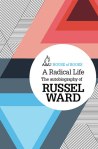
Book coverAs you’ll have realised from the Tennants above, the books include non-fiction, like Australian historian Russell Ward’s memoir, A radical life. There are also books of poetry, such as AD Hope’s Selected poems, and short story collections.
More contemporary writers in the list include Nick Earls and Mandy Sayer (both born, coincidentally, in 1963).

I’d love to know if any of my Australian readers know of this series? The cover style is a little familiar to me, but I am certainly not as aware of them in the shops as I am of the wonderful Text Australian Classics series. My guess is that this is due to the publishing model they are using. Any comments?

Monday musings on Australian literature: Author blogs on the publishing journey

Most readers, not to mention aspiring authors, love hearing about the writing and publishing process authors go through. What inspired their book? How did they go about writing it and were there any hiccoughs along the way? How hard was it to get an agent and/or publisher? What role did the publisher/editor have in shaping the final product? And, once the book is out, how did the marketing/promotion journey go? How did they feel about reviews, positive and negative? These sorts of issues are often covered in book launches, and on panels and “in conversation” events at writers’ festivals, but some writers go a step further and share them via their personal blogs.

So, today, I’ve decided to share a select few of these, given I can’t possibly capture them all (even if I knew them all, or could remember all those I’ve come across!) All these authors have had books published, and all have written more posts on writing than the posts I’m featuring here. In other words, I’m brazenly inviting you to explore their blogs beyond the posts I’m highlighting below.

Book coverLouise Allan

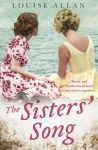
Louise, whose debut novel The sisters’ song was published in 2018, has a series on her blog called Writers in the Attic. Here she publishes guest posts from Australian authors on what it’s like to be an author. Her guests include authors well-known to me like Heather Rose (A few thoughts about writing), Favel Parrett (When fiction becomes truth), and Robyn Cadwallader (The angel among the chaos). Introducing Robyn’s post, Louise writes:

I’m always deeply grateful to the writers who contribute to Writers in the Attic. Their words never fail to give me something to think about, or bestow a nugget of wisdom or just make me feel less lonely on this torturous journey to a novel.

Book coverAmanda Curtin

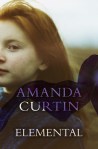
Amanda, like Louise (above) and Annabel (below), is a Western Australian writer, and has published a few books, including novels Elemental and The sinkings. She has a couple of special series of posts about writing on her blog, looking up/looking down. One is called Writers ask writers (with topics like early inspirations and tools of the trade), and the other is 2, 2 and 2 (writers + new books) in which writers discuss two things about each of three aspects or ideas relevant to their new book. Two of these aspects are set – things that inspired their book and places connected with it – while the third is chosen by the author. So, for example, Brooke Davis, writing about her novel Lost and found (my review) chose 2 of her favourite secondary characters in her book, while Jenny Ackland talking about The secret son (my review) chose 2 favourite things connect with her book.

Nigel Featherstone, Bodies of menNigel Featherstone

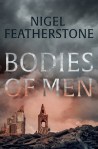
Local author Nigel has been documenting his writing life on and off since 2009 in his creatively named blog, Under the Counter or a Flutter in the Dovecote. However, he has written a special series documenting the course of his latest novel, Bodies of men (my review). The series, called Diary of bodies, takes us from its original inspiration to his feelings about reviews and, woo hoo, being shortlisted for an award. Nigel, like many of the authors in this post, shares not only the practical, factual things about writing and publishing his book, but also his emotional journey. Nigel, a local author, has appeared several times on my blog.

Irma Gold Craig Phillips Megumi and the bear book coverIrma Gold

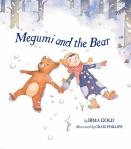
Irma is also local author who has appeared several times on my blog. She is a professional freelance editor who also teaches editing. She has edited an anthology, and has had a collection of short stories and children’s picture books published. She discusses all this, and many other topics related to the writer’s life on her blog. Like some of the other writers listed here, she has included in some of these posts input from other writers, such as this post on rejections, in which Anna Spargo-Ryan, Sheryl Gwyther and Ben Hobson discuss their feelings about rejections. Hobson, author of To become a whale, writes:

It sucks. But I’m saying to you: you can persevere. You’re a writer, damn it. Get off the floor and clench your fists and edit and send it out once more. You can endure. You are being refined. Collect rejections like UFC fighters collect scars; each one of those things is a mark that has created this warrior you’re becoming. Be proud. And send it out again.

Annabel Smith and Jane Rawson

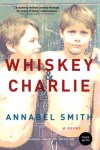
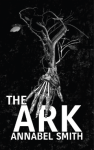
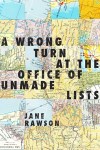
Annabel Smith (from Perth) and Jane Rawson (from Melbourne) have both appeared on this blog before (see Annabel and Jane). Together, they created in 2017 a series of posts they titled What to expect, which they ran on both their blogs, Annabel and Jane. Their aim was to “dish the dirt on what happens just before, during and after your book is released”. In these posts, Annabel and Jane give their opinion – on, say, prizes or book launches – and then, mostly, also invite another author or two to contribute.

Annabel is a member of the Writers Ask Writers series of posts that Amanda also posts. She also has an Author Q&A series in which she asks writers “to answer some questions about writing and publication” and a series on How Writers Earn Money.

Book coverMichelle Scott Tucker

Michelle, like Nigel, has maintained a general litblog for many years. However, also like Nigel, she has a specific series of posts focused on her biography, Elizabeth Macarthur: A life at the edge of the world (my review). In this series, she shares both her writing and publishing journey and her post-publication experiences and events, including being shortlisted for awards.

How generous and open-hearted are these writers to share their knowledge, and to go to so much trouble to do so. I dips me lid to them. But, they are just a start. Many other authors have blogs too, offering us all sorts of delights. I plan to share more of them during 2020.

Have you read any of the blogs, or blogs like them? If so, do you enjoy them and why?

Monday musings on Australian literature: NLA Publishing, and some free e-Books

Enlighten 2014, NLA

Enlighten 2014, National Library of Australia

I was idly following links around the ‘net over the weekend and somehow ended up at NLA Publishing’s site. For those of you who don’t know, they are the publishing arm of the National Library of Australia. I first mentioned them back in 2011 when I referred to publisher Alec Bolton as the person who established the Library’s publishing program. That would have been over 40 years ago. He was a lovely man, and would surely be thrilled to see that his “baby” is still going today.

NLA Publishing is a small publisher, producing around 18 books a year. As you’d expect from a cultural institution publisher, their books draw on the Library’s collections – and they accept submissions from writers who have an idea that uses these collections. Their publications, they say, contribute to their

aims of nourishing the nation’s memory, of supporting the vitality of Australian culture and heritage, and of demonstrating a strong national focus in all of the Library’s services, products and programs.

These works “selectively interpret the Library’s collections in order to contribute to an understanding of Australian history and culture”, and are also seen as a way of disseminating and promoting the Library’s collections and services. Collecting and preserving, interpreting and disseminating is, of course, the prime function of cultural collecting institutions.

“Australian history”, defined broadly I’d say, is their main subject area, but they also cover “natural history, art, photography and literature”, and a range of children’s books including “picture books, novels and historical ‘faction’”. Their books have won, or been shortlisted for, a variety of awards.

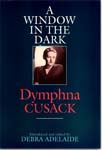
Dymphna Cusack, A window in the darkI have bought many of their books (for myself and as gifts) over the years, and have reviewed at least one on this blog, Dymphna Cusack’s A window in the dark. Other bloggers have also reviewed their books, such as Janine’s (Resident Judge of Port Philip) review of Craig Wilcox’s Badge Boot Button: The story of Australian uniforms and Lisa’s (ANZLitLovers) review of Clive Hamilton’s What do we want: The story of protest in Australia. These are just of few of the many reviews of NLA’s books out there in cyberspace!

The exciting thing, however, is that many of their older books are now available free from the website in eBook form. Now that’s a bargain. I’ll share just a few here – literary-focused ones, naturally – to give you an idea:

  • Dymphna Cusack’s A window in the darkCusack, who also wrote novels, tells of her time as a teacher, including some of the controversies she became embroiled in while trying to offer the best, most appropriate education for her various students.
  • Rosemay Dobson: A celebration: There are several books in their Celebration series, covering such authors as Thomas Keneally, David Malouf, and Ruth Park. These small books comprise “tribute” essays on their subjects and can provide an excellent introduction to the writers. I’ve chosen the late Rosemary Dobson as my example here because as well as being a well-regarded poet, she was Alec Bolton’s wife.
  • David Foster’s (selected and introduced) Self-portraits: A selection of oral history interviews from the National Library’s wonderful Hazel Berg oral history collection. The authors Foster selected include Wilfred Burchett, David Campbell, Ion Idriess and Charmian Clift. (PS Just noticed, 10 May, that autocorrect had made her Chairman!)
  • Ann Moyal’s Alan Moorehead: A rediscovery: A biography of author, journalist, war correspondent Moorehead, who, Moyal claims, was “one of the most successful writers in English of his day” but under-recognised in his own country.
  • John Shaw Nielson’s The autobiography of John Shaw Nielson: Never published in the poet’s lifetime, the biography was included in the papers of one Harry Chaplin, a collector and “connoisseur of literary Australia”.

Presumably, over time, the list of eBooks freely available will grow, so I’ll be checking the site every now and then.

A short post this week, but I hope a useful or, at least, an interesting one.

Monday musings on Australian literature: New Australian releases for 2016

With the first month of 2016 already gone, I thought it was time I had a look around to see what new works are in the pipeline this year from our Aussie authors. This is a serendipitous list, partly because tracking down this information isn’t easy and partly because I’m more interested in providing a flavour than in being comprehensive. My main aim is simply to tantalise us all a little, so below you’ll find novels, short stories, poetry, essays and non-fiction. See what you think:

  • Larissa Behrendt’s Finding Eliza: Power and Colonial Storytelling (January 2016, University of Queensland Press) is a non-fiction work inspired by the story of Eliza Fraser, who was apparently captured by the Butchulla people after she was shipwrecked on their island in 1836. Fraser’s story has been fictionalised before. Behrendt springboards from Eliza’s story to explore how indigenous people in Australia and elsewhere have been portrayed in their colonisers’ stories.
  • David Brooks’ Napoleon’s roads (February 2016, University of Queensland Press) is the fourth collection of short stories from this writer, who is a poet and prose writer.
  • Maxine Beneba Clarke’s The hate race (August 2016, Hachette Australia) is a memoir by the author of the award-winning short story collection, Foreign soil. It’s the second of a three book deal she has with Hachette, the third one being a novel.
  • Helen Garner’s Everywhere I look (March 2016, Text Publishing) is a collection of essays. I’ve reviewed here a few books by Garner, including a novel, Cosmo Cosmolino, a book of short stories, Postcards from Surfers, and a non-fiction work, This house of grief, but I haven’t read any of her essay collections. This might be the one.
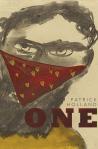
  • Patrick Holland, OnePatrick Holland’s One (April 2016, Transit Lounge) is an historical fiction about Australia’s last bushrangers. Known for his minimalist writing, Holland has written several works, including The Mary Smokes boys and Navigatio, both of which were shortlisted for various awards.
  • Fiona McFarlane’s The high places (February 2016, Hamish Hamilton) is a collection of short stories from the author of the multiply-shortlisted The night guest, which I reviewed last year.
  • Michelle Michau-Crawford’s Leaving Elvis (February 2016, University of Western Australia Publishing) is a debut collection of mostly, but not totally, linked short stories. Michau-Crawford is new to me but she won the Australian Book Review’s Elizabeth Jolley Short Story Prize in 2013, so this collection sounds worth checking out.
  • Meg and Tom Keneally’s The Soldier’s Curse (March 2016, Random House) is the first in The Monserrat Series (a new crime series). I wouldn’t normally include a crime book in a list like this because crime is not in my sphere of interest, but I’m including this one because it’s by Tom Keneally, who as you probably know is the Booker prize-winning author of Schindler’s ark, a Miles Franklin winning author, to name just a couple of accolades. And, also because it’s a collaborative novel with his daughter.
  • Ellen van Neerven’s Comfort food (May 2016, University of Queensland Press) is a book of poetry by the author of the award-winning Heat and light and the short story Sweetest thing, both of which I’ve reviewed.
  • Terri-Ann White’s Desert writing: Stories from country (February 2016, University of Western Australia Publishing) is something a little different. It’s a collection edited by White, comprising stories that resulted from writers’ workshops held with indigenous people in remote communities.
  • Dominique Wilson’s That devil’s madness (February 2016, Transit Lounge) is a novel set in Algeria. It tells story of a photojournalist who, while covering current politics decides to also retrace the steps of her grandfather a century earlier. Wilson was a founding editor of the now defunct but much lamented literary journal Wet Ink. (For an advance review of this book, check out Lisa’s at ANZLitLovers.)
  • Arnold Zable’s The fighter (April 2016, Text Publishing) is a biography of Henry Nissen, a boy from Melbourne’s Carlton who became a champion boxer but who now devotes his spare time to helping disaffected people on the streets. It’s also about his mother and her decline into mental illness. I’ve read a few of Zable’s novels, including The sea of many returns which I reviewed early in this blog’s life.

Steven Amsterdam, Ashley Hay, Toni Jordan and Hannah Kent, some of whose earlier books I have reviewed here, also have books coming out this year … Meanwhile, Text Publishing is continuing to put out its classics, and Fremantle Press is starting a Treasures series celebrating its 40 years of publishing. Nice to see backlists (or older works) continuing to get second lives.

Do any of these inspire or you? Or are there books coming up in your region or area of interest that you are keen to read. 

Monday musings on Australian literature: Little books

Christmas is coming and those stockings are wanting inspiration. I know I’m jumping the gun a little in terms of the traditional round of Christmas book talk, but it’s never too early to think of book gifts, and I’ve been wanting to write about little book initiatives for a while now. I can’t wait any longer!

Do you remember those Penguin 60s, the little books that Penguin published twenty years ago, in 1995, to celebrate its 60th anniversary? The books were around 80 pages and, before the days of smart phones, they were handy little items to carry around for those reading moments that suddenly open up out of the blue. I loved them, and still own several. I particularly remember reading Edith Wharton’s Madame de Treymes and Jean Rhys’ Let them call it Jazz. They were so popular that they spawned – at least I think it was the Penguin initiative that came first – similar small books by other publishers like Bloomsbury. I have some of those too. Anyhow, for its 80th birthday this year, Penguin has published a Little Black Classics series – and again they have proved successful, according, at least to The Guardian, which concluded that, even in this era of the e-book, it “proves people like their reading matter cheap… and portable”.

I hope they’re right about this because a few Australian publishers are producing their own “little” books, and I thought I’d share them here, as I don’t think they have the same visibility as Penguin – funnily enough!

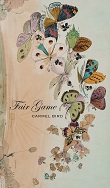
FL Smalls 7: Carmel Bird's Fair Game

FL Smalls 7: Carmel Bird’s Fair Game

FL Smalls  are published by a small independent publisher in Braidwood about an hour’s drive away from me, Finlay Lloyd. Finlay Lloyd describes the project as

an ongoing project where we give its authors sixty pages to create a book. Published together in groups, the first five Smalls came out in 2013, and now we have commissioned another five to be released in early September this year, shoulder to shoulder, as an offering of vital writing by Australian authors.

You might have picked up a difference here between these and Penguin’s little books. FL Smalls are not classics, and are not reissues of works published elsewhere. They are commissioned, meaning of course that they provide a publishing opportunity for living writers. I love that. They include fiction, non-fiction, poetry, graphic works. I have the recent set, kindly sent to me by Finlay Lloyd. They are priced at $10 each. Reviews will start appearing here, soon. Meanwhile, you can check out Lisa at ANZLitLovers’ discussion of them.

Short Blacks – isn’t that a great name – are published by another Australian independent publisher, Black Inc. They describe the project as being

gems of recent Australian writing – brisk reads that quicken the pulse and stimulate the mind.

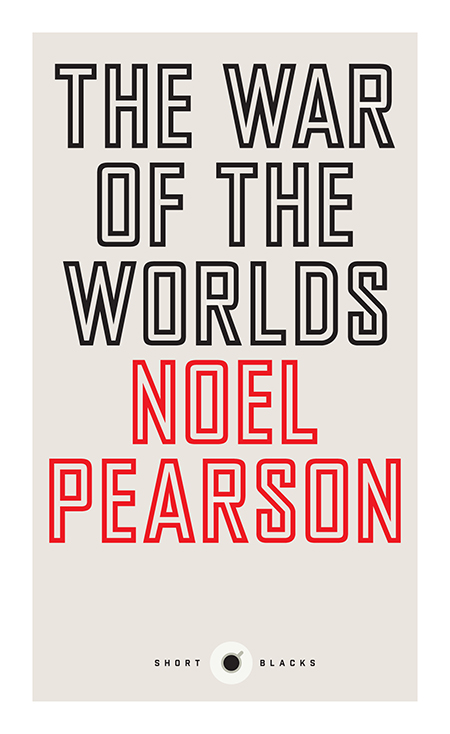
Noel Pearson in Short Blacks

Noel Pearson in Short Blacks

These then have been published before – but they are not classics. They are recent works, and seem to be non-fiction. They include Robyn Davidson’s No fixed address which was originally published by Black Inc as a Quarterly Essay, David Malouf’s One day about ANZAC Day, and Noel Pearson’s cleverly titled The war of the worlds about the “colonial project” and genocide in Australia. I bought a couple of these from the wonderful, independent Hobart Bookshop on my recent visit to Tasmania. Twelve have been published and it’s not clear from the website whether it’s an ongoing project. Like FL Smalls they are appealingly, if more simply, designed, and cost only $6.99 each. What a bargain.

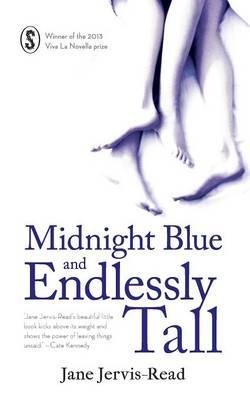
Viva La Novella is a slightly different project. An initiative of the online publisher Seizure Inc, it is a prize that was established in 2012

Jane Jervis-Read, Midnight blue and endlesslly tall

First Viva La Novella Winner

to celebrate and promote short novels – because we like them and believe some of the greatest works in the English language are actually novellas.

I wouldn’t argue with that! Since 2012, Seizure has, with the support of the Copyright Agency Cultural Fund, expanded the award to produce more than one “winner” each year. Like FL Smalls, these are new works, but unlike the Smalls, they are all fiction. Also, unlike the previous two initiatives they are not a standard size, due to the wide the definition of a novella. For Seizure, the range is 20–50,000 words, which means that some books some books are 100 or so pages while others might be 190.  I’ve included them here, however, because they are priced at the cheaper end of the Australian paperback market, $14.95 each, and it is a project dedicated to the shorter book. I have bought one of the 2015 winners, so you will see a review of that too in the coming weeks or months.

Do you like little books? I’d love to hear if you have any favourites – and of any initiatives, in Australia or elsewhere, that you’ve come across.