Monday musings on Australian literature: Quiet achievers 2, Barry Scott of Transit Lounge

Back in August, I wrote the first post in my Monday Musings sub-series on Quiet Achievers in Australia’s literary landscapes, meaning people like publishers, for example. My first post was on Terri-ann White from Upswell Publishing.

Of course, most of these people aren’t really Quiet Achievers. Those in the industry will know them, often well. However, for the general reading public, people in the industry are not necessarily well-known, hence this new little sub-series.

Barry Scott (Transit Lounge)

I have read and reviewed many books published by Transit Lounge over the years because they publish the sorts of books and authors I like. According to Wikipedia, Transit Lounge was founded in Melbourne in 2005 – 20 twenty years ago – by two librarians Barry Scott and Tess Rice. It is an independent Australian literary small press, which publishes literary fiction, narrative and trade non-fiction. Its focus is to “show the diversity of Australian culture”. Their website says they are

dedicated to the publication of exciting new fiction and non-fiction.  Our tastes are broad and encompass literary fiction and upmarket genre writing such as  psychological thrillers.  We have a particular interest in creative literary publishing that explores the relationships between East and West and entertains and promotes insights into diverse cultures.

As far as I can tell, Scott works full-time on the press, while artist and photographer Rice works part-time. In 2018, Scott was interviewed by Books+Publishing, and said their books:

go in search of the outsider, the marginalised, the immigrant, the different or the disappearing. We are always searching for what seems beautiful, unique, true, and isn’t afraid to push beyond the current zeitgeist in terms of themes or genre tweaking.

AS Patric, Black rock white city

And, they have been successful in doing so. AS Patrić won the Miles Franklin Award in 2016 for his immigrant story, Black rock white city (my review), and Jane Rawson’s “genre-tweaking” From the wreck (Bill’s review), won the 2017 Aurealis Award for best science fiction novel, with its blend of historical and science fiction. Many other Transit Lounge books have been listed or won significant awards, including, recently, Lisa Kenway winning the Ned Kelly Award for Debut Crime Fiction with All you took from me (my post).  We often wonder about the impact of awards on sales, so I was interested to see a comment by Scott, in the Sydney Morning Herald (SMH) after Patrić’s win, that the company overall “will be more visible” and that he had “already noticed more people following the company on Twitter and wanting to see its books”.

In 2023, Scott was interviewed by ABR (the Australian Book Review), and here we hear his motivation for getting into publishing:

I was involved with administering the Victorian Premier’s Literary Awards in 2003 when the Unpublished Manuscript Prize was conceived. … I became acutely aware that there were many talented writers unable to achieve publication. Transit Lounge always has been and always will be about giving some of those new writers a voice, as well as publishing more established authors.

A bit like Terri-ann White! That said, Transit Lounge’s focus in terms of what they publish has changed a little over the years. In the above-mentioned SMH article, Scott said that he initially ‘wanted to publish Australian authors writing about other cultures and people writing from overseas about here. “We have moved away from that a bit; we were a bit more travel based than we are now”.’

Once in the publishing game, it seems that Barry Scott was fully invested, that is, he became involved in the industry. He was a director of the Board of the now-unfortunately-defunct Small Press Network. In 2009, he visited the US for several weeks, under a Copyright Agency Limited grant to find out about small independent publishers there, including the state of the industry. You can read his report at Overland.

Meanwhile, I’ll return to the ABR interview. Over the years, it has run several interviews with publishers, and I will refer to those – if or when I focus on those people. It’s illuminating to see their different reactions to the questions. For example, when asked about the significance of book reviews, Scott replied:

They are gold, even when negative. As Oscar Wilde said, ‘There’s only one thing in the world worse than being talked about, and that is not being talked about.’

Not all publishers responded so positively to this question, although most recognised that reviews mean something to authors. I recently listened to the interview with Graeme Simsion and Anne Buist on the Secrets from the Green Room podcast, and Simsion, a “data person” who has researched bookselling at some length, said that the main impact on sales comes from “word of mouth”. He didn’t talk about how you get that word-of-mouth started, but surely reviews, as Scott implies, are a contributing factor? I wonder whether the current fragmentation of book “reviewing” across traditional media, websites, blogs and social media, is, in fact, resulting in increased “word of mouth” exposure?
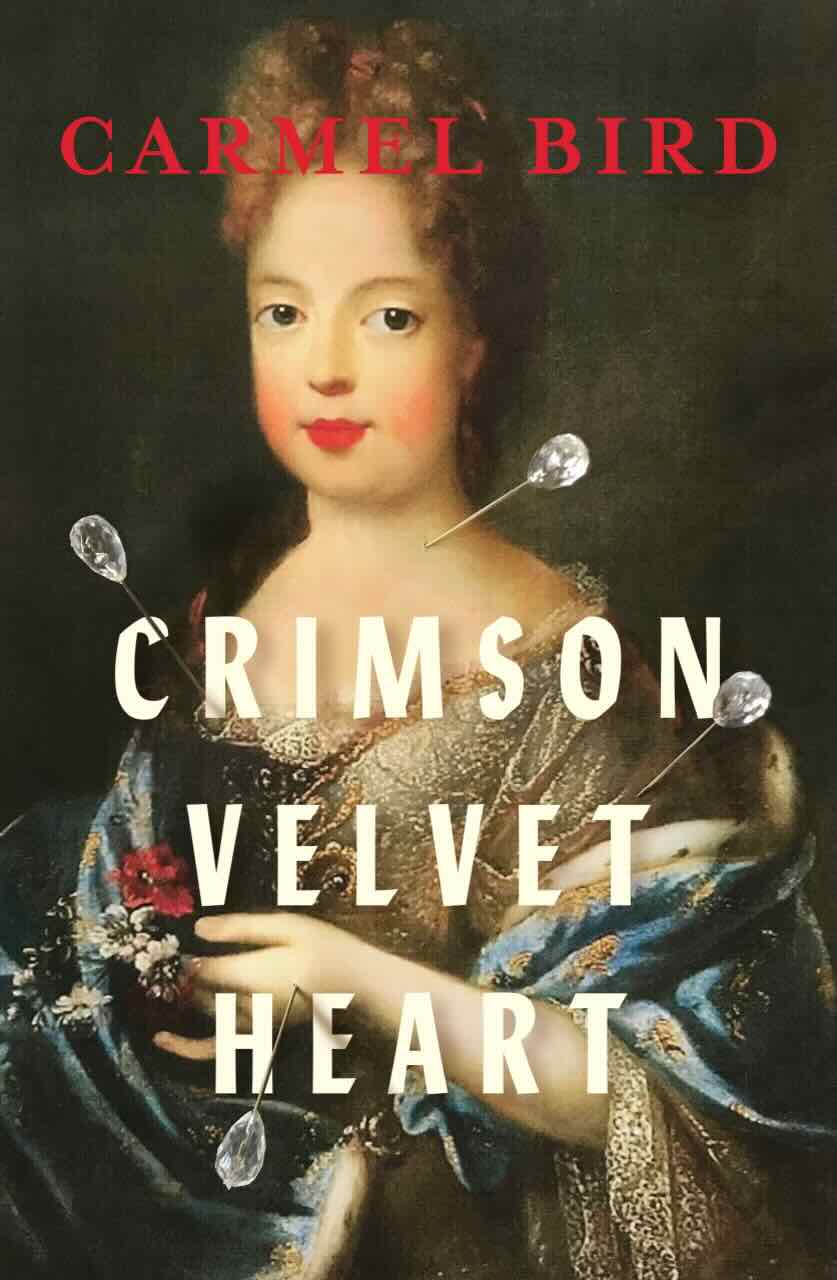
I have a few Transit Lounge books on my TBR, as I write, including Carmel Bird’s latest novel – a foray into historical fiction with Crimson velvet heart, set in Versailles at the end of the 17th century.

I’ll conclude, however, with a comment made by another author. In the blog, In Their Own Write, Mandy Sayer says

Barry Scott at Transit Lounge is a truly collaborative publisher, and I’m grateful for the opportunity to work with him.

This was August 2025, just before the publication of her memoir, No dancing in the lift. It seems that the fire is still burning in Scott.
Monday musings on Australian literature: Quiet achievers 1, Terri-ann White of Upswell Publishing

Over the years I have started several Monday Musings sub-series, some of which I’ve nearly completed (such as those on writers centres and on supporting genres) while others are still continuing (like Forgotten writers). Today, I’m introducing a new one. It was inspired by an email I received the other day from Terri-ann White of Upswell Publishing. It occurred to me that not only was here a quiet achiever, but that people like her were worth posting about.

Okay, so those in the industry will say that White is no quiet achiever. After all, she’s been around publishing for a long time, and successfully so. However, for the general reading public, people in the industry are not necessarily well-known, hence this new little sub-series. I hope to focus on the people more than their companies, but they and their jobs are intertwined. Still, I hope to at least give a sense of who they are. I start with Terri-ann White, but there will be more …

Terri-ann White

In 2022, I wrote about two new indie publishers, of which Upswell Publishing was one. As I wrote then, it came across as a passion project, but the passion project of someone with significant cred. It was triggered by – hmm – adversity. White had been running UWAP (University of Western Australia Press) since 2006 when, in 2019, the University announced that it would close its publishing arm. As most of us know, that didn’t happen, but White left in 2020 anyhow, unhappy with how she had been treated.

Not long after, on 25 December 2020 in fact, the Sydney Morning Herald’s Jason Steger reported that White had a plan. She wanted to publish books that for some reason couldn’t find an easy route to publication, “books that are too quiet, or the authors are older than 25, that are not about misery, that are not about trends”. She wanted to publish books, wrote Jason, “that speak to each other across a set of intellectual interests, and how they work language and revere it”. And so, Upswell Publishing was born.

Books are in White’s blood. As Upswell’s About page tells it, all her working life, from 1980 on, “has been arranged around books and ideas: as a bookseller, writer, publisher and organiser of public events involving literature and writing”. This new venture, however, broke new ground. For a start, it has been set up as a not-for-profit company, with three impressive women, Carmen LawrenceLinda Savage and White, as its directors. It also has DGR status, which means that (Australian) donations to them are tax-deductible. Their tagline is “Support the future of Australian literary writing and publishing”. They hope that “the generosity of rusted-on, passionate readers” will help them extend their “work of commissioning writers and building audiences”.

Upswell is also selling a bit differently. While individual books can be bought from them directly or from booksellers, they also have a subscription program. I subscribed the first two years, but not since. They have been experimenting with their subscription packages, but my main issue is that I’m a bit too overwhelmed with books to keep subscribing (for a while, at least). I did however preorder two of their 2025 books. One has arrived, with Jessica White’s Silence is my habitat: Ecobiographical essays, to come.

Despite this, however, I have been watching and drooling, partially attracted, I admit, to their recognisable and gorgeous design, but also the content. White is, I believe, achieving what she set out to do, which was to publish distinctive works across narrative nonfiction, fiction and poetry, to publish books that “elude easy categorising and work somewhat against the grain of current trends … books that may have trouble finding a home in the contemporary Australian publishing sector”.

It hasn’t all been smooth sailing. In 2022 she was, as publisher, unwittingly caught up in the plagiarism controversy over John Hughes’ novel The dogs (my review) which was initially longlisted for the Miles Franklin Award.

If you really want to understand who she is, and what she believes, check out this opinion piece she wrote for Seesaw in September 2021. She wrote of

a withering of success for Australian literature of the ground-breaking variety. I think you’ll know what I’m getting at here: books that take more concentration, perhaps, with less of a direct connection to the idea of entertainment. By which I don’t mean the equivalence of cod liver oil – good for you but it’s unfathomable that you are sinking it down your gullet. I could be more explicit and name some names often cited as difficult writers: Shirley Hazzard, Randolph Stow, Beverley Farmer, Elizabeth Jolley, Kim Scott, Gerard Murnane. Or I could name literary forms that are not novels (including poetry and short stories, for instance).

Or, see her report, ‘There is nothing else quite like it’, in Books+Publishing about the Sharjah Publishers Conference, which she describes as “a corrective from the world of English-language commercial publishing, and a rich chance to meet the Arab world’s publishing enterprises, along with a raft of Eastern European book people and representatives from the wide-ranging Indian book industry.” Tells you something about her publishing philosophy.

Then there’s her interview in the Australian Book Review (ABR, November 2022, paywalled). Regarding the value of reviews, she says that they are “Very significant for the author and, to a lesser extent, the publisher. Potentially useful for finding readers”. And, regarding whether she thought individuality was a casualty of a highly competitive market, she responded:

No. I’m in this for the long haul. Even books that flop in their time end up in libraries and second-hand bookshops, ripe for discovery. The prospect of a living wage for writers, on the other hand, is even less likely these days.

I love this long view of what writing an publishing is about.

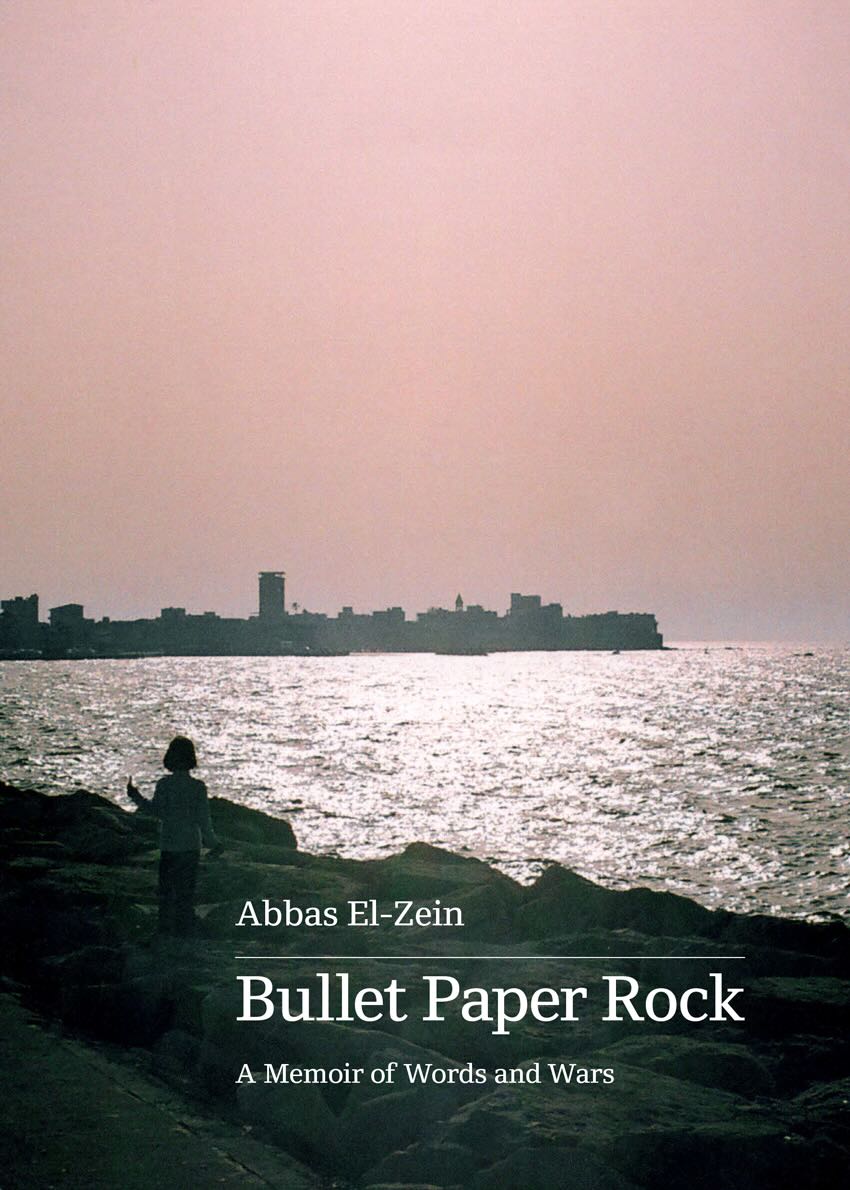
Finally, I’ll return to the email that inspired this post. It announced that Upswell’s book, Abbas El-Zein’s memoir, Bullet paper rock: A memoir of words and wars, had won the 2025 National Biography Award (having already won in the 2024 Queensland Literary Awards and been shortlisted in the 2024 NSW Premier’s Literary Awards). The NBA judges called it “a work of rare linguistic and emotional insight, and a tribute to the resilience of the human condition”. Awards aren’t the be-all and end-all of publishing, but it is still be a thrill for authors and their publishers when they win.

Any thoughts on this quiet achiever – and her contribution to the Australian literary scene?

Monday Musings on Australian literature: Diverse publishing

With the idea and practice of diversity under attack in more than one place around this world of ours, it’s encouraging to see publishers continuing to support the need for more diversity in their output.

I’ve written several Monday Musings about diversity in publishing, including these, listed from the most recent to the earliest:

  • Bundyi (2024): on a new First Nations imprint, being curated by Dr Anita Heiss, and under the auspices of Simon & Schuster
  • Canberra Writers Festival 2023: 2, Celebrating the classics (2023): on a panel discussion about UQP’s First Nations Classics initiative
  • First Nations Classics (2022): introducing UQP’s First Nations Classics initiative.
  • Magabala Books (2022): spotlight on this First Nations publisher, which was established in 1984.
  • Diversity and memoir (2021): on the issue that people from diverse backgrounds are expected to write memoirs about their experience rather than free to write on their choice of subject.
  • Multicultural NSW Award (2019): on this award that celebrates the publishing of books dealing with or furthering our understanding of migrant experience, cultural diversity or multiculturalism in Australia
  • Who is publishing the interesting books (2014): looks at what “interesting”means from a number of angles including diverse writers

Of course I’ve written posts on diversity from other angles – such as on festivals, or listing books by diverse writers – and I have reviewed many books by diverse writers.

I was inspired to write this post by another publishing initiative in this space, Allen & Unwin’s Joan Press. It was created, in fact, in 2020, but I only cam across it recently. Curated by Nakkiah Lui, a Gamilaroi and Torres Strait Islander woman, and a writer, actor and director, it describes itself as “Radical, inclusive, rebellious”. Its simple home page says:

Joan publishes books across all genres and forms. Each Joan title creates space for voices that get pushed to the fringes; voices that challenge and interrogate the world around them. Named after Lui’s grandmother, Joan Press recognises that storytelling is both the legacy and the future of any community, and aims to be a home for stories and storytellers who are redefining the mainstream in a way that is radical, inclusive and bold.

As far as I can tell, Joan has so far published three books:

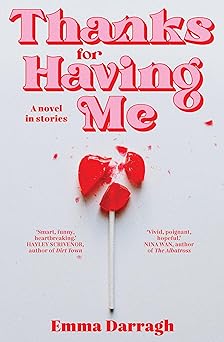
  • Emma Darragh, Thanks for having me (2024), Joan Press’s first fiction title, described as comprising “interwoven stories about three generations of women in one family as they navigate girlhood, motherhood and selfhood, perfect for fans of Jennifer Egan, Meg Mason and Paige Clark”. 
  • Sarah Firth, Eventually everything connects (2023), a work of graphic non-fiction, described as  a delicious mix of daily life, science, philosophy, pop culture, daydreams and irreverent humour”
  • Madison Godfrey, Dress rehearsals (2023), described as “A memoir made of poetry, Dress Rehearsals documents a decade of performing womanhood in a non-binary body”.

Unlike some of the publisher sites I’ve visited recently, Joan does seem to be currently still accepting submissions.

And a little extra …

Related to the issue of diversity in publishing is that of diversity in the publishing workforce. In March and April of 2022, a survey was conducted of diversity and inclusion in the Australian publishing industry. You can read about it here 9where there are links to further details including the full report, but the summary drawn was that

The publishing industry in Australia is highly educated, driven by women and has strong LGBTQ+ representation, yet struggles to reflect Australia’s cultural and social diversity, according to the first survey examining diversity in Australian publishing.

The summary said that the survey yielded “important insights that will help to push for change in the sector”. Some of you may remember this survey, because it got quite a bit of coverage at the time. But what has happened since? That has been hard to find, as my search on the subject produced a page or more of hits on the 2022 survey, but a page or so in, I found a Books + Publishing article from February 2024, titled “APA [Australian Publishers Assoication] releases diversity and inclusion plan” and stating that APA had released ‘a diversity and inclusion plan “to guide and support industry progress over the next two years”‘. The article lists eight recommendations for publishers to work on, and provides a link to the plan.

I also find an announcement from August 2024 that Hachette Australia and Media Diversity Australia (MDA) “are excited to announce a significant partnership, with Hachette becoming the inaugural book publisher member of MDA. This collaboration also marks the launch of the Hachette x MDA Publishing Traineeship, aimed at championing diversity and inclusivity within the publishing industry”. Besides this traineeship, membership of MDA apparently gives Hachette “access to a suite of valuable services, including the MDA TalentHub to reach a more diverse talent pool; participation in advocacy initiatives and industry roundtables; and customised Diversity, Equity, and Inclusion training and guidance”.

Too early to see how all this is playing out, but it’s surely positive.

Any thoughts? Do you seek writing my diverse authors, and if so, how easy is it to find?

Monday musings on Australian literature: Bundyi

Next week will be NAIDOC Week – with this year’s theme being “Keep the Fire Burning! Blak, Loud and Proud” – but I am jumping the gun a little with a post on a relevant publishing initiative that was announced earlier this year.

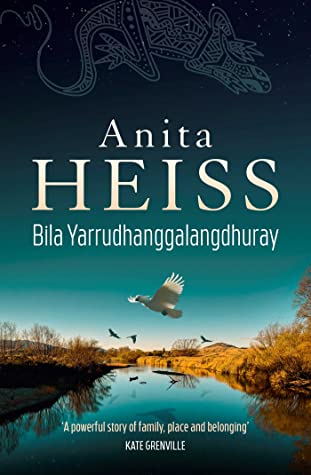
This initiative comes from publisher Simon & Schuster, and is that they have created a new First Nations imprint called Bundyi, which will be curated by Dr Anita Heiss, “a proud Wiradyuri woman and one of Australia’s most prolific and well-known authors”. Simon & Schuster published Heiss’s most recent novel, Bila Yarrudhanggalangdhuray (my review).

Bundyi is, the website says, a Wiradyuri word meaning “to share with me’” The aim is to “focus on cultivating First Nations talent in the industry by publishing First Nations authors, edited and designed by First Nations people”. Heiss, described as Publisher at Large, will be commissioning both fiction and non-fiction writing. She says that “the only way we will see First Nations people truly sovereign in this space, is to have us as publishers of our own stories”, and makes the point that Simon & Schuster understands “that the responsibility for change in the sector lies with the current mainstream publishers acting as mentors, and eventually moving over to allow us to learn, and to do what Australian publishing has needed for a long time: for us to have control over the way we are represented on the page, and in the national narrative”.

And they have started the way they mean to continue with the Bundyi logo being designed by a 100% Aboriginal-owned company, Iscariot media. The logo, which you can see at the link I’ve provided above, “represents the flow of the three rivers of Wiradyuri country – the Kilari, the Marrambidya and the Wambool – as well as the flow of creativity”.

What can we expect?

S&S’s page, linked above, says that the first titles in the imprint will be published this year, but doesn’t name them. However, in late May, through Canberra’s wonderful Meet The Author convenor, Colin Steele, who is also one of my major sources of literary news, I received a news item from Books+Publishing. It said that Bundyi had “acquired world rights to a new commercial novel by Larissa Behrendt”, and that the book was the result of a brainstorm between Behrendt and her good friend Anita Heiss. It is to be a First Nations take on Pride and prejudice!

Heiss said that “It didn’t take long for us to come up with the idea of Larissa, an Austen aficionado, writing a version of Pride and Prejudice through her lens, as a Euahlayai/Gamilaroi woman”. Behrendt added that “As a long-time friend and admirer of her work, I am beyond excited to be working with Anita on this project. I love Jane Austen, and the idea of translating the characters and story arcs through a First Nations lens is an idea that is close to my heart. Anita has been a trailblazer with new writing, and I am proud to be following in her footsteps.”

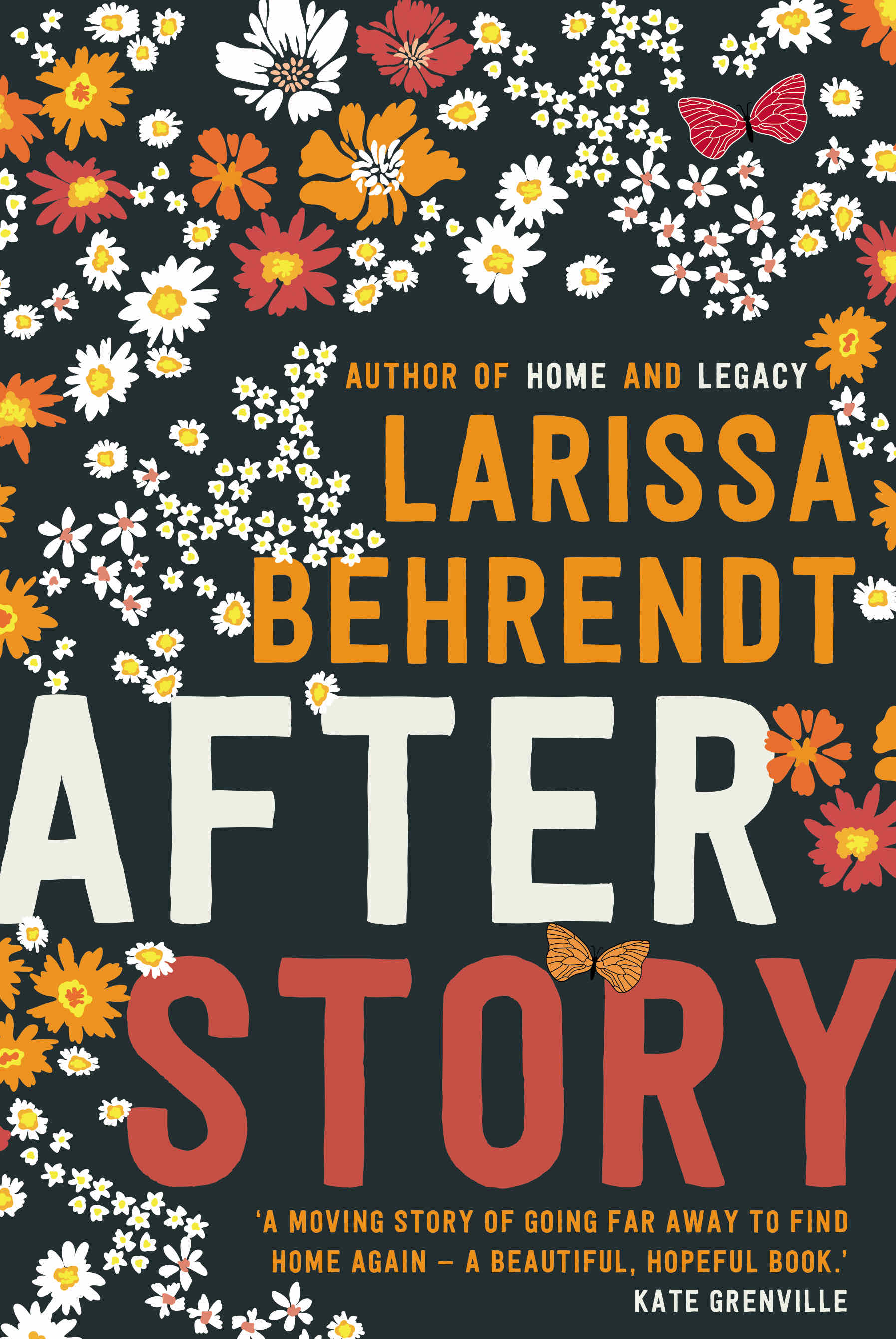
That Behrendt is a fan of Austen won’t be news to those who read her novel After story (my review) in which a woman takes her mother on a literary tour of England, so this will be interesting – even to someone like me who is not normally a fan of prequels, sequels and retellings. Behrendt has a seriously impressive cv. Not only is she an award-winning author, but she is a filmmaker and host of the program Speaking Out on ABC Radio, the Distinguished Professor at the Jumbunna Indigenous House of Learning at the University of Technology Sydney, a Fellow of the Academy of Social Sciences of Australia, a Fellow of the Australian Academy of the Humanities, a Foundation Fellow of the Australian Academy of Law – and more. We have to wait a bit for her book, though, as it’s not due to be published until 2026.

Meanwhile, Books+Publishing named two books which will be published by Bundyi before Behrendt’s – Stan Grant’s memoir Murriyang and Tasma Walton’s historical fiction novel, I am Nan’nert’garrook. These align with the imprint’s focus as listed on its homepage:

  • Non-fiction: memoir, autobiography, biography, essays
  • Commercial fiction: romance / chick lit, historical fiction, contemporary fiction.

This new imprint is exciting news for all of us interested in First Nations Australian writing. It may not, it seems, be focusing on the edgier end of town, but there is room for all, particularly if we want more Australians to read First Nations writing. If you are interested, I suggest you keep an eye on Bundyi’s homepage for further news. I plan to.

Monday musings on Australian literature: Book industry awards

How to title today’s post was my first challenge – and I hope the title I settled on covers it well enough. What I am wanting to cover here are those awards that don’t go to books (or manuscripts) or writers, but to those in the industry – people and organisations – that support writers and their books. The ABIAs, or, Australian Book Industry Awards, have been doing this for some years.

ABIAs

Established in 2006, these awards are, says Wikipedia, ‘publishers’ and literary awards held by the Australian Publishers Association annually in Sydney “to celebrate the achievements of authors and publishers in bringing Australian books to readers”‘. I have only written on them once before, and that was to highlight some of the winners in the 2019 awards that interested me. However, these awards also recognise others working in the industry. The categories change over the years, but since 2017 there have been awards for (listed with the winners in the years they were made):

  • Book Retailer of the Year: Readings (2020); Readings (2021); Harry Hartog Bookseller, Burnside Village, Adelaide (2022); Big W (2023)
  • Bookshop of the Year: Books Kinokuniya (2020); Avid Reader, Brisbane (2021); Avenue Bookstore, Albert Park, Melbourne (2022); Matilda Bookshop (2023); Fullers Bookshop, Hobart, Tasmania (2024)
  • Commissioning editor of the Year: Jane Palfreyman (Allen & Unwin) (2023); Catherine Milne (HarperCollins Publishers) (2024)
  • Independent Book Retailer of the Year: Readings Potts Point Bookshop (2017); Readings (2018); Mary Martin Bookshops (2019)
  • Marketing Strategy of the Year: Bloomsbury for Johann Hari’s Stolen Focus (2023); Affirm Press for Pip Williams’ The Bookbinder of Jericho (2024)
  • National Book Retailer of the Year: Booktopia (2017); Dymocks (2018); Booktopia (2019)
  • Publisher of the Year: Pan Macmillan Australia) (2017); HarperCollins (2018); Pan Macmillan Australia (2019); Allen and Unwin (2020); Penguin Random House Australia (2021); Penguin Random House Australia (2022); Allen and Unwin (2023); Penguin Random House Australia (2024)
  • Rising Star Award: Shalini Kunahlan, marketing manager at Text Publishing (2018); Ella Chapman, head of marketing communications at Hachette Australia (2019); Hazel Lam, senior book designer at HarperCollins (2020); Pooja Desai, head of design at Hardie Grant Children’s Publishing (2021); Emily Hart, Commissioning Editor, Hardie Grant Books (2022)
  • Small Publisher of the Year: NewSouth (2017); Thames & Hudson Australia (2018); Affirm Press, with Honourable Mention to Magabala Books (2019); Magabala Books (2020); UQP (or University of Queensland Press) (2021); UQP (or University of Queensland Press) (2022); UQP (or University of Queensland Press) (2023); Magabala Books (2024)

As you can see, the categories move around a bit, but there are awards for publishing companies, booksellers, and book industry professionals. I like seeing designers, commissioning editors and marketers being recognised in what is an awards-rich field.

ABDAs

The Australian Book Design Awards aim to “showcase the best of the best in book design in this country”. They are open to books designed and first published in Australia, in the year preceding the awards. They are offered in multiple categories. In 2024, some 19 categories are in the mix, including Best Designed Commercial Fiction Cover, Best Designed Literary Fiction/Poetry Cover, Best Designed Non-fiction Cover, and so on. There are awards for covers only and for overall book design. I have written about them once, in the past, for the 2017 Shortlist.

Sarah Krasnostein, The trauma cleaner

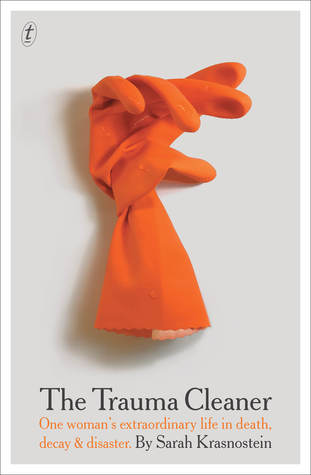
Their Awards Archive site takes a bit of navigation, and doesn’t always present the information in the most ideal way, but you can find some gorgeous covers there, including Sandy Cull’s award winning cover (2017) for Heather Rose’s The museum of modern love. Another award winner – cover and overall design (2018) – was W.H. Chong’s work on Sarah Krasnostein’s The trauma cleaner. Back in 2018, I attended and wrote up a Canberra Writers’ Festival event involving W.H. Chong.

Specialist Awards

There are also awards run by specialist or special interest publishers, like the Educational Publishing Awards Australia (or EPAAs). These were co-founded in 1993 by the APA (Australian Publishers Association) and the late Professor Mike Horsley, and are organised by the APA which also manages the ABIAs. Most of the award categories are for specific books/educational titles, but they also include Primary and Secondary Publisher of the Year, which, in 2023, were won by SevenSteps (Primary) and Cambridge University Press (Secondary). Publisher Jacaranda has been a regular winner of these awards.

Are you aware of these awards, or of similar awards in your location or area of interest? I’d love to hear about them.

Monday musings on Australian literature: Lothian Book Publishing Company

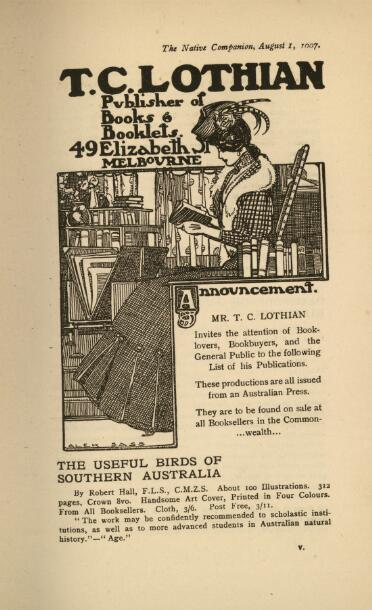
As I research for my 1924 Monday Musings series, I am coming across articles that don’t neatly fit into 1924-dedicated posts but that I want to document. The most recent one concerned the Lothian Book Publishing Company. It was about a specific initiative, which I will discuss at the end of this post, but I was intrigued to find out more about the publisher itself.

AustLit tells us that, while now an imprint of Hachette Australia, Lothian has a long history, starting well over a century ago, in 1888 in fact, when it was founded by John Inglis Lothian. Then it was a Melbourne-based book distribution company, but it started publishing in December 1905 under John’s son, Thomas Carlyle Lothian. During its first three years, it produced 40 books and four periodicals. AustLit then jumps to the interwar years (the 1920s and 30s) and says that it “was particularly notable” for publishing Australian poets, such as Bernard O’Dowd and John Shaw Neilson. Lothian also represented Penguin Books in Australia until the end of the Second World War. Cecily Close, in her article on Thomas Carlyle in the ADB, provides more information, and adds other authors to their list, like Miles Franklin and Ida Outhwaite.

The company was active, and by 1945, it had offices around Australia and in Auckland, and had literary agents in London and New York. It remained a family-run affair, with Thomas Carlyle Lothian being followed by his son Louis Lothian, and then Louis’ son Peter Lothian.

Austlit says that the company moved into children’s publishing in 1982, which has remained a big part of its activity since. Then the take-overs started. In December 2005, the Time Warner Book Group acquired Lothian and formed the Time Warner Book Group (Australia), with Lothian Books becoming an imprint of Time Warner. Very soon after, in February 2006, Hachette Livre acquired the global Time Warner business, with Lothian Books now becaming an imprint of Hachette Livre Australia. Lothian Books’ CEO Peter Lothian retired in July 2006.

The focus on children’s books has continued with Hachette Australia expanding its children’s publishing, and branding its children’s books with the Lothian imprint. AustLit says that as part of the new arrangement, some adult publishing would continue, as a ’boutique’ list of Australiana titles, both already published and to be commissioned, but I’m not sure that this eventuated, or, if it did, that it lasted. Hachette Australia’s website does not clearly differentiate its imprints.

Lothian stories

It was a story about Lothian that inspired this post, but while researching it, I found another intriguing story, so I’m closing with two little anecdotes about Lothian.

Lothian and Henry Lawson

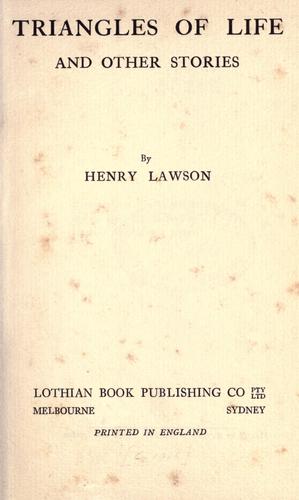
The State Library of Victoria’s La Trobe Journal carries an article by John Arnold about the relationship between Lothian founder, Thomas, and Henry Lawson. You can read the article yourself as the story is not a short one but, essentially, it started in 1907 when, on a business trip to Sydney, Thomas Lothian signed a contract with Henry Lawson to publish two collections of his writing, one of prose and one poetry. The contract was signed in James Tyrrell’s bookshop in Castlereagh Street, Sydney.

I won’t go into the details but it was a standard Lothian printed contract. The author would receive a 10% royalty for each title. Lawson was to deliver the completed manuscript of both titles to the publisher, two weeks after the signing of the contract, and Lothian was to publish the two books no later than three months from receipt of manuscript. The contract “declared that the author was the proprietor of the copyright of the material proposed to be published and it gave the publisher the world serial, translation and dramatic rights to the material in question”.

This is not what happened, and Arnold writes that “this commercial agreement … was in a short time revised, revised again, then broken, leading to false promises, abuse of copyright, and a falling out between author and publisher. The proposed books were not to appear for six and a half years”.

It was a tortuous process, due largely to Lawson’s “erratic behaviour” but also affected by Lothian’s busy and ambitious workload. Arnold concludes his article with:

Despite his unrewarding and frustrating dealings with Henry Lawson, Lothian was still willing to chip in when the Lawson hat was sent round after the author’s death. In 1928 he became a Life Member of the Footscray-based Henry Lawson Memorial Society, and in 1931, as one of Lawson’s publishers, wrote a one-page testimonial to be read at the society’s annual meeting.

The handsome certificate with which Lothian was presented by the Henry Lawson Society in 1938 stated that Life Membership was awarded for ‘Unselfish and Generous Services rendered to this Society and Australian Literature generally’ …

Lothian and Nettie Palmer

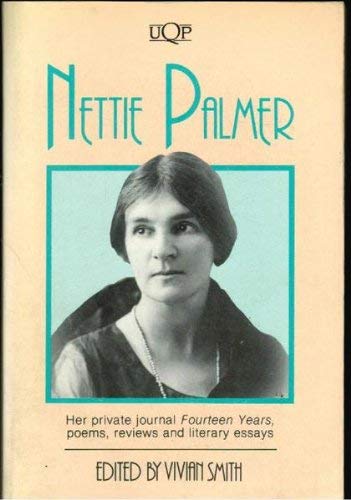
Finally we get to the article that inspired this post, the announcement in The Argus of 8 May 1924 that Nettie Palmer had won a “prize of £25 offered by the Lothian Book Publishing Company for the best critical essay dealing with Australian literature since 1900”. Her essay was titled “Australian literature in the Twentieth Century” and was to be published in June. On 18 July, The Albury Banner and Wodonga Express, reports on this work, now titled Modern Australian literature, describing it as ‘an interesting “measuring up” of Australian literary work from 1900 to 1923’. Vivian Smith, editor of UQP’s Nettie Palmer anthology, which includes this work, says the piece “is significant for what it reveals of the expectations and hopes of the time”, and also that

Nettie, like Vance, was concerned for the relationship between a national literature and the national experience behind it, but both explored this relationship in a tentative and programmatic way and had no readymade formula to account for it.

Nettie has appeared here several times, and will again, but I’ll leave her here for now. (Except, I’ll share that the Goulburn Evening Penny Post (23 October 1924) reported that she gave her prize money to the “Blinded Soldiers”.)

My initial idea was to write a post about this Lothian Prize, but I’m not sure it continued. However, I’ve written posts about publishers before, and Lothian seemed perfect for another.

Monday musings on Australian literature: on 1923: 2, The Platypus Series

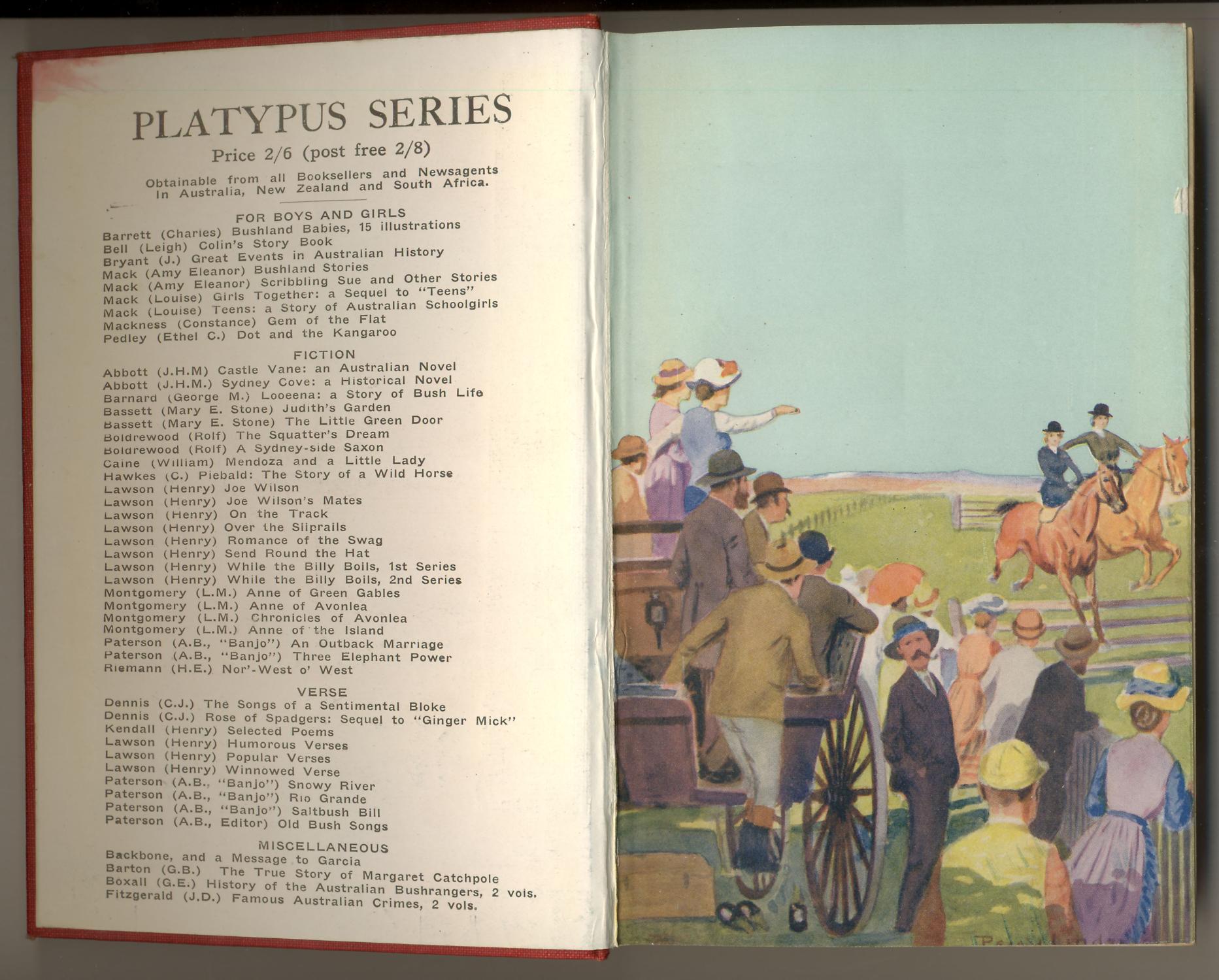
My first post in my Monday Musings 1923 series featured an update on the 1880-established NSW Bookstall Company, which, you may remember, focused on supporting Australia’s writers and readers by publishing Australian books and selling them for just one shilling each. In 1923, another publishing initiative appeared on the scene, Angus and Robertson’s Platypus Series.

This series, though, is a little more complicated. In 1923, as far as I can gather, the books were published by Angus and Robertson under their own imprint. Then, from 1924 to 1929, some, though maybe not all, were published under a different Angus and Robertson imprint, Cornstalk Publishing, before returning to Angus and Robertson in 1930. Through all this, however, it remained the Platypus Series.

So now, let’s get to 1923, to November in fact, when newspapers started reporting on receiving the first 8 books in a new series of books from Angus and Robertson. They all reported that seven of the books were classics, with the eighth, J.H.M. Abbott’s historical novel, Sydney Cove, being new fiction. The books, at half-a-crown (2/6), were more expensive than Bookstall’s 1 shilling.

The articles made some other interesting points, prime of which concerned the economics and profitability of publishing. Western Australia’s The Beverley Times, put it particularly clearly:

The publishers suggest that they [the books] could not have been turned out in Australia had not Henry Ford’s methods been applied to their manufacture by a Sydney firm of printers and binders. “More power to the elbow” for the venture has kept thousands of pounds worth of work in “this country,” and good Australian books which have perforce gone out of print have been made available with more to follow. 

Most articles reported on the “mass production” used to produce the books, though only some referenced Henry Ford. Some quantified the amount as £10,000.

Many of the articles, like those writing about the NSW Bookstall Company, commended Angus and Robertson for, as Sydney’s The Sun wrote, “catering for the local market by encouraging the local author”. Some added their own flavour to their description of the series. Victoria’s The Ballarat Star, which described Angus and Robertson as “one of the firms that believes in Australian literature for Australians”, provided its own perspective on the state of Australian literature:

We are, as a nation, rearing our own literary atmosphere. It is not a hasty progress, but it is in sound lines, and when a firm of the standing of Angus and Robertson, of Sydney, can find that it pays to keep Australia to the front in the matter of the “making of books,” well, there is encouragement for the authors also.

And I did love The Sydney Stock and Station Journal‘s little admonition to readers, that there are “other volumes in preparation — sixteen promised by next February, so you can’t growl about the high cost of good reading any more”. But, it’s The Sydney Morning Herald which provided the most information about the Series’ overall plans. It advised that “at least 84 volumes are contemplated”, across several categories – “For Boys and Girls,” “Fiction,” Poetry,” and “Miscellaneous” – and concluded that from what they knew “it is clear that anyone who purchases the series will acquire much of the most characteristic literature that Australia has produced”.

Platypus Series books, 1923

The first eight books in the series were published in 1923:

  • J. H. M. Abbott, Sydney Cove
  • Henry Lawson, Joe Wilson 
  • Henry Lawson, Joe Wilson’s mates
  • Amy Eleanor Mack, Bushland stories, stories for children
  • Amy Eleanor Mack, Scribbling bus
  • Louise Mack, Teens: a story of Australian school girls  
  • Louis Mack, Girls together (a sequel to Teens
  • Ethel C. Pedley, Dot and the kangaroo

Most of the articles discussed the books, but tended to say the same things – whether due to syndication or publisher’s press release, I’m not sure. One of the repeated comments was that the set included “five of the best School Library and Prize books ever written”. That’s a big call. “Ever written” in the world? In Australia? And which were the five? None make it clear. But it sounds good.

While many of the articles gave a little extra information about the new book, Abbott’s Sydney Cove, The Ballarat Star, cited above, wrote more than most on the other books, saying that the two Henry Lawson’s were ‘fine specimens of what the London “Academy” well termed the “artless art” of Henry Lawson’. It also praises Louise Mack’s two books – both for their writing and for being Australian:

She makes the Australian school girl really live, and in her two books — Teens and Girls together which is a sequel— any Australian children will revel because it is their own atmosphere free from artificiality, and redolent of the Australian school life, which is so different from that of England or America. One of these days outsiders who try to write school stories of Australia will have to go to Miss Mack and Ethel Turner, and Ethel Pedley and Amy Mack, and many others of our Australian girl writers for Australian atmosphere.

I love the idea that “outsiders” might want to write Australian school stories, but, regardless, this is lovely praise. It then describes Louise’s sister Amy’s books as “two daintily written kiddie stories, written evidently from the sheer joy of writing”, and says that ‘one of the brightest little things in the Bushland stories is the “Bird’s Alphabet.” It is a lesson inside a story for the author had to drag in the scientific name for the familiar silvereye (“Zosterops”), to complete the Alphabet”. And, it commends Pedley’s Dot and the kangaroo as having a “flavor” of Lewis Carroll, and being “a delicious story of the Australian bush inhabitants and their quaint and wonderful ways”.

Finally, while several articles commented on the value of publishing Australian authors for Australians, Sydney’s The World News made this very clear when it praised the initiative “for everyone knows it is far less risky to sell British and American books, and much more profitable, than publishing works by Australian authors”. That said, it was apparently in the Platypus Series (in 1924) that Anne Montgomery’s Anne of Green Gables made her first appearance in Australia! Just saying.

Photo credit: From Rolf Boldrewood’s A Sydney-Side Saxon 1925 (via Abe Books)

Other posts in the series: 1. Bookstall Co (update)

Monday musings on Australian literature: on 1923: 1, Bookstall Co. (update)

Last year I wrote a series of posts about 1922, drawing primarily from Trove. I enjoyed doing it, and have decided to repeat the exercise this year, and perhaps continue annually, to build up a picture of the times. My first 1922 post was about the NSW Bookstall Company which was established in 1880, but which around 1904 began publishing and selling Australian books for one shilling each. When I started my 1923 Trove search, this company featured heavily, so I’ve decided to lead off with an update of it.

Now, I noted last year, that the company’s longstanding managing director, A.C. Rowlandson, had died that year, but that the company planned to continue. During this year’s research, I found that in 2000 the University of Melbourne’s Baillieu Library put on an exhibition titled “Sensational Tales: Australian Popular Publishing 1850s-1990s”. One of the “tales” concerned the NSW Bookstall Co. They confirmed that the Company had “helped make writing a viable occupation for a generation of Australians, a number of whom – including Norman Lindsay, Vance Palmer and ‘Steele Rudd’ – achieved lasting reputations”. However, they also say that the Company’s publishing program did decline after Rowlandson’s death, and that it issued fewer than 70 titles between 1924 and 1946. By the end of World War II, the Company had “reverted to being a retail distributor of books and magazines”. How much of this decline was due to Rowlandson’s death and how much to changing times, they don’t say, but, from what I’ve read of him, I suspect the former played a role, as Rowlandson was clearly a powerful and inspirational force.

Anyhow, on with 1923. I plan to share the fiction that I’ve identified as published by them in 1923. What is interesting is not just who the Australian authors were and what they were writing, but what the reviewers and commentators were saying about both the company and the specific books, and what it all reveals about Australia’s literary environment of the time.

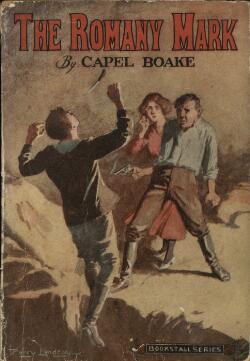
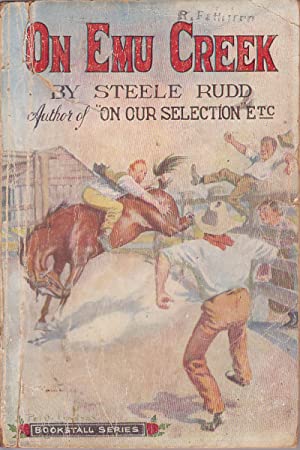
Bookstall Series books, 1923

Although the University of Melbourne’s exhibition notes the company’s decline, it was still going strong in 1923:

  • Vera Baker, The mystery outlaw (pub. 1920, and 1923)
  • Capel Boake, The Romany mark
  • Dale Collins, Stolen or strayed
  • Arthur Crocker, The great Turon mystery
  • A.R. Falk, The red star
  • J.D. Fitzgerald, Children of the sunlight: stories of Australian circus life
  • Jack McLaren, Fagaloa’s daughter
  • Jack North, A son of the bush
  • Ernest Osborne, The plantation manager
  • Steele Rudd, On Emu Creek
  • Charles E. Sayers, The jumping double: a racing story
  • H.F. Wickham, The Great Western Road

Most of these authors are male. Indeed, Capel Boake and Vera Baker seem to be the only woman here.

I found several references for most of the books listed above. Some were not much more than listings, and some seemed to be somewhat repetitive (which could be due to syndication and/or drawing from publisher’s publicity. It’s hard to know without deeper analysis.) However, there was also some more extensive commentary.

First though, as you can probably tell from the titles, the books tend to be “commercial” or genre books, most of them adventure with some mystery thrown in. One of my 1922 posts focused on the time’s interest in adventure, so I won’t repeat much of that except to say that many of the reviewers/columnists talked about “thrills”, “exciting reading”, fast pacing, and the like. The majority of the novels are set in the bush, reflecting our well-documented ongoing interest in outback stories. But A.R. Falk’s detective novel The red star, is set in Sydney. The Brisbane Courier’s reviewer (23 June) argues that Australian writers hadn’t “developed the field of detective fiction to any extent”, which is interesting given its popularity now. This reviewer praises the book saying that Falk had “written a far better detective story than the majority of those that are imported”. S/he says that “the fight between detectives and a clever gang of thieves and murderers is told in a very convincing manner” and that while “the ending, perhaps, is forced” the story “takes a high place among current detective fiction”.

That’s higher praise than some of the books received at the hands of our reviewers. J.Penn tended to write a little more analytically. I haven’t been able to identify who J.Penn is, but s/he wrote a new books column in Adelaide’s Observer and Register titled “The Library Table”. S/he generally praised Ernest Osborne’s The plantation manager but did note a weakness at times for ‘making people “talk like a book”‘ (Observer, 5 May) and was critical of Steele Rudd’s On Emu Creek which s/he felt lacked the satirical edge of his Dad works. S/he writes that “Steele Rudd is firmly convinced that his readers will find sufficient fun in the mere fact of some one being humiliated or hurt, without the author’s having to worry to hunt for words” (Register, 19 May). The Murray Pioneer and Australian River Record (3 August) described On Emu Creek as humorous but qualified this with “the reader may be pardoned if he fails to see in the more recent books the same rich vein of humor that characterised the earlier chronicles of the Rudd family” while The Age (5 May) was gentler, calling it “an agreeable story, without any affectation of style, and containing points of humor”

Penn described (Register, 21 April) Dale Collins’ Stolen or strayed as ‘a “shilling shocker” of modern Australia’. Set mostly on the Murray, “it is,” writes Penn “a joyous yarn, and, as generally happens nowadays, the literary style is more than worthy of the tale it unfolds”. Interestingly, though, Collins’ book generated more disagreement than most. The Queenslander (12 May) was less impressed, saying that “neither the workmanship nor the characterisation show any especial ability” and The Sun (22 April) said that “It is a story just good enough, so far as construction is concerned, to lead one to hope that the author will do much better some day.”

Overall, several reviewers commented along the lines of Perth’s Western Mail (26 April) reviewer, who said, regarding Stolen or strayed and The planation manager, that “both books will no doubt be read with avidity by those who care for stories of this kind”. This is fair enough given these readers were Bookstall’s target market.

Now, some quick observations, before closing. I was interested that some reviewers seemed to give the whole plot away, which we don’t see now. Also, I’ve not (yet) been able to identify several of the authors, but a few were also journalists – like Dale Collins and Jack North – and some used pseudonyms, like Capel Boake about whom I’ve written before.

Finally, despite what seemed to be qualified praise for many of the books, it’s clear that the endeavour was valued for providing a career for Australian writers and illustrators at a time when they struggled to get published. And, as Hobart’s Mercury (18 August) wrote

Beyond question, they are more than worth the money, the thing most prejudicial to their success being the gaudy “Deadwood Dick” types of covers in which they appear.

Trove (et al) under threat

You all know how much I rely on Trove. Back in 2016 I wrote a post in support of it when its survival was threatened. Well, it’s under threat again, and Lisa posted on it today. She references an(other) article in The Conversation that addresses not only the situation for the National Library of Australia and Trove, but other significant national cultural institutions like the National Film and Sound Archive and the National Gallery of Australia. These services and institutions are the lifeblood of academics, writers, journalists and other researchers (professional and general). Their role is to acquire, preserve and make available our heritage. They are not dispensable. They are essential.

Monday musings on Australian literature: First Nations Classics

Over the years I have written several posts on publishers who have made a commitment to publishing Australian classics, such as Text, Allen and Unwin and the Sydney University Press, to name a few. I was thrilled last week to come across another one, this time from UQP, the University of Queensland Press, which has announced a First Nations Classics series.

UQP is well-known for its longstanding support of First Nations writing – both through publishing and through its sponsoring the annual David Unaipon unpublished manuscript award for First Nations writers. Indeed it describes itself as the first mainstream publisher “to set up a list specifically for Indigenous authors, the Black Australian Writers series”. Now, with this Classics initiative, it is going the next step.

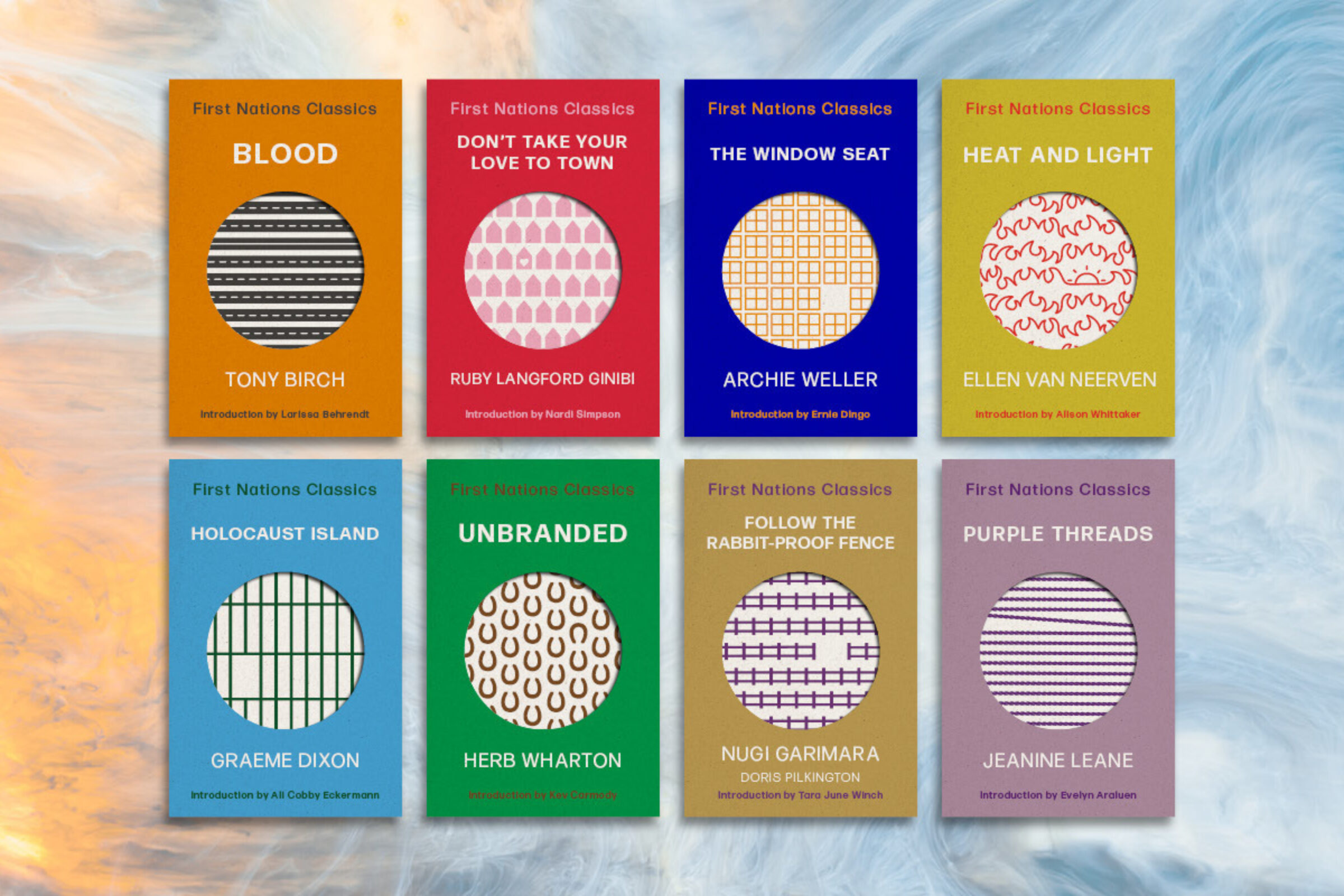
The first set in the series comprises EIGHT titles which will be published in 2023. They are award-winning or shortlisted titles, dating back to 1988, and are well-priced at $19.99 each. Here’s the list (from UQP’s own blog):

(Links on the introduction writers are to my posts on those writers.)

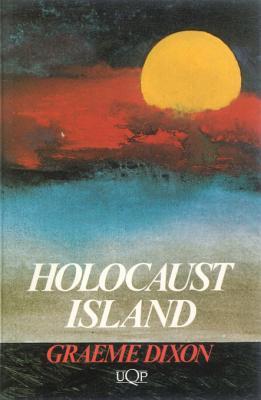
As you can see, like the Text Classics series, for example, this comes with new introductions from contemporary authors – a true value-add. UQP says on its blog that this first set of books includes memoir, novels, short stories and poetry. Some are Unaipon Award winners, including the inaugural 1988 winner, Graeme Dixon’s poetry collection Holocaust Island, which is currently out of print.

You will also notice that among the bloggers I know, we have reviewed five of the eight titles. The three we haven’t, Graham Dixon’s Holocaust Island, Archive Weller’s The window seat and Herb Wharton’s Unbranded aren’t known to me, though I have heard of Archie Weller. So, given you have no reviews for them to click on, here is a little more on them:

  • Dixon’s Holocaust Island (1990): “a dynamic collection of poetry” that speaks out “on contemporary and controversial issues, from Black deaths in custody to the struggles of single mothers. Contrasted with these are poems of spirited humour and sharp satire”. (from GoodReads)
  • Weller’s The window seat, and other stories (2009): “a collection of Weller’s best short fiction and a tribute to his contribution to Australian literature. The stories are honest, brutal and moving” (from UQP website).
  • Wharton’s Unbranded (2000): a novel which offers “an Aboriginal viewpoint on the pastoral industry and race relations … by a masterly yarn teller” (from the book cover on the UQP website)

Now, back to the series – UQP’s publisher Aviva Tuffield articulates, on the above-linked blog, their ambition for this project:

This series will generate renewed interest for these books and their authors – both individually and collectively – and ensure them the contemporary audience they deserve.

She also explains that they’ve been assisted with funding from the Australia Council and the Copyright Agency’s Cultural Fund. I love the work that the latter does, in particular. Over the years of this blog I have referred to many varied programs and projects supported by the Copyright Agency.

The editor of the series is First Nations writer and editor Yasmin Smith who reiterates Tuffield’s ambition:

I hope this series will provide readers a renewed appetite, a greater awareness and a new thoughtfulness towards Indigenous stories and culture. The First Nations Classics are essential reading for all generations.

The blog implies UQP’s selection criteria for the books when it describes them as “some brilliant, timeless books – across all genres – that are as important, engaging and relevant today as they ever were on first publication”.

The blog also shares a little about the cover design for the series, by Jenna Lee, “a Larrakia, Wardaman and Karajarri woman with mixed Asian (Chinese, Japanese and Filipino) and Anglo-Australian ancestry”. The aim of the design is “to highlight and showcase the vibrancy, diversity and nuance of First Nations authors, their voices, and the important stories they share”. The covers are intended “to make sure they are recognisable as a collective set but still allow for individuality to feature, with unique colour combinations and illustrative patterns giving the reader a window into the story within”. I’ve had a look at them, and think they are gorgeous and accessible. Click on the pic and see what you think.

Now, over to you. What – looking at UQP’s inventory – do you think should be in the 2024 set?

(If you are not Aussie, you are welcome to select a First Nations work from your own country if relevant. Of course, you can also name a non-UQP book, as an intellectual exercise, but I’d love to see how close we get to what is selected.)

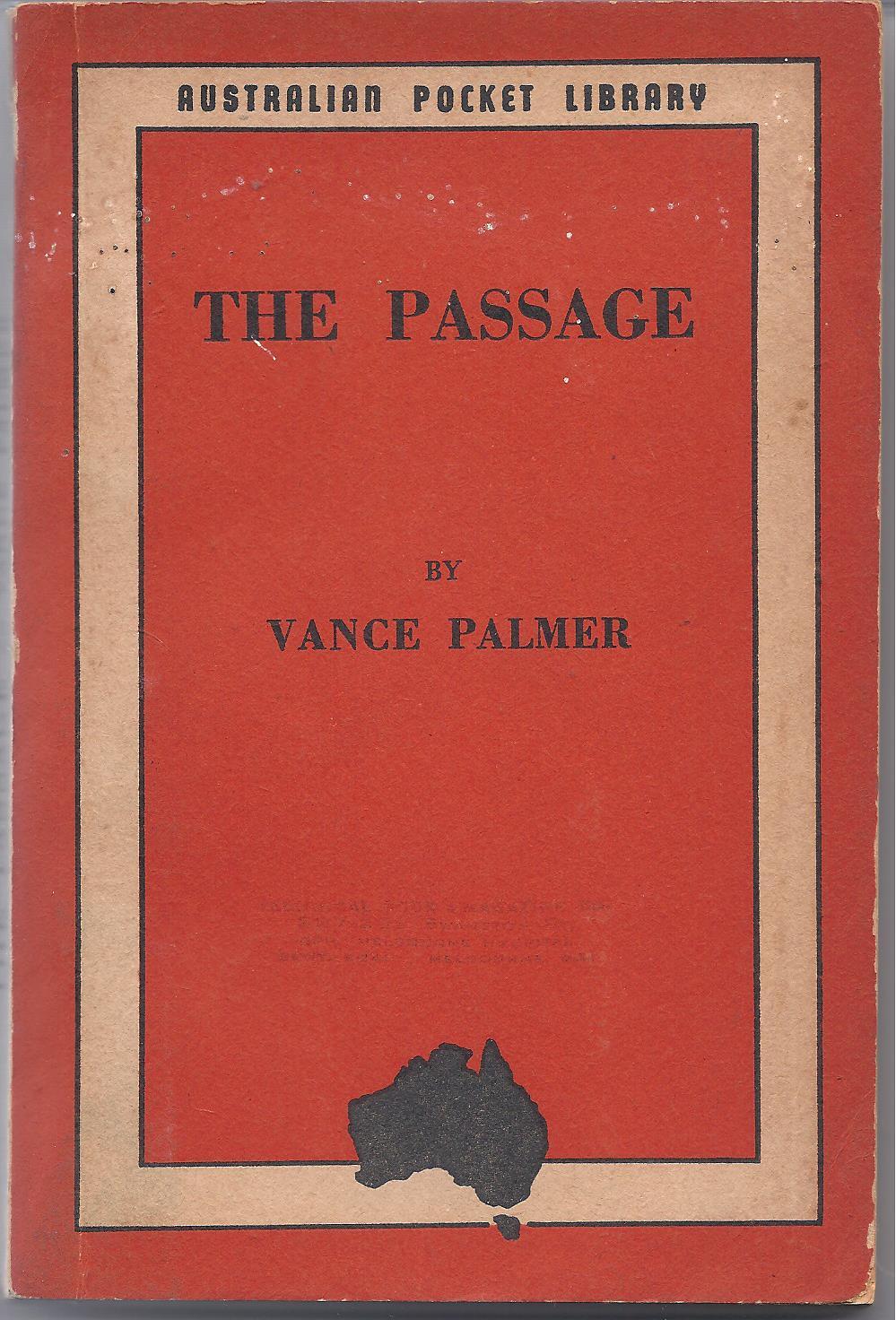
Monday musings on Australian literature: Australian Pocket Library (2)

Last Monday I introduced the Australian Pocket Library (APL) which was a series of cheap paperbacks produced under the auspices of the Commonwealth Literary Fund (CLF). Its initial purpose was to provide Australian reading matter to Australian POWs but, in its final form, was intended by the CLF to play a bigger role in promoting Australian literature at home too. Planning started in 1943, with publication occurring between 1944 and 1947.

In last week’s post I shared part of an article on the APL by academic, Neil James, and some thoughts on the selection by a contemporary critic and literary editor, RG Howarth who discussed the library, taking as his starting point that the library was intended to contain “standard” works. I will return to James, but first, more from contemporary commentators on Trove.

Standard?

I’ve chosen to focus on P.I. O’Leary (1888-1944), a journalist and poet who, like Howarth, was committed to promoting Australian literature, and who also took up the “standard” question. P.I.O’L (his by-line) wrote an extended article about the APL in the Books and Bookman magazine of the Advocate in 1944 (17 May). He commences his article, titled “We parade our masterpieces”, with:

What is a “standard” Australian book? How many of the books selected by the Advisory Board of the Commonwealth Literary Fund to form the nucleus of an “Australian Pocket Library” are “standard” works? These and other points in this commendable enterprise are here considered.

Overall, he commends the endeavour, because too many works have been out of print. He sees the Library as representing “a belated national appreciation” of Australian writers. He is “not heady with any enthusiasm for an attempted, forced growth of literature in Australia”, he says, arguing that you cannot force produce great novels or great poems. However, “Australia has, and has had, many subsidised industries—and there is no reason why the literary industry … should not have some assistance in the shape of grants to writers”. Then he gets onto the issue of “standard”.

He doesn’t really know ‘what entitles an Australian literary work to be styled a “standard” book’, he says, but supposes that

Robbery under arms has passed the test, together with, say, We of the Never-Never, On the track and Over the sliprail, Such is life, and a handful of other books.

However, the selection of some of the other books as “standard” works, “sets up an energetic speculation as to what special passport a book must carry in order to cross the frontier”. (Love the language.) He knows how difficult it is to make such choices, but writes that “some books selected do not appear to me to even be borderline cases”. Then, like Howarth, he puts forward his views on some of them.

He agrees with Howarth’s questioning the inclusion of Katharine Susannah Prichard’s Haxby’s Circus, asking “what standard does it set up?” He thinks it the weakest of her novels, and “not comparable to Working bullocks or Coonardoo as a skilful work of fiction”. (Howarth named Working bullocks and Pioneers as better.) Like Howarth, he also questions the inclusion of Brian Penton’s Landtakers (read it anyone?) as “standard”, describing it as “largely sound and fury”. 

P.I.O’L also discusses representativeness, asking whether the selection is “representative” of “our writers’ books”. He feels that “as a foundation selection it is … satisfactory”, arguing that “a start had to be made somewhere”. Howarth, he says, agrees, given the limitations the CLF was operating under. Moreover:

Allied Servicemen are not literary cognoscenti balancing niceties of literary values, characterisation, form. If you were to ask most of them in what order they would place the writers of their own polyglot land they would probably very honestly say that they were no judges—and had not read many books, American or otherwise, anyhow.

Then he tackles Howarth’s discussion of the gaps, the works that should have been included. Again, I loved his language:

And when you start offering a register of names of writers whose works should be included in the “Australian Pocket Library” you push your keel into a wide sea—one, sometimes of trouble. 

He disagrees with some of Howarth’s suggestions – we are mostly talking poets here – and makes his own, but you can read it yourself if you are interested. Overall, he agrees with Howarth’s support of the project, quoting Howarth’s statement that the CLF should be “congratulated on the vision and courage of the enterprise”.

Legacy?

Now, I’ll return to Neil James’ 2000 article because he has some interesting points to make about the selection, and the APL’s legacy.

Looking at the selection nearly sixty years later, James writes

The titles selected reflect clearly the nationalist agenda in Australian literature … `Representative Australia’ in 1943 derived from the Bush, and the democratic values which seeped into Australian culture from its historical struggle against the natural elements. Most of the titles were originally published in the 1920s and 1930s, but some went back to an earlier age to engage with the grand narratives of exploration, adventure and colonisation. The list sets up literary values, social values, and national-historical values as interchangeable. This is hardly surprising given the primary influence of Palmer, whose published and broadcast criticism sought to define an Australian literature in national terms … It was a nationalist canon in paperback set for a wide distribution, and it sat comfortably with the government’s war-time agenda.

James shares the many practical challenges the CLF confronted – acquiring rights to the books, cover design, production problems, and agreeing on price with the publishers. And he describes the project’s demise, ending up publishing 26 of the finally planned 39. It’s all interesting and you can read it in the article. I want to end with his discussion of the legacy because this is most relevant to us now.

First, he says, it “represents the first officially selected and endorsed canon of Australian literature” and one recognised at the highest level of government. Furthermore, the APL played a significant, though not recognised, role in the “unprecedented transformation in the publication and recognition of Australian literature” in the 1940s and 50s. However, the importance of the Library has been lost partly, he argues, because the “nationalist outlook” of the selection was rejected a decade or so later by the universities, resulting in the writers being expunged from the canon.

The failure of the venture also had an impact on publishing. The CLF withdrew from “acting as de facto publisher” and became more reactive than proactive in publishing ventures. Had it succeeded, and had the CLF ‘continued to foster a nationalist canon of writing, there would have been, at the very least, more than “one set of values [to rule] the entire roost”, as Max Harris put it’.

More significant, though, I think, is James’ argument that the failure of the APL “effectively delayed the literary paperback in Australia by two decades”. He believes that the 1930s Penguin revolution in Britain “could have been reproduced here in the 1940s” with the APL its “de facto trial run”. Unfortunately, its unappealing format, which was “far too compromised by wartime conditions … killed off any good will towards paperbacks amongst booksellers and publishers”.

How fascinating. It was not until the 1960s, James says, that the literary paperback returned to the Australian scene, and not on a major scale until the 1970s. This fundamentally influenced “the character and the accessibility of Australian writing”, by which he means that because mass cheap paperbacks were not available as they were in Britain and France, “the readership of Australian literature was to remain the middle classes rather than `the multitude’.”

James concludes – in 2000 – that the Australian Pocket Library is worthy of “further scrutiny as part of the assessment of individual authors, and in understanding the evolution of Australian cultural values”. He also suggests that, “given the current paucity of an available Australian backlist” it may contain lessons for a classics publishing program! Well, it may not be the same model, but the Text Classics imprint, which began in 2012, has picked up the baton of cheap affordable classics and run with it. As far as I can tell, ten years later, it is going strong, with a catalogue that is diverse but, like the APL, constrained at times by access to rights.

Sources