Monday musings on Australian literature: Japan and Australia

I had another post partly drafted for today but, due to the events of last week in Japan, I’ve decided to postpone that idea for another time. Australia (and we are not the only country in this) has a close relationship with Japan – much of it positive, some of it negative (this latter to do with, most recently, whaling, and before that the Second World War). Like most good relationships though we accommodate the good and the bad and strive always to improve it. And here endeth that particular lesson!

Canberra Nara Candle Festival, 2008

Canberra Nara Candle Festival, 2008

I’m not going to detail the full history of our relationship now, but Japanese people have lived and worked in Australia since the nineteenth century – back then, in industries like pearl diving and sugar cane farming. Japan is an important trading partner for Australia – and so, largely for this reason, not only is Japanese a popular language taught in schools, but many cities, towns and schools across the country have sister relationships with their counterparts in Japan. Our city, Australia’s capital, is sister city to Nara, a previous Japanese capital. Our son taught English in Japan for three years. Mr Gums and I have visited Japan twice, and are booked to go again this May.

In other words, Australia’s connections with Japan are political, economic and cultural. Consequently, things Japanese are not hard to spot. Food, cars, computers and other electronic goods are the obvious manifestations, but they are in our culture too. Manga and anime for a start. However, for today’s post I’m choosing just one example. It’s a poem that was written in response to the 2004 earthquake and subsequent tsunami in the Indian Ocean. I’ve chosen it because it’s relevant now, and because it shows how language transcends boundaries. After all, when I grew up, we talked of tidal waves.

Tsunami
such a pretty word
trips off
the tongue
saltily
in pleasing phonemes
(Japanese
– you know –
like sakura and
kimono)
[ … ]

Tsunami
a slash
of syllables
– tabloid terrible –
a crackle of images
ravage
our screens.
[ … ]
lives shatter [ … ]

(from “Tsunami”, by Anita Patel, in Summer conversations, 6(2), 2006)

It’s a beautifully conceived poem, with a very Japanese sense of form and  symmetry, but for copyright reasons I don’t believe I can quote it in full.

And now, in respect for those suffering, I’ll finish here and leave further discussion of Japanese culture and Australia for better times.

Note: I have not here, or in previous posts, provided links for donations to relief efforts for the way-too-many disasters that have occurred during the time I’ve been blogging. I’m sure, after all, that you, like us, have your favourite charities to use if you wish to donate.

Monday musings on Australian literature: A dry or not so dry continent?

It’s rather ironic that  in the last week or two when I’ve written a couple of posts about Australia’s image* as a “sunburned land” (Barbara Hanrahan) or “sunburnt country” (Dorothea Mackellar), the image the world has been seeing is somewhat opposite – a raindrenched land. Then again, Dorothea Mackellar did also write that this is a land “of drought and flooding rains”.

So, I thought this week I’d share a few images from current poets – from The best Australian poems 2009 book which I was given a year ago. For most of these poets the imagery might come from the land and the weather, but the subject is not necessarily so …

Sarah Day‘s poem, “A dry winter (Some observations about rain)” is particularly poignant – though no less real – given current events:

… This rain moves on swiftly
leaving sun and silence in its wake …

And the poem ends with

Mostly too little rain falls here.
There is only the silence of the sun.

Even in winter after low skies
and the impression of rain

for days and weeks, the earth is dry as dust
under trees. Cracks refuse to close up

in the cold months. This makes rain exotic.
Something to pay attention to.

John Leonard’s “Rain in March” captures the cleansing effect of rain. His poem ends with:

Chirping crickets and autumn peepers
Trilling with the carolling of magpies
And currawongs, and a brief clamour
Of cockatoos.

In the muted darkness
The front passes, single drops
Spitting from a matt black sky –
Rain has washed through the world,
A faint, cool wind lifts
Branches heavy with wet leaves.

“Fred’s Farm” by Astrid Lorange is about more than the land, but it starts with

yes this is a field of gunmetal glinting like weather
an entire ecology of dead thistles mapping a drought

That imagery rather sets a tone doesn’t it … The poem is not so much about Fred’s farm – a self-consciously neutral title – as the poet’s stream of consciousness reflection on remembering a past. She’s a new young poet and one to watch…

Road to Hermannsburg, Central Australia

Road in Central Australia

For Robyn Rowland too, in “Is the light right?”, landscape and weather are closely related to mood, but there’s no simple polarity to the imagery. The water, for example, is “blood-warming” but “dark”. Her poem ends:

What if tomorrow, light is too big when it comes,
never a shadow to rest in,
no blood-warming pools of dark water to drink from,
sky never again boot-black and anxious,
and I forever driving through burning day
along ten thousand miles of loneliness.

In “The orchardist”, by Petra White, the tough needing-to-be-irrigated land breeds tough farmers. Here is a description of the landscape, with “we” being fruit pickers:

At night we walked the river, following its curves
that wound us out to where a redgum
stood marooned at water’s edge, fossilised in thirst

And then the farmer:

All day the farmer circled on his tractor, mad as a bull-rider,
lurching on thick dry mud-tracks…

Finally, a poem that harks back to the terrible fires in Victoria just two years ago, reminding us again of the extremes wrought by our “drought and flooding rains”. The poem is titled “Kinglake“, a town which bore the brunt of the Black Saturday fires. It’s by Fiona Wright and she concludes her poem about the devastation with:

Your orchard eaten into black dust.
I send you irises,
and try to write
some kind of greening.

This post is, I know, rather bitsy-piecy. The poems, which vary in theme and style, aren’t necessarily my favourites in the collection, but they show that sun and water still pervade the Australian consciousness even if the purpose to which they are put, poetically speaking, has diversified. I may return to this book in the future … but in the meantime would love to know if there’s particular imagery that represents your nation’s “being”, or, if you’re Australian, whether agree with what I’ve written?

* After all, wasn’t Bill Bryson’s book on Australia published overseas as A suburnt country?

The gift of words

Xmas Tree

There be words in there

Middle age has come
and all the plans and needs
are chaff not seeds,
blowing down the blue air
to fall flat and trampled
by some window where
a hopeful girl braids
her thick hair and hums.

(“Humble”, by Ginny Jackson)

Better late than … hmm, perhaps not, but I’m going to tell you anyhow.

I’ve noticed in recent years that I don’t receive a lot of books for Christmas – and when I do, they are often not fiction – but a few hardy gift-givers still bravely feed my obsession. And so, I received a small but intriguing bunch this year, which I will list by category:

Fiction:

  • Margaret Atwood‘s The year of the flood. Atwood is one of my favourite writers but I’ve dropped the baton on her a bit in recent years. I hope to pick it up again and run this year with this, her most recent. Thanks, Mum.
  • Helen Simonson’s Major Pettigrew’s last stand. I have already read and reviewed this one – and suggested at the time that there were people I knew who would enjoy it. I didn’t have a copy then so couldn’t lend it to them. I now do … thanks Sandra, from my bookgrouplist swap.

Poetry:

  • Ginny Jackson’s The still deceived. I can always rely on my brother to choose something a little bit different for me, and this year was no exception. My brother lives in Tasmania and this book, published by Ginninderra Press, is by a Tasmanian poet/artist. I have only dipped into it – but if you like the poem opening this post you might like to dip into it too. Thanks, bro!
  • There’s something about a rose. I knew immediately who chose this book – my Dad, the rose lover. It comprises a selection of poems and art celebrating, yes, roses, and was compiled by the Friends of Old Parliament House Rose Gardens. The poems are by Australian poets, some well-known, such as Barbara Blackman, Les Murray and Chris Wallace-Crabbe, and others not so well known (to me at least). I have already dipped into and enjoyed several of the poems…and may share some with you as the year goes on. Thanks, Dad.

Non-fiction:

  • The Canberra gardener. I’ve had previous editions of this gardening bible, but not for some years. Published by the Horticultural Society of Canberra, this one is the 10th edition published in 2010. The previous edition was published in 2004, just as our last serious drought was starting to bite. As a result, this new edition focuses on how to create lovely gardens with less water. Funnily enough, our dams are now suddenly full (last year they were at 50%) but we have all learnt (if we didn’t already know it) that Australia is a dry continent and that we should make water conservation a permanent goal regardless of annual fluctuations in water levels. This book will help me in my endeavour. Thanks, Carmel.
  • Roger McDonald‘s Australia’s wild places. I do like a good coffee table book and this is a good coffee table book. It’s published by the National Library of Australia and comprises landscape photographs of Australia from the Library’s collection. The photos were chosen by award-winning Australian novelist, Roger McDonald, whose books tend to have strong rural themes. The book has an introductory essay, with a strong environment message, by McDonald, followed by gorgeous images by some of our top photographers, including Peter Dombrovskis and Frank Hurley. It is just the book for me to look at now, as we prepare for our annual foray into the Snowy Mountains for a bit of post-Christmas R&R. It was given to me by a friend who spent most of her career working with these images. Thanks, Sylvia.

So, there you have it, six books from six people, each book reflecting a little bit of both the giver and the receiver. What more can one ask of a gift?

And now, if it’s not too late, I’d love to hear if any of you received books this year, and what they were.

Monday musings on Australian literature: For the love of ballads

Gum tree trunks, Rutherglen

Crisscrossing gum tree trunks at Rutherglen

I was first introduced to Australian ballads by my father who loved to read the works of AB (Banjo) Paterson to us. I loved it – my father’s reading and the poems themselves. This love was reinforced in my first year of high school, through my poetry textbook, The call of the gums: An anthology of Australian verse. I treasured this book – and still have it today. It’s organised by subjects/themes, with the first two sections being “Bush songs and ballads” and “Not very serious”.

First though, the introduction. The anthology was selected by one Ian V Hansen, and he starts his brief introduction by saying that:

The world knows Australia; she produces brilliant cricketers and formidable soldiers, athletes and tennis players. But this is not all. She also exports (mostly to Britain) painters, opera principals, concert musicians, scientists … and keeps her poets at home. Which is a pity. This book is an attempt to give some Australian poets the wider school public they deserve.

I don’t know much about Ian V. Hansen, the anthologist, but his introduction gives me a little pause. I wonder how much has changed in the last five decades regarding how the rest of the world sees Australia and its (we don’t use “her” anymore, do we) achievements? Methinks not quite as much as we’d like!

Anyhow, back to the book. It seems that I started my marginalia practice quite young. In the front of the book I have written the following, clearly based on what the teacher taught us:

Ballads

  1. Passed on from one man’s lips to another
  2. They varied because people could not remember all the words
  3. Easy rhythm that can be sung (Folk songs)
  4. A lot are anonymous
  5. A complete story about a happening or story
  6. A lot have a chorus
  7. Narrative (spoken by story-teller)

Well, a few of the ballads in the book are anonymous, they do tell stories, and I’m sure it was my love of ballads that led to my enthusiasm for folk music. While my interest in folk music now ranges widely, a good singer-songwriter telling a moving or funny story will always win me over.

Australia’s best known ballad has to be Banjo Paterson’s “Waltzing Matilda” which tells of the swagman who drowns himself in the billabong rather than be captured for stealing a sheep. It says something rather endearing I think about the Australian character that many would be happy to have this as our national anthem! It is, of course, in this anthology along with many others, including Paterson’s “Clancy of the Overflow”, Adam Lindsay Gordon’s poignant “The sick stockrider”, and Henry Lawson‘s “Andy’s gone with the cattle now”. I’m sure I don’t need to tell you their subject matter: droving was almost the universal theme of the nineteenth century Australian ballad.

Some of the ballads are tragic, and some wistful, but my favourites in this collection tend to be the funny ones, because humour in the face of adversity is often seen as an Australian trait. They celebrate ingenuity, such as Thomas E Spencer’s “How Macdougall topped the score”, or the determination of the bush to prove itself over the city, as in Banjo Paterson’s “The Geebung Polo Club”, or simply explore personality. One such is “Holy Dan” (anonymous), the story of a devout drover who, as he loses his cattle one by one to drought, continues to pray trustingly to God, until only one remains:

‘That’s nineteen thou hast taken, Lord
And now You’ll plainly see
You’d better take the bloody lot,
One’s no damn good to me.’
The other riders laughed so much
They shook the sky around;
The lightning flashed, the thunder roared,
And Holy Dan was drowned.

Another is John O’Brien’s “Said Hanrahan” who is the opposite of optimistic Dan. Hanrahan always expects the worst – and again the theme is the weather. It starts:

‘We’ll all be rooned,’ said Hanrahan
In accents most forlorn
Outside the church ere Mass began
One frosty Sunday morn.

And continues…

‘We’ll all be rooned,’ said Hanrahan,
‘If rain don’t come this week.’

Well, the rain does come but Hanrahan is still not satisfied. Rain, you see, means growth and knee-deep grass, and that means the risk of bushfires. As Hanrahan says, “We’ll all be rooned”!

“Said Hanrahan” also appears in a recent anthology, 100 Australian poems you need to know. The anthologist of this collection, Jamie Grant, writes

…it is significant that a large proportion of the poems I have chosen are distinctly funny … The most striking achievement of our culture, and the distinctive element of our national character, lies in the Australian sense of humour. That sense of humour is often described as “dry”, like the Australian landscape, but it also includes an element of cheerful exaggeration, and a liking for the reversal of expectations. It amuses Australians that our most iconic military adventure was a failure, but it also amuses us that we have produced triumphs where none was anticipated, whether through a stroke of ingenuity such as a winged keel or by winning a race by being the last left standing…

(If you don’t know what Grant is referring to in these examples, just ask the next Australian you meet. S/he is sure to know.) Meanwhile, I’ll be posting more on Australian poetry, but I wanted to start with the ones that first captured my attention… Do you have poems that you remember from childhood?

The call of the gums
(The world of English poetry)
Selected by Ian V Hansen
London: Edward Arnold (Publishers), 1962
180pp.

Ah, sweet synchronicity of life!

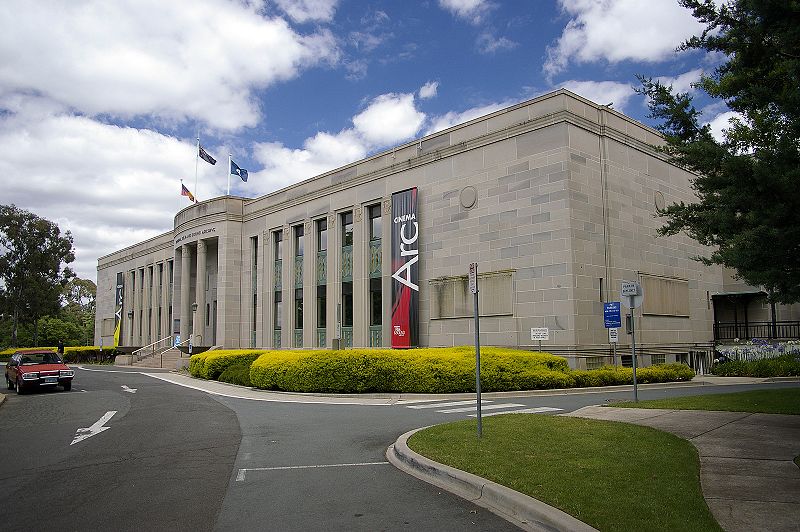
NFSA exterior

Exterior of my previous home-away-from-home (Courtesy: Bidgee, via Wikipedia, using CC-BY-SA 3.0)

Ok, I know that “synchronicity” doesn’t really scan with “mystery” but it just felt right.

Last night, wearing one of my hats, I attended the National Film and Sound Archive‘s event, Coo-ee: Sound Day: Sounds of Australia 2010. (Phew, that’s a mouthful isn’t it?). Sounds of Australia is an NFSA initiative aimed at creating a register of recorded sounds that Australians deem significant. These sounds can be songs, speeches, jingles, sporting announcements, and so on. Anyone can nominate, and the final selection for each year’s additions is made by a judging panel.

Well, I was astonished (but pleased) to find that one of this year’s additions is Oodgeroo Noonuccal reading one of her most famous poems, We are going. This poem appeared in her first 1964 anthology as well as in My people which I listed in this week’s Monday Musings post. It was one of the poems that I remembered from my youth and considered using in that post. You can hear her, clear and strong, online at the Sounds of 2010 website – scroll down to 1986. Here are the last lines of the poem:

The scrubs are gone, the hunting and the laughter.
The eagle is gone, the emu and kangaroo are gone from this place.
The bora ring is gone.
The corroboree is gone.
And we are going.

See why I like her? Simple but powerful.

Monday musings on Australian literature: Indigenous writers

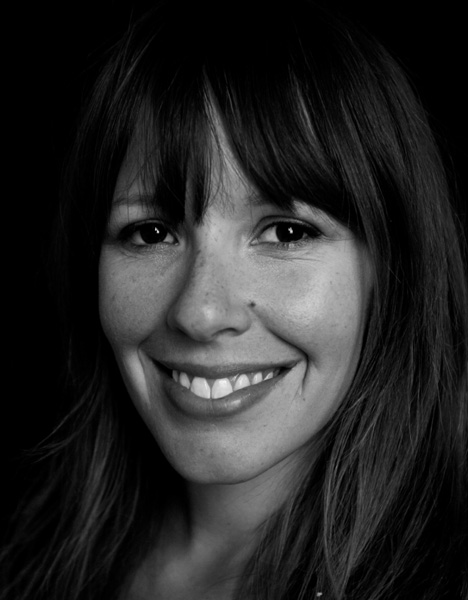
Tara June Winch

Tara June Winch (Courtesy: Friend of subject, via Wikipedia, under CC-BY-SA 3.0)

It’s important I think that my third post be on our indigenous writers. Again it’s going to be pretty idiosyncratic as my reading in this area has been scattered, not for lack of interest so much as the old “so many books” issue that we all know only too well. I was first introduced to indigenous writing at high school where I had two inspirational teachers who encouraged us to think seriously about human rights. It was then that I bought Oodgeroo Noonuccal’s (or Kath Walker as she was then) book of poetry, My people.

In my first Monday Musings post, I mentioned David Unaipon who is generally recognised as the first published indigenous Australian author. However, it was Oodgeroo Noonuccal, with her book of poetry, We are going (1964), who heralded contemporary indigenous Australian writing. So let’s start with her.

Oodgeroo Noonuccal My people (1970, poetry)

Noonuccal’s poetry is largely political. She wrote to right the wrongs which indigenous Australians confronted every day: the racism, the white-colonial-slanted history, the lack of land rights, and so on. Much of her poetry is therefore strong but accessible “protest” poetry. My people collects poems from her first two books and includes new works as well. Here are just a few lines to give you a sense of what she was about:

… Do not ask of us
To be deserters, to disown our mother,
To change the unchangeable.
The gum cannot be trained into an oak.
(from “Assimilaton – No!”)

Gumtree in the city street,
Hard bitumen around your feet,
Rather you should be
In the cool world of leafy forest walls
And wild bird calls.
(from “Municipal gum”)

I love the way she uses gums to represent her people – who they are, where they should be. Some of the poems are angry, some are conciliatory, and others celebrate her culture. I loved the book then, and I still value it now.

Sally Morgan My place (1987, memoir)

The next book in my collection, chronologically speaking, is Sally Morgan’s memoir My place. Sally Morgan is primarily an artist but her memoir became a best seller when it was first published. In it she chronicles how she discovered at the age of 15 years old that her colour did not come from an Indian but  an Aboriginal background, and her subsequent investigations into her family’s rather controversial story. I don’t want to go into the controversy here. Rather, the point I’d like to make is her story-telling: it is warm, funny, and thoroughly engaging.

Women of the centre (1990, short life-stories); Black chicks talking (2002, short life-stories produced in film, book, theatre and art)

Telling stories is an intrinsic part of indigenous Australian culture. It’s how traditions have been passed on for 40,000 years or more. It’s probably simplistic to draw parallels between traditional story-telling and the telling of stories in general. After all, we all love stories. Nonetheless it is certainly clear from the little experience I’ve had and the reading I’ve done, that story-telling is an intrinsic part of indigenous Australian culture and is becoming an important way of sharing their experience with the rest of us. This was powerfully done in Bringing them home: The stolen generation report of 1997 which contained not only the history of the separation of children from their parents and recommendations for the future, but many many first person stories which drove the drier points home.

Two books that I’ve read which contain personal stories by indigenous women are Women of the centre and Black chicks talking. The introduction to the former states that its aim is to help we non-Aboriginal Australian readers to understand lives that are so different from our own and “to provide personal written histories for the descendants of the women involved”. This latter is becoming an urgent issue in indigenous communities today – the capturing of story before more is lost. In Black chicks talking Leah Purcell interviews nine Aboriginal woman – some urban, some rural, some well-known, some not – about their lives. Another wonderful read.

Life stories/memoirs represent, in fact, a significant component of indigenous literature. Another work worth mentioning, though I’ve only seen the film and not read the book (shame on me!), is Doris Pilkington’s “stolen generation” story of her mother’s capture and subsequent escape involving an astonishing trek home, Follow the Rabbit-Proof Fence.

Alexis Wright Carpentaria (2006, fiction); Tara June Winch Swallow the air (2006, fiction); Marie Munkara Every secret thing (2009, novel)

Finally, a brief mention of three recent fictional works, two of which I’m ashamed to say are still in my TBR pile. These are the two David Unaipon Award winners by Tara June Winch and Marie Munkara. If you are interested in the latter, please check Musings of a Literary Dilettante’s review.

I have though read Alexis Wright’s Miles Franklin Award-winning Carpentaria. It’s set in a fictitious place, tellingly called Desperance, in northern Australia. Its focus is colonialism (ie European invasion of the land), and conflict within black communities about how to respond. To explore these, Wright touches on lot of ground, including land rights, deaths in custody, mining rights, boat people, and petrol sniffing to name just a few. She flips between the real and the magical, she uses language that is image-rich and often playful, and she tells some very funny stories. It’s a big, wild and rather complex read that manages in the end to be hopeful despite itself.

This is just a small introduction to the wealth of Australia’s indigenous literature. It won’t be the last time I write about it. I will also in the future post on white Australians who have written about Aboriginal Australians, writers like Thomas Keneally who wrote The chant of Jimmie Blacksmith but who now says he wouldn’t presume to write in the voice of an indigenous Australian. A vexed question really. I believe there should be no “rules” for writers of fiction and yet, sometimes perhaps, it is best not to appropriate voices not your own. But that is a question for another day…

Meanwhile, back to Alexis Wright – and stories:

Old stories circulating around the Pricklebush were full of the utmost intrigues concerning the world. Legends of the sea were told in instalments every time you walked in the door of some old person’s house. Stories lasted months on end, and if you did not visit often, you would never know how the story ended. (Carpentaria, p. 479)

Edward Field, WWII (Poem)

Well, Library of America has surprised again. This week it is a poem (6 pages). I wasn’t expecting that, but as I like to delve into poetry every now and then I was rather pleased. The poem, “WWII” by Edward Field, was first published in 1967 in a collection titled Poets of World War II. According to LOA’s notes, the poem “recounts an actual incident” – and that’s certainly how it reads.

B-17 Bomber plan

B-17 Bomber (Royalty free image from Planes of WW2 website*)

It tells the story of an American bombing mission over Europe in which Field’s plane is damaged by flak and ends up having to ditch in the North Sea on its way back to England. It’s a very matter of fact poem that calmly documents the events, until the moment of ditching when, for a moment, the language becomes more expressive. Here is the beginning of the serious troubles with the plane:

Over the North Sea the third engine gave out
and we dropped low over the water.
The gas gauge read empty but by keeping the nose down
a little gas at the bottom of the tank sloshed forward
and kept our single engine going.

Pretty plainly descriptive. It sounds like they’re in a tight situation but they’ve got everything under control. And then, just nine lines on, that engine’s in trouble and we get:

listened as the engine stopped, a terrible silence,
and we went down into the sea with a crash,
just like hitting a brick wall,
jarring bones, teeth, eyeballs panicky.

Suddenly we get adjectives, a simile and a shift in rhythm, and we are right there with him. He then describes the exit from the plane, the rush for the life rafts which aren’t in a condition to accommodate them all, and the resulting loss of life among the crew. This, though, is not one of those heroic “band of brothers” war poems. It is about survival – our poet is not a coward, but neither does he risk his life to save others. He’s a realist. Soon after the plane ditches, he (the navigator) and the radio operator find themselves still on the plane, with the rafts already pushed off. Their colleagues tell him later that the cords holding the raft to the plane broke. He’s not 100% sure of that:

… but I wouldn’t have blamed them
for cutting them loose, for fear
that by waiting for us the plane would go down
and drag them with it.

Back to plain speaking. And it prepares us for when he too opts for survival – not by any sin of commission but by not engaging in heroics:

I chose to live rather than be a hero, as I still do today,
although at that time I believed in being heroic, in saving the world,
even if, when opportunity knocked,
I instinctively chose survival.

The poem ends – surely this is not a spoiler? can you spoil a poem? – with the idea that “This was a minor accident of war”. Life and death – all in a day’s work!

I liked this poem. It was not what I expected when I started it: it has few of the usual hallmarks of war poetry. There’s no breast-beating patriotism, no histrionics; its tone is neither tragic, nor melancholic, nor heroic. It’s a plainly told story about one man’s experience of one event in war, and its power lies in that and the understated style in which he tells it. Thanks, once again, to the Library of America for presenting me with something a little different.

*B-17 Bombers were flown by Field’s company, the Eighth Airforce. Attribution as requested: “This image comes from Airforce Image Gallery and has been modified and can be found at Planes of World War II page”.

Dorothy Porter, The bee hut

The bee hut, by Dorothy Porter

Cover image (Courtesy: Black Inc)

The most powerful presence
is absence
(from “Egypt”)

The above lines open Australian poet Dorothy Porter‘s The bee hut, a collection of poems mostly writen in the last five years of her life. The lines are prophetic … and they appropriately open a collection which deals very much, though not exclusively, with the tension between life and death. The poems are, in turn, angry, resigned, beautiful, humorous even, and philosophical. Some draw on Christian and other mythology, some allude to other poets, and some are simply founded in the unembellished here-and-now. And, despite the fact that we and she know that death is coming sooner rather than later, they are life-affirming.

The collection is divided into eight groups:

  • Head of Astarte
  • The enchanted ass
  • Poems: January – August 2004
  • Smelling tigers
  • Jerusalem
  • Africa
  • The freak songs
  • Lucky

The title poem, “The Bee Hut”, is in the “Poems: January – August 2004” group:

But do I love the lesson
of my thralldom
to the sweet dark things
that can do me harm?

In her brief introduction to the collection, novelist Andrea Goldsmith, Porter’s partner, writes that:

The bee hut became a metaphor for these last years of her life … She marvelled at the bees, as she had always marvelled at life, but she was also aware of the danger amid the sweetness and beauty.

Danger in life, the darkness that is found alongside beauty, is the defining paradox of the collection: “In living there is always/the terror/of being stung” (from “Bluebottles”). Not all poems explore this idea but many do.

There is some sort of thematic underpinning to the poem groupings, and there is a strong autobiographical flavour. The “Africa” section, for example, clearly relates to travels in Africa; “Poems: January – August 2004” were written about her time undergoing chemotherapy for the breast cancer that was to kill her; while “The Freak Songs” are “a song cycle written for performance with the music of Jonathan Mills“. These last are older poems, and therefore predate her diagnosis, but are an apt inclusion. They are wild and defiant: “I bite the apple/I lick the fire/I kiss the sweet sweet snake” (from “The Fruits of Original Sin”). But even here there’s recognition that death, in the end, has the upper hand: “You live your life/as if there’s a secure cage/for the clipped wings/you’re planning” (from “The Bluebird of Death”).

Even more than with a short story collection, it is impossible to discuss every poem in a collection – and, to be honest, I would find it hard to do so since while  some spoke to me easily and some I could grasp with a little thought, there are others that elude me, mostly because their allusions are not familiar to me. I am not, for example, an expert on French poets like Rimbaud, Verlaine, Baudelaire, so when she invokes them I can guess at their meaning but am not totally sure I “got” it. Consequently, I’m just mentioning a few of the poems which particularly appealed to me.

Her poem “Blackberries” in “The enchanted ass” deals with the imperative to write poetry and the urgency to get it down, to locate and express the idea:

and your pen slashes ahead
like a pain-hungry prince
hacking through
the bramble’s dragon teeth
to the heart’s most longed for
comatose, but ardently ready
princess.

Most of the poems are like this – strong, vivid and comprised of short active lines. There are quite a few recurrent images – blood, birds, incense. All very concrete and yet all highly evocative as well. I think that’s what I like about most of the poems – they work well on a visceral as well as a philosophical level. You feel them as well as hear them.

Also in “The enchanted ass” are “Three Sonnets”. The first refers to Byron, the second to Woolf and the third to Blake. In the Woolf one, she writes:

Life is so dangerous,
but this morning you can take
the wave
right to the sparkling shore

You can bear knowing
the street will one day dump you.
(from “What a plunge!”)

One day she finally is dumped … and yet, even then, just two-and-a-half weeks before her death she can write:

Something in me
despite everything
can’t believe my luck.
(from “View from 417”)

There are poems here that are a little obscure to me – that I will need to read again with Google at my side to check the allusions – and there are no amazingly new revelations about life and death, but their passion and vigour engaged me from the get-go! I’m glad I’ve finally been introduced to Dorothy Porter.

Dorothy Porter
The beet hut
Melbourne: Black Inc, 2009
146pp.
ISBN: 9781863954464

Richard Allen and Kimbal Baker, Australia’s remarkable trees

It’s odd, don’t you think, that a poem by Thomas Hardy is used to introduce a book titled Australia’s remarkable trees? The poem, “Throwing a tree”, starts with a line that leaves you in no doubt as to the poet’s sympathies:

The two executioners stalk along over the knolls

… and concludes with the poignant, nay tragic:

And two hundred years’ steady growth has been ended in less than two hours.

Relevant? Yes. But there are Australian poems that would have done the job, such as, for example, David Campbell’s “The last red gum”, which concludes:

So we stand, me and my brothers, just the bones of ancient trees
that have lined the riverbank since time began.
In a bare and barren landscape, fed by the red dust on the breeze,
We’ve been ravaged by the careless hand of man.

I’m being churlish though I know, as this is a gorgeous book. The best way to describe it, I think, is as the tree equivalent of a dictionary of biography: it documents 50 trees from all over Australia, through photographs (Baker) and text (Allen). The trees are categorised under six chapters:

  • Magnificent natives
  • Old curiosities
  • Foreign invaders
  • Historic trees
  • Private trees
  • Local giants

Not surprisingly, gum trees (22 of them) feature heavily in the book, with four of these being the River Red Gum . In his text – a page or two for each tree – Allen provides some background to the tree (the specific tree photographed, its species, and its location). Just enough information to whet the appetite. Take, for example, the Himalayan Cedar (Cedrus deodar) at Government House in Canberra.

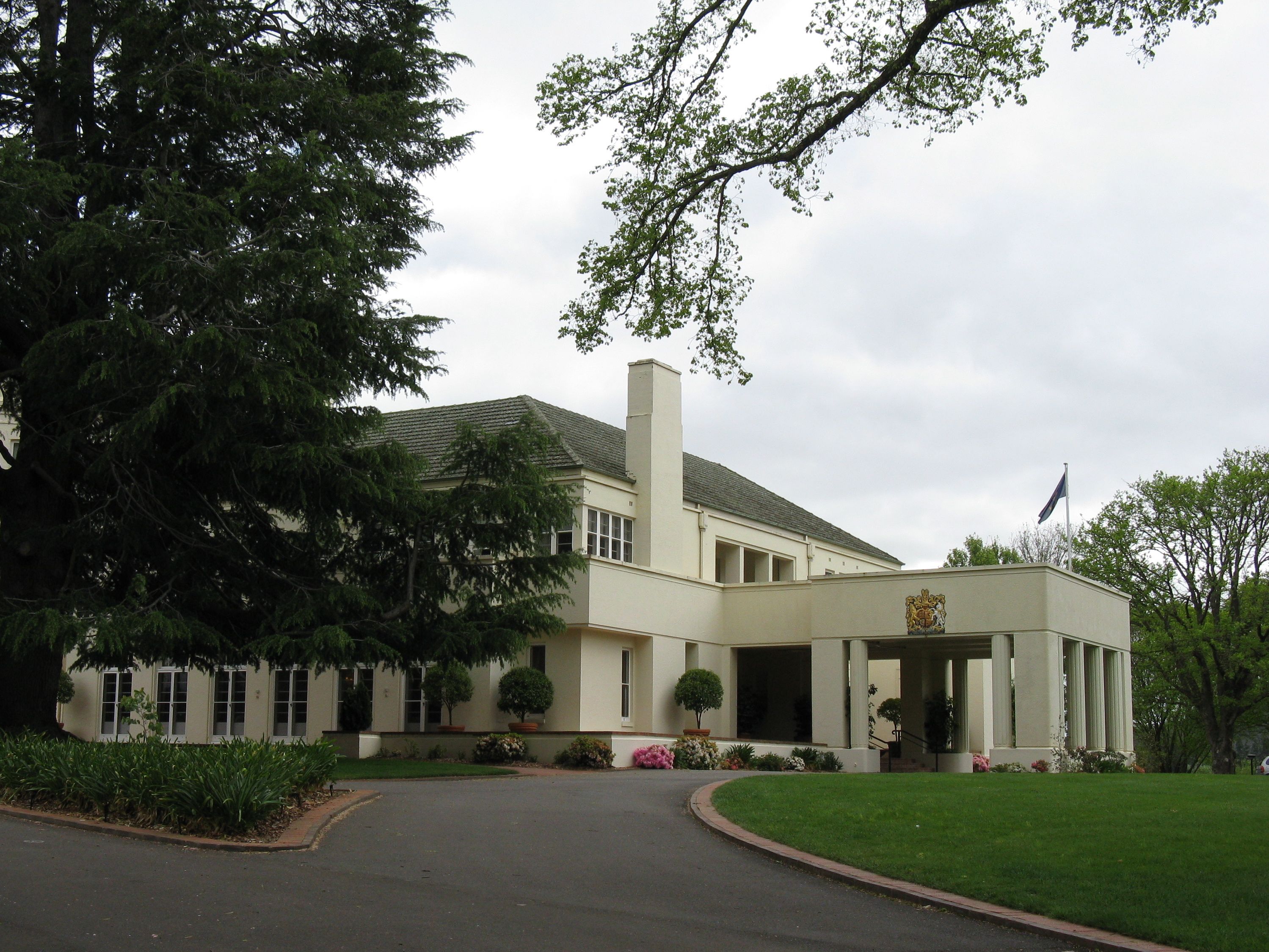
Himalayan Cedar (Deodar cedrus)

Himalayan Cedar (left), Government House, Canberra. (If I’d known I was going to write about it I would have featured it more!)

This tree was 5 years old, when it arrived in Australia, from Britain, in 1837 and was planted on what was then a sheep station called Yarralumla (now the name of its suburb). It is HUGE and one limb is now supported by a steel cable, but it is still surviving and, Allen says, could live another 100 years. When I did a tour of the garden last year, the gardener told us that they are propagating from it: it is clearly of good stock, and propagating it will ensure that it continues to be part of the Government House landscape when it does finally die.

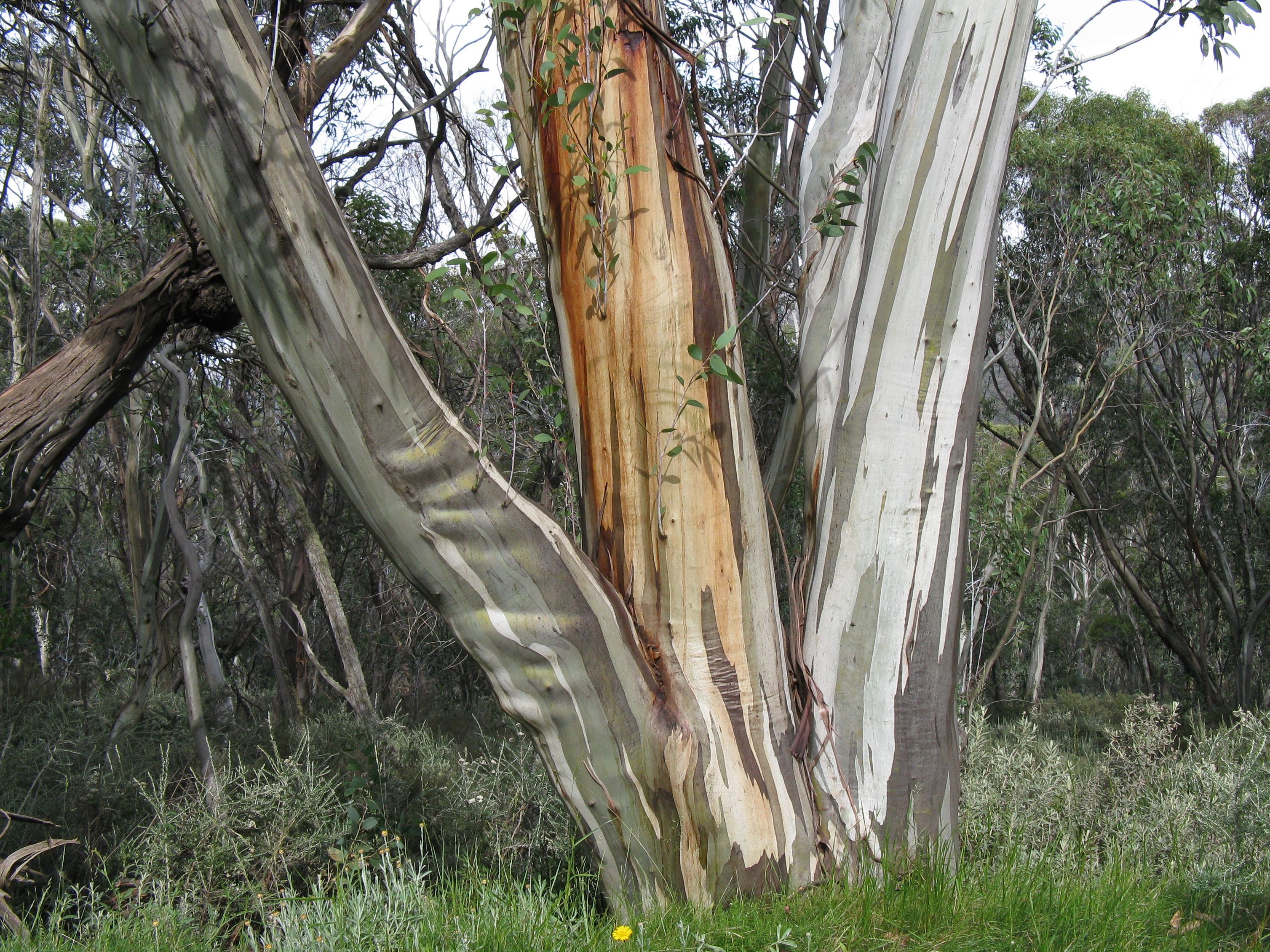
Snow gum (Eucalyptus pauciflora)

Snow gum on Merritt’s Traverse, Kosciuszko National Park, Thredbo

Among the gums featured is one of my favourites, the Snow Gum (Eucalyptus pauciflora). The one chosen for the book is from the Bogong High Plains in Victoria. It has the tortured, twisted formation typical of those that live in high altitudes. And, like my younger less tortured one here, it also has the gorgeous multicoloured ribbon marking that is characteristic of these trees.

These are just two of the trees presented in this book. There are many more gums (and other natives) and more exotics, there are the giants (such as Western Australia’s Karri) and the strange ones (like the Boab and the Banyan Fig), and of course there is the famous, recently discovered (1994) “living fossil”, Wollemi Pine (Wollemia nobilis).

This book has a lot to offer if you are interested in trees – for themselves, and for how they relate to landscape and our sense of place – and if you believe passionately, as the authors do, that preserving them is key to our future. John Muir would be proud. But again, strangely, the book ends not with an Australian reference but a quote from American architect, Frank Lloyd Wright, who apparently said “The best friend on Earth of man is the tree”. I think, though, that I will end with something a little more mystical. It’s from “Scribbly Gum”, by Judith Wright:

The gum-tree stands by the spring.
I peeled its splitting bark
and found the written track
of a life I could not read.

Richard Allen and Kimbal Baker
Australia’s remarkable trees
Carlton: The Miegunyah Press, 2009
254pp.
ISBN: 9780522856699

Geoff Page, The scarring

Geoff Page (born 1940) is a Canberra-based poet who has been active in the Australian poetry scene for many decades now. He was also, for nearly three decades, an English teacher. Page has published several volumes of poetry and at least three verse novels, of which The scarring is his first.

The scarring, which I read a few years ago but have been wanting to review here, is, I have to say, one of the most gut-wrenching works I have read. Page has set it in the landscape – rural northern New South Wales – of his childhood and says it was inspired by rumours he heard as a child (but it is not a “true” story). The story spans around seven decades from the 1910s to the 1980s, and chronicles the lives of a couple from their youth and courtship through to old age. As the blurb on the back cover says, “their separation through war sows the seeds of their eventual destruction”.

One of the things I love about the book is the way Page weaves so much of the social and political history of twentieth century Australia through the lives of this couple – war, the Great Depression, the boom of the 1950s, city versus country life and values, and of course gender inequity and the old double standard! The scene is set from the first line:

Breed em tough, the old man says.

Little do we know what lies beneath this seemingly innocuous opening – and I’m not about to give it away to you now. Let’s just say that Page deftly weaves the breeding motif through his tale of a young couple running a cattle property.

Here is an example of how history is told alongside life on the farm:

the new white stiffness of the sheets
where Sally will be his forever

‘Forever’ moves on two years more.
The set of skills they share between them
shoves them sideways from the news:
Sudetenland, then through to Munich,
Kristallnacht and into Prague.
It rattles in through bakelite
and once or twice on Cinesound
showing at the flicks in town,
that lifted arm and square moustache
relishing a massed salute.

And so the story moves on to its more or less inevitable – given the events that occur – conclusion. This is not flowery poetry. Page tends more to a spare style that is well suited to his setting and subject.  The poetry’s insistent rhythm draws you on, and Page’s use of repetition slowly but subtly builds up the tension. This is a novel that you’ll want to read in one sitting.

Page is, I think, a little too unsung … but then, isn’t that the case with most poets?

Geoff Page
The scarring
Alexandria: Hale & Iremonger, 1999
111pp.
ISBN: 0868066826