NSW Premier’s Literary Awards 2019 Winners; and Vale Les Murray AO (1939-2019)

I decided to replace today’s Monday Musings with an awards announcement, because the NSW Premier’s Literary Awards were being announced tonight, and they comprise a swag of prizes, many being of particular interest to me. But, then I was shocked to hear that Australian poet Les Murray had died, and I couldn’t let that pass either, so you have a double-barrelled post tonight!

NSW Premier’s Literary Awards

I will only report on a selection of the winners, but here is a link to the full suite. And, if you are interested to know who the judges were, they are all listed on the award’s webpage.

Michelle de Kretser, The life to comeBook of the Year: Billy Griffiths’ Deep time dreaming: Uncovering ancient Australia

The Christina Stead Prize for Fiction: Michelle de Kretser’s The life to come (my review).

People’s Choice Award for Fiction: Trent Dalton’s Boy swallows universe (my review)

The Douglas Stewart prize for Non-Fiction: shared between Billy Griffiths’ Deep time dreaming: Uncovering ancient Australia and Sarah Krasnostein’s The trauma cleaner (my review)
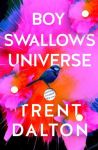
Trent Dalton, Boy swallows universeThe UTS Glenda Adams Prize for New Writing Trent Dalton’s Boy swallows universe (my review). I love that in his thank you speech, he spoke about the time he spent with Les Murray in 2014. Murray, he said, shared his poem Home Suite, telling Dalton not to be afraid to go home. Going home, he said, is exactly which he did in his novel.

Multicultural NSW Award: Michael Mohammed Ahmad’s The Lebs.

Translator’s Prize (presented every two years, and about which I posted recently): Alison Entrekin.
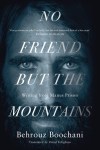
Behrouz Boochani, No friend but the mountainsSpecial Award: Bherouz Boochani’s No friend but the mountains (translated by Omid Tofighian). This award is not made every year, and is often made to a person, but this year it went to a work “that is not readily covered by the existing Awards categories”. The judges stated that it

demonstrates the power of literature in the face of tremendous adversity. It adds a vital voice to Australian social and political consciousness, and deserves to be recognised for its contribution to Australian cultural life.

Some of you may remember that I recently wrote about taking part in a reading marathon of this book.

Congratulations to all the winners – and their publishers – not to mention the short- and long-listees. We readers love that you are out there writing away, and sharing your hearts and thoughts with us. Keep it up!

Vale Les Murray

As I said in my intro to this post, I was shocked to hear this evening that one of Australia’s greatest contemporary poets, Les Murray, aka the “Bard of Bunyah”, had died. He was only 80.

His agent of 30 years, Margaret Connolly, confirmed the news, saying that

The body of work that he’s left is just one of the great glories of Australian writing.
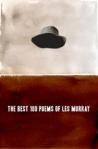
Les Murray, Best 100 poemsI don’t think that’s an exaggeration.

Black Inc, released a statement saying

Les was frequently hilarious and always his own man.

We mourn his bundles of creativity, as well as his original vision – he would talk with anyone, was endlessly curious and a figure of immense integrity and intelligence.

Although I don’t write a lot about poetry, Les Murray has appeared in this blog before, most particularly when Mr Gums and I attended a poetry reading featuring him. What a thrill that was. He was 75 years old then, and the suggestion was that these readings were probably coming to an end due to his health. I have just two of his around 30 volumes of poetry – The best 100 poems of Les Murray and an author-signed edition of Selected poems, both published by Black Inc – and dip into them every now and then.

His poetry was diverse in form, tone, subject-matter. He could be serious, fun, obscure, accessible. You name it, he wrote it. He was often controversial, being, as Black Inc said, “his own man”! In other words, he was hard to pin down, not easy to put in any box. David Malouf, interviewed for tonight’s news, said that he could be “funny”, he could be “harsh”, but that he said things “we needed to hear”. And that, wouldn’t you say, is the role of a poet, particularly one considered by some to be a candidate for the Nobel Prize for Literature?

If you would like to find out more about him, do check out his website, and if you’d like to read some of his poetry (though it would be better to buy a book!), you can check out the Australian Poetry Library. Lisa ANZLitLovers) has also written a post marking his death.

Meanwhile, I’m going to close with the last lines of a poem called “The dark” in his Selected poems (which he chose in 2017 as his “most successfully realised poems”):

… Dark is like that: all productions.
Almost nothing there is caused, or has results. Dark is all one interior
permitting only inner life. Concealing what will seize it.

Seems appropriate for today.
Vale Andrew McGahan (1966-2019)

My reading group was only talking about Andrew McGahan (1966-2019) this week. We knew he was terminally ill, but little did we know that his end was so near. How very sad, then, to hear today that he died just yesterday, at only 52 years of age.

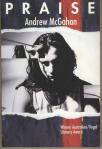
Andrew McGahan, Praise, Allen and UnwinNow, I know that Lisa (ANZLitLovers) has written a tribute but I do want to write one too, because he’s an author who made an impression on me. After all, he introduced me to a genre that would not be my natural calling – grunge lit (or, perhaps more “formally” known as dirty realism!) I enjoyed it. Well, I appreciated his books anyhow. I read both Praise (1992) and 1988 (1995), back in the mid-1990s, which was long before blogging. I wrote to my Californian friend in 1995 – my letters to her are a useful resource sometimes – that I found 1988 “interesting reading” even if I found the 21-year-old protagonist “frustrating in his inability to take hold of his life”. Frustrating perhaps, but the vivid sense of hopelessness and helplessness that McGahan conveyed in these books has stayed with me, which says something about his writing. (It helped too that the protagonist’s girlfriend in Praise suffered from eczema. There’s something validating, as many of you know, in reading about a character whose challenges are yours!)

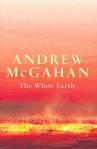
Andrew McGahan, The white earthAnyhow, I went on to read his very different novel, The white earth (2004), a rather ambitious multi-generation book about indigenous and non-indigenous Australian love of land/country. It was inspired by the 1992 native title legislation and the conflicting attitudes towards it. It was controversial in some quarters. I liked it. In my letter to my Californian friend, I did say it was a little “clumsy” and used some fairly conventional images and symbolism, but again, over time, it’s a book whose “message”, whose heart really, has stayed with me, while other books I read back then haven’t.

I haven’t read any other of McGahan’s novels. though he wrote three more, Last drinks (2000), Underground (2007) and Wonders of a godless world (2009). According to Wikipedia, he also wrote young adult novels, a play and the screenplay for the film of Praise. The reason he came up at my reading group earlier this week was because one of our members – a recently retired rep for McGahan’s publisher Allen & Unwin – was reading Last drinks. It’s about police corruption in Queensland, and she was wondering if Trent Dalton’s Boy swallows universe was going to visit similar ground. It doesn’t – but she did tell us that McGahan was taking his diagnosis philosophically and was continuing to work on his new novel. It will be published later this year.

The wonderful thing about McGahan was his versatility, having tried his hand at several genres and forms. He didn’t do a bad job at them either, as the following awards for literary, crime, science fiction and children’s fiction reveal:

  • Praise: the Australian/Vogel Award (for an unpublished manuscript by a writer under 35 years of age); the Commonwealth Writers Prize for First Novel (Southeast Asia and South Pacific Region)
  • Praise (screenplay): AFI Award for Best Adapted Screenplay; the Queensland Premier’s Award for Best Drama Script.
  • Last drinks: Ned Kelly Award for Crime Writing for Best First Novel. (That must mean best first crime novel?)
  • The white earth: Miles Franklin Award; Commonwealth Writers Prize Southeast Asia and South Pacific Region; Age Book of the Year; Courier Mail Book of the Year.
  • Wonders of a godless world: Aurealis Award for Best Science Fiction Novel.
  • The coming of the whirlpool: CBCA (Children’s Book Council of Australia) Book of the Year.

For a lovely insight into who McGahan was, albeit from 2004 when The white earth came out, check out this article with him in The Age. The Guardian Australia’s announcement of his death and tribute is also worth reading.

I am very sorry to hear that he has died, and pass my sympathy to his family, friends and colleagues. Fifty-two is just too young to die. He may not have been, for me, the “perfect” writer, but he made a lasting impression on me, so much so that those three books I’ve read frequently come to mind. In the end, what writer could ask for more? (Except for some more years, perhaps!)

Monday musings on Australian literature: Eleanor Witcombe

Eleanor Witcombe

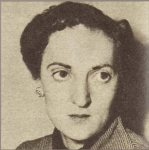
Eleanor Witcombe, 1950 from Australian Women’s Weekly (Presumed Public Domain)

Eleanor Witcombe, who died in October at the venerable age of 95, is not exactly a household name in Australia – but some of her work is, because she’s associated with the renaissance of Australian film in the late 1970s. She wrote the screenplays for The getting of wisdom and My brilliant careerHowever, her writing career long preceded that work.

Growing up

Eleanor Witcombe, then, was a playwright and screenwriter. She was born in 1923 in Yorketown, South Australia, where she went to Yorketown Higher Primary School until 1939 when her family moved to Brisbane. There she attended Brisbane Girls’ Grammar School. I was entertained to find, via Trove, all sorts of references to her schooldays because in those days, particularly in country towns, the papers reported on school doings. Yorketown’s The Pioneer regularly included “Honor Lists” in which the young Eleanor would appear, such as in 1931 for “Arithmetic” and “Mental”, or, in 1935, as winning a prize for “Schoolwork” in the Yorketown Show. In 1932 the paper reported on the formation of Yorketown’s first Brownie pack, and listed Eleanor and her sister among its first members, and in 1938, it reported that she had earned Honours in her Grade VI Music Theory exam. She was clearly a diligent girl …

… and she liked writing. The Sydney Morning Herald, in its obituary, says that her English teachers at Brisbane Grammar School encouraged her talent. She wrote her first play, “Omlet”, a skit on Shakespeare’s Hamlet, for a school concert.

Early working years

In 1941, the family moved to Sydney, and by mid-20s, she was living in Cremorne, Sydney. She went to art school where she knew Margaret Olley (also born in 1923.) This connection also popped up in Trove, this time in The Daily Telegraph of 23 January 1949 which reports on William Dobell controversially winning the Archibald Prize with his portrait of Olley. The report writes that of the 50 people viewing the portrait only two recognised “buxom, attractive 25-year-old Miss Olley”, and one of these was Witcombe. The report continues that:

Miss Witcombe attended East Sydney Technical College art school with Miss Olley. She said: “From some angles the portrait resembles Margaret. “There is a certain something about the whole thing that is Margaret. “I think it is glorious. I think it glows. It jumps out of the wall and really gets you. “But no one who does not ‘know’ Margaret would recognise it as a portrait of her.”

However, by this time, Witcombe had moved from art to writing and the theatre. In 1945, her short story “The Knife” was one of 43 out of over 2000 entries chosen for publication by the Sunday Telegraph in its short story competition, though I suspect she wasn’t among the final winners. Her story is available on-line.

It was drama though that captured her interest. Her biography at AustLit records that she enrolled in Peter Finch’s Mercury Theatre School, and that between 1948 and 1950 she was commissioned by the Mosman Children’s Theatre Club to write three plays for children: Pirates at the BarnThe Bushranger, and Smugglers Beware. Searches on Trove find many, many references to these plays – over a long period of time, and in England as well as Australia. According to AustLit, Smugglers, Beware became the first Australian children’s play professionally produced in London.

In 1950, The Australian Women’s Weekly included her in an article on Interesting People. She was 27, and had written and had performed those three children’s plays. The article concludes with

Miss Witcombe has been writing plays since she was seven, likes action and says “fairies are only for adults.”

Throughout the early 1950s, she appears frequently in the newspapers, with her plays being performed all over Australia – in remote places like Bourke as well as the cities. She started writing for radio, and talks in interviews about original versus adapted works.

However, she also spent part of the 1950s abroad, going to London in 1952 where she worked and studied for 5 years, not returning to Sydney until 1957.

Television years, and beyond

On her return, she wrote for the ABC and commercial radio – including many one-hour drama adaptations of plays, books, and stories – as well as for the theatre. She initiated the Australian Theatre for Young People in 1963, and was a foundation member, in 1962, of the Australian Writers Guild. We have a picture, in fact, of an active successful writer – of both original and adapted works.

When television appeared on the scene, Witcombe turned her hand to that medium too, writing for sketch comedy series The Mavis Bramston Show and, for three years, for the television soap opera Number 96, both of which, for different reasons, are important parts of Australian television history. She adapted children’s novels for television: Pastures of the blue crane (1969), which is one of the first miniseries I recollect seeing, and Seven little Australians (1973).

And, just to show her complete versatility, she adapted Norman Lindsay’s The magic pudding for the Marionette Theatre of Australia, a show that was performed at Expo 70 in Japan. When this show was revised in 1980 for new puppets, the Australian Women’s Weekly reported that

The script for the new production is by screen writer Eleanor Witcombe. Richard [the Theatre’s artistic director Richard Bradshaw] believes she’s the best.

“Eleanor used great huge chunks of the original book but we had to develop Pudding’s part. Her additional dialogue is perfectly in character.”

Meanwhile, of course, there were those films, The getting of wisdom (1977) and My brilliant career (1979). Both were adaptations of Australian classics, and both earned Witcombe AFI Awards for Best Adapted Screenplay.

I found a lot more in my research that I’d love to share, but will just tell this, before concluding. Around 1976, Witcombe was invited by Sir Robert Helpmann to research Daisy Bates for a film in which Katharine Hepburn wanted to star! Who knew! It was Witcombe, apparently, who uncovered that Bates had once been married to “Breaker” Morant.

After her death, the National Film and Sound Archive posted an excerpt from a 1998 oral history interview with her by Stuart Glover. In the excerpt she discusses writing adaptations, and the need to find the wood amongst the trees, the essence of the story. The excerpt ends with Glover suggesting she’d had a good career and asking her whether she’d enjoyed it. She replied:

No, I’m disappointed in myself. Because I don’t think I’ve – I haven’t adapted myself well. [Laughs] I haven’t found my centre enough and quickly and solidly and surely enough, to be able to go for that centre, y’know? I haven’t looked at me like a book and said, ‘This is what this book is about, and that is where the centre is.’

Sounds to me like an artist – never happy with her work – because, if you ask me, she had a brilliant career.

Have you heard of Eleanor Witcombe, or seen any of her plays or films?

Vale Jill Ker Conway

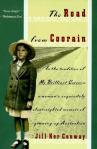
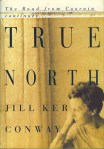
Jill Ker Conway, The road from CoorainJust before Mr Gums and I set off for our Arnhem Land holiday in early July, I came across an obituary for the Australian-born academic, educator and writer Jill Ker Conway (1934-2018). She had died on June 1, but I hadn’t heard. Why not? Her first memoir, The road from Coorain, was a best-seller, and I think her second one, True north, was also well received. I’ve read, and enjoyed, them both, but long, long before blogging. Her final memoir, A woman’s education, a slimmer volume, is on my TBR.

Those who know Jill Ker Conway will know why her passing didn’t make big news here. It’s because she made her name in the USA … added to which she was a woman. Or, am I being too paranoid?

So, who was Jill Ker Conway? Well, for a start she was born on a sheep station her parents named Coorain (Aboriginal for “windy place”) in outback New South Wales. Although more often hot, dry and dusty than not, Ker Conway loved it, as she shares in her first memoir.

Now, though, I’ll quickly summarise her career. She was, says Wikipedia, “an Australian-American scholar and author”. She was “well-known” for her autobiographies/memoirs, particularly for The Road from Coorain, but she also made history by becoming the prestigious Smith College‘s first woman president (1975-1985). She made history, of course, because she was its first woman president, but it’s fascinating to me that she was also Australian. She was 40 when appointed to this role, and in her first year was named Time magazine’s “woman of the year”. That’s impressive.

She was, later, a visiting professor at the Massachusetts Institute of Technology. In 2004, she was named a Women’s History Month Honoree by the National Women’s History Project, and in 2013 she was awarded the National Humanities Medal by President Barack Obama. She was, in other words, a bit of a mover-and-shaker!

I have, though, exaggerated the lack of news of her death here. There were some reports, including two in The Sydney Morning Herald. To give you a sense of how she was viewed, here are some of the titles of her obituaries:

Did you notice the odd one out? Yes, the SMH Business section report which identifies her as “chairman and trailblazer”. Chairman? Apparently, in addition to being an educator, academic, author and historian, she was a “business woman”. She was, in fact, “the first female chairman of global property group, Lendlease”. The Sydney Morning Herald says of her business career:

Dr Conway served on the boards of businesses including Merrill Lynch, Nike, Colgate-Palmolive and Lendlease. She was also a former chairman of the American Antiquarian Society.

In 2000 she was appointed as chair of Lendlease at a time when the company needed a firm hand.

Interesting woman eh? For an excellent obituary, do read the SMH National Section one.

She was also one of that wave of Australian intellectuals who left our shores in the 1960s and never really returned, mostly because of the stultifying academic lives they found here. Others included Germaine Greer (1939-), Robert Hughes (1938-2012), Clive James (1939-), not to mention writers like Randolph Stow (1935-2010). They went to England, while Ker Conway made the USA her home.

Ker Conway chronicles exactly why she left Australia in her first two autobiographies/memoirs. It was because she was regularly overlooked for significant jobs – or any job – in favour of men, and because she could not find the sort of intellectual enquiry she sought. Here she is, near the end of The road from Coorain, describing Sydney’s academic circles around 1959, and the group she thought most interesting because they were “iconoclasts, cultural rebels, and radical critics of Australian society”:

When I rejected the inevitable sexual advances, I was looked at with pained tolerance, told to overcome my father fixation, and urged to become less bourgeois. It was a bore to have to spend my time with this group rebuffing people’s sexual propositions when what I really wanted to do was explore new ideas and to clarify my thoughts by explaining them to others. I didn’t know then that I was encountering the standard Australian left view of women, but I could see that the so-called sexual revolution had asymmetrical results.

By the end of True north, she had her Harvard degree in history, and was living with her husband in Toronto when the Smith College job came up. She writes:

I’d been pushed out of Australia by family circumstances [all chronicled in the first memoir], the experience of discrimination, frustration with the culture I was born in. Nothing was pushing me out of this wonderful setting but a cause, and the hope to serve it.

Jill Ker ConwayAnd what was that cause? Well, as she also writes in True north, her main consideration when choosing whether or not to accept Smith College’s offer was “where my work would have the greatest impact on women’s education”. That “impact”, she explains, was not just about numbers. It was about proving that a woman’s institution was not only valid but valid and relevant in a modern world, and about the potential for making it “an intellectual centre for research on women’s lives and women’s issues, research that could have influence far beyond Smith’s lyrical New England campus”. She was there for 10 years, and made her mark.

Ker Conway was, then, a significant woman whose achievements I’ve only touched on. Check the Wikipedia article linked above for more, including a list of her books. Meanwhile, I’m ending with her final words in The road from Coorain, as she’s departing Australia:

Where I wondered would by bones come to rest? It pained me to think of them not fertilising Australian soil. Then I comforted myself with the notion that wherever on the earth was my final resting place, my body would return to the restless red dust of the western plains. I could see how it would blow about and get in people’s eyes, and I was content with that.

The Sydney Morning Herald’s (National section) obituary concludes:

Her love for her two worlds was reflected in her final wishes. Half her ashes will rest in a small private cemetery with John’s, near their beloved house and garden in Massachusetts. The other half are to be scattered by the big tree beside the roadway into the house at Coorain.

How good is that?

Vale Anne Deveson (1930-2016) and Georgia Blain (1964-2016)

Anne Deveson 2013

Anne Deveson, 2013 (Photo: Courtesy Mosman Library, using CC BY 2.0, via Wikimedia Commons)

If you are a person of a certain age in Australia you will know Anne Deveson. She was a radio broadcaster first, then filmmaker, activist and writer. Her death this week after suffering for some years with Alzheimer’s Disease is the saddest thing. She was 86, but sadder still is that just three days before she died, her daughter, novelist Georgia Blain, died of brain cancer, aged 52. We knew it was coming, she’d written about it, but she ended up with less time than the general prognosis she’d been given. These are big losses.

I’m going to focus here on Anne Deveson, partly because Lisa (ANZLitLovers) has written on Georgia Blain and partly because I so admired Deveson. She was one of those people you could rely on to be honest but warm, to fight for the people who needed fighting for – though her own life was not an easy one.

She popped up in the most interesting places, including, controversially, advertisements for Omo laundry powder in the 1970s!

http://www.youtube.com/watch?v=PyuVbed5E9E

We all knew her face from these ads – I wonder why she did them? Money, I suppose, but we soon came to realise that social justice and the well-being of humans were her real passions. She was a member of the inspiringly conceived (by one of our most visionary prime ministers, Gough Whitlam) Royal Commission on Human Relationships, from 1974 to 1977. This Commission was charged with gathering “a wide range of information about the private lives of Australians in order to better inform public and social policy”. An obituary for Deveson in the Sydney Morning Herald described the Commission as being instrumental in areas like “the legalisation of homosexuality, the decriminalisation of abortion and the establishment of women’s refuges”.

I became aware of her, though, through other means, such as discovering her work in film when I was working as a film librarian. The main films I remember were Who Killed Jenny Langby? , a 1974 docudrama about a woman/mother/wife who commits suicide; Do I Have to Kill My Child?, a 1976 documentary about child abuse and desperate mothers who need help; and then  Spinning Out, her 1991 documentary about schizophrenia. You are probably getting a sense now of where her heart was.

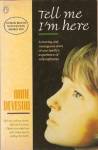
Anne Deveson, Tell me I'm hereAnd then there were her books. Her memoir, Tell Me I’m Here (1991), about life with her schizophrenic son, was the first book I read with my reading group upon my return from a posting in the USA. It is imprinted on my mind – and not just because it was so lovely to be back with my reading group! It’s, dare I be clichéd, a raw book. We need people like Deveson who are prepared to not sugarcoat the darker sides of human experience. She speaks of the love, the desperation to find a solution, but also of the shame, the violence and the fear. Best, I think, if I share an excerpt with you, from the first page I randomly opened today:

10 November. Georgia [Blain, of course] was to have her first exam, English, the following day. English was her best subject and she was expected to do extremely well; she had studied hard against big odds. Poor child, I thought as I looked at her taut face.

We went to bed early. At about ten thirty I heard a banging sound downstairs. Jonathan had forced himself in through the cellar door and was climbing the stairs. I sat bolt upright. At all costs he must not wake Georgia. I put on a dressing gown and ran downstairs. Keep calm. Make some tea. ‘No thank you,’ he said, he didn’t want any tea. His eyes followed me as I moved around the room, and even now as I write this I feel you might be thinking I am being melodramatic. But madness is sometimes the stuff of melodrama, and if you don’t take it seriously it can become tragedy. Jonathan had one of the kitchen knives in his hands and he waved it at me and ordered me to sit down …

And so she continues to describe the horror – his terrible appearance “three safety pins dangling from one ear” and wearing jeans that were “dirty, tattered and at half mast”,  as he continued to wave the knife and threatening “I’m going to get you before you get me”. She manages to give him tea and cake, and says she’s going to let the dog out. She goes to the GP who lives up the road, but whom she doesn’t know, to ask his help to get Jonathan to hospital. The GP clearly doesn’t want to get involved, but does come back with her. Deveson continues:

I introduced him to Jonathan and told Jonathan I thought he needed to go to hospital.

‘No sir, no sir, I am not sick,’ Jonathan said in a whining voice. He continued to spin the knife. ‘My mother only thinks I am sick and she’s got the army trained against me.’

Dr W said he couldn’t see any army and suggested that Jonathan might feel safer in hospital.

Jonathan disagreed, ‘I’ve got the PLO on my side.’

At this point the doctor draws Deveson into the hallway and tells her, confidentially, tgat she has a “dangerous young man there”! Deveson, relieved, assumes this means he’ll help get Jonathan to hospital. What does Dr W say but “He doesn’t want to go.” Helpful, huh? After further discussion, the doctor decides to call the police:

Dr W looked relieved and rang the police. He said that I seemed to be an educated sort of woman, even though he didn’t know me. What was the implication from this? Ignore all women if they don’t have an education?

Ckear-eyed about the bigger picture, while describing an intensely personal experience. The book won the Human Rights Non-fiction Award in 1991, just one of several awards Deveson won over the years for services to media and the community. She wrote other books too, including Coming of age: Twenty-one interviews about growing older (1994) and Resilience (2003). Both of these, as was her wont, blended the personal with the political, with the social implications. She was a tenacious and influential Australian about whom we can truly say she left the world a better place.

The tributes have started appearing, including one from Wendy McCarthy, ten years Deveson’s junior and for whom Deveson had been an early role model. There will be many more over the coming days, so I’m going to leave it here, having paid my little tribute to a woman I admired. Vale Anne Deveson – and vale, too, Georgia Blain. Brave women both.

Monday musings on Australian literature: Inga Clendinnen

I cannot let this week pass without adding my voice to the tributes made by my blogger friends to anthropologist-historian Inga Clendinnen (1934-2016), who died last week at the too-young age of 82. It seemed fitting to delay my tribute for a couple of days to make her a Monday Musings topic. Clendinnen deserves no less (says she, applying a gravitas to her Monday Musings that they don’t really warrant!)

Now, I wonder how many of my non-Australian readers have heard of or know much about this rather significant Australian public intellectual? Clendinnen’s first area of speciality – and the subject of her first two books – was the Aztec civilisation. I haven’t read those books. She then wrote another which is on my TBR, Reading the Holocaust (1998). Her next was the first I read, her memoir Tiger’s eye (2000). Critic Morag Fraser described it as follows (the back blurb):

This is a rare book … it is memoir, history, fiction, a documenting of filial gratitude and ingratitude, and a record of the cauldron of a near-fatal illness, all bundled coherently – that’s the miracle – between covers.

The book was inspired by her experience with liver disease (and her ensuing transplant) … but this disease in turn inspired her to contemplate all sorts of things about life – hers and life in general – about the things that interest her, like writing, for a start, and of course about the experience of being seriously ill. (Oh dear, I’ve always wanted to reread this, and am now becoming distracted from the task at hand by dipping into it!) She talks about how writing is her way of understanding herself. Much of what she says is thoughtful, serious, philosophical, but there are also light touches:

Meanwhile, I wrote. I was in a big mixed ward and discovered when I pulled out my writing pad that in such a ward writing is ‘letter-writing’, and therefore a collective activity. Topics and items of local interest were offered by patients and by nursing staff. If I said, defensively, that I was writing stories, passing strangers–chaplains, orderlies, tea-ladies–would stop to empty a bucket of tales about their dogs or their ex-wives over me, or would say that they are writers too, or would be when they could get around to it. When they weren’t too busy living.

I love how she captures that special world that is the hospital.

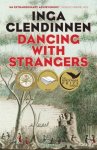
Inga Clendinnen, Dancing with strangersAnyhow, moving on. The book that really brought her to wider attention in Australia was her multi-award-winning book, Dancing with strangers (2003). In her Introduction she describes it as “a telling of the story when a thousand British men and women, some of them convicts and some of them free, made a settlement on the east coast of Australia … and how they fared with the people they found there.” “A” telling, she writes. I like that. She also explains how she aimed to apply the disciplines of history (which can be “culture-insensitive”) and anthropology (which can be insensitive to “temporal change”) to an analysis of episodes recorded in primary resources in order to understand better what people did and why they did it. In other words, she teases out possible cultural assumptions, expectations, and, even, aspirations which might have underpinned the behaviours and events that have too often been simplified in the historical record we all know.

So, in this history, we have Clendinnen, our historian, saying things like “I think Baneelon believed he had fully instructed Phillip as to what was in store for him”, and

There is another possibility in this hall-of-mirrors world: that Barangaroo’s funeral rites were muted not because of Barangaroo’s social isolation, but because of Baleen’s ongoing ambition to impress the British, in this case with the reverent sedateness of his mourning. After all, he has watched enough British burials.

She concludes by arguing, logically it seems to me, that “to understand history we have to get inside episodes, which means setting ourselves to understand our subjects’ changing motivations and moods in their changing contexts, and to tracing the devious routes by which knowledge was acquired, understood and acted upon.” This is the sort of history I enjoy reading …

Every time, in fact, that I read Clendinnen on history I am mystified all over again about her strong criticism of Kate Grenville’s comments regarding The secret river. I keep thinking I’m missing something. In Dancing with strangers Clendinnen uses her knowledge of culture and human beings to fill gaps or find different explanations for how people behaved which is, in a different but to me related way, what “literary” historical novelists do. We could get caught up in semantics here, in arguing exceptions and rules, and so on, but my feeling (with no evidence I admit) is that Grenville’s over-exuberant-at-the-time way of explaining what she was doing “got up Clendinnen’s nose”. I read (and enjoyed) Clendinnen’s Quarterly Essay on “The history question: Who owns the past (QE23)” (2006) and the section in which she discusses novelists and historians is replete with my marginalia! I’ll leave it there!

Finally, the last book of hers that I’ve read is her essay collection, Agamemnon’s kiss (2006). One of the dedicatees is “my unknown [liver] donor, April 1994”. Not surprisingly, the collection includes essays on health, life and death. It also includes writings on reading fiction, writing history, the history wars, the Holocaust. And she writes about other writers, such as Hilary Mantel and Penelope Fitzgerald. In the last titular essay, she writes (yet again) about reading and writing. I’ll end with something that I think we’d all agree with:

Rewarding reading is like being luxuriously absorbed in intimate conversation with a person not previously known, but whose words somehow interweave with the lonely interior monologue we conduct inside our heads. In real life we might encounter such a conversation in five, ten or twenty years, or possibly not at all. In a world of libraries and bookshops it is forever at our fingertips …

Vale Inga Clendinnen. Thank you for all your wonderful books, and for the intimate conversations we can now, because of them, continue to have with you.

For tributes from other bloggers, please see

  • Michelle’s of Adventures in biography (who brought Clendinnen’s death to my attention last week)
  • Lisa’s of ANZLitLovers
  • Janine’s of the Resident Judge of Port Phillip

Vale Pete Seeger

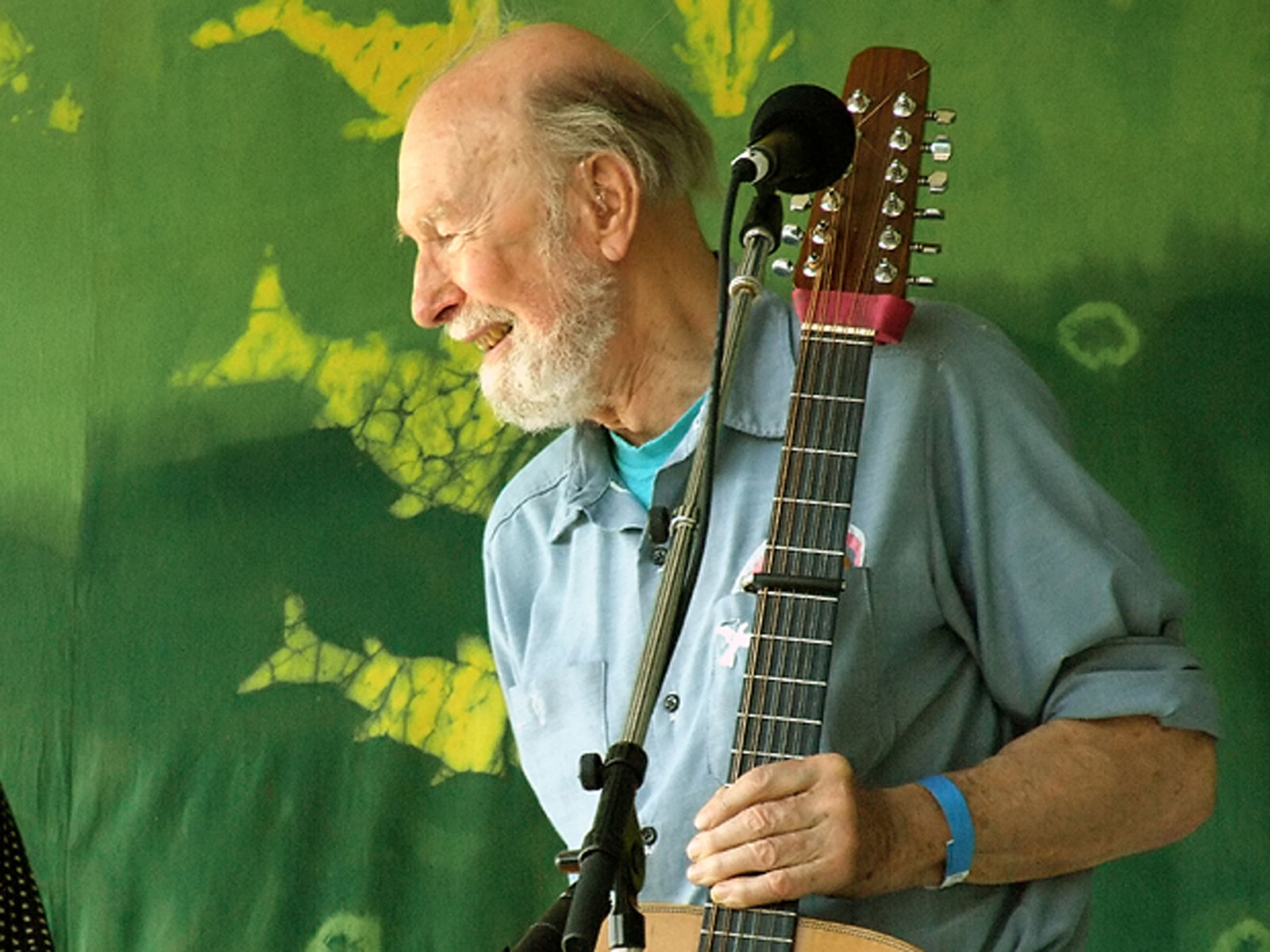
Pete Seeger, 2007 (Photo: Anthony Pepitone, using CC-BY-SA 3.0, via Wikipedia)

Pete Seeger, 2007 (Photo: Anthony Pepitone, using CC-BY-SA 3.0, via Wikipedia)

If music is powerful, and words are powerful, what power can words set to music have? Pete Seeger knew, but I don’t need to tell anyone that do I? What a legacy he has left us from his 94 years on this earth!

I’m an Australian of course, but Seeger, who first came to me through Peter, Paul and Mary singing “If I had a hammer”,  introduced me to folk music, or, more specifically, to folk music as protest. Later, I got to hear Peter himself – not live, unfortunately – and others like Joan Baez, Judy Collins who sang Seeger’s songs, and were inspired by him.

Anyhow, in memory of Seeger, I thought I’d share my favourite memories:

  • singing “If I had a hammer”, “This land is your land”, and “Where have all the flowers gone”, with such feeling, in my youth;
  • choosing Ecclesiastes 3:1-8 as the bible reading at our wedding because I loved the song “Turn! Turn! Turn!“;
  • falling in love with The Weavers whose heyday was a little before my time when I saw the 1982 documentary The Weavers: Wasn’t That a Time (and then buying the CD);
  • being surprised every time I discover that yet another song I love was either written by Seeger (including those named here) or popularised by him (such as Malvina Reynolds’ “Little boxes” and the traditional hymn “We shall overcome”).

The LA Times obituary quotes Bruce Springsteen as saying that Seeger was:

a living archive of America’s music and conscience, a testament to the power of song and culture to nudge history along, to push American events towards a more humane and justified end.

Seeger himself is quoted as saying “My religion is that the world will not survive without dialogue”. I’m no Seeger expert, but everything I’ve ever heard about the man has either inspired me or made me feel good.  So, vale to Pete. His influence may have been greatest in the USA, but it sure was nice knowing he was around, singing his heart out and doing his best to make the world a better place to live in. Thank goodness we still have the songs.

Vale Jeffrey Smart

There is a logic for writing a brief post on the death of an artist on my litblog …

For those of you who haven’t heard, the Australian artist Jeffrey Smart died today in Italy (20 June in the Northern Hemisphere), at the age of 91. He painted in a style described as Precisionism – and I wish I could include a couple of images here to show you, but of course they are still in copyright. A Google Images search on his name will, though, quickly introduce you to his work. His subject matter was urban – stark, often focusing on the industrial. Warehouses, roads, factories, high-rises – with nothing natural to soften them. There are often figures, but while they are to scale they tend to be overwhelmed by what’s around them. The figures are rarely personalised. The paintings are clean, geometric, stark and often bright in colour. They feel surreal.

I would call him spare (not minimalist which is something different). And regular readers here know I like spare. By spare in this context, I mean his art looks simple; your eyes can’t get lost – there’s nowhere for them to go. The shadows, any details, are up-front, in your face. And yet, there’s complexity – the meaning isn’t clear and we are forced to ponder what we think he is saying. I find his work beautiful but disturbing.

Given his style, I didn’t find it surprising that in an interview on ABC TV’s Talking Heads a few years ago, he said that he liked T.S. Eliot:

I was interested in poetry anyway. And the images were not about daffodils and roses in the spring, it was about vacant lots and suburban houses, slummy corridors – ordinary, ordinary things, made into great poetry. He was a brilliant man.

On tonight’s ABC TV report of his death, the newsreader quoted Smart as saying that he couldn’t use words so he articulated his ideas in art.

Smart was apparently a neighbour and good friend of Australian author David Malouf who also lived in Italy. Smart painted Malouf’s portrait but it’s not like any portrait of a writer I’ve ever seen – though it’s recognizably Malouf. You can see it on the ABC’s website.

These are a few reasons for writing about Smart on a litblog – but there’s another. And that’s the book of short stories, Expressway, which comprises “invitation stories by Australian writers from a painting by Jeffrey Smart hosted by Helen Daniel”. The painting is Cahill Expressway (1962) (image at NGV). The book was published by Penguin in 1989 and I read it with my reading group in 1990, too long ago now for me to write a review but not so long ago that I’ve forgotten it.

The book was the brainchild of Australian editor Helen Daniel. She chose the painting, and invited over 40 writers to write a short story in response. She ended up with 29 pieces from Australia’s established and emerging writers of the time. They include writers I’ve reviewed here such as Elizabeth Jolley, Kate Grenville, Barbara Hanrahan, David Malouf, Gerald Murnane, and Louis Nowra; those I’ve read before such as Glenda Adams, Peter Goldsworthy, Rodney Hall, and Janette Turner Hospital; and some I’ve still to read like David Foster, David Ireland and Finola Moorhead. It’s a gorgeous, special book that I have kept by my bedside for years.

I shall conclude with some lines from the wicked first story in the collection, “Art is dangerous. Not so?” by Morris Lurie. It’s about an art class:

‘So could we talk about, say, perhaps, what that certain something is, under the symbol, under the metaphor. Estrangement, someone said. Yes. Very good. Modern estrangement. Fine. So shall we, um, nudge that concept a little? Prod it? A poke? Zero in? Anyone? Too dangerous? Come on. Let’s be dangerous. Art is dangerous. Not so? Hmm.’

Here’s to dangerous art – and the artists who create it. Vale Jeffrey Smart!

Vale Rosemary Dobson (Australian poet)

Last time I wrote about poet Rosemary Dobson was in my post on Australian literary couples but my post today is a sadder one as Dobson died this week, just a week or so after her 92nd birthday. She had a long career as a poet, starting soon after World War 2. When she first came to recognition, winning awards in the 1940s, she was described as the granddaughter of English poet and essayist, Austin Dobson, who was well-known in his time.

Dobson moved to my city – well, she was here first, in fact – in 1971 when her husband Alec Bolton became the National Library of Australia’s first Director of Publications. I knew Alec, as his office was next to mine for a few years in the late 1970s. He was a charming, lovely man who, first as a hobby and then a retirement project, managed his own small press which printed, among other works, some of his wife’s poetry. It’s nicely fitting that the poem used in our newspaper’s front page article on her death is one she dedicated to him:

The kitchen vessels that sustained
Your printed books, my poems, our life,
Are fallen away. The words remain –
Not all – but those of style and worth.

(from “Divining Colander”)

The poem goes on to use the “colander” as a metaphor for sifting out the bad from the good.

Dobson was active in Canberra poetry circles and well-known to our poets, some of whom I’ve written about here, such as Geoff Page and Alan Gould. But, she was known more widely too, having won several significant literary (and other) awards, including:

  • Patrick White Award for Literature (1984)
  • Grace Leven Prize for Poetry (1984)
  • Order of Australia for Services to Literature (1987)
  • Australia Council’s Writers’ Emeritus Award (1996)
  • The Age Book of the Year Award for Untold lives (2001)
  • NSW Premier’s Special Award (2006)

In a review of a recently published collected edition of her work, titled, Collected, Australian writer David Malouf described her as “the last of a generation of Australian poets – Judith Wright, David Campbell, Gwen Harwood – who in the 1940s and ’50s remade Australian poetry, and then, by remaking themselves, helped remake it a second time in the ’70s.” He also refers to a poem of hers which appears in The Penguin Book of Australian Women Poets (1986) which I like to dip into every now and then. The poem is dedicated to Christina Stead, whom Dobson knew, and is about Stead’s dying:

I sit beside the bed where she lies dreaming
Of Pyrrhic victories and sharp words said

[…]

Suppose her smouldering thoughts break out in flame,
Not to consume bed, nightdress, flesh and hair
But the mind, the working and the making mind

That built these towers the world applauds

(from “The Nightmare”)

I reckon that effectively conveys Stead’s strength and feistiness – and Dobson’s affection and admiration for her. “The Nightmare” is one of five poems of hers, from her mid career I think, included in the anthology. They demonstrate some of Dobson’s variety, her seriousness and her humour, but there’s no way I can do justice to her career here, now. Before I conclude though, I must say that what I found interesting, when I researched her life a little a few years ago, was that she and poet David Campbell, also produced anthologies of Russian poetry that they had translated.

For a lovely, brief summary of her life and contribution to Australian poetry, check out the podcast from ABC Radio’s Books and Arts Daily.

Australian poetry will miss her …

Vale Sarah Watt

Non-Australians may not be aware of Sarah Watt, unless they are interested in Australian film. Sarah Watt is an animator-writer-photographer-film director who made a small number of well-reviewed films, one of which, My year without sex, I reviewed on this blog.

Sarah (aged 53) died on Friday from secondary bone cancer (diagnosed in 2009), having been originally diagnosed with breast cancer in 2005. Just before her first diagnosis, she made the award-winning film Look both ways (2005) which gorgeously incorporated animation into live action to tell a story about a man (played by her husband William McInnes) coping with a cancer diagnosis. It’s a clever, whimsical, sad (but prescient) film about ordinary lives in an ordinary suburb. Ten years earlier, she had made the film which brought her to public attention: a short animated film called Small treasures (1995) about the loss of a baby during birth, something Sarah and William experienced. It won a short film award at the Venice Film Festival in 1995 – and gave us a sense of what she was about.

In an interview some years ago Sarah wrote of her work, that

I probably make films that are autobiographical more because I think they make better stories because they’re real and therefore more likely to, sort of, touch other people and pull other people into the story and into the drama  … When I go and see films or look at paintings or whatever, I want to be moved and touched and, and usually it’s coming from something personal in the, in the artist, so, that’s why I probably raid my own life a bit to, to make films.

If you haven’t seen a Sarah Watt film, do yourself a favour and go hire one. I can’t imagine you’d be disappointed.

In a recent interview about their jointly written (amazingly titled) book Worse things happen at sea (2011), William paid tribute to Sarah and all those who struggle with cancer. They are, he said, the bravest people I know. I think he’s right.

Vale Sarah … we’ll miss your humour, humanity and beautiful work.