Monday musings on Australian literature: Vale Kerry Greenwood

I was sorry to hear a few days ago that the Australian writer Kerry Greenwood (1954-2025) had died on 26 March, at the too-young age of 70. Her death was only publicly announced week ago, which is fair enough. Families have a right to grieve their loved person in private if they so desire. It appears she had been seriously ill for some years, but was still writing to the end. Once a writer …
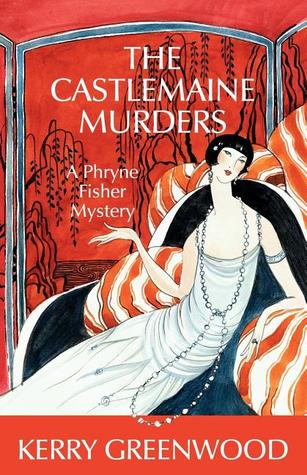
Kerry Greenwood, The Castlemaine murders

Greenwood has appeared a few times on my blog, but more in passing – such as being the inaugural winner of the Davitt Lifetime Achievement Award in 2013 – than as a featured author. This is because she mostly wrote in a genre I don’t tend to read, crime fiction. She is best known for her Phryne Fisher historical crime detective series, which was turned into a very successful television series, and a movie. I saw both the series and the film, which is how I consume most of my crime, rather than through reading.

She was, however, a prolific writer, as you can tell from her Wikipedia page. She wrote across many forms and genres including mysteries, science fiction, historical fiction, children’s stories, and plays. She won many awards for her books, including Australia’s various crime awards, and a few children’s book awards. She was, from what I’ve read, as colourful, brave and inventive as her heroine.

Allen & Unwin, Greenwood’s publisher since 1997, wrote on Facebook that:

Kerry was a gifted writer, a generous spirit, and a fierce advocate for creativity, joy and justice. She brought us the iconic Phryne Fisher and Corinna Chapman—two unforgettable heroines who continue to inspire readers around the world.

Since 1997, we’ve had the honour of publishing her work, with over 1.4 million copies sold globally. A new Phryne Fisher novel, Murder in the Cathedral, will be published later this year.

The Guardian’s obituary shares more from Allen & Unwin, including that she’d said she “had two burning ambitions in life: to be a legal aid solicitor and defend the poor and voiceless; and to be a famous author”. She certainly achieved the latter, and I understand that as a lawyer she did her best to achieve the former. Melbourne’s Her Place Museum shared this little video on Facebook, in which she talks about her decision to become a lawyer. The beautiful obituary on her website, by her partner, the “Duty Wombat” (aka David Greagg), tells more about her legal work.

But, I’ll end with some words from Sue Turnbull’s obituary in The Conversation. Many of her books, she writes

sit within what has often been characterised as the “cosy” genre: a subgenre of crime fiction to which Kerry’s crime fiction certainly belongs. Until recently, cosy crime has tended to be underrated, compared to the kind of “gritty” crime fiction that wins accolades. 

This has obscured the achievement of crime fiction such as Kerry’s, in which historical and contemporary social issues are reflected back to us in ways that give us pause, even as they are presented in a form designed to entertain.

This is Kerry’s legacy: a wealth of entertainment with a heart. Her novels are provocations to care about social justice.

Many tributes are being planned, such as a screening of the outrageously flamboyant movie, Miss Fisher and the Crypt of Tears, at Yarraville’s Sun Theatre, on 16 April.

Vale Kerry Greenwood.
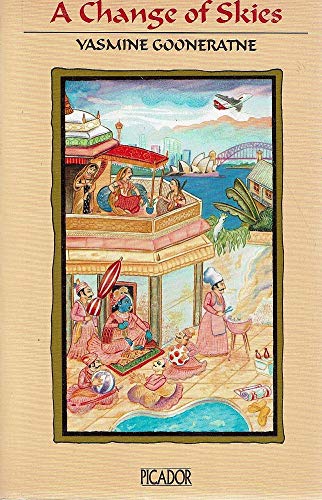
Monday musings on Australian literature: Vale Yasmine Gooneratne (1935-2024)

It was through the Jane Austen Society of Australia’s (JASA) newsletter, Practicalities, that I learned of the death of Yasmine Gooneratne, a woman with whom I have crossed paths – one way or another – three times. She was an academic at Macquarie University, where I did my undergraduate degree; she wrote a novel, A change of skies (1991), which my reading group discussed back in 1996; and, she was the patron of JASA (and you know how I love Jane).

You can find quite a lot about Yasmine Gooneratne on the Internet, if you are interested, so I’m just going to focus on a few points that struck me, and I hope will interest you.

“No nonsense”

A site called The Modern Novel provides a useful potted biography, so I will start with that. It says that she was born in Sri Lanka (then Ceylon) in 1935 as Yasmine Bandaranaike, which means she was “a member of the well-to-do Ceylonese family which included Sirimavo Bandaranaike, the first woman prime minister in the world”. She studied at the University of Ceylon and Cambridge University, and in 1962, she married the doctor and environmentalist Dr Brendan Gooneratne (who died in 2021). They emigrated to Australia in 1972, where she lived for 35 years, according to Wikipedia, before returning to Sri Lanka. It was here, in her home country, that she died on 18 February this year.

AustLit provides more detail, which includes that she was founding Director of Macquarie University’s Post-Colonial Literatures and Language Research Centre from 1989-1993, and that she was awarded an AO (Order of Australia) in 1990 “for her distinguished contribution to Sri Lankan and Australian literature”. She won (or was listed for) a number of awards in Australia and elsewhere.

Gooneratne wrote over twenty books, including novels, some poetry and short story collections, as well as many works of non-fiction, but she seems little known outside academic circles (and JASA). Indeed, my initial – and general – search for this post brought up many references to her but no news items on her death. I had to search a little more specifically for that. This was interesting given that, on the several internet sites I found, she is described as widely known. DBpedia* calls her a “Sri Lankan poet, short story writer, university professor and essayist” and says that “she is recognised in Sri Lanka, Australia and throughout Europe and the U.S.A., due to her substantial creative and critical publications in the field of English and post-colonial literature”.

When I did find something about her death, I was delighted to find an obituary written by her daughter Devika Brendon. Initially posted in the Sunday Times on 18 February 2024, it has been shared on many other sites including the blog I am quoting from. It provides a loving and personal tribute to her mother, but one which I suspect also rings true to the person Gooneratne was. Devika Brendon tells us that:

Yasmine Gooneratne as a private individual left clear instructions about what she wished regarding her funeral. Her directives show a great deal about her character and her values. ‘No public notices. No public viewing. No public funeral. No memorial lectures. No fuss. No feathers. No posturing. No performativeness. No photographers. No selfies. No celebrities. No nonsense.’

I have mentioned Gooneratne a few times on this blog, including in a brief Monday Musings post I wrote in 2013 on Migrant literature. It had been a long time since I’d read A change of skies (and it’s even longer now), but I wrote that the novel was about “educated middle class migrants – like herself I presume – who work to find a balance between fitting into the new culture while at the same time preserving their Sri Lankan identity”. If you want a better flavour of this work, check out this post written in 2012 by someone called Elen on a blog called the southasiabookblog. Elen says that Gooneratne’s “portrayal of the immigrant experience is as funny and poignantly ironic as Jhumpa Lahiri’s work on a similar topic is earnest”. I wish I could remember it that well, but I read it when I was immersed in parenting and my memory is general. This description of Gooneratne’s tone, however, sounds like the writing of an Austen-lover!

I will end with another paragraph written by her daughter because, not only does it tell us a lot about Gooneratne but, if you are an Austen fan, you will love the final line:

She had great contempt for hypocrisy and cruelty. She had a great sense of humour and a lively sense of fun. As she was a person of moral integrity, the repulsive conduct of people who prey upon the vulnerable saddened her, especially as she grew older. While always choosing to believe the best in people, she found herself unable to accept the lies that are spun by opportunists and predators on a daily basis. Her good opinion, once lost, was lost forever.

* DBpedia describes itself as “a crowd-sourced community effort to extract structured content from the information created in various Wikimedia projects”

Vale Marion Halligan (1940-2024)

Such sad news. I have just heard that Marion Halligan, one of Australia’s literary treasures, died yesterday. She has been frail for some time, but the last time I saw, and spoke briefly to, her was at the 2023 ACT Book Awards in December. She was her usual engaged self, though also frustrated with the limitations her health was placing on her life. Getting old, as many of us know, isn’t a heap of fun.

Before I share a few thoughts of my own, here is how I heard the news. It was from Karen Viggers, via Facebook. I hope she’s OK with my sharing this:

It is with infinite sadness that I share the sad news with you today that the wonderful literary champion, Marion Halligan, died peacefully last night.

Marion was just the most amazing, beautiful, graceful, wise and generous person. She always had time to talk to and support other writers and was always generous in her friendships. She had a sparkling wit and personality, was always astute and sharp in conversation and she enjoyed books and literature to the end.

She has had an incredible life and will be very sadly missed.

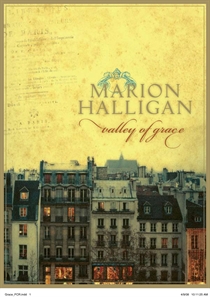
Marion Halligan Valley of grace

It is so hard to know where to start. I do not want to write an obituary, as there will be plenty of those in the coming days and weeks. Rather, I’d like to share my experience of her, which started in the 1980s when I decided to focus my reading on women writers, and particularly on Australian women writers. I read three of her novels with my reading group, Lover’s knots, The golden dress and Valley of Grace. For this last discussion, Marion attended our meeting. What an absolute treat that was.

Outside of the reading group, I have read more of her books, including The fog garden and The point, and I have around five others waiting on my TBR. It was through Marion, too, that I met Carmel Bird when she approached me about posting the speech she was making to launch Marion’s novel Goodbye sweetheart.

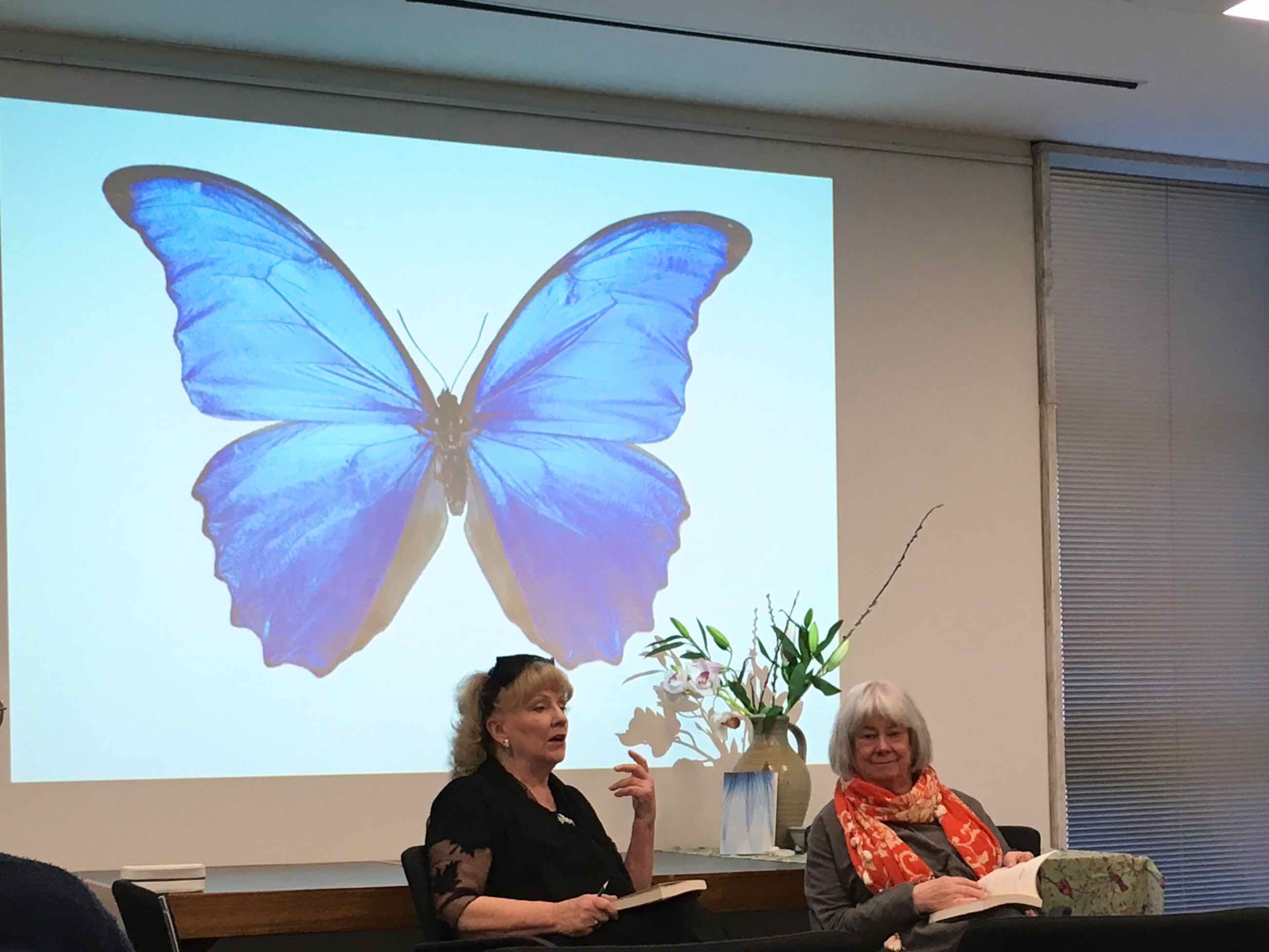
Carmel Bird and Marion Halligan
Halligan launching Bird’s Family skeleton

Marion lived her writing life in Canberra, and was a member of the “Canberra Seven” or “Seven Writers” group about which I have written. I have seen her at award events, festivals and conversations, sometimes the interviewer and sometimes the interviewee. One memorable occasion was when she interviewed Margaret Atwood back in the early 2000s. Atwood was not easy to interview, but Marion held her ground with grace and humour. I will never forget it. (I was glad it was she and not me in that seat!)

Marion is loved here as our grand dame of literature, and her presence will be greatly missed. Not only did she support local writers generously, as Karen Viggers says above, but she was for many years patron of the ACT Writers Centre (now named Marion partly in her honour), was at one time the chairperson of the Literature Board of the Australia Council and also an organiser of Canberra’s previous writers festival, the Australian National Word Festival.

She was a versatile writer. She wrote eleven novels, several of which won and/or were shortlisted for some of Australia’s best literary awards, and which included a little foray into crime fiction. She was a big supporter of the short story form, ruing their unpopularity with publishers, and she also wrote non-fiction books, as well as journalism, including articles on food. Wikipedia lists her books and awards. Searching her in your browser will retrieve several interviews with her, and she was interviewed by Irma Gold and Karen Viggers for their Secrets from the Green Room podcasts I posted on recently. You can see most of my posts involving Marion on this tag. (There are few reviews here, though, because most of my reading of her books was before blogging.)

I could go on, but this is enough for now. I will close with a quote I’ve shared before on this blog. It comes from one of my favourite books of hers, a work of autofiction, The fog garden. I just loved this book, her cheeky, wry way of telling us that it was fiction not biography. It’s a lesson, in fact, in how to read fiction, and it also has one of my favourite statements about the value of reading. It goes like this:

Read a wise book and lay its balm on your soul.

All I can say is, thanks Marion for your intelligent wit, your warmth and your wisdom – and for the balm you laid on our souls. We will miss you muchly.

Monday musings on Australian literature: Elizabeth Webby (1941-2023)

This might be a first for me, an obituary-style post for an academic/literary scholar rather than for an author. However, this post seemed appropriate as, Elizabeth Webby, who died last month, is someone whom I’ve mentioned several times in my blog due to her having written in areas that are of interest to me. Specifically, these areas were colonial Australian literature and contemporary Australian writers, particularly women writers. I heard about her death from the Association of the Study of Australian Literature, for which she was a founding member and of which she was President from 1988 to 1990.

A significant legacy

Julieanne Lamond, current president of ASAL and co-editor of its online journal, Australian Literary Studies, has posted a tribute to her on ASAL’s website. It is well worth reading, because it outlines her major roles and achievements, which include her being Professor of Australian Literature at the University of Sydney from 1990 to 2007. This involved her “supporting works of scholarly infrastructure including the AustLit Database, numerous scholarly editions, and the online Australian Poetry Library”. I have often used AustLit (albeit much of the content is paywalled) and the Australian Poetry Library (which seems not to be currently available, perhaps due to lack of ongoing support?) Webby also edited the Southerly literary journal for over a decade.

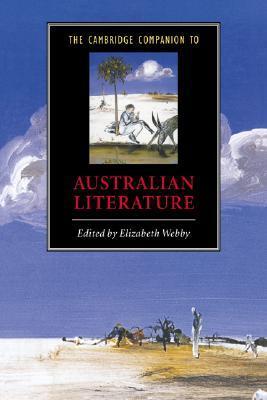
However, my “experience” of Webby has also been more specific. While I had come across her before, I became seriously aware of her through The Cambridge companion to Australian literature (1996), which she edited. This book is a little different from those “companion” style books which contain alphabetic encyclopaedic entries related to their chosen topic. Rather, it comprises essays which provide a partly chronological, partly thematic, survey of Australian literature starting with “Indigenous texts and narratives”. It works, in other words, more like a text book or history than a reference book. I often dip into it, when I am researching specific aspects of Australian literature, and find it sometimes useful sometimes not, depending on how well my particular interest has been covered.

However, I had came across Webby earlier via her essay on colonial poets in Debra Adelaide’s A bright and fiery troop (1988), which is another book of essays on Australian literature, but this one limited to 19th century women writers. It’s another book I often dip into when researching earlier writers.

Both these books, though, were in my ken before I started blogging. Skip a couple of decades to 2018 when I wrote a Monday Musings post titled Literary culture in colonial Australia drawing on Webby’s work. It was fascinating research, both for what she found and for the sorts of sources she used and their varying levels of completeness. Then in 2021, I wrote another Monday Musings on the Irish-Australian poet, Eliza Hamilton Dunlop (1796-1880), using research by Elizabeth Webby and another academic, Anna Johnston. These are just two examples of Webby’s work but, as Lamond of ASAL writes, her research interests spanned the breadth and depth of Australian literature, from early colonial literature, through early 20th century writers like Miles Franklin and Barbara Baynton, and mid-20th century ones like Patrick White, to those more contemporary to her own times like Frank Moorhouse, Elizabeth Harrower and Joan London. She was also, apparently, a loved and respected teacher, academic supervisor and mentor.

All this is important and significant, but another measure of who she was can be found in the funeral notice for her in the Sydney Morning Herald where can be found the following request, “In lieu of floral tributes, please consider a donation to the Indigenous Literary Foundation”. Presumably that was her own request – or from her family based on their knowledge of her passions. Either way, it’s the icing on the cake. Vale, indeed, Elizabeth Webby.

My literary week (17), musicals, movies and more

Spring is springing

It’s been over two years since my last literary week, which is weird given I enjoy writing these posts that explore the literary content or implications of other parts of my life. I am writing this one, for a number of reasons, prime of which is that I’ve not written a review this week and need to write something! I have been reading, just not enough to write about – yet. There’s been too much going on.

Now, an admission … this literary week is more like literary season, which I hope you agree is fair enough. Who says bloggers can’t invoke artistic licence, after all? By season, I mean winter, which ends this week, here downunder. Thank goodness.

Musicals

Mr Gums and I enjoy musicals and have seen two this month, one this week in fact. The first, which we saw earlier this month, was Hamilton. We must be among the last musical enthusiasts in Australia to see it, but we finally got there. I loved it. Besides its colour-blind casting, I loved its Shakespearean quality. It has the hallmarks of great Shakespearean tragedy, from the great man brought down by his own flaws to the fool (in this case King George III) who provides comic relief while also saying some wise things. And, the political machinations have such relevance to today. I loved, for example, the reference to transparency, or lack thereof: “I want to be in the room where it happens”. A real treat – though we were briefly thrown when, after Interval, the actor playing George Washington changed from an average-build white man to a thinner, younger looking black man. There had been an announcement but in the rustle of everyone returning to seats, we’d missed the crucial piece of information about who was “now being played by”? We worked it out soon enough.

The other musical, the one we saw this week, also has strong literary content, The Girl from the North Country, which, as many of you will probably know, features Bob Dylan’s songs and tells a Depression era story. Given Dylan – albeit controversially – won the Nobel Prize for Literature in 2016, it’s hard to deny the “literary week” credentials of this one. I didn’t engage with it as quickly as I did with Hamilton, mainly because the story and characters were not familiar, but by the end, the characters had won me over with their stories and the actors with their performance.

Movies

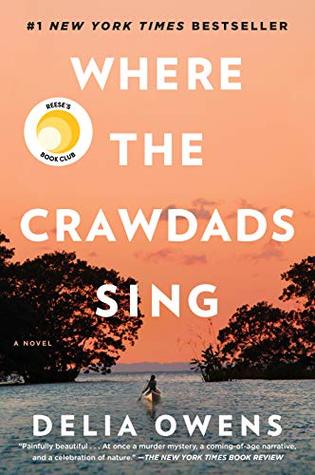
I’m just going to mention one of the movies I’ve seen in recent times, Where the crawdads sing. Yes, a popular movie, though I have been to some more arthouse and classic fare too (like John Farrow’s gorgeous-to-look-at The Big Clock just last night). But I want to mention a conversation (by letter) with my American friend Carolyn, on Crawdads. Both of us enjoyed the movie. It’s beautiful to look at, well-cast overall, and the adaptation felt true to the book. Any problems it has, we agreed, are due more to the book – the stretching of credulity and generally stereotyped characterisation – than with the film itself. (My review of the book explains why I felt I could accept some of these challenges in the book.)

Now is the winter of our discontent…

This section is the saddest part of this post, because here I want to pay brief tribute to some special people who died this season and who also happen to have some literary or arts relationship with me.

The first occurred at the beginning of winter and was, in some ways, the most shocking – because it came with no warning, and because she was the youngest of the people I’m talking about. It was my reading group’s fabulous member Janet Millar who died, suddenly, of a heart attack in early June. She had moved to Sydney but, once a reading group member aways a reading group member and we had stayed in contact over the years. A journalist by training, Janet was warm, intelligent, funny, subversive and could be relied on to enliven any group. So sad, so missed.

Then there were two people who were not as close to me personally, but who were meaningful acquaintances, Liz Lynch who was in Mr Gums’ Advance German Conversation class and with whom I’d discussed reading group experiences, and Geoffrey Brennan, who was on our local Musica Viva committee and hosted, with his wife, many lovely musical afternoons in their home. These afternoons were equally about socialising as about music, because Geoff, like Liz, was a people person. They will be so missed too.

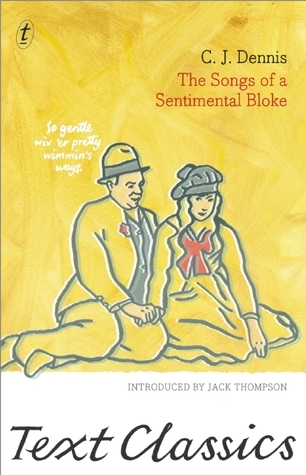
And finally, there was ex-work colleague and friend, Richard Keys. The oldest of the four here, Richard was in his 80s. He was a loyal, warm-hearted and fun colleague and friend, whom I met him through work at the National Film and Sound Archive. We quickly connected over literature as well as film, because both were dear to Richard. After he retired, we stayed in contact, and frequently ran into each other at film events, literary events and folk festivals. I would also occasionally find a letter from him in my mailbox – containing some newspaper clipping or other about Jane Austen! Richard could also quote Shakespeare at the drop of a hat, and may or may not have approved of my heading for this section! I’m going to close here, though, not with Shakespeare, but with a quote Richard had over his desk at work. It was from The sentimental bloke which is both an Australian film and literary classic. I used it in my last message to him:

Sittin’ at ev’nin’ in this sunset-land,
Wiv ‘Er in all the World to ‘old me ‘and,
⁠A son, to bear me name when I am gone.…
⁠Livin’ an’ lovin’—so life mooches on.

“so life mooches on” … on that note, I’ll mooch off and try to finish the unfinished books next to my bed, so I can bring you some reviews next week. Meanwhile, vale Janet, Liz, Geoff and Richard. You will all be remembered.

Monday musings on Australian literature: Frank Moorhouse (1938-2022)

Frank Moorhouse was one of the grand old men of Australian literature, so when I learned that he’d died yesterday, I knew I had to change my plan for this week’s Monday Musings to feature him. Wikipedia’s introduction to him gives you a sense why I’ve described him as I have: “He won major Australian national prizes for the short story, the novel, the essay, and for script writing. His work has been published in the United Kingdom, France, and the United States and also translated into German, Spanish, Chinese, Japanese, Serbian, and Swedish”. Today, he is best known for his Edith trilogy – Grand days, Dark palace and Cold light – the middle of which earned him a Miles Franklin award, but his legacy extends deeper than that.

A major legacy

I first became aware of Moorhouse back in 1975 when I was beginning my librarianship career. It was due to a court case known as University of New South Wales v Moorhouse which concerned the use of photocopying machines to photocopy “infringing portions” of a work in copyright. Wikijuris summarises it nicely if you are interested. The High Court unanimously found that, although the copying was done by a student, the Unviersity was liable for “authorising” infringement. It was a groundbreaking case whose legacy continues today.

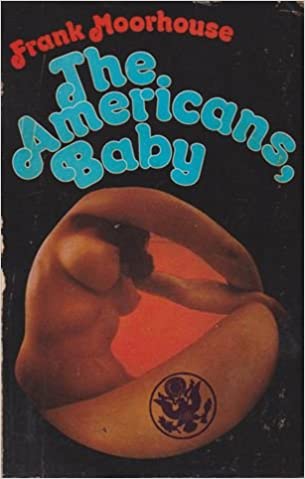
The Copyright Agency also tells the story. They explain that Moorhouse was determined to achieve “respect and financial recognition for Australian creators”. He gave permission for his book, The Americans’ Baby, “to be used in a copyright test case” which, the Agency says, has ensured that, today, nearly 50 years later, “creators are fairly remunerated for their work in a digital environment that provides millions of students with access to high quality educational material”. Moreover, the case also resulted in a recognition that “an agency would be needed to collect the royalties generated by the copying of materials to distribute payments to creators”. That agency was the Copyright Agency, which was established in May 1974 for this purpose.

You can imagine that this was exciting stuff for a new, philosophically engaged librarian – we wanted to support creators but we also believed in the importance of libraries being able to provide access to the material students needed. Good copyright law should achieve both and here a fair (acceptable) balance has probably been struck – though I’m sure both sides will have arguments for more.

But of course …

For most readers, Moorhouse’s legacy is in his writing. He was born in Nowra, New South Wales, a beautiful spot less than three hours’ drive from where I live. On leaving school, he began work in 1955 with newspapers, first as a copy boy, and then as reporter and editor. His first short story, “The young girl and the American sailor”, was published in Southerly magazine when he was 18 years old, and he went on to be published in some of Australia’s best literary magazines after that.

In the 1970s he became a full-time fiction writer but he also wrote essays, short stories, journalism and film, radio and TV scripts. He was also, with Clive James, Germaine Greer and Robert Hughes, part of the “Sydney Push” (about which I wrote in my review of Richard Appleton’s memoir, Appo.) It was a bohemian, libertarian movement with a strong anti-right wing underpinning. He has led or been heavily involved in many of Australia’s significant writerly organisations, including the Australian Copyright Agency, the Australian Society of Authors and the Australian Journalists’ Association. In 1985, he was appointed a Member of the Order of Australia for service to Australian literature.

Writing about his death in The Guardian, Sian Cain says this about his work:

Moorhouse wrote prolifically and with irreverence and humour of his passions – food, drink, travel, sex and gender. Early in his fiction, and later in his 2005 memoir, Martini, he wrote frankly about his own bisexuality and androgyny. In his writing, he said, he wanted to explore “the idea of intimacy without family – now that procreation is not the only thing that gives sex meaning”.

Tim Barlass wrote something similar in The Sydney Morning Herald:

Moorhouse lived and wrote about the good life – in both senses of the phrase, sometimes paradoxically. With a passion for fine food, cocktails and justice, he fearlessly wrote about the things essential to him.

Frank Moorhouse, Cold Light

If didn’t know all that about Frank Moorhouse, I have only to think back to Edith (particularly to Cold Light which I read after I started blogging) to see how it could be true! Edith, Ambrose and their friends knew how to work and play hard. My review of the novel was a little measured, but it is also one of those books that has remained with me. You never know, when you finish a novel, which ones will hang around in the mind for the long run.

I understand that a biography by Catharine Lumby is coming very soon. Barlass quotes her response to his death:

 “Frank Moorhouse was a literary legend. It was an incredible privilege to have a friendship with him and be his biographer. As always, Frank had to have the last word. I started writing the conclusion to his biography this morning and learnt that he had died.”

I can’t think of a better place to end, except to add that I look forward to her biography of this colourful but serious man. Vale Frank Moorhouse.

Monday musings on Australian literature: Kate Jennings (1948-2021)

Kate Jennings, Moral Hazard

Strangely, Australian writer and intellectual, Kate Jennings, has been in the air lately, even though she has lived in New York since 1979. She’s been in blogosphere because blogger Kim Forrester reviewed her novella, Moral hazard, just last month, but she’s been more broadly visible too because she features in the documentary Brazen hussies which screened in cinemas last year, and was broadcast on ABC-TV in a shortened version, this year. I saw both versions, and was inspired by Jennings’ bravery and passion in speaking for women at a 1970 Vietnam Moratorium march. This speech marks, many believe, the beginning of the second wave of feminism in Australia.

Kate Jennings, then, was quite a woman, and it’s incredibly sad that she died this weekend at the too-young age of 72. Yes, Virginia, 72 is too young.

“one of our essential writers” (David Malouf)

I’m impressed but not surprised that Australian novelist, David Malouf, described her as “one of our essential writers” in The Sydney Morning Herald’s announcement of her death. What does “essential” mean? I don’t know what Malouf means by this, but I agree with him in terms of my own meaning of the word. For me, essential, in this context, encompasses two things. First, it’s that the writer writes about important (though I don’t like this word) or significant or, perhaps even better, critical subjects. An essential writer will address the issues that are central to our being – personal, political and/or societal. But, I sense that Malouf means a little more. Certainly I do, and it’s that an essential writer doesn’t just write about, let us say, the “essential” things, but they confront us with them. They go where others don’t go – in subject matter, or form, or tone, or language, or … I’m sure you know what I mean.

Malouf thinks Jennings filled this bill, and so too, I think, does Maria Tumarkin who appeared in the first Sydney Writers Festival session I attended this weekend. A quick Google search retrieved the 2016 University of Melbourne Handbook (archived version). It includes the description of a course on The Art and Practice of the Personal Essay taught by Maria Tumarkin and Kevin Brophy. The description says “Some essayists we might read: Montaigne, Swift, A.D. Hope, Annie Dillard, Kate Jennings, Joan Didion, David Foster Wallace”. This is quite a list, and it tells us something about Jennings’ stature, and how Tumarkin and Brophy view her.

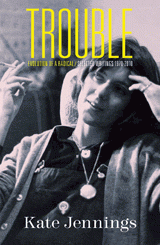
Kate Jennings, Trouble, bookcover

So, in what way was Jennings essential? I’ll start with the above-mentioned speech that brought her to the fore when she was just 22. The women in the Vietnam Moratorium movement had fought (hard) to have one of their number included among the many male speakers scheduled to speak at the march. Here is how Jennings, herself, introduces it in her “fragmented autobiography”, Trouble: Evolution of a radical: Selected writings (1970-2010) (my review).

We persisted, and eventually the organisers gave in. As the most experienced writer in our group, I was given the task of composing the speech, which we decided would be deliberately incendiary. But what I wrote was so incendiary everyone balked at giving it, me included. In the end, with a big shove and no experience of speaking in public, much less in front of a thousand or more, I walked the plank.

The reaction to her speech, she says, was immediate – much of it negative, particularly from the men in the movement – but, she writes

the confrontational language of the speech worked: we could no longer be ignored. Right tactic, right time.

It was essential, in other words. (You can read it here.)

And Jennings continued in that vein, being true and uncompromising to what she believed in. Take, for example, her introduction to the poetry anthology she edited, Mother I’m rooted. She was unapologetic about what drove her choices. She states the problem, then says what she did:

I don’t know any longer what is ‘good’ and what is ‘bad’. I have been trained to know, in a patriarchal university, on a diet of male writers. We have to go back to bedrock, and explore thoroughly that which is female and that which is male, and then perhaps we can approach androgyny, and humanity.

I have chosen the poems mainly on the grounds of women writing directly, and honestly.

(Included in Trouble)

Jane Bullen, reviewing the book in the ANU’s student newspaper Woroni (23 July 1975), picked up this point:

Perhaps it is this that is most striking about the book; the form of the poem is subordinated to the intense desire to say something, to mean something. Sometimes what is said contorts the poem, and the words are clumsy in their attempt to say it. The honesty, the urgent saying of what is meant is expressed (in the flawed structure, the not quite balanced nature of many of these poems. The effect of this is a refusal to compromise, an insistence on meaning in the face of form and a book well worth the time it takes to read it. 

My point is that Jennings saw that this poetry was different, that it may not have met the “received” style, but that it had something to say and she was darned well going to let them say it.

Her own writing broke boundaries. Her novel Snake (1996) takes the autobiographical novel to a different place with its spare style, episodic form, and mixed voice, and her Miles Franklin Award-winning novel Moral hazard (2002) is a work of that rare genre, business fiction. She wrote an essay, “Gutless fiction”, for the Australian Financial Review (26 August 2005), on the necessity for

unflinching works of fiction that engage our public and private selves, our intellect and emotions. More able to inhabit the skins of its characters, fiction can capture the ambiguity and caprice inherent in human behaviour and then give it context and causality in ways that nonfiction rarely can.

(Included in Trouble)

Erik Jensen’s book, On Kate Jennings, in the Writers on writers series, provides tender but honest insight into Jennings. Her life had many troubles. It’s worth reading, but I’m going to conclude by sharing something he tells us Jennings wrote for the back cover of her first poetry collection:

‘Kate Jennings is a feminist. She believes in what Jane Austen recommended at fifteen: “Run mad as often as you chuse; but do not faint.”’

(Jane Austen, Love and freindship)

An essential writer recognising another! Vale Kate Jennings. You gave us much to think about. A true legacy.

Lisa wrote a Vale Kate Jennings post on the weekend, and I have reviewed three of her books.

Vale my dear old Dad (1920-2021)

If it was my Mum who introduced me to Jane Austen and the classics of English literature, together with a love of language (and thus Scrabble and cryptic crosswords), it was my Dad who introduced me to Australiana, starting in my youth with the verse (as the poet himself called it) of Banjo Paterson. The grandson of a Presbyterian minister, my father never swore, but he’d read with great gusto the lines ‘”Murder! Bloody murder!” cried the man from Ironbark’. And we kids loved it. As Dad’s eyes deteriorated in his last years, he gave up reading books, but the book he kept by his chair-side, and the book he was last seen dipping into, was a book of Paterson’s verse.

Born in 1920, and living through the heyday of Australia’s development in the twentieth century, Dad loved stories about Australian pioneers of all sorts, from the exploits of Charles Kingsford-Smith to those of cattle kings like the Duracks. Mary Durack’s Kings in grass castles was one of his favourites, at least from the time when I was old enough to be aware of his reading. In later years, he became more aware of the politics of Australia’s colonial settlement and appreciated our need to revise our understanding of frontier life, but I don’t think that ever completely removed his love of these ventures. Dad, of course, also lived through the Depression and Second World War, with the latter inspiring another major reading interest, the history of the War. (He didn’t read a lot of fiction, being of that generation of men who felt fiction wasn’t quite as worthwhile as non-fiction).

My other main memory of Dad and books comes from the days when, as a very little girl, I would go to my parents bedroom in the morning – much to my mum’s chagrin as she loved a sleep-in – with my “twenty-eight books”. It wasn’t 28 of course, but for some reason, that was the number I would say. One of those books featured Jiminy Cricket, and Dad would feign great fear as I shoved this terrifying creature under his nose! This became a lasting in-joke between us for the rest of his life.

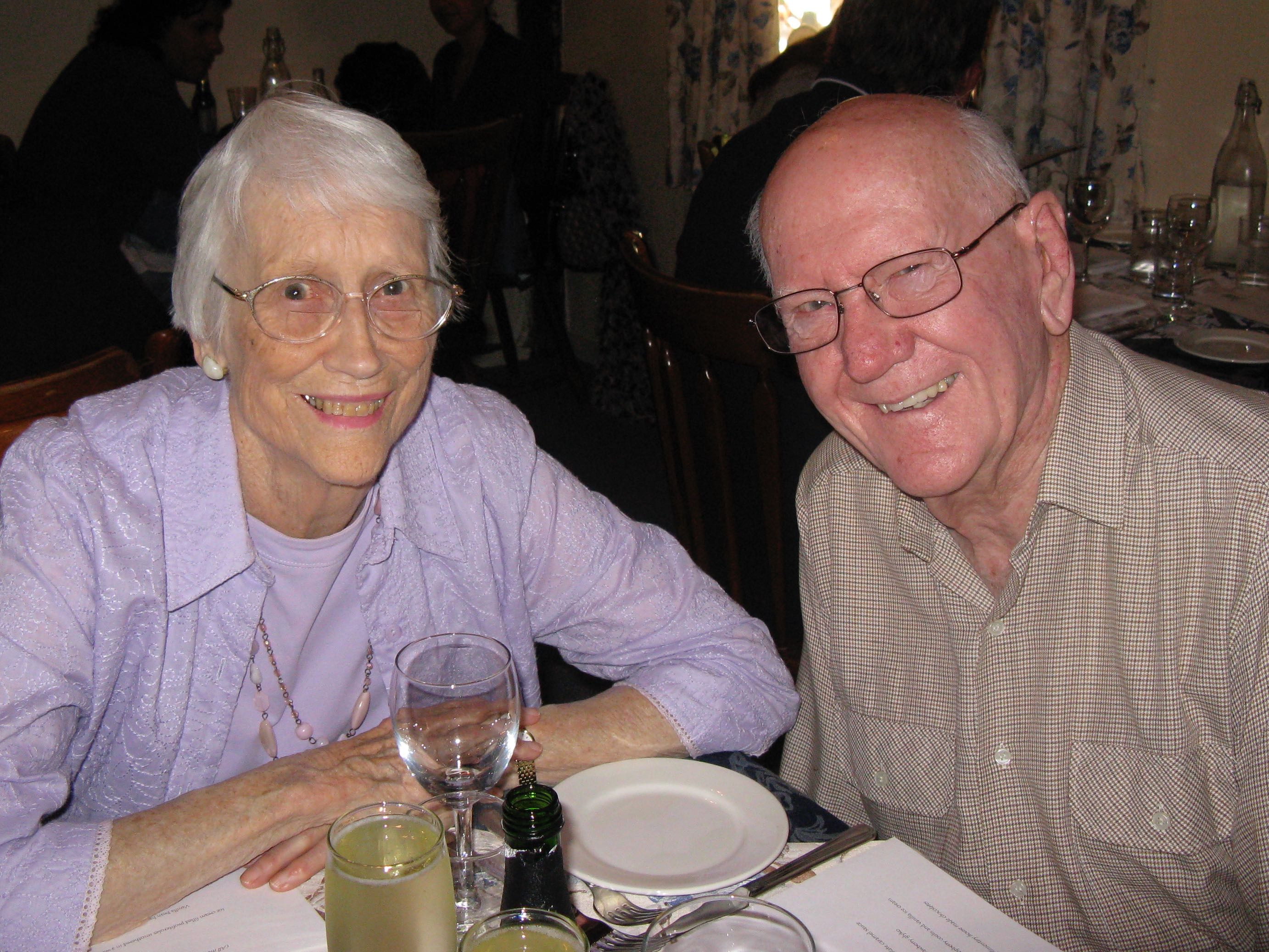
Now, though, Dad has gone – peacefully, at the excellent age of 100 years and 8 months – and I am left with these memories, along with the enduring knowledge of a man who loved me very much, who never failed to support me and compliment me, and who set an example of integrity, honesty, acceptance, stoicism, and love of and responsibility for family. He, like all of us, had his moments, but his, like Mum’s, was a life well-lived, one that will continue through our memories and through the lives of all those who loved him.

Vale, Dad. Go well, and thanks.

Vale my magnificent Mum (1929-2020)

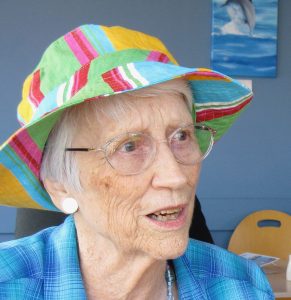
Portrait of JessieSome of you already know, but most of you may be wondering about my recent silence. I am really too heartsore to write much now, but I feel all you lovely followers deserve to know whyfor this silence. On Friday, my dear 90-year-old Mum died peacefully, after a short illness that, coincidentally, aligned with the COVID-19 lock-down here. I have spent much of the last month by her side, and am just too sad right now to compose a proper post about her. She loved and nurtured me with all her heart from the moment I was born right through to the end; she fostered my love of reading, introduced me to Jane Austen and taught me cryptic crosswords; she supported and respected me; she was self-effacing, always putting herself last; she was quietly passionate about social justice and the environment; and she made me laugh. She was the whole package.
Here are some words from her friends:

“I have fondly admired Jessie and feel so privileged to have learned from her wisdom, her gentle elegance, and her intellect.”

“Jessie is one of the most beautiful women I have known, so kind and thoughtful and so clever too. She is a truly lovely lady.”

“I feel very privileged to have known Jessie … so wonderfully supporting, caring and kind.”

 “I have always enjoyed her company and admired her attitude to all things.”

And, finally, from one of her church friends …

“We have lost a soft voice, a strong faith, an enquiring mind and a great friend”.

As for the family, we have lost a dearly treasured and much enjoyed wife, mother and mother-in-law, grandmother, great-grandmother, aunt and cousin. The loss is all ours.

(Finally, I must say a huge thanks to Lisa and Bill for their behind-the-scenes support and offers of help, and to Bill, in particular, for ensuring my blog kept going. There are still a couple of Bill Curates posts to come. I do not have enough words to thank them.)

Vale Kerry Reed-Gilbert

Note: It is traditional in most indigenous Australian communities to avoid using the name of a deceased person, for some time after their death. And so, as is my wont regarding writing about indigenous writers, I checked out what I believed to be authoritative precedents, and found that Wiradjuri woman Kerry Reed-Gilbert’s name has been used on sites such as AIATSIS (Australian Institute of Aboriginal and Torres Strait Islander Studies). I am therefore presuming that her family (probably with her approval) is happy for her name to be used. It is in this spirit that I write this small tribute post.

Kerry Reed-Gilbert (1956-2019) died last weekend, as NAIDOC Week was coming to an end. She was, says Wikipedia, an “Australian poet, author, collector and Aboriginal rights activist”, and anyone interested in the history of Indigenous Australian writing is sure to have heard of her. She had certainly been in my ken for a long time, and has appeared in this blog several times. The first time was in 2013 when I described her as the first chairperson of FNAWN, the First Nations Australians Writers Network, which she co-founded. She appeared again in 2014 as one of the indigenous people recommending books every Australian should read. She recommended:

  • Because a white man’ll never do it, by her father, the author and activist Kevin Gilbert
  • The Macquarie PEN Anthology of Aboriginal Literature, edited by Anita Heiss and Peter Minter
  • Any book by historian Henry Reynolds, because “it’s time for people to know the truth of this country”
  • That deadman dance, by Kim Scott (my review)

Jump a couple of years to 2016, and Reed-Gilbert appeared here again, this time as a participant in the Blak and Bright Festival. And she appeared twice the next year – 2017 – first, as a contributor to the interactive book, Writing Black, and then later in my review of that work.

It was, however, not until 2018, when I attended An evening with First Nations Australia Writers session as part of the Canberra Writers Festival, that I became fully aware of the love and esteem with which this clearly amazing woman was held. Jeanine Leane, in particular, paid tribute to her for her work with FNAWN, with the Us Mob Writing Group, and in organising the Workshop for indigenous writers that coincided with the 2018 Festival. The warmth felt towards her was palpable that evening.

Us Mob Writing, Too DeadlyBut wait, there’s more! Reed-Gilbert appeared again in my blog this year, twice in fact – for her contributions to two anthologies, Growing up Aboriginal in Australia, edited by Anita Heiss (my review), and Too deadly, edited by her and two others for the Us Mob Writing group (my review). As well as being one of the editors, she had ten pieces in the anthology.
If you don’t have a sense by now of what a stalwart she was for Indigenous Australians, and particularly for Indigenous Australian writers, then maybe some info from the AustLit database will help. Reed-Gilbert was a well-recognised, high-achieving poet and editor:

  • receiving funding from the Australia Council to attend a poetry festival in the USA (2010);
  • receiving an ‘Outstanding Achievement in Poetry’ award and ‘Poet of Merit’ Award from the International Society of Poets (2006);
  • touring Aotearoa New Zealand as part of the Honouring Words 3rd International Indigenous Authors Celebration Tour (2005);
  • being awarded an International Residence from ATSIAB to attend Art Omi, New York, USA (2003); and
  • touring South Africa performing in ‘ECHOES’, a national tour of the spoken word (1997)

Her work has been translated into French, Korean, Bengali, Dutch and other languages.

You may also like to read the statement made by AIATSIS upon her death, which speaks of her role as a writer, mentor and activist, and this heartfelt one from Books + Publishing which describes her, among other things, as a literary matriarch.

Book coverNot only is it sad that we have lost such an active, successful and significant Indigenous Australian writer, but it is tragic that we have lost her so soon, as happens with too many indigenous Australians. So, vale Kerry Reed-Gilbert. We are grateful for all you have done to support and nurture Indigenous Australian writers, and for your own contributions to the body of Australian literature. May your legacy live on – and on – and on.

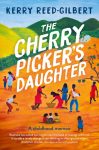
Meanwhile, we can all look out for her memoir, The cherry-picker’s daughter, which is being published this year by Wild Dingo Press.