Beryl Fletcher, Juno and Hannah (Review)

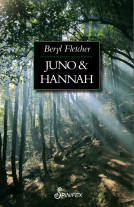
Beryl Fletcher, Juno and Hannah

Courtesy: Spinifex Press

I’ve been pretty remiss in my blog regarding New Zealand literature. I have read and enjoyed several New Zealand novelists, such as Keri Hulme, Janet Frame and Fiona Kidman, but the only New Zealand writer I’ve reviewed here to date has been Lloyd Jones. And so I was both intrigued and pleased when Spinifex Press sent me Juno and Hannah by New Zealand writer, Beryl Fletcher.

I’m embarrassed to say that I hadn’t heard of Fletcher, but she has some form! Her first novel, The Word Burners, won the 1992 Commonwealth Writers’ Prize Best First Book for the Asia/Pacific region. Juno and Hannah is her fifth novel. She has also written a memoir and some short stories. The fact that four of her five novels have been published by Spinifex Press would suggest a feminist agenda but, while Juno and Hannah certainly has an element of women being challenged by patriarchal authority, it is not a preachy or proselytising book, any more than are the other Spinifex Press books I’ve reviewed. Rather, like them, its focus is women’s experience of the world.

Hmm … that’s a long introduction. Time to get to this particular world. Juno and Hannah is set in 1920s New Zealand. The eponymous sisters are living in a religious commune, and are without parents. Despite the fact that Juno’s name appears first in the title, Hannah is the older. Two things happen in the opening pages of the book which cause Hannah to “run away” with Juno. The first is that she is punished with a month’s isolation for saving a strange man from drowning by breathing life into him – and thereby arousing fears of witchcraft, of communing with the spirits. It’s a clearly unjust punishment from (the significantly named) Abraham, who claims to adhere to “the sacred principles of Christian justice”. The second thing is her hearing that the community plans “to get rid of” 14-years-old Juno, probably to an orphanage in town. Juno, you see, requires special care as she is not quite normal – and the so-called Christian community “can’t carry a non-productive member”. This sets up what is essentially a Gothic adventure tale in which Hannah, with the help of a strange assortment of others, searches for a secure home for Juno and herself.

The novel (novella, really) is a page turner. There are good guys and bad guys (including eugenicists who have their sights on the “mentally defective” Juno), but sometimes we can’t always be sure who are the good guys. Hannah, a resilient and loyal young women but one who experienced abandonment at an early age, finds it hard to trust anyone, including those who offer help. In this mix are Hannah’s mother, her father and his mistress, the man she’d saved, and his sister. There are all sorts of Gothic archetypes here – cottages in the wood, horses pushed to their limits, storms, secrets, a sanatorium. While the story is told third person, we see much of it through Hannah’s inexperienced eyes, so when she is unsettled, so are we. And rightly so, because the world is an uncertain place.

Fletcher’s style is plain, direct, and yet also poetic. It comprises mostly short sentences, which keep the plot moving but which are interspersed every now and then with more Gothic descriptions. These are particularly effective because they are not overdone:

When the southerly blew itself out, fog crept up from the river and devoured all before it. Not one leaf moved, not one bird sang. One by one the trees melted away. The fog brought a terrible silence outside her prison that emulated the social death within.

And:

Something had changed. The hut was withdrawing into itself; the fire had gone out, empty tins had been dropped onto the clay floor. She touched the glass chimney of the paraffin lamp. It was cold.

I enjoyed reading this book, but am having trouble writing about it. I think this is because the themes are carried primarily through the plot. By this I mean, they are conveyed by who does what with whom, who appears and disappears, who chases whom, and who helps whom. I don’t really want to explain too much for fear of giving the story away. Briefly, though, the main themes are resilience and trust. As a young vulnerable woman responsible for an even more vulnerable sister, Hannah needs to be resilient to survive the world she finds herself in. She also needs to trust, but she must temper this with wariness because the world is not a safe place. Another theme is the responsibility to protect weaker members of our society, as Hannah does for Juno, but as was not done for her when she was “abandoned” in the religious community. In fact, “abandonment” is another theme. And finally is the theme of nurturing. Clearly, Hannah nurtures her sister, but the theme is also conveyed through the act of bread-baking, which occurs throughout the novel. Hannah is good at it, so is her mother Eleanor. Providing bread to others in need is one of the final, reassuring images of the novel.

Juno and Hannah is a compelling read. There were times when the plot seemed to be slipping from my grasp. Loose ends perhaps, or maybe just part of the uncertain world Fletcher was creating.  It was never enough, however, to stop my being invested in Hannah and her trials. There’s something about Fletcher’s direct narrative style evoking an almost other-worldly setting that drew me in. I didn’t want to put it down.

awwchallenge2014Beryl Fletcher
Juno and Hannah
North Melbourne: Spinifex Press, 2013
174pp.
ISBN:9781742198750

(Review copy supplied by Spinifex Press)

NOTE: I have included this review in the Australian Women Writers Challenge because Fletcher’s primary publisher is Spinifex Press (and because someone before me has also included her!). I hope Fletcher and any New Zealand readers here aren’t offended!

Diego Marani, The last of the Vostyachs (Review)

Italian writer Diego Marani‘s The last of the Vostyachs was originally published in 2002, but the English translation was not published until 10 years later in 2012. How lucky we are that it was, because this book is unlikely to have been written by an English-language writer. Its focus on the relationship between language, culture and place and on darker issues like ethnic nationalism comes from a different – and particularly European – sensibility. We speakers of the world’s dominant language can, I think, be a bit oblivious to the linguistic issues faced by speakers of other languages, particularly in Europe where multiple languages live cheek by jowl. The challenge of communication is an important issue for Marani who works in Brussels for the European Union. His roles have included interpreter, translator, and policy adviser on multilingualism. Marani knows as well as anyone that language is both a cultural and political issue – and this is what he explores in this, his second novel.

However, The last of the Vostyachs is no dry tome explicating the role and value of language. Instead it is a surprising and often funny novel that weaves myth and saga, melodrama and irony through the warp of a crime thriller. It incorporates a number of literary traditions and archetypes: the wild (innocent) man set loose in the city, the spurned wife, the spirit guide, the corrupt obsessive, and the remote cottage in the woods where dastardly things happen. On the night the crimes (murders, in fact) take place, nature runs amok. Zoo animals roam the city and the temperature drops to its coldest in fifty years.

The plot centres on Ivan, who is the last of the Vostyachs, an ancient Siberian shamanic tribe. He is the only one who can speak the language, though at the novel’s opening he had not spoken it (or anything else) for twenty years, not since, as a young boy in the gulag, he’d seen his father killed. When the gulag is suddenly freed, he returns to the Byrranga Mountains but all he finds are wolves. He believes them to be his people who, to flee the soldiers, had hidden deep in caves and turned into wolves. He cannot bring them back to human form but they shadow and protect him.

Every single language is necessary to keep the universe alive

Into this mix appears the plain, ethical, Russian linguist Olga who is excited to find a speaker of a language thought to have been extinct and who sees in this language an exciting connection between Europeans and the native Americans. Her old colleague, the womanising, unethical, Finnish linguist Jarmo Aurtova is not so pleased with this threat to his theory of Finnish as the “Latin of the Baltic”, as, in effect, the master language of Europe. Jarmo sounds scarily like Hitler in his desire to prove the supremacy of a pure Finnish language:

In ancient times we were the civilised ones and they were the barbarians. We were the masters, they were the slaves. Not for nothing is the word aryan so similar to the Finnic orja, which means slave.

and

But now ‘someone’ was trying to throw Finland into the dustbin of history, together with the other conquered peoples who have no future. Aurtova was not having that …

Jarmo cares not if a language or two disappears and dies in the service of his theory. He believes that the fewer the languages the more “we’re moving towards the truth, towards the pure language”, while for Olga “with each one that dies, a little truth dies with it”. Marani, the creator of the flexible inclusive language Europanto, is on Olga’s side, on the side of plurality. She says

The true meaning of things is hidden from us; it lies beyond the bounds of any one language, and everyone tries to arrive at it with their own imperfect words. But no language can do this on its own. Every single language is necessary to keep the universe alive.

Cherish ignorance

The last of the Vostyachs is a ripping yarn that takes us from the tundra to Helsinki, through city streets, down country roads, across ice and onto the sea, as the various characters pursue their passions. But it’s the irony that conveys its main messages – and much of this irony revolves around our arch-villain and misogynst, Jarmo. His guilt as a murderer is revealed through a clue that is gorgeously ironic. In his final speech to the linguistic congress he, an academic for heaven’s sake, exhorts people to “cherish ignorance”, to not learn other people’s languages but “force” them to learn yours. And, most ironic of all, not only is the Vostyach language not destroyed, but by the end of the book, without giving too much away, “it could truly be said to be alive and flourishing” – albeit in a rather odd place.

Partway through the novel, Olga says to Jarmo of Finns that “to communicate with the rest of the world you have to learn another one, you have to venture out among words which are not your own, which you have borrowed from others”. In The last of the Vostyachs, Marani has ventured out and written something wild and rather risky. In doing so, he has produced a novel that’s not only fun to read but also gives the mind much to think about.

Lisa at ANZLitLovers read and enjoyed this book earlier this year.

Diego Marani
The last of the Vostyachs
(Trans. by Judith Landry)
Melbourne: Text Publishing, 2012
176pp.
ISBN: 978192196885 (Kindle ed.)

Murray Bail, The voyage (Review)

Murray Bail, The voyage, book cover

Courtesy: Text Publishing

It took me a while to read Murray Bail‘s latest novel The voyage. I started it before we went overseas but didn’t quite finish it, and decided not to carry it with me. So, 8 weeks later, I picked it up and found it surprisingly easy to continue. I say surprising because it is a rather astonishing novel – in style, structure, and also, I think, theme. Like other works of Bail’s, particularly Eucalyptus, it manages to feel old and new at the same time, which is rather the point, since it shifts back and forth between the Old World (Europe) and the New (Australia), between high society Vienna and a cargo ship returning to Australia with piano inventor Delage and escapee from the Old World, Elisabeth von Schalla, on board.

It’s a short book, just 200 pages, but it’s by no means simple. Short books, I’ve found, often demand the most of their readers. Anyhow, Bail, you may remember, gave the opening keynote address at the National Library of Australia’s Writing the Australian Landscape conference. It was a provocative talk, but I won’t reiterate what I’ve said before. Instead I want to refer to his plea for writers to take stylistic and intellectual risks. This is what Bail has done here.  There’s a Patrick White-like intensity, but the style is all Bail.

First though, as usual, a few words about the plot. The story concerns 46-year-old piano-inventor Frank Delage coming to Europe – specifically Vienna – to sell his new Delage piano. It’s a cheeky thing to do, this, but he gives it a go with a certain naiveté perhaps that comes with being from the New World. He meets the Schalla family, first the mother Amelia von Schalla and then the husband, Konrad, and their 36-year-old daughter Elisabeth. There are two main plot tensions – will he sell his piano, and what will happen between him and the two “landlocked women”. The piano plot is resolved clearly (though not necessarily neatly) while the relationship plot is not so clean, even though early in the novel we know that Elisabeth is on the boat with him going to Australia.

Now to the risky business. This is a novel with no chapters, and it mostly comprises long paragraphs that last several pages. These are somewhat unusual, though not particularly risky. The chronology alternates between Delage’s time in Vienna and his voyage home on the ship, with occasional flashbacks to Australia. This sort of narrative structure isn’t unusual these days either. But, what is unusual, what is risky, is how he alternates his chronology. It is done organically, fluidly, mid-paragraph and even – sometimes – mid-sentence. For example, the following sentence starts in the present, on the ship, with the subject being two of the passengers, and then shifts back to Amalia in Vienna. The next sentence returns to the ship, but now with Elisabeth:

Now the sisters faced the sun, closing their eyes, allowing the warmth to soften their thoughts, the older, forsaken one undoing the top buttons of her blouse to extend the tan, after first rubbing cream into her feet and throat, the buttons on Amalia’s, pleated, high-collar blouse he found to be imitation buttons, decoration only, on her back well-hidden by the Italian pleating, which gave the impression of vertical stripes was a tiny zipper of unexpected elegance. For Elisabeth, it was too hot on the small deck, she went back to the cabin, favouring an Austrian complexion over acquiring a tan … (p. 142)

Bail, it seems, loves the comma! It looks tricky to read: if you try to analyse a sentence or paragraph, it defeats you, the syntax is odd. And yet, it flows seamlessly from place to place, character to character, idea to idea. It is artful, carefully composed, but reads naturally, surprisingly so.

The important question, however, is how does this style relate to the theme? And here I’d like to return to Bail’s address. He spoke of Australians not being sure of who we are. We have a thin layer of history, he said, by contrast with the Old World and its long, albeit often grim history. “What is bad for a country can be good for art”, he proposed. Oh dear, I’m not sure we want to generate a few revolutions or civil wars for ourselves just to give artists something to chew on! He also said that “I hadn’t quite realised my novels are centred around journeys … My people are instinctively hot-footing it out of here, turning away from the apparent barrenness.” Bail senses a continuing discomfort about the New World’s “place”, which is articulated by Delage: “It goes without saying that they [the Viennese] would stick their noses up in the air at an intruder, a concert grand made in a hopeless backward place, Australia”.

And so, in The voyage, we have a dialogue between Old and New, which is mirrored in the style. Bail sees a tension between respecting the old and encouraging or supporting the new, between certainty and uncertainty, between world-weariness and naivete. I was initially surprised. Surely we have resolved our identity crisis; surely Old World-New World discussions are old hat. But he has a point. The Old World does, whether it’s justified or not, seem sure of itself in a way that we aren’t – “the old buildings, industrial, older than anything in Sydney or at least different, carved stonework above the windows and doors, left him feeling out of place”. It’s natural to feel out-of-place in a different culture, but there’s something else going on here too – and it’s regarding the fact that we Australians often feel lesser, and apologise even, for the fact that we, as exemplified by our buildings, are new. You hear it all the time – the awe and admiration – from Australians travelling overseas. And yet, our land is older, and indigenous Australian culture is probably the oldest continuous culture in the world. No wonder indigenous writers like Jeanine Leane get a little fired up!

Anyhow, Bail explores this tension through Delage’s attempts to sell his New World piano to the Old World, and his triangular relationship with the von Schalla mother and daughter. What happens to his piano – who buys it, how it is used – provides a biting comment on both New World and Old World pretensions. How the relationships develop is more nuanced and less resolved, leaving the way open for growth and change. Because, of course, the novel is not simply about Old World meets New World. It is about New in a much broader sense. It’s about “being open to the new”, in all fields of endeavour, whether this be piano manufacture, writing, the arts in general, or even the self. Indeed, at the book’s conclusion, Delage, who had earlier felt “without edges”,  senses that he has “become a slightly different person”.

For all this seriousness, though, The voyage is a quietly funny, satirical book. Bail delights in skewering self-importance and pomposity in critics, avant-garde artists, architects, and business men, to name a few of his targets. Women generally fare better. Viennese Amalia says she enjoys “the discomfort of the unexpected” and Elisabeth demonstrates that she does by joining Delage on his cargo ship.

I’ve laboured over this review as you can probably tell. I’ve rambled, and may not have made much sense. It’s a slippery novel that can be tackled from many angles and it doesn’t resolve all its tensions. This is good. I enjoyed the novel, but I suggest you ignore my review and read the book yourself. I’d love to know what you think.

Lisa (ANZLitLovers) has also reviewed the book, and enjoyed its inventiveness.

Murray Bail
The voyage
Melbourne: Text Publishing, 2012
200pp
ISBN: 978192192261

Dorothy Johnston, Eight pieces on prostitution (Review)

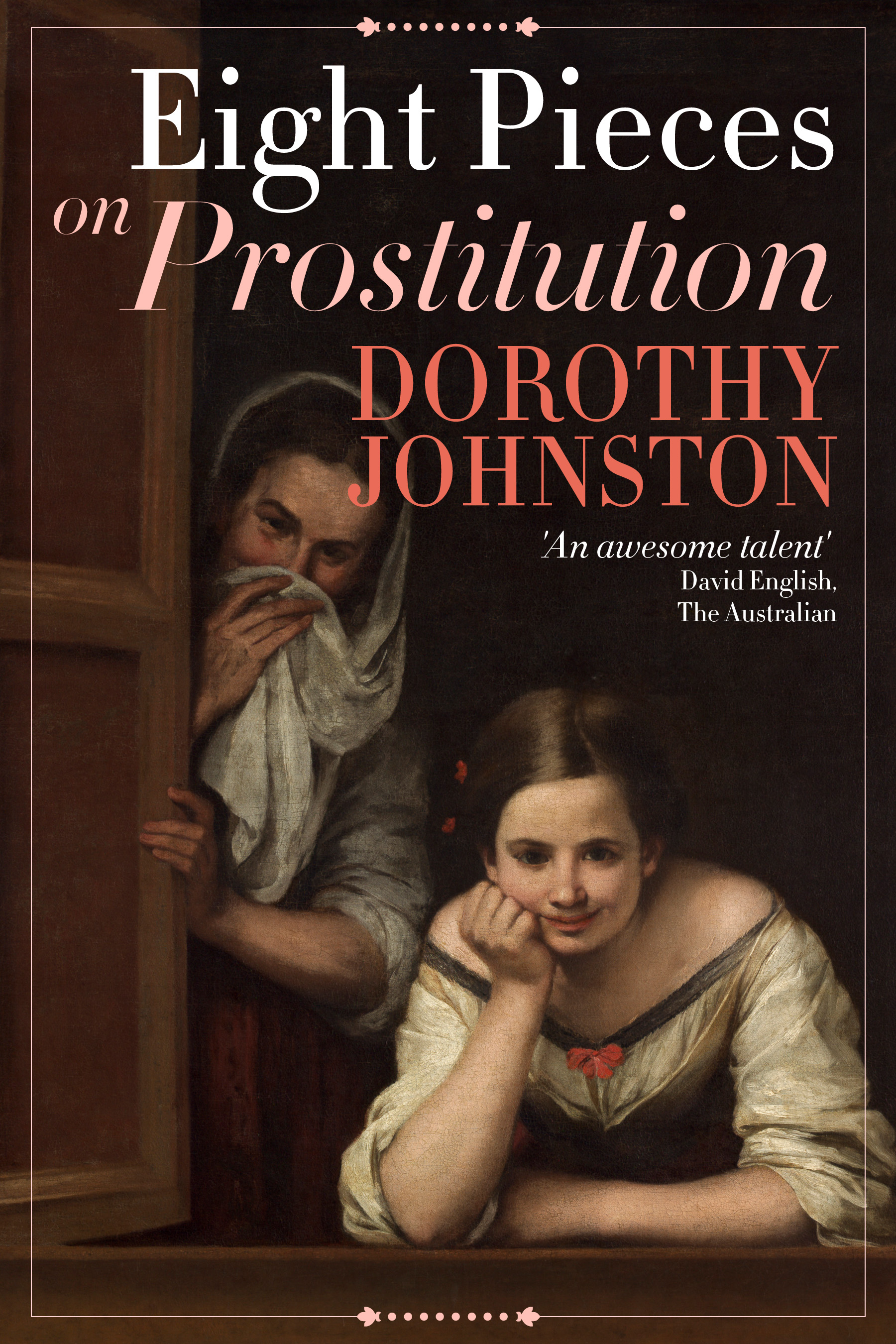
Dorothy Johnston, Eight pieces on prostitution book cover

Lifted, with approval I hope, from Johnston’s website

A few months ago I wrote a Monday Musings on the Australian Society of Authors’ digital publishing initiative, Authors Unlimited e_Book portal. At the time I decided to try it out and bought Dorothy Johnston‘s collection of short stories, Eight pieces on prostitution.

The collection comprises 7 short stories and a long story or novella. One of the stories, ‘Mrs B’, I read earlier this year in Meanjin‘s Canberra edition. Some of the other stories have been published before too: ‘The Man Who Liked To Come With The News’ (The State of the Art, 1983), ‘Commuting’ (Island, issue 52, Spring 1992, and elsewhere), and ‘The Studio’ (Southerly, Winter 1996).

The first thing I should say about this collection is that it is not salacious reading. That is, it’s not erotica. Johnston’s interest is the lives, the experience, of prostitutes as people. Who are they? Why are they doing what they are doing? How do they negotiate their relationships, professional and personal? How do they live the life they’ve chosen and are they happy?

Johnston’s prostitutes are neither glamorous nor tarty, and most work for themselves or in small establishments. They are not the prostitutes of popular imagination. That is, they tend not to work in fancy parlours under control of a madam nor in that sleazy underworld borderland managed by pimps. They are, instead, either ordinary employees or small businesswomen. Some are career prostitutes, others are university students or single mothers who need to support themselves, while still others, like Eve in ‘The Studio’, are a little more mysterious:

She lives in a small flat. She chose the national capital because she imagined it to be a city where she could fade into the background, where she could hide.
Johnston’s characters are often wistful or even a little sad, but they are never pathetic. They are intelligent, and Johnston respects not judges them. They are not powerless, either, though sometimes the power they have is limited to their domain and can be tenuous. They can be a little lost, or perhaps just at a cross-roads in their lives. Maria in ‘The Cod-piece and the Diary Entry’ is uncertain about the world and her place in it. She thinks, when she moves and loses a client:
Looking back, she could not shake the feeling that she’s been on the point of understanding something important while in Harry’s company, that understanding had been no more than a breath away.
Sandy in ‘Names’ admires university student Gail’s strength and resilience:

She never let herself fall into a chair like I did when she came back from a client, slumping my stomach and letting the smile drop off my face.

There is a continuity between these characters and the three women in her novel The house at number 10 which I reviewed earlier this year. Like Elizabeth Jolley, Johnston is not afraid to re-use or develop characters across her oeuvre. I rather like that.

The pieces are set in places known to Johnston – Canberra and Melbourne. We get a clear sense of those cities, but even more we are let into the rooms the prostitutes inhabit – the ones they work in, the ones they relax in between clients. We learn about the things that are part of their daily routine. Sophie, for example, in ‘Commuting’, finds that when she steps outside work
petrol fumes are a relief after hours of perfumed towels and bubble bath.
The final piece is the novella ‘Where the Ladders Start’. The title comes from Yeats’ poem, ‘The Circus Animals’ Desertion’:
I must lie down where all the ladders start
In the foul rag-and-bone shop of the heart.

It concerns a three-woman brothel established by Sue, who’d been dreaming for years of a “better system”. It’s “a co-operative … Tough that word, but they’d risen to its challenges”. Now though, the dream is being severely tested as they cope with the death of a client, on the first page, from erotic asphyxiation, “the choking game”.  The story explores the “one for all, all for one” ideal. Are there limits to trust, and how far should you take loyalty, particularly when it starts to be to your own detriment? Johnston sets the story at the beginning of the new millennium adding an ironic overlay to the situation confronting the women. What sort of millennium are they setting up for themselves by their response to the death?

As in all her stories, Johnston’s view of human nature here is warm but realistic, clear-eyed. She pits the “never let a chance go by” attitude against the desire to protect, care and trust, and then tests that against the need for self-preservation.

Johnston’s language is a delight to read. She’s precise but expressive, using imagery with a light touch:

The freedom to ask each other questions danced and shimmied in the air.

She can be quietly ironic:

Laura went on sitting in the kitchen like a Buddha, or more accurately a simpleton, a girl who’d left her mind someplace and forgotten to go back for it.

Is Laura simple or not is the question we ponder through most of the story.

In dealing with a mysterious death, “Where the Ladders Start” introduces us to that other string on Johnston’s writing bow, the crime novel. It’s a clever story, well-plotted, nicely maintaining a tension between mystery and clarity. Like most of the stories, there’s no simple resolution. Life, Johnston shows, is a messy business.

You’ve probably gathered by now that I thoroughly enjoyed this collection. While there is a commonality between the women, giving the collection a lovely coherence, there is also difference. Each character is unique, each story engaging. If there’s an overall theme, it is one of survival, or perhaps more accurately, resilience. Her women get on with life. They make decisions, some good, some bad, some we are not sure about, but, and here’s the important thing, they don’t stand still. Do read it. At $9.95, I reckon this is a steal.

Dorothy Johnston
Eight pieces on prostitution
Australian Society of Authors, 2013
202pp.
Availability: Online download for $9.95 from the ASA site

Monday musings on Australian literature: Qantas flight-length book deal

Some of you have probably sussed that Whispering Gums is not at her usual desk – and you’d be right. I’ve been travelling since mid-August, mostly in Europe, and will be back home in early October. I had hoped to read some books and write reviews while on the road, but somehow the reviews haven’t happened. One review is nearly ready though!

However, here’s something interesting I read just before I left Australia in AustLit news. It was about a Qantas initiative involving commissioning, from Hachette, a series of paperback books “timed to be read during 10 of Qantas’s main flying routes”. The series is called “A Story for Every Journey” and, AustLit reports, will be offered to Qantas’ platinum Frequent Flyers.

The books will cover popular fiction and non-fiction genres  –  the ones we often call “airport books”. The book lengths are based on average reading speeds, taking into consideration time for napping and eating – or so I read in an article at goodereader.com. It quoted Mr Nobay, spokesperson for Hachette’s partner Droga5, as saying that

According to our literary friends at Hachette, the average reader consumes between 200 and 300 words per minute, which equates to about a page per minute.

This spokesperson also said that

for the longer flights, we accommodated some napping time and meals … After a few hours with a fine Qantas in-flight meal with Australian Shiraz, most people need a break from reading.

(Don’t you love the marketing?!)

AustLit said that one of the ten books – sounds like the initial plan is for ten – will be Kimberley Freeman’s Wildflower Hill which “has been suggested as the perfect read for travellers on the Sydney to Dubai route”. What a shame I didn’t have it when I flew that route a few weeks ago! I’ve never heard of Kimberley Freeman, which is apparently the nom de plume of Brisbane writer and academic Dr Kim Wilkins. Other authors include popular actor and author William McInnes, popular non-fiction writer Peter FitzSimmons and novelist Lian Hearn.

Anyhow, as goodereader comments

If this concept in reading takes off (pun intended) and if lawmakers insist on holding to strict regulations on the use of mobile devices during air travel, there is potential for a surge in not only print-reading, but also a shift towards more books being written with an intentional audience already in mind.

On my first reading of the initiative, I thought it was about commissioning books to be written for the purpose, but it sounds like it’s about identifying existing books that suit the criteria and re-packaging them for a new market. It may, of course, lead to books being written specifically for the market, as goodereader wonders.

I’m not sure I need to have books specially targeted to a set reading period, but I love the creative thinking behind this initiative. What do you think? Have you heard of anything similar?

Louis Nowra, Into that forest (Review)

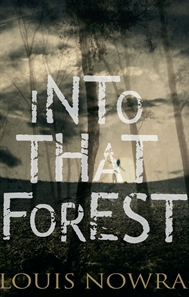
Louis Nowra, Into that forest

Courtesy: Allen & Unwin

Louis Nowra is one versatile and prolific writer, having written novels, non-fiction, plays and screenplays, essays and even libretti. Into that forest is his latest work. It was shortlisted for the Young Adult Novel prize in the 2012 Aurealis awards and the Ethel Turner Young People’s Literature prize in this year’s NSW Premier’s Literary Awards. I read this for my reading group. We don’t often do youth literature but every now and then one pops up that we think might interest us … such as a book by Nowra.

The first thing to say is that the novel is written in a unique voice. Here is its opening:

Me name be Hannah O’Brien and I be seventy-six years old. Me first thing is an apology me language is bad cos I lost it and had to learn it again. But here’s me story and I glad to tell it before I hop the twig.

And what a story it is … this novel feeds into several Australian, and wider, literary traditions. There’s the lost child and the feral child motifs (reminding me of Dog boy). There’s Tasmanian Gothic, and there’s also a bit of the fairy-tale about it. Subject-wise it covers some significant ground: environmental issues (involving both the extinct Tasmanian tiger and the whaling industry) and what we’d now call Post Traumatic Stress Disorder. This might sound rather mechanistic, but there’s no sense of “ticking off”. It’s not didactic, and it’s all logical within the framework of the book.

Set in the late 19th century, it tells the story of two young girls, Hannah (then 6) and Becky (7) who find themselves lost in the bush (oops, forest!) after their boat capsizes in a storm and Hannah’s parents drown. They are taken in by a Tasmanian Tiger pair, and live with them for four years. Meanwhile, Becky’s father, Mr Carsons, is out looking for her. Eventually they are found, but the process of re-integration is not easy. The novel has a small cast of characters, which keeps it tightly focused. Besides Hannah’s parents who die near the beginning, there’s our two young protagonists, Becky’s father, his friend Ernie, the “tiger man”, a few other minor characters – and of course, the tigers, named Dave and Corinna by Hannah.

As in Dog boy, the description of life with the tigers is pretty visceral. At first Becky resists living like a tiger – perhaps because she still has a father whom she hopes will find her – but eventually she too succumbs, if succumb is the word. It is, after all, a matter of survival. And so they shed their clothes, start to move mostly on all fours, and develop keen animal instincts (of sight, hearing and smell). They also develop a taste for raw food and become adept at hunting. The descriptions of killing and eating the prey are not for the squeamish – “I were starving and the taste of blood made me feel even more hungry” and “What were ever in that shiny pink gristle surged through me in waves of ecstasy” – but they are important to our understanding of what their lives had become. Hannah says:

God knows where me sense of survival came from. Maybe it’s natural cos humans are just animals too.

There is a bogey man here – the tiger man or bounty hunter, whom Hannah had met before, through her parents. To the girls he is more brutal than the tigers. He’s “evil”, kills tiger pups, does “stuff to himself that were rude”. But, perhaps, he’s just another survivor, albeit a not very pleasant one?

While Hannah is the narrator, Becky’s character is the more complex one. She struggles more with the change forced upon them:

She didn’t want to forget. Me? I thought it were stupid to try and remember like Becky did. I didn’t see any use for it. Me English started to shrivel up, like an old dry skin a snake gets rid of. It just lies there in the grass rotting away and then vanishes with the wind. I took to talking in grunts, coughs and hoarse barks like the tigers. This annoyed Becky no end. But it were simple – the tigers understood me. Becky warned I were making a mistake. You will forget your language. You will forget your parents. You are becoming an animal, she’d say. Why argue with her? She were right on every level.

Becky initially fights against the brutality of the hunt – there’s a horrific description of the tigers attacking seals – but then surprises Hannah by rather fearlessly exerting some dominance in the pack. She was of course desperately hungry by then, but it shows Hannah that:

she were really stubborn if she wanted something. She were brave, she were stubborn, she were smart, she were tough.

Unfortunately, Becky is not as tough – or as adaptable – as Hannah thought, and consequently precipitates the novel’s rather shocking conclusion.

It’s a pretty bold novel – but less so than, say, Lord of the flies. There’s plenty to discuss, particularly regarding the subjects I suggested at the beginning of the post. The big theme, though, the one common to feral children books, has to do with defining our nature. What separates human from animal? What would you do to survive – and what would that say about the essence of humanity? Good stuff for young adults, and a gripping read too for we older readers.

Louis Nowra
Into that forest
Crow’s Nest: Allen & Unwin, 2012
ISBN: 9781743311646 (Kindle ed.)

Carrie Tiffany, Mateship with birds (Review)

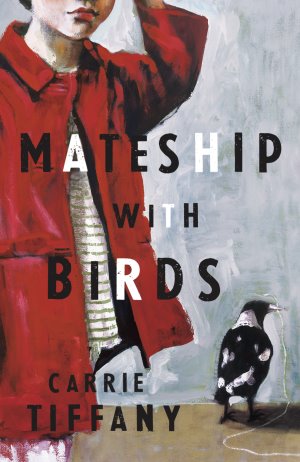
Mateship with Birds (Courtesy: Pan MacMillan)

Book Cover (Courtesy: Pan MacMillan)

Carrie Tiffany is on a roll. Last month her second novel, Mateship with birds, won the inaugural Stella Prize, and this month it won the Christina Stead Prize for Fiction at the New South Wales Premier’s Literary Awards. It has also been shortlisted for the Miles Franklin award. Many bloggers* have already read and reviewed it so, once again, I’m the last kid on the block, but I have finally got there.

Like her gorgeous first novel, Everyman’s rules for scientific living, Mateship with birds is set in rural Victoria in the past, this time, the early 1950s. Its central characters are the lonely, gentle dairy farmer, Harry, whose wife has left him, and his also lonely neighbour, Betty, who has brought her fatherless children to the country and who works in the local aged care home. The novel takes place over a year, a year that is paced by the life-cycle of a kookaburra family which Harry watches and documents in the spare righthand column of his old milk ledger. These notes, which are interspersed throughout the novel, are delightful and poetic, albeit brutal at times:

They work in pairs
against a fairy wren.
Dad buzzes the nest,
the wren throws herself on the ground
to draw him away.
She pluckily performs her decoy
– holding out her wing as if it is broken.
A small bird on the ground
is easy picking.
Club-Toe finishes her off.

They also provide commentary on the main story which is, as you’ve probably guessed, a love story. It is, however, no traditional romance. The boy and girl, Harry and Betty, are well past their youth and are cautious, given their previous experiences of love and relationships. They reminded me a little of Kate Grenville‘s rather dowdy protagonists in The idea of perfection. They care for each other in all sorts of practical ways: Betty cooks meals for Harry and tends his health, and Harry looks out for Betty and her children, fixing things when he can. A sexual tension underlies all their interactions – over many years – but it’s not openly expressed.  (“When he’s invited to tea he leaves immediately the meal is finished, as if unsure of what happens next”). Harry gradually takes on the role of “father figure” for Michael. However, when Michael becomes interested in a girl and Harry decides to pass on some “father-son” knowledge (“an explanation of things – of things with girls? Of … details of the workings”), including some rather specific physical advice regarding women, Betty is not impressed.

It sounds pretty straightforward, doesn’t it, but there’s something about Tiffany’s writing that makes it feel fresh, original. Part of it stems from her particular background as a scientist and agricultural journalist. Again, like her first novel, she grounds the story in her knowledge of farming life, but not in so much detail as to be boring. Rather, her descriptions give the novel its underlying rhythm – the landscape and the creatures inhabiting it (the kookaburras, owls, magpies, and so on); the milking; the driving into town; the way country neighbours help each other out; the sense of life going on regardless of the little dramas, the kindnesses and the cruelties, that occur. The writing is evocative but has a resigned and rather laconic tone that fits the rural setting.

Although a short book – a novella, really – it’s richly textured. There’s the main narrative drive which flips between Harry and Betty and includes flashbacks to their past, occasional dialogue, gorgeous descriptions (“The eucalypts’ thin leaves are painterly on the background of mauve sky – like black lace on pale skin”), and lists of plants, animals, medications, and so on. Interspersed with this main narrative are Harry’s kookaburra log, Betty’s notebook, Little Hazel’s nature diary, and Harry’s letters to Michael. And all this is layered with imagery involving mating, mateship, birds and humans. You can imagine the possibilities that Tiffany teases out from these. It’s all carefully constructed but doesn’t feel forced. It just flows.

In other words, this is a clever book, but not inaccessibly so. It’s generous, not judgemental. It’s also pretty earthy, with regular allusions to and descriptions of sex. If I have any criticism, it’s  in the persistent references to sexuality. At times, I wanted to say, “ok, I get it, sex – in its beauty, carnality, and sometimes cruelty and brutality – is integral to life” but I kept on reading because … of the writing. I love Tiffany’s writing. I mean, how can you not like writing like this description in which Harry compares Betty to Michael’s girlfriend Dora:

Not like Betty. His Betty is heavier, more complicated. Betty meanders within herself; she’s full of quiet pockets. The girl Dora might be water, but his Betty is oil. You can’t take oil lightly. It seeps into your skin. It marks you.

Australian Women Writers ChallengeI also kept reading because I wanted to know what it was all about. Why was Tiffany writing this particular story, I kept thinking. For some reviewers (see the links at the end), it is primarily about family, for others it is about the relationship between men and women, but for Tiffany it’s about desire. I can see that it is about all these things, but here’s the thing, the book starts with the description of four attacks by birds on humans followed by a description of cockatoos damaging crops. This, together with the sexual imagery, the frequent references to animal behaviour and to humans’ relationships with animals, suggests to me another theme to do with the nature of life, with the nature of our relationships with animals, and with how we accommodate the animal versus the human within ourselves. I’ll give the final word to the birds:

Mum, Dad, Club-Toe
break off their
preening,
squabbling,
loafing,
to attack.
They lose themselves in the doing.
I struggle to tell them apart.
Knife-beaked,
cruel-eyed,
vicious;
there is no question
they would die for the family
– that violence is a family act.

This book packs a punch!

* You may like to read the reviews written by Lisa (ANZLitLovers), John (Musings of a Literary Dilettante), Matt (A Novel Approach) and Kim (Reading Matters).

Carrie Tiffany
Mateship with birds
Sydney: Picador, 2012
208pp.
ISBN: 9781742610764

Valeria Luiselli, Faces in the crowd (Review)

Mexican writer Valeria Luiselli’s Faces in the crowd was, as regular readers here might remember, one of my two Bah Humbook virtual gifts from Stu of Winston’s Dad. I ordered it on Christmas Day for my Kindle – after all, it was a Christmas present – and have now read it. Wow, what a read, but how to write about it?

Perhaps I’ll start by quoting something near the end of the novel:

There are people who are capable of recounting their lives as a sequence of events that lead to a destiny. If you give them a pen they write you a horribly boring novel in which each line is there for an ultimate reason: everything links up, there are no loose ends.

This is not such a novel. Things don’t link up, there are loose ends, and it’s both chronological and not. It is in fact a metafictional work. It has the old story-within-a story-within-a-story structure, the self-consciousness about fiction versus reality, all of which could be a bit old hat, except it isn’t. The first person narrator is a somewhat frustrated novelist in Mexico City. She has two children – the boy and the baby – and a husband. To make her novel, an autobiographical one, interesting, she has her husband leave her. (Wish fulfilment? we wonder.) Reading over her shoulder, he says:

Why have you banished me from the novel? What? You wrote that I’d gone to Philadelphia. Why? So something happens.

This fictional husband sometimes takes up the story, telling of his life in Philadelphia and of missing his children. Our narrator reminds us that “it’s only a novel, none of it exists” and says she is writing “A horizontal novel, told vertically”, and then “A vertical novel told horizontally”, and still later “Or a horizontal novel, told vertically. A horizontal vertigo”. Word play, you see! I can imagine the fun the translator had with this – and from what I can tell, she seems to have made a good fist of it because there’s a lot of humour here, humour that is linguistic, verbal, and that requires you to keep your wits about you.

Meanwhile, interspersed with telling the story of her current life in Mexico City and the “fictional” life of her husband in Philadelphia, she tells of her past when she worked in New York City “as a reader and translator in a small publishing house dedicated to rescuing ‘foreign gems'”. There are a few “digs” at Americans in the book and one follows this statement, when she continues, “Noone bought them, though, because in such an insular culture translation is viewed with suspicion!” I can see why Stu, with his love of translated literature, related to this work! This story, the one about her time in NYC, is full of unusual but colourful characters flitting into and out of each other’s lives, houses and beds, all told through little, sometimes interconnecting, vignettes which mostly serve to illustrate the contrariness of existence.

There’s Moby, for example, who “forged and sold rare books that he himself produced on a homemade printing press”. “My husband reads some of this”, our narrator writes, “and asks who Moby is. Nobody I say. Moby is a character.” Is he? Your guess is as good as mine. Suffice it to say that Luiselli plays these games with us from beginning to end, all the while challenging us to consider what is fiction, what is real. Is any of it real, she seems to be asking? She writes, “Writing this is coarse. But reality is even more so.” There are ghosts, blindness, and shadows; people and objects suddenly slip from being substantial to being insubstantial. And gradually our narrator, herself, seems to merge with the obscure Mexican poet, Gilberto Owen, about whom she is writing, while running into (or does she?) other poetic luminaries like Federico Garcia Lorca, William Carlos Williams and Ezra Pound.

There’s a fantastical element to the story, but it’s not the same as Gabriel Garcia Marquez‘s magical realism. It’s more slippery, if that makes any sense at all. While Gabriel Garcia Marquez expects us to comprehend “the magical” as part of it all, Luiselli seems to be saying the opposite, suggesting that perhaps “nothing is”.

This all might sound rather depressing, but it’s not. It is in fact a fun read. And while the novel is, I think, about the challenge of living an artistic life in which the things of the real world threaten to overwhelm the imagination, the final word is positive – albeit ironically so. You’ll have to read it yourself though to find out what that is.

Valeria Luiselli
Faces in the crowd
Translated by Christina MacSweeney
London: Granta Books, 2012
ISBN: 9781847085580 (Kindle ed.)

Fridays with Featherstone, Part 4: On writing and admired writers

Today, I bring you the final part of Susan Errington’s Wet Ink interview with Nigel Featherstone. In this part Nigel talks primarily about some of the writers he admires or who have inspired him – and how they relate to his writing. I love the fact that many of the writers Nigel admires are also favourites of mine, such as … but no, if I tell you now that will spoil the interview. Read on …

INTERVIEWER

You seem interested in troubled or fractured families, especially in Remnants. Is the family dynamic something you want to expand on in future writing and perhaps bring to the forefront?

FEATHERSTONE 

Families are both fascinating and frightening.  As a writer I’m asking, what makes up a family?  It’s not just husband and wife and two children.  A family can be a group of people living in a share-house.  It can be a rock band.  It can be three kids on a road-trip.  It can be an old woman and her twenty cats; Eva Hornung explored human-animal relationships as family in her extraordinary novel Dog Boy.  Families can be forces for good, and forces for evil; more often than not, they are both at once – this is what Anne Enright was doing in her Man Booker prize-winning The Gathering.  Whenever I hear someone say that family is ‘the bedrock’ of society I want to reach for my pen and get to writing.  Family might be the traditional bedrock in terms of procreation, but it certainly isn’t the emotional bedrock for many individuals.

INTERVIEWER

Your Australian families lack the hysteria of Patrick White’s and remind me more of the quiet honesty of Randolf Stow’s. What’s important to you in creating a family in your work?

FEATHERSTONE

You’re not the first person to mention Randolf Stow in relation to my stories, and it always fills me with a warm inner glow.  I read The Merry-Go-Round in the Sea back in high-school and I was rapt, and that rapture has continued after all these years – and I haven’t read it since, although recently I bought another copy and it’s on the bedside-table pile.  Quiet honesty.  I like that.  Is that what attracted me to Stow?  Who can tell?  In terms of technics, what’s important in creating a fictional family is life, depth of character, and conflict.  It’s also important, I think, for the family to want something, resolution, revelation, salvation, disintegration, even if they don’t know it.

INTERVIEWER

Who are the important novelists for you?

FEATHERSTONE

J.M. CoetzeeDisgrace is the perfect contemporary novel.  Colm ToibinThe Blackwater Lightship, a story about three generations of Irish women, is told in the simplest, most direct voice, but it dives so confidently into the depths.  Alan Hollinghurst – the language in The Line of Beauty never ceases to amaze me, and the author is invariably hilarious.  Kazuo IshiguroA Pale View of Hills and The Remains of the Day are two gorgeous novels, both being vast wells of intimacy.  Graham SwiftLast Orders is a novel I return to regularly.  Morris WestEminence is built around a terrific what if (what if the next Pope was agnostic?).  Truman CapoteIn Cold Blood is a book that has had a huge impact on me because it’s the portrait of friendship and family and landscape.  Harper Lee – the burning desire for justice in To Kill A Mockingbird.  The verse-novelist Dorothy Porter – what she could conjure on the page!  Helen Garner – although not fiction, Joe Cinque’s Consolation shows all the hallmarks of what makes a novel.  It may appear odd in this company, but Flann O’Brien’s The Third Policeman is the most audacious of stories.  The names Tolstoy and Chekhov have to appear in this paragraph.  As does Flaubert’s; Madame Bovary is the truly great novel.

INTERVIEWER

Writing is a tough and often lonely gig.  Where do you draw your inspiration?

FEATHERSTONE 

From the things that happen around me, or happen around other people.  That makes it sound easy.  You’re right: it’s not.  There are days when I’d like to chuck it all away, but my life would be dreary without writing and reading.  And music.

INTERVIEWER

What are you working on at present?

FEATHERSTONE

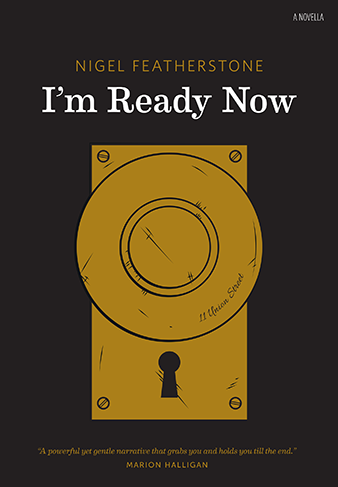
Nigel Featherstone, I'm ready now

Cover (Courtesy: Blemish Books)

Going back to where we started, the second of those Launceston novellas is being published by Blemish Books in November this year*, so over the coming months I’ll be working on the nips and tucks required by the publisher (it’s already been through quite a few rounds of these), getting the story as perfect as humanly possible.  What can I tell you about it?  Perhaps, after all this talk about men and their trials and tribulations of forming relationships and trying to have meaningful lives, it might be a surprise to tell you that this second novella, which is called I’m Ready Now, is a story about a mother and son.  The mother has reached a fork in her life, and so has the son, and both are in the midst of making decisions that will change the course of their lives and their relationship(s).  It’s told from both points of view, and I enjoyed writing the mother as much as the son, perhaps even more so.  And I’m always working on short stories, and creative journalism.  And, yes, there’s a bigger project but I can’t talk about that because I’ll jinx it.  But for the next few months, much of whatever brain-power I have will be occupied with bringing I’m Ready Now into the world.

* This interview was prepared many months ago for publication in Wet Ink during 2012. Readers of this blog will know that I’m ready now was indeed published in November and reviewed by me that month.

If you missed Part 1, click here, for Part 2 here, and for Part 3 here.

Thanks again to Susan Errington for supporting my running this interview after the demise of Wet Ink. I’m sorry that Wet Ink no longer exists, but it’s been a pleasure to share this great interview with readers here.

Fridays with Featherstone will finish next Friday with my follow-up interview with Nigel…

Fridays with Featherstone, Part 3: Using the Arts and Landscape in fiction

Today, I bring you the third part of Nigel Featherstone’s Wet Ink interview with Susan Errington. One of the things that stands out in the two novellas I’ve read by Featherstone is the way he uses the arts. Even though the title of the first novella, Fall on me, is a direct reference to the REM song of the same name, Featherstone’s use of and allusion to the arts is not heavy-handed in his writing. It’s there however, suggesting that a life that incorporates the arts is important to him. And don’t we all (readers here, at least) agree! In this part of the interview, Susan talks with Nigel about the way he uses the arts in his writing, and they talk a little at the end of landscape as well. I was intrigued when I first read the interview to discover that Featherstone grew up in the part of Sydney that I spent my teen years in. Small world. Anyhow, here goes part 3 …

INTERVIEWER

In Fall on Me, the main character, Lou, must deal with his son’s decision to open his art exhibition, which consists of naked photos of his seventeen-year-old body. What attracted you to this idea?

FEATHERSTONE

Three years ago I attended a final-year student exhibition at the Canberra School of Art. One of the pieces was a large photo – a self-portrait – of a young man dressed as a woman reclining on a bed in a dilapidated house. I became aware that two friends of mine – a husband-and-wife couple – were standing next to me. I said, ‘Isn’t this a striking image?’ And they replied, ‘We’re glad you think so because our nephew is the artist.’ That set off my imagination: were the aunt and uncle at the exhibition because the young man’s parents had refused to attend? Back home later that night I jotted all this down in my journal. When I was in Launceston I rediscovered the idea and still felt curious about it. In the planning of the story, the young man became a high-school student, because that would be more dangerous. Enter Luke Bard, who’s someone else I’d like, because he too refuses to be anyone but himself.

INTERVIEWER

Nakedness has often proved to be dangerous terrain for visual artists over the centuries and still is. What are you saying about this in your novella?

FEATHERSTONE

Some people have commented that in Fall on Me I’m drawing on the whole Bill Henson saga. I don’t recall Bill Henson cropping up in my thinking at any point during the writing and editing of the novella. To make the story have impact, Luke Bard simply had to do the most radical and, yes, dangerous thing he could: which was display photos of his naked body in public. But why is this dangerous? Why are we so hung about images of naked bodies, no matter what the age? I think it taps into something deep within us that makes us feel terribly uncomfortable. As I worked on Fall on Me, and reworked it, I realised that Luke’s nakedness was less a physical act and more a symbolic act: it was all about being revealing, not so much himself, but his father. While we’re on the topic, I was surprised how some readers initially found Luke’s actions – and his father’s actions – quite difficult to accept, but, thankfully, it all seemed to make sense at the novella’s conclusion. That’s my mission as a writer: to gently lead people into the darkness and show that there’s not a lot to be scared about.

INTERVIEWER

A number of writers have spoken of the importance of visual art to their writing; I’m thinking of Steven Carroll and John Banville, for example, where visual art has an important part to play in their stories just as photography does in your novella. Robert Hughes is an art critic but also a poet, essayist and biographer. Patrick White actually wanted to be a painter. Why is your character Luke a photographer and not, say, a performance poet?

FEATHERSTONE

The short answer is that I think I can imagine how a photographer’s brain might work; who can imagine a performance-poet’s brain? Also, for Fall on Me to come together, I needed to put in the reader’s mind the images that Luke had made of himself, and I did this by describing them to the best of my ability. A better writer than me might have been able to achieve this through having Luke use performed words rather than pictures.

INTERVIEWER

Are the visual arts integral to your writing or is it simply that words have lost the power to shock?

FEATHERSTONE

Oh words can shock. They’ve always been able to shock, and they’ll continue to be able to shock. You only have to look at a cleverly crafted newspaper headline or a sound-bite prepared for a politician to see how words can deal blows. However, I’m also a fan of visual art, particularly photographs – there’s nothing like a haunting black and white image. And there’s a parallel between photography and writing: both start with the blank page and through artistry people and/or places come to life and a story is told. I’m going to use that word again: both are magic.

INTERVIEWER

Remnants is much more about the revealing power of words, in personal letters and secret novels for example. What are you trying to say there?

FEATHERSTONE

When I wrote Remnants, which was between 2000 and 2005, letter-writing was still a part of my life, albeit a rapidly fading part, so it felt natural to bring letters into the story. Also, I was writing about people in their seventies and eighties – they’d be well and truly in their nineties now – and most people of that generation would have collected boxes or suitcases of handwritten correspondence. More broadly, as each day goes by, I’m astounded by how story-telling is an integral part of life. A status update on Facebook or a few flicked off words on Twitter or a brief piece of correspondence sent by the increasingly old-fashioned email is about character and event, if not story, as rudimentary as it may be. And it’s all to do with words and how they’re used.

INTERVIEWER

Fall on Me is the title of an REM song and this band’s music is important to the character, Lou. I think writers who refer to contemporary music are quite brave because they risk dating their work or limiting their audience. Tell us about your decision to use this music and whether it is also important to you.

FEATHERSTONE

During the writing of the first draft, REM’s pop-song gem ‘Fall on Me’ just – well – fell into the story. I’ve always liked the song, but I wouldn’t say it’s one of my all-time favourites, or one I’ve played regularly; it just seemed to fit Lou and his life. But as the writing of the story progressed, the song became more and more important, until by the end it had become a physical presence in the story, before it eventually took over the whole thing and demanded to be the title. Shockingly, it wasn’t until after the novella was published that I understood it had a deeper meaning: Lou lost his wife through tragic circumstances and he is, in effect, saying to her, fall on me and I’ll save you. Now that I have even more distance from the making of the story, I realise that it’s an example of character being very real to the author, even if the author doesn’t know it at the time.

INTERVIEWER

What is the role of music in your writing generally?

FEATHERSTONE

Music is the foundation of my life – it means the world to me. But I don’t write to music; I get too distracted. However, if I’m trying to get in a certain mood to write, or trying to bring to a story a certain aesthetic, I might listen to a particular song or piece of music, but it’s always turned off as soon as the pen goes down on the page. Just to prove that every project is different, I wrote some of the drafts of Remnants to Arvo Part’s Alina. It is such simple and repetitive music that I was able to play it and still hear the words in my head. I think I needed it to access the sense of longing that was required for the novel.

INTERVIEWER

In Remnants the different landscapes are a powerful presence and richly described. It seems as if the changes in landscape are reflecting the mood and action of the novel. Was this your intention?

FEATHERSTONE

My childhood was spent exploring the wild edges of the Ku-ring-gai Chase National Park, the sea-and-sand-scapes of the northern beaches, and the almost prehistoric Blue Mountains. Even today, as I drive around the Southern Tablelands, I’m struck by the character of the landscape, its moods, its reticence, but always the amplification of self. As a writer, I’m interested in place as character as much as I am in human beings as character. Remnants was set in a small village in the Blue Mountains that I know very well; in a way I spent the first eighteen years of my life there. The vast majority of the story is concerned with the train trip from Perth back to the Mountains, so the narrative becomes a cross-section through the heart of the nation.

Look for Part 4 next Friday …

If you missed Part 1, click here, and for Part 2, here.