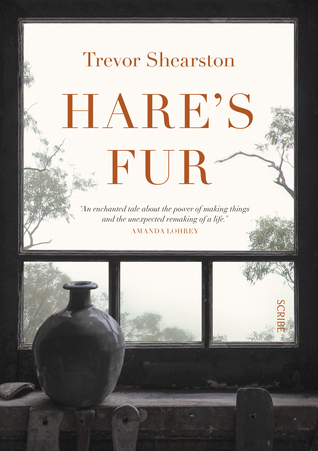
Carl Merrison and Hakea Hustler, Black cockatoo (#BookReview)

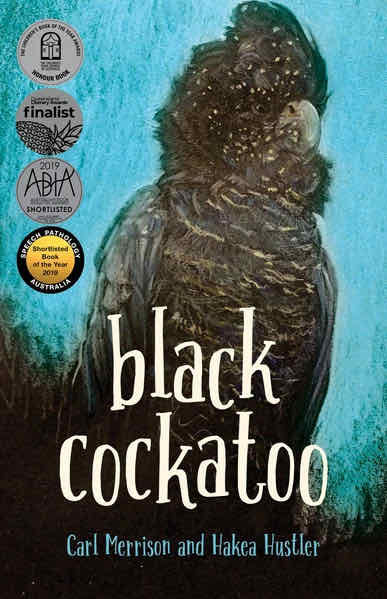
Black cockatoo is a young adult novel written by Indigenous Australian author, Carl Merrison, and his non-Indigenous collaborator, Hakea Hustler, and illustrated by Indigenous Australian illustrator, Dub Leffler. It is a beautiful, little (in size, not value) book that made quite a splash when it was published. It was shortlisted for several children’s literature awards in 2019, including those by the Children’s Book Council of Australia, Readings, the Australian Book Industry Association, and the Queensland Literary Awards. However, it is not the sort of book that I would normally post on here, so I plan to keep this review short.

I say this for a few reasons. For a start, children’s and young adult literature are not my main interest, though I do occasionally make exceptions, as I am making here. My main reason, however, is that not only am I not the typical age demographic for this book, but I am also the wrong cultural demographic, which makes me two steps removed from its target audience. But, I ordered this book from Magabala because I was intrigued about what was being written for young Indigenous readers, and it is on that basis that I’m posting on the book.

The story is set in a remote community in Australia’s Kimberley region, and focuses on 13-year-old Mia. She is disturbed to see her 15-year-old brother, Jy, becoming increasingly alienated from his community and culture, but feels powerless to do anything about it. In the book’s first chapter she rescues a young black cockatoo (dirrarn) which had been injured by Jy who had been target practising with his shanghai. The dirrarn is her totem animal.

What makes this book interesting for someone like me to read is the way it conveys the issues that I, an outsider, am aware of through my reading. One of these is the issue of family breakdown in Indigenous communities. Mia and her brother are being raised by their mother and grandparents, and haven’t seen their father or his family for many years. It’s clear that this is a tough gig for the grandparents. Mia overhears her grandfather (her jawiji) tell her grandmother that he’s “just tired”, and that:

I’m not sure I have it in me to teach him the right ways anymore. He’s just so headstrong.

In one way, of course, Jy is a typical teenager – stubborn and defiant – but concern about this behaviour is magnified in Indigenous communities where disconnection from culture can leave young people, young men in particular, highly vulnerable. In this story, the grandparents, like many in Indigenous communities, do their best to inculcate knowledge of and respect for culture, while also supporting their grandchildren’s need to make their way in a world they don’t know themselves.

This brings me to the main subject of this story, Mia. Her angst stems not only from her concern about her brother, but from having to make a decision about whether to take up her place at “a fancy school down south”. She’s confronting that conundrum faced by young Indigenous people that I’ve also gleaned through my reading, the challenge of straddling two cultures. There is a lovely sense here of Mia being supported and encouraged by her family, but also of her having some agency in what she does:

“You live in both worlds,” her grandmother added. “You will be strong in both ways.”

Black cockatoo is a short story but Merrison and Hustler pack a lot in here about the warmth and humour within extended Indigenous families, which lightens the more serious concerns they confront. The tone is not heavy, which is appropriate given the aim of this book being presumably to support young Indigenous people in making good choices rather than to demoralise them with the challenges they face!

The book is illustrated by Dub Leffler, with stylish, sometimes realistic sometimes more subtle, black-and-white images opening each chapter. Words from Jaru language are lightly scattered through the text:

It had been a proper long barranga dry weather, so to hunt we didn’t have to travel far to find big fat bin.girrjaru bush turkey.

There are two small glossaries at the end, one of Jaru words, and the other of Aboriginal English/Kriol words, that are used in the text.

While not all issues are resolved by the end, as you would expect, the novel’s conclusion, as you would also expect, is positive, with Mia coming to realise both her own inner strength and that she has the ongoing support of family and culture. It’s a good message in an accessible book, it seems to me, but the real proof is whether it works for its target readers, and that, of course, I don’t know.

Challenge logo

Carl Merrison and Hakea Hustler
Dub Leffler (illus.)
Black cockatoo
Broome: Magabala Books, 2018
62pp.
ISBN: 9781925360707

Carol Lefevre, Murmurations (#BookReview)

Book coverMurmurations is a beautiful, evocative word, and Carol Lefevre’s latest book, titled Murmurations, does beautiful, thoughtful justice to it. It is though an unusual book. Styled by its author as a novella, it reads on the surface like a collection of short stories, except that the stories are not only connected by the various characters who pop in and out, but by an overarching mystery concerning one of them, Erris Cleary, whose funeral occurs in the first of the eight stories.
Murumuration is, you may know, the collective noun for a flock of starlings, something I discussed in my 2016 post on Helen Macdonald’s essay “The human flock”. She says starlings flock for protection (out of fear), to signpost where they are to other starlings, and for warmth. Lefevre provides, as an epigraph for her book, an image of a murmuration and the following quote from a paper on starling flocks:

The change in the behavioural state of one animal affects and is affected by that of all other animals in the group, no matter how large the group is.

These ideas are all reflected, in some way, in Lefevre’s book. But, the book also has another idea as Lefevre explains in her acknowledgements, and that is that each story was inspired by a different Edward Hopper painting. If you know his paintings – like “Automat” which inspires the first story – you will know that although they are set in real places, they have a certain paradoxical other-worldliness, which entwines bleakness with a sort of dreamy expectation. This tone also pervades Lefevre’s book.

Murmurations starts with “After the island”. Here, young doctor’s secretary Emily considers the funeral of her employer’s wife, the 53-year-old Erris Cleary. She remembers some mysterious messages that had occasionally broken through the doctor’s patient note recordings, messages that implied Erris was in danger. The book ends with “Paper Boats”, in which two neighbours, Amanda and Magda, discuss Erris’ death, with Amanda going on to write a short story about it. Erris Cleary, then, is the link that joins the stories.

The six stories that come between these opening and closing ones are all, like the two just mentioned, told third person from different characters’ perspectives. All are women except for the titular (and penultimate) story, “Murmurations”, which features a young man. His, Arthur’s, story is the only one in which we finally “meet” Erris as a living woman. Four of the remaining five stories feature women who moved in Erris’ circle – Claire, Fiona, Jeanie and Delia – with the fifth one featuring Lizbie who had a complicated and ultimately tragic relationship with two sons from this circle. She is also the daughter of the final story’s Amanda.

Each story focuses on the dark little accommodations or disturbances in its protagonist’s life. Marriage breakdown, looming dementia, suicide and other events threaten to – and usually do – destabilise the characters. There is a sense of quiet desperation in the stories, even in those that look to be alright on the surface. Claire (“Little Buddhas everywhere”) clings to the husband who has remarried. She relies on his sense of responsibility, not to mention her faith in her inherent lovability, to keep him looking after her as well as his new family, while Jeanie (“The lives we lost”) is thrown by the fact that the man she married admits years later that he hadn’t loved her then, though he did now. Delia (“This moment is your life”) is starting to lose her mind. She appreciates her second husband but seems to have married the same sort of controlling man she had the first time. And so on.

These are, mostly, the quiet little tragedies of life, the ones that never make the newspapers but that are all around us – if we only knew what questions to ask. As one character or another appears in the story of another, we see the possibilities for impacting each other – as in a murmuration. The overarching tragedy is that for all their apparent connections, no one seems to really see what is happening to the others or to have the time, or even the desire, perhaps, to genuinely care. This is beautifully illustrated in Jeanie’s story. She moves in with her cousin but they can’t connect:

Neither cousin understands what the other is saying. Though they speak the same language, words, sentences, turn opaque when they attempt to describe their lives.

The implication seems to be that this little murmuration of women is a surface one only, with little protection or warmth afforded to the individual members.

The exception is the mysterious Erris who, in the titular story, speaks to the young Arthur, working in her garden. She offers him the chance to fly:

… and a note, addressed to him, scribbled on a page torn from a blind notebook: Fly away, Arthur. Fly far, be free. Erris.

Around the edges of the paper, cloud shapes were filled with dozens of small, dark, pencilled birds.

The book is beautifully structured to suggest complex layers of links between the stories and characters, layers that would only multiply, I suspect on multiple readings.  The first story’s Emily, for example, is a young girl from the Star of Bethlehem children’s home. Then, after five stories about women linked through neighbourhood lives to Erris, we come to the aforementioned young Arthur. He also comes from the Star of Bethlehem children’s home and was a friend of Emily’s. Will these two, despite lacking the opportunities the others have presumably had, make a better fist of their lives?

The final story adds another dimension. In converting Erris’ death and the mystery surrounding it into a short story that she submits to The New Yorker, Amanda hopes to achieve her writing goal:

to hit one true note. A note that will make sense of something, perhaps of everything, a note that will crack the obliterating silence once and for all.

Can fiction, Lefevre seems to be asking, make the difference? Can we, through fiction, see the connections that we don’t always see in the real lives around us? If it’s fiction like this, written with such clarity and heart, I believe it can.

Challenge logoCarol Lefevre
Murmurations
North Geelong: Spinifex, 2020
108pp.
ISBN: 9781925950083

(Review copy courtesy Spinifex Press)

Sayaka Murata, Convenience store woman (#BookReview)

Book coverConvenience store woman, which won Japan’s prestigious Akutagawa Prize, is Sayaka Murata’s 10th novel, but her first translated into English. Hopefully, it won’t be the last. A rather unusual book, it elicited a stimulating discussion at my reading group last week.

The convenience store woman of the title is 36-year-old Keiko Furukawa. She isn’t “normal”, and her family worries she will never fit in to society. However, when 18 years old, she obtains work at a newly opened Smile Mart convenience store, and quickly feels comfortable, undertaking routine daily tasks, and following the store’s rules. Eighteen years later, she’s still there. This is not seen as a valid situation for a woman of Keiko’s now mature age. Why isn’t she married? And why doesn’t she have a better job? Then she meets another convenience store worker, the also, but differently, nonconformist Shiraha, and she thinks she can solve both their problems by having him move in with her.

It’s a short book, at just 176-pages in the print edition, and is told first person. Now, for those of you who remember my recent discussion of first person voices, Convenience store woman is a perfect example of an effective use of first person. The main theme is the push for conformity, the push to follow the expected narrative of a life, but our narrator, Keiko, is not, for whatever reason, able (or willing) to conform. This theme is particularly relevant to Japan, which has a reputation for conformity and group behaviour, but it’s also universally relevant, because many societies, my own included, are not good at coping with people who stray from the “norm”.

So, Keiko is different. She’s been different all her life. She knows it, and she’s mystified. She’s particularly mystified by the way people often behave which seems counter to logic, and also by the way people cheer up when they think she’s behaving “normally”. An example of the former happens in her childhood, which she tells us via flashback. There’s a schoolyard fight. The kids call for the fight to stop, so she goes to the toolshed, gets a spade and bashes one of the kids with it. Everyone is horrified,

“But everyone was saying to stop Yamazaki-kun and Aoki-kun fighting! I just thought that would be the quickest way to do it,” I explained patiently. Why on earth were they so angry? I just didn’t get it.

An example of the latter occurs after she invites Shiraha to live at her place. Everyone assumes they are in a relationship. “They were all so ecstatic”, she wondered, she says, “whether they’d lost their minds”. Listening to her friends “go on”, she says,

was like hearing them talk about a couple of total strangers. They seemed to have the story wrapped up between them. It was about characters who had the same names as we did, but who had absolutely nothing to do with me or Shiraha.

There it is – the expected story or narrative of life!

Of her convenience store colleagues, she says:

I was shocked by their reaction. As a convenience store worker, I couldn’t believe they were putting gossip about store workers before a promotion in which chicken skewers that usually sold at 130 yen were to be put on sale at the special price of 110 yen. What on earth had happened to the pair of them?

As you can see there’s a good deal of humour in this book. You can also see why this story could only be told first person. Any other voice would risk undermining Keiko’s authenticity, her reality.

So, for Keiko, it’s “convenient” having Shiraha at her place. Everyone is happy for her, and she likes that “they’ve stopped poking their nose into my business”.

However, while Keiko, for all her strangeness, is a likeable character, Shiraha is not. He has no desire to work, and takes advantage of her wish to appear “normal”, even though it satisfies his need for the same. He excuses his laziness by criticising society and its unfair gender expectations on men:

“Naturally, your job in a convenience store isn’t enough to support me. With you working there and me jobless, I’m the one they’ll criticize. Society hasn’t dragged itself out of the Stone Age yet, and they’ll always blame the man. But if you could just get a proper job, Furukura, they won’t victimize me anymore and it’ll be good for you, too, so we’d be killing two birds with one stone.”

Worse, he’s arrogant and cruel:

“I did it! I got away! Everything’s okay for the time being. There’s no way you’ll be getting pregnant, no chance of me ever penetrating a woman like you, after all.”

Actually, he only “got away” because Keiko had the idea of his moving in. Fortunately, she has no interest in sex, so his comment falls on flat ears – but we notice it.

The novel, then, hinges on the idea of normality, with the word “normal” recurring throughout the novel. Early on, Keiko realises that “the normal world has no room for exceptions and always quietly eliminates foreign objects”. This is why, it dawns on her, her family wishes to “cure” her. She is therefore grateful for the convenience store, where she can operate as “a normal cog in society” – until her age makes it no longer “normal”. The charming Shiraha has his own take:

“People who are considered normal enjoy putting those who aren’t on trial, you know. But if you kick me out now, they’ll judge you even more harshly, so you have no choice but to keep me around.” Shiraha gave a thin laugh. “I always did want revenge, on women who are allowed to become parasites just because they’re women. I always thought to myself that I’d be a parasite one day. That’d show them. And I’m going to be a parasite on you, Furukura, whatever it takes.”

Shiraha shows us that Murata’s understanding of deviations from the norm is nuanced, not simplistic.

Anyhow, later in the novel, after her sister asks “How can we make you normal?”, Keiko comes to recognise that her sister is happier seeing her as “normal”, albeit with “a lot of problems”,

than she is having an abnormal sister for whom everything is fine. For her, normality—however messy—is far more comprehensible.

In the end, Keiko does resolve her conundrum regarding how to live in a way that is true to herself. It is inspired, in fact, by the convenience store, which I think we can read as a microcosm of society. She suggests that “a convenience store is not merely a place where customers come to buy practical necessities, it has to be somewhere they can enjoy and take pleasure in discovering things they like”. She can play a role in that.

Convenience store woman is a wonderful read. Perfect in tone and voice, and fearless in its exploration of the confining nature of “normality”, it forces us to look beyond, and imagine other lives and ways of being.

Sayaka Murata
Convenience store woman
Translated by Ginny Tapley Takemori
London: Portobello Books, 2016 (trans. ed. 2018)
eISBN: 9781846276859

Elizabeth Jolley, The orchard thieves (#BookReview)

Elizabeth Jolley, The orchard thievesElizabeth Jolley’s twelfth novel, The orchard thieves, is a little different from most of the other Jolleys I’ve read. It’s a little less black, a little less about alienation, but it’s unmistakably Jolley in style and preoccupations.

By preoccupations, I mean her interest in family relationships and dynamics – and, related to that, her humane, but clear-eyed, understanding of human nature. The orchard thieves was written when Jolley was in her early seventies, and revolves around a grandmother contemplating the meaning of family and children. It feels very much like the meditations a woman of her age would be having – which is not to suggest that the story itself is autobiography. Still, I can see once again, why Helen Garner loves Jolley (and doesn’t love Thea Astley). Jolley and Garner both draw from their lives, albeit Garner more so, and both focus on life’s interior challenges. They also both do so in spare but loaded writing.

The orchard thieves, then, has a minimal plot, and no named characters. Told third person from the grandmother’s perspective, it concerns a family whose members are identified by their roles: the grandmother, the grandsons who belong to the youngest sister, the granddaughter who belongs to the middle sister, and the aunt (who also happens to be the eldest sister who lives with the grandmother). There is also the son-in-law (the youngest sister’s husband.) The novel (novella, really) is constructed in three parts, and the plot, such as it is, revolves around the return from London of the middle sister with her daughter.

So, what is it all about? It’s about the family at a point in time, from the grandmother’s point of view. It’s about parents and children, about love and worry, and about age and wisdom – not that the grandmother pontificates her wisdom or is even really sure that she has it. She worries about the aunt, her eldest unmarried daughter, fearing she’s lonely. She worries about the grandsons, their safety now and their future. And she worries about the middle sister’s health and happiness when she returns home – for how long? – clearly pregnant but saying nothing. It is this sister’s return that ripples the surface of the family’s finely balanced relationships.

Jolley prepares us for this “rippling” with an initially mysterious Preface, which commences

‘If you have the house,’ the middle sister said to the aunt, the eldest sister, ‘if you have the house you’ll have to pay us each one-third of the current market price. One-third each of the value of the place.’

We immediately think of course that someone has died, and then, as the book commences we realise that the owner of the house, the grandmother, has not died. We then wonder if she will die, but Jolley’s purpose is more subtle. This is not an inheritance-fight plot. Instead, the conversation tells something about the sisters’ characters. It also suggests underlying tensions, and introduces some ideas which, when they re-appear in their correct chronological sequence, become clear.

This is not a depressing book. The tensions are real, but the grandmother’s hard-won wisdom re-stabilises without offering pat solutions – and it’s all done in a quietly meditative, but by no means dry, tone. I found it absolutely delicious reading, with its Jolleyesque references to pear trees and birds, orchards and gardens, music and myths, sexuality and lesbianism; its sly humour; and, dare I say it, its relevance to my own musings. I haven’t reached my seventies yet, but am soon to join the world of grandmas and am certainly the mother of adult children. Jolley captures the concerns, the lessons learnt and still being learnt – about raising children, about relating to adult children, about being a grandmother, and above all about love – so economically but with sensitivity and insight.

Here’s a scene, early in the book:

Alone on the grey rug in the deeply shaded garden, the grandmother began to understand that it was not until she was a grandmother herself that she, because of her own love for her grandsons, realised how much she, as a small child, had been loved. And the pity was that it was too late to acknowledge this to anyone. It was no longer possible to offer, unsolicited, a kiss, a caress or a tender phrase backwards, as it were, over her shoulder. Recalling momentarily the pain of a telephone reprimand, well deserved she was sure, and only one of many, the grandmother came to a very real truth, which was that the great love which holds the mother to the child does not necessarily travel in the other direction, from the child to the mother. She understood also that she would not be the only person in the world to have discovered this.

Such spare writing. With the exception of the descriptions in the opening phrase – “grey” and “deeply shaded” – which set the melancholic, reflective tone, the language is direct and largely unadorned, and powerful as a result.

There are several references to myths and legends, which the grandmother believes “were attempts to explain happenings which were too painful and hard for human endurance.” Wanting to share these with the grandsons, she starts to tell them the story of Ceres/Demeter and her daughter Persephone/Proserpina, but it gets all too dark and boring for them, so they

simply slipped from the grandmother’s hands and disappeared with a slight rustling of dry leaves into the surrounding bushes.

You can just see it can’t you? Elsewhere, this gorgeous elegant language is subverted when the grandmother, walking with her grandsons, uses their language:

The grandmother hoped that the river paths unlike the roads and houses and the trolleys in the supermarket, were not crap. She hoped they were not crappy crap. She hoped that the aunt’s game and the secret paths, the rocks and the rock pools along the river beaches would remain uncrapped for as long as possible.

Oh, I could go on, sharing more and more. There’s so much more to say about, for example, the imagination and how it can lead you to worry and worry, about mothers’ regrets for things they could have done differently, about the time when children need to grow out of thieving orchards, about the reality that the

little rogues and thieves … would, during their lives, do something perfect and noble and wonderful and something absolutely appalling.

And appalling is pretty much how we could describe the middle sister’s behaviour when she arrives!

Helen Garner concludes her tribute to Jolley*, “To my dear Lift-rat” (which she wrote after Jolley had succumbed to dementia), with this:

But it was too late for me to say goodbye, or to thank her for the last sentence of The Orchard Thieves, where an old woman points out comfortingly to her daughter that the difference between a bad haircut and a good one is only a week.

Garner’s right. It’s somehow the perfect, grounding ending for a book which is about both the importance of “the unseen things, the real feelings and the deep needs” and the business of “push[ing] on with living.” It’s a timeless book.

Read for Lisa’s (ANZLitLovers) Elizabeth Jolley Week.

* You can read Garner’s essay on-line and in her collection Everywhere I look (my review).

AWW Badge 2018Elizabeth Jolley
The orchard thieves
Ringwood: Viking, 1995
134pp.
ISBN: 9780670865505

Wendy Scarfe, The day they shot Edward (#BookReview)

Wendy Scarfe, The day they shot EdwardThere’s something about novellas, about the way they can combine the tautness of the short story with the character development of a novel, and then hone in on an idea, undistracted by side-stories. This, in any case, is what Adelaide-writer Wendy Scarfe achieves in her book, The day they shot Edward.

Like her previous novel, Hunger town (my review), The day they shot Edward is a work of historical fiction. It’s set in Adelaide in 1916, in other words, half-way through World War One. Emotions run high, and 9-year old Matthew, through whose third-person perspective we see most of the events, is often uncertain, if not fearful. The plot is simple enough. We know from the title that Edward has died, and we know from the Prologue that Matthew is implicated in his death in some way, but was a child at the time. From the Prologue we move straight into a chronological narrative telling the story of Matthew, an only child who lives with his restless mother Margaret, his wise Gran (Sarah), and his father, the ironically named Victor, who is dying of tuberculosis on the sleep-out. There are three other main characters, the aforesaid Edward, who is an anarchist and whom Matthew idolises, an intimidating man in a cigar-brown suit, and Mr Werther, the German-born headmaster of Matthew’s school.

Matthew’s life is difficult. A sensitive lad, he is caught between his grounded, politically-aware, loving Gran and his self-centred, unhappy Mother. Gran, who approves of Edward’s activism on behalf of disadvantaged people, is constantly disappointed by her daughter’s readiness to put Matthew’s and anyone else’s interests behind her own desire for acceptance by the “better class”. Matthew himself is conscious of his mother’s self-centredness. Out with Gran and Mr Werther, for example, he feels included, part of “the special laughter and talk of Gran and Mr Werther”, but out with his Mother he feels “alone, beside her but separate” because although she sat with him

in reality she skipped out of her chair nodding, laughing, flirting and frolicking around the room. People always looked at her. She insisted that they did.

Complicating all this is that Edward is attracted to Margaret, and she’s happy to flirt with him but, “lost in her dream of social acceptance”, is unlikely to accept him when she does become free. However, lest you are now seeing Margaret as the villain of the piece, she deserves some sympathy. She had chosen poorly in marriage, and her lot is now doubly difficult in having to care for an ill man who hadn’t been a good husband in the first place. Her life is not easy, and her future not assured.

Anyhow, as if this wasn’t enough in Matthew’s life, there are the political tensions – Mr Werther is insulted by his students and is no longer welcomed amongst people who once socialised with him, and, worse, there are people wanting to trap Edward in the act of subversion. The net is closing in on Edward – as we knew it would from the Prologue.

We see these adult tensions and interactions through Matthew’s eyes – but we know the dangers lying behind the things that simply mystify (or, unsettle) him. I would call Matthew a naive narrator but I’m trying to recollect whether I’ve ever read a third-person naive narrator. Regardless, though, this is essentially what he is.

All this is to say that The day they shot Edward makes for great reading. Although we essentially know the end at the beginning, we do not know who the characters are, nor how or even why it happened. We don’t know, for example, who this Mr Wether is who is accompanying the now violin-playing grown-up Matthew in the Prologue. It is all told through a beautifully controlled narrative. There are recurring plot points – from the opening scene when Matthew decides to save the yabbies he’d caught to his ongoing concern about people liking to kill things, from Edward’s little box-gift for Margaret to the boxes of papers he asks them to store. There’s the quiet build-up of imagery, particularly the increasing references to red/blood/crimson colours. There’s the development of the characters through tight little scenes in the kitchen and living room, on the street and in the schoolyard, in cafes and at the beach. And there’s the language which is poetic, but never obscure.

Ultimately, this is a coming-of-age story. Sure, it’s about politics – about how difficult times turn people to suspicion, intolerance and cruelty – and in this, it’s universal. We see it happening now. But it is also about a young boy surrounded by adults whom he doesn’t understand. He’s only 9 when it all comes to a head – young for a coming-of-age – but as he considers in the Prologue:

Had surprise ceased that tragic night? Or did his understanding as a man mark that moment as his step into awareness?

In this, it’s also universal. Matthew learns some difficult truths the night Edward died – but those truths include some positive ones, such as that love can continue after a person dies, that good choices can be made, and that not all people kill things. A lovely, warm, read.

Lisa (ANZLitLovers) also enjoyed this book.

AWW Badge 2018Wendy Scarfe
The day they shot Edward
Mile End: Wakefield Press, 2018
124pp.
ISBN: 9781743055199

(Review copy courtesy Wakefield Press)

Nick Earls, NoHo (#BookReview)

Nick Earls, NoHoNick Earls is a Queensland-based writer known mostly for humorous fiction about contemporary life. While I’d heard of him, I hadn’t read any of his work when I attended a session involving him at the 2016 Canberra Writers Festival. The session was titled “Modern Masculinity” (my report). Earls was there because of the recent publication of his Wisdom Tree series of five novellas, of which NoHo is the fifth. I chose to buy it because of my familiarity with its setting, Los Angeles.

The Wisdom Tree books are beautifully designed (by Sandy Cull), and just lovely to hold. For that reason alone, I’m glad I finally decided to pick NoHo off the TBR pile and introduce myself to this writer. The books are apparently “subtly linked”, but I don’t think that means you need to read them all, or read them in any order. I certainly haven’t, and I enjoyed NoHo regardless.

The five books in the series are titled by the name of a place: 1. Gotham, 2. Venice, 3. Vancouver, 4. Juneau, and this one, 5. NoHo. NoHo refers to North Hollywood where 11-year-old Charlie is temporarily living with his mother and 12-year-old sister Cassidy who is seeking her break into the movie business. It’s not this Australian family’s first stay in Los Angeles, so Charlie knows the routine. As Cassidy and her mother do the rounds of agents and auditions, Charlie is left to himself. He chases wifi at audition venues. He goes “dumpster diving” for bottles and cans he can cash in at a recycling centre. And, in the last part of the story, he’s left at an art gallery to work on a school assignment that has been posted on the Distance Ed Blackboard site. Dropped off at 1.15pm, he is still there at gallery closing at 6pm because his sister has a “call-back” – and her needs come first. That’s the basic set up. Oh, and there is a father, but he is back in Australia, due to join the family at Christmas.

The story is told in the first person voice of Charlie. At the Canberra Writers Festival session I attended, Earls said that he used an 11 to 12-year-old boy as a protagonist because this is the age of starting to push boundaries, of wanting to be successfully independent but also being a little fearful. He wanted, he said, NoHo’s narrator to be naive about what he was seeing. That’s pretty much what he’s achieved: Charlie is starting to push boundaries – willing to be independent to a degree – but is not so confident that he isn’t a little anxious when his mum leaves him too long at the gallery. He’s lucky that a down-to-earth warm-hearted security guard, Wanda – “a tough woman who has had difficult times, I can tell” – stays with him.

Charlie isn’t, however, completely naive. He’s an intelligent boy who has some insight into the treadmill his mother and sister are on. He comments on the sorts of dream-and goal-focused mantras that his sister follows:

I’ve seen sports clothes that say, “Never, never, never give up,” but is that right? Never? Triple never? What if your dream is to win a marathon and your body with triple-never do that? It’ll finish, if you work at it, but it’ll never cross the line first and could fall apart trying. What if your dream is to be a movie star before you’re old, and it’s a million other people’s dreams as well? More than a million, actually. And some of them, lots of them, have perfect teeth and better luck than you.

Good questions, Charlie.

The second part of the novella involves Charlie choosing an art work for his art assignment. He chooses an anthropomorphic sculpture titled Family #5, which features three creatures made primarily from found objects. There’s irony or, at least, poignancy, in Charlie’s descriptions of the work:

She could have put three creatures in a row, ignoring each other, but these ones aren’t. They’re relating to each other in a way that says family. We can’t help but see it that way. It’s an instinct. So, it makes you connect with them more … It’s a good family. How a family should be, looking out for each other.

[and]

The child creature has no idea how good life is in this moment before trouble comes, however long the moment might be. It’s the care the parent creatures are showing that keeps you looking.

There’s also a lovely humorous little scene in the art gallery between the guard, Charlie, and a couple of other gallery visitors, that provides a wry little comment on art, what it is and what it means.

Anyhow, NoHo is an engaging, lightly told but not light story about family relationships. Charlie is generous, tolerant even, about his lot. He doesn’t rail about the attention his sister garners (and expects) again and again. It’s not an abusive or consciously neglectful family. The mother and sister don’t exactly ignore Charlie, nor are they intentionally cruel to him. It’s just that Cassidy is the centre of the mother’s energy and Charlie is expected to understand this. And this is, perhaps, where the naive narrator comes in. We see the family dynamics and recognise the potential pitfalls. Life is seemingly good now but trouble is very likely around the corner. Will the family unit hold?

I thoroughly enjoyed NoHo, partly for Earls’ evocation of the place – it made me laugh at times – but mainly for its delightful narrator and his insights into what makes a family. I wish him well!

Lisa (ANZLitLovers) has reviewed 1. Gotham and 2. Venice.

Nick Earls
NoHo
(Wisdom Tree 5)
Carlton South: Inkerman & Blunt, 2015
142pp.
ISBN: 9780992498573

Mirandi Riwoe, The fish girl (#BookReview)

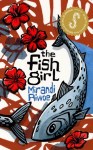
Mirandi Riwoe, The fish girlMirandi Riwoe was joint-winner of the 2017 Seizure Viva La Novella prize with her book, The fish girl – and it has now been shortlisted for this year’s Stella Prize. As you may already know, it was inspired by Somerset Maugham’s short story “The four Dutchmen”, which I reviewed a few days ago. Indeed, Maugham’s story provides the epigraphs to each of the novella’s three parts. Do you then need to have read Maugham’s story to appreciate Riwoe’s take? I’d say not – and would hate that assumption to put people off reading her book. Nonetheless, I’m glad I read Maugham’s work. How’s that for a foot in both camps?

To recap briefly, “The four Dutchmen” tells of four fat, jolly Dutchmen who work together on a boat plying the southeast Asian seas. Immensely loyal to each other, they plan to all retire when the first of them dies. The only blot on their togetherness is the captain’s penchant for Malay girls. However, the chief officer usually cleans up after him – paying off the girls, in other words, when the captain tires of them – until the day the captain decides to bring one of these girls along on a boat trip. Tragedy ensues.

Now, Maugham’s story is told first person by an observer-narrator, a traveller in the region, rather than one who’s involved in the events. The story has a matter-of-fact tone. Not so Riwoe’s story, which, although told first person, gets into the girl’s heart. Unlike Maugham, Riwoe gives her a name, Mina, and from the start, we realise that Mina’s fate is tied to men. Hers is a world controlled by men – regardless of whether that world is her village or the Dutch Resident’s house.

I should, perhaps, clarify some terminology at this point. Maugham uses the terms “Javanese” and “Malay girl” in his story. These days, we differentiate Javanese, who come from Java which is part of Indonesia, from Malaysians, who come from Malaysia, which neighbours Indonesia. However, in Maugham’s time, Malay was used for Austronesian people, which include today’s Malaysians and Indonesians, amongst others. Mina, Riwoe’s version of Maugham’s Malay girl, is from a Sunda village in this region.

Riwoe tells her story in three acts, each preceded by epigraphs from Maugham’s story. In the first part, Mina is offered by her father to a man who comes searching for “cheap labour for the Dutch Resident’s kitchen.” The barely pubescent Mina doesn’t want to go, has never left home before, but for her parents, her father in particular, there is hope that she will be able to send them things they “need, like more spice and tobacco.” Mina is scared, but we also get an intimation of resilience when we’re told of the “tremor of excitement finally mingling with the dread in her stomach.” Maybe it will work out alright we hope.

By the end of part 1, she has arrived at the Dutch Resident’s place where she works in the kitchen to the unsympathetic, unkind head cook Ibu Tana. She seems to be a favourite of the Dutch Resident who treats her kindly, and requests her to serve table in his house. Is he grooming her? Or is he decent? We fear the answer.

Part 2 introduces the four Dutchmen who dine with the Dutch Resident, and, in particular to the captain – the man described in the epigraph from Maugham as “losing his head over one brazen hussy or another”. That should warn us, though in this part he seems gentle. He wants her to teach him her language. In return he teaches her his, and gives her gifts. Hmm … our antennae are up. Meanwhile, Mina has fallen for Ajat, her village chief’s son who does some work for the Dutch Resident. Her sexuality is awakening, but Ajat treats her cruelly. Part 3 commences with her arrival on the boat with the captain, after which the story plays out pretty much as Maugham tells in his short story.

What Riwoe does in this story – her post-colonial response to Maugham’s – is to look at it from the angle of the colonised, and particularly colonised young women. What she shows is that young women are not only pawns in the hands of colonial powers but also in the hands of their own men (in this case her father who trades her for potential material gain, and the chief’s son who tricks her and uses her ill).

This may all sound same-same, as in “I’ve heard all this before”, and at a simple level that’s so. However, what makes The fish girl such a good read is the character Riwoe gives Mina. She’s young and naive, but she’s not a type. She has dreams and at least an attempt at having agency. Here she is, as she’s about to be taken to the boat by the Captain:

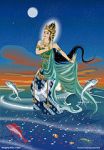
Kanjeng Ratu Kidal (Ocean Queen): By Gunawan Kartapranata (Own work) [CC BY-SA 3.0]


Mina leans against a tree, rolls her head gently against the prickly bark. She takes a deep breath. She will need to be very strong. She will need to be like one of the dhalang’s wayang puppets, as hard as lacquer, enduring.

Also, Riwoe adds a mythical element through Mina’s love of the sea, and her belief in the Ocean Queen. The sea is presented as a curative force – both physically (for her rash, presumably eczema) and spiritually.

She calls for the Ocean Queen. Only when she feels Nayai Loro’s strong, smooth pull, feels the soft arms suckle at her damaged thighs, does Mina scatter the flowers upon the sparkling water.

Finally, although this is short, Riwoe unfolds the story slowly, developing Mina’s character and allowing us to hope that Mina will endure. But that, of course, would be a fairy tale and, despite its heartening mystical conclusion for Mina, this is definitely not that. An engaging but powerful read.

AWW Badge 2018Mirandi Riwoe
The fish girl
Sydney: Xoum, 2017
97pp.
ISBN: 9781925589061

Hoa Pham, Lady of the realm (#BookReview)

Hoa Pham, Lady of the realm

Hoa Pham was one of the participants at the recent Boundless Festival (my post), so it’s rather apposite that her latest work, Lady of the realm, popped up as my next review copy. The very brief author bio on the Festival site describes the novel as “about a Buddhist clairvoyant in Vietnam”. Well, it is, but it’s about far more than that too.

Vietnamese-Australian Hoa Pham was born in Hobart after her Vietnamese parents went there to study in the 1970s. She has written several novels, children’s books, plays and short stories, but her novella, Lady of the Realm, is the first that I’ve read. It’s a slim book, a novella in fact, told first person in a chronological sequence that covers nearly five decades from 1962 to 2009. If you know your south-east Asian history, you’ll realise that this time-span starts during the Vietnam or American War (depending on your perspective.)

It’s quite a challenge to cover such a long and tumultuous period in less than 90 pages, but Pham achieves it by keeping her focus tight – to the experience of the Buddhist monk Liên. Before we meet her formally though, there is a short prologue, which is also in her voice, albeit unknown to us at that point. She prepares us for the vignette-style in which she tells her story:

Looking back over the years, it seems that time stretches and contracts, depending on my experience of each moment. Some moments are etched in my memory, like the sunlight patterning the water in the river, ethereal moments captured only by my mind. Other longer stretches of time are a blur ….

This makes perfect sense to me in terms of how we remember our lives, and hence works for telling a story that covers a long life in a turbulent place. However, if you are someone who likes to get lost in a character and the ongoing drama of life, this book may not work for you.

So, Liên. She is introduced in 1962 as a young girl who has a prescient dream that the Viet Minh will come and destroy her fishing village. This marks her as the one to succeed her grandmother Bà as keeper of the shrine and mouthpiece for the Lady of the Realm (as she calls the Buddhist goddess of mercy, Quan Ám). Unfortunately, the village head ignores the warning, and the village is attacked with most in the village killed. Liên, however, escapes, and lives to chronicle the aftermath.

The book then takes us through moments in Liên’s, and therefore Vietnam’s, life in 1968, 1980, 1991 and 2007, before finishing in 2009 when Liên is now an old woman living in a Buddhist monastery. She has experienced much violence and oppression – through the war and the “fall of Saigon”, through the Communist regime which she “naively believed” would bring peace but which brought “re-education” and more death, and through later “reforms” which were supposed to open up Vietnam but saw her beloved Prajna Monastery destroyed. Liên survives it all, sustained by hope:

Ever hidden away the Lady could still bring hope, I thought. I had found the Lady in many guises, but the strongest seemed to be the Lady I had inside. (1980)

This hope is sorely tested, however, and in the last section she says:

Sanctuaries are an illusion, only suffering is real. I know that this is not what Buddha taught, and my experience has made my own sayings out of his teachings. I believe that any safety I find is temporary, any refuge is not permanent. But my teacher would say, all things are impermanent and change. I hope that our situation will change. Some days I cannot bear another moment of being under siege. (2009)

The tone, here, is typical of the book as a whole – calm, somewhat resigned, and sometimes hopeful.

Now, how to describe the writing? There’s the tone, and there’s Pham’s simple, direct language (which is also evidenced in the above excerpt). There’s also her preponderant use of short paragraphs. And there’s the episodic form, with each episode/year heralded by an epigraph, the last four by Buddhist monk and peace activist, Thích Nhất Hạnh. Together, these create a sort of prose-poem, and with that, dare I venture, a higher (or perhaps just universal) plane of truth!

In other words, Pham has contrived to tell a personal, human story through her character Liên, while also conveying a philosophical attitude to life based on endurance, compassion and most of all hope. A moving, inspiring read.

Lisa (ANZLitLovers) captures the book beautifully in her review.

aww2017 badge

Hoa Pham
Lady of the realm
Mission Beach: Spinifex Press, 2017
98pp.
ISBN: 9781925581133

(Review copy courtesy Spinifex Press)

Stephen Orr, Datsunland (#BookReview)

Stephen Orr, DatsunlandTwo things I loved about Stephen Orr’s novel The hands (my review) were its evocation of men, boys and their relationships, and its rural setting. And this is also why I liked Datsunland, his recent short story collection comprising thirteen short stories and a novellaIt’s a no-holds-barred exploration of the lives of boys and men. It is not a pretty book, but it feels real, even where it pushes extremes.

Lisa (ANZLitLovers) interviewed Orr in one of her early Meet an Australian Author Series of posts. Answering her question about who inspired him to write, he said

I became convinced the human psyche was the only thing really worth worrying about, so I’ve been working at it ever since.

This is true of these stories in which men confront their dreams and hopes, their strivings to achieve these, and their frequent failures. Take, for example, the first story, “Dr Singh’s despair”, which is about an Indian doctor from the Punjab who obtains a visa to work in rural Australia. We are desperate for doctors in rural/outback areas and he seeks a better life for his family. Unfortunately, his welcome – to Coober Pedy, which would be a challenge for anyone – is less than ideal. Indeed, we could call it non-existent. Not surprisingly, Dr Singh does not last and returns home, “disappointed … [but] at least happy”. This is the first story in the collection … worth considering, that ordering of the stories!

The stories in this collection are loosely linked. Most are set in rural or suburban South Australia; all focus on men (though women do appear); and many reference, sometimes so briefly you could miss it, a particular school, the Christian Brothers’ Lindisfarne College. The characters never cross into each other’s stories, however. It’s more that the school represents a certain conservative or inward-looking value or attitude – which makes this a good time to introduce the second story, though I promise to not describe every story in the collection! Titled “The shot-put”, it is set on a farm in 1919, just after World War 1, and concerns a couple whose son, a school shot-put champion, is being publicly listed on a Cowards’ List and has therefore been removed from his school’s – the aforementioned college – Honour Board. It’s another story of hopes (and in this case promise) unfulfilled – and more, of lack of compassion.

Lack of compassion is, in fact, one of the underlying themes of the collection. Had Dr Singh in the first story, for example, been shown some compassion, he may have stayed. In the fourth story, “A descriptive list of the birds native to Shearwater, Australia” a new wife begins to realise that what she’d hoped might be compassion in her husband was something entirely different, and in the fifth story there’s something creepy in Brother Vellacott’s caring for Miss Mary. It all, though, comes to a head halfway through the collection, in “Akdal Ghost”, the seventh story. It’s about a preacher, Pastor Fletcher, who should be compassionate, right? He hires a commercial video producer to make a video showing people what will happen if they don’t “find God”. It features the Akdal Ghost, which I had to look up in Wikipedia, and is absolutely shocking, though, as in several of the stories, Orr does not play it fully out. Much more effective to leave it to the reader’s imagination!

Religon is another motif that runs through the collection, and is behind some of the most violent stories. Besides “Akdal Ghost”, there’s “Confirmation” in which a massacre in 1976 Ireland is set against the hopefulness of a son’s confirmation, and “The Syphilis Museum” about a man preparing for the end of the world. One gets the impression that Orr is not a fan of religion.

And, so the stories continue. Some are more poignant, such as “The Barmera Drive-in” about a 45-year-old man who buys an old, long defunct, drive-in, thinking (hoping) he can reclaim his childhood and in so doing make the (or his) world a better place, and “The Shack” about an aging father who needs to decide what to do about his “retarded” son.

Most of the stories focus on adults, but a few feature children, including the 9-year-old boy lost in the hull of ship under construction (“The One-eyed Merchant”) and the 6-year-old boy trapped with a neglectful mother and an abusive step-father (“The Adult World Opera”). The final, titular story, “Datsunland’, which appeared in last year’s Griffith Review IV novella edition, also features a child, though in this case a teenager.

At 100 pages, “Datsunland” concludes the collection beautifully, continuing the melancholic tone but containing just that little bit of hope to leave us not completely discouraged as we turn the last page. It concerns teen-aged Charlie Price, his widowed father Damien, who sells second-hand cars at Datsunland, and his Lindisfarne College guitar teacher, William Dutton. The story opens with William Dutton, a struggling musician who finds teaching, particularly at that “poor cousin of elite schools” Lindisfarne, stultifying. He hates the narrow focus on assessment and performance, on trivialities, such as the proper wearing of socks, on rules that squash motivation and creativity.

Meanwhile, Damien knows his son is bright, has potential, but becomes increasingly concerned about the relationship developing between Charlie and William. The story leads us on, keeping us, along with Damien, unsettled, exploring the awful challenge faced by teachers in today’s fearful environment. What are the boundaries between teacher and student, and where are they crossed? How can a teacher nurture, safely?

Now, more often than not, reviewers describe short story collections as uneven, which is probably not totally unreasonable, because how can every story have equal punch for every reader. So, I’m not going to go there. I don’t think it particularly helps and, anyhow, I’ve seen reviews of collections where different reviewers identify very different stories as the best or the weakest. It’s so subjective, particularly given short stories can range from quiet slices of life to plot-driven-tales-with-twists. If you are a plot-twist lover, can you equally love the quieter story? I’ll simply conclude by saying that in Datsunland, we, like William Dutton, find ourselves “caught in the middle of multiple truths” – and what uncomfortable truths they mostly are. It’s a provocative read, but a good one.

Lisa (ANZLitLovers) reviewed the novella and the collection. The collection has also been reviewed by French blogger Emma (bookaroundthecorner) and Carmel Bird (The Newtown Review of Books) whose insightful analysis of the language and style is well worth reading.

Stephen Orr
Datsunland
Mile End: Wakefield Press, 2017
295pp.
ISBN: 9781743054758

(Review copy courtesy Wakefield Press)

Yuri Herrera, Signs preceding the end of the world (#BookReview)

Yuri Herrera, Signs preceding the end of the worldWhile I was travelling in the USA last month, I wanted to read at least one book relating to the regions we were visiting. I started by looking for a novel set in/about the northwest, but then Yuri Herrera’s Signs preceding the end of the world, set in the southwest, popped out at me, and I knew I had my book.

When you live in the southwest, as we did in the 1990s, you can’t help but be aware of the issue of migration, “illegal” or otherwise, across the border from Mexico. I’d seen the film El Norte (about two Guatemalan youths fleeing to the US via Mexico) and read T. Coraghessan Boyle’s The tortilla curtain, but I hadn’t read a Mexican author on the subject – until now.

Signs preceding the end of the world tells the story of Makina, who is sent to “the other side” by her mother to carry a message to her brother who’d gone and not returned. To obtain the help she needs to make the crossing, she also agrees to take a message from Mexican gangster, Mr Aitch. This synopsis would suggest to most readers an adventure story – a thriller perhaps – or at least some sort of plot-driven drama, but that’s not what this is at all. Yes, it follows a traditional linear journey narrative, but the tone is more mythical, which means that it works on two levels, the literal Mexican-American border story and something more universal about crossings and transitions.

Herrera achieves this by keeping details to a minimum. Places aren’t named, but just described. Chapter titles like “The place where the hills meet” and “The place where people’s hearts are eaten” exemplify this beautifully. Most people aren’t named, either, and, where they are, the names are minimal (such as Chucho who helps her cross the border) or enigmatic (such as the alphabetical three, Mr Double-U, Mr Aitch and Mr Q!) It is in this shadowy context that Makina makes her journey.

He also achieves it by starting the novel with a surprising scene that isn’t critical to the literal plot, but which provides a thematic or symbolic link to the ending. We meet Makina walking in the street, when, suddenly, a sinkhole opens up and a man is swallowed up. Makina manages to pull herself back and survive, but we learn in the opening paragraph the tenuousness of life and, perhaps, that Makina is either lucky or has good survival instincts. Meanwhile, the sinkhole itself, while a literal geographic phenomenon, also conjures up the underworld, the murky sub-legal world that Makina must traverse to make it to, and survive in, “the other side”.

Herrera evokes the dangers of the journey vividly, but having already set up Makina as a resourceful young woman, he convinces us of her ability to survive the crossing – and she does, despite being accosted by a young thug, nearly drowning in the river, being shot at near a mountain pass. She locates her brother too, even though the information she has regarding his whereabouts is minimal.

What really makes this book, though, besides the strength and heart of Makina, is Herrera’s language (albeit in translation). It’s written in the sort of spare language I like. Here’s Makina’s experience of the city:

The city was an edgy arrangement of cement particles and yellow paint. Signs prohibiting things thronged the streets, leading citizens to see themselves as ever protected, safe, friendly, innocent, proud, and intermittently bewildered, blithe, and buoyant; salt of the only earth worth knowing. They flourished in supermarkets, cornucopias where you could have more than everyone or something different or a new brand or a loaf of bread a little bigger than everyone else’s. Makina just dented cans and sniffed bottles and thought it best to verse …

Yes, “verse”. Dillman in her translator’s note discusses the challenges of translating the book, which she says is about “bridging cultures and languages”. One way Herrera conveys this theme is to use neologisms, signifying the idea of a new language for the potentially new people forged out of migration. One of his neologisms is “jachar” which he uses to mean “to leave”. Dillman needed to create/choose an English word that would play the same role, and came up with “to verse”, because it refers to poetry and is also part of “several verbs involving motion and communication (traverse, reverse, converse) as well as the ‘end’ of uni-verse”.

As I implied earlier, this is a road novel, a journey to another place as well as to the self. Here’s Makina looking for her brother:

It had taken everything she had just to pronounce the eight tundras. To cleave her way through the cold on her own, sustained by nothing but an ember inside; to go from one street to another without seeing a difference; to encounter barricades that held people back for the benefit of cars. Or to encounter people who spoke none of the tongues she knew: whole barrios of clans from other frontiers, who questioned her with words that seemed traced in the air. The weariness she felt at the monuments of another history. The disdain. The suspicious looks. And again, the cold, getting colder, burrowing into her with insolence.

And when she arrived and saw what she’d come to find it was sheer emptiness.

Here and elsewhere, Mexican-born Herrera, who now lives in the USA, is clear about the materialistic, insular reality of “the other side”.

As I read this book, I was reminded of other journeys and crossings, specifically crossing the Styx (it’s no accident I’m sure that the first chapter is titled, simply, “The earth”), Dante’s journey to hell, and even Alice’s fall down the rabbit-hole. Herrera, though, while invoking these journeys in Signs preceding the end of the world, has created his own, one that addresses the politics of borders and boundaries (and dare I say “walls) between countries, while exposing the personal, psychological and spiritual implications of traversing these borders. Its ending is unsettling – but perfect for all that.

Yuri Herrera
Signs preceding the end of the world
(Trans. by Lisa Dillman)
London: And Other Stories, 2015 (Orig. lang. ed. 2009)
114pp.
ISBN: 9781908276421