Novellas in November 2024, Part 1

This November has been – well, about as busy as usual. I am secretary of an association for which, in November, we present our annual lecture and also hold our AGM. It all takes time and energy. I am therefore planning to combine my Novella in November (run by Cathy of 746 Books and Rebecca of Bookish Beck) comments into a couple of posts.

These reading months tend to suggest you start with “my year in [whatever the topic is]”. For last year’s (2023) post, I was horrified to discover that I’d only read one novella in the preceding twelve months, Jessica Au’s Cold enough for snow (my review). But, in fact, I realise now that I told a lie, as I had read another, Gwendolen Brooks’ Maud Martha (my review). Regardless, that was an easy benchmark to beat and beat it I did. Of course, I’ve still only read a fraction of what many bloggers have read, but here is my alphabetically-ordered list of books read for this “novella” year – that is, between 1 November 2023 and 31 October 2024:

  • Jane Austen, Lady Susan (my review)
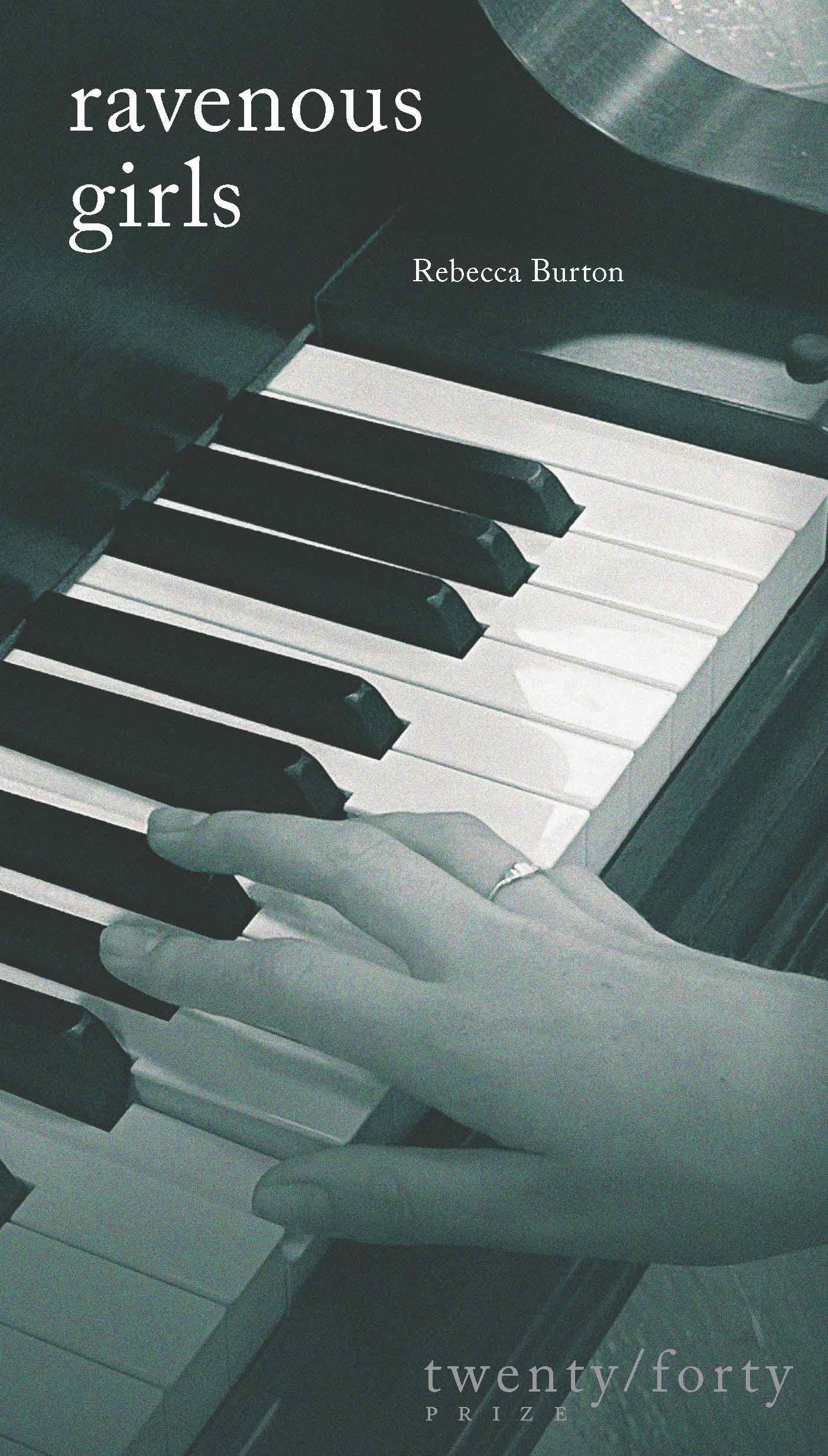
  • Rebecca Burton, Ravenous girls (my review): joint winner of Finlay Lloyd’s inaugural 20/40 Prize
  • Rebecca Campbell, Arboreality (my review): novella or connected short stories, which won the 2023 Ursula K. Le Guin Prize
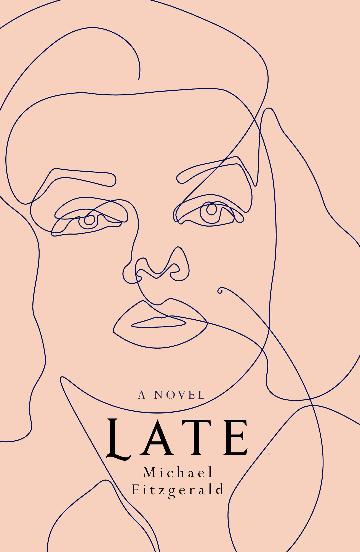
  • Michael Fitzgerald, Late (my review)
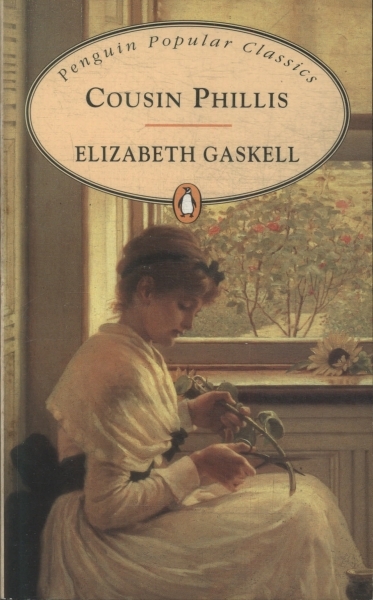
  • Elizabeth Gaskell, Cousin Phillis (my review): read for Bill’s Gen O week
  • Elizabeth Gaskell, Lizzie Leigh (my review): read for Bill’s Gen O week
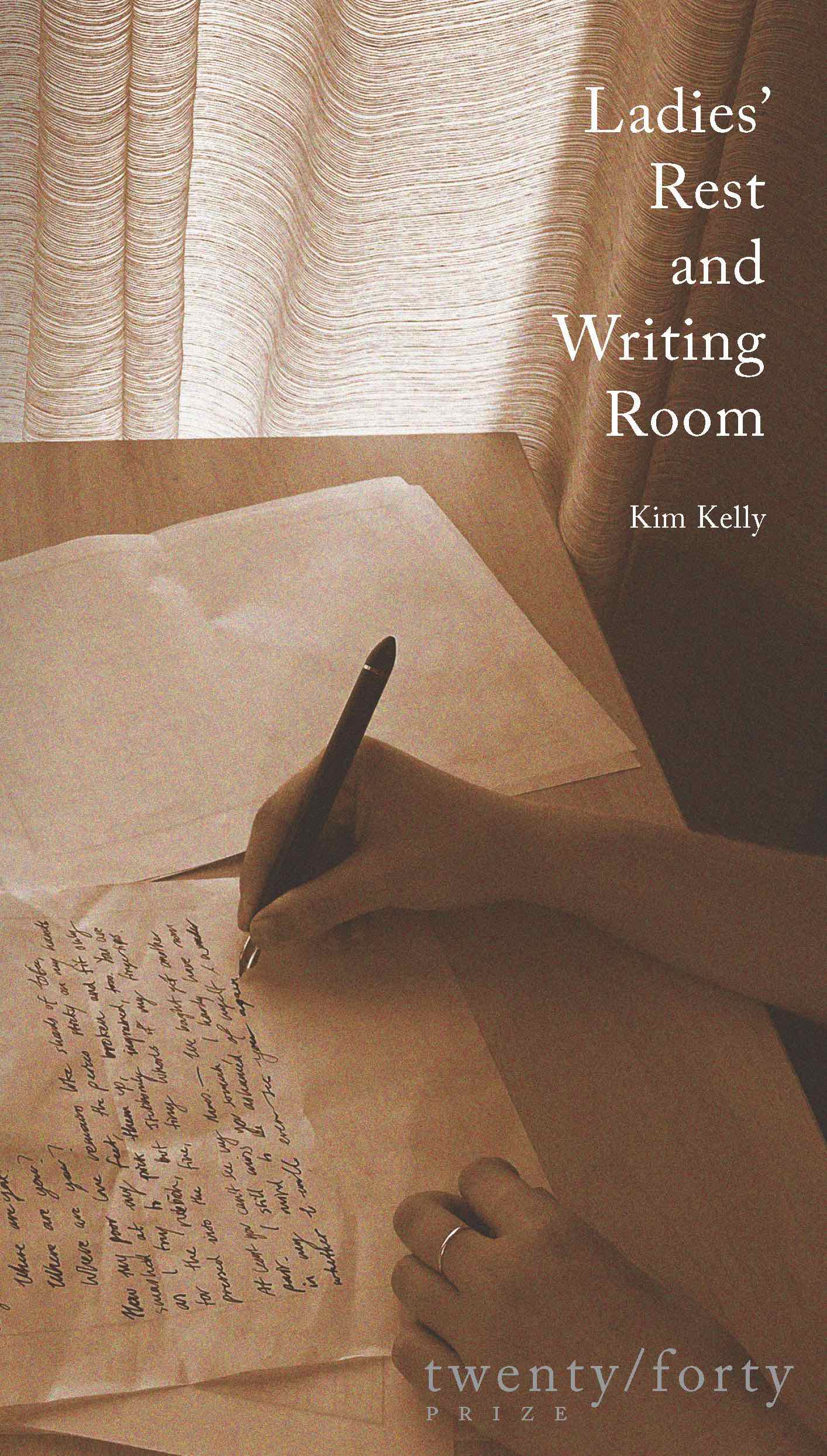
  • Kim Kelly, The Ladies’ Rest and Writing Room (my review): joint winner of Finlay Lloyd’s inaugural 20/40 Prize
  • Thomas King and Natasha Donovan, Borders (my review): short story turned into an under 200pp short graphic novel which makes it a novella to my mind
  • Patrick Modiano, Sundays in August (my review)

In addition to these, I have read a novella this month (but have not yet posted my review) and have also nearly finished another, but both of these will all appear in next year’s novella count.

As I understand it, Cathy and Rebecca are not posing weekly prompt questions this year, which suits me as these can sometimes become repetitive. So, given that freedom, I am going to conclude this post with some comments made by Rebecca Campbell in an interview posted in the online journal The Artisanal Writer. The whole interview is worth reading, particularly if you liked Arboreality. She was asked

Another writer might have broken the personal narratives into linked short stories or added content to meet the length expected for a novel. You chose instead to give us a form we don’t get to read often enough. What drew you to the novella form for this particular piece of fiction? 

It’s an interesting question, as the book can be (and has been) described as linked short stories. However, Arboreality does have an overall narrative trajectory and it has some continuing characters albeit, by the end, the early ones are in memory rather than still living. Anyhow, Campbell answered:

This is where genre expectations are important. Novellas have always been an important part of science fiction, probably a holdover from its origins in pulp magazines. They’re still published regularly in periodicals, and markets for them are growing at both major and small presses.

Readers like novellas, and they are of an appealing length for writers. The novella maintains some of the focus of the short story, but allows a writer more space to explore the world they’ve created, something that’s particularly important in a genre obsessed with world-building. 

Arboreality is one of two novellas I’m publishing in 2022 (the other is The Talosite from Undertow Publications). After years of writing short fiction, I found my stories growing longer and more elaborate, so this form was the next natural step for me. I was also inspired by novellas that combined the focus of the short story with a sense of breadth, as though we are only seeing a fraction of a much larger world that is more compelling because it’s incomplete. On Chesil Beach by Ian McEwan and Great Work of Time by John Crowley in particular let me see how flexible and evocative the form can be, despite its brevity.

I have heard other writers talk about the novella form appealing to them.

I particularly liked Campbell’s point about how novellas can combine the focus of the short story with a sense of breadth resulting in our “only seeing a fraction of a much larger world that is more compelling because it’s incomplete”. While some sense of resolution is usually needed, I’m not one who must have closure, so this openness appeals to me. Certainly, I loved On Chesil Beach. What do you think about this idea of “incompleteness”?

Written for Novellas in November 2024 (linked in opening para).

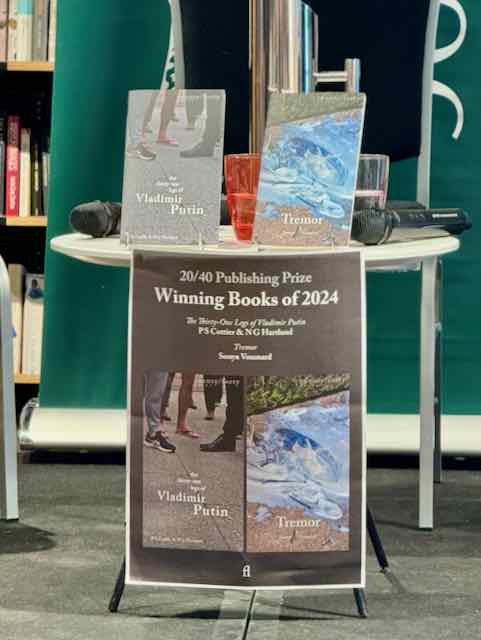
Finlay Lloyd 20/40 Publishing Prize 2024 Winning Books Launch with Conversation

I mentioned the nonfiction winner of the 2024 Finlay Lloyd 20/40 Publishing Prize, in this week’s Monday Musings, but saved the full winner announcement until after I attended the launch at a conversation with the winning authors this weekend.

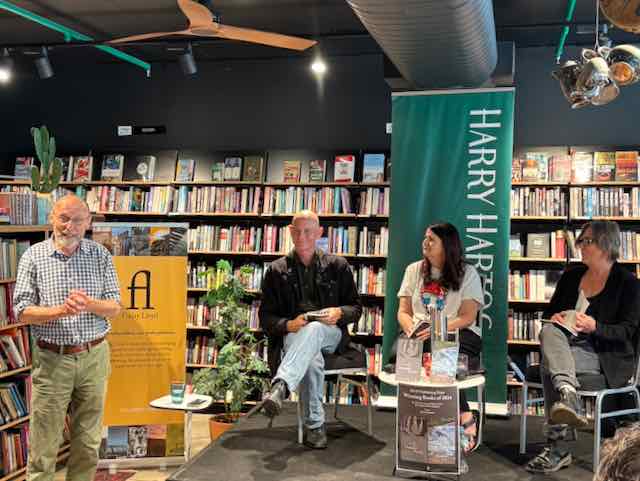
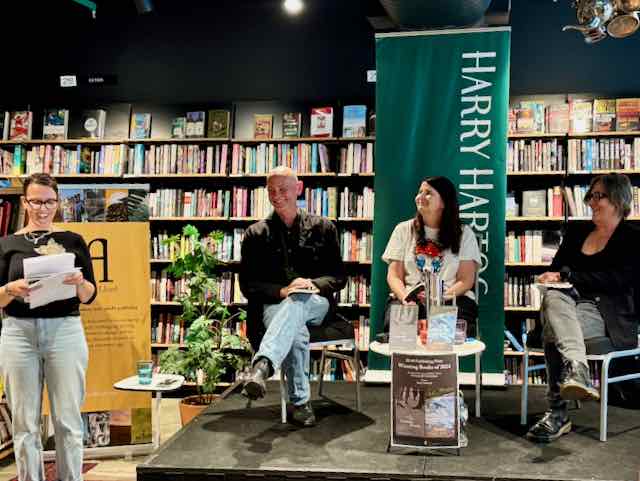
The participants

This year, as publisher Julian Davies had hoped, there was a prize for fiction and one for nonfiction. The winners were all present at the conversation, and were:

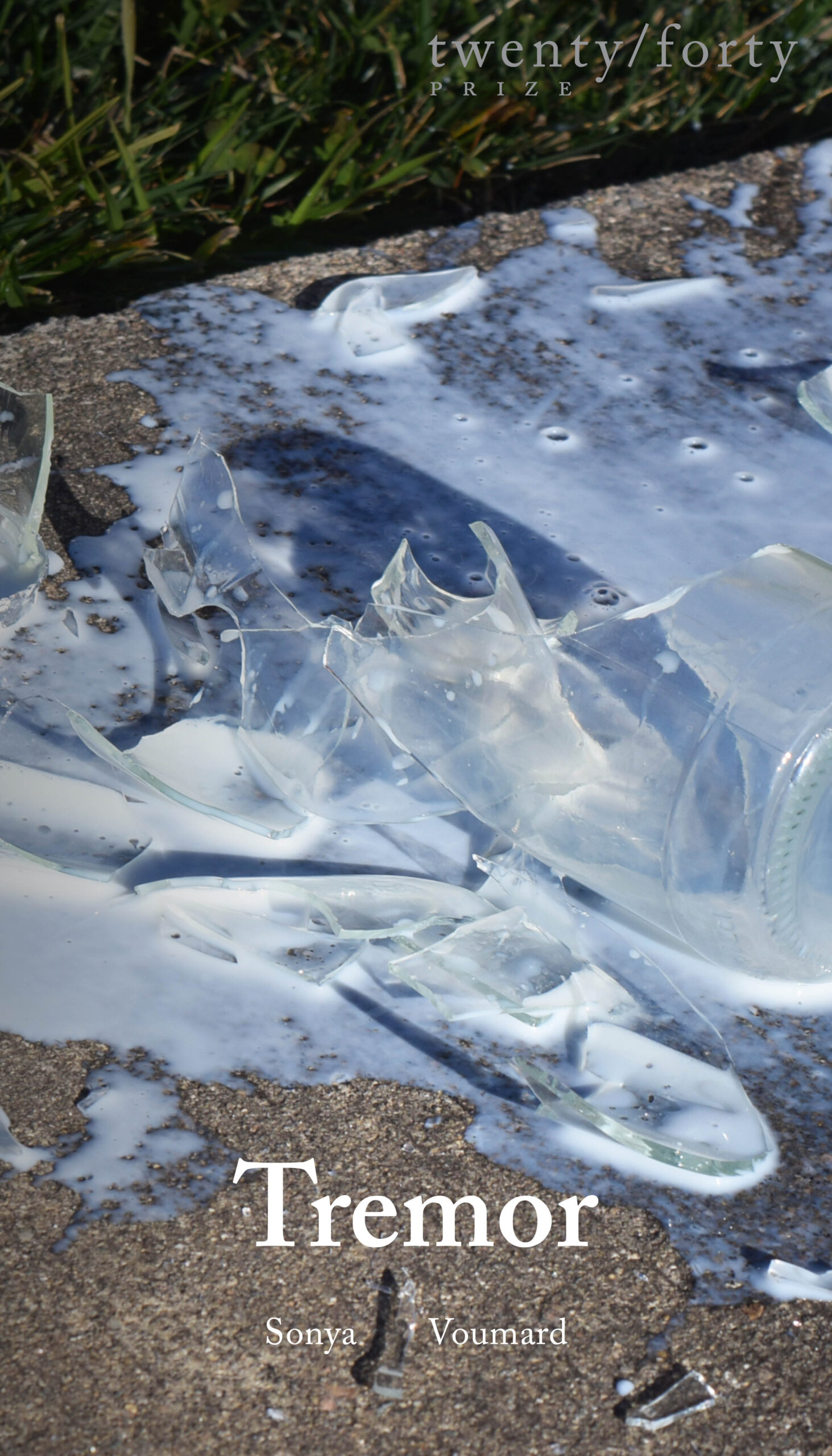
  • Sonya Voumard for Tremor, which the judges described as “notable for its compellingly astute interweaving of the author’s personal experience with our broader societal context where people with disabilities, often far more challenging than her own, try to adapt to the implicit expectations and judgements that surround them”.
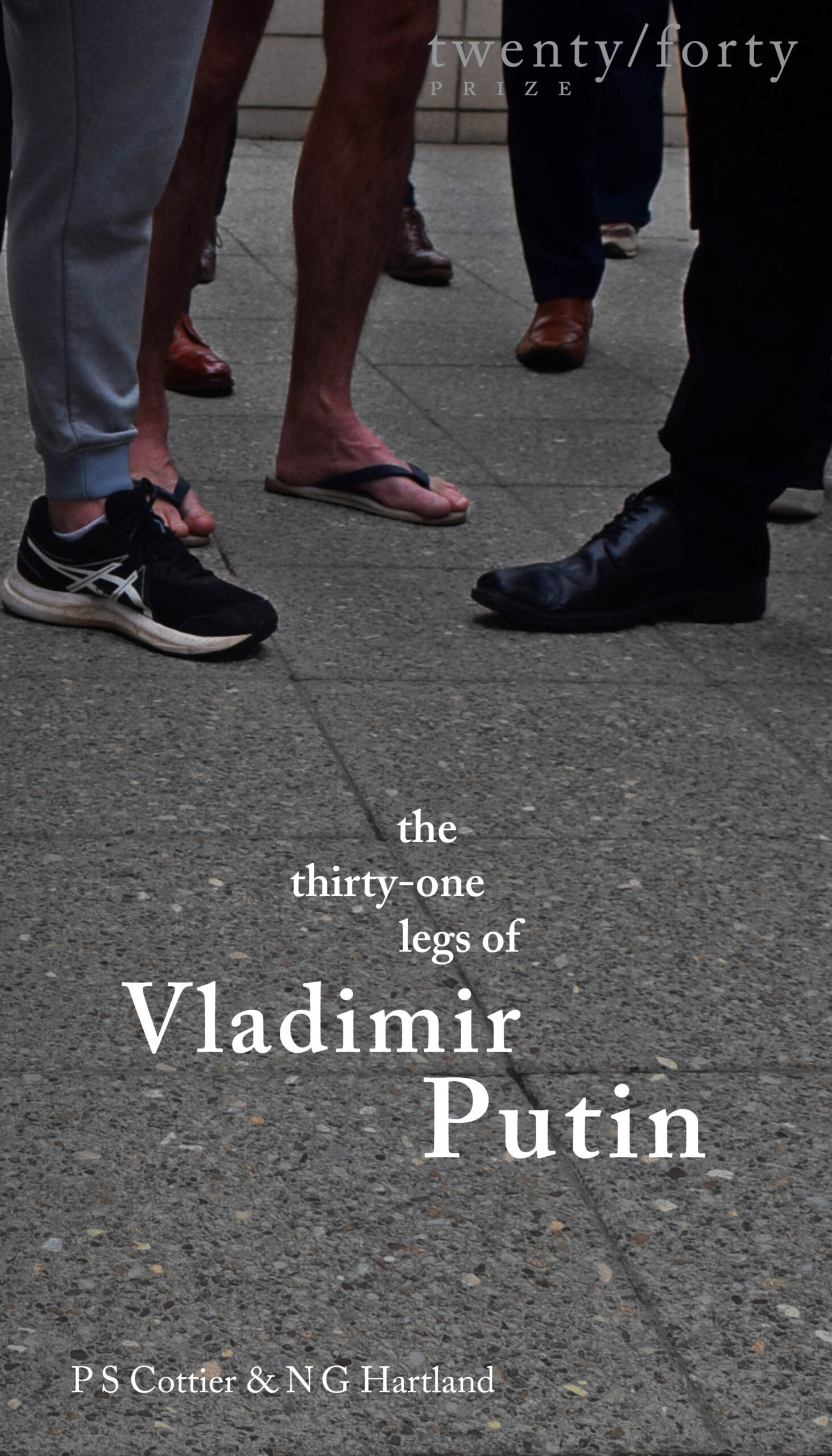
  • P S Cottier & N G Hartland for The thirty-one legs of Vladimir Putin, which the judges said “welcomes us to a world where absurdity and reality are increasingly indistinguishable and where questions of identity dominate public discourse. The book spirits us off on a playful journey into the lives of a group of individuals whose physical attributes appear to matter more than who they may be.”

The conversation was led by Sally Pryor who has been a reporter, arts and lifestyle editor, literary editor and features editor at The Canberra Times for many years. Born in Canberra, and the daughter of a newspaper cartoonist, she has a special connection to our city and its arts world.

And of course, the publisher, Julian Davies, started the proceedings. As I wrote in last year’s launch post, he is the inspiring publisher and editor behind Finlay Lloyd, a company he runs with great heart and grace (or so it seems to me from the outside.)

The conversation

Before the conversation started proper, Julian gave some background to the prize, and managed to say something different to what he said last year. He described Finlay Lloyd as a volunteer organisation, with wonderful support from writers like John Clanchy. He reminded us that they are an independent non-profit publisher, but wryly noted that describing themselves as non-profit seems like making virtue out of something that’s inevitable! Nonetheless, he wanted to make clear that they are not a commercial publisher and aim to be “off the treadmill”. And of course he spoke of loving “concision” and the way it can inspire real focus.

As last year, the entries – all manuscripts, as this is a publishing prize – were judged blind to ensure that just the writing is judged. The judging panel, as I wrote in my shortlist post, included last year’s winners.

Then, Sally took over … and, after acknowledging country, said how much, as a journalist, she also loved concision. Short books are her thing and they are having a moment. Just look, she said, at Jessica Au’s Cold enough for snow (my review) and Claire Keegan (see my post). Their books are “exquisite”. She then briefly introduced the two books and their authors. Sonya’s Tremor is a personal history told through vignettes, but which also explores more broadly the issue of viewing differences in other. She then jokingly said that she “thinks” Nick and Penelope’s book is fiction. Seriously though, she loved the novel’s set up which concerns the lives of 16 Putin “doubles”. It’s a page-turner. The books are very different, but share some themes, including identity, one’s place in the world, and how we can be captured and defined by the systems within which we live.

On Sonya’s journey

The conversation started with Sonya talking about her journey in writing this book. She was about to have brain surgery, a stressful situation. But she’s a journalist, and what do journalists do in such situations? They get out their notebook. Her coping mechanism was to cover it as a story, one of big stories of her life.

She has had a condition called Dystonia – mainly tremor in her hands – since she was 13. She managed for many years but, as she got older, more manifestations developed, not all easily linked to the condition, and her tremor got worse. Getting it all diagnosed took some time.

Sally noted that in the book, the doctor is thrilled that he could diagnose her and have someone else to observe with this condition (which is both environmental and genetic in cause). Sonya, of course, was thrilled to have an answer.

On Nick and Penelope’s inspiration and process

It started when they were holidaying in Queensland. I’m not sure I got the exact order here, but it included Penelope’s having read about Putin doubles, and Nick having been teased about looking like Putin. Penelope said it was a delight to write in a situation where humour would not be seen as a negative. The story is about look-alikes being recruited from around the world to act as Putin doubles should they be so needed.

Sally commented that the doubles respond differently. For some, it provides purpose, while others feel they lose their identity. What’s their place in the world, what does it mean?

Putin, said Nick, is an extraordinary leader who has morphed several times through his career. They tried to capture different aspects of him, though uppermost at the moment is authoritarianism. How do we relate to that? Penelope added that it’s also about ordinary people who are caught up in politics whether we like it or not. Capitalism will monetise anything, even something genetic like your looks.

Sally wondered about whether people do use doubles. Nick and Penelope responded that it is reported that there are Putin doubles – and even if they are simply conspiracy theories, they make a good story.

Regarding their collaborative writing process, Nick started “pushing through some Putins” so Penelope wrote some too, but they edited together. Nick is better at plot, at getting a narrative arc, Penelope said.

On Sonya’s choosing short form not memoir

It was a circuitous process. There is the assumption that to be marketable you need to write 55,000 plus words. She had the bones, and then started filling it out, but it was just “flab”. The competition (and later Julian) taught her that there was a good “muscular story” in there, so she set about “decluttering”. Sally likes decluttering. The reader never knows what you left out!

“Emotional nakedness” was a challenge for her, and to some degree members of her family found it hard being exposed – even if it was positive – but they learnt things about her experience they hadn’t known. Sonya’s main wish is that her family and loved ones like what she’s written.

But, did she also have a sense of helping others? Yes! There are 800,000 Australians with some sort of movement disorder, and many like she had done, try to cover it up. (For example, she’d sit on her hands during interviews, or not accept a glass of water). Her book could be liberating for people.

Continuing this theme, Sally suggested there are two kinds of people, those who ask (often forthrightly) about someone’s obvious condition, and those who would never. She wondered how Sonya felt about the former. It varies a bit, Sonya replied, but it feels intrusive from people you don’t know well. At work it can feel like your ability is being questioned.

On Nick and Penelope’s editing process

Nick explained that their story had a natural boundary, given they had a set number of Putins. (And they didn’t kill any Putin off in the writing!) There was, however, a lot of editing in getting the voice/s right, and getting little arcs to the stories.

In terms of research, they read biographies of Putin, and researched the countries their Putins come from.

Sally wondered whether Nick and Penelope saw any legal ramifications. Not really, but they did research their Putins’ names to get them appropriate but unique, and they have a fiction disclaimer at the end (though Julian didn’t believe it necessary!)

On Sonya’s writing another book on the subject, and on negotiating with those involved

While there are leads and rabbit holes that could be followed, Sonya is done with this story (at present anyhow).

As for the family, Sonya waited until the book was finished to show them, but she also tried to avoid anything that might be hurtful or invade people’s privacy. She’s lucky to have a family which has tolerated and understood the journalistic gene. Regarding work colleagues, she did talk to those involved. It was a bit of a risk but she didn’t name those who had been negative towards her. Most people just thought her shaking was part of her, and she liked that.

Sally talked about the stress of being a daily newspaper journalist, with which Sonya agreed, and gave a little of her personal background. She started a cadetship straight out of school and was immediately thrust into accidents and court cases. It was a brutal baptism. Around the age of 30, when the tremor and other physical manifestation increased, she decided she couldn’t keep doing this work.

Were they all proud of their achievement with this format?

As a poet Penelope is comfortable with brevity, so this was an expansion (to sentences!) not a contraction. Nick was obsessed with “patterning” – with ordering, moving between light and dark, internal and external, providing an arc. Penelope added that it started with less of an arc, including no names for the Putin doubles.

Sonya paid tribute to Julian for being “such an amazing editor” who taught her about how to impose structure on chaos. Penelope added that it was an intense editing process. It was also a challenge because, being a publishing prize it’s not announced until publication so she couldn’t tell people what she was working on. But the editing process was interesting.

Q & A

There was a brief Q & A, but mostly Sally continued her questions. However, the Q&A did bring this:

Is Nick and Penelope’s book being translated into Russian and/or will it be sent to Putin: Julian said Finlay Lloyd were challenged enough getting books to Australians. Penelope, though, would love Russians having the opportunity to read it. Perhaps, said an audience member, it could be given to the Russian embassy …

Julian concluded that it had been a joy working with these authors who “put up with him”, and thanked Sally sincerely for leading the conversation.

This was a lovely warm-hearted event, which was attended by local Canberra writers (including Sara St Vincent Welch, Kaaron Warren, and John Clanchy) and readers!

These books would be great for Novellas in November. You can order them here.

The Finlay Lloyd 20/40 Publishing Prize Winning Books of 2024 Launch
Harry Hartog Booksellers, Kambri Centre, ANU
Saturday, 2 November, 12.30-1.30pm

Finlay Lloyd’s 20/40 Prize 2024: Shortlist announced

And, the interesting literary awards keep coming. In November 2022, I announced the creation of the new 20/40 Publishing Prize by the local-to-my-region independent, non-profit publisher, Finlay Lloyd. A year later, in October 2023, I announced the inaugural shortlist, and soon after that, the winners, Rebecca Burton’s Ravenous girls (my review) and Kim Kelly’s Ladies’ Rest and Writing Room (my review). I am absolutely thrilled to see that the shortlist for this year’s award has just been announced.

But, before I get to that, a little explanation re my opening sentence. Like the Barbara Jefferis and the Mark and Evette Moran Nib Literary Awards, this award, too, has different and specific criteria, though in this case they are not so much about content as form. The 20/40 prize is a manuscript award with the prize being publication, neither of which criteria is particularly unusual. Further, it is not limited to debut or young or women or any other subgroup of writers, as some manuscript awards are. Submissions can be fiction or non-fiction, but must be prose (albeit “all genres … including hybrid forms” are welcome). What makes this award particularly special – to me anyhow – is that it is for shorter works, that is, for works between 20,000 and 40,000 words (hence the award’s name, the 20/40 Prize). The original aim was to make two awards – one to a work of fiction and one to nonfiction. However, last year the fiction submissions were so strong, said the judges, that both winners were fiction. Let’s see what happens this year …

And now, the 2024 Shortlist

Here is the shortlist, with a description from the announcement, plus further information I have found on the previously published authors.

  • Alicia Marie Carter’s Minotaur toes pulls no punches in taking the reader deep into the searing, visceral reality of the ensnared existence of a young woman, manipulated in prostitution: Carter is a writer, editor, teacher and podcaster who has had short stories, poetry and personal essays published in various literary journals, has won awards for her short fiction, and had a novel, Songs at the end shortlisted for the Penguin Literary Prize 2021.
  • PS Cottier and NG Hartland’s The thirty-one legs of Vladimir Putin spirits us away on a comedic journey into a world where the reality and absurdity of political power are increasingly indistinguishable: Cottier is a Canberra-based “poet who occasionally writes prose”, among other things, with an impressive body of work to her name; Harland is also a Canberra-based writer about whom I have found little except some references to prose writing.
  • Susan Saliba’s There is something that waits inside us empathetically explores the search for solace of a girl caught between the example of her high-achieving aunt and her eccentric, dysfunctional mother: Saliba is an English and Creative Writing Teacher, and an award-winning writer of young adult and children’s fiction.
  • Sonya Voumard’s Tremor shows us that beyond our societal expectations and judgements about normality, individual lives with disability can follow atypical, often difficult, but ultimately inspiring paths: Voumard is a writer and lecturer, primarily in non-fiction, who first came to my attention when she was longlisted for the Stella Prize in 2017 with The media and the massacre (which kimbofo reviewed from her won journalistic perspective).

Last year’s submissions were judged blind. This is not explicitly stated in this year’s shortlist announcement, but Julian Davies did say in an email announcement earlier this year that “Consistent with the ethos behind the prize, and last year’s guidelines, all entries will be read blind by the panel so that the quality of the writing guides the panel’s decisions rather than any extraneous influence”. I am clarifying this as I know it appeals to many readers and writers.

The judging panel for the 2024 prize comprised author Kevin Brophy (whose The lion in love I’ve reviewed), the publisher and author Julian Davies (whom I’ve reviewed a few times), author and poet Rashida Murphy, and last year’s winners, Rebecca Burton and Kim Kelly (aka Kim Swivel). The ongoing plan is for the previous year’s winners to be on the next year’s panel.

The winners will be announced on 26 October, just in time, again, for Novellas in November. The media release says, “it is intrinsic to a publishing prize that when the shortlisted entries are announced, the winning books are already in the final stages of being prepared for publication”. In other words, we should be able to buy them at the end of this month. Watch this space. I have so many novellas I want to read for Novellas in November …

It is heartening to see Finlay Lloyd’s commitment to their prize. I hope it continues long into the future.

Michael Fitzgerald, Late (#BookReview)

Australian author Michael Fitzgerald’s novel Late owes something to what is known as the alternate (alternative) history genre, or what I call “what if” novels. Here, the underlying story is, what if Marilyn Monroe had not died in 1962 but, instead, had instead escaped Hollywood’s oppressive celebrity culture and moved to Sydney, Australia?

It’s hard to imagine any celebrity who has inspired more books, films, songs – you name it – than Marilyn Monroe. Just check out Wikipedia’s page listing them. There are over twenty works of literature, of which I’ve only read one, Andrew O’Hagan’s The life and opinions of Maf the dog and of his friend Marilyn Monroe (my review).

Now though, I should ‘fess up that nowhere in Fitzgerald’s book does he name Marilyn Monroe. His narrator is unnamed. However, she tells us she is also known as Zelda Zonk, a name once used by Marilyn Monroe, and the biography she gives us is that of Monroe down to her birth and death dates, the details of her marriages, and much more. So, given our narrator is intended to be Marilyn, the question is why? Why write a(nother) story using Marilyn, rather than start from scratch? And why do it using another of her personas, Zelda Zonk? I don’t know, but I’ll have a go at thinking about it.

So, let’s start with the setting. We are in 1980s Sydney, so Marilyn has been in Sydney for a couple of decades. She is living in a modernist (Harry Seidler-designed) building in Vaucluse, not far from some of the cliffs in Sydney which, in the 1980s, were also the site of gay-hate crimes known as the “Sydney cliff murders”. Notwithstanding that darkness, Sydney is beautifully evoked.

Early in the novel, our narrator meets a young man Daniel, who turns out to be gay and who is locked out of the apartment he is house-sitting. The relationship that ensues brought to mind Sigrid Nunez’s The invulnerables (my review) in which an older woman develops a friendship with a young man, but they are different books, so let’s move on. Our narrator and Daniel discover points on which they connect – from something as simple as their mothers’ names (Gladys and Gladyne) to something more fundamental like both having experienced adoption and a sense of being outsiders. Trust and tenderness develop between them, as they walk, ride on a ferry together, and cook a meal for Shabbat.

Now, a little aside: I’m not sure how to refer to the narrator because, as she writes in the opening paragraph of Scene (aka Chapter) 2, “I am not always Zelda, and Zelda is not always me”. Indeed, she writes, “Zelda is everything that I’m not […] She is the me who goes on living”, and later again, she is “the protectress of my spirit, of the shattered sense of me”. If I name her Zelda in my post, I am ignoring the distinction, and I don’t to do that. So, I am going to stick with the term “narrator”.

“What I have to say is important and personal” (Zelda)

Our narrator’s voice is variously wise, funny, erudite, and also at times self-deprecating. She is out to set the record straight in terms of her reputation as the “dumb blonde”, the “beautiful child”, the difficult actress who was always “late”:

You see, I wasn’t late: they were in a God-awful American hurry. Yes, let it be said for the record, being late wasn’t a problem: they were in this crazy rush to the moon. In any case, who aspires to be on time when, for my Art, readiness is all?

And when it really counted, let’s face it, my timing was perfect.

Drop-dead perfect.

So much in those few sentences.

She makes us see her life from a different perspective, such as the time she wore the see-through rhinestone dress to sing Happy Birthday to JFK. I don’t know what Monroe really thought or intended but that is perhaps not the point. Michael Fitzgerald gives her a voice that reflects on her experience, on how the culture manipulated her, on the hurts of being commodified and ignored as a person. Marilyn is a wonderful vehicle for interrogating celebrity, and Zelda for exploring how an escapee might see the experience and move on from it.

There are several questions to ask about this book, besides why Marilyn. Another is, why is she speaking now, a couple of decades after her arrival in Sydney? This one she answers – it’s because “the cliffs have been warning me, for months now, that evil dwells here”. And this is where Daniel as a young gay man comes in. He is the vehicle for exploring the homophobia of the time, the gay-hate crimes and cliff-murders. He is a gentle person with his own crisis, and is drawn to Zelda “like an old person or wounded animal is”. Our narrator empathises with him, and the other young men who have disappeared, and wants to help him. Their cliff-top nemesis is, pointedly, blond.

I won’t say more about the plot, because the novel’s main interest lies in the narrator’s musings. They are what I most enjoyed – her clever allusions to movies, books, poetry, and songs, her witty footnotes, her humanity, and the entertaining wordplay (starting with the multiple meanings of the title itself).

I don’t know if I understood the novel the way Fitzgerald intended, but I enjoyed the voice. It is confident, witty, in-your-face. “Without a sense of humour, we are animals, we are lost,” she says. It is also intelligent and thoughtful. This Marilyn – if I can call her that at this point – has come through and is living life the way she wants to live it, but she has heart too, and cares about the young men. It’s a surprising thing that Fitzgerald has done to put the two ideas together, but I think he has made it work. After all, why not have a gay icon care about saving young gay men?

So, I found it an absorbing to read, one that encourages us to think about who Marilyn might have been had she been allowed to be herself. And who Daniel might be if allowed to be himself!

Right near the end, our narrator comments,

Don’t you think it’s funny? How we still haven’t explored these shadows of the human heart?

Maybe we never will, fully, but books like this encourage us to keep trying.

Lisa also enjoyed and reviewed this book.

Michael Fitzgerald
Late: A novel
Melbourne: Transit Lounge, 2023
208pp.
ISBN: 9781923023024 

(Review copy courtesy Transit Lounge via publicist Scott Eathorne)

Elizabeth Gaskell, Lizzie Leigh AND Cousin Phillis (#BookReviews)

This year, Bill (The Australian Legend) has framed his usual January “Gen” (short for generation) week, as Gen 0. Zero? How can that be? Well, let’s get it from the horse’s mouth. Bill says, “I am using ‘Gen 0’ as a designation for those writers – necessarily not Australian – whose work influenced, predated or paralleled the first wave feminists of AWW Gen 1”. In other words, we are looking at mostly 19th century writers – like Charlotte Bronte, Elizabeth Gaskell, and Charlotte Perkins Gilman.

Bill’s list is just a start. I would add Kate Chopin in there too, but more discussion and expansion of Bill’s list will presumably happen over the week, so I’ll get on to Mrs – or Elizabeth – Gaskell.

My Gaskell journey started in my teens when my mother, seeing my enthusiasm for Jane Austen, suggested I read Mrs (as she was on the book) Gaskell’s Cranford. From there I read North and south, Wives and daughters, and Ruth – all before blogging. I had hoped to read her first novel, Mary Barton, for this week, but when I saw how tight my reading schedule was this month, I decided to go for a novella (in the end, two novellas) instead. As it turned out, Bill has already posted on one of them, Cousin Phillis.

The Independent Woman

Bill’s AWW Gen weeks, which started back in 2018, draw from his thesis that “a case can be made for a parallel myth” to that of historian Russell Ward’s male-dominated Lone Hand. It features “the Independent Woman, who makes her way without, and often despite, men”. He is talking Australian women, of course, but for Gen 0 we are looking at what was happening elsewhere that may have affected, or simply parallel, what was happening in Australia. Elizabeth Gaskell is a perfect example, because, despite being a wife and mother of four daughters, she managed to forge a career for herself as a writer of novels, short stories, and biography.

She could do this for a few reasons, including the fact that the church she belonged to, and married into, was the dissenting, non-conformist Unitarian church, and that her minister husband William Gaskell was himself a writer and poet. He was also, according to Wikipedia, “a charity worker and pioneer in education of the working class”. It’s no surprise, then, that Gaskell’s themes, as Bill succinctly puts in it his post on Cousin Phillis, encompassed “dissenting religion and the plight of the poor, as well as strong women characters”, are all important themes in her work.”

Her fiction falls broadly into to main strands – the “ghost” stories, and the “social novel“. It is into the latter that Lizzie Leigh and Cousin Phillis fall.

Lizzie Leigh

Lizzie Leigh, published in 1855, is the simpler, shorter, of the two novellas, and its themes remind me of the 1853-published Ruth. It starts with the death of the “hard, stern, and inflexible” husband and father, James Leigh, who says to his wife on his deathbed “‘I forgive her, Anne! May God forgive me!’” We soon learn that the “her” being forgiven is their fallen daughter “Lizzie” whom he’d disinherited.

With her husband gone, Anne decides to rent out the farm for a year and go to Manchester with her two sons, the 21-year-old responsible Will who sees things his father’s way and the much younger Tom. She wants to find Lizzie.

The rest of the novella concerns her search for Lizzie, and the difference of opinion between her idea of religion – a forgiving, New Testament-based one – and Will’s. He is prepared to support his mother, for a year anyhow, but he believes Lizzie is dead and, further, that her sin brings shame on the family. When he meets an angelic young woman, he’s convinced that her knowing about Lizzie will spoil his chances with her. But things are not as he sees them, and his mother, who had been a submissive wife, starts to express her own beliefs, and commands him to listen to her on tolerance and forgiveness:

She stood, no longer, as the meek, imploring, gentle mother, but firm and dignified, as if the interpreter of God’s will.

So, two independent women here – Gaskell the writer and Anne Leigh the character.

Cousin Phillis

This novella, originally serialised in The Cornell Magazine (1863-64), is briefly introduced in my Delphi edition with “many critics agree that Cousin Phillis is Gaskell’s crowning achievement in short fiction”. It is a longer, somewhat more complex tale, and is, essentially, a coming-of-age story in which 19-year-old Paul, and his 17-year-old second cousin, Phillis – both only children – learn some tough lessons.

The story is told first person by Paul, who speaks from later in his life about when, as a young man, he had obtained a job in a country town working to an engineer in a railway building company. He begins visiting some previously unknown relations, the aforementioned Phillis and her Nonconformist clergyman-farmer father and plain-thinking mother. You might be expecting a romance to develop between these two, but quite early on Paul decides that Phillis is not for him. Not only is she still, strangely, wearing a childish pinafore, but she is taller and, like her father, bookish, which makes him feel inferior. This will not do, so they quickly fall into a sibling-like relationship, and Paul slots comfortably into their lives whenever he can. Well and good.

However, there is another man in the story, Paul’s supervisor, Mr Holdsworth, whom he hero-worships. Paul describes him as “really a fine fellow in a good number of ways”, adding that “I might have fallen into much worse hands”, which of course makes us wonder whether this is an ironic hint. As it turns out, yes and no. Heartbreak does ensure, and Paul, with well-intentioned naïveté, plays a role in bringing this about. But, he should not shoulder the full blame because we, like guilt-ridden Paul and sensible servant Betty, have seen how much her parents have babied Phillis: ‘”the child” is always their name for her when they talk on her between themselves’, says Betty.

Most of the action takes place on Phillis’ family farm, with Gaskell beautifully rendering rural life, while also introducing readers to the increasing industrialisation, bringing hints of the social change she portrayed with more depth in North and south‘s exploration of rural tradition versus modern values.

Gaskell also conveys some of her progressive views on religion. Early on, Mr Holdsworth asks Paul about his cousins:

How do preaching and farming seem to get on together? If the minister turns out to be practical as well as reverend, I shall begin to respect him.

Towards the end of the story, when Phillis is critically ill, her father is visited by some local ministers who preach their punitive religion to him, suggesting he consider “what sins” had brought this trial upon him, and

whether you may not have been too much given up to your farm and your cattle; whether this world’s learning has not puffed you up to vain conceit and neglect of the things of God; whether you have not made an idol of your daughter?’

Our minister will have none of it. He will confess his sins to God, but, he says

‘I hold with Christ that afflictions are not sent by God in wrath as penalties for sin.
‘Is that orthodox, Brother Robinson?’ asked the third minister, in a deferential tone of inquiry.

The ending, while not tragic, is open, which works well for me, though according to Wikipedia, she had considered adding two more parts to this four-part story. All up, another good read from the independent Mrs Gaskell!

Elizabeth Gaskell
Lizzie Leigh (1855) and Cousin Phillis (1864, available online)
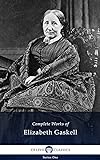
in Complete works of Elizabeth Gaskell (illustrated)
Hastings (UK): Delphi Classics, 2015 (Version 5)

Rebecca Campbell, Arboreality (#BookReview)

Arboreality, by Canadian writer Rebecca Campbell, won the 2023 Ursula K. Le Guin Prize. However, not being much of a speculative fiction reader, I didn’t discover this book through this award. Fortunately, some bloggers I follow, like Bill (The Australian Legend), do follow this genre, and his review convinced me that this climate change dystopian work fits into the sort of speculative fiction that does interest me.

Before I talk about the book, however, a little about the prize. It was established in 2022, in honor of Ursula K. Le Guin, and is currently worth $25,000. It has some specific criteria: it’s an English-language award for a single work of “imaginative fiction”, and intends to honour authors who “can imagine real grounds for hope and see alternatives to how we live now”. This last bit is interesting – “real grounds for hope”. It reminds me of the Barbara Jefferis Award, which now seems to be in abeyance, but which was controversial because it stipulated that the winning work had to depict “women and girls in a positive way [my emph] or otherwise empowers the status of women and girls in society”. I don’t believe literature must offer hope or be positive, but I have no problem with awards sponsors making such stipulations.

So now, that out of the way, the book. It is set on Vancouver Island, a beautiful part of the world that I have visited. It’s novella in size, but, structurally, is best described as a collection of six inter-connected short stories:

  • “Special collections”
  • “Controlled burn”
  • “An important failure”
  • “Scion and root stocks”
  • “Pub food”
  • “Cathedral arboreal”

These stories are presented more or less chronologically, starting with the first two stories being set in the very near future (up to around 2050) with the last encompassing 2100. They are linked in various ways – by location; by characters (encompassing family and friends, ancestors and descendants, over time); and, as you’d expect, given the title, by trees, particularly but not exclusively, the arbutus and its mutant version, the golden arbutus. Each story focuses on a specific issue or idea and plays it out through personal stories, such as an academic saving books from a “crumbling” library (“Special collections”); a suburbanite trying to revive a devastated garden with local plants, as one-by-one his neighbours leave (“Controlled burn”); a luthier hunting for seasoned tonewood, via the black market if necessary, to make a Cremona-worthy violin (“An important failure”). These highly personalised stories are placed in context, through the addition of another voice – an omniscient narrator, in italicised sections – which conveys the wider ecological, economic and political picture. We see the land change through fire and rising sealevels; we hear of space colonisation; we learn of pandemics. It’s cleverly done, and although it requires concentration, I was more than willing to go with it because the vision Campbell presents is compelling in its awful believability. That, I think, is what telling a near-future story can achieve. It’s hard to pretend it won’t happen.

“What are we going to do?”

What makes this book so beautiful, however, is the way Campbell manages convey both absolute horror alongside a sense of hope born of human ingenuity, resilience, and sheer doggedness. Jude and Berenice, fighting a losing battle in their mission to save books, must constantly downgrade their expectations, which means becoming more and more selective about what is saved (and therefore also what is lost to human knowledge), but they don’t give up, and these books are seen in 2100. Similarly, Bernard, in his now empty suburb where gardens have died due to a watering ban, doggedly works to find plants that will live in his and neighbouring gardens, which we see, a few generations later in “Cathedral Arboreal”, has become a forest. And Mason’s “secret history” violin also appears in this last story in another generation. These people will not let go even though they are very aware of what has been lost, of what they have lost.

We’ve lived here for ten thousand years. Someone survived everything history threw at them, the fires and tsunamis, the earthquakes, the smallpox, the settlers. Empire. Capitalism. Someone’s going to survive this. (Benno, c. 2071, in “Scions and Root Stocks”)

The ecological story Campbell tells, alongside the human one, is fascinating, albeit probably more challenging to those of us who don’t know the plants of the region and their significance – the garry oak, the arbutus, the camas (lily), fireweed, Douglas fir, and so on. I know some of the plants she names, but I don’t know their particular role in the culture, their horticultural essence and value, or their symbolic meaning (if any any). Some I looked up, and some I didn’t, but certainly Campbell’s story is rich with interconnections here too, between past, present and future, and between Indigenous and non-Indigenous practices.

One of the meanings of “arboreality” is “of, relating to, or resembling a tree” which makes it a good literal title for a book in which trees stand for so much that is important to life – ecologically, culturally, and psychologically. But Campbell is also, perhaps, playing with the “sheltering” notion implied in “arbor” and “reality”.

The Ursula K. LeGuin Prize’s selection panel wrote:

Arboreality is a eulogy for the world as we know it. Rebecca Campbell’s extraordinary, deeply felt book explores the difficulties of the long hard project of survival. There are no heroes or villains here—only people making brave, difficult choices, out of hope and love for their community, for art, knowledge, and beauty. Arboreality imagines things that we haven’t yet considered about what can and will go wrong with our gardens, libraries, and archives if we don’t act now (maybe even if we do). In her masterful and profoundly ethical stories, Campbell asks us what might be saved, what must be saved, and what it will take to do so. 

‘What are we going to do?” asks Jude in the opening story, “Special collections”. Well might he ask. Arboreality is an astonishing book because of the way it imagines the dire, with all its attendant griefs, side-by-side with survival (and its attendant, hope). This makes it a bit discombobulating because we are constantly surprised by what happens next. The world is not beautiful, and life is tough, but people are surviving and working their way through what life has thrown at them. I don’t imagine Campbell intends us to think, “it’s alright then, let’s continue along our merry, destructive ways” but more that when (because we are, it seems, past “if”) we are confronted with the worst, humans can, and hopefully will, find ways through. The question is: is this the future we want?

Rebecca Campbell
Arboreality
Hamilton, Ca: Stelliform Press, 2022
128pp.
ISBN: 9781777682330 (eBook)

Novellas in November 2023: Week 5, New to my TBR

You will of course have realised that November is somewhat over, but in the blogosphere we are pretty flexible – at least I think we are – so I am going to do this final Novellas in November post more than a week into December.

The final theme for the month is that we talk about the novellas we’ve added to our TBR since the month began. I strongly resist adding any new books to my TBR, but my willpower failed me – partly because I am partial to novellas.

So, here goes, in alphabetical order by title, some of the books that captured my attention around the month:

  • Rebecca Campbell, Arboreality: Bill Holloway (The Australian Legend) posted on this before NovNov but it is a novella, it attracted my attention and I am in fact reading it right now.
  • Michael Fitzgerald, Late: Lisa (ANZLitLovers) posted on this and I also have it in my review pile to read. It sounds right up my alley, and I have bought it as a Christmas gift for a family member too.
  • Natalia Ginzburg’s The dry heart: Claire (Word by Word) posted on this one, describing it as “this brilliant, page turning feminist classic, originally penned in 1947”. How could I not be in?
  • Margo Glantz, The remains: Claire (Word by Word) posted this before NovNov but it is a novella so I am including it here. She commenced her post by describing it as an “incredible literary masterpiece. A lyrical elegy of tempo rubato.” This and the rest of her review captured my attention.
  • Hans Keilson, Comedy in a minor key: Cathy (746 Books) wrote that this is about “citizens risking their lives to harbour Jews in Nazi-occupied Netherlands but deals with this serious theme with a lightness of touch.” I know some readers don’t like a light touch applied to deadly serious subjects like this, but I do. Sometimes a light touch makes a bigger impact, in fact.
  • Elizabeth Lowry, The chosen: Bookish Beck reviewed this, not in the month, but, during the month, she paired Thomas Hardy’s wife Emma’s memoir Some recollections with Lowry’s novella. Lowry’s book, says Beck, “examines Thomas Hardy’s relationship with his first wife, Emma Gifford”. I like Hardy, so this of course caught my attention
  • Janet Malcolm, The journalist and the murderer: Cathy (746 Books) wrote on this before NovNov, but it caught my attention because I have been wanting to read Malcolm ever since I discovered that Helen Garner admires her. Any one Helen Garner admires is of interest to me. In this book Malcolm apparently explores the relationship between journalist and subject, particularly when that subject is a murderer.
  • Joyce Carol Oates, Black water: Lisa (The Short Story Editor) recommended this book on my NovNov week 2 post calling it “the most quintessential novella on my shelf”. I have read an Oates novella, Beasts (my review), but not this one.

Eight books, one of which I am reading now. I’m not sure how many more I will read, but at least I have now got them on my list?

Has Novella November affected your TBR pile this year?

Written for Novellas in November 2023

Novellas in November 2023: Week 4, The short and the long of it

This week’s question is the Novella version of Nonfiction November’s Book Pairings. It goes like this

Pair a novella with a nonfiction book or novel that deals with similar themes or topics.

I am doing several pairings with Jessica Au’s novella Cold enough for snow (my review), because although it’s a “little” book, it’s so rich.

  • Mother-daughter trip instigated by a daughter, novella-novel pairing: Larissa Behrendt’s novel, After story (my review), is about a daughter taking her mother on a literary tour of England. Behrendt’s novel, however, had a clearer resolution than Au’s complex “little” book in which the issues to be resolved are more subtle and internal.
  • Mother-daughter migration stories, novella-memoir pairing: I’m pairing three books here, Susan Varga’s Heddy and me (my review), Anna Rosner Blay’s Sister, sister (my review), and Halina Rubin’s Journeys with my mother (my review). These three hybrid biography-memoirs are all about post-war migrations, and in each the daughter is challenged by her mother, though in different ways. Sometimes it’s that the mother is hesitant to share a painful past, while in others the mother is a challenging personality. In Cold enough for snow, the issue seems to be a sense of distance or difference that the narrator feels with her migrant mother, and their respective expectations, and a desire to work that through.
  • Mother-daughter disconnect, novella-novella pairing: Elisa Shua Dusapin’s Winter in Sokcho (my review) is about a daughter who struggles to live up to her mother’s expectations and those of the society she lives in. Both daughters seem uncertain about their relationship with their mothers, and both have decisions to make about the way forward in their own lives. Both novellas have open endings.
  • Daughters questioning their relationships with their mothers, novella-memoir anthology pairing: Rebellious daughters (my review), edited by Maria Katsonis and Lee Kofman, contains stories about rebellions against mothers (and also some against fathers and grandmothers). Not all are resolved but as I wrote in my post, in most of the stories, age and experience eventually bring rapprochement: daughters come to understand their mothers (or whomever) a little more, while their mothers likewise learn to accept the daughter they have. In Au’s book, there is a sense that the daughter has come to understand her mother more but also to understand that there are limits to this understanding.

Do you have any pairing ideas?

Written for Novellas in November 2023

Novellas in November 2023: Week 3, Broadening my horizons

This week’s question is new to me, and I like it. It goes:

Pick your top novellas in translation and think about new genres or authors you’ve been introduced to through novellas.

I love this question because it feels like I’ve read almost more novellas in translation than English language novellas. Is this because translation is such a difficult and expensive task that publishers tend to commission translations for shorter books more than for longer ones? But no, I don’t really think so. Just look at all those big Russian classics that have been translated – and translated more than once. My guess is something more simple, that perhaps some literary cultures value novellas more than others.

This idea is supported by something I read only a few months ago in Trove. The article, which appeared on 6 July 1907 in Sydney’s The Australian Star, cites an English writer named Basil Tozer, who had made a “plea for shorter novels”. He commented that

The habit of loading a story with indifferent descriptive passages still prevails to a great extent, though it might with considerable advantage be dispensed with. A beautiful woman loses her charm when every good point she possesses, from the creamy smoothness of her complexion to the alluring, curve of her eyebrow, is described separately and in detail; and in the same way a glorious scenic panorama metaphorically falls flat when every square mile of it is analysed and dissected. 

He says these “faults” are “commonest among young writers” but also occur “among some of our novelists who have served a long apprenticeship”. He doesn’t name these offending writers, but he does name the opposite, French writers like Daudet, Hugo and de Maupassant, whose writing includes no “superfluous verbiage”. These are, he admits, three of France’s most polished fiction writers, but even “the rank and file” French novelists “seldom err upon the side of overloading their work with unnecessary vocables and third-rate descriptive passages”. He argued that British novels would be strengthened if they were more condensed. That was over 100 years ago, but I wonder – without much evidence to support it – whether there really is something cultural in this?

Whatever … I can say that of the translated fiction I’ve read over the years, novellas represent a large proportion. This started way before blogging, and is not because I specifically chose to read novellas. They just seemed to be the books most often recommended to me.

So, before blogging, my favourites included Albert Camus’ The outsider (French, and which I did first read in French, as L’étranger, at school), Alexander Solzhenitsyn’s One day in the life of Ivan Denisovich (Russian), and Gabriel Garcia Marquez’s Chronicle of a death foretold (Colombian). These three have stuck with me over a long time. Marquez’s has such a mesmerising opening, “On the day they were going to kill him…”

Since blogging, I have read so many compelling translated novellas that I find it hard to choose, but I’ll name three, in alphabetical order by author, that have captured my interest:

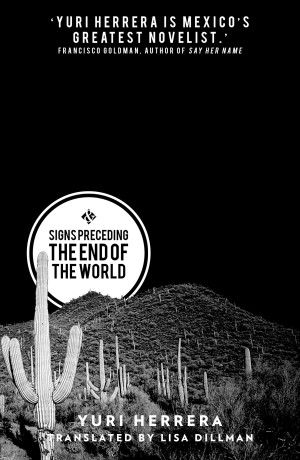
Yuri Herrera, Signs preceding the end of the world
  • Yuri Herrera, Signs preceding the end of the world (Mexican, my review), because it deals with the Mexican-USA migration issue, but with an almost mythical tone that overlays it with a bigger story about crossings and transitions.
  • Patrick Modiano’s Sundays in August (French, my review), because of the carefully structured journey we are taken on, one that leaves us at the end with so many questions to think about, while also revealing enough about what had happened that we know its impact on the protagonist.
  • Sayaka Murata’s Convenience store woman (Japanese, my review), because of the way Murata gets into the head of her mystified outsider in a culture that values conformity.

I found it hard limiting myself to three but, it had to be done or I’d go on forever.

In terms of how these have broadened my horizons, well, there’s the obvious thing to do with reading different cultures. Herrera’s and Murata’s books deal with issues I know to be significant in their cultures, but it means something to read about them from artists working within the culture rather than from the perspective of the news. Modiano’s exploration of disappearance, loss and memory is less obviously a specifically French issue, but it does I think have roots in a postwar European sensibility.

Each book uses the novella form a bit differently, but each is characterised by a sustained tone which can denote a novella. By this I mean that novels, being longer, will often vary the tone because not to do so could become oppressive, whereas the intensity of a sustained tone (whatever that tone may be) is part of what makes a novella. I’m generalising of course, but this seems to be the case in the novellas I love.

As for the other part of the question. I don’t think I’ve been introduced to new genres through novellas, just to different ways of writing those genres, but I have certainly been introduced to many great new writers – like the three above, for a start. But, moving away from translation, I have been introduced to other writers too through their novellas, such as Edith Wharton through her intense Ethan Frome. From that introduction, I went on to fall in love with Edith Wharton.

Novellas … any whichway, I love them.

What about you?

Written for Novellas in November 2023

Finlay Lloyd 20/40 Publishing Prize 2023 Winning Books Launch with Conversation

I have written about Finlay Lloyd’s 20/40 Publishing Prize a few times now, so I hope I’m not imposing too much on your precious time. However, this weekend was the launch here in Canberra, and it involved a conversation led by a favourite Canberra journalist, Virginia Hausseger, with the two winning authors. I had to go.

The participants

Rebecca Burton and Kim Kelly are the two winners, and I’ve introduced them before, so just to recap, Burton is an editor and author of two young adult novels, while Kelly is also an editor and the author of twelve adult historical fiction novels.

Virginia Hausseger is, to use Wikipedia’s description, an “Australian journalist, academic advocate for gender equity, media commentator and television presenter”. She is well-known to Canberra audiences, having been our local ABC news presenter from 2001 to 2016.

Julian Davies did the introductions. He is the inspiring publisher and editor behind Finlay Lloyd, a company he runs with great heart and grace (or so it seems to me from the outside.)

The conversation

Before the conversation started proper, Julian provided some background to the prize. Human nature, he said, seems drawn to large things. Why else would we have things like the Big Potato! What is it about large things? He sees it related to the “tussle between quality and quantity” and thinks there’s something problematic in our tendency to admire the grand and overlook the miniature. (Yes!) He believes restrictions can liberate writers, and sees the novella form as perfect for this. It can encourage succinctness while allowing room for development. I don’t expect he had any argument about that in the room.

He reminded us that it was judged blind (by two old men and three young women). That it was won by published writers shows that those who have developed their craft are likely to shine through.

Then, Virginia took over …

On their novellas

Kim described her novella with beautiful succinctness saying it was set in 1922 Sydney in the wake of World War 1, just as the city was starting to wake up. It’s about grief, and about how recognising pain in the other leads to the young women rescuing each other. She added a little later that many novels have been written about the War, but not so many about after it, and even fewer about young women’s experience of that time.

She has written three novellas, and “kind of” knows at the beginning which form the story will be. The impetus for this one was wanting to impress a potential PhD supervisor. While researching Trove she saw the ad for the Room (which she included as an epigraph.) Virginia remarked that the closing pages set up a whole new story.

Rebecca said that hers was about two teenage sisters over six weeks of summer in 1986. The old sister, who is anorexic, has been admitted to hospital for bed-rest, and the younger sister visits her daily. It’s about what the sisters learn about each other, and the impact of this condition on the family.

She said that she hadn’t set out to write a novella, but she is comfortable with a word length which is shorter than the standard novel. Then she saw the prize! Writing adult fiction is a new genre for her, but she had stopped reading YA fiction and adores literary fiction. A friend suggested that she write what she reads. Sounds good advice to me.

On Ladies Rest and Writing Room

Kim explained that rest and writing rooms “were a thing” in the late 19th and early 20th centuries, for men and women. What is special about hers is that it was in a department store, and how it was advertised.

Dotty’s grief comes out in shopping addiction and behaving as though she had a death wish. She is so tied up in herself that she doesn’t notice her old schoolmate Clarinda. The book is built around the moment of recognition, that is, when Dotty “sees” Clarinda.

When Virginia commented on how well the “story gallops along” while still being “tight, descriptive, elegant”, Kim said that was the “magic of editorial process”. Also, she said, she knows that Sydney well.

On Ravenous girls

Answering where her story came from, Rebecca said that it was a story she had to write. Frankie had been with her for a long time, and a story about her childhood kept coming to her. The trickiness was not so much the 1986 summer story, but managing the way the time telescopes at the end. She wanted to nod at the years that go by after someone comes out of hospital.

When Virginia commented on how well she’d handled the scene of another girl post-hospital, providing an alternative glimpse of how it goes, Rebecca said she wanted to tell other stories because every story is different.

Young Frankie loves her sister, but is bewildered. An enlightening moment for her is when she realises that sister Justine is the only one allowed to suffer, that her own pain is not seen. She realises that the story she’s been told is not right. Hers is a story of loss, grief, sadness. She’s left to her own resources, and because her older sister is sick, she’s left with no role model.

As for Justine, she uses hunger to mute her desires. Rebecca said that her working title was Yearn, and quoted that great line from the novella, “I don’t want to want the things I want”. Justine feels shame for wanting things, and so starves herself for wanting them.

On the physical process of writing

Kim throws her whole self into a new project, trying to get it all down before she loses her emotional or imaginative connection. Then she goes away, coming back some time later to a “full tub of play dough” that she can then mould. She is able to quarantine the time to work this way because as a freelancer she can manage her time. She loves to be free to fly through the story.

Rebecca has a very different more measured process. She works part-time to a set roster, so has a “chipping away” process. Since her new job, she has created a ritual involving getting up an hour earlier than usual, making a cup of tea and writing for an hour. This helps her manage the peaks and troughs that happen with writing. If things go badly she can get up and go away, leaving it for the next time, and if they go well, she can get up feeling good! It’s important for her not to get obsessed with writing.

On the editing process

Rebecca said for her it went structural edit, then copy edit, then the final proofread. The delight of working with small publisher was that time was allowed for growth.

Kim seconded Rebecca’s comment about the delight of working with Julian, who “cares about words and ideas”. In her worklife as commercial fiction editor, time is of the essence, so she luxuriated in the “nurturing” experience of working with Julian.

On what’s next

Kim’s next project is her PhD, which will include a story about an ancestral grandfather who intersects with Dickens. It’s an idea she has had for a long time, but she will need to try Rebecca’s “chipping away” approach for this!

Rebecca has these characters in head, and wants to see these young girls into adulthood. This could mean three related novellas, the next set in 1993 with Justine in recovery and in her first relationship. She wants to explore recovery because some never move beyond “functional recovery”. The third book she’d like to be about Frankie in her 30s or 40s to see how things have worked out for her. Some of these futures are hinted at in Ravenous girls.

Virginia was an excellent, well-prepared and enthusiastic interviewer. She knew the books well and showed genuine interest in them and their authors.

There was no Q&A which suited me, as I had to rush off to get to my monthly Jane Austen meeting where we were to discuss the up-and-comers in Austen’s novels. However, I did have a very brief chat, as I was leaving, with the other “old man” judge, John Clanchy whose writing I love and who had commented on my recent novella post. He talked about his interest in the form and the choices writers need to make when working within it, such as which characters or stories to develop and which to leave by the wayside.

The Finlay Lloyd 20/40 Publishing Prize Winning Books of 2023 Launch
Harry Hartog Booksellers, Kambri Centre, ANU
Saturday, 18 November, 12.30-1.30pm