Novellas in November 2025

Last Novellas in November I wrote two posts, besides my reviews, but this year I will only manage one. However, I just want to put it on record that I do appreciate the work put into it by Cathy of 746 Books and Rebecca of Bookish Beck), because novellas feature highly in my most memorable books.

These reading months tend to suggest you start with “my year in [whatever the topic is]”, so that is my focus for this post. Last year I had read nine – a small number I know compared to many of you. This year, which goes from 1 November 2024 to 31 October 2025, I’ve read even fewer, but they were good! I’m dividing them into two groups: Novellas, and Novella-length Nonfiction.

Novella

  • Melanie Cheng, The burrow (185pp.) (my review): shortlisted for the 2025 Stella Prize and other awards
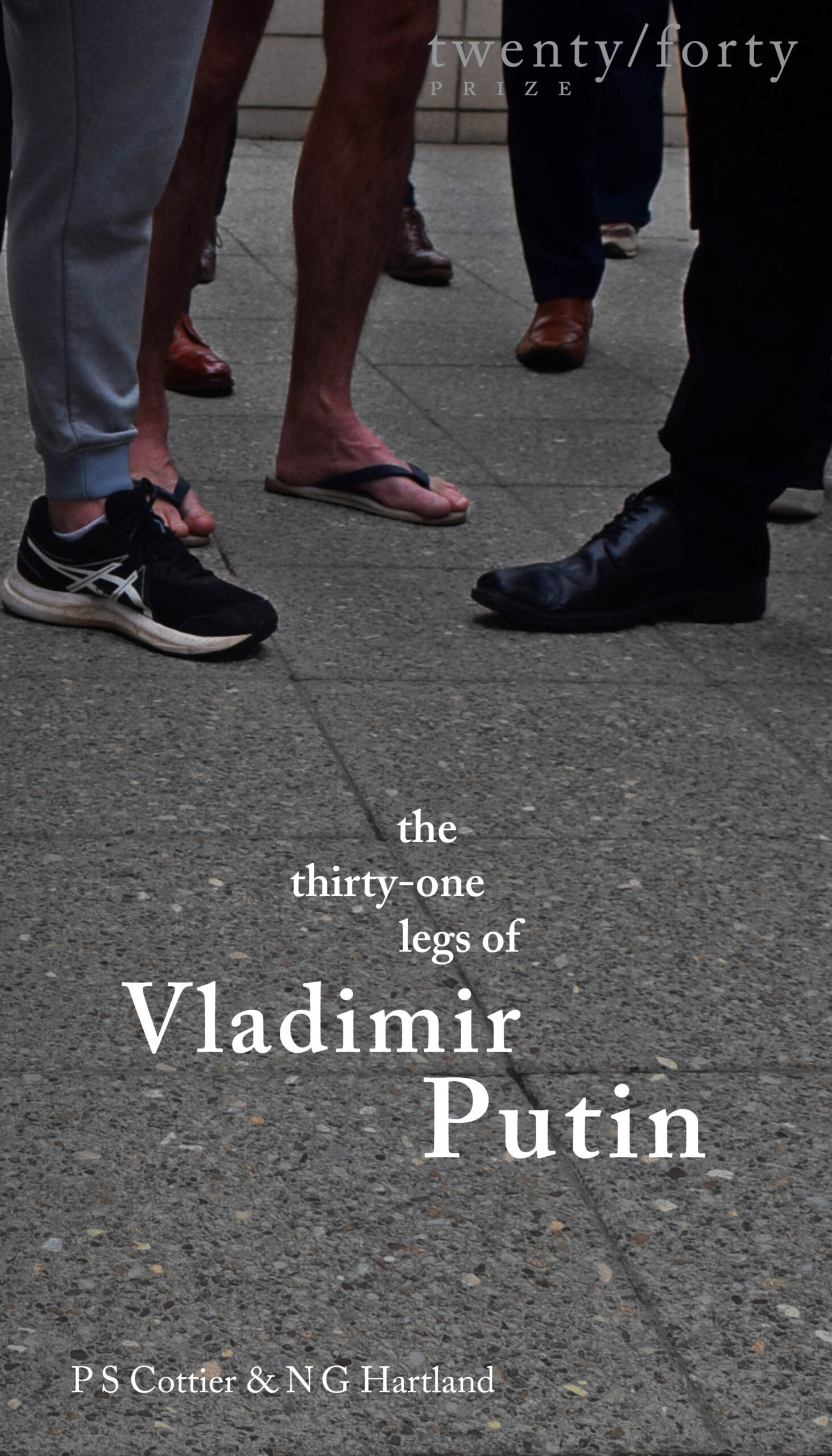
  • PS Cottier and NG Hartland, The thirty-one legs of Vladimir Putin (115pp.) (my review): joint winner of the 2024 Finlay Lloyd 20/40 Prize
  • Michelle de Kretser, Theory & practice (184pp) (my review): winner of the 2025 Stella Prize and Prime Minister’s Literary Award
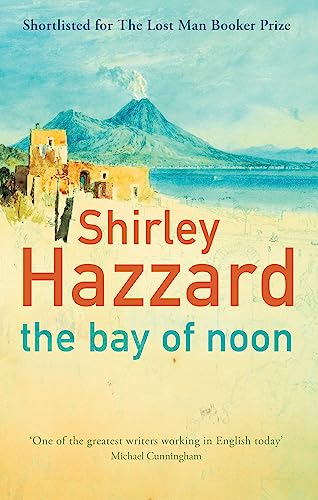
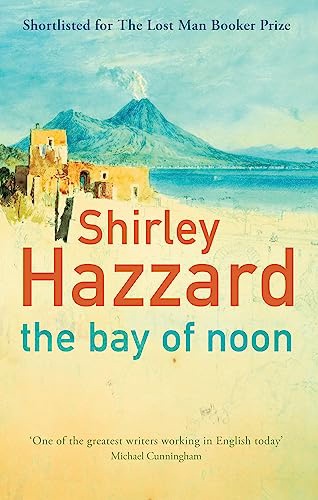
  • Shirley Hazzard, The bay of noon (182pp.) (my review)

Novella-length nonfiction

  • Helen Garner, The season (Memoir, 188pp.) (my review)
  • Gideon Haigh, My brother Jaz (Memoir, 87pp.) (my review)
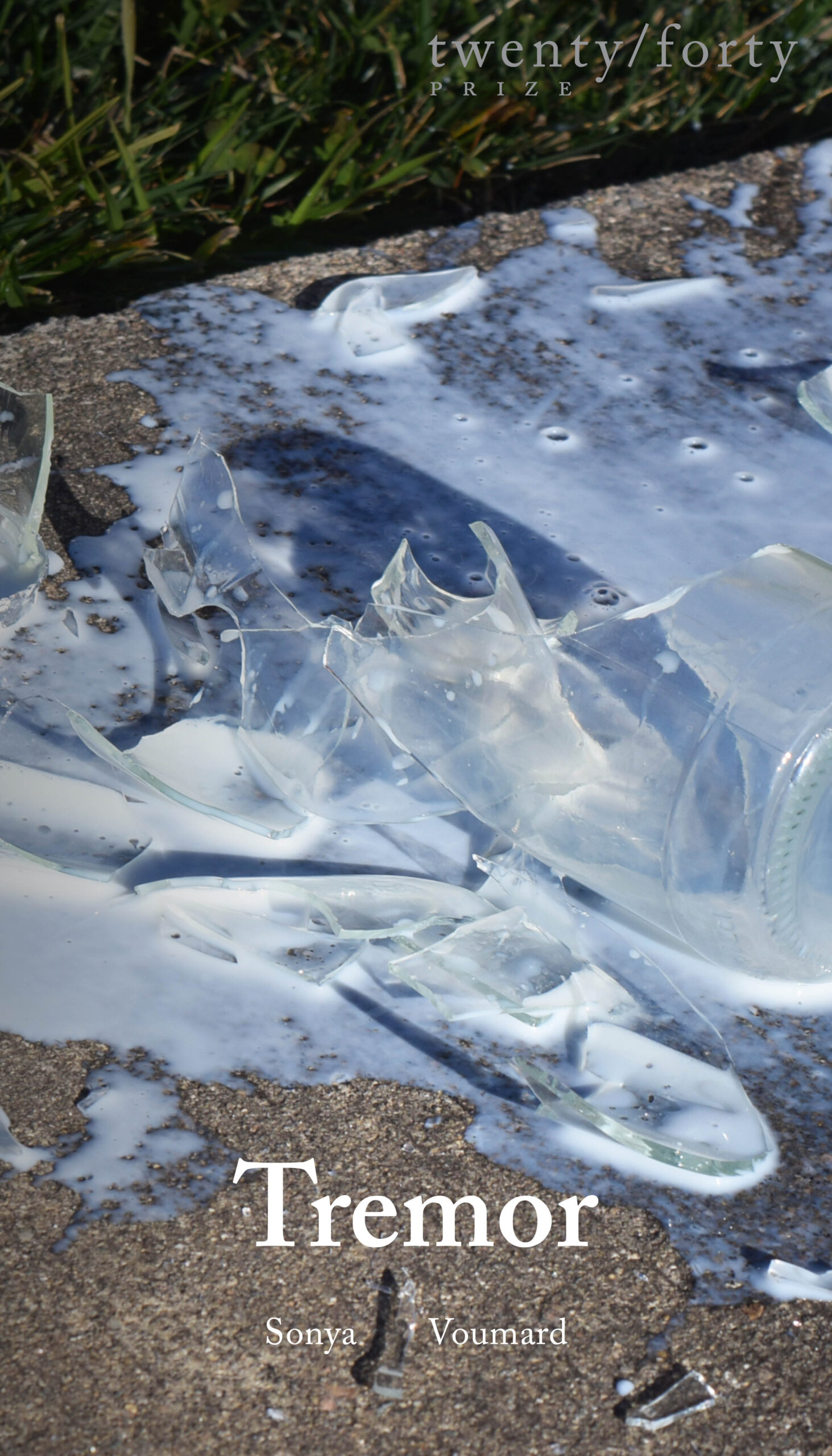
  • Sonya Voumard, Tremor (Memoir, 129pp.) (my review): joint winner of the 2024 Finlay Lloyd 20/40 Prize

In addition to these, I have read a novella this month but it will appear in next year’s novella count. And I’ll soon be reading another novella-length nonfiction, but again that’s for next year’s count.

All of the above, with the exception of Shirley Hazzard’s The bay of noon, were published in 2024, which suggests that publishers are currently happy to publish shorter works – and, given some showing in literary awards, that judges see value in them. Meanwhile, Shirley Hazzard’s novel, now 55 years old, could be called a classic.

It’s interesting – and completely serendipitous – that the three novella-length nonfiction books are all memoirs. It’s made me think, however, that this shorter length is a good one for memoirs because it encourages a focus on the main driver for the memoir, and discourages the wallowing or padding that can sometimes happen? Indeed, Sonya Voumard made exactly this point about writing Tremor (see my post on a conversation with her).

And this leads me to making a brief final note on novel-length. I have read many wonderful long books, but I have a preference for short (and therefore usually tight) ones. Just as, anecdotally, there’s the view that readers want more bang for their buck when buying books, meaning they don’t want to pay around the same amount for a 100-page novella as for a 400-page tome, I want more bang for my reading time! In other words, I prefer to read three great novellas in the same time I can read one great tome. That’s three different authors’ perspectives and ideas versus one. This, in addition the fact that I do enjoy concision (which I seem unable to emulate!), is what appeals. The point is that getting lost in a book’s world and never wanting to leave it, while I do love that, is not my main criterion for enjoyment.

If you are taking part in Novellas in November, you clearly enjoy them too. And, you are probably interested in literary culture, so if you are interested in the history of book-lengths, check out this article “Novels and novellas and tomes, Oh my!” by American writer and editor, Lincoln Michel. It has an American slant but I found it most interesting nonetheless. (BTW, if you read to the end, you’ll see that he struggles to be concise too!)

Thoughts anyone?

Written for Novellas in November 2025.

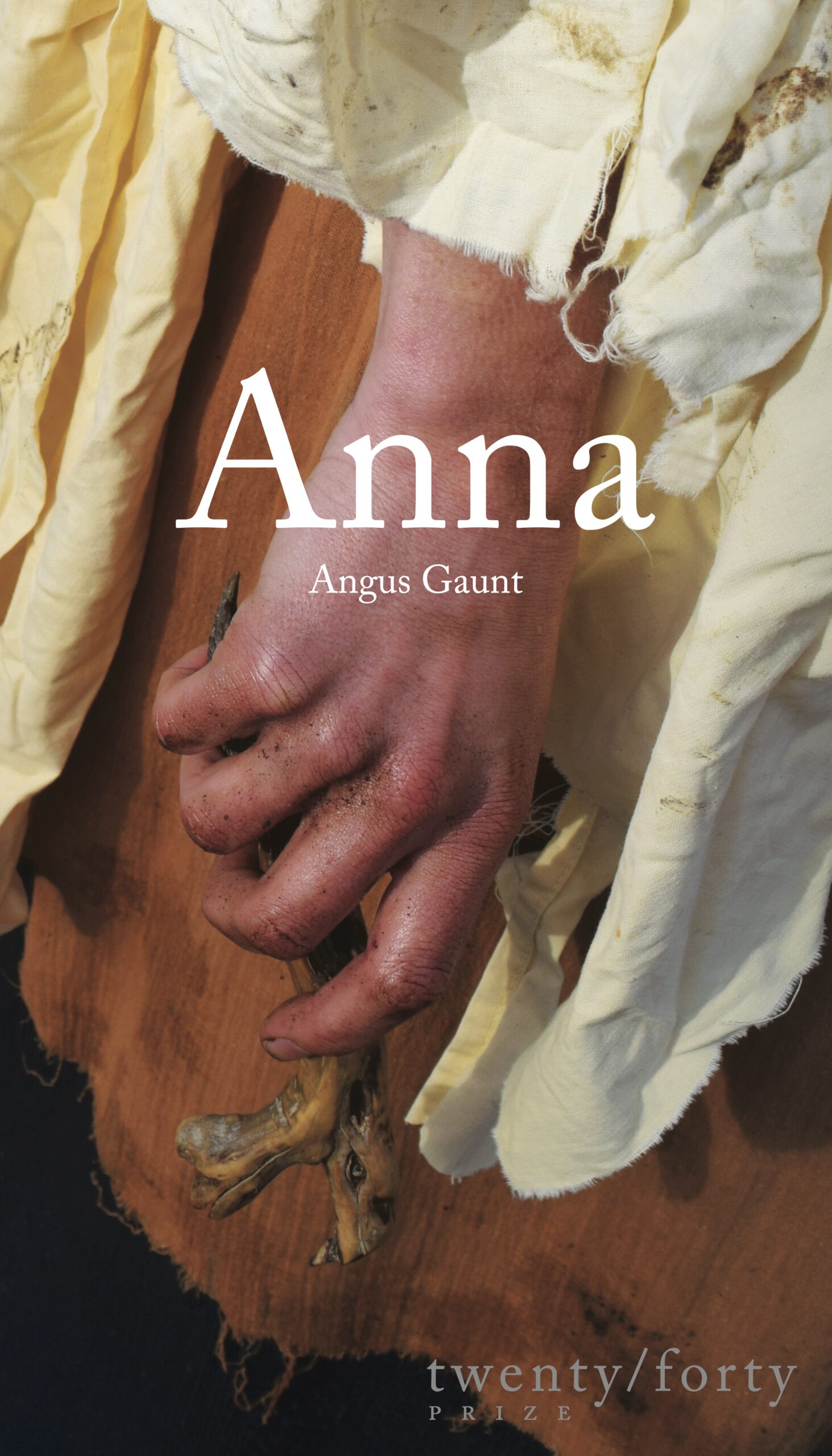
Angus Gaunt, Anna (#BookReview)

Last month, I posted on the winners of the 2025 Finlay Lloyd 20/40 Publishing Prize, of which Angus Gaunt’s Anna was one. I am thrilled with this prize, not only because I love the novella form, but because of the variety of stories we are seeing. So far the fiction winners have been an historical novel from Kim Kelly, a contemporary coming-of-age novel from Rebecca Burton, and an audacious “what if” story from PS Cottier and NG Hartland. Three very different books, and now Anna makes it four.

When I started reading Anna, I thought I was heading into a dystopian novel. It is told third person from Anna’s perspective, and starts with her walking in the woods. A young man is following her. The woods are not identified, and neither is the young man, but she recognises him as a guard from the place she’s just left. Through their initial interaction, we learn that “the war is over” and the gates had been opened. Therefore, she firmly implies, he has no jurisdiction over her.

Anna, we discover as her journey continues, is about 15 years old, and had been taken to a labour camp with her family about three years ago. Her parents had died but she’s hoping her remaining siblings are ahead of her, safe in the exodus she’d missed. We know nothing about the woods – but they do not sound Australian – nor do we know the time setting. It is cold. There are some generic animals and plants – deer, hares, mushrooms, berries. The story focuses on Anna’s thought processes and her survival. There is almost nothing about the sociopolitical situation that got her there. We do know that Anna and the guard speak different languages, which suggests an invasion or some sort of oppression of minorities, but Gaunt does not go there. The notes I made during my reading, include this: “Timeless, placeless, non-political, means not dystopian? More allegory?”

The judges don’t call it either of these, but on “why this book is different” they say:

Winter is only beginning to thaw in a remote forest as Anna treks for her survival, accompanied by someone she cannot trust. With distilled clarity, this short novel carries the reader on a journey from victimhood to self-possession.

So, it is about survival, or, more precisely, about the inner resources you need to develop to overcome a dire situation.

Anna is a moving and absorbing read. Gaunt quickly engages our sympathy for his protagonist, young and defenceless in the woods. The language in the first two paragraphs sets up uncertainty. It starts:

Anna had already walked further than she meant to, but did not want to go back, not yet. She was basking in the sun … also in the silence. She had not done something like this for a long time … (p. 9)

Then she stops and looks up, where she sees “a large predatory bird … floating on secret air currents, delicate wing tips spread”. “Predatory” but “delicate”. Should we be worried? Then she sees the young guard, later identified as Yevgeny. He’s very young, uncertain, and in a show of bravado he tries to shoot the bird, but fails. He’s never shot anything before. And so the narrative and its main characters are established. Anna is alert, sensitive, intelligent and has some nous and wisdom about her. The guard, also young, lacks confidence, experience and nous, and is confused about his role as a man, a soldier, a human. This makes him potentially dangerous but also vulnerable. We – like Anna – are on the watch for which way he might go.

And so the novel progresses as this uneasy, wary-of-each-other pair journey through the woods, looking for the railroad and its promise of civilisation. Early on, during a brief time when she and Yevgeny are not together and she has returned to the camp, Anna meets a dying man who gives her his last food. Then later, together, they come across a cottage containing a barely surviving couple.

This brings another literary form to mind, the journey narrative, the search for home, a new one or old one, and – perhaps – for self. In journey narratives, physical and spiritual or emotional challenges are faced, and people are met. The journeyer must rely on inner resources to overcome the challenges, including assessing whether the people met are to be trusted or not. This is what we watch Anna do. We are privy to her thoughts as she goes, as she draws together past knowledge and present experience, and we gain confidence in her ability to make good decisions. Nearly half way through the story, her mind drifts to the schoolroom. It is comforting, but she stops herself,

recognising that she was attracted by the emotion of it rather than its practical application. There was not room for emotion. She was glad of this thought. Feelings and emotion could only cloud the mind, waste precious resources. All resources were precious. Her mind was clear now. She had a choice to make and she made one. (p. 56)

Of course it’s not a straight line, and Anna, like any journeyer under stress, slips back several times before getting a grip once more.

Anna is beautiful to read, from the first sentence. The language is tight but expressive. The necessary tension is off-set by moments of tenderness and hope, not to mention some subtle foreshadowing. And the characterisation is warm and empathetic.

I concluded my post on last year’s winner, The thirty-one legs of Vladimir Putin, that it was an audacious “what if” story. Anna is also audacious, in a different way. It calls on the tropes of established forms, like allegory and the journey narrative, but makes them into something new, something that confronts issues like trust and power in a way that feels both modern and timeless.

Read for Novellas in November.

Angus Gaunt
Anna
Braidwood: Finlay Lloyd, 2025
110pp.
ISBN: 9780645927047

Review copy courtesy Finlay Lloyd.

Finlay Lloyd 20/40 Publishing Prize 2025: Winners announced

In August I wrote a progress report on Finlay Lloyd’s 20/40 Publishing Prize, a prize in which I have special interest because I love novella-length writing and the publisher behind this prize, Finlay Lloyd.

So just a quick recap on the prize: 20/40 is a manuscript award, with the prize being publication. It is not limited to debut or young or women or any other subgroup of writers, as some manuscript awards are. However, it does have its own criteria, which is implied in its name. It is for prose writing that is between 20,000 and 40,000 words. Outside these criteria – prose and length – the submissions can be from “all genres … including hybrid forms”. The aim is to choose two winners, preferably one fiction and one non-fiction, as they did last year.

And now, the Shortlist and Winners

The shortlist, announced on Finlay Lloyd’s website, was:

  • Angus GauntAnna: a novel which “steps with deep insight into the dire circumstances of a girl who has little more than her own inner resources to deal with sustained privation and the threat of violence”.
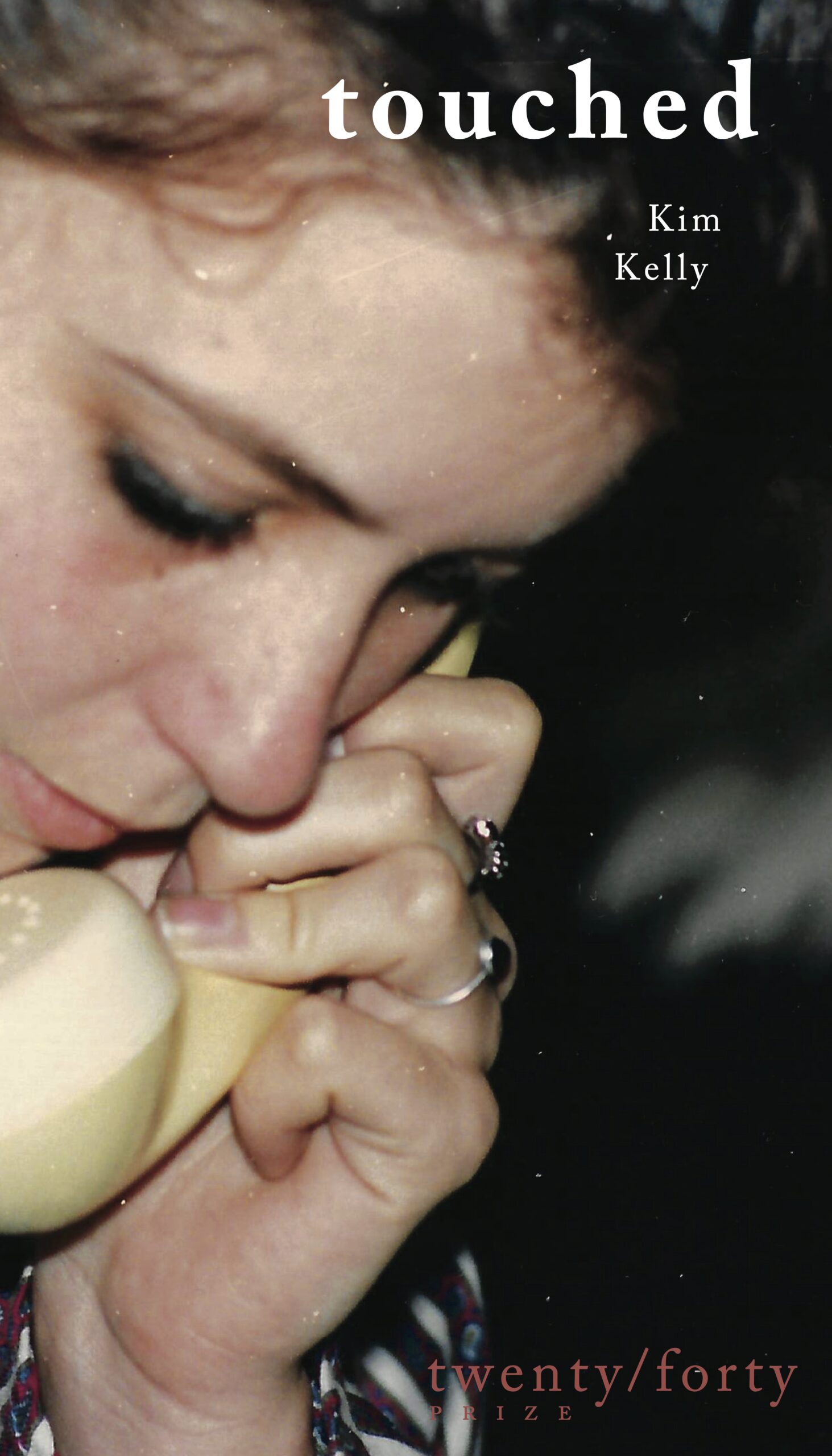
  • Kim KellyTouched: “a memoir that uses self-deprecation and humour to turn her own experience of intense panic attacks into a lively and profound reflection on the prevalent role of anxiety in so many of our lives.”
  • Monica RaszewskiMystic Vera and Lottie the shadow puppet: another novel, this one “centred on eccentric, flighty, Vera who dances with happy abandon around her sister, Lottie’s flailing attempts to control her excesses.
  • Paul TooheyBad face: an historical novel “set on the late 19th Century US frontier, where totemic violence between settlers, cattle ranchers and rustlers, and native Americans is played out with vital gothic intensity”.

And the winners are Angus Gaunt’s Anna and Kim Kelly’s Touched. You can read more about them on the Winner Announcement page. The judges were last year’s winners – Sonya Voumard, Penelope Cottier and Nick – plus Finlay Lloyd author John Clancy and the publisher Julian Davies.

The judges liked Gaunt’s novel because “the extreme circumstances of this story are written with a quiet yet incisive humanity”. Gaunt as born and educated in England, coming to Australia in 1987. He now lives in Dharug/Guringai country on the northern edge of Sydney. He has been published and nominated for awards in Australia, England and Ireland.

They liked Kelly’s memoir because of its “breadth of understanding—of the author’s own crazily complex family, of the wider issue of anxiety across society, and of her own voyage as a highly competent yet vulnerable being in a worryingly unhinged world”. Kelly was one of the two inaugural winners of this prize with her historical fiction novella, The Ladies Rest and Writing Room (my review). She lives and works on Wiradjuri and Eora lands in central west NSW and Sydney. Kelly has written historical fiction, short stories and essays, and is completing a PhD in Literature at Macquarie University. She is also a book editor (as Kim Swivel).

I was able to attend the launch of the 2023 and 2024 winners, as they were held in Canberra. This year, however, because both authors have Sydney bases, the launch will be held there next week when I’m in Melbourne, so I will not be able to report on the winners’ conversation, unfortunately. However, I do have the books and plan to read both for this year’s Novellas in November. And, there is an excellent interview with the authors available RIGHT NOW on the above-linked Winner Announcement page!

I am thrilled that this prize has now passed its third year, and hope it continues for many years more. If you like the sound of these books, and would like to support them (and the prize), you can order the books at Finlay Lloyd (though great bookstores will carry them too.) The recommended retail price is AUD26, but you can buy them from FL at AUD23.40 each (plus postage).

Congratulations to Finlay Lloyd and this year’s winners.

Monday musings on Australian literature: Finlay Lloyd’s 20/40 Publishing Prize, progress report

Nearly three years ago, I reported on a new literary prize, the 20/40 Publishing Prize which was being offered by the non-profit publisher, Finlay Lloyd. It has now been awarded in both 2023 and 2024, and preparations for announcing the 2025 winners are well under way.

Briefly, the aim of the award is to “encourage and support writing of the highest quality” by offering publication rather than cash. It has a specific criterion, however, as conveyed by its title: the works, which can be fiction or nonfiction, must be between 20,000 and 40,000 words. The submissions are read blind, and the judging panel includes the previous year’s winners. This means the judges for the 2025 award are Sonya Voumard, Penelope Cottier and Nick Hartland, alongside publisher, Julian Davies, and longtime Finlay Lloyd supporter (and writer), John Clanchy. 

The winners to date have been:

  • 2023: Rebecca Burton, Ravenous girls (fiction, my review)
  • 2023: Kim Kelly, Ladies’ Rest and Writing Room (fiction, my review)
  • 2024: PS Cottier and NG Hartland, The thirty-one legs of Vladimir Putin (fiction, my review)
  • 2024: Sonya Voumard, Tremor (nonfiction, my review)

Most awards, particularly those coming from a small organisation, take time to build – and some disappear into the ether. So I worried that this award might not last – not only because Finlay Lloyd is small but also because this shorter form is not popular with everyone. I am therefore thrilled to hear that the third annual winners are on track for announcement, and that Finlay Lloyd is now calling for entries for the 2026 prize.

This is where today’s post comes in. I don’t make a practice of announcing calls for competition entries, but this attracted me for a couple of reasons. First, I often wonder what difference awards make to authors and their sales. Well, while I don’t know what the initial print runs were, Finlay Lloyd says that The thirty-one legs of Vladimir Putin has been reprinted twice since its first run, and Tremor is about to go into reprint. This must be encouraging, surely, for writers?

The other relates to the fact that Finlay Lloyd wants to offer a fiction and a nonfiction award each year. This didn’t happen in 2023 because they did not receive enough quality entries, but it happened in 2024. Sonya Voumard’s Tremor is an excellent example of novella-length (is there a better description for this) nonfiction.

In my report on the Winners Conversation last year, I shared Voumard’s discussion about length. She said that there’s “the assumption that to be marketable you need to write 55,000 plus words”. She had the bones of her story, but had then started filling them out, when, in reality, it was just “flab”. The competition, and then Julian Davies’ editing guidance, taught her that she had a good “muscular story”. So she set about “decluttering”. The end result is interesting, because this book doesn’t have that spare feeling common to short works, which is not at all a criticism of spare writing. However, Tremor feels tight. It has little extraneous detail, but it’s not pared back to a single core. I found it informative but also a personal and moving read, and I bought a few copies as gifts last year. I would love to read more shorter-length works of nonfiction.

All this is precursor to sharing that last week, I received a Media Release from Finlay Lloyd, in which publisher Julian Davies says:

As 20/40 builds momentum, our enthusiasm for encouraging this compact scope for both fiction and nonfiction has continued to grow. The length of 20,000 to 40,000 words allows for the rich development of an imaginative story or factual concept while being tight enough to encourage focus and succinctness. It’s a form we love and believe is apt for our moment in the history of thought and invention.

Each year we support the winning authors through a close and probing editorial process that works towards finding the best possible version of their book. We also take delight in a design process where books are created that feel like artefacts, that ask to be picked up and engaged with.

Submissions for 2026 will open in December. The prize is open to emerging and established writers, but they must be Australian citizens, permanent residents, or valid visa holders. It is a prose prize, but is open to all genres – as the winners to date demonstrate – including hybrid forms.

The original NaNoWriMo might have ended, but that doesn’t mean November (or any month of your choice) isn’t a good month for giving writing a go, particularly if there’s a publisher out there waiting for your work. For more information, check the prize’s webpage.

Sonya Voumard, Tremor (#BookReview)

As I’ve previously reported, Sonya Voumard’s short memoir, Tremor, is one of the two winners of this year’s Finlay Lloyd 20/40 Publishing Prize. Earlier this month, I reviewed the fiction winner, P.S. Cottier and N.G. Hartland’s novella The thirty-one legs of Vladimir Putin. Now it’s Voumard’s turn, with her book on living with a neurological movement disorder called dystonia.

While essentially a memoir, Tremor also fits within that “genre” we call creative nonfiction. The judges would agree, I think, given their comment that Tremor is “notable for its compellingly astute interweaving of the author’s personal experience with our broader societal context where people with disabilities, often far more challenging than her own, try to adapt to the implicit expectations and judgements that surround them” (back cover). The interweaving of something personal with something wider is a common feature of creative nonfiction, but what seals the deal for me is its structure. Tremor has a strong – subjective – narrative arc that propels the reader on, with more objective information providing the necessary support.

The narrative opens on December 3, 2020, the day Voumard is to undergo brain surgery for her condition. It leaves us in no doubt that what we are about to read is a very personal journey. “I am”, she writes on this first page, “a hairless head on top of a flimsy cotton gown and long compression socks”. But then, two sentences later, she opens a new paragraph with, “as I wait to be taken to the operating theatre, I channel my inner journalist. I’m on a news assignment for which I have already gathered some key facts.” And just like that, we are in journalist mode, with Voumard describing her condition and the relatively new treatment she is about to receive, followed by some facts and figures. Around 800,000 Australians, she informs us, experience tremors of the body, and about 70,000 of these have dystonia. A couple of paragraphs later we flash back to early 1960s Melbourne. Voumard is four or five years old, and her personal trajectory begins with an anecdote about dropping a bottle of milk, about being “clumsy, prone to dropping things”, but also being “a risk-taker”.

From here, the book takes us on the two journeys I’ve just intimated. There’s the mostly chronological one tracking her life with dystonia until we arrive – at the end of the book – back at the beginning with her surgery and its aftermath. And there’s her exploration of dystonia, its causes, diagnosis, and treatment. Voumard binds these two journeys together with her astute, and empathetic, reflections and analyses. She knows what it’s like to live with a disability, even if early on she didn’t recognise it as such.

So, for example, she chronicles the tactics she’d use to hide her shaking, in order to get jobs and then to demonstrate she could do them (when clearly she could). She would sit on her hands, refuse offers of drinks, self-medicate with alcohol. Whatever it took to hide her condition. She talks about navigating a medical world that is so “siloed” that diagnoses ranged from the “psychogenic” (due to “some sort of failure of womanhood, an unfulfilled yearning, a cloak for something else”) to the “purely physical” (like a sports injury or from computer use) – depending on the speciality she was dealing with – when it was something else altogether. She touches on the cost of treatment, the overall politics of medicine, the gender issues which see women’s conditions so often dismissed.

And, lest I’ve given the wrong impression, she does this not only through her own experiences, but through those of others – met personally, or found through her research – ensuring that Tremor is not a “misery memoir” but something bigger, that contributes to our understanding of how people navigate a world in which they don’t fit the norm. This navigation has a few prongs: the obvious ones relate to coping with the physical limitations, discomfort, and/or pain the condition brings; and the less visible ones concern managing your expectations and aspirations, while also dealing with how people interact with you. Voumard shares the story of a woman who had suffered for over twenty years from cervical dystonia before she got a diagnosis. While diagnosis didn’t bring a cure, “identifying her condition had helped her to live her life more calmly, to not try to do too much and to understand something of others’ suffering”.

Voumard, you’ve probably realised by now, packs a lot into the 20/40 form (that is, into 20,000 to 40,000 words). At the winners’ conversation, she said there is the assumption that to be marketable you need to write 55,000 plus words. She had the bones, and had then started filling them out, but it was just “flab”. The competition, and then Julian Davies’ editing guidance, taught her that she had a good “muscular story”. So she set about “decluttering”. The end result is interesting, because this book doesn’t have that spare feeling common to short works. Tremor feels tight – there’s little extraneous detail – but not pared back to a single core.

Voumard, in fact, covers a lot of ground. She uses the Eurydice Dixon murder case, for example, to epitomise her ongoing interest in media and reporting, particularly regarding structural disadvantage and social justice. She also contextualises the latter stages of her journey against the 2019 bushfires, the 2020-2021 pandemic and lockdowns, and the 2022 floods in NSW’s northern rivers. Why all this? The subtitle explains it. This book, this “tremor”, is not just about a movement disorder but about something bigger:

My more recent thinking about disability has strengthened my belief in the urgent need to privilege the voices of others more marginalised than mine. But I also cling to the concept of freedom of speech – not as a neoliberal, tabloid-news defender of hate speech – but as someone striving to find ways to respond to the challenges of a democratic society that is becoming more disordered.

Tremor is another beautiful, thoughtful product of the Finlay Lloyd stable. Recommended.

Read for Novellas in November, because, while not a novella, it is a short work.

Sonya Voumard
Tremor: A movement disorder in a disordered world
Braidwood: Finlay Lloyd, 2024
129pp.
ISBN: 9780645927023

Review copy courtesy Finlay Lloyd.

Shirley Hazzard, The bay of noon (#BookReview)

Shirley Hazzard’s novella, The bay of noon, has been in my sights for a long time, but finally, this Novellas-in-November year, I managed to get it out of my sights and into my hands. It’s the first of two novellas I read for the month, but the second to review. Such was my November (and we are now well into December!)

Published in 1970, The bay of noon was Hazzard’s second novel. It was one of six books nominated for the Lost Man Booker Prize in 2010. This was a special award created to, in effect, right a wrong which occurred when a change in the Booker Prize rules resulted in books published in 1970 missing out on a chance for Booker glory. The award was decided by public vote, with JG Farrell’s Troubles emerging the victor.

I’ve read three books by Hazzard before blogging, but since then I’ve just read one short story – “The picnic” – for the 1962 Club. In my post on that story, I referred to a review in The Guardian of Shirley Hazzard’s Collected stories. The reviewer Stephanie Merritt writes that “Hazzard’s recurring themes here – enlarged upon in her novels – are love, self-knowledge and disappointment”.

This is true of The bay of noon, which tells of a young Jenny, who, though born in England, had been sent to Cape Town with other young children to escape the Blitz. Post-war she was reunited with her older brother but, realising that her love for him was unhealthy, she leaves England to take up a job with NATO in Naples, bringing me to another of Hazzard’s recurring themes, that of young women leaving home to find their place. I understand from her biography that Hazzard herself worked for NATO in Naples in the timeframe this book is set, so she knows whereof she writes – which is not to say that she is writing her life. This is fiction, so while Hazzard draws on her own experiences, Jenny’s story is not hers.

Anyhow, we are in Naples, and it is some years after World War II, the mid 1950s in fact. Hazzard loved Italy, and her description of Naples at this time is imbued with a love born of knowing a place authentically, not as a sightseer. Naples is poor, and damaged both by war and a Mt Vesuvius eruption in 1944. Hazzard’s evocation of the city is a joy to read. A “through the looking-glass” city of both “apartness” and “continuity”, it also provides a moody, sometimes metaphoric, backdrop for our newcomer Jenny.

The storyline is straightforward. Knowing no-one outside of her work, Jenny follows up a letter of introduction to the charming and welcoming writer Gioconda, whose married lover, and Roman film director, Gianni, she also meets. Soon, however, through her work, Jenny also comes to know a Scotsman, Justin Tulloch, and a relationship of sorts develops between them. These relationships, and how they play out – with their mysteries and betrayals – form the nub of the story, but they are not what the novel is about. That is not so straightforward, but there are clues.

The title offers one clue, particularly, for me, the idea of “noon” as a time when the sun is at its highest, when the light is brightest, and so, perhaps representing a moment of clarity and, perhaps, also, of transition or change? Another clue is in the epigraph from Auden’s “Goodbye to the mezzogiorno” and in the opening paragraphs, both of which encompass ideas about memory and experience. The story is told first person through Jenny’s eyes, and there is a sense as the novel progresses of her working through an experience. Or, perhaps, not so much “working through” as allowing the passage of time to do its work. In the opening paragraphs, Jenny speaks of experiences building up “until you literally sink under them” but is also aware that, with the passage of time, memory, which was once “clouded with effects and what seemed to be their causes”, can become protective. As Auden concludes his poem:

… though one cannot always
Remember exactly why one has been happy,
There is no forgetting that one was.

But of course, not all memories are happy – and time can’t make them so. Gioconda, who had suffered loss, says

‘When people say of their tragedies, “I don’t often think of it now”, what they mean is it has entered permanently into their thoughts, and colours everything…’ (p. 67)

Just prior to this, she admits:

‘When I talk of it this way, now, to you, it all comes out as if there were some sequence, some logic, instead of moods, contradictions, alternatives. The design imposes itself afterwards. And is false, must be false.’ (p. 66)

It’s a curious but beguiling novel. The writing has a formal, intellectual – almost dispassionate, and sometimes elegiac – tone. It feels as though it belongs to a much earlier time, earlier in a way than the time in which it is set. This works somehow, partly because of Hazzard’s clear and measured prose, partly because the characters themselves seem to belong to an earlier time, and partly because Jenny is telling us the story from some time in the future.

As I read The bay of noon, I kept trying to place it within a wider literary tradition. It belongs, in part, to those stories about young people being taken under the wing by more experienced elders. Jenny observes the world she is drawn into, gradually becoming a more active and confident player in it. However, an Englishwoman, she remains an outsider, so retains her observer status which, over time enables her to see some realities she had missed in the first flush.

This is not a simple coming-of-age story, as it might look on the surface. Jenny is not an ingenue, but neither is she, at the start, experienced enough to understand the complex emotions and tragedies her older friends have experienced. Moreover, Hazzard has set the novel in a time that was itself complex, as Europe, and Naples specifically, was emerging from the war and – hmmm, was what? I wanted to say remaking itself, but that’s not the sense we get of Naples. It’s more one of being itself.

Towards the end, Jenny, reflecting on that past time in Naples, likens it to a

vineyard that had been left to flourish intact … among the deadly apartment buildings, not so much showing how it was as what has happened to it.

And that is the book’s ultimate meaning for me. It is not about who we are, what we hoped for, or where we have arrived, but about, in the closing words of the novel, “how we came”. Life, in other words, is a process, a journey that doesn’t always take us where we plan or expect.

Read for Novellas in November. Also read by Brona for the month. Read very late for the 1970 Year Club run by Karen (Kaggsy’s Bookish Ramblings) and Simon (Stuck in a Book)

Shirley Hazzard
The bay of noon
ISBN: 9781860494543
Virago Press, 2005 (originally published 1970)
182pp.

Novellas in November 2024, Part 2 (New to my TBR)

November is over and, as I expected, I didn’t get to post much for Novellas in November. However, I did read a couple of novellas and started another short form work (ie nonfiction), and, more to the point, I did read some participants’ posts which resulted in my noting some “New to my TBR” options.

Last year I listed 8 “New to my TBR” options and, unusually for me, I actually read two of them. They were:

New to my TBR:

  • Jon Fosse, Aliss at the fire (translated by Damion Searles) (orig. pub 2003): Brona of This Reading Life was mesmerised by this book in which an elderly woman reflects on the disappearance of her husband some twenty-five years before, after taking his rowboat out into the fjord.
  • Pascal Garnier, Boxes (translated by Melanie Florence) (orig. pub. 2012?): Kimbofo of Reading Matters didn’t like this as much as other books she’s read by Garnier, but I’m intrigued. Strangely, given my interest in Fosse’s book, it’s about, says kimbofo, “a middle-aged man reeling from his young wife Emma’s sudden disappearance”. It appears that journalist Emma fails to return home from a work trip and is presumed dead.
  • Paul Griffiths, Tomb guardians (2021): Lisa of ANZLitLovers makes this story – about the guardians of the tomb from which Christ’s Resurrection took place – sound both interesting and entertaining.
  • Jean-Patrick Manchette, No room at the morgue (translated by Alyson Waters) (orig. pub. 1973): host Cathy of 746 Books attracted me to this one by describing it as French noir which “blends a taut mystery with a trenchant sense of ennui and regret”.
  • Hiroko Oyamada, The factory (translated by David Boyd) (2010): Karen of Booker Talk posted on this and caught my attention, partly because it’s Japanese, but more because factory settings intrigue me and she describes it as unsettling and bordering on the absurd. 
  • Evelyn Waugh, Love among the ruins (1953): Judith Stove commenting on my Part 1 post, recommended this dystopian novella. She write that “Waugh covers a lot of themes – the ‘ruins’ of the title, criminal rehabilitation, and the transformative power of love – as well as the assisted-death industry. Plenty of themes with relevance to our time!” It’s a while since I’ve read Waugh, and this appeals and sounds manageable in my time-poor life!

There are probably others but given my track record for actually reading books I spy, I think this is enough. Maybe some of them caught your eye too? I see that two caught host Cathy’s eye. Check out her post to see which ones! I must say that she reminded me that I’d also been attracted to Kate’s post on Carys Davies’ Clear, but I am not going to (formally, anyhow) add it to my list. It’s long enough.

Regardless, has Novella November affected your TBR pile this year?

Written for Novellas in November 2024. Thanks as always to Cathy and Rebecca for hosting this special month.

PS Cottier and NG Hartland, The thirty-one legs of Vladimir Putin (#BookReview)

Earlier this month, I posted on a conversation with the winners of the 2024 Finlay Lloyd 20/40 Publishing Prize, P S Cottier and N G Hartland, who wrote The thirty-one legs of Vladimir Putin, and Sonya Voumard, who wrote Tremor. On the surface, these books look very different, but conversation facilitator, Sally Pryor, found some similarities suggesting both explore ideas related to identity, one’s place in the world, and how we can be captured and defined by the systems within which we live. Having now read Cottier and Hartland’s novella, and having started Voumard’s memoir, I can see she has a point.

If you didn’t read my conversation post, you may be wondering what the heck this book with its curious title is about. Besides the fact that it’s a novella, which I love, I was attracted to it from the moment I saw it on the shortlist because the description said it “spirits us away on a comedic journey into a world where the reality and absurdity of political power are increasingly indistinguishable”. That sounded just too delicious and I was glad to see it win.

Ok, so I still haven’t told you what it’s about, but be patient, I’m getting there. The novella was inspired, said Cottier and Hartland, by the idea that there are such things as Putin “body doubles”. There is even a Wikipedia page about this “theory” so it is a thing, as they say! The titular “thirty-one legs” belong to 16 of these body doubles whose stories are told in the book. Sixteen, you ask? That doesn’t compute from 31? True, but one of the doubles only has one leg! How can that be, you might also ask, how can a “double” of two-legged Putin only have one leg? Good question, and I won’t give it away, but let’s just say that the idea epitomises the absurdity of the notion.

Now, this is a collaborative novel, and if I understood correctly from the conversation, Cottier and Hartland started by “pushing out” individual Putins. In fact, the novella reads rather like a set of interconnected short stories because each Putin stands alone, with minimal connection between them except they are all Putin doubles and most of them assume there must be others. However, there is a narrative arc to the whole. Each Putin tells us something about their recruitment and its impact on their lives, with some threads recurring through the different Putins, depending on their location and personality. Two Putins also bookend the story. Surfing Putin, Dave McDermott in Western Australia, opens the book in the Prologue and concludes it with his own story, while English Putin Samuel Chatswood starts off the stories proper, and returns with the penultimate story. Each chapter is titled with the name and location of a Putin, so we have, for example, “Maja Dahl, Oslo, Norway”, “Richie ‘The Putin’ Rogers, Cirencester, England”, “Joppe Stoepke, The Hague, Netherlands”, and “Andrei Galkin, Rostov-on-Don, Russia”.

The set-up, or plot, is simple. People from around the world who look like Putin have been recruited to act as Putin doubles should they be so needed. This recruitment has happened over twenty years, but the book is set post the Ukraine invasion, so our doubles suspect they will not be called upon to play Putin. Some are quite edgy about this, while others are more phlegmatic. For all of them, though, being paid – because paid they are, monthly, from an anonymous bank account – comes with questions, if not challenges.

Our first fully-fledged Putin, Samuel Chatswood from London, sets the scene. He tells us about his fears about being a double. Not only is he frequently teased about his resemblance to Putin and asked “why anyone would want to invade Ukraine?”, but he’s anxious because he has been increasingly getting dark looks from strangers since the Skripal poisoning. However, having recently spied another lookalike, he is “comforted” by the idea that “whatever suspicion and recriminations are possible, they are less likely to entangle me if I’m not the only Putin lookalike”. He also heralds the denouement, when he returns to find that such comfort might have been misplaced.

We meet all sorts of Putins, from the fearful, through the deluded, and the thoughtful, to the confident or more upbeat, but all ponder what being a Putin double means for them. For some their own identity gets lost in the role, and some are confused, or at least perplexed, about what’s expected of them. For others, like the resourceful Chilean, Sebastian Soto, it’s a business proposition, while several capitalise on their lookalike-ness. Steve Pinebrother in “International Waters”, for example, not only makes money, secretly, as a double but, publicly, as a performer on a cruise ship. Each one is beautifully individuated, and I find it hard to pick a favourite. There’s much humour in many of their stories, but there’s pathos too, particularly with those who get lost in – or fearful about – their roles. Life is not simple when you accept money without clarity, eh?

“the butterfly of truth does not need questions to emerge from its cocoon of facts”

So, what’s the takeaway. An obvious one is contemporary culture’s focus on appearance and its willingness to monetise looks without much substance behind it. But another is murkier. This novella, I’m tempted to say, could be read as an allegory of the changing world order. No matter where the Putins live, recent changes are unsettling them. The ground is shifting and they (we?) don’t know how to react. Do they bury their heads in the sand, believing it will be alright? Do they wait for the inevitable or, try to withdraw? Or do they take action, and if so, what action can they take? For French Putin, Hugo Fournier,

It matters not, I conclude, what is reality and what is an extravagant theory from a feverish mind. The answer of course is that I should trust no one. I am the only Putin who can, and will, look after me.

Is such isolationism the answer? Through their various Putins, Cottier and Hartland pose serious questions, including, what do we believe and what we can or should we do?

The thirty-one legs of Vladimir Putin is an audacious “what if” story. Its episodic approach works well in the novella form. Were the book much longer, the conceit would, I think, start to lose its freshness. As it is, there are enough Putins to provide a variety of stories, without becoming repetitive. The tone is light enough to be highly entertaining, but the content is informed and thoughtful enough to engage our minds. This book would make a perfect Christmas stocking stuffer, which is not to say I put it on a par with chocolates and scratchies, but that it is small in size, well-priced, physically lovely, and a thoroughly absorbing read.

Read for Novellas in November.

PS Cottier and NG Hartland
The thirty-one legs of Vladimir Putin
Braidwood: Finlay Lloyd, 2024
115pp.
ISBN: 9780645927016

Review copy courtesy Finlay Lloyd.

Novellas in November 2024, Part 1

This November has been – well, about as busy as usual. I am secretary of an association for which, in November, we present our annual lecture and also hold our AGM. It all takes time and energy. I am therefore planning to combine my Novella in November (run by Cathy of 746 Books and Rebecca of Bookish Beck) comments into a couple of posts.

These reading months tend to suggest you start with “my year in [whatever the topic is]”. For last year’s (2023) post, I was horrified to discover that I’d only read one novella in the preceding twelve months, Jessica Au’s Cold enough for snow (my review). But, in fact, I realise now that I told a lie, as I had read another, Gwendolen Brooks’ Maud Martha (my review). Regardless, that was an easy benchmark to beat and beat it I did. Of course, I’ve still only read a fraction of what many bloggers have read, but here is my alphabetically-ordered list of books read for this “novella” year – that is, between 1 November 2023 and 31 October 2024:

  • Jane Austen, Lady Susan (my review)
  • Rebecca Burton, Ravenous girls (my review): joint winner of Finlay Lloyd’s inaugural 20/40 Prize
  • Rebecca Campbell, Arboreality (my review): novella or connected short stories, which won the 2023 Ursula K. Le Guin Prize
  • Michael Fitzgerald, Late (my review)
  • Elizabeth Gaskell, Cousin Phillis (my review): read for Bill’s Gen O week
  • Elizabeth Gaskell, Lizzie Leigh (my review): read for Bill’s Gen O week
  • Kim Kelly, The Ladies’ Rest and Writing Room (my review): joint winner of Finlay Lloyd’s inaugural 20/40 Prize
  • Thomas King and Natasha Donovan, Borders (my review): short story turned into an under 200pp short graphic novel which makes it a novella to my mind
  • Patrick Modiano, Sundays in August (my review)

In addition to these, I have read a novella this month (but have not yet posted my review) and have also nearly finished another, but both of these will all appear in next year’s novella count.

As I understand it, Cathy and Rebecca are not posing weekly prompt questions this year, which suits me as these can sometimes become repetitive. So, given that freedom, I am going to conclude this post with some comments made by Rebecca Campbell in an interview posted in the online journal The Artisanal Writer. The whole interview is worth reading, particularly if you liked Arboreality. She was asked

Another writer might have broken the personal narratives into linked short stories or added content to meet the length expected for a novel. You chose instead to give us a form we don’t get to read often enough. What drew you to the novella form for this particular piece of fiction? 

It’s an interesting question, as the book can be (and has been) described as linked short stories. However, Arboreality does have an overall narrative trajectory and it has some continuing characters albeit, by the end, the early ones are in memory rather than still living. Anyhow, Campbell answered:

This is where genre expectations are important. Novellas have always been an important part of science fiction, probably a holdover from its origins in pulp magazines. They’re still published regularly in periodicals, and markets for them are growing at both major and small presses.

Readers like novellas, and they are of an appealing length for writers. The novella maintains some of the focus of the short story, but allows a writer more space to explore the world they’ve created, something that’s particularly important in a genre obsessed with world-building. 

Arboreality is one of two novellas I’m publishing in 2022 (the other is The Talosite from Undertow Publications). After years of writing short fiction, I found my stories growing longer and more elaborate, so this form was the next natural step for me. I was also inspired by novellas that combined the focus of the short story with a sense of breadth, as though we are only seeing a fraction of a much larger world that is more compelling because it’s incomplete. On Chesil Beach by Ian McEwan and Great Work of Time by John Crowley in particular let me see how flexible and evocative the form can be, despite its brevity.

I have heard other writers talk about the novella form appealing to them.

I particularly liked Campbell’s point about how novellas can combine the focus of the short story with a sense of breadth resulting in our “only seeing a fraction of a much larger world that is more compelling because it’s incomplete”. While some sense of resolution is usually needed, I’m not one who must have closure, so this openness appeals to me. Certainly, I loved On Chesil Beach. What do you think about this idea of “incompleteness”?

Written for Novellas in November 2024 (linked in opening para).

Finlay Lloyd 20/40 Publishing Prize 2024 Winning Books Launch with Conversation

I mentioned the nonfiction winner of the 2024 Finlay Lloyd 20/40 Publishing Prize, in this week’s Monday Musings, but saved the full winner announcement until after I attended the launch at a conversation with the winning authors this weekend.

The participants

This year, as publisher Julian Davies had hoped, there was a prize for fiction and one for nonfiction. The winners were all present at the conversation, and were:

  • Sonya Voumard for Tremor, which the judges described as “notable for its compellingly astute interweaving of the author’s personal experience with our broader societal context where people with disabilities, often far more challenging than her own, try to adapt to the implicit expectations and judgements that surround them”.
  • P S Cottier & N G Hartland for The thirty-one legs of Vladimir Putin, which the judges said “welcomes us to a world where absurdity and reality are increasingly indistinguishable and where questions of identity dominate public discourse. The book spirits us off on a playful journey into the lives of a group of individuals whose physical attributes appear to matter more than who they may be.”

The conversation was led by Sally Pryor who has been a reporter, arts and lifestyle editor, literary editor and features editor at The Canberra Times for many years. Born in Canberra, and the daughter of a newspaper cartoonist, she has a special connection to our city and its arts world.

And of course, the publisher, Julian Davies, started the proceedings. As I wrote in last year’s launch post, he is the inspiring publisher and editor behind Finlay Lloyd, a company he runs with great heart and grace (or so it seems to me from the outside.)

The conversation

Before the conversation started proper, Julian gave some background to the prize, and managed to say something different to what he said last year. He described Finlay Lloyd as a volunteer organisation, with wonderful support from writers like John Clanchy. He reminded us that they are an independent non-profit publisher, but wryly noted that describing themselves as non-profit seems like making virtue out of something that’s inevitable! Nonetheless, he wanted to make clear that they are not a commercial publisher and aim to be “off the treadmill”. And of course he spoke of loving “concision” and the way it can inspire real focus.

As last year, the entries – all manuscripts, as this is a publishing prize – were judged blind to ensure that just the writing is judged. The judging panel, as I wrote in my shortlist post, included last year’s winners.

Then, Sally took over … and, after acknowledging country, said how much, as a journalist, she also loved concision. Short books are her thing and they are having a moment. Just look, she said, at Jessica Au’s Cold enough for snow (my review) and Claire Keegan (see my post). Their books are “exquisite”. She then briefly introduced the two books and their authors. Sonya’s Tremor is a personal history told through vignettes, but which also explores more broadly the issue of viewing differences in other. She then jokingly said that she “thinks” Nick and Penelope’s book is fiction. Seriously though, she loved the novel’s set up which concerns the lives of 16 Putin “doubles”. It’s a page-turner. The books are very different, but share some themes, including identity, one’s place in the world, and how we can be captured and defined by the systems within which we live.

On Sonya’s journey

The conversation started with Sonya talking about her journey in writing this book. She was about to have brain surgery, a stressful situation. But she’s a journalist, and what do journalists do in such situations? They get out their notebook. Her coping mechanism was to cover it as a story, one of big stories of her life.

She has had a condition called Dystonia – mainly tremor in her hands – since she was 13. She managed for many years but, as she got older, more manifestations developed, not all easily linked to the condition, and her tremor got worse. Getting it all diagnosed took some time.

Sally noted that in the book, the doctor is thrilled that he could diagnose her and have someone else to observe with this condition (which is both environmental and genetic in cause). Sonya, of course, was thrilled to have an answer.

On Nick and Penelope’s inspiration and process

It started when they were holidaying in Queensland. I’m not sure I got the exact order here, but it included Penelope’s having read about Putin doubles, and Nick having been teased about looking like Putin. Penelope said it was a delight to write in a situation where humour would not be seen as a negative. The story is about look-alikes being recruited from around the world to act as Putin doubles should they be so needed.

Sally commented that the doubles respond differently. For some, it provides purpose, while others feel they lose their identity. What’s their place in the world, what does it mean?

Putin, said Nick, is an extraordinary leader who has morphed several times through his career. They tried to capture different aspects of him, though uppermost at the moment is authoritarianism. How do we relate to that? Penelope added that it’s also about ordinary people who are caught up in politics whether we like it or not. Capitalism will monetise anything, even something genetic like your looks.

Sally wondered about whether people do use doubles. Nick and Penelope responded that it is reported that there are Putin doubles – and even if they are simply conspiracy theories, they make a good story.

Regarding their collaborative writing process, Nick started “pushing through some Putins” so Penelope wrote some too, but they edited together. Nick is better at plot, at getting a narrative arc, Penelope said.

On Sonya’s choosing short form not memoir

It was a circuitous process. There is the assumption that to be marketable you need to write 55,000 plus words. She had the bones, and then started filling it out, but it was just “flab”. The competition (and later Julian) taught her that there was a good “muscular story” in there, so she set about “decluttering”. Sally likes decluttering. The reader never knows what you left out!

“Emotional nakedness” was a challenge for her, and to some degree members of her family found it hard being exposed – even if it was positive – but they learnt things about her experience they hadn’t known. Sonya’s main wish is that her family and loved ones like what she’s written.

But, did she also have a sense of helping others? Yes! There are 800,000 Australians with some sort of movement disorder, and many like she had done, try to cover it up. (For example, she’d sit on her hands during interviews, or not accept a glass of water). Her book could be liberating for people.

Continuing this theme, Sally suggested there are two kinds of people, those who ask (often forthrightly) about someone’s obvious condition, and those who would never. She wondered how Sonya felt about the former. It varies a bit, Sonya replied, but it feels intrusive from people you don’t know well. At work it can feel like your ability is being questioned.

On Nick and Penelope’s editing process

Nick explained that their story had a natural boundary, given they had a set number of Putins. (And they didn’t kill any Putin off in the writing!) There was, however, a lot of editing in getting the voice/s right, and getting little arcs to the stories.

In terms of research, they read biographies of Putin, and researched the countries their Putins come from.

Sally wondered whether Nick and Penelope saw any legal ramifications. Not really, but they did research their Putins’ names to get them appropriate but unique, and they have a fiction disclaimer at the end (though Julian didn’t believe it necessary!)

On Sonya’s writing another book on the subject, and on negotiating with those involved

While there are leads and rabbit holes that could be followed, Sonya is done with this story (at present anyhow).

As for the family, Sonya waited until the book was finished to show them, but she also tried to avoid anything that might be hurtful or invade people’s privacy. She’s lucky to have a family which has tolerated and understood the journalistic gene. Regarding work colleagues, she did talk to those involved. It was a bit of a risk but she didn’t name those who had been negative towards her. Most people just thought her shaking was part of her, and she liked that.

Sally talked about the stress of being a daily newspaper journalist, with which Sonya agreed, and gave a little of her personal background. She started a cadetship straight out of school and was immediately thrust into accidents and court cases. It was a brutal baptism. Around the age of 30, when the tremor and other physical manifestation increased, she decided she couldn’t keep doing this work.

Were they all proud of their achievement with this format?

As a poet Penelope is comfortable with brevity, so this was an expansion (to sentences!) not a contraction. Nick was obsessed with “patterning” – with ordering, moving between light and dark, internal and external, providing an arc. Penelope added that it started with less of an arc, including no names for the Putin doubles.

Sonya paid tribute to Julian for being “such an amazing editor” who taught her about how to impose structure on chaos. Penelope added that it was an intense editing process. It was also a challenge because, being a publishing prize it’s not announced until publication so she couldn’t tell people what she was working on. But the editing process was interesting.

Q & A

There was a brief Q & A, but mostly Sally continued her questions. However, the Q&A did bring this:

Is Nick and Penelope’s book being translated into Russian and/or will it be sent to Putin: Julian said Finlay Lloyd were challenged enough getting books to Australians. Penelope, though, would love Russians having the opportunity to read it. Perhaps, said an audience member, it could be given to the Russian embassy …

Julian concluded that it had been a joy working with these authors who “put up with him”, and thanked Sally sincerely for leading the conversation.

This was a lovely warm-hearted event, which was attended by local Canberra writers (including Sara St Vincent Welch, Kaaron Warren, and John Clanchy) and readers!

These books would be great for Novellas in November. You can order them here.

The Finlay Lloyd 20/40 Publishing Prize Winning Books of 2024 Launch
Harry Hartog Booksellers, Kambri Centre, ANU
Saturday, 2 November, 12.30-1.30pm