Non-fiction November 2018, Weeks 1 to 3

I’m not sure how long Non-fiction November has been happening in the blogosphere, but I first became aware of it last year. It runs for a month, with a different set of questions posed for each week of the month. Last year I concatenated my responses into two posts, one for weeks 1 to 3, and the other for weeks 4 to 5. I’m going to do the same this year.

The meme is jointly hosted this year by Katie (Doing Dewey), Lory (Emerald City Book Review), Sarah (Sarah’s Book Shelves), Rachel (Hibernator’s Library) and Julz (Julz Reads).

Week 1: (Oct 31-Nov 4) (KatieYour Year in Nonfiction: 

There are several questions for this week, but, like last year, I’m just going to answer a couple …

What was your favorite nonfiction read of the year?

Now, last year, I read a disproportionate amount of non-fiction (in terms of my reading preferences, that is), and said that I would like to right the balance somewhat this year. I like non-fiction – a lot – but I don’t want it to overtake fiction as it nearly did last year. Well, this year I sure have righted it, with, so far, non-fiction representing around 15% of my reading to date – mostly biographies and autobiographies/memoirs.

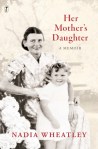
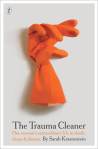
There are three standouts: Michelle Scott Tucker’s Elizabeth Macarthur: A life at the edge of the world (my review), Nadia Wheatley’s Her mother’s daughter (my review), and Sarah Krasnostein’s The trauma cleaner (my review). If I were forced to choose just one, I would have to go for The trauma cleaner for the sheer chutzpah of its subject against terrible odds and for the clever structure Krasnostein uses to tell the story.

What is one topic or type of nonfiction you haven’t read enough of yet? 

The same as last year – literary biographies – closely followed by Australian history.

Week 2: (Nov 7 – 11) – (Rachel) Choosing Nonfiction

Again, there are several questions and I’ll share them all: What are you looking for when you pick up a nonfiction book? Do you have a particular topic you’re attracted to? Do you have a particular writing style that works best? When you look at a nonfiction book, does the title or cover influence you? If so, share a title or cover which you find striking.
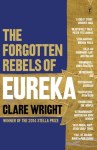
Book cover, The forgotten rebels of EurekaThese are complex questions that could take a whole post, but I’m going to keep it succinct, with the following answer encompassing the first three questions above! The two main things I look for in a non-fiction book are subject matter and engaging style. For example, I like biographies (particularly of writers and achieving women) and Australian history, but I don’t like dry factual this-happened-and-then-that-happened writing. I particularly like something called creative non-fiction. However, while I want to be engaged, I also want to feel that the writing is authoritative so I like to see the author’s sources. Clare Wright’s histories, such as The forgotten rebels of Eureka (my review) and You daughters of freedom, are excellent examples. Wright writes with the narrative instincts of a novelist and yet her claims and statements are thoroughly cited.

Covers are never hugely important to me in selecting books. Of course, a good cover can catch my eye, but I will never buy a book by its cover. With fiction, it’s the author or a recommendation from a person I respect, that will decide me once I’ve seen the book. With non-fiction, the cover is even less important to me, which is just as well, because in general I’ve found non-fiction covers to be less interesting. Non-fiction covers seem more literal, more determined to capture the “facts” of the book – an image of the subject of the biography for example or of a war scene for a war history – whereas fiction covers can get a little more creative and look to capture an emotional response rather than depict content.

PS I also like Helen Garner’s non-fiction. She could write about grass growing and I’d be there.

Week 3: (Nov 14 – 18) – (Sarah) Book Pairing

I’m a bit ahead of the game here, but as I’ll be away from November 14 to 16, I’m going to sneak in my response now. The challenge is to pair up a nonfiction book with a fiction one – via whatever sort of connection seems fit. I loved this challenge last year, and found it fun again this year.

My pair is:
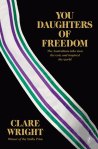
Yes, it is Clare Wright’s latest history, You daughters of freedom, which I’m still reading, and EM Forster’s Howard’s End which I reviewed just a week or so ago. You daughters of freedom is about the achievement of women’s suffrage in Australia, from the late 19th to early 20th century, and the role Australian suffragists played in worldwide suffrage movements, particularly in England.

Howards End was published in 1910, and its two main female characters, Margaret and Helen Schlegel, are well aware of and support women’s suffrage, though, as you’d expect from their personalities, Margaret is the one who is clearer about its meaning and impact. The novel opens with Helen writing from Howards End where Mr Wilcox easily demolishes her arguments for suffrage and equality:

He says the most horrid things about women’s suffrage so nicely, and when I said I believed in equality he just folded his arms and gave me such a setting down as I’ve never had. … I never felt so ashamed of myself in my life. I couldn’t point to a time when men had been equal, or even to a time when the wish to be equal and made them happier in other ways. I couldn’t say a word. I had just picked up the notion that equality is good from some book – probably from poetry, or you.

Later, when Margaret holds a luncheon party in Mrs Wilcox’s honour, suffrage and women’s rights come up. Margaret sees the issue as wider than just “the vote”:

“Aren’t we differing on something much wider, Mrs. Wilcox? Whether women are to remain what they have been since the dawn of history; or whether, since men have moved forward so far, they too may move forward a little now. I say they may…”

Howards End provides a fascinating study of England during this time of political and social change – and gender is one of the issues which recurs throughout.

Non-fiction November 2017, Weeks 4 and 5

Nonfiction November 2017 bannerIn my last My Literary Week post, I took part (sort of) in the Non-Fiction November meme, giving my responses for the first three weeks. Because the last two weeks ask some questions, I’d like to answer, I’ve decided to combine them is a second post. It’s probably cheating, but …

Week 4, Nov. 20 to 24: Nonfiction Favorites

For this week the question is to discuss our favourites and what makes them so. Is it to do with the topic? Or the style, or tone? Or what?

Helen Garner, This house of grief book cover

Courtesy: Text Publishing

I can name some non-fiction books that I remember years after I finished them, but can I find some common threads in them? Well, perhaps, and it’s not the topic. For example, a non-fiction work that stands out for me is one I read before blogging, so that’s more than 10 years ago. It’s Erik Larson’s Isaac’s storm about the lead up to and aftermath of the damaging 1900 hurricane in Galveston. It’s told through the eyes of meteorologist Isaac Cline, and is in that style loosely called creative non-fiction, which means it uses many of the techniques of fiction to tell its story. I discovered long ago that creative or narrative non-fiction is the non-fiction style that most appeals to me. If that makes me shallow, then so be it!

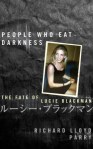
Other books using this style that I’ve read in the last decade include Chloe Hooper’s Tall man, Ann Krien’s Into the woods (my review), Richard Lloyd Parry’s People who eat darkness (my review), and Helen Garner’s First stone, Joe Cinque’s consolation and The house of grief (my review). The topics vary in these books – there’s a natural disaster, an environmental investigation, a sexual harassment case, and four very different true crime stories (including an Aboriginal death in custody, a serial killer and two focusing largely on court cases) – but they all use a narrative approach.

Book cover, The forgotten rebels of Eureka

However, there are two topics that are likely to attract me, regardless of style – Australian history and literary biographies/memoirs. Of the former, books like Inga Clendinnen’s Dancing with strangers and Clare Wright’s The forgotten rebels of Eureka (my review) appeal, partly because they explore history from different angles, from angles that question existing paradigms (if I dare use that word), and partly because both historians share the process of their research with the reader as they write. I like this direct engagement with me. Not only do I find it more readable, but importantly this more personal approach reminds me that this is one historian’s view of the past – a well-supported valid view (hopefully, and in these two cases, absolutely) but their view nonetheless.

My favourite recent literary biography has to be Karen Lamb’s Thea Astley: Inventing her own weather (my review) because I love Thea Astley and because Lamb’s book, though clearly positive about Astley, provides a “real” picture of an intelligent, passionate and sometimes prickly woman, of the woman, in other words, that I imagined Astley to be.

Week 5, Nov. 27 to Dec. 1: New to My TBR

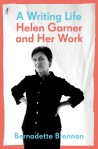
Bernadette Brennan, A writing life Helen Garner and her workI think here we are supposed to mention books that we’ve read in other posts on this meme – and link back to the blog which inspired us. However, I’m afraid I’ve been a bit remiss in keeping up with all the posts, and with noting the books that have appealed when I have read the posts, so I’m going to start with a book that I’ve recently added to my TBR because it’s a must for me to read. It’s a literary biography, Bernadette Brennan’s A writing life: Helen Garner and her work. I will read this in the next two months!

And, just to show I did read some Non-fiction November posts, I was attracted to a book posted by Buried in PrintTanya Talaga’s Seven Fallen Feathers: Racism, Death and Hard Truths in a Northern CityBuried described it as “a gripping story, bound to appeal to readers who appreciate elements of true crime, history, memoir, social justice and narrative-driven journalism.” If you’ve read my Week 4 above, you’ll know exactly why this book appealed to me! It’s about the deaths of students who were attending an Indigenous-run high school in Thunder Bay, Ontario (a fairly remote place which daughter Gums visited three or four years ago). Buried explains that “to understand the importance of this educational opportunity (even with the challenges of students’ adjustments to city life and the embedded racism in the community), it’s useful to have some understanding of the residential school system, which was wielded like a weapon against Indigenous communities from the later nineteenth-century until 1996.” With our own problematical treatment of indigenous people, and my ongoing interest in racism, this book sounds particularly interesting to me.

POSTSCRIPT: Oops, I clicked the Publish button before writing my conclusion! I wanted to say that I’ve read a lot of great non-fiction in the last few years, so it’s been hard to name just a few in this post and the previous one. Different Non-fiction November questions could very well have resulted in my naming different books.

My literary week (10), Non-fiction November and Lady Chatterley

I had hoped to finish my current book by this weekend, but it’s been a busy week with a two-day trip away, an exhibition launch, and a Friends’ of the NFSA event, on top of usual commitments. However, I do have some “literary” bits and pieces to share. I’ll start with the one that isn’t hinted at in the post title!

Starstruck: Australian Movie Portraits Exhibition

Stupidly, I didn’t take any pics of the two events I attended – a special members preview and the gala opening – for this exciting new exhibition at the National Portrait Gallery (NPG). Created collaboratively by the NPG and the National Film and Sound Archive (which provides most of the images), this exhibition contains 275 images from Australia’s film industry. I’m including it here – besides wanting to promote it – because the curators, Jennifer Coombes and Penny Grist, have organised the collection to convey a narrative, from set-up to resolution. This results in images from different eras and genres being placed side by side, forcing us to think about them from different perspectives. I’ll be back to spend more time. (Meanwhile, you might like to check out the interactive exhibition of the Cinesound movie company’s gorgeous Casting Books.)

Cover Story (or, Vinyl Covers with David Kilby)

Still with the NFSA, on Friday I went to an event organised by our Friends’ group at which record collector David Kilby presented a selection of record covers. David often collects records for their covers, rather than their contents, and at this presentation we could see why. But, how to present them? There are various possibilities, but the one David chose was to display examples from the “categories” he collects – and my, does he have some fascinating categories. Some relate to audio content – such as Religious songs, Instructional records, or Co-star with me – and some to the cover art. There are, for example, covers which use “stars” who have nothing to do with the content. Jayne Mansfield was a popular choice here! Wonder why! Then there are those which depict actions, such as smoking, or types of people, such as plumbers. You really had to be there!

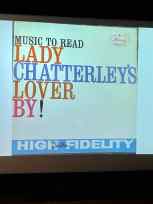
Music to read lady Chatterley's lover by, album coverBut, the group I’m sharing here is the “Music to [insert action] by”, and particularly, “Music to read by”. To represent this group, David displayed the cover for Music to read Lady Chatterley’s lover by. The music comes from Richard Shores and his Orchestra, and there are ten tracks: Love, Hate, Sorrow, Gay, Blues, Surprise, Frustration Nostalgia, Fear, Hysteria! The cover notes briefly refer to the novel’s controversial history – the censorship, and so on – and then continues:

Richard Shores [apostrophe?] initial venture into musical “no-man’s-land” may trip the same kind of alarm. Nature in the raw is seldom mild as can be seen when Shore utilizes his melodic pallet to characterize the spectrum of human emotions.

While music has always reflected the composer’s attempt to picture human emotions through the symmetry of naturals, sharps and flats, Shores flamboyantly exposes man’s innermost feelings relentlessly.

Gotta hear this one day!

Non-fiction November meme

Having seen some of my favourite bloggers – such as Lisa (ANZLitLovers) and Kate (booksaremyfavouriteandbest) – take part in the Non-fiction November meme sponsored by julzreads, among others, I considered joining in, but this week got the better of me. Consequently, I’m just going to respond briefly here:

Week 1, Oct 30-Nov 3: Your year in non-fiction

Two of the questions for this week were:

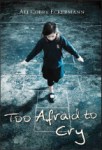
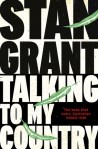
  • What was your favourite non-fiction read of the year? Without doing the count, I seem to have read more non-fiction this year than in recent years, so it’s tricky to answer this. In fact it’s so tricky that I’m going to give three: Kim Mahood’s Position doubtful (my review); Ali Cobby Eckermann’s Too afraid to cry (my review); and Stan Grant’s Talking to my country (my review). All three explore Australia, and what it means to be Australian, particularly in relation to indigenous people. (For more, see Week 3 below)
  • Bernadette Brennan, A writing life Helen Garner and her workWhat is one topic of nonfiction you haven’t read enough of yet? This would have to be literary biographies and memoirs. Two, in particular, have come out this year that I’ve not managed to read (yet), Bernadette Brennan’s biography of Helen Garner, A writing life: Helen Garner and her work, and Georgia Blain’s memoir, The museum of words. I did though retrieve (and read) from my TBR pile, Gabrielle Carey’s Moving among strangers (my review) so it hasn’t been completely hopeless.

Week 2, Nov 6-10: Book pairing

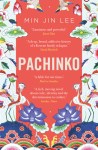
For Week 2 participants were asked to pair a non-fiction book with a fiction one, using your own criteria, but essentially meaning books that seem to go well together. Many bloggers have posted multiple pairings, but as I’m not devoting a whole post to this, I’m going with just one, the one that popped into my head the minute I realised the subject of my reading group’s August book, Min Jin Lee’s Pachinko (my review). It’s about Koreans in Japan, and their struggle to survive. My paired book is Richard Lloyd Parry’s People who eat darkness (my review). Parry’s analysis of the murder of a young English woman in Japan by a serial killer includes a discussion of the poor treatment of Koreans by the Japanese. It prepared me well for Min Jin Lee.


Week 3, Nov 13-17: Be the expert/Ask the export/Become the expert

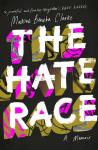
From this group – which officially starts tomorrow, so I’m jumping the gun somewhat – I’m choosing the “be an expert option”. This asks me to share the title of three books on a single topic that I’ve read and recommend (thus making me an expert!). Well, I don’t claim to be an expert on this topic – it would be insensitive of me to do so in fact – but I would (and have) recommended these three memoirs on the experience of racism in Australia. Two of the books are by indigenous Australians, Ali Cobby Eckermann’s Too afraid to cry and Stan Grant’s Talking to my country, and one by an Australian-born writer of West Indian background, Maxine Beneba Clarke’s The hate race (my review). These books paint a picture of Australia that is depressing and distressing. When I first became aware of racism in my teens in the late 1960s, I’d have been horrified to think that half a century later so little progress would have been made in how we treat each other. What is wrong with us?


And here I will end. It would be cheeky answering Weeks 4 and 5 this far in advance.

However, I’d love to know your answers to these non-fiction questions.