Monday musings on Australian literature: New Australian releases for 2016

With the first month of 2016 already gone, I thought it was time I had a look around to see what new works are in the pipeline this year from our Aussie authors. This is a serendipitous list, partly because tracking down this information isn’t easy and partly because I’m more interested in providing a flavour than in being comprehensive. My main aim is simply to tantalise us all a little, so below you’ll find novels, short stories, poetry, essays and non-fiction. See what you think:

  • Larissa Behrendt’s Finding Eliza: Power and Colonial Storytelling (January 2016, University of Queensland Press) is a non-fiction work inspired by the story of Eliza Fraser, who was apparently captured by the Butchulla people after she was shipwrecked on their island in 1836. Fraser’s story has been fictionalised before. Behrendt springboards from Eliza’s story to explore how indigenous people in Australia and elsewhere have been portrayed in their colonisers’ stories.
  • David Brooks’ Napoleon’s roads (February 2016, University of Queensland Press) is the fourth collection of short stories from this writer, who is a poet and prose writer.
  • Maxine Beneba Clarke’s The hate race (August 2016, Hachette Australia) is a memoir by the author of the award-winning short story collection, Foreign soil. It’s the second of a three book deal she has with Hachette, the third one being a novel.
  • Helen Garner’s Everywhere I look (March 2016, Text Publishing) is a collection of essays. I’ve reviewed here a few books by Garner, including a novel, Cosmo Cosmolino, a book of short stories, Postcards from Surfers, and a non-fiction work, This house of grief, but I haven’t read any of her essay collections. This might be the one.
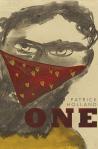
  • Patrick Holland, OnePatrick Holland’s One (April 2016, Transit Lounge) is an historical fiction about Australia’s last bushrangers. Known for his minimalist writing, Holland has written several works, including The Mary Smokes boys and Navigatio, both of which were shortlisted for various awards.
  • Fiona McFarlane’s The high places (February 2016, Hamish Hamilton) is a collection of short stories from the author of the multiply-shortlisted The night guest, which I reviewed last year.
  • Michelle Michau-Crawford’s Leaving Elvis (February 2016, University of Western Australia Publishing) is a debut collection of mostly, but not totally, linked short stories. Michau-Crawford is new to me but she won the Australian Book Review’s Elizabeth Jolley Short Story Prize in 2013, so this collection sounds worth checking out.
  • Meg and Tom Keneally’s The Soldier’s Curse (March 2016, Random House) is the first in The Monserrat Series (a new crime series). I wouldn’t normally include a crime book in a list like this because crime is not in my sphere of interest, but I’m including this one because it’s by Tom Keneally, who as you probably know is the Booker prize-winning author of Schindler’s ark, a Miles Franklin winning author, to name just a couple of accolades. And, also because it’s a collaborative novel with his daughter.
  • Ellen van Neerven’s Comfort food (May 2016, University of Queensland Press) is a book of poetry by the author of the award-winning Heat and light and the short story Sweetest thing, both of which I’ve reviewed.
  • Terri-Ann White’s Desert writing: Stories from country (February 2016, University of Western Australia Publishing) is something a little different. It’s a collection edited by White, comprising stories that resulted from writers’ workshops held with indigenous people in remote communities.
  • Dominique Wilson’s That devil’s madness (February 2016, Transit Lounge) is a novel set in Algeria. It tells story of a photojournalist who, while covering current politics decides to also retrace the steps of her grandfather a century earlier. Wilson was a founding editor of the now defunct but much lamented literary journal Wet Ink. (For an advance review of this book, check out Lisa’s at ANZLitLovers.)
  • Arnold Zable’s The fighter (April 2016, Text Publishing) is a biography of Henry Nissen, a boy from Melbourne’s Carlton who became a champion boxer but who now devotes his spare time to helping disaffected people on the streets. It’s also about his mother and her decline into mental illness. I’ve read a few of Zable’s novels, including The sea of many returns which I reviewed early in this blog’s life.

Steven Amsterdam, Ashley Hay, Toni Jordan and Hannah Kent, some of whose earlier books I have reviewed here, also have books coming out this year … Meanwhile, Text Publishing is continuing to put out its classics, and Fremantle Press is starting a Treasures series celebrating its 40 years of publishing. Nice to see backlists (or older works) continuing to get second lives.

Do any of these inspire or you? Or are there books coming up in your region or area of interest that you are keen to read. 

Monday musings on Australian literature: Coming in 2015

Although my readerly eyes are always too big for my readerly brain, I do like to know about coming attractions – book-wise – and assume you’re interested too. If you’re not, apologies, but I know I’ll find this post useful to refer to as the year progresses. As I did last year, I’m basing this post on an article in The Australian by literary editor, Stephen Romei, followed by a little research of my own.

Here, according to Romei, are some of the fiction (and poetry) treats we can expect:

  • Les Murray: Given I opened my recent Reading Highlights post with Murray, I like that Romei starts off with him too. Apparently, Black Inc will be publishing two books from Murray this year. The first, Waiting for the past, is apparently his first volume of new poems in five years. I think we heard some poems from this volume at the Poetry at the Gods event I attended last year. The second, Bunyah, is a collection of poems he has written about his home town. It apparently will have an introduction by Murray. And, Romei asks, “Might this be the year the Bard of Bunyah finally collects Australia’s second Nobel Prize in Literature. I wouldn’t mind having an early wager on him doing so”.
  • Steven Carroll: Forever young (Fourth Estate, June), the next in his Glenroy series. Carroll jointly won the 2014 Prime Minister’s Literary Award for fiction last year with Richard Flanagan.
  • Stephen Daisley: Coming rain (Text Publishing, May). I was just wondering the other day what had happened to Daisley who won the Prime Minister’s Literary Prize in 2010 with his novel Traitor. Well, now I know!
  • Marion Halligan: Goodbye sweetheart (Allen & Unwin, May). I’m a Halligan fan and reviewed her gorgeous Valley of grace early in this blog.
  • Krissy Kneen: The adventures of Holly Whit and the Incredible Sex Machine (Text Publishing, May). Text describes it as “an amazing literary sci-fi superhero sex romp from Australia’s genre-bending queen of erotica”! Sounds intriguing, eh? I reviewed her Steeplechase a couple of years ago.
  • Malcolm Knox: Wonder lover (Allen & Unwin, May), his fifth novel. He also has two non-fiction books coming out.  Knox is probably most famously known for exposing the Norma Khouri hoax in 2004.
  • Amanda Lohrey: A short history of Richard Kline (Black Inc, March). Lohrey is an acclaimed novelist and essayist, and can be relied upon to produce something thoughtful and, very likely, different.
  • Frank Moorhouse: The book of Ambrose (Random House, November), about the second (and cross-dressing) husband of Edith Campbell Berry, heroine of Moorhouse’s Edith trilogy. I’ve reviewed Cold light, the last of this trilogy.
  • Steve Toltz: Quicksand (Penguin Books, May). Toltz is another author I’ve been wondering about lately. I loved his “out there” A fraction of the whole, which was shortlisted for the Man Booker Prize way back in 2008.

Romei’s article runs to 6 pages and includes Australian non-fiction, as well as fiction and non-fiction from overseas writers. I couldn’t possibly list them all, but I will note that some interesting sounding memoirs are coming out from Kate Grenville, Gerald Murnane, and Ramona Koval, among others. Caribbean-background author Maxine Beneba Clarke, whose Foreign soil was highly recommended in a comment on this blog by author Julie Twohig, has The hate race, a book about her experience of discrimination, coming out. It’s a real reader’s feast that awaits us.

While Romei mentions several debut novels in his article, I’d like to introduce two of my own gleaned from women I’ve come across via blogging and the Australian Women Writers’ Challenge:

  • Robyn Cadwallader: The anchoress (Fourth Estate, early 2015. It’s historical fiction set in the 13th century, about a woman who commits herself to a life of prayer, rather than marry a wealthy lord. Cadwallader is an expert in mediaeval literature.
  • Lizzy Chandler (pen-name of Elizabeth Lhuede, instigator and convener of the Australian Women Writers’ Challenge): Snowy River man (Escape Publishing, February 2015). This is in the romance genre, so not my preferred fare as Elizabeth knows, but in the spirit of the challenge’s commitment to diversifying our reading I’d like to give her a shout out here.

Finally, I wish good luck – because we all know that talent is only part of the equation in the “getting-published” game – to those out there working hard to get their first or next novel published.

Do any coming releases – either listed here or that you know about from elsewhere – appear on your must-read list for 2015?

(PS I’ll be getting back to reviewing soon!)

Monday musings on Australian literature: Here come the men!

Women really have dominated the literary awards season in Australia over the last two years. In 2012, the majority of the awards were won by Anna Funder with All that I am and Gillian Mears with Foal’s bread. Last year it was mostly Michelle de Kretser with Questions of travel and Carrie Tiffany with Mateship with birds. ML Stedman also won an award with her The light between oceans. As well as all this, last year we had, for the first time ever, an all female shortlist for the Miles Franklin Award! Where, you may have been wondering, were the men?

Well, in their writing rooms it seems, beavering away, because by late last year their books started appearing in droves … and nice to see it is. I love reading fiction by women, but I also love reading fiction by men. Let’s face it, I love reading good fiction! Anyhow, I, and others like The Australian’s literary editor Stephen Romei, expect some strong showings by our male writers in this year’s award lists. Books like:

  • Richard Flanagan’s The narrow road to the deep north
  • Tom Keneally’s Shame and captives
  • Roger McDonald’s The following
  • Alex Miller’s Coal Creek
  • Christos Tsiolkas’ Barracuda
  • Tim Winton’s Eyrie

Stephen Romei predicts that Winton and Flanagan will battle it out, though says there are other strong contenders from a bumper year for Australian fiction. I will be reading Tsiolkas and Winton with my reading group over the next few months, and received Flanagan for Christmas. I am greatly looking forward to getting my teeth into these writers, each of whom I’ve reviewed before on this blog, and each of whom I respect and enjoy.

None of these, though, are debut authors. Every one has won and/or been shortlisted for the Miles Franklin at least once, and most, more than once. Of course it takes a little time for a debut to make it into public consciousness. However, you may remember that last year’s Miles Franklin Award shortlist of five titles contained three – yes, three – debut novels (Floundering, by Romy AshThe Beloved by Annah Faulkner, The Mountain by Drusilla Modjeska). That was healthy, and augurs well for the future, but I wonder if we’ll see any debut novels by male authors in the shortlists this year? While I don’t report regularly on awards, I’ll certainly be keeping an eye out for new authors appearing on the scene – or, indeed, for more established authors making their debut on the award lists.

Meanwhile, of course, I’ll continue to read Aussie women for the Australian Women Writers’ Challenge, including Hannah Kent’s debut novel Burial rites which could very well give the men a run for their money this year if the buzz surrounding this book is right.

2014 looks to be another exciting year for Australian fiction. How do you – Aussies and otherwise – see your reading shaping up for the year?

Monday musings on Australian literature: Coming up in 2013

In a first for Whispering Gums, I have decided to post about coming attractions. It seemed an appropriate first Monday Musings for the year. But, how to do it? As I can’t possibly list them all, I’m going to make a selection and group them in sets that make sense to me. So here, as you’ve heard me say before, goes. Remember, this is just a selection reflecting the sorts of books I’d like to read. Whether or not I actually manage to read them all is another thing entirely.

John Maxwell Coetzee

Coetzee, 2006 (Courtesy: Mariusz Kubik, via Wikipedia)

Fiction from authors I’ve read before

  • J.M. Coetzee, The childhood of Jesus (March 2013 from Text Publishing): It’s been over 5 years since Coetzee’s last piece of fiction, Diary of a bad year (my review). I look forward to seeing whether Coetzee plays further with the novelistic form, as he has in recent outings, in this new offering.
  • Richard Flanagan, The narrow road to the deep north (August 2013 from Random House): Similarly it’s been over 4 years since Flanagan’s Wanting (which I read before starting this blog). This new novel, I gather, moves from Australia where his previous novels have been set to the Burma-Siam death camps.
  • Andrea Goldsmith, The memory trap (May 2013 from Fourth Estate): Goldsmith’s last novel Reunion (my review) was not my favourite Goldsmith, but she’s well worth watching.
  • Joan London (November 2013 from Random House): I don’t know the title of London’s next book, but I can’t wait to see it, as her Gilgamesh (which I virtually gifted to Stu) is one of my favourite Australian novels. My review of her most recent novel, The good parents (2008), was one of my first reviews on this blog.
  • Alexis Wright, The swan book (August 2013 from Giramondo): It’s been nearly 7 years since Indigenous author Wright’s last novel, Carpentaria (my review). It won the Miles Franklin award in 2007 so a new one from her is long-awaited.

Fiction from authors I’ve been meaning to read

  • Georgia Blain, The secret lives of men (April 2013 from Scribe): A collection of short stories and you know how I like short stories.
  • Fiona Capp, Gotland (July 2013 from Fourth Estate): Apparently about a reluctant Prime Minister’s wife, but this article written by Capp in 2009 might throw some light on the title.
  • Steven Carroll, A world of other people (May 2013 Fourth Estate): A Miles Franklin Award winning author I haven’t read. Boo me!
  • Robert Gott, The holiday murders (February 2013 from Scribe): OK, I’m lying with this one. Gott is not an author I’ve been meaning to read. In fact, I’d never heard of him. He has written children’s books, crime (not my genre), and a newspaper cartoon. Why then you are probably asking am I including him? Well, he, like PL Travers of Mary Poppins fame, was born in the same not-well-known town that I was, Maryborough in Queensland. And that’s good enough in my mind to give him a nod!
  • Chris Womersley, Cairo (September 2013 from Scribe): I’m still hoping to find time to read Womersley’s second and well-reviewed novel, Bereft, but if I don’t, this might well be my introduction to him.

Debut fiction

  • Balli Kaur Jaswal, Inheritance (February 2013 from Sleepers)
  • Lesley Jørgensen, Cat & fiddle (February 2013 from Scribe)
  • Maurilia Meehan, Madame Bovary’s haberdashery (April 2013 from Transit Lounge): Described as quirky crime novel, so I might just be interested.

Non-fiction

  • Anna Goldsworthy, Quarterly Essay (June 2013 from Black Inc): I’ve reviewed a couple of Quarterly Essays (by Krien and Flannery) and am interested in this one which will apparently be on misogyny/feminism in Australian politics.
  • Anna Krien, Night games (May 2013 from Back Inc): I’ve reviewed Krien’s Into the woods about forestry in Tasmania (my review) and her Quarterly Essay (see above). I enjoy her style and perspective. This book is apparently about the rape trial of a footballer.
  • John Safran, Murder in Mississippi (July 2013 from Penguin): This intrigues me – an Australian writing about the murder of a white supremacist in the American south – but then Safran has made somewhat of a career of investigating religion and related issues around the world.
  • Helen Trinca, Madeleine (April 2013 from Text): I’ve reviewed one of Madeleine St John’s novels, The women in black (my review), and know a little of her life. She was apparently the first Australian women to be shortlisted for the Booker Prize. She’s also a peer of Australian expat intellectuals, Germaine Greer, Robert Hughes, Clive James and filmmaker Bruce Beresford who, many years ago, optioned The women in black for film. I’d love to read this biography.

For more information about these or other books coming out in 2013, you might like to check the publishers’ websites: