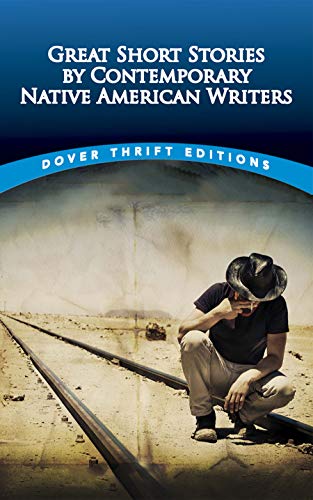
I’m continuing to work through the stories in Great short stories by contemporary Native American writers. With this post, we jump from 1968 to 1983, which mens we are getting close to contemporary territory. The story is “Turtle meat” by Jospeh Bruchac III.
Joseph Bruchac III
As before, I’m using anthology editor Bob Blaisdell’s intro and Wikipedia to introduce the author, though in this case Blaisdell is extremely brief. Bruchac was born in 1942 and, says Wikipedia, “identifies as being of Abenaki, English, and Slovak ancestry” with his Abenaki heritage coming from his grandfather. He writes poetry, novels and short stories, with “a particular focus on northeastern Native American and Anglo-American lives and folklore”, and is the director of a press which publishes new Native American writers. He is also a performing storyteller and musician.
This post’s short story, “Turtle meat”, was first published, according to Blaisdell, in 1983, in an anthology titled Earth power coming: Short fiction in Native American literature, which was published by the Navajo Community College Press. It was published again in Bruchac’s own collection, Turtle meat and other stories, nearly a decade later in 1992.
“Turtle meat”
Wikipedia’s description of his focusing on “northeastern Native American and Anglo-American lives and folklore” certainly rings true for this story. Blaisdell introduces the story this way, “In this strange great story about an elderly Native American who has been living for years with a debilitated woman, Bruchac writes one of the most extraordinary fishing scenes in literature”. That sure sets up some expectations. It is also a bit misleading because “the debilitated woman” is simply old. She hadn’t always been so.

The story concerns Homer LaWare who, when the story opens, had been Amalia (Mollie) Wind’s hired hand for decades after she had kicked out her husband and come for him. There’s a little sense of “Driving Miss Daisy” here except we are on a farm and life is more earthy than Miss Daisy’s refined life with her Black American chauffeur. To start with, Homer and Mollie have been lovers from the beginning, even though Homer always slept in his cot in the shed – his decision it seems, because “it’s the Indian in me”.
The point at which the story starts, both are showing their age. The story opens with Mollie calling out to him because she needs help getting off the toilet. He comes in from the once-farmed but now overgrown field, and “gently” lifts her, reassuring her that she’s not old, that it “must of was just a cramp. Nothing more than that”. This opening scene tells us a few things – that they are old, of course; that they are comfortable with each other; and that he is sensitively attentive to her physical and emotional needs. We also learn that she has retained ownership of the farm that had originally been her father’s, and that Homer is happy with that: “It’s the Indian in me that don’t want to own no land”. Her grasping husband, Jack Wind, had been sent packing, and her “no-good daughter” had not been seen for years.
The central part of the story describes Homer’s fishing expedition – his catching (and cleaning) several yellow perch, and then an old snapping turtle. It’s a battle – it was easier when he was young “and his chest wasn’t caved in like a broken box” – but he does it. Finally, having been out longer than he’d expected, he returns home, muddy and bloody, to find Amalia missing. Where is Amalia, and why is her daughter – who has “Jack Wind written all over her face” – sitting in Amalia’s rocker?
In one sense, “Turtle meat” is a traditional story of ageing parents and grasping children, but it is imbued with a different sensibility. Homer’s battle with the turtle recalls other literary battles between fishermen and their prey, but in this case it is not only about Homer confronting his age, but is also symbolic of the battle Amalia simultaneously faces. I suspect, too, that the choice of a turtle has specific cultural references for Bruchac, given turtles seem to feature often in his writing.
It’s a great story, as Blaisdell says, but what makes it particularly so is the writing. The characters are more than just types. There’s a natural dignity to them, with an individuality that is conveyed mostly through dialogue – and in Homer’s case, also through his thoughts expressed via italics. The descriptive writing is tight and fresh. And it has a quiet humour. Take, for example, Homer out on his boat:
He looked in the water. He saw his face, the skin lined and brown as an old map. Wattles of flesh hung below his chin like the comb of a rooster.
“Shit, you’re a good-looking man, Homer LaWare,” he said to his reflection. “Easy to see what a woman sees in you.”
How can you not warm to such a character and such writing?
Unfortunately, I don’t think this story is available online so you’ll just have to believe me that it’s another one worth reading from this anthology.
Joseph Bruchac III
“Turtle meat” (orig. pub. 1983)
in Bob Blaisdell (ed.), Great short stories by contemporary Native American writers
Garden City: Dover Publications, 2014
pp. 50-56
ISBN: 9780486490953

 When I bought Louise Erdrich’s The bingo palace in 1995, I never expected it to take me 24 years to read it but, there you go. Time flies, and suddenly it was 2019 and the book was still sitting on the high priority pile next to my bed! Truly! It took Lisa’s ANZLitLovers Indigenous Literature Week to make me finally give it the time it deserved – and even then I’m late. Oh well.
 Whispering Gums