Louise Erdrich, The night watchman (#BookReview)

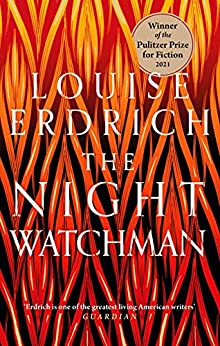
Louise Erdrich’s Pulitzer Prizewinning The night watchman is historical fiction about a community fighting back against a government set on “terminating them”. Erdrich, whom I have reviewed before, is an enrolled citizen of the Turtle Mountain Band of Chippewa Indians of North Dakota and it is the story of this community’s response to something called the House Concurrent Resolution 108 that she tells in The night watchman.

Passed by Congress on August 1, 1953, this Resolution would, says Erdrich in her Afterword, “sever legal, sacred, and immutable promises made in nation-to-nation treaties”. Or, as Wikipedia explains, it would “end reservations and tribal sovereignty” and “integrate Native Americans into mainstream American society”.

As it happens, Erdrich’s grandfather, Patrick Gourneau, was Chairman of the Turtle Mountain Band of Chippewa Advisory Committee at the time and recognised this resolution for what it was. He is the inspiration for Thomas Wazhushk, one of Erdrich’s two protagonists. Thomas is a man of two cultures:

Watching the night sky, he was Thomas who had learned about the stars in boarding school. He was also Wazhashk who had learned about the stars from his grandfather, the original Wazhashk. (p. 17)

Throughout the novel Thomas strategically draws on these two selves in order to perform his role, which is to keep the community safe (or, at least, safer, than they would be if the Government’s plans came to fruition).

This is both a sophisticated and a grounded novel. Grounded in the way Erdrich uses her storytelling ability to create a compelling narrative peopled by a large cast of wonderfully individuated characters. We are interested in them all, and this makes the novel a darned good read. Sophisticated in how Erdrich subtly layers her story to enrich its meaning. The overall structure comprises two parallel but related stories or journeys: Thomas’s fight for his community’s survival, and his niece Patrice’s journey to find both her missing sister and her own path in life. Erdrich’s writing is simple, plain, but also imbued with gorgeous lyricism, metaphor and symbolism. The novel is threaded, for example, with physical holes, wells, caves, ship holds, and falls, which never let us forget the precariousness of these people’s lives.

She also peppers the story with humour, which reminds us no matter how serious things are, people can still have a laugh. There are many laugh-out-loud moments, alongside a recognition of humour’s role in how we navigate the things we confront. In Minneapolis, Patrice finds herself in a strange and potentially dangerous situation, and has

the sort of feeling and thinking that could only be described in Chippewa, where the strangeness was also humorous and the danger surrounding this entire situation was of the sort that you might laugh at, even though you could also get hurt… (p. 131)

“Survival is a changing game” (Biboon)

Overlaying all this is Erdrich’s exploration of how language works, how it can be used to clarify or obfuscate, to inspire or deflate. Her writing embodies this knowledge. So, for example, Thomas receives the Resolution papers and reads them carefully. He sees

their unbelievable intent. Unbelievable because the unthinkable was couched in such innocuous dry language. Unbelievable because the intent was, finally, to unmake, to unrecognize. To erase as Indians … his people, all of us invisible and as if we never were here, from the beginning, here. (p. 79)

His people were being targeted, the papers said,

for emancipation. E-man-ci-pation. Eman-cipation. This word would not stop banging around in his head. Emancipated. But they were not enslaved. Freed from being Indians* was the idea. Emancipated from their land. Freed from the treaties that Thomas’s father and grandfather had signed and that were promised to last forever. (p. 80)

Later, the once dapper but now frequently drunk Eddy Mink cuts to the chase, stunning officialdom with his plain language statement:

The services that the government provides to Indians might be likened to rent. The rent for use of the entire country of the United States. (p. 200)

Meanwhile, as Thomas builds his case, Patrice, who works in the Turtle Mountain Jewel Bearing Plant where Thomas is the titular night watchman, sets off for Minneapolis to look for her sister. Vera had gone there with her new husband but had not been heard of since. What Patrice finds in the city, how people can be exploited, is shocking, and she returns home somewhat wiser but with more to learn about herself and the ways of humans.

Surrounding Thomas and Patrice is a large community of people – family, friends, neighbours, work colleagues, teachers, coaches, visiting missionaries, and even a ghost. The interactions between these people build up a picture of a community that functions despite external stresses and the usual internal disagreements. This makes engrossing reading because these characters are so real, including the two Mormon missionaries who not only add humour and pathos but also represent the naiveté of supporters of a faith – in the form of Utah Senator Arthur V. Watkins – that was driving the Resolution.

Similarly, our protagonists’ interactions with specific individuals make great reading while also advancing the narrative and the ideas. When Thomas is with his father Biboon and Patrice with her mother Zhaanat, we feel their spiritual connection with their culture, and their desire to learn from their elders. When Thomas is with the white teacher and boxing coach, Barnes, we see how little non-Indian society understands the existing situation and the implications of the Resolution. Thomas patiently – and generously – explains to the clueless Barnes why Indians are not, and can never be, “regular Americans”. And, why he, Barnes, cannot be an Indian! Just look at this writing:

“If I married an Indian woman,” said Barnes, “would that make me an Indian? Could I join the tribe?”
He was awed at the possible sacrifice he could be making.
Thomas looked at the big childish man with his vigorous corn-yellow cowlicks and watery blue eyes. Not for the first time, he felt sorry for a white fellow. There was something about some of them—their sudden thought that to become an Indian might help. Help with what? Thomas wanted to be generous. But also, he resisted the idea that his endless work, the warmth of his family, and this identity that got him followed in stores and ejected from restaurants and movies, this way he was, for good or bad, was just another thing for a white man to acquire.
“No,” he said gently, “you could not be an Indian. But we could like you anyway.”

In statements like “he was awed at the possible sacrifice he could be making”, Erdrich conveys more about cultural superiority than just this man’s thoughts.

When Patrice is with her girlfriends and workmates, Valentine and Doris, we see how her goals diverge from their more girlish ones, and when she is with Wood Mountain we see her inner conflict about her chosen direction. As a young person, her journey is more personal than Thomas’s but they coalesce when it comes to saving the community.

“Assimilation. Their ways become your ways.” (Roderick)

I loved spending time with these characters. In fact, so did most of my reading group, as this novel was our September read. We enjoyed her vividly drawn characters – and their perfect names, like Juggie Blue, Wood Mountain, Louis Pipestone, Millie Cloud, and Patrice not Pixie. We teased out the complexity of the storytelling, the way Erdrich seemed to effortlessly incorporate complex ideas into a compelling narrative. This starts right at the title, The nightwatchman, which is both literal, Thomas’ job, and metaphorical, in his role of keeping watch as the community’s Chairman. I was reminded a little of Melissa Lucashenko’s novels, in which tough stories are told with compassion and humour to paint a picture of real people confronting a world that’s against them.

Early in the novel, Thomas moves that the Committee call the Resolution the “Termination Bill [because] Those words like emancipation and freedom are smoke”. This bill heralded what is now called the Termination Era (1953-1968). As Erdrich explains in her Afterword, this is what happened to 113 tribal nations. Although some regained recognition, “31 are now landless” and “24 are considered extinct” (p. 447).

The night watchman is one of those books that hits the spot – the heart spot and the mind spot. Recommended.

* The novel is set in 1953, and Indian is the term most commonly used when the specific Chippewa is not.

Louise Erdrich
The night watchman
London: Corsair, 2020
453pp. (Kindle edition.)
ISBN: 9781472155337
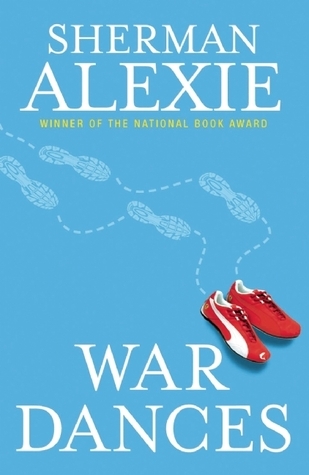
Sherman Alexie, War dances (#Review)

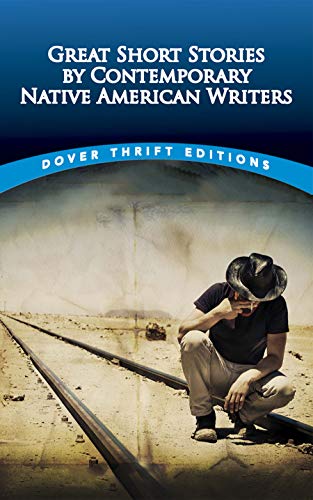
Sherman Alexie’s “War dances” is the fourteenth and last story in the anthology, Great short stories by contemporary Native American writers. It is also the longest story in the book, and the most intriguing in form.

Sherman Alexie

Anthology editor Bob Blaisdell introduces Alexie as “born in 1966, of Coeur d’Alene and Spokane heritage”, meaning he is from US’s Pacific northwest. Describing Alexie as the “most colloquial” of the writers in the anthology, Blaisdell also says that he writes “with a confessional voice that is often humorous”. Not surprisingly, given Alexie is a contemporary and award-winning author, Wikipedia provides quite a lot more, too much in fact to share here in even summary form, so click on the link if you are interested. There are personal and political controversies there, as well as several literary awards.

Essentially, though, Wikipedia describes him as “a Native American novelist, short story writer, poet, screenwriter, and filmmaker”. And, citing a couple of sources, Wikipedia says this about his themes:

Alexie’s poetry, short stories, and novels explore themes of despair, poverty, violence, and alcoholism in the lives of Native American people, both on and off the reservation. They are lightened by wit and humor. According to Sarah A. Quirk from the Dictionary of Library Biography, Alexie asks three questions across all of his works: “What does it mean to live as an Indian in this time? What does it mean to be an Indian man? Finally, what does it mean to live on an Indian reservation?” The protagonists in most of his literary works exhibit a constant struggle with themselves and their own sense of powerlessness in white American society.

“War dances”

“War dances”, as I wrote above, has an intriguing form. Blaisdell writes in his introductory Notes for the anthology that “we feel as if the writer [Alexie] is discovering the story himself and extending conventional short story boundaries as he composes it: we encounter an interview a checklist, a poem, a critique of that poem and continual jokes and revelations”.

Now, as far as I can tell, the “story” titled “War dances” comes from a book of short stories of the same name. It won the PEN/Faulkner Award for Fiction in 2010. GoodReads’ entry for the book describes it as “a virtuoso collection of tender, witty, and soulful stories that expertly capture modern relationships from the most diverse angles.” My problem is that I don’t know whether the “story” in Blaisdell’s anthology is a coherent excerpt from this book, or whether Blaisdell has selected disparate pieces to represent the work as a while. Whichever it is, I found an online version in The New Yorker. It comprises essentially the same content, with just a few differences that suggest some editing has happened between the versions. Also, in Blaisdell’s book the short pieces are numbered 1 to 16, while in The New Yorker they are not. None of this is probably germane to my comments so I’ll say no more. Consider yourselves informed!

I thoroughly enjoyed reading this piece (these pieces). The quotes I’ve shared about his work all ring true from what I read here – the mix of forms (lists, poems, interviews, and so on), the wit and humour, the “diverse angles”. It is a work that draws from Native American experience, but that encompasses wider personal and political issues.

By personal issues, I mean his dealing with significant familial relationships, and by political, I mean his recognition that Native Americans don’t exclusively suffer from the socioeconomic (including health) ramifications of racial discrimination. While the pieces seem disparate, there is an overall narrative arc concerning the narrator’s own health – he is diagnosed with a meningioma – and his father’s. There are also recurring motifs which connect many of the pieces – insects, like Kafka’s bug (or cockroach), being one. Here is a scene from the first person narrator visiting his father in hospital. You can see the pointed use of bees here:

How had this change happened? For the first sixty-seven years of his life, my father had been a large and dark man. And now he was just another pale and sick drone in a hallway of pale and sick drones. A hive, I thought, this place looks like a beehive with colony collapse disorder. (4, Blankets)

The imagery here is clear, but not laboured. Alexie doesn’t, in general, labour his points but lets humour do the talking. The second last piece comprises questions for his dying father, the first one being

True or False?: when a reservation-raised Native American dies of alcoholism it should be considered death by natural causes. (15, Exit Interview for My Father)

There are many references to race, and to its construction by other in the determination to distinguish and separate, while for our narrator, no such distinction truly exists:

And then I saw him another Native man … Well, maybe he was Asian; lots of those in Seattle. He was a small man, pale brown, with muscular arms and a soft belly. Maybe he was Mexican, which is really a kind of Indian too, but not the kind that I needed. It was hard to tell sometimes what people were. Even brown people guess the identity of other brown people. (4, Blankets)

This is followed by a self-deprecating racist joke … the reason a Mexican was not the kind of Indian our narrator needed was because he was looking for a blanket for his shivering, hospitalised father, and, well, Indians do blankets don’t they! The dialogue with the man, who is indeed Indian, is priceless.

So, these pieces build up. Entertaining to read, with their varied forms and chatty but cleverly humorous style, they convey specific truths about racism, and larger ones about identity, change and loss. In terms of this work at least, I’d say Sarah Quirk’s above-quoted three questions nail it. “War dances” – including for its very title – makes a worthy conclusion to this anthology.

(Thanks to Carolyn for this book.)

Sherman Alexie
“War dances” (orig. pub. 2009)
in Bob Blaisdell (ed.), Great short stories by contemporary Native American writers
Garden City: Dover Publications, 2014
pp. 104-127
ISBN: 9780486490953

Available online, with some differences, at The New Yorker (August 10 and 17, 2009)

Beth H. Piatote, Beading lesson (#Review)

Beth Piatote’s “Beading lesson” is the thirteenth of fourteen stories in the anthology, Great short stories by contemporary Native American writers, and with it, we move from the 1990s to the 2000s.

Beth H Piatote

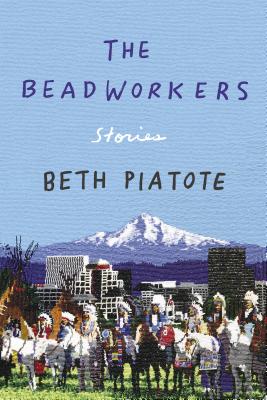
Anthology editor Bob Blaisdell provides very little information about Piatote. It simply says that she is Nez Perce and a Professor of Native American Studies at University of California, Berkeley. Wikipedia provides a little more, but not much in terms of life history. It tells us that she is a scholar and author, that she is “a member of Chief Joseph’s Tribe and the Colville Confederated Tribes”. And it expands on her academic qualifications and achievements a bit more. It seems most of her writing is academic, but she has had one short story collection published, The beadworkers, published by CounterPoint Press in 2019.

“Beading lesson”

“Beading lesson” is the shortest story in the anthology. Blaisdell gives its original date as 2002, but the source for the story is a 2008 Oxford University Press anthology, Reckonings: Contemporary short fiction by Native American women. However, I believe, from the GoodReads description of The beadworkers, that the story was also included there.

GoodReads describes The beadworkers, starting with, “A woman teaches her niece to make a pair of beaded earrings, while ruminating on a fractured relationship”. This perfectly captures the setting of “Beading lesson”, but of course there’s much more to it. Before I get onto that, however, I’ll add that the collection sounds interestingly varied, as it includes stories set in the 1960s and 1890. GoodReads concludes its description/promo with “Formally inventive, witty, and generous, the works in this singular debut collection draw on Indigenous aesthetics and forms to offer a powerful, sustaining vision of Native life in the Americas”. I haven’t read the other stories, but my guess from reading “Beading lesson” is that the collection explores the cultural, social, political and economic role and implications of beadwork, and that it also uses the idea of beadwork literally, as a practice, and symbolically, to represent the wider culture.

So now, “Beading lesson”. The fractured relationship mentioned by GoodReads is with the aunt’s sister, that is, the niece’s mother. The story is told first person by the aunt, who gently and patiently shows her niece the intricacies of beading, as they make some earrings for the mother. However, as she passes on to her niece an important cultural skill, she also shares values and information that she believes are important for her niece to know. In other words, the skill teaching is part of wider mentoring, which is what all good skill teaching is about.

What makes this story interesting is the subject of this mentoring. It’s multifold – to pass on cultural traditions, to teach the niece some life-skills, and, eventually, maybe, to lead to a repair in the broken relationship with her sister. It appears that this sister, the youngest in her family, had been spoilt. As a result, she had not learnt the skills our narrator had learnt, and has lost culture. The aunt tells her niece:

I think sometimes she wishes she learnt to bead, but she didn’t want to when she was little. She was the youngest, so I think she was a little spoiled but don’t tell her I said that. She didn’t have to do things she didn’t want to, she didn’t even have to go to boarding school. 

The boarding school reference is intriguing. Our narrator is positive about her experience, when, quite often, such schools were sites of cultural loss.

As the lesson progresses, we learn that the narrator is passing on beadskills to men in prison, which gives them skill and pride. The subtle message here of course concerns Indigenous incarceration. We also learn that her beadwork has supported her in tough times, through times of “livin’ skinny”. And, we gain some insight into the politics of, let us say, “Indigenous arts and crafts”. The aunt tells her niece that when some people

buy your beadwork, they think it should last forever. Somebody’s car breaks down, he knows he got to take it to the shop, pay someone to get it goin’ again. But not with beadwork — not with something an Indian made. No, they bring it back 10 years later and they want you to fix it for free! They think because an Indian makes it, it’s got to last forever. Just think if the Indians did that with all the things the government made for us. Hey, you got to fix it for free! 

The use of vernacular for the aunt’s story could lull readers into thinking she is a sweet but simple old lady. However, as the story builds, it becomes increasingly clear that she knows exactly what she is about. We see her to be kind, wise, and generous, where it is warranted, but not stupid. She knows the value and importance of what she does, but she also knows exploitation and is resilient in its face. She knows that maintaining cultural practice is important to her people’s continuation. This a story in which the personal is quietly, but absolutely, infused with the political. It’s clever and delightful to read.

Beth H. Piatote
“Beading lesson” (orig. pub. 2002)
in Bob Blaisdell (ed.), Great short stories by contemporary Native American writers
Garden City: Dover Publications, 2014
pp. 100-103
ISBN: 9780486490953

Available online at High Country News.

Eli Funaro, The dog pit (#Review)

Eli Funaro’s “The dog pit” is the twelfth of fourteen stories in the anthology, Great short stories by contemporary Native American writers. Like the previous stories by Thomas King and Duane Niatum, it was written in the 1990s.

Eli Funaro

Anthology editor Bob Blaisdell provides very little information about Funaro, and I have to say that I have very little more to add. Blaisdell says that he “seems to hail from Minnesota, where he is a video director” and that his “plain-spoken and shocking story was written for a program at the Institute of American Indian Arts at Santa Fe”. That’s it.

All I’ve found is that someone called Eli Funaro – presumably the same one – is part of a media company called A Tribe Called Geek, which describes itself as

an award-winning media platform for Indigenous Geek Culture and Stem. But we are more than just a media platform. We are a community of intelligent, imaginative, innovative and creative Indigenerds acknowledging and advancing the visibility of our contributions to pop culture and STEM. From indigenous superheroes to Harry Potter and more, our podcasts, website and social media are a celebration of Indigenous Representation and Geekery.

When I tried to enter the “A Tribe Called Geek” website, I got one of those “Not Secure” warnings. While it’s probably OK to proceed, I’m not prepared to take the risk.

So, all I have is a list of 35 articles by Eli Funaro at a site called Muck Rack. Clicking on the articles takes me to that website with its “not secure” warning, and to find out more about Funaro at Muck Rack I have to join, which I’m not going to do. Funaro is not in Wikipedia, and nor is A Tribe Called Geek, but Muck Rack is. It’s a software program that “connects public relation offices and journalist listing on social media”.

What all this says to me is that Funaro seems to be more a journalist than a writer of fiction, and that his affiliation and ongoing interest is Indigenous. His articles – some of which are dated “three months ago” – seem to be mostly reviews, such as of the Wolverine movie, and of Marvel comics. The list provides a brief summary, or the opening sentence, and it’s clear that most reference “Indigenous” issues. For example, on Marvel’s Echo comics, Funaro writes that “of all the Indigenous Heroes appearing in the Marvel Universe, Echo stands out as one of the more unique comic book characters”.  Echo – or Maya Lopez – is a Cheyenne woman.

“The dog pit”

“The dog pit” is one of the shortest stories in the anthology. It is told first person in the voice of an eight-year old boy who lives on the “rez” – reservation – where, he tells us, “no garbage trucks … came to pick up your trash”, the implication being that other people had this service. So, Saturday is Garbage Day, and our narrator and his dad’s job is to haul their garbage to the dump.

The story opens with “It was a sunny Saturday, the day that dog died”. A few paragraphs in we are introduced to our boy’s dog Corky, for which his father seems to have little time. “You fed that mutt yesterday” he says, when the boy wants to feed his dog before they head off. But soon they are on their way, along “untitled roads”. Another indication of their second-class status.

The boy finds a pink ball in the glove-box and starts playing with it. However, when his father, having told him he can have it, also tells him he’d taken it from a dead man at the hospital where he works as a janitor, the boy is not so sure he wants it. His father, we are learning, is a practical man. Life is tough and he doesn’t have time for sentiment.

So they get to the dump, with its piles of burning trash and rancid smell, empty their bins, and go through their routine of bleaching their bins before they leave for home. While this is happening, the boy picks up the ball again, only to be told by his dad that the old man who had died holding the ball had probably not been the only person to have died holding it. This makes him anxious; he fears there will be many dead people angry with him if he keeps the ball.

Then we get to the death of the dog mentioned in the opening sentence. It involves the titular dog pit, and is cruel. The boy doesn’t know what to make of it, but doesn’t want his dog to end up there. HIs father, who might be practical, is not hard and says this wouldn’t have to happen. The story concludes with the boy creating his own stories about death with his new Zartan and Stormshadow toys, but also on a sense of a childish ability to put it aside. This is where I come a bit unstuck, because a point is being made in referencing these GI Joe-series figures, but there are cultural nuances that I am not fully across.

On the surface, “The dog pit” is a story about the innocence-versus-experience aspect of youth, on the gradual way we become aware of the darker side of life without taking it all in at once, but there are deeper socioeconomic and sociocultural issues being explored here, ones that Funaro seems to have continued to explore.

It’s not a perfect story. The language doesn’t always stay true to an eight-year-old’s voice, but this is probably the work of a young writer. It works overall, however, because it’s tightly told.

Eli Funaro
“The dog pit” (orig. pub. 1994)
in Bob Blaisdell (ed.), Great short stories by contemporary Native American writers
Garden City: Dover Publications, 2014
pp. 95-99
ISBN: 9780486490953

Thomas King and Natasha Donovan, Borders (#BookReview)

Earlier this year I posted on Thomas King’s short story “Borders” from Bob Blaisdell’s anthology, Great short stories by contemporary Native American writers. The story was written in 1991, but as I noted in my post, it has also been adapted into a teleplay for the CBC, and turned into a graphic novel for younger readers. I was intrigued, and because I loved the story, I bought the graphic novel, on the assumption that we will share it with our grandchildren in a few years.

To recap a little from my original post. Wikipedia describes King as an “American-born Canadian writer and broadcast presenter who most often writes about First Nations”. Born in California in 1943, he “self-identifies as being of Cherokee, Greek, and German descent”, and has written novels, children’s books, and short stories. I also shared from Wikipedia a quote they include from King’s book, The inconvenient Indian, because it’s relevant to Borders:

“The issue has always been land. It will always be land, until there isn’t a square foot of land left in North America that is controlled by Native people”.

In that post I summarised the story, and I’ll repeat that here too. The narrative comprises two alternating storylines, both of which are told first person through the eyes of a young boy. One storyline concerns his much older sister, Laetitia, leaving home at the age of 17 to live in Salt Lake City, Utah, while the other tells of a trip he makes with his mother some five or so years later to visit this sister.

The crux of the story lies in what happens at the US-Canada border. Asked to give her “citizenship”, the mother insists “Blackfoot” and is denied entry. She refuses to offer anything else. As a result, she and her son get caught in a no-man’s land when, attempting to return to Canada, the same response to the same question results in her being refused entry there too. As one of the border officials tries to explain to her, “it’s a legal technicality, that’s all”. Of course, that’s not all. Blackfoot people ranged across the great northwest of America in what is now known as America and Canada. For our narrator’s mother, that land is her “citizenship”, not that she is American or Canadian, and she will not back down.

So, to the graphic novel. The illustrator is Natasha Donovan, who is described at the back of the book as “a Métis illustrator, originally from Vancouver, Canada”. She has illustrated, among other books, “the award-winning graphic novel Surviving the city, as well as the award-winning Mothers of Xsan children’s book series.”

This graphic novel version of Borders is beautiful. It turns what is a perfectly suitable story for pre-adult readers into a book that should appeal to and engage these readers. It contains King’s full text as far as I can tell, enhanced (if I can use that word) with Donovan’s gorgeous drawings. Because it is designed for younger readers, the drawings are simple enough to appeal to younger readers, but they offer a subtle depth which make the story well worth reading in this form by older readers too. The original story is told in a spare style, which leaves the reader to imagine (work out) the ideas and emotions behind the words. In this graphic version, sometimes the illustrations replicate the words, but in many cases they value add. This is not to say that value-adding is necessary, as it’s a gem of a story, but that the drawings encourage the reader to stop, think, and consider what the words might be saying.

An example: of their second night stuck in border-limbo, our narrator says that “The second night in the car was not as much fun as the first, but my mother seemed in good spirits and, all in all, it was as much an adventure as an inconvenience”. The panel following this depicts chicken wire in the foreground with a flock of birds flying off in the background, conveying some of the tension between the constraint of borders and the idea of freedom. The next panel, also textless, shows mother and son companionably sitting on the boot of their car, eating their sandwiches. In the border-guard scenes, the narrator mentions their guns. Donovan picks this up, providing frequent close-ups of guns, gun belts and holsters when the guards are present, which suggests authority and, perhaps, menace without overplaying the idea of fear.

What I liked about this graphic version, too, is how much it encouraged me to “see” things from our young protagonist’s perspective. I saw it in the text, but it becomes more vivid and immediate in this version. We see him report what he is seeing, and his own thoughts; we see him inserting his boy-ish wishes and perspectives. There is a running theme, from the beginning, about food which marks his focus on the concrete, on his needs. He asks Mel, the duty-free shopkeeper, for a hamburger, which he doesn’t get, but the next day:

Mel came over and gave us a bag of peanut brittle and told us that justice was a damn hard thing to get, but that we shouldn’t give up.

I would have preferred lemon drops, but it was nice of Mel anyway.

In this way, King conveys the truth as experienced by our young boy, but the wider truth that is happening around him – the strength of the mother’s identity and her determination to preserve it. Occasionally, our young narrator perceives some of these truths too. He sees the pride – and yes, the not always positive stubbornness – displayed by his mother and sister, but concludes:

Pride is a good thing to have, you know. Laetitia had a lot of pride, and so did my mother. I figured that someday I’d have it too.

Hachette’s promo for the graphic novel version describes it as resonating “with themes of identity, justice, and belonging”. It is exactly that – and conveys so much that is both personal and political, making it a rich book for any age to think about and consider.

Thomas King (story) and Natasha Donovan (Illustrator)
Borders (text from the 1993 published version)
New York and Boston: Little, Brown and Company, 2021
[192pp.]
ISBN: 9780316593052

Thomas King, Borders (#Review)

Thomas King’s “Borders” is the eleventh of fourteen stories in the anthology, Great short stories by contemporary Native American writers. Like the previous story by Duane Niatum, it was also written in the 1990s.

Thomas King

Anthology editor Bob Blaisdell provides some basic information about King, but I am supplementing that with information from Wikipedia which introduces him as an “American-born Canadian writer and broadcast presenter who most often writes about First Nations”. He was born in California in 1943, and “self-identifies as being of Cherokee, Greek, and German descent”. He has written novels, children’s books, and short stories. 

King studied in Californian schools and universities, before earning his PhD at the University of Utah. Between his various degrees, he worked in many jobs, including spending three years in New Zealand. He moved to Canada in 1980, where he worked as an academic until he retired.

In terms of his First Nations activity, our main interest here, Wikipedia says that “his 1986 PhD dissertation was on Native American studies, one of the earliest works to explore the oral storytelling tradition as literature”. He is committed to a wide range of issues concerning First Nations rights, prospects and culture, but most relevant to his story, “Borders”, is a statement Wikipedia shares from his book, The inconvenient Indian:

“The issue has always been land. It will always be land, until there isn’t a square foot of land left in North America that is controlled by Native people”.

“Borders”

According to Blaisdell, “Borders” appears in King’s 1993 short story collection, One good story, that one, which was a best-seller in Canada. “Borders” is one of those frequently anthologised stories, apparently, which doesn’t surprise me because it is a ripper. From what I’ve read about King’s writing, “Borders” feels typical of his approach, with its conversational style and use of humour to convey a serious message. King adapted this story into a teleplay for a CBC anthology drama series, and it has also, recently, been turned into a graphic novel for a younger readers.

The narrative comprises two storylines which are alternated with each other. It is told first person through the eyes of a young boy. One storyline concerns his much older sister, Laetitia, leaving home at the age of 17 to live in Salt Lake City, Utah, while the other tells of a trip he makes with his mother some five or so years later to visit this sister. The crux of the story, though, lies in what happens at the US-Canada border. Asked to give her “citizenship”, the mother insists “Blackfoot” and is denied entry. She refuses to offer anything else. As a result, she and her son get caught in a no-man’s land when, attempting to return to Canada, the same response to the same question results in her being refused entry there too. As one of the border officials tries to explain to her, “it’s a legal technicality, that’s all”.

Of course, that’s not all. Blackfoot people ranged across the great northwest of America in what is now known as America and Canada. For our narrator’s mother, that land is her “citizenship”, not that she is American or Canadian, and she will not back down.

From the opening, the mother is established as sensible, no-nonsense. She doesn’t want Laetitia to go to Utah, and she doesn’t give in easily, pointing out the negatives right until they leave her at the border. But Laetitia will go and her mother is eventually proud of her, because she hadn’t “gone floating after some man like a balloon on a string” nor had she “snuck out of the house … to chase rainbows down alleys. And she hadn’t been pregnant.”

We first meet the border, as mentioned above, when the mother and son (our narrator) take Laetitia there, from where she’ll get a bus to Salt Lake City. We see the border, but mother and son don’t attempt to cross it at this point. The writing, at this early point, captures the obstinacy and strength in both mother and daughter, alongside the love between them::

The wind had come up and it blew Laetitia’s hair across her face. Mum reached out and pulled the strands out of Laetitia’s eyes, and Laetitia let her.

“Laetitia let her”. Conveys so much, doesn’t it?

Anyhow, it’s a few years later, when mother and son set off to visit Laetitia that the fun starts. Our narrator sets it up beautifully, his “mom” packing food for the trip, while he plaintively hopes they can “stop at one of those restaurants too, right?” The pacing of the border conversations is perfect. We chuckle, but we see the point too. When the mother gives up trying to get into the USA, and tries to return to Canada, the humour continues. The Canadian border guard, after some friendly small talk, asks

“Where are you coming from?”
“Standoff”.
“Is that in Montana?”
“No.”
“Where are you going?”
“Standoff.”
The woman’s name was Carol and I don’t guess she was any older than Laetitia. “Wow, you both Canadians?”
“Blackfoot.”

And it starts again. It’s just delicious. “Mom” is polite, but also determined to make her point and not. give. in. There are no histrionics, there’s no violence. Just polite behaviour on all sides. (But, the description of the few days they spend in this limbo region, visiting the duty free shop and sleeping in the car, did remind me of that Kath and Kim episode when Kath and Kel spend their honeymoon at the airport.)

The language is direct and spare, told from a pre-teen’s point of view. He reports rather than comments, but in that reportage we see the truth – of the strength of the mother’s identity and determination to preserve it, and of her wisdom in dealing with her daughter.

Hachette’s promo for the graphic novel version describes it as resonating “with themes of identity, justice, and belonging”. It is exactly that. I imagine the graphic novel is a winner, because the short story sure is.

Thomas King
“Borders” (orig. pub. 1991)
in Bob Blaisdell (ed.), Great short stories by contemporary Native American writers
Garden City: Dover Publications, 2014
pp. 84-94
ISBN: 9780486490953

Duane Niatum, Crow’s sun (#Review)

Duane Niatum’s “Crow’s sun” is the tenth story of fourteen in the anthology, Great short stories by contemporary Native American writers, and moves us into the 1990s, where we will remain for the next two stories before ending up in the early 2000s.

Duane Niatum

Anthology editor Bob Blaisdell provides more information about Niatum than he does for some of the writers, but I am supplementing that with information from Wikipedia and the Poetry Foundation. Variously described as a poet, fiction writer, playwright, essayist and editor, Niatum was born in 1938 in Seattle, Washington, to a Klallam (Salish) mother and Italian-American father. After his parents divorced when he was just 4, he spent a lot of time with his maternal Klallam grandfather, from whom he learnt tribal ways and oral traditions. He is an enrolled member of the Klallam Tribe (Jamestown Band).

At 17, Niatum enlisted in the United States Navy, and served in Japan. On leaving the Navy, he did his B.A. in English, at the University of Washington, studying with poets, Theodore Roethke and Elizabeth Bishop. He then earned his M.A. at Johns Hopkins University, and a Ph.D. in American culture from the University of Michigan.

Poetry was his main love, it seems. Wikipedia states that he “established himself as one of the most influential promoters of Native American poetry”. He edited a Native American author series at Harper & Row Publishers, producing two “influential anthologies”. He has published essays on Native American literature, and his poetry has been translated into many languages.

The Poetry Foundation says that his “writing is deeply connected with the Northwest coast landscape, its mountains, forests, water and creatures” and that “the legends and traditions of his ancestors help shape and animate his poetry”. However, it is a short story, of course, that Blaisdell has chosen for his anthology.

“Crow’s sun”

I’ve now read a couple of Niatum’s poems at Poetry Foundation, but none that specifically illuminate this story. “Crow’s sun” presumably draws from his experience in the Navy as it deals with a young sailor named Thomas sentenced to 30-days in the brig. I’m not saying that the story is autobiographical. It may be – I don’t know – but my point is that his Naval experience, and its treatment of people of colour, is sure to have informed the story.

The narrative takes place over one day. It starts with Thomas, just one year into his service, waiting to be taken to the brig and ends with him behind bars. Not a lot of action, in other words, but a lot goes on. This is a story about systemic racism. Thomas, we learn, had let his mother and step-father talk him into enlisting under-age, a common story for youths of colour with limited opportunities. In his case, he’d already been kicked out of home after he’d “stopped his step-father from beating up his mother in a drunken brawl”.

Once in the Navy, things don’t go well. Thomas “cannot fathom why sailors 17 to 70 live in some dream of future glory, which is the oldest myth of the military”. We are not told what Thomas has done, but it appears, from Shore Patrolman Cook’s advice as he delivers Thomas to the brig, that Thomas has been treated harshly:

“This hole’ll be your home for thirty days, Thomas. And buddy, you’d better watch your mouth in this joint. Do your time with your trap shut, until you’re running free. Don’t act the wise-guy. I don’t like your face, Thomas, but I don’t think those hicks from the base were right. You’re a punk, but who isn’t at your age. They went too far. I believe burning a man at the stake’s too much like what like what I left in Alabama.”

This surprises Thomas, because Cook, who “is a spit and polish sailor married to the idea that blind obedience to orders is the only law”, has never really liked him. His advice, then, means something, and Thomas thanks him for it. The rest of the story tells of his admission interview with the Brig Warden – and we get the full measure of the racism he is likely to experience. The Warden aggressively violently enforces his will. He calls Thomas, insultingly and erroneously at that, a “wetback”. He ridicules Thomas’ name insisting it should be “Pancho Villa or Willy Garcia”. I don’t need to continue because you’ve surely seen or read enough scenes like this to get the gist.

What makes this story is how Thomas handles the situation, which is to call on the wisdom of his grandfather. At the first sign of the Warden’s aggression:

The muscles in Thomas’ face tighten; his eyes thicken; narrow into tiny moons peering from behind a shield of fern. He sways slightly; stiffens his whole body, not sure what to expect from the man closing in. Grandson to Cedar Crow, Thomas feels his fingers change to claws, to a wing of thrashing spirit flying wildly inside his ear. (Be calm and steady now. This man could be your enemy. Know his every move. Break him like a twig if he tries to harm you. Be the Thunderbird of our song. I am Crow, your father.)

From here on, Thomas draws on his grandfather’s wisdom to assess and manage the situation. There is violence but he sees death is not on the cards. We learn that many Klallam people had lost faith in their beliefs and practices, but not Thomas. His late grandfather, “the quiet man of family, sea and forest had counselled him well”. From here to the end, where we leave Thomas standing in his cell, we observe him watching and responding to the Warden and drawing on his spirit wisdom.

It’s a strong story about the power and value of knowing your culture.

Duane Niatum
“Crow’s sun” (orig. pub. 1991)
in Bob Blaisdell (ed.), Great short stories by contemporary Native American writers
Garden City: Dover Publications, 2014
pp. 75-83
ISBN: 9780486490953

Mary TallMountain, Snatched away (#Review)

Mary TallMountain’s “Snatched away” is the ninth story of fourteen in the anthology, Great short stories by contemporary Native American writers, that I’ve been working through this year. It, like the previous three, was published in the 1980s, in 1988 in this case.

Mary TallMountain

Anthology editor Bob Blaisdell provides minimal information about her. He gives her heritage as Athabascan, Koyukan and Russian on her mother’s side, and tells us she was born Mary Demoski in Alaska in 1918, and died in 1994. Wikipedia’s article on her describes her as “a poet and storyteller of mixed Scotch-Irish and Koyukon ancestry” (Koyukon being Alaska Native Athabascan). Later in the article Wikipedia also mentions her Russian heritage.

Wikipedia provides more background, though not as much as on some of the other writers I’ve read in this anthology. She didn’t start writing until she was in her 50s, which means the 1970s , and she was part of the Native American Renaissance. However, the works listed seem to be primarily poetry, and there’s no discussion of her prose writing. It describes her main themes as being Native and Christian spirituality, including a connection to nature. It also tells us that she was given up for adoption when she was 6, by her tubercular mother, who knew “she would inevitably die” from the disease. It was not a happy experience for TallMountain. Her step-father was abusive, and she was forcefully dislocated from her culture.

TallMountain’s whole life was a challenge – from the unsurprising alcoholism, given her difficult childhood, to serious health problems, including cancer and a stroke.

“Snatched away”

“Snatched away” is told through the eyes of a white man, Clem, who has an Athabascan partner, Mary-Joe, and two children, though this is only slowly revealed. The framing story takes place over a day, in the 1920s, as Clem manoeuvres his way down the Yukon river, meeting rivermen and reflecting on his life. Through him, TallMountain tells of the culture of Athabascan river people whose survival depends on their river, fishing and hunting skills:

Quick dark silhouettes against the greens of alder and cottonwood, the Indians were part of sky, river, earth itself: they wove their dories through tumbling water, poled schools of darting salmon, strode like lumberjacks. Born rivermen, Clem thought with respect. Still, the river was a tough customer. In the seven years he’d been here, ten men and boys had downed between Nulato and Kaltag.

The river might be tough, but it is nature, and its spirit and theirs are entwined. The more problematical thing is the impact on their lives and culture of the arrival of white people, particularly with their diseases like small-pox and tuberculosis.

TallMountain doesn’t gloss over or romanticise life, before or after the arrival of the whites. Rather, she tells it as it is. Early in the story is a scene, told in flashback, in which Clem spends an afternoon on the riverbank with locals, young Andy, who had later drowned, and Little Jim. They see a bundle rolling fast down the river and, on his asking what it is, Clem is told it’s a “Baby. Throwed away”. A common practice in the “old time” for imperfect babies, with a “bum leg” maybe, or “head mashed”, it happened less now, but women will still do it, he’s told, if the baby is “too bad”.

Death pervades the story, actual or intimated – from the babies and the drownings to the aforementioned diseases – but its handling is unsentimental.

From the opening paragraph describing the Yukon as being in a “fierce, frowning mood” to the end when Clem’s “words are snatched away by the wind”, it is the river that controls the story. Its power and potential to both sustain with fish and birds and to kill, and its associated spirituality, are evoked through the people Clem interacts with on his journey – like the consumptive Floyd out hunting mallard and Willy the fisherman who “looked as if he had always been there” and who tells Clem “you got to watch that river” – and through Clem’s physical struggle to keep his boat upright and on course. The river is a living thing, and should never be underrated. Nor perhaps, should be the Woodsman, an Athabascan bad spirit about which Clem asks Willy. It’s a joking reference, but with a tinge of something else all the same, given soon after this Clem senses “something besides fish alive, out there in the river”.

There is clearly an autobiographical element to the story, with Clem’s partner, like TallMountain’s mother, contracting tuberculosis and the local doctor offering to adopt the children, just as Tallmountain had been. Clem is bothered, but philosophically believes “it will all work out in the wash”. Will it? Much is left open in this story.

Like many of the stories in the anthology, “Snatched away” is at least partly about the intersection of cultures. TallMountain, like many of the authors, is of mixed heritage, and in the little I’ve found about her on the Internet, she was comfortable with that. In fact I found an Interview with her in which she describes herself as an “inbetween”*, by which she means having “a connection between two different cultures” to which must be done justice. As Clem fights his way down the river, he thinks about his own heritage and background, as well as of the Athabascan people. As he tires, he sees the faces of his wife and children “wavering” in the mist. But, his specific pronouncement about “Indianness” just after this – “what difference now, how much the blood is mixed” – felt sudden and a bit out of the blue.

It may be that TallMountain was more poet than storywriter, but I did still enjoy the story, even if more for its gorgeous writing about the river and its people than for its narrative coherence. And it has been anthologised more than once, which says something.

* Joseph W. Bruchac III, “We are the inbetweens: An interview with Mary Tallmountain”, Studies in American Indian Literatures, Series 2, Vol. 1, No. 1 (Summer 1989), pp. 13-21

Mary TallMountain
“Snatched away” (orig. pub. 1988)
in Bob Blaisdell (ed.), Great short stories by contemporary Native American writers
Garden City: Dover Publications, 2014
pp. 65-74
ISBN: 9780486490953

Rayna Green, High cotton (#Review)

With Rayna Green’s short story, “High cotton”, we pass the halfway mark in that anthology I’ve been posting on over the last few months, Great short stories by contemporary Native American writers. We are also getting closer to the anthology’s publication date of 2014, so these chronologically listed stories are starting to bunch up in their dates. The previous two were both published in 1983, with “High cotton” being published just a year later in 1984.

Rayna Green

Again, I’m mostly using anthology editor Bob Blaisdell’s intro and Wikipedia to introduce the author. Blaisdell’s intro is brief, as usual, but it is he who formally clarifies Green’s identity as a Native American, explaining that her “Native background, through her father, is Cherokee”. Identity, as we’ve come across already in this collection, can be problematical so I was a bit unsure when Green’s Wikipedia article didn’t explicitly provide her tribal affiliation, as I’ve found for our preceding authors. As this anthology specifically contains stories by Native American writers, I do want to identify how each writer fits into this.

Wikipedia’s article on Green (b. 1942) isn’t completely silent. It does imply her heritage, describing her as the “first American Indian to receive a Ph.D.” in Folklore and American Studies, and stating, near the end, that she was “a founding member of both the Cherokee Honor Society and the American Indian Science and Engineering Society”.

Continuing with Wikipedia, I was also surprised that, unlike for our previous writers, Green is not introduced as a writer, but as a curator and folklorist – at the Smithsonian Institution, among other organisations – and as having worked in academia. Duke University is more useful regarding her writing career. In 2008, it said that she had written or edited four books and published “many essays on American Indian representations, American Indian women, American identity, American Indian material culture, and American Indian food and foodways”. The page also says, and this was of particular interest to me, that

Several of her short stories and essays on Native women and American identity have been widely reprinted and have served as standard reading for twenty years in courses in women’s studies, American Indian studies, and American studies (e.g., “The Pocahontas Perplex: The Image of American Indian Women in American Culture,” “The Tribe Called Wannabee: Playing Indian in Europe and America,” “Magnolias Grow in Dirt: Southern Women’s Bawdy Humor,” and “High Cotton”).

This seems like a good point to move to today’s short story …

“High cotton”

“High cotton” is a tricksy story. For a start, it is framed as a story within a story, which suggests that storytelling is one of its concerns. There is also the challenge of the Oklahoman Tahlequah vernacular that is used in the telling. Finally, there are complicated relationships, and, dare I admit it – identities – to unravel. I’m not sure I completely got them all, but that I think it part of the point about identities: To what extent are they what you are born as and to what extent what you choose?

The story-within-the-story concerns Rose who, in effect, gets the better of those who have made her life hell – the Baptist Church and her abusive alcoholic white husband Will – by emulating Jesus to encourage said husband to convert to Christianity and preach the word. The story turns to almost pure farce at this point as Rose prances around the bedroom in a cloudy, white nightgown exhorting her out-of-it husband to repent his ways. She can’t believe that he doesn’t recognise her, but she does such a good job of it that he does indeed repent and go on to preach the word while, in a pointedly ironic twist, she goes on to support herself by selling the very liquor that had made her life a misery. And, she stays away from the church.

Framing this is Grandma (Rose’s sister, I think) telling the story to Ramona (a great-niece, I think). Green opens her story with:

Is everything a story? Ramona asked her.

To which Grandma replies, somewhat cryptically:

It is if a story is what you’re looking for – otherwise it’s just people telling lies and there’s no end to it.

While Grandma waits for Ramona’s response, Ramona is watching some “purple cockscombs” through the kitchen door. This ends the opening paragraph so, hmmm, what do these “purple cockscombs” signify, as they seemed too deliberately placed there to mean nothing. They are flowers, but my first thought was of the cockscomb strutting about in foolish pride. My web search retrieved several, often paradoxical meanings. Symbolsage.com provides a good description, summarising them as symbolising “love, affection, silliness, partnership, individuality, strength”. Green could be calling on some of these, and/or on that “cockscomb” image of showy emptiness.

Perhaps more relevant to focus on is the black snake that runs across another character’s foot out in the cotton fields. The snake doesn’t bite her – a Cherokee named Gahno – but the event results in pandemonium and change that involves, over time, the women working on the cotton fields leaving. This infuriates the German plantation-owner Poppa, particularly when his daughter (Ramona’s mother) marries Gahno’s son: “Betrayal was bad enough, but race mixing was worse”.

It is only after we are told all this, and after Ramona has doctored Grandma’s iced tea with some “boogered Indian” whiskey, that we hear the story of Rose and Will. Grandma is quite the storyteller:

Rose got all the church women to pray and pray over him, week after week, and they kept poor Jesus awake yelling about Will’s sinful state. The more they prayed and hollered over him, the more he cussed and drank. And that made them pray more. You know how them prissy Baptist women is, honey—wouldn’t say shit if they had a mouthful—and they like to drove everyone to the ginmills and shake dance the parlors before long. But everyone was more disgusted with Will.

By the end of the story Will has been dead some years, and Rose “had turned Indian just as sure as she’d turned away from Christians”.

To conclude, we return to the aforementioned snakes. Grandma tells Ramona that Rose “always figured, just like Gahno, that snakes were meant to warn you, and she took the warning”. As for stories? Well, they may be lies or they may be what Grandma calls them, “snakebite medicine”. “High cotton” is an intriguing story. Green evokes a lively scene, and explores with dark humour the complexities of multiracial communities where personalities and cultures clash, but I did have to read it several times to work out who was who. If anyone else has read it, I’d love to hear your thoughts.

Rayna Green
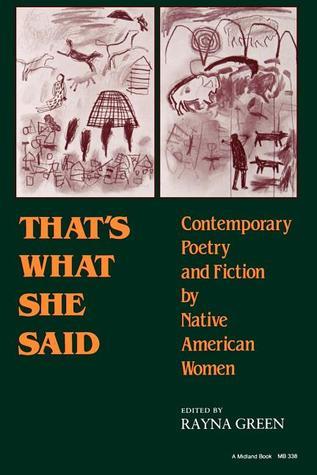
“High cotton” (orig. pub. 1984 in That’s what she said: Contemporary poetry and fiction Native American women, ed. Rayna Green)
in Bob Blaisdell (ed.), Great short stories by contemporary Native American writers
Garden City: Dover Publications, 2014
pp. 59-64
ISBN: 9780486490953

Jack D. Forbes, Only approved Indians can play made in USA (#Review)

The title of the next story in Great short stories by contemporary Native American writers is almost as long as the story itself. Well, not quite, but, occupying just two pages in the anthology, it is a short short story. It was first published the same year, 1983, as the previous story, “Turtle meat” by Jospeh Bruchac III, but is very different in tone.

(I apologise to those of you who were expecting my next post to be on Chris Flynn’s Here be Leviathans. It is coming, soon, but I had to put it aside for my end-of-July reading group book, and I do want to do it justice.)

Jack D. Forbes

Again, I’m using anthology editor Bob Blaisdell’s intro and, mostly, Wikipedia to introduce the author. Forbes (1934-2011), says Wikipedia, was an historian, writer, scholar and activist who “identified as being of Powhatan-Renapé and Lenape descent”. He is best known for his role in establishing one of the first Native American studies programs at the University of California Davis. He also cofounded D-Q University, “a prominently Native American college in Davis, California”. His activist career started in the early 1960s, when he became involved in the Native American movement, which, Wikipedia explains, “asserted the rights to sovereignty and resisting assimilation into the majority culture”.

Blaisdell introduces his story with this: ‘”Only approved Indians can play made in USA” is almost too sad to be funny, but funny it is’. Or, is it?

“Only approved Indians can play made in USA”

I enjoyed this story because of the way it addresses that issue that can dog First Nations peoples in colonial settings, that of proving indigeneity, which feeds into ideas about identity. It’s an issue I’ve discussed here before, including in First Nations writer Anita Heiss’ Am I black enough for you (my review), and in the essay “Channelling Mannalargenna” (my review) by the non-Indigenous journalist Kathy Marks.

In her book, which is a few years old now, Heiss shares the working definition of an Aboriginal or Torres Strait Islander person used by Australia’s Federal Government:

An Aboriginal or Torres Strait Islander is a person of Aboriginal or Torres Strait Islander descent who identifies as an Aboriginal or Torres Strait Islander and is accepted as such by the community in which he “or she” lives.

I share this purely for background purposes to this story. I am not going to get into the Australian situation because it’s not an issue I have followed recently. It was particularly problematical in Tasmania in recent decades, but I believe that much of that has now been resolved, to the extent that self-identifcation and community recognition are the accepted criteria.

Meanwhile, though, Heiss’s comment is relevant to Forbes’ story which concerns an All-Indian Basketball Tournament, and the two teams that are about to play, one from Tucson and one from the Great Lakes. Many people had come to watch, “mostly Indians” we are told, with many being relatives or friends of the players. There was betting, and “tension was pretty great”. The issue is that the Tucson players are, in general, much darker. Many also have long hair, and some have goatees or moustaches. A rumour starts from the Great Lakes camp that they are Chicanos, not Indians. (If you know your American geography, you will know that Tucson is in southern Arizona, so not far from Mexico, while the Great Lakes are up there near Canada.)

Anyhow, this is a serious point because, as the story goes, the Indian Sports League’s rule is that “all players had to be one-quarter or more Indian blood and that they had to have their BIA [Bureau of Indian Affairs] roll numbers available if challenged”. The Great Lakes players, coming from a big Midwestern city, are all over this:

they all had their BIA identification cards, encased in plastic. This proved that they were all real Indians – even a blonde haired guy. He was really only about one-sixteenth but the BIA rolls had been changed for his tribe so legally he was one-fourth.

You can feel the tongue firmly planted in the cheek – the satirical tone – here can’t you! They challenge the Tucson players, many of whom, as it turns out, can speak their language. None of the urbanised Great Lakes players could, but they claim this proved nothing. Only the BIA card did! The story is short and you can read it at the link below.

“Only approved Indians can play made in USA” is a clever, and oh-so succinct story that draws on recognisable conventions of competitive sport to produce a satire that explores the role of regulation and law in people’s lives, the way power can be wielded, and its potential for destabilising cultural heritage and disrupting solidarity. The ending is particularly biting because after the Great Lakes team has had its way, the last word is given to a white BIA official. That tells you all you need to know about this story.

Jack D. Forbes
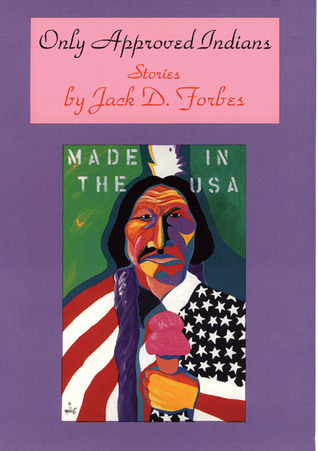
“Only approved Indians can play made in USA” (orig. pub. 1983; also published in Forbes’ collection, Only approved Indians: Stories, 1995)
in Bob Blaisdell (ed.), Great short stories by contemporary Native American writers
Garden City: Dover Publications, 2014
pp. 57-58
ISBN: 9780486490953

Available online at genius.com