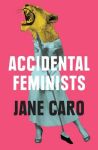
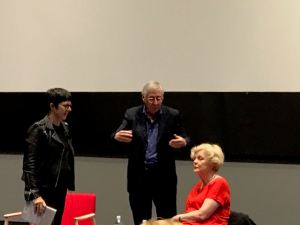
Tonight I went to an ANU/The Canberra Times Meet the Author event featuring author and journalist, Jane Caro, in conversation with local radio personality and booklover, Alex Sloan. It was of course inspired by Caro’s new book, Accidental feminists. So, I thought it might be fun this Monday Musings to just list some of Australia’s best-loved feminist books – in chronological order of publication.
While I call myself a feminist, I wouldn’t call myself an expert on the history of feminist writing in Australia – and most of what I’ve read I read before blogging so I have minimal reviews here. Consequently, I don’t want to pretend to be offering anything like a complete or thorough list. Instead, this list is just a taster, a sample, an introduction to some of the best-known books and writers. (Oh and I admit up-front that I’m using the term “classic” loosely as I will be including some rather recent books which might, in time, become classics.)
Here goes:
Louisa Lawson’s The Dawn: a feminist magazine published between 1888 and 1905, The Dawn was established by feminist Louisa Lawson (under the name, Dora Falconer). It became, according to Wikipedia, the official publication of the Australian Federation of Woman voters. The journal has been digitised on Trove, and this comes from its first issue, May 15, 1888.
Every eccentricity of belief, and every variety of bias in mankind allies itself with a printing machine, and gets its singularities bruited about in type, but where is the printing-ink champion of mankind’s better half? There has hitherto been no trumpet through which the concentrated voice of womankind could publish their grievances and their opinions … Here then is Dawn, the Australian Woman’s Journal and mouthpiece – phonograph to wind out audibly the whispers, pleadings and demands of the sisterhood.
Here we will give publicity to women’s wrongs, will fight their battles, assist to repair what evils we can, and give advice to the best of our ability.
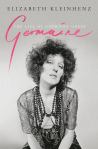
Germaine Greer’s The female eunuch: first published in 1970. Reading this while still a teen was my founding feminist moment. I had been brought up believing I was equal, that I could go to university and get a job just like my brother and the boys around me, that I didn’t have to marry to live a good and enjoyable life, but Greer’s book gave me an understanding of the structural, personal, psychological issues behind the struggle women faced (and still face) to gain true equality.

Anne Summers’ Damned whores and God’s police: first published in 1975, this book examines the two main stereotypes that are used to define women – “bad girls” who refuse to conform to society’s expectations of “the good girl”, or “good women” whose role it is to civilise society, to keep everyone else moral. Forty years on, Summers believed that, despite some progress, the stereotypes persist, and a revised edition of her best-selling book was published in 2016. Lisa (ANZlitLovers) posted on this book, focusing on the introduction to the new edition.
Jocelynne Scutt’s Different lives (ed): published in 1987, this is less a feminist treatise, than an anthology of writing by women who were active in the second wave of feminism (either formally through organisations or informally through individual action.) This is just one of feminist lawyer Scutt’s several books on feminist issues.
Dale Spender: I’ve included Spender here because of the volume of her writing on women’s issues, in the 1980s and 1990s in particular, rather than for one particular book. Her focus has largely been women writers, and their neglect. Her first book, Man-made language, analyses how the English language is constructed from a masculine point of view, and the ramifications of this. Other books include Writing a new world: Two centuries of Australian women writers and the provocatively titled The writing or the sex?, or, Why you don’t have to read women’s writing to know it’s no good. I have her Mothers of the novel: 100 good women writers before Jane Austen, in which, among other things, she discusses how and why the work of these early women writers has been lost while that of their male peers has entered the canon.
Tara Moss’ The fictional woman (my review): published in 2014, this explores her thesis that women’s lives and roles are subject to an inordinate number of fictions that contradict reality, and that this helps perpetuate ongoing inequalities for women in representation, status, value. I’m not sure of Moss’s longterm standing in feminist literature, but I found this an engaging read.
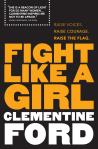
Clementine Ford’s Fight like a girl: published in 2016, this book belongs to the new generation of Australian feminists of whom Ford is clearly one of the frontrunners. The book’s starting point is that things have not changed for women – at least they haven’t changed enough. The book is therefore, writes Readings bookshop, “a call to arms for all women to rediscover the fury that has been suppressed by a society that still considers feminism a threat.”
There are many other Australian writers who explore aspects of women’s experience from a sociopolitical, and feminist, perspective, including Drusilla Modjeska’s Exiles at home, on Australia’s lively, fierce and often activist women writers of the 1930s; Diane Bell’s Generations on the way women pass on traditions; and Larissa Behrendt’s Finding Eliza (on my TBR) which takes on colonialism – and how the attendant stereotypes and myths have played out in the treatment of indigenous people, particularly women, since 1788. But, I had to stop somewhere…
Now, over to you: do you have any favourite feminist texts, Australian or otherwise, you’d care to share with us?

 Whispering Gums