Finlay Lloyd 20/40 Publishing Prize 2025: Winners announced

In August I wrote a progress report on Finlay Lloyd’s 20/40 Publishing Prize, a prize in which I have special interest because I love novella-length writing and the publisher behind this prize, Finlay Lloyd.

So just a quick recap on the prize: 20/40 is a manuscript award, with the prize being publication. It is not limited to debut or young or women or any other subgroup of writers, as some manuscript awards are. However, it does have its own criteria, which is implied in its name. It is for prose writing that is between 20,000 and 40,000 words. Outside these criteria – prose and length – the submissions can be from “all genres … including hybrid forms”. The aim is to choose two winners, preferably one fiction and one non-fiction, as they did last year.

And now, the Shortlist and Winners

The shortlist, announced on Finlay Lloyd’s website, was:

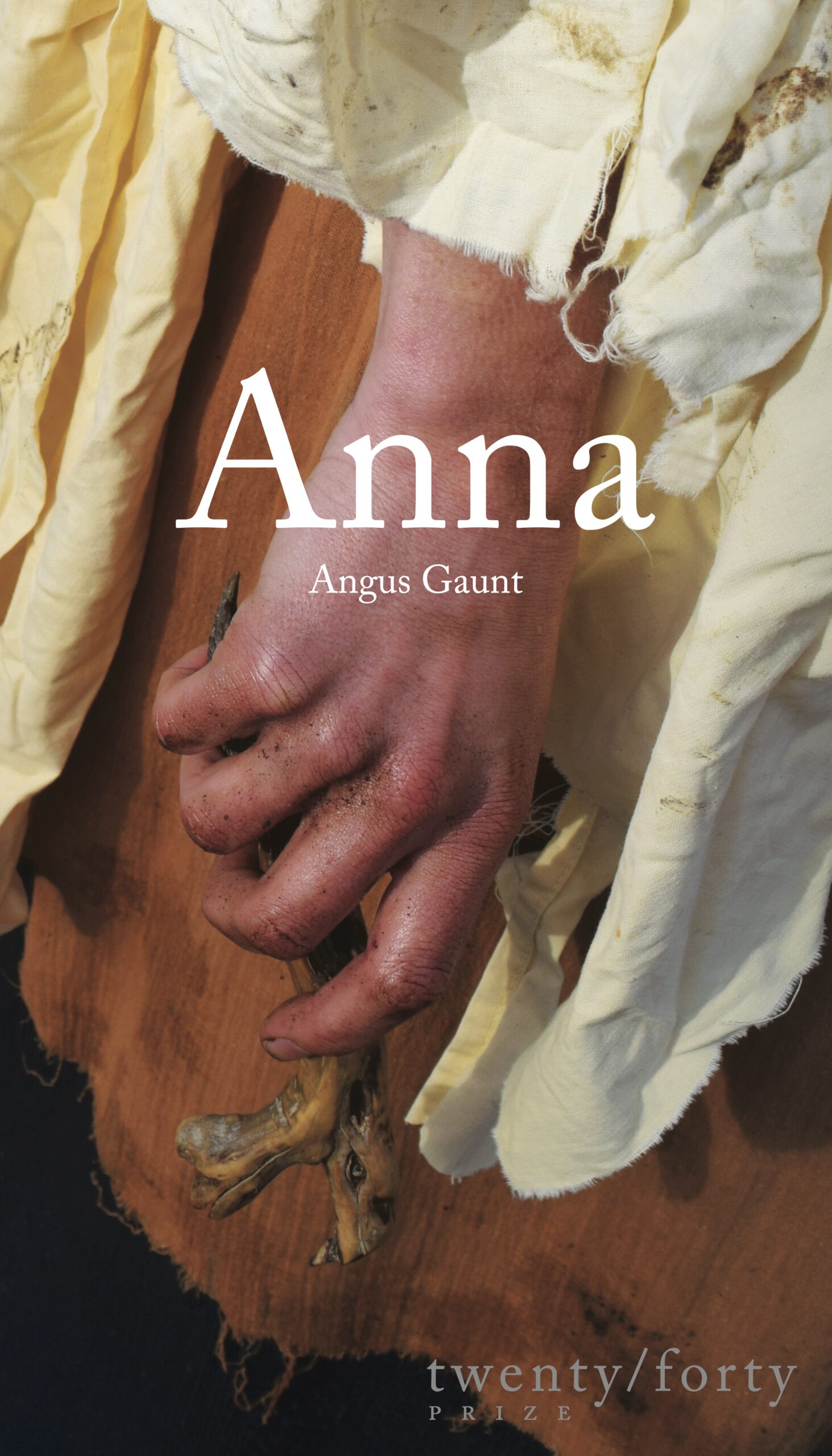
  • Angus GauntAnna: a novel which “steps with deep insight into the dire circumstances of a girl who has little more than her own inner resources to deal with sustained privation and the threat of violence”.
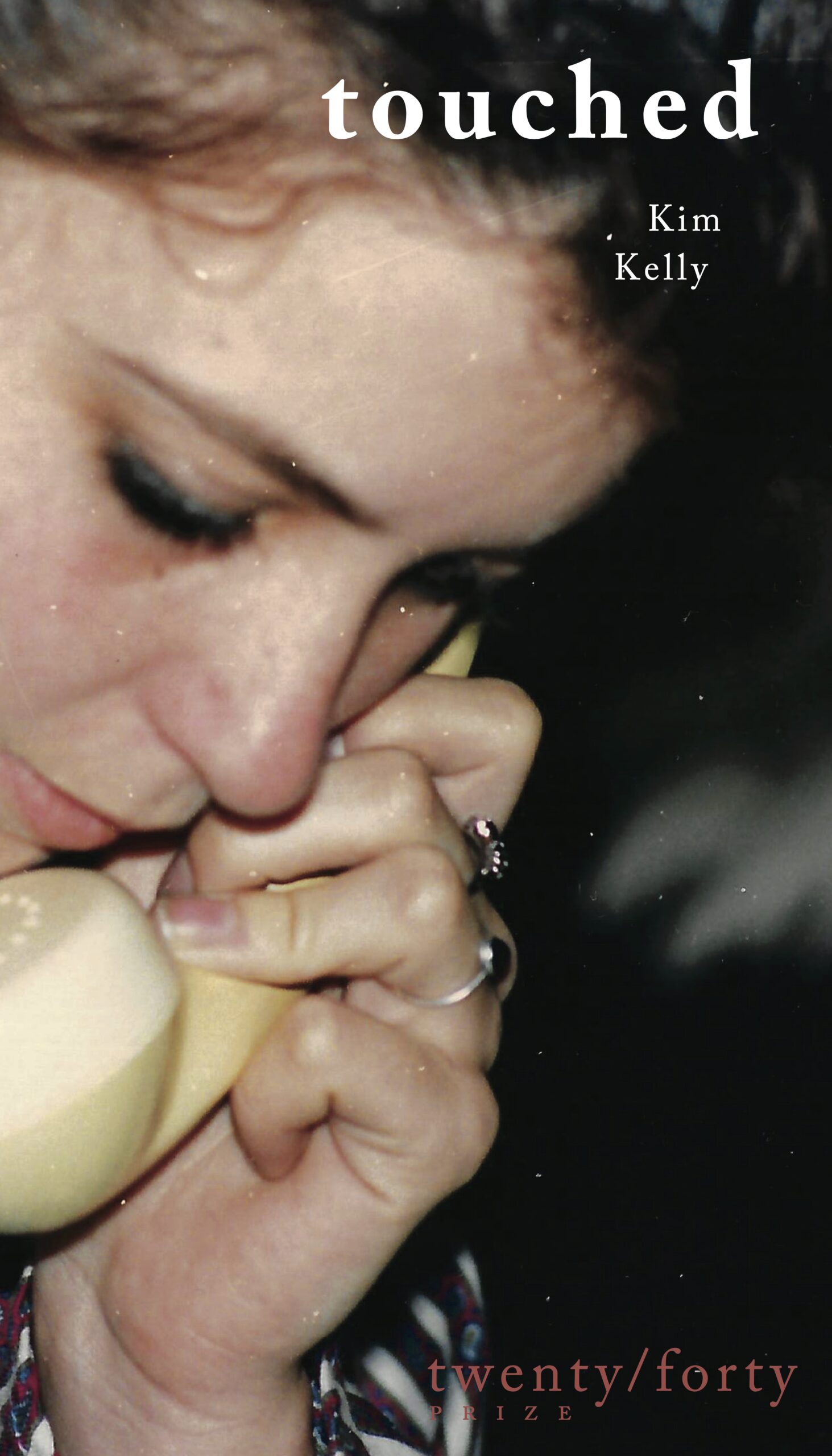
  • Kim KellyTouched: “a memoir that uses self-deprecation and humour to turn her own experience of intense panic attacks into a lively and profound reflection on the prevalent role of anxiety in so many of our lives.”
  • Monica RaszewskiMystic Vera and Lottie the shadow puppet: another novel, this one “centred on eccentric, flighty, Vera who dances with happy abandon around her sister, Lottie’s flailing attempts to control her excesses.
  • Paul TooheyBad face: an historical novel “set on the late 19th Century US frontier, where totemic violence between settlers, cattle ranchers and rustlers, and native Americans is played out with vital gothic intensity”.

And the winners are Angus Gaunt’s Anna and Kim Kelly’s Touched. You can read more about them on the Winner Announcement page. The judges were last year’s winners – Sonya Voumard, Penelope Cottier and Nick – plus Finlay Lloyd author John Clancy and the publisher Julian Davies.

The judges liked Gaunt’s novel because “the extreme circumstances of this story are written with a quiet yet incisive humanity”. Gaunt as born and educated in England, coming to Australia in 1987. He now lives in Dharug/Guringai country on the northern edge of Sydney. He has been published and nominated for awards in Australia, England and Ireland.

They liked Kelly’s memoir because of its “breadth of understanding—of the author’s own crazily complex family, of the wider issue of anxiety across society, and of her own voyage as a highly competent yet vulnerable being in a worryingly unhinged world”. Kelly was one of the two inaugural winners of this prize with her historical fiction novella, The Ladies Rest and Writing Room (my review). She lives and works on Wiradjuri and Eora lands in central west NSW and Sydney. Kelly has written historical fiction, short stories and essays, and is completing a PhD in Literature at Macquarie University. She is also a book editor (as Kim Swivel).

I was able to attend the launch of the 2023 and 2024 winners, as they were held in Canberra. This year, however, because both authors have Sydney bases, the launch will be held there next week when I’m in Melbourne, so I will not be able to report on the winners’ conversation, unfortunately. However, I do have the books and plan to read both for this year’s Novellas in November. And, there is an excellent interview with the authors available RIGHT NOW on the above-linked Winner Announcement page!

I am thrilled that this prize has now passed its third year, and hope it continues for many years more. If you like the sound of these books, and would like to support them (and the prize), you can order the books at Finlay Lloyd (though great bookstores will carry them too.) The recommended retail price is AUD26, but you can buy them from FL at AUD23.40 each (plus postage).

Congratulations to Finlay Lloyd and this year’s winners.

Finlay Lloyd 20/40 Publishing Prize 2023 Winning Books Launch with Conversation

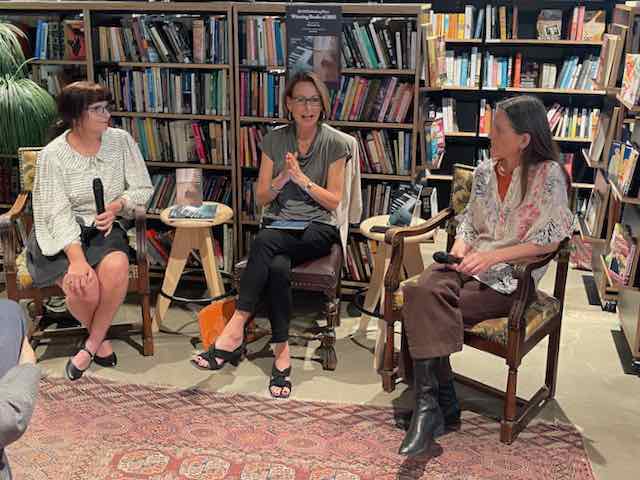
I have written about Finlay Lloyd’s 20/40 Publishing Prize a few times now, so I hope I’m not imposing too much on your precious time. However, this weekend was the launch here in Canberra, and it involved a conversation led by a favourite Canberra journalist, Virginia Hausseger, with the two winning authors. I had to go.

The participants

Rebecca Burton and Kim Kelly are the two winners, and I’ve introduced them before, so just to recap, Burton is an editor and author of two young adult novels, while Kelly is also an editor and the author of twelve adult historical fiction novels.

Virginia Hausseger is, to use Wikipedia’s description, an “Australian journalist, academic advocate for gender equity, media commentator and television presenter”. She is well-known to Canberra audiences, having been our local ABC news presenter from 2001 to 2016.

Julian Davies did the introductions. He is the inspiring publisher and editor behind Finlay Lloyd, a company he runs with great heart and grace (or so it seems to me from the outside.)

The conversation

Before the conversation started proper, Julian provided some background to the prize. Human nature, he said, seems drawn to large things. Why else would we have things like the Big Potato! What is it about large things? He sees it related to the “tussle between quality and quantity” and thinks there’s something problematic in our tendency to admire the grand and overlook the miniature. (Yes!) He believes restrictions can liberate writers, and sees the novella form as perfect for this. It can encourage succinctness while allowing room for development. I don’t expect he had any argument about that in the room.

He reminded us that it was judged blind (by two old men and three young women). That it was won by published writers shows that those who have developed their craft are likely to shine through.

Then, Virginia took over …

On their novellas

Kim described her novella with beautiful succinctness saying it was set in 1922 Sydney in the wake of World War 1, just as the city was starting to wake up. It’s about grief, and about how recognising pain in the other leads to the young women rescuing each other. She added a little later that many novels have been written about the War, but not so many about after it, and even fewer about young women’s experience of that time.

She has written three novellas, and “kind of” knows at the beginning which form the story will be. The impetus for this one was wanting to impress a potential PhD supervisor. While researching Trove she saw the ad for the Room (which she included as an epigraph.) Virginia remarked that the closing pages set up a whole new story.

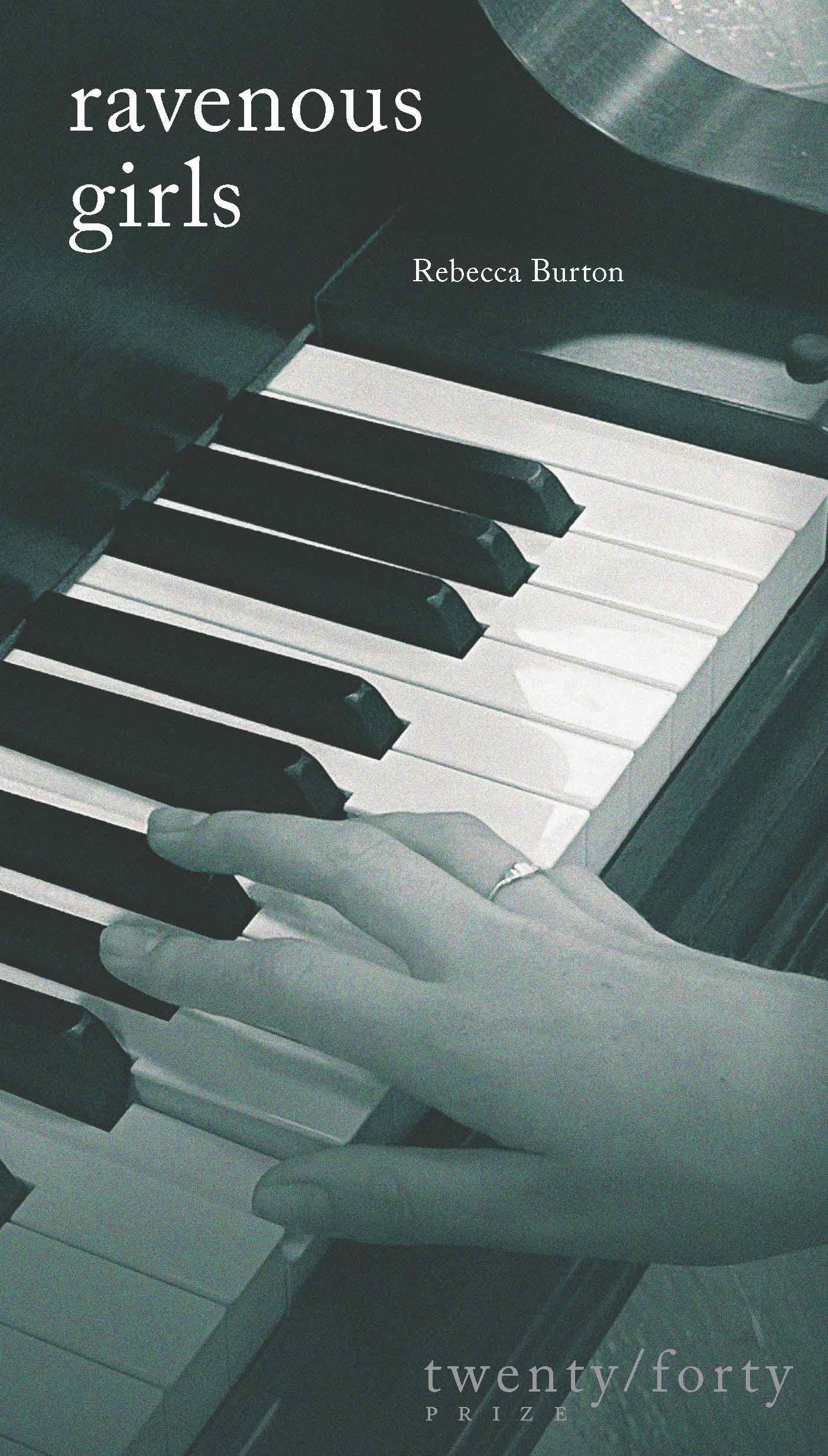
Rebecca said that hers was about two teenage sisters over six weeks of summer in 1986. The old sister, who is anorexic, has been admitted to hospital for bed-rest, and the younger sister visits her daily. It’s about what the sisters learn about each other, and the impact of this condition on the family.

She said that she hadn’t set out to write a novella, but she is comfortable with a word length which is shorter than the standard novel. Then she saw the prize! Writing adult fiction is a new genre for her, but she had stopped reading YA fiction and adores literary fiction. A friend suggested that she write what she reads. Sounds good advice to me.

On Ladies Rest and Writing Room

Kim explained that rest and writing rooms “were a thing” in the late 19th and early 20th centuries, for men and women. What is special about hers is that it was in a department store, and how it was advertised.

Dotty’s grief comes out in shopping addiction and behaving as though she had a death wish. She is so tied up in herself that she doesn’t notice her old schoolmate Clarinda. The book is built around the moment of recognition, that is, when Dotty “sees” Clarinda.

When Virginia commented on how well the “story gallops along” while still being “tight, descriptive, elegant”, Kim said that was the “magic of editorial process”. Also, she said, she knows that Sydney well.

On Ravenous girls

Answering where her story came from, Rebecca said that it was a story she had to write. Frankie had been with her for a long time, and a story about her childhood kept coming to her. The trickiness was not so much the 1986 summer story, but managing the way the time telescopes at the end. She wanted to nod at the years that go by after someone comes out of hospital.

When Virginia commented on how well she’d handled the scene of another girl post-hospital, providing an alternative glimpse of how it goes, Rebecca said she wanted to tell other stories because every story is different.

Young Frankie loves her sister, but is bewildered. An enlightening moment for her is when she realises that sister Justine is the only one allowed to suffer, that her own pain is not seen. She realises that the story she’s been told is not right. Hers is a story of loss, grief, sadness. She’s left to her own resources, and because her older sister is sick, she’s left with no role model.

As for Justine, she uses hunger to mute her desires. Rebecca said that her working title was Yearn, and quoted that great line from the novella, “I don’t want to want the things I want”. Justine feels shame for wanting things, and so starves herself for wanting them.

On the physical process of writing

Kim throws her whole self into a new project, trying to get it all down before she loses her emotional or imaginative connection. Then she goes away, coming back some time later to a “full tub of play dough” that she can then mould. She is able to quarantine the time to work this way because as a freelancer she can manage her time. She loves to be free to fly through the story.

Rebecca has a very different more measured process. She works part-time to a set roster, so has a “chipping away” process. Since her new job, she has created a ritual involving getting up an hour earlier than usual, making a cup of tea and writing for an hour. This helps her manage the peaks and troughs that happen with writing. If things go badly she can get up and go away, leaving it for the next time, and if they go well, she can get up feeling good! It’s important for her not to get obsessed with writing.

On the editing process

Rebecca said for her it went structural edit, then copy edit, then the final proofread. The delight of working with small publisher was that time was allowed for growth.

Kim seconded Rebecca’s comment about the delight of working with Julian, who “cares about words and ideas”. In her worklife as commercial fiction editor, time is of the essence, so she luxuriated in the “nurturing” experience of working with Julian.

On what’s next

Kim’s next project is her PhD, which will include a story about an ancestral grandfather who intersects with Dickens. It’s an idea she has had for a long time, but she will need to try Rebecca’s “chipping away” approach for this!

Rebecca has these characters in head, and wants to see these young girls into adulthood. This could mean three related novellas, the next set in 1993 with Justine in recovery and in her first relationship. She wants to explore recovery because some never move beyond “functional recovery”. The third book she’d like to be about Frankie in her 30s or 40s to see how things have worked out for her. Some of these futures are hinted at in Ravenous girls.

Virginia was an excellent, well-prepared and enthusiastic interviewer. She knew the books well and showed genuine interest in them and their authors.

There was no Q&A which suited me, as I had to rush off to get to my monthly Jane Austen meeting where we were to discuss the up-and-comers in Austen’s novels. However, I did have a very brief chat, as I was leaving, with the other “old man” judge, John Clanchy whose writing I love and who had commented on my recent novella post. He talked about his interest in the form and the choices writers need to make when working within it, such as which characters or stories to develop and which to leave by the wayside.

The Finlay Lloyd 20/40 Publishing Prize Winning Books of 2023 Launch
Harry Hartog Booksellers, Kambri Centre, ANU
Saturday, 18 November, 12.30-1.30pm

Kim Kelly, Ladies’ Rest and Writing Room (#BookReview)

Early in the month I reviewed the first of the two winners of Finlay Lloyd’s inaugural 20/40 Publishing Prize, Rebecca Burton’s Ravenous girls (my review). It was set in Sydney in the 1980s. Now, as promised, I bring you the other winner, Kim Kelly’s Ladies’ Rest and Writing Room. It is also set in Sydney, but in the early 1920s. Some of you will know Kim Kelly, as she has published around 12 novels, mostly historical fiction. Not only that but she was longlisted for the ARA Historical Novel Prize 2022 and shortlisted for the Viva La Novella 2021 prize with her novella, The rat catcher: A love story.

So, she has written novellas, before. A check on her GoodReads page revealed others, including what I think is her best known book, Wild chicory. So, she, like Rebecca Burton, is comfortable with the novella form (or length).

Finlay Lloyd describes the book on their website like this:

Two young women, brought up to expect conventional lives, are thrown together in unexpected circumstances. Each has suffered a devastating loss that challenges their belief in life and themselves. It’s rare to come across a work of deep psychological insight conveyed with such verve and lightness of touch.

As I said in my opening paragraph, Ladies’ Rest and Writing Room is set in 1920s Sydney. The title is explained in the first of two epigraphs. It comes from an advertisement in the Sydney Morning Herald, in 1922, for the Ladies’ Rest and Writing Room in Farmer’s department store. This “artistic room” was intended as a place of respite for busy shopping ladies. It was also where they could also write any “urgent notes” for “the very next mail”. Writing facilities were provided for the purpose. The room was, of course, intended for the well-heeled, as you paid a “nominal charge of 8d.” to avail yourself of its charming “rose shades”. The second epigraph comes from Sappho, which might or might not tell you something!

The story is told in from alternating third person perspectives of two young women. One is the apparently entitled Dotty, who comes from a wealthy business family and who uses the Room in the opening chapter. She is introduced, however, on the street outside where she plays chicken with a tram every Tuesday on her way to Farmer’s and its titular room. Why does she do this? We soon come to understand the pain this young woman, who seems on the outside to have it all, is dealing with. And it’s to do with World War 1, if you haven’t already guessed from the time setting.

The other young woman is down-on-her-luck Clarinda, who has just started work as the Room’s attendant. She went to school with Dotty, but Dotty, in her grief, doesn’t notice her, which doesn’t surprise Clarinda after her shooldays’ experiences with Dotty. Clarinda has her own sadness, partly stemming from losses in the War, but also from the fact that due to her father’s tragic death she and her mother are now on the proverbial hard times.

The narrative takes place over a few weeks encompassing Christmas, and comes to a head when Dotty’s pain becomes too much for her, resulting in a crisis in the Corset Salon (next door to the Ladies Rest and Writing Room). Clarinda steps in to protect Dotty, and, through what ensues, both young women grow. Clarinda treats Dotty with compassion and forgiveness, while Dotty wakes up to sadnesses in others.

What I most enjoyed about the book is its evocation of post WW1 1920s Sydney. Kim Kelly knows the place and the time well, and, despite the shortness of the novella form, she vividly captures a city and people in flux – the grief of wartime loss, the changing workforce as men return home after the war, the increasing migration, the excitement of change in the air, but with old social values and class structures still in place.

Clarinda, for example, was grateful for having finally landed a decently paid job:

It certainly beat unreliable casual waitressing at three shillings a luncheon, or three and six per dinner service, or sixty hours per week as a shop assistant at considerably less than two pounds, both of which she’d done, piecing together a living. All the better paying more respectable clerical positions for which she was qualified, were being given to returned soldiers, and that was fair enough, except that nothing fair had happened for Clarinda since her brothers were ripped from this life and …

So much is told in these words.

Kelly is also adept at characterisation, creating two well-differentiated characters in Dotty and Clarinda. They immediately come to life on the page, which is particularly important in a novella where there’s no time to waste. We care about them both, because we are privy to what’s going on for them, and thus to their isolation, even if those around them aren’t.

The writing and plotting are assured. Kelly is clearly experienced in writing historical fiction where description and rhetorical language are used to create the sort of atmosphere and tone needed to drive a plot forward. Kelly does this very well, and I quickly became engrossed in these two girls’ lives. It’s a novella that wears its heart on its sleeves, and I wondered at times whether some pulling back might have challenged us readers to delve into more of the complexities, and maybe leave us with more questions than answers. But, that would have been a different book. As it is, Ladies’ Rest and Writing Room is beautifully accessible and will hopefully attract more people to the novella form. It and Ravenous Girls would make excellent stocking stuffers for busy readers in your lives. And I don’t mean this condescendingly! I am referring to their perfect stocking-stuffer size!

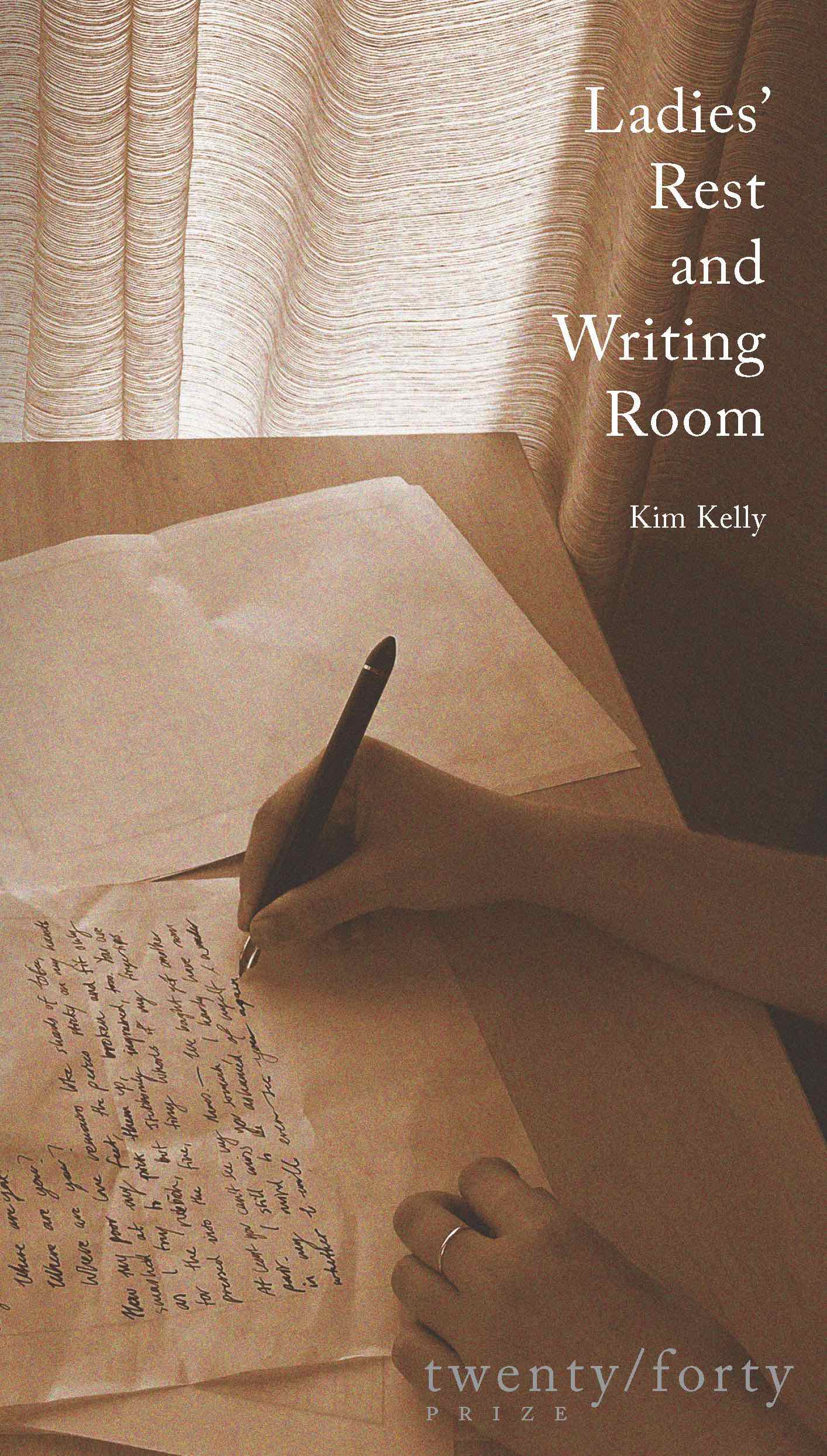
As with all Finlay Lloyd books, the design is gorgeous, with an appealing monochromatic cover featuring a woman’s hands writing a letter. Very different to your usual historical fiction cover.

Ladies Rest and Writing Room is a good read about a significant and complicated time in our history. Like Ravenous girls, it is a compassionate book, this one about navigating deep loss and the grief that attends it, and, even more, about the importance of generosity in dealing with others. I wish these two books well and thank Finlay Lloyd for sponsoring such an appealing, targeted prize.

Read for Novellas in November. Lisa (ANZ Litlovers) and Theresa (Theresa Smith Writes) have reviewed both winners in one post, but I have done them separately.

Kim Kelly
Ladies’ Rest and Writing Room
Braidwood: Finlay Lloyd, 2023
122pp.
ISBN: 9780994516596