Monday musings on Australian literature: Aussie writers and Jane Austen

Jane Austen sketch by Cassandra

Cassandra's portrait of her sister, c. 1810

Funnily enough, I’m not the only Australian who loves Jane Austen – and so we too have our very own Jane Austen juggernaut. We see the films and miniseries, we have the Jane Austen Society of Australia – and we have academics and others researching and writing on all sorts of topics relating to her. Today, I thought I’d post about one of the lighter Australian-published books on her because it is, after all, that time of year when we tend to relax the brain power a little – or, at least, I do. The book is Jane Austen: Antipodean views (edited by Suzannah Fullerton and Anne Harbers).

I clearly remember when this book was published, nearly 10 years ago, because it included comments that I related to – that tickled me, in some cases – by some Aussie writers, and so this is what I’m going to share now.

The comment that made the greatest impression on me was the one from John Marsden, a popular and award-winning Australian children’s writer:

I’ve deliberately refrained from reading Persuasion, so that I would never get to the point where I had no more Jane Austens left to read. When the doctor, with grave countenance, gives me the news that I have only three months, the grief will be mitigated by delight that at last I am allowed to read Persuasion. In the meantime, I am avoiding crossing roads when busses are in sight.

Now, I can relate to this because I too saved a Jane Austen for quite a long time. Although I’d reread all of the others a few times, I was saving Mansfield Park for the same reason. Finally, a decade or so ago, I decided that I could put it off no longer (mainly because the Patricia Rozema film version was coming and I wanted to read the book first!). I’m glad I changed my mind and I hope Marsden has too, as rereading Jane Austen is as enjoyable, really, as reading her the first time. Why deny yourself that pleasure?

Close to that one is the following from one of my very favourite Australian writers, Elizabeth Jolley:

I find in old age, I have forgotten the novels, in particular the magic of being lifted into other lives and background. Re-reading is one of the Best Things of old age. Forgetfulness – it’s like having a present.

This one tickles me because my reading group often jokes that when we get to a certain age – and it’s moving rapidly closer – we’ll read the same book over and over because it’ll be new every time! I’ll be very happy if that one book is a Jane Austen…

My third favourite comment – and those of you who regularly read my blog will soon see why – comes from the mellifluous broadcaster and writer, Phillip Adams:

The longer I live the more bored and irritated I am by excess  – and the more grateful to find such a wide range of emotions, and such accuracy of observation, in the less-is-more prose of that remarkable woman.

“Less-is-more”. Exactly so! Need I say more?

There are many more comments along similar lines to those above but, just to be even-handed, I’ll end with the words of the award-winning but clearly unenlightened children’s book author and illustrator, Graeme Base:

Jane who?

The cheek of it!

Suzannah Fullerton and Anne Harbers (eds)
Jane Austen: Antipodean views
Neutral Bay: Wellington Lane Press, 2001
168pp
ISBN: 9780908022168

Tracy Chevalier, Remarkable creatures

Bookcover

Cover image courtesy HarperCollins Australia

Most readers experience, I think, periods of reading synchronicity when we read books in close succession that are related in some way. I am experiencing such a period now as Tracy Chevalier‘s Remarkable creatures is the third book I’ve read recently to deal in some way with the first decades of the 19th century. The others are David Mitchell’s The thousand autumns of Jacob de Zoet and Peter Carey’s Parrot and Olivier in America.

Tracy Chevalier would not normally be high priority for me, but this book intrigued me because of its period and setting. You see, it is set in Lyme Regis in the early 1800s, and that rings a special bell for me! Yes, it’s to do with Jane Austen. Not only did she visit Lyme Regis, but she set a significant scene in Persuasion there*. So, my appetite was whetted.

But, I must say, I was somewhat disappointed. It’s not that I expected a lot, really, but I did expect a little more than I got. In other words, I didn’t expect exciting or innovative prose, but I did expect writing that wouldn’t bother me. However, it did, and this was mostly due to a lack of subtlety. The best writing shows, not tells, but there was way too much telling in this book, and it falls into two main types:

  • Giving “facts” that we should know. Here is Elizabeth over-explaining Mary’s calling her “Ma’am”, when she’d previously called her “Miss”:

And she was calling me “ma-am” now. Spinster or not, I had outgrown “miss”. Ladies were called “miss” while they still had a chance of marrying.

  • Describing something, such as a character’s emotions, when it should be (and usually is) apparent. Here is a bit of petulance that sounds rather silly in the first person voice of a supposedly mature Elizabeth:

As angry as I sounded, I was also secretly pleased that Colonel Birch had discovered the value of my fish enough to want one for himself.

(For a humorous review of an unsubtle book, do read Kerry, aka Hungry Like the Wolf, on Ken Follett’s The pillars of the earth.)

There are also a couple of rather gratuitous references to Jane Austen and her novels, gratuitous because the main characters don’t read novels and the reference to Austen adds nothing significant in terms of plot or characterisation. It’s as if Chevalier knew Austen went there and decided to draw on Austen’s current popularity by making the connection:

One of Miss Austen’s books had even featured Lyme Regis, but I did not read fiction and could not be persuaded to try it. Life itself was far messier, and did not end so tidily, with the heroine making the right match. We Philpot sisters were the very embodiment of that frayed life. I did not need novels to remind me of what I had missed.

Enough of all that, however. Let me give a quick rundown of the plot. It tells the story of two women who were fossil hunters in Lyme Regis in the first half of the nineteenth century. They were Mary Anning (1799-1847), a poor working class woman whose fossil finds helped change the course of paleontology, and Elizabeth Philpot (1780-1857), a gentlewoman who befriended Anning and who was particularly interested in fossil fish. Using known facts and novelistic licence, Chevalier has written an engaging story that focuses not only on the fossils and their impact on scientific and religious thinking of the time but also on the difficulties faced by women, particularly those unmarried like Philpot or unmarried and uneducated like Anning. Philpot says early in the novel that

… I had to find a passion: I was twenty-five years old, unlikely ever to marry, and in need of a hobby to fill my days. It is tedious being a lady sometimes.

Chevalier shows the financial precariousness of women, their lack of power, and how easily they can be exploited. Women, for example, were unable to belong to the Geological Society of London, and Mary’s collections (in particular) were written up in scientific journals by men, often with no credit given to her contribution. This is the real story of the novel and Chevalier captures well the circumscribed lives of women, and the challenges they faced in living independently. And yet, she undermines this by fabricating a jealous falling out between Elizabeth and Mary over a man. Did Chevalier really need to do this to make the story exciting?

That said, the characterisation is effective overall. She differentiates the two main characters not only by their very different voices, but also by creating a conceit for each of them. For Elizabeth it is her describing what people “lead with”. The forthright Mary, for example, leads with her eyes, while one of the foppish male characters leads, she says, with his hair. Good one, I thought! Mary’s conceit is being the “lightning girl”. The book begins with her being struck, but not killed, by lightning when she was a young girl. Lightning thereafter becomes a motif in her life for surprising or lucky events and for strong feelings.

Chevalier also writes some lovely descriptions – of people and landscapes:

While I accommodated her absence, a dull ache in my heart remained, like a fracture that, though healed, ever flares up during damp weather.

and

Lyme Regis is a town that has submitted to its geography rather than forced the land to submit to it …It is not planned, like Bath or Cheltenham or Brighton, but wriggles this way and that, as if trying to escape the hills and sea, and failing.

This is an enjoyable book for the glimpse it gives into the lives of two interesting and little known women, but the writing, for me, doesn’t quite do the story justice. For a more positive review, you may like to read Lisa’s at ANZLitLovers.

Tracy Chevalier
Remarkable creatures
London, HarperCollins, 2010
352pp.
ISBN: 9780007178384

*It is also the setting, of course, of John FowlesThe French lieutenant’s woman.

Toni Jordan, Fall girl

Jordan Fall Girl

Fall girl cover (Courtesy: Text Publishing)

It’s just as well I’m not one of those readers who likes to draw conclusions about writers’ lives from their writing, because if I were I’d be seriously concerned about Toni Jordan. You see, her latest novel, Fall girl, is about a con-artist, a very experienced one in fact. And Jordan writes so convincingly you’d almost think … ah, but we’re not going there, are we!

Now, Toni Jordan writes chick lit, but it’s chick lit with a difference. The heroine of her first novel, Addition (which I reviewed earlier in this blog’s history) has obsessive compulsive disorder and at the start of the novel is almost a recluse. She is not, in other words, your typical chick lit heroine.  And so it also is with Fall girl‘s heroine, Della. She too is a little off-the chick-lit-beaten track. She is:

  • not in normal employment;
  • not really upwardly mobile (as her family lives in a dilapidated mansion, and tends to spend up big “wins” rather than using the money to improve their lifestyle);
  • not focused on fashion and appearance (though she does prefer to dress well); and
  • not looking for a husband (though of course this being chick lit, romance does rear its head).

The hero, Daniel Metcalf, however, is somewhat more typical: “he looks like a model from an adventure store catalogue”. He is tanned, strong, big and muscled, and there is a little nod, I think, to Jane Austen’s Mr Darcy in him. But there is also a bit of a mystery about him that our heroine needs to resolve if she is to succeed in this, her biggest “sting” by far.

What can I say about it? It’s a fun read. The plotting and characterisation are good. It’s told first person, in a mostly light tone, but there is light and dark, as not everything runs smoothly (of course). There are some lovely comic scenes – particularly during the scientific expedition on which Della (aka Dr Ella Canfield) takes her mark, Daniel, to demonstrate how professionally his grant money will be spent. Without giving anything away, the resolution is in keeping with chick lit without being completely, neatly tied up.

Is there anything else to it? The writing is good – in a traditional, straightforward way – and the structure is generally chronological, with the odd flashback to fill in Della’s family background. It drips with irony, but in a light-hearted, rather tongue-in-cheek way. Jordan knows that we know the conventions of the genres – of both chick lit and the con – and plays them to effect. We read, and we smile, not grimace. But, there is something else here too, something besides the chick lit and the con story, and that is a coming-of-age story. Not the traditional adolescent story, but we discover as the novel wears on that twenty-something Della has not really achieved self-determination. Everything she does is in accord with her training and her father’s “rules”. Towards the end of the book, her stepmother Ruby talks to her about her upbringing in the family and her inculcation into its “business”, and says:

What you choose to believe is up to you, Della. You don’t have to listen to anybody. You have to make up your own mind.

But, of course, being a Jordan novel, it’s not typical “coming-of-age” either and what Della decides is part of the fun of the ending.

This is a light, entertaining read – and yet it’s not lacking in things for readers to think about. In fact, it’s just the right sort of read for the Christmas holidays. Lisa at ANZLitLovers would probably agree – but go check her review for yourself.

Toni Jordan
Fall girl
Melbourne: Text Publishing, 2010
234pp.
ISBN: 9781921656651

(Review copy supplied by Text Publishing)

On polishing Jane Austen’s halo

My American friend Peggy who, several years ago, very generously sent me the Pride and Prejudice Game, has now sent me a link to a short interview – with a transcript – conducted on NPR (National Public Radio) with Dr Kathryn Sutherland. Sutherland is the academic who has been researching Austen‘s manuscripts for the last three years and whose quoted-around-the-world comments I discussed briefly in a recent post.

This interview contains statements by Sutherland that are similar to those she made in a BBC interview (in a link provided by blogger Arti in her comment on my previous post). In Peggy’s link, Sutherland says that she has received some negative reactions to her comments. Not surprising, I suppose, given what was clearly out-of-context seantionalist reporting.

Anyhow, this is what she said to the NPR interviewer:

I’ve heard a range of responses. And I have had some very extreme and, I have to say, unpleasant responses to my work. All I can say is that, you know, as critics we should just stop polishing her halo.

There are very few authors that we put in this extraordinary position where we feel that we should never say anything critical about them. She can stand up to it. She’s interesting. She’s experimental. She’s an extraordinary writer. The idea that we can never question what she wrote I think is absolute nonsense.

Can’t say fairer than that …

Jane Austen’s manuscripts: Is she the writer we think she is?

Jane Austen sketch by Cassandra

Cassandra's portrait of her sister, c. 1810

Well, it’s all over the web, Jane Austen‘s manuscripts are full, FULL they say, of errors. They’re being formally launched tomorrow, Monday 25 October, so we can all see them then, though as far as I can tell they are already up: Jane Austen’s Fictional Manuscripts. Is something more going up tomorrow? Or is this just a case of a soft launch versus a formal launch? Anyhow, what does the claim really mean?

Kathryn Sutherland, the Oxford University academic who has been looking at the manuscripts, says that

It’s widely assumed that Austen was a perfect stylist – her brother Henry famously said in 1818 that ‘everything came finished from her pen’ and commentators continue to share this view today.

Except that it is pretty well acknowledged that Austen’s family was protective of her reputation, so … we do need to look a bit further.

Kathryn Sutherland continues to say, according to what I presume is the advance press release:

The reputation of no other English novelist rests so firmly on this issue of style, on the poise and emphasis of sentence and phrase, captured in precisely weighed punctuation.

That is partly so – and I am certainly one to laud her style – though I’d say her reputation rests on three things: style, story and insight.

Anyhow, Sutherland then says that what we know as the precision of Jane Austen’s writing is not evident here –

We see blots, crossings out, messiness – we see creation as it happens, and in Austen’s case, we discover a powerful counter-grammatical way of writing. She broke most of the rules for writing good English…

– and suggests there was a strong editorial hand involved in getting the works to the state in which we see them. Hmm… isn’t this the case for other authors? And anyhow, on how many novels is she basing this opinion? If it’s just Persuasion and the unfinished Sanditon – besides some of the earlier juvenilia and minor works then these two were written when her health was failing. In fact, a quick look at the website as it exists now shows very little crossing out, for example, in Lady Susan. In her letters, Austen wrote of a few small typographical errors in Pride and prejudice and the odd missing “said he” and “said she”, which presumably means that what was published was close to what she wrote? Added to this is the fact that I understood that very little survives in manuscript form of Jane Austen’s novels. In fact, the introduction to the site says that:

There is no evidence to indicate that Jane Austen saw the bulk of these drafts as anything other than provisional.  Hence the stark situation that no manuscripts appear to remain for works published or planned for publication in her lifetime (Sense and SensibilityPride and PrejudiceMansfield ParkEmmaNorthanger Abbey or Persuasion, the famous six novels). The assumption must be that their working and finished drafts were routinely discarded once replaced by print forms. There is only one exception: the two cancelled chapters of Persuasion, which represent an alternative ending to the one that made it into print.

Has this “press release” (or syndicated article) been written to get some controversy going … or is Sutherland, a reputable scholar I believe, basing her statements on other information? Will there be more on the site tomorrow? I look forward to following the continuing discussion …

Did Shakespeare write Shakespeare? Did Austen write Austen? In the end what matters really is the work … isn’t it? Or is this just a little too naive?

POSTSCRIPT: I wrote the above last night as a bit of a “feeler”. While the statements in the news pieces did not accord with the knowledge I had about Austen’s manuscripts and her own practices, and while my research indicated that Sutherland is a reputable scholar, I wanted to raise the following issues:

  • had more knowledge/manuscripts come to hand (though I suspected not) to alter our understanding?
  • what difference does editing make to our assessment and appreciation of the works?

Let’s not even bother to raise the third one about  the ethics of such skewed reporting if that’s what I – and clearly others – believe is behind it all!

Monday musings on Australian literature: Elizabeth von Arnim

Cover of "All the Dogs of My Life"

All the Dogs of My Life (Courtesy: Vintage Books, via Amazon)

This week’s Monday musings is a bit cheeky since Elizabeth von Arnim (or Mary Annette Beauchamp, her birth-name) was born in Sydney in 1866 but her parents left Australia in 1871 for Switzerland and then England. Von Arnim spent the rest of her life abroad. So, why am I writing about her? She didn’t grow up in Australia and doesn’t write about it either. Well, it’s because I love her writing and thought I could use the Australian birth justification to write about her now rather than later. After all, it’s my blog and I’ll do what I want to!

Before I talk about her writing, it’s worth mentioning that she has a famous relation: her first cousin was Katherine Mansfield (born Katherine Mansfield Beauchamp in 1888). But this isn’t the only name-dropping that can be done. The writer E.M. Forster tutored her children at one stage, she had a three-year relationship with H.G. Wells, and she married (but soon regretted it) Bertrand Russell‘s older brother. In other words, she had an interesting life.

I have read a few of her 20 or so books:

And, I have Vera (1921), which some see as her best, on my TBR pile.

So, why do I like her? Well, not only is her main theme, at least from the books I’ve read to date, women’s lack of power in a male-dominated world but, like Jane Austen, she approaches this with wit and irony and with a clear eye for human failings in general. In other words, she empathised with women’s lot but wasn’t blind to their faults and foibles (as individuals, as women and as representatives of humanity). Just read Mr Skeffington, and you will see what I mean.

To give you a sense of her writing, here are the opening paras of her “memoir” All the dogs of my life:

I would like, to begin with, to say that though parents, husbands, children, lovers and friends are all very well, they are not dogs. In my day and turn having been each of the above – except that instead of husbands I was wives – I know what I am talking about, and am well acquainted with the ups and downs, the daily ups and downs, the sometimes almost hourly ones in the thinskinned, which seem inevitably to accompany human loves.

Dogs are free from these fluctuations. Once they love, they love steadily, unchangingly, till their last breath.

That is how I like to be loved.

Therefore I will write of dogs.

How can you not be captivated by such a wry writer? The book continues in this teasing tone. She insists it is not her autobiography (“as this isn’t an autobiography, I needn’t go into that” is a refrain), but a story of her dogs, and regularly tells us so. But of course, through the story of her dogs, we get a pretty good impression of her life. She may not give us all the details, but we certainly learn about many of her “ups and downs”. This book, though, was not my introduction to von Arnim: that goes to the delightful Elizabeth and her German garden.

In a recent post, Max of Pechorin’s journal wrote that “the line between novel and memoir can be a tricky one”. I immediately thought of Elizabeth and her German garden, which I first read back in the mid 1980s. This is, I believe, a novel (in diary form) but it is also rather close to her life. She did, like the Elizabeth of the book, marry a German (count) and she did call him, as she does in the book, “The Man of wrath”. Furthermore, she did have several children. In fact her second book, The solitary summer, is dedicated “To the man of wrath, with some apologies and much love”.  Anyhow, here is the Elizabeth in the novel:

The people about are persuaded that I am, to put it as kindly as possible, exceedingly eccentric, for the news has travelled that I spend the day out of doors with a book, and that no mortal eye has ever yet seen me sew or cook. But why cook when you can get someone to cook for you?

OK, so she is well-to-do … but still, I love her priorities! Here she is in her (aforementioned) memoir, speaking of herself and one of her dogs:

Fortunately we liked the same things. She only wanted to be outdoors in the sun, and so did I …

And so, while some of the facts may differ (though I don’t know which ones), the basic “truth” of her life – her likes, dislikes and, more to the point, her attitudes and personality, come through both books.

Elizabeth von Arnim was a woman who tackled life head on. Her first husband died, she had affairs and a failed marriage; she lived in England, Europe and the USA; and she met some of the significant thinkers and writers of her time.  But, through it all, she never lost sight of “women’s lot” and the psychological ramifications of their powerlessness. Here she is in Elizabeth and her German garden on migrant workers:

From us they get a mark and a half to two marks a day, and as many potatoes as they can eat. The women get less, not because they work less but because they are women and must not be encouraged.

There is also, in the same book, an extended – and infuriating – discussion between Elizabeth, the Man of Wrath, and two others on German women having the same (lack of) rights as children and idiots. But politics was not her main game, I think. Rather, she was interested in women’s lives, in their wish and need to make self-determined, meaningful lives for themselves. So, I might just finish with another little excerpt from All the dogs of my life:

What on earth did I, of all people, want with a lot of husbands? I asked myself in wonder. Besides, by readily sticking to poached eggs for dinner I was getting abreast of my expenses, and the bills of Saturdays held no more terrors for me.

Ha! What indeed (at least in those inequitable days)!

Books into films

‘Do you mind what they did to your book?’
‘Well, they can’t do anything to my book. They can’t alter a single comma … ‘

I came across the above in an article about P. D. James‘ in the September issue of goodreading magazine. The discussion relates to her non-crime novel The children of men which was adapted into film. What a great response I thought, because …

Pride and Prejudice (1940 film)

1940 film adaptation (Image via Wikipedia - Presumed public domain?)

I tend to take a pretty relaxed view towards adaptations. I see books and films as completely different media. Rather than expect the film to replicate the book, I like to see how the filmmaker has interpreted it. These are the questions I ask myself:

  • First: Did I enjoy the film as a film? Did I like the story? Did I like the way it was acted, directed, photographed, scripted? What did it “say” to me? Did it move and/or entertain me?
  • And then, if I’ve read the book, I think about the filmmakers’ interpretation. What was their take on it? Did it accord with mine? If it didn’t accord with mine, was it an interesting take? Was it a valid take?

And so, for example, I am one of the few Jane Austen fans who likes Patricia Rozema‘s Mansfield Park. Her Fanny is certainly not the Fanny of the book, but she is an interesting creation nonetheless and, as I see it, an attempt by Rozema to “update” her and to invest her more clearly with the strength of mind that she clearly has but that many readers lose because her “issues” (such as not taking part in the play) seem “wimpy” to modern eyes.  (This is not the only point of difference in the film, but discussing these is not the point of my post).

A poster on the Ellen and Jim blog has attempted a “classification” of film adaptations, using Jane Austen as an example. Here it is:

  • Close (or faithful) adaptations (such as the Pride and Prejudice film, 1995, starring Colin Firth and Jennifer Ehle), meaning “literal transposition of plot hinge-points, keeping most major characters, important crises, dialogue, themes”;
  • Intermediate (or analogous) adaptations (such as Patricia Rozema’s Mansfield Park, 1999), in which “the film-makers drop hinge-points or characters, change enunciations, and alter the book’s themes, even radically”; and
  • Free (or loose) adaptations (such as Clueless, 1995), meaning “a transposition into modern or other era terms which keeps only enough idiosyncratic elements of the major story and characters to be recognizably partly derived from the book”.

You will know my approach to adaptations when I say I enjoyed all three examples I selected above – which is not the same as saying that I think all adaptations work. I was less enamoured, for example, of the 2007 ITV adaptation of Mansfield Park. It had the unfortunate effect of making me laugh – at the wrong time for the wrong reasons – and its plot changes did not seem to me to enhance the themes.

Further on in the Ellen and Jim blog post is this from John le Carré on the adaptation of his The Constant Gardener:

the job of the movie … is to take the minimum intention of the novel and illustrate it with the maximum of freedom in movie language in movie grammar.

That sounds very reasonable to me, but now I wonder about you, as I know a few readers here are keen moviegoers. What makes a successful adaptation to you? How important is fidelity – however you define that – to you? And, if you like, what are some of your favourite adaptations?

And the Jane Austen bloggernaut just keeps rolling …

Late last year I created a blog for my local Jane Austen group and in the blog roll listed some of the well-known (among Austen circles anyhow) Austen blogs. Since then I have come across many bloggers like myself – such as, say, So Many Books and The Captive Reader –  who like Jane Austen but don’t focus their blogs on her. Nothing unusual about all this you might say, but then things start to get a little weird, almost as weird as the appearance of books like Pride and prejudice and zombies, because I recently came across another Austen-lover’s blog, this one a foodie. It’s called Pride and Vegudice and belongs to a vegan-lovin’ Austen fan. Now what would mutton-stew-and-roast-pork-eating Jane Austen think of that?

In the immortal words of another nineteenth century writer, it just gets curiouser and curiouser!

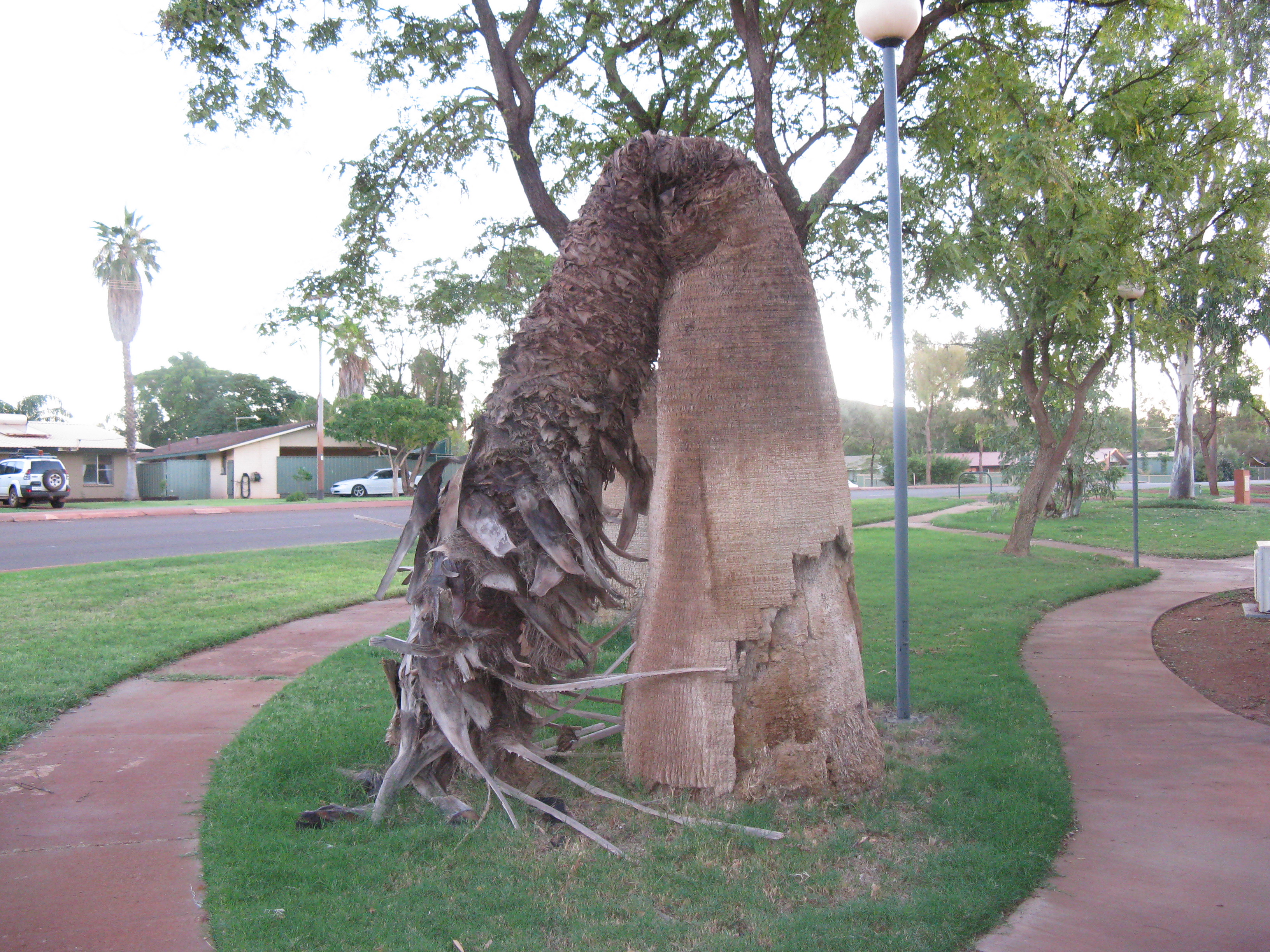
Fallen over palm

Almost as curious as this fallen over palm

Jane Austen: Conservative or progressive?

I must admit that, fan as I am of Jane Austen (of her wit and clear-eyed observation of humanity), I have sometimes been conflicted about whether she is, as this post title asks, conservative or progressive.

She was innovative in terms of the history of the novel – her sure use of the third person omniscient narrator and her psychological and social realism were progressive for her time. But, what about her plots and their resolution? The fact that her heroines tend to marry well? Or, well enough, anyhow. I have often felt ashamed about my sorrow that sensible Elinor in Sense and sensibility did not “catch” as wealthy a husband as her emotional sister Marianne did. It’s not the money so much, but the fairness of it! Elinor deserved … but, she got what she deserved didn’t she? The man she loved!

But, I digress. The point is – and this is what seems to put some readers off – that Austen’s heroines always do marry, and they always marry within their class or slightly higher. They don’t throw it all to the wind to follow some passion; they are usually materially “sensible” even though they also determine to follow their heart. And so, there’s the conundrum. Austen’s heroines are independent of mind enough to hold out for a marriage of affection, but they don’t cast their net outside their kind. They seem to affirm the status quo.

However, as I also wrote in a recent post, I and many others see Austen as a protofeminist: while her plots and their resolution can be seen, superficially, to be conservative, there is something else going on. And this was presented from a fascinating perspective the other night by academic Glenda Hudson who spoke at the public library. Her topic was “Sibling love in Jane Austen, revisited” and was an updating of an article she published in 1989. She explored the role of sibling love and incest in Jane Austen – not that “actual” incest ever occurred in her books, but some of the highly sanctioned relationships, such as Fanny and Edmund in Mansfield Park, and Emma and Mr Knightley in Emma, have incestuous overtones (that are consciously articulated in the books).

Hudson claims that Austen promotes the value of fraternal (sibling) love in her novels – and defines this love as being based on shared moral and intellectual values and ideas. She argues convincingly that in many of Austen’s novels this idea is extended to encompass conjugal love, and that marriage in Jane Austen is presented as a meeting of like minds, as an egalitarian partnership between two people who, through the course of the novel, have come to love and respect each other. In fact, she argues that, through these marriages, Austen redefines gender roles in marriage.

Here is a description of Fanny with her brother, in Mansfield Park:

Fanny had never known so much felicity in her life, as in this unchecked, equal, fearless intercourse with the brother and friend [brother William] who was opening all his heart to her, telling her all his hopes and fears, plans, and solicitudes  … An advantage this, a strengthener of love, in which even the conjugal tie is beneath the fraternal. Children of the same family, the same blood, with the same first associations and habits, have some means of enjoyment in their power, which no subsequent connexions can supply … (Mansfield Park, Ch. 24)

Here is Edmund, realising at the end that Fanny just might be the one for him. It is interesting in to look at in light of the above, since Edmund and Fanny were, from the time Fanny was 10 years old, “children of the same family”:

… it began to strike him [Edmund] whether a very different kind of woman might not do just as well, or a great deal better: whether Fanny herself were not growing as dear, as important to him in all her smiles and all her ways, as Mary Crawford had ever been; and whether it might not be a possible, an hopeful undertaking to persuade her that her warm and sisterly regard for him would be foundation enough for wedded love. (Mansfield Park, Ch. 48)

Hudson’s conclusion is that Austen is both conservative and radical – that she confirms the validity of the traditional family in what was a changing world, but that her vision of that family incorporates something new. I found this argument pretty convincing – but then, of course, it doesn’t take much to convince me that Austen was ahead of her times in thought and writing.

Jane Austen’s letters, 1811-1813

Mansfield Park book covers

Mansfield Park book covers - Penguin wins

Early in my blogging career I wrote a post on the letters Jane Austen wrote (well, those remaining anyhow) between 1814 and 1816. This was to coincide with my local Jane Austen group’s reading of Emma. This year we are reading Mansfield Park and so decided to read the letters she wrote during her writing of that novel, which was published in 1814.

These letters are less rich than the later ones in terms of containing specific information about her writing style and process, and they can be somewhat demanding to read as they are full of the names of people met and places visited. Le Faye, who edited the edition I read, provides excellent annotations and indexes to the letters so that you can look up the people and the places, but this can be tedious if you just want to get on with it. However, if you go with the flow, not worrying too much about all this detail, you can in fact glean a lot.

The most significant thing you learn, besides her biting wit as you will quickly see from the quotes below, is what a keen observer of people she was. This becomes very clear in a letter written from London in 1811, in which she speaks of visiting some museums:

… I had some amusement at each, tho’ my preference for Men & Women always inclines me to attend more to the company than the sight.

The letters are, consequently, full of her observations of people, and it’s easy to tell that they come from the pen of Jane Austen:

They have been all the summer, in Ramsgate, for her health, she is a poor Honey – the sort of woman who gives me the idea of being determined never to be well – & who likes her spasms & nervousness & the consequence they give her, better than anything else.

And I can’t help thinking that this woman provided the model for Miss Bates in Emma:

Miss Milles was queer as usual and provided us with plenty to laugh at. She undertook in three words to give us the history of Mrs Scudamore’s reconciliation, & then talked on about it for half an hour, using such odd expressions & so foolishly minute that I could hardly keep my countenance.

Many readers of Jane Austen, and I am one of them, see her as a protofeminist. There is a lovely, very Austen-ish, comment in an 1813 letter which supports this view. It regards the poor treatment of the Princess of Wales by her husband, the future George IV:

I suppose all the World is sitting in judgement upon the Princess of Wales’s Letter. Poor Woman, I shall support her as long as I can, because she is a Woman, & because I hate her Husband – but I can hardly forgive her for calling herself “attached and affectionate” to a Man whom she must detest…

And there is this on the education of the children of Reverend Craven:

…She looks very well & her hair is done up with an elegance to do credit to any education … & the appearance of the room, so totally un-school-like, amused me very much. It was full of all the modern Elegancies – & if it had not been for some naked Cupids over the Mantlepiece, which must be a fine study for Girls, one should never have Smelt Instruction.

As many of you probably know, her first novels were not published under her name, but during these years it was becoming harder for her to maintain her anonymity. In 1813, she writes to her brother Frances:

… but the truth is that the Secret has spread so far as to be scarcely the Shadow of a secret now – & that I believe whenever the 3rd [her third novel published, Mansfield Park] appears, I shall not even attempt to tell lies about it. – I shall rather try to make all the Money than all the Mystery I can out of it. – People shall pay for their Knowledge if I can make them.

As the poor daughter of a deceased clergyman, Austen highly valued the money she made from her books.

All this said, she does say a few specific things about writing. I found this one particularly interesting. It’s related to her finally receiving her “own darling Child” (that is, Pride and prejudice). She writes that:

There are a few Typical [typographical] errors – & a ‘said he’ or a ‘said she’ would sometimes make the Dialogue more clear – but ‘I do not write for such dull elves/As have not a great deal of Ingenuity themselves’*.

Hmm … perhaps that’s what Hilary Mantel would like to say to those readers who can’t cope with her use of “he” in Wolf Hall.

Another comment that gives us a sense of what she sees as important in a novel is this on Mary Brunton’s novel Self control:

I am looking over Self Control again, & my opinion is confirmed of its’ being an excellently-meant, elegantly-written Work, without anything of Nature or Probability in it.

Jane Austen, you see, was a realist. And in this section of letters we also discover the amount of research she did to get her facts right in Mansfield Park – ships, hedgerows in Northamptonshire, and buildings in Gibraltar are all things she wanted to get right.

These letters are full of other things too – family, food, and fashion feature heavily, as do the books she’s reading and the theatre she attends. If I have piqued your interest you can read them online here. In the meantime I’ll end with one of my favourite quotes from this section:

By the bye, as I must leave off being young, I find many Douceurs in being a sort of Chaperon for I am put on a Sofa near the Fire & can drink as much wine as I like.

Is it any wonder I like Jane Austen?

* Jane Austen here paraphrases Sir Walter Scott’s lines from his long poem Marmion.

Deirdre Le Faye
Jane Austen’s letters (3rd ed)
Oxford: Oxford University Press, 1995
642pp.
ISBN: 9780192832979

Note: The spellings, punctuation etc used in the above quotes come from Le Faye’s edition.