OK folks, today I’m begging your indulgence to let me stray from the “proper” theme of my Monday Musings series. In other words, I’m not going to talk – except for a minor digression – about Australian literature. But, I am going to talk about Australians talking about literature. Bemused? I’ll explain.

Quiet foyer at the Hyatt, outside seminar room.
This last weekend in Canberra was the 9th Jane Austen Festival Australia. It’s a festival designed “to explore all aspects of Jane Austen’s world”, so many of the sessions relate to dance, costume, military re-enactments, and learning about the culture of Regency times. However, it also includes a thread focusing on Jane Austen’s novels, and in the last three years this thread has been concentrated into a day-long Symposium, on a theme. The theme for 2016 was the Chawton Years. For those of you unfamiliar with Jane Austen’s biography, the Chawton Years cover the period of her life from 1809, when she, her mother and sister were offered Chawton Cottage as a home after their father and husband’s death in 1805, to 1817, when Austen herself died. All her novels were published after the move to Chawton, but three were specifically written during that time – Mansfield Park, Emma and Persuasion. (We could also add the unfinished novel, Sanditon, if we liked!).
The Symposium comprised 6 papers, and I’m going to reflect very briefly on each, knowing that some of you who come here like things Jane.
Edward Austen Knight and his Legacy at Chawton (Judy Stove)
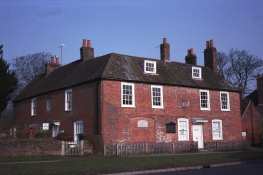
Chawton Cottage (1985)
Judy Stove was an early member of my local Jane Austen group, until she left town. She’s now an Adjunct Lecturer at the University of NSW in the Faculty of Science, but is also interested in, and has written on, eighteenth century literature. Her paper provided the perfect start to the day, as it was Edward Austen Knight, Jane’s brother, who provided his mother and sisters with Chawton Cottage. Judy took us through a well-constructed argument concerning Edward’s legacy, moving from his and Jane’s immediate family to his descendants, and their role in the beginning of we would now describe as the cult of Jane Austen. From this point Judy developed a case concerning cultural nationalism and the controls now being exerted in many countries on exports of cultural property. Her example was Kelly Clarkson’s purchase of Jane Austen’s turquoise ring. I won’t elaborate here, but Judy proposed that emotion may play a bigger role than rational thought in some of these “material culture” export decisions. A thoughtful, and well structured paper.
“My Fanny” and “A heroine no one but myself will much like”: Jane Austen and her heroines in the Chawton novels (Gillian Dooley)
Gillian Dooley is an Honorary Senior Research Fellow at Flinders University in South Australia, with particular expertise in the music of Jane Austen and her times. This paper, however, was dear to my heart because it got into some literary nitty-gritty regarding point-of-view. Her aim was to explore the degree to which Austen’s heroines might speak for her, thereby giving us insight into Austen’s own beliefs and opinions. To do this, Dooley teased out, to the depth available in her 30-40 minutes time-slot, where Austen’s “authorial persona” does and doesn’t collide with the perspectives of her heroines. She compared excerpts from some of Austen’s letters with statements by heroines, like Mary Crawford (Mansfield Park) and Emma, and she teased out points-of-view in the novels, suggesting where we are in a character’s head, and where it is authorial comment speaking. I found this particularly interesting given my recent reading of Elizabeth Harrower during which I was conscious of a similar slipping between characters and author. As for Dooley’s thesis? Well, we’ll never know exactly who Jane really was, but we certainly have clues to consider!
Marriage in Mansfield Park (Julia Ermert)
Julia Ermert is a retired teacher, historical dancer and Jane Austen aficionado. She is particularly expert in the social history that informs the novels, in those things that readers at the time knew and which can add significantly to (even change) how we understand the novels. For example, a knowledge of the different carriages helps us understand status, and assumptions. And knowing courtship “rules” and practices can be critical to our understanding why, and how, certain events happen. For this talk, Ermert focused on that most controversial heroine, Mansfield Park’s Fanny, and the issue of marriage, that “coldly cruel social obligation”. She took us through laws and practices relating to dowries and marriage settlements, elopements, adultery, breaches of promise, cousin marriage, and the fragility of women’s reputations. Even those of us who know Austen and the era pretty well learnt a thing or two.
“Suppose we all have a little gruel”: the importance of food in Emma (Katrina Clifford)
Clifford is the Dean of Residents at Robert Menzies College, Macquarie University (my original alma mater). She did her PhD on sibling relationships in 18th century domestic fiction, and has written and taught widely on things Austen. Her talk started from the point that there’s nothing superfluous in Austen, that is, if Austen talks about food, or carriages, or jewellery, you can be sure it’s there to make a comment. Food features heavily in Emma: it explains the relationships between characters and the structure of Highbury life. Who is generous to whom and how, who accepts generosity from whom and who doesn’t, provide subtle (or not so) commentary on the characters. For example, Mr Knightley giving the last apples of the season to the impoverished Bateses demonstrates his generosity of spirit, whilst Emma giving a whole loin of pork to them tells us her heart is kind even if she doesn’t always behave well. These also demonstrate that both have a similar attitude to their social responsibility and are a good match. And what about Mr Woodhouse’s gruel, and Mrs Elton and the strawberry party? They provide the book’s comedy but also inform about character and relationships. Another insightful talk, in other words.
The ever absolute Miss Austen (Marcus Adamson)
Adamson is a psychotherapist and ethics consultant interested in the history of ideas and the application of philosophy to psychology. This was the most demanding of the day’s presentations, because of its dense erudition. Referencing philosophers and thinkers from the ancient Greeks on, he argued that Austen’s novels have a serious moral vision, that they present moral truths and certainties that are innately “known” to us. In other words, she asks the big Socratic question, “How should I live my life?” This runs counter to the common assumption that “small ‘r” romance” is the chief attraction of her novels. He then turned to modern times. Our current individual-focused world has, he said, resulted in the individual becoming “unshackled from society”, and thus losing, if I understood him correctly, a moral mooring. Nothing in our post-modern world is certain anymore, everything is open to doubt, and the consequences, he believes, are “catastrophic”. Austen’s novels, with their serious moral vision, can work as a “corrective” to this dilemma. I’ve compressed something very complex into something very simple, but I think that was the gist of it. As an Austen-lover I agree that, for all their wit and humour, Austen’s novels do contain serious commentary about human behaviour, but the bigger picture of his paper? It’s appealing but I need to digest it more.

Napoleonic era British Naval Uniforms demonstrated
Royal Navy in the Regency Period (John Potter)
After that talk we all needed to decompress a little, and John Potter was just the man to do it. An amateur expert in military and naval history, and in the Napoleonic period in particular, he turned up in full naval uniform, accompanied by some armed officers and sailors, also in historical dress. He talked about the Napoleonic Wars (1793-1815) and regaled us with much information about the British Royal Navy – its ships, its organisation, naval hierarchy and jobs. We learnt about weapons, and his “men” showed a few, including the dirk and cutlass. The Navy tended to be drawn from the middle class, and boys joined very young – around 10-12 years old – as there was a lot to learn about running a ship. The army was a different matter. He also explained how prize money was shared (which is relevant to Persuasion and Captain Wentworth’s returning a wealthy man) and the impress service (i.e. press gangs). A relaxing and enjoyable end to the day.
And that, as they say, was that. Back to Aussie lit proper next week.
 Whispering Gums