 Last year, Mr Gums and I bought a new car to replace our loved but aging 15-year-old Subaru Forester. We’ve been keen to move into the hybrid world but wanted to stay with the SUV-style for various practical reasons, so, as soon as a reasonably-priced hybrid SUV appeared on the market here – the Toyota RAV4 – we were in, and so far so good. However, the real reason I’m sharing this is because another impetus for buying a new car was all the new technology, including the audio systems that enable you to play music – and books – via your phones. And so it was that I borrowed my first ever e-audiobook from our local library, Steven Carroll’s The lost life. The technology worked a treat.
Long-term readers here know that I’m not a huge fan of audiobooks, for reasons I’ve explained before. Fortunately, the reader here, Deirdre Rubenstein, did an excellent job. She was expressive, appropriately English-sounding, but read more than played the characters. That helps a lot.
So now, the book. I chose it for two reasons – it was short, making it a good test case, and it was by Aussie author Steven Carroll, whom I haven’t read yet, and whose Eliot Quartet series I’ve been wanting to read. The lost life, the first book in this series, is inspired by the poem “Burnt Norton”, the first of Eliot’s Four Quartets. Makes sense, huh! “Burnt Norton” was published in 1935, and most of Carroll’s novel is set in September 1934. The novel is framed by the story of Eliot and Emily Hale*, who did, in fact, visit Burnt Norton manor in 1934, but their love is paralleled by that of a young couple, 18-year-old Catherine and 22-year-old Daniel. Eliot, himself, is a fairly shadowy figure in the story, with the focus here being on Miss Hale and Catherine.
The story starts at Burnt Norton, a country estate to which Catherine and Daniel have gone for a romantic picnic and maybe a swim. It’s summer, and Carroll beautifully evokes the passion beating in the “ardent” young Catherine’s breast as she looks forward to further development of their physical relationship, which has not yet been consummated. But, they are interrupted by the appearance of two older people, who turn out to be, of course, Eliot and Miss Hale, and they scurry away because they are trespassing. However, they do observe, from behind the shrubs, a little lovers’ ceremony between the older couple, one that Daniel later violates, fortunately unbeknownst to Eliot and Miss Hale, but distressing to Catherine.
Here, I might pause and refer to the poem which inspired this novel. It starts:
Time present and time past
Are both perhaps present in time future,
And time future contained in time past.
A little later come the lines that I remember so well from my university days:
At the still point of the turning world. Neither flesh nor fleshless;
Neither from nor towards; at the still point, there the dance is,
But neither arrest nor movement.
I don’t know what it is about Eliot’s lines that move me so, but I think it’s their almost confounding spareness and mesmerising rhythm. Putting that aside though, it’s this sense of timelessness, of past, present and future being tied to the here and now, of both stillness and movement, of almost suspended animation too, that pervades Carroll’s novel as the protagonists work through their ideas about love and life.
“a felt experience”
Now, Catherine and Miss Hale know each other, as Catherine’s summer job is cleaning the house in which Miss Hale is staying. The plot is, to a degree, predictable. However, it is not the point. The point is how the characters react and feel about what happens. This is an introspective novel in which the two women reflect on love, their own attitudes to it, and what they see, or think they see, in each other. Miss Hale sees her young self in Catherine, her eighteen-year-old self whose disappointment she does not what to see repeated, while Catherine sees wisdom but also sadness in Miss Hale. She comes to realise, in fact, that Miss Hale, who describes her love with Eliot as “a different kind of love”, is a virgin. It is this experience of love, this mystery that endows a special knowledge, that drives the plot.
There is, though, so much to this novel. The tone is gorgeously melancholic, mirroring the poem that inspired it. Carroll also uses images from the poem – sunlight, roses, light – to suffuse his book with a sense of lost time. Repetitions like “young man of whom great things were expected”, “ardent ways”, and “the woman who won’t let go long after she has any right” add to the melancholic tone, while also anchoring our understanding of the characters.
There is also a link drawn between performance and reality. Catherine sometimes feels she is in a play or story, and this contributes to the theme of “the lost life”. Literally, it is the life Miss Hale lost by waiting all those years for Eliot rather grabbing life herself, but more broadly it can encompass all those lives we never have. Even if we, as Miss Hale realises we should, “grasp our moments as they arrive”, there will always be other lives not taken or lived. As Eliot writes in “Burnt Norton”:
Footfalls echo in the memory
Down the passage which we did not take
Towards the door we never opened.
Ironically, Catherine, who delivers “a felt experience” for Miss Hale, becomes an actor who can “deliver a felt experience on cue”, offering up other lives to her audiences, while living her own moments as they arrive. It’s an inspired conclusion to a book about love, living, and the biggest of them all, time.
Lisa (ANZLitLovers) loved this book.
Steven Smith
The lost life (Audio)
(Read by Deirdre Rubenstein)
Bolinda Audio, 2010 (Orig. pub. 2009)
5:57 e-audiobook (Unabridged)
ISBN: 9781742333830
* Check Wikipedia for more on the relationship between Eliot and Hale.
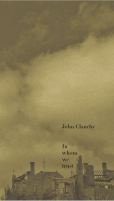 My first question when I read a book of historical fiction is why? And so it was for John Clanchy’s latest novel In whom we trust, which is set in Victoria around World War 1, albeit is not about the war. It is, in fact, about a Catholic home for orphaned children, St Barnabas, and three people associated with it, visiting chaplain Father Pearse, and two young people, inmate Thomas Stuart and scullery maid Molly Preston. Of course, when I say “about” St Barnabas, I don’t really mean that. St Barnabas frames the novel, provides its context, but the novel itself is about something far more complex, which gets me back to my opening question, why?
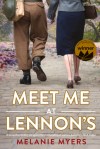 I was keen to read Melanie Myers’ debut novel, Meet me at Lennon’s, because it is set during the Brisbane of my mother’s early teens, that is, wartime Brisbane when her school,
  Melanie Myers
 I admit to a brief feeling of déjà vu when I started Dominic Smith’s latest novel, The electric hotel, because it starts by telling us that its protagonist 85-year-old Claude Ballard has been living in the
 We need more novels like Tony Birch’s The white girl and Melissa Lucashenko’s Too much lip. This is not to say that we don’t need all the wonderful Indigenous Australian literature I’ve read and reviewed here over the years, but some of the books, as excellent (and as beloved by me) as they are, can be more challenging to read. The white girl and Too much lip, on the other hand, are accessible, page-turning novels that have the capacity to reach a wide audience, but will they? I sure hope so, because the truths they tell are crucial for all Australians to know if we are to ever become a more mature and united nation.
 Whispering Gums