Sawako Ariyoshi, The doctor’s wife

The doctor’s wife is the third Ariyoshi novel that I’ve read. The other two – The River Ki and The twilight years – I read well over a decade ago. According to Wikipedia The doctor’s wife is considered her best novel. All, though, are fascinating reads providing an insight into a culture which is so different from my own but in which, at the same time, people experience similar desires, pressures and emotions.

The twilight years is set in 1970s Japan and beautifully captures the cultural changes that were occurring around the time as Japan was (and still probably is) moving from  feudal/traditional parent child relationships to our more modern independent ways, with women caught in the middle. The River Ki chronicles three generations of women from the late 19th to mid 20th century, exploring changing attitudes and expectations of women. You are probably getting a picture here and you’d be right: Ariyoshi’s overriding theme concerns the role of women in Japanese society, both historically and in modern times. (Ariyoshi died in 1984.)

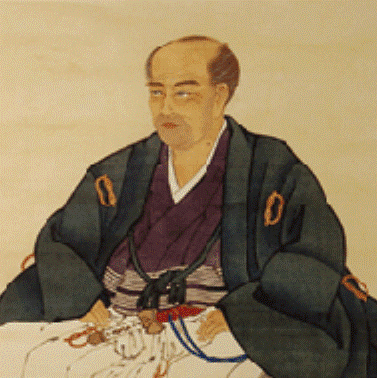
Hanaoka Seishu

Hanaoka Seishu (Public domain, via Wikipedia)

The doctor’s wife is an historical novel, spanning 70 years from around 1760 to 1830 and based on the life of famous Japanese doctor Hanaoka Seishu. A quick plot summary. The doctor’s wife is Kae, a young woman from a wealthy family, who is lured to become Seishu’s bride by his ambitious mother Otsugi, herself a woman married from a wealthy into a poorer family. The novel then chronicles Kae’s life in this extended family household as Seishu develops his medical skill and training until, near the end, he performs the world’s first surgery under anaesthetic (1804, breast cancer)*. While Seishu’s development as a doctor frames the novel, the real plot concerns the relationship between Kae and Otsugi.

The novel is told in third person, mostly the more objective omniscient voice, but occasionally we feel we are specifically in the heads of Kae or Otsugi. According to my edition’s introduction, Ariyoshi had access to Seishu’s personal records, diaries and books. However, being a man of his time and a doctor focused on his research, he did not, I assume, document much of his family life. The story, then, of the women is largely fictional. Mostly through dialogue, with description as needed, Ariyoshi describes how the loving supportive role Otsugi initially presented towards her daughter-in-law changes when her son (who had been married to Kae in absentia some three years before) returns home from his medical studies in Kyoto. Overnight, the relationship, to Kae’s shock and distress, changes into a competitive one – a competition that has serious consequences as they vie to be guinea pigs for his experiments in anaesthesia. Both women are presented as flawed, but as it is Kae who opens the novel and is the more powerless, it is with her that we are most keen to identify and empathise.

Why has Ariyoshi chosen to tell this story of conflict and competition within an historically based story of a great man? Does the historical “truth” add credibility to her exploration of familial power discrepancies? I’m not sure it’s necessary, but perhaps it helps … It is a very human tale – the grand gestures made by the women to support his research are small in the scheme of things though the impact on them, particularly on Kae, is immense. Ariyoshi realistically explores the nuances of their relationship through the normal day-to-day patterns of life (weaving, cooking, house management, childbirth) suggesting that this sort of conflict doesn’t have to be but that it often (traditionally, even) is. In fact, we readers are lulled into seeing it as the norm – the lot of women – until we are shocked out of that frame of mind near the end by Seishu’s unmarried sister who says (in broken speech because she is ill):

I think this sort of tension among females . . . is . . . to the advantage . . . of . . . every male.

She continues to explain her particular perspective on women’s secondary lot, and pronounces that:

as long as there are men and women side by side on this earth, I wouldn’t want to be reborn a woman into such a world.

Clearly, given the story Ariyoshi has told, she rather agrees  – or, at least, agrees for such societies as she depicts here in which women’s lot is not only an inferior one but which work to discourage them from cooperating and supporting each other. The novel may be set in Japan, but the fundamental truths, unfortunately, are not so confined.

What I have described here is the main story, but there’s more here that can be discussed, including the development (or history) of medicine in the east and west, the experimentation on animals and humans, and Japanese social life and customs in the Tokugawa period.

It’s a short but engrossing read. It falters a little I think right at the end when the historical facts are presented so prosaically that they threaten to overwhelm its novelistic achievements, but the last line fuses the two so beautifully that you forgive this.  The doctor’s wife is a fascinating and keenly observed novel that deserves to be read.

*Ironically, in 1811, novelist Fanny Burney underwent a horrific mastectomy without anaesthesia because it was unknown in the west!

Sawako Ariyoshi
The doctor’s wife
(trans. by Wakako Hironaka and Ann Silla Kostant)
Tokyo: Kodansha International, 1966 (orig ed), 1978 (trans)
174pp.
ISBN: 0870114654

Sarah Waters, The little stranger

The little stranger, by Sarah Waters

The little stranger (Book cover courtesy: Virago Press)

I’m not quite sure I know where to start with this one –  the ghost story that isn’t. Or is it? The little stranger is my second Sarah Waters’ novel. I found The night watch riveting, and I did see and enjoy (but not read) her very Dickensian Fingersmith.

Like The night watch, The little stranger was shortlisted for The Man Booker Prize. It’s an easy read, and rather a page-turner, but by the end I have to say that I felt a little unsure about what I’d read. In one of those interesting bits of reading synchronicity, I recently read Helen Simonson’s Major Pettigrew’s last stand. It is very different to this one, and is set a few decades later, but they both deal with the loss of “old families” and the breaking up of their estates. Waters, though, is the far superior writer.

So, what is the plot of The little stranger? Its first person narrator, Dr Faraday, was born to the working class but, through family sacrifice, has pulled himself up into the professional middle class. After a brief flashback to a childhood memory of Hundreds Hall, where his mother had worked as a housemaid, he proceeds to chronicle the relationship he develops with the Hall’s family when he is in his late 30s and practising in the nearby town as a GP. The family comprises the mother, Mrs Ayres, and her adult children, Caroline and Roderick. The book is set soon after World War 2, and the story he tells occurs over the period of about a year, but is told from the vantage point of some three years later.

Waters is best in her vivid description of the house, its inhabitants and its increasing dilapidation. I’m tempted to read the house as a metaphor for the society it represents – for the days of elegance and upstairs-downstairs that are now on the way out.  And, extending this idea, “the little stranger” (or “dark germ”) that seems hell-bent on bringing about the house’s destruction could then be seen as a metaphor for the rapid modernisation that was occurring in post-war England and that was pushing the old families to the brink of economic and, thereby, social ruin. After all, servant Mrs Bazeley reassures the young servant girl Betty that “it” is not interested in them.

To support this way of looking at the novel, here is Dr Faraday early-ish in the novel:

But Hundreds Hall had been made and maintained, I thought, by the very people they were laughing at now. After two hundred years, those people had begun to withdraw their labour, their belief in the house; and the house was collapsing, like a pyramid of cards. Meanwhile, here the family sat, still playing gaily at gentry life, with chipped stucco on their walls, and their Turkish carpets worn to the weave…

And here is Dr Seeley (to whom he later goes for advice):

The Ayreses’ problem … is that they can’t or won’t adapt … Class-wise they’ve had their chips. Nerve-wise, perhaps they’ve run their course.

Quotes like these support a social change interpretation. And yet, perhaps it is more psychological? Dr Seeley suggests that part of one’s psychology, one’s dream-self , can break loose and become some sort of “psychic force”:

The subliminal mind has many dark, unhappy corners, after all. Imagine something loosening itself from one of those corners. Let’s call it a – a germ. And let’s say conditions prove right for that germ to develop – to grow … What would this little stranger grow into? A sort of shadow-self, perhaps a Caliban, a Mr Hyde. A creature motivated by all the nasty impulses and hungers the conscious mind had hoped to keep hidden away: things like envy, and malice and frustration…

Somewhat supporting this interpretation is Caroline’s report of her mother as saying:

the house knows all our weaknesses, and is testing them one by one.

And so what do you think? Psychological/psychic or social? Or perhaps bit of both? That is, the arrogant upper class family out of touch and unable to adapt (social) releasing all its weaknesses (psychic). I’m not sure that Waters makes the case clearly enough – partly I think due to the ambiguity posed by the narrator.

Her characterisation is in fact coherent and convincing, except for the narrator. How are we to read him? Is he genuine – does he really care for the family? Does he genuinely care for the house and its history? Or, is he a social climber who wants his way into the house any way he can. I must say I couldn’t fully work him out. Is he reliable? The tone is quite reminiscent of that in Ishiguro’s wonderful Remains of the day. Like Ishiguro’s butler, Dr Faraday tells the story from some time after the events, and he peppers his account with such words as “recall”, “I think I noticed”, “must have”, words that suggest that all may not be as he sees it. And in some ways it isn’t, but there is no intriguing twist, neither is there a traditional resolution. As I read I wondered whether he was stringing me along, whether he was the cause of the malevolence. He did after all chip away a decorative acorn from the house on his youthful visit:

I was  like a man, I suppose, wanting a lock of hair from the head of a girl he had suddenly and blindingly become enamoured of.

If he was the malevolence, there is no evidence to suggest it is anything other than unconscious. And further, if he was, it certainly makes the whole class divide story more complex – and, more interesting.

Regardless, though, of how the end comes about, of “who” (one? many? none?) is responsible, it is pretty clear that the winners – if there can be such things in the messy game of life – are the old underclass. Hundreds was, in Dr Seeley’s view, “defeated by history, destroyed by its own failure to keep pace with a rapidly changing world”. It is not surprising, I suppose, that by the end the narrator is both “baffled and longing”.  Social change never has been easy!

Sarah Waters
The little stranger
London: Virago, 2009
450pp.
ISBN: 9781844086023

Ruth Park, Swords and crowns and rings

Note to self: never again “read” an audiobook over a long period, such as, say, 5 months! This is how I read Ruth Park‘s engrossing 1977 Miles Franklin award-winning novel, Swords and crowns and rings. It was not hard to keep up with the plot as it’s pretty straightforward – and powerful. It is hard, though, over such a time to keep up with and remember all the nuances in her writing and expression and the way they affect character development and thematic strands. For a thoughtful review of the book by someone who read it more sensibly, please see my friend Lisa’s, of ANZLitLovers, here.

I am not an experienced “reader” of audiobooks and I have to say that I found what seemed to me to be the over-dramatisation of the story rather trying in the first few CDs. I gradually got used to it, however, and by the end I was happy with Rubinstein’s reading, but it did take me a while to settle into it.

New-Zealand born Ruth Park is a wonderful chronicler of Australian life. Her novel, The harp in the south, set in working class Sydney in the 1940s is, to my mind at least, an Australian classic – but it is just one of her extensive and well-regarded body of work. Her autobiographies are also well-worth reading, not only for the light they throw on her life and on that of her husband, author D’Arcy Niland, but also on that of the Australian literary establishment of the mid-twentieth century.

Anyhow, back to the novel. Swords and crowns and rings tells the story of two young people born in an Australian country town before World War 1 – pretty Cushie Moy (born to a comfortable family with the stereotypical socially ambitious mother who has married down) and the dwarf, Jackie Hanna (whose background is well and truly working class). Not surprisingly, Cushie’s parents frown on the friendship which develops between the two. This is not an innovative story but, rather, good historical fiction with evocative writing and sensitive character development. Consequently, as you would expect, the two are separated just as they realise their love for each other and the book then chronicles their respective lives – Cushie with various relations in Sydney and Jackie in a number of country locations before he too reaches Sydney. Much of the book takes place during the early 1930s Depression. Park gorgeously evokes the hardships – physical, economic and emotional – experienced by people like Jackie and his step-dad “the Nun” as they struggle to support themselves. All this is underpinned by Park’s thorough knowledge of the social and political history of the time: we learn about labour organisations and the rise of socialism, of that irascible politician “Big Fella” Jack Lang, and of the building of the Sydney Harbour Bridge.

The resolution is predictable – it is, after all, a book of its genre – but it is not over-sentimentalised and is not achieved before the characters, Jackie in particular, have matured to the point that we can trust that he not only deserves what will come but that he will continue to work and mature for the betterment of himself and those he loves. It is truly a powerful book about human nature, as well as about the place and time in which it is set.

Ruth Park
Swords and crowns and rings (Audio CD)
Read by Deidre Rubenstein
Bolinda Audio, 2007
18 hours on 15 compact discs
ISBN: 9781741636628

Hilary Mantel, Wolf Hall

An interesting question to ponder when thinking about Hilary Mantel’s Wolf Hall is the significance of the title. While the place Wolf Hall, the family seat of the Seymour family, does get a few mentions it does not really function as a location. Wolves, however, are one of the subtle motifs running through the novel. As its protagonist remembers late in the book:

…homo homini lupus, man is wolf to man.

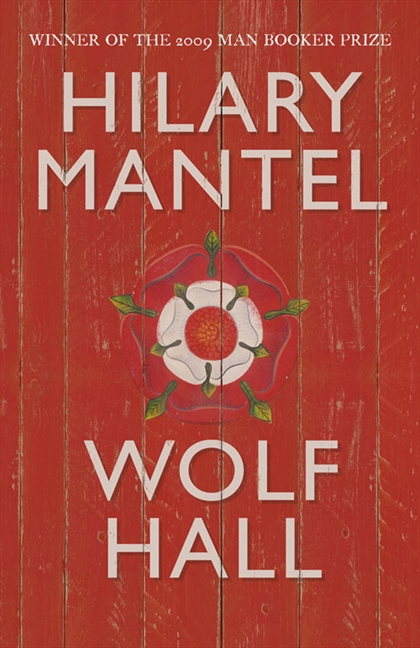
Hilary Mantel, Wolf Hall

Cover image (Courtesy HarperCollins Publishers)

And, after reading the novel, it would be hard to refute this notion! Wolf Hall is set in England between 1500 and 1535, with most of the action taking place between 1527 and 1535. It deals primarily with the lead up to and first years of Henry VIII’s marriage to Anne Boleyn, but as seen through the eyes of Thomas Cromwell. Its plot centres on the machinations involved in dissolving Henry’s marriage to Katherine (Catherine) of Aragon, who had failed to produce a male heir, so he could legally marry Anne Boleyn; its real subject matter, though, is far wider than that. Its time period – the early years of the English Reformation – and its plot mean that it deals with the major issues of the time, including England’s separation from Rome, the translation of the Bible into English and the relaxing of rules regarding access to the Bible, the Act of Supremacy, and succession to the throne. Running through this are the jostlings for power, the skullduggery, and the betrayals (and suprising acts of loyalty) that are the hallmarks of the Tudor Court. Man was indeed wolf to man then (and I sometimes wonder how much has changed?).

This is an exquisite – though large! – novel. It won the 2009 Booker Prize: I can’t compare it with the others because I haven’t read them, but I did enjoy this immensely. In my recent review of The enchantress of Florence – and what fascinating synchronicity to read these two in sequence – I said that the one word I would use to describe it was “paradoxical”. The word I would use for Wolf Hall is “subtle”. It is subtle in so many ways – in its narrative style, its humour, its irony, its symbolism, its descriptions, its juxtapositions. Nothing here is heavy-handed or overdone.

But first, its narrative style. I was forewarned about Mantel’s use of “he” in this novel and perhaps this helped, because I rarely found it difficult or confusing. In fact, I rather liked the style. It’s a bit like a first-person novel told in third person – third person subjective (limited) point of view, I guess – and so the use of “he” reminds us that it is HIS perspective we are getting. Everything we know we know through him, through his thoughts and through his interactions with others. I found this approach intriguing – it gave immediacy and distance at the same time. And this brings me to the man himself.

Thomas Cromwell, for those who don’t know their English history, rose from very humble beginnings to being Henry’s trusted chief minister. He did this by dint of his character and the timely beneficial patronage of Cardinal Wolsey. He became street-smart in his youth but he also educated himself in the culture (literature and art) of the times. He could speak Latin, Italian and French. He was an accountant and lawyer.  He knew about trade. He was no slouch in the kitchen either. He was, indeed, a jack-of-all-trades. Here is a description early in the book (1527):

Thomas Cromwell is now a little over forty years old. He is a man of strong build, not tall. Various expressions are available to his face, and one is readable: an expression of stifled amusement … It is said he knows by heart the entire New Testamant in Latin … He is at home in courtroom or waterfront, bishop’s palace or inn yard. He can draft a contract, train a falcom, draw a map, stop a street fight, furnish a house and fix a jury…

A man, that is, not to be trifled with – and yet he is a man who develops a large and loving household full of loyal children, relatives and “wards”. Some of the loveliest sections of the book are set in his home, Austin Friars. He is also loyal – sticking by Wolsey, for example, in his decline – and firm, hard even, but not cruel.

However, I don’t want this review to be as long as the book and so shall move on. I loved Mantel’s descriptions – they are always short but highly evocative. Here is the Duke of Norfolk:

The duke is now approaching sixty years old but concedes nothing to the calendar. Flint-faced and keen-eyed, he is lean as a gnawed bone and cold as an axe-head;  his joints seem knitted together of supple chain links, and indeed he rattles a little as he moves, for his clothes conceal relics…

And here is another telling description (after charges against Wolsey have been written):

It is a wan morning, low unbroken cloud; the light filtering sparely through the glass, is the colour of tarnished pewter. How brightly coloured the king is, like the king in a new pack of cards: how small his flat blue eye.

Delicious aren’t they?

The novel ends at an intriguing point – but I won’t give that away here except to say that it does not conclude with the end of Cromwell’s life. That, we believe, is the subject of a sequel.

I would love to keep writing about the characters, the language, the way Mantel puts it all together – such as the way she drops hints then explores them later – but that could become boring. Better for you to read the book (if you haven’t already). Instead, I will end with what is probably the book’s overarching theme – that of “how the world works”, and that is through machinations behind the scenes:

The fate of peoples is made like this, two men in small rooms. Forget the coronations, the conclaves of cardinals, the pomp and processions. This is how the world changes: a counter pushed across a table, a pen stroke that alters the force of a phrase, a woman’s sigh as she passes and leaves on the air a trail of orange flower or rosewater…

It was ever thus, eh?

Hilary Mantel
Wolf Hall
London: Fourth Estate, 2009
653pp.
ISBN: 9870007292417

POSTSCRIPT: Steven, at A Momentary Taste of Being, posted a link to this fascinating article by Hilary Mantel on Thomas Cromwell. It is well worth a read.

Historical fiction…some brief thoughts

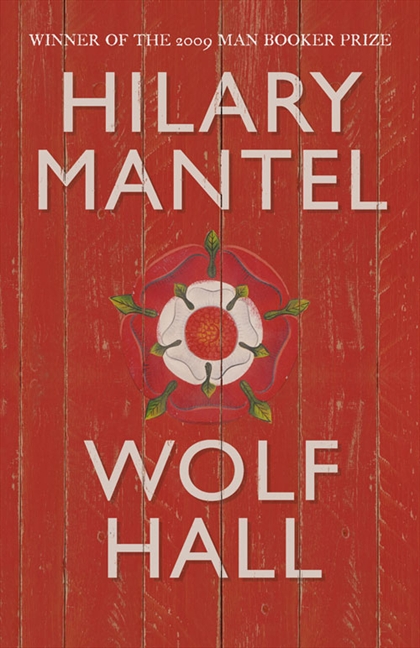
Hilary Mantel, Wolf Hall cover

Cover image (Courtesy: HarperCollins Australia)

I have never really thought of myself as a reader of historical fiction but of course I have read quite a bit of historical fiction, not because I seek it as a genre but because some of the, for want of a better word, literary fiction that comes my way is, also, historical fiction. Take last year’s Booker Prize winner, Hilary Mantel’s Wolf Hall, for example. (This is not my review of it, that will come next week)

A writer of The Guardian Books Blog wrote a little on the topic after the announcement suggesting that historical fiction has regained some “gravitas” in recent years but also recognised:

Writing in 1850, Alessandro Manzoni argued that novelists were different from historians because they give “not just the bare bones of history, but something richer, more complete. In a way you want him to put the flesh back on the skeleton that is history”. This is key, I think, to understanding fiction about the past.

However, the tension between the bones of fact and the fictional flesh can be problematic, as Leon Garfield argued: “Often you have to suppress what you actually know, and do it in a way that doesn’t seem as though you’re doing it, and you can only do that, I find, by being very subjective in your writing.” The historical novel writer is forced to acknowledge the innate fictionality of what they are doing and the way it suffuses everything, even the so-called “facts”.

Here in Australia we had a little furore over an historical novel, Kate Grenville’s The secret river, as I briefly referred to in an earlier post, and it was largely over her suggestion that novelists could add to our understanding of history. I think she understood very well “the tension between the bones of fact and the fictional flesh”: she knows that there are things that history can’t tell us and that there is a place for “imagining” how and why things actually happened, for trying to get in the heads of the people of the times. Sophisticated readers of fiction, I believe, can make this distinction, can understand that it is fiction they are reading while also recognising that this fiction may also contribute to their appreciation of the past.

I’ll probably come back to this again in future posts, but I thought I’d make an observation about how a couple of recent authors have handled presenting to their readers the historicity of their fiction. Salman Rushdie in The enchantress of Florence provides an 8-page bibliography at the end of the book demonstrating the extent of his research and giving his readers the option of following up anything they are interested in. (The fact that this book also includes magical/fantastical material as well doesn’t, I think, deny its historical aspect). Hilary Mantel doesn’t do this, but she provides an extensive list of characters and two family trees at the beginning of the novel. And like many authors of historical fiction she provides an Author’s Note to explain some of her sources and historical decisions. Kate Grenville, though, went one step further: she wrote a follow-up book, Searching for The secret river, which chronicled in detail her writing process for her book and how and why, in fact, she turned it from a biography of her ancestor into an historical novel with a fictional protagonist!

Price Warung, Tales of the early days

Tales of the early days (Cover: Courtesy Sydney University Press)

Tales of the early days (Cover: Courtesy Sydney University Press)

Okay, I admit it, I have convict ancestors (plural even!). Consequently, I was particularly interested to read Price Warung’s 1894 collection of short stories, Tales of the early days, when I discovered it was part of the Australian Classics Library recently published by the Sydney University Press. My convicts include John Warby who, with another labourer, stole two donkeys and was transported to Australia on the Pitt in 1791, and Sarah Bentley who stole several items of clothing from her mistress in 1795 and was transported on the Indispensable. In 1796, John married the 16-year old Sarah. Fortunately (for me and for them), they were a hardworking pair. John had been given land by Governor Phillip in 1792, and he and Sarah made a good life for themselves, so much so that there is now a primary school named after him, the John Warby Public School in the Campbelltown area west of Sydney.

Enough about my family, though. What about Price Warung? He was, in fact, William Astley, and was born in Liverpool, England, in 1855 but came to Australia with his family in 1859. He became, according to the succinct little biography at the back of the book, a radical journalist and short-story writer, with particular interests in transportation (or, convict) literature, and the Labour and Federation movements.

Now to Tales of the early days. This was his second published collection, and comprises 8 stories set in Norfolk Island, Hobart, Sydney and London. They explore various aspects of convict life, and many draw on real people and events. In fact, my city’s new (and first) prison is named after the penal reformer/prison commandant, Alexander Maconochie, who features in the first two stories. The eight stories are worth listing for their titles, most of which convey a strong sense of personality:

  • Captain Maconochie’s ‘Bounty for Crime’
  • The Secret Society of the Ring
  • In the Granary
  • Parson Ford’s Confessional
  • The Heart-Breaking of Anstey’s Bess
  • The Amour of Constable Crake
  • The Pegging-Out of Overseer Franke
  • At Burford’s Panorama

These stories can be described as “historical fiction”. In a new introduction to this collection, Laurie Hergenham quotes Thomas Keneally, who has written a deal of historical fiction. Keneally says:

the novelist need not prove his reliability to scholars … the only warrant a writer needs for his ideas about the past is that they reek of human, poetic, dramatic, symbolic veracity and resound in his imagination.

Like many writers of historical fiction, Warung draws on documentary fact. He writes largely in the social realism style that was typical of the nineteenth century. A strong theme runs through the book, and it can be best described by quoting Robert Burns’ “man’s inhumanity to man”. Warung’s particular argument is that this inhumanity is worse in the “System” (aka The Establishment) than in the convicts.  As one of the convicts says in the longest and, generally regarded to be, the best story, “The Secret Society of the Ring”:

Th’ System finds orl its orf’cers men, an’ leaves ’em orl brutes. Orl o’ we don’t get ‘ardened, but there ain’t one o yer wot doesn’t.

And so Warung, with his own apparently anti-British sentiment in the lead up to Federation (and Australia’s independence), perpetuates the myth that the convicts were poor souls turned bad by the System: “the beast-nature with which the System had superseded that granted unto him by his Creator”. It is true, if you read the histories, that some (many?) convicts were victims of poverty in Britain and were transported for comparatively minor offences, but there were also many who were violent, serial offenders. It is also true, though, that the treatment of convicts in Australia was, overall, very harsh – particularly in the secondary penal establishments like Norfolk Island and Hobart (at nearby Port Arthur). It’s not for nothing that Warung, with the fire clearly in his belly, chooses these as the settings for most of his stories of horror.

The first story, “Captain Maconcochie’s Bounty of Crime” serves as a useful introduction to the longest and most complex in the book, “The Secret Society of the Ring”. It introduces us to Maconochie and his desire to improve “the monstrous conditions of penal life at Norfolk Island” but, we are told, the System does not want him to succeed because his failure would mean “that the System was right and its administrators were wise”. And so, the cynicism (or is it simply realism?) starts:

Therefore the failure was only to be expected. Men do not care about being proved wrong, even if it could be shown that a few dozen souls were saved in the process of correction.

This truth, as Warung conceives it  and which encompasses related truths relating to the behaviour of men in power, is played out again and again in the stories that follow – but it is no more ironically conveyed than in “The Secret Society of the Ring” in which the Ring, which is the convicts’ own “system”, turns out to be every bit as cruel and inflexible as the System that controls them. Maconochie’s attempt to appeal to convicts’ (“society’s wrecks”) sense of fraternity and loyalty to each other – and along the way provide them with a more comfortable prison life – is undermined by the loyalty demanded of the Ring. This is a devastating story – and the most sophisticated in the collection in terms of style and structure.

The third story, “In the granary”, is no less devastating, and turns on the irony of a granary, designed by “a genial officer”, being put to far from genial purposes. This story has an interesting, given Warung’s own work as a journalist, discussion of the power of newspapers. “Parson Ford’s Confessional” is the only one of the collection that doesn’t focus on convicts. Rather it explores corruption among those in power just, I suppose, to make sure we know that this corruption does not only occur in relation to convicts. The next three stories chronicle events in the life of a particular character: Anstey’s Bess, a convict woman whose maternal love nearly brings her down; Constable Crake whose lust does bring him down; and Overseer Franke, the ironically nick-named Cherub who selects the architect of his downfall (but the triumph here is rather Pyrrhic). The final story is set in London and nicely shows us what those “at home” were seeing of the colony while also providing a final opportunity for corruption and power to again ensure that the downtrodden remain that way. (It is also the only story to refer to the Aboriginal people of Australia – and the reference is surely ironic when he describes the “Savage King” Bennelong’s recognition of “the new era of civilisation”!)

Warung’s style is not subtle – he uses irony heavily, foreshadowing, symbolism, some wordplay, the occasional repetition and understatement, and authorial intrusion – and he can over-explain at times, not trusting always that the reader gets it. It would be a very dull reader, though, who didn’t! The tales are, it has to be said, pretty black and white. The System is demonstrated again and again to be corrupt and cruel, with no attempt made to explore the privations those in power also suffered. That said, the stories are powerful and, despite their lack of “balance”, convey enough truths to make reading them worthwhile for both their narratives and the messages underpinning them. It is good to see them brought to life again.

(Review copy supplied by Sydney University Press)