Louise Erdrich, The night watchman (#BookReview)

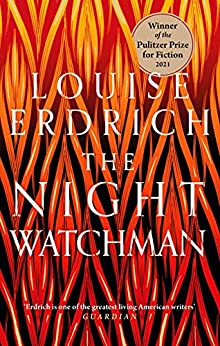
Louise Erdrich’s Pulitzer Prizewinning The night watchman is historical fiction about a community fighting back against a government set on “terminating them”. Erdrich, whom I have reviewed before, is an enrolled citizen of the Turtle Mountain Band of Chippewa Indians of North Dakota and it is the story of this community’s response to something called the House Concurrent Resolution 108 that she tells in The night watchman.

Passed by Congress on August 1, 1953, this Resolution would, says Erdrich in her Afterword, “sever legal, sacred, and immutable promises made in nation-to-nation treaties”. Or, as Wikipedia explains, it would “end reservations and tribal sovereignty” and “integrate Native Americans into mainstream American society”.

As it happens, Erdrich’s grandfather, Patrick Gourneau, was Chairman of the Turtle Mountain Band of Chippewa Advisory Committee at the time and recognised this resolution for what it was. He is the inspiration for Thomas Wazhushk, one of Erdrich’s two protagonists. Thomas is a man of two cultures:

Watching the night sky, he was Thomas who had learned about the stars in boarding school. He was also Wazhashk who had learned about the stars from his grandfather, the original Wazhashk. (p. 17)

Throughout the novel Thomas strategically draws on these two selves in order to perform his role, which is to keep the community safe (or, at least, safer, than they would be if the Government’s plans came to fruition).

This is both a sophisticated and a grounded novel. Grounded in the way Erdrich uses her storytelling ability to create a compelling narrative peopled by a large cast of wonderfully individuated characters. We are interested in them all, and this makes the novel a darned good read. Sophisticated in how Erdrich subtly layers her story to enrich its meaning. The overall structure comprises two parallel but related stories or journeys: Thomas’s fight for his community’s survival, and his niece Patrice’s journey to find both her missing sister and her own path in life. Erdrich’s writing is simple, plain, but also imbued with gorgeous lyricism, metaphor and symbolism. The novel is threaded, for example, with physical holes, wells, caves, ship holds, and falls, which never let us forget the precariousness of these people’s lives.

She also peppers the story with humour, which reminds us no matter how serious things are, people can still have a laugh. There are many laugh-out-loud moments, alongside a recognition of humour’s role in how we navigate the things we confront. In Minneapolis, Patrice finds herself in a strange and potentially dangerous situation, and has

the sort of feeling and thinking that could only be described in Chippewa, where the strangeness was also humorous and the danger surrounding this entire situation was of the sort that you might laugh at, even though you could also get hurt… (p. 131)

“Survival is a changing game” (Biboon)

Overlaying all this is Erdrich’s exploration of how language works, how it can be used to clarify or obfuscate, to inspire or deflate. Her writing embodies this knowledge. So, for example, Thomas receives the Resolution papers and reads them carefully. He sees

their unbelievable intent. Unbelievable because the unthinkable was couched in such innocuous dry language. Unbelievable because the intent was, finally, to unmake, to unrecognize. To erase as Indians … his people, all of us invisible and as if we never were here, from the beginning, here. (p. 79)

His people were being targeted, the papers said,

for emancipation. E-man-ci-pation. Eman-cipation. This word would not stop banging around in his head. Emancipated. But they were not enslaved. Freed from being Indians* was the idea. Emancipated from their land. Freed from the treaties that Thomas’s father and grandfather had signed and that were promised to last forever. (p. 80)

Later, the once dapper but now frequently drunk Eddy Mink cuts to the chase, stunning officialdom with his plain language statement:

The services that the government provides to Indians might be likened to rent. The rent for use of the entire country of the United States. (p. 200)

Meanwhile, as Thomas builds his case, Patrice, who works in the Turtle Mountain Jewel Bearing Plant where Thomas is the titular night watchman, sets off for Minneapolis to look for her sister. Vera had gone there with her new husband but had not been heard of since. What Patrice finds in the city, how people can be exploited, is shocking, and she returns home somewhat wiser but with more to learn about herself and the ways of humans.

Surrounding Thomas and Patrice is a large community of people – family, friends, neighbours, work colleagues, teachers, coaches, visiting missionaries, and even a ghost. The interactions between these people build up a picture of a community that functions despite external stresses and the usual internal disagreements. This makes engrossing reading because these characters are so real, including the two Mormon missionaries who not only add humour and pathos but also represent the naiveté of supporters of a faith – in the form of Utah Senator Arthur V. Watkins – that was driving the Resolution.

Similarly, our protagonists’ interactions with specific individuals make great reading while also advancing the narrative and the ideas. When Thomas is with his father Biboon and Patrice with her mother Zhaanat, we feel their spiritual connection with their culture, and their desire to learn from their elders. When Thomas is with the white teacher and boxing coach, Barnes, we see how little non-Indian society understands the existing situation and the implications of the Resolution. Thomas patiently – and generously – explains to the clueless Barnes why Indians are not, and can never be, “regular Americans”. And, why he, Barnes, cannot be an Indian! Just look at this writing:

“If I married an Indian woman,” said Barnes, “would that make me an Indian? Could I join the tribe?”
He was awed at the possible sacrifice he could be making.
Thomas looked at the big childish man with his vigorous corn-yellow cowlicks and watery blue eyes. Not for the first time, he felt sorry for a white fellow. There was something about some of them—their sudden thought that to become an Indian might help. Help with what? Thomas wanted to be generous. But also, he resisted the idea that his endless work, the warmth of his family, and this identity that got him followed in stores and ejected from restaurants and movies, this way he was, for good or bad, was just another thing for a white man to acquire.
“No,” he said gently, “you could not be an Indian. But we could like you anyway.”

In statements like “he was awed at the possible sacrifice he could be making”, Erdrich conveys more about cultural superiority than just this man’s thoughts.

When Patrice is with her girlfriends and workmates, Valentine and Doris, we see how her goals diverge from their more girlish ones, and when she is with Wood Mountain we see her inner conflict about her chosen direction. As a young person, her journey is more personal than Thomas’s but they coalesce when it comes to saving the community.

“Assimilation. Their ways become your ways.” (Roderick)

I loved spending time with these characters. In fact, so did most of my reading group, as this novel was our September read. We enjoyed her vividly drawn characters – and their perfect names, like Juggie Blue, Wood Mountain, Louis Pipestone, Millie Cloud, and Patrice not Pixie. We teased out the complexity of the storytelling, the way Erdrich seemed to effortlessly incorporate complex ideas into a compelling narrative. This starts right at the title, The nightwatchman, which is both literal, Thomas’ job, and metaphorical, in his role of keeping watch as the community’s Chairman. I was reminded a little of Melissa Lucashenko’s novels, in which tough stories are told with compassion and humour to paint a picture of real people confronting a world that’s against them.

Early in the novel, Thomas moves that the Committee call the Resolution the “Termination Bill [because] Those words like emancipation and freedom are smoke”. This bill heralded what is now called the Termination Era (1953-1968). As Erdrich explains in her Afterword, this is what happened to 113 tribal nations. Although some regained recognition, “31 are now landless” and “24 are considered extinct” (p. 447).

The night watchman is one of those books that hits the spot – the heart spot and the mind spot. Recommended.

* The novel is set in 1953, and Indian is the term most commonly used when the specific Chippewa is not.

Louise Erdrich
The night watchman
London: Corsair, 2020
453pp. (Kindle edition.)
ISBN: 9781472155337

Percival Everett, James (#BookReview)

Well, let’s see how I go with this post on Percival Everett’s Pulitzer Prize winning novel James. I read all but 30 pages of this novel before my reading group’s meeting on 27 May. I was not at the meeting as I was in Far North Queensland, but I wanted to send in some notes, which I did. The next day, our tour proper started and I did not read one page of any novel from then until the tour ended. So, it was some 15 days later before I was able to pick it up to finish it. I found it surprisingly easy to pick up and continue on but, whether it will be easy to remember all my thoughts to write about it, is another thing. However, I’ll give it a go.

I greatly enjoyed the read. The facts of slavery depicted here are not new, but Everett offers a clever, engaging and witty perspective through which to think about it, while also being serious and moving. In terms of form, it’s a genre-bender that combines historical and adventure fiction, but I would say these are overlaid with the road novel, a picaresque or journey narrative, those ones about freedom, escape and survival rather than adventure.

Now, I’m always nervous about reading books that rewrite or riff on other books, particularly if I’ve not read the book or not read it recently. I’m not even sure which is true for Huckleberry Finn, given I came across that book SO long ago. Did I read it all in my youth? I’m not sure I did, but I don’t think it mattered here, because the perspective is Jim’s, not Huck’s. More interesting to me is the fact that at times James reminded me of Toni Morrison’s Beloved, such as when James says “we are slaves. What really can be worse in this world” (pt 2, ch 1) and his comment on the death of an escaping slave, “she’s just now died again, but this time she died free” (pt 2 ch 6).

Before I say more, however, I should give a brief synopsis. It is set in 1861 around the Mississippi River. When the titular slave, James, hears he is about to be sold to a new owner some distance away and be separated from his wife and daughter, he goes into hiding to give himself time to work out what to do. At the same time, the young Huck Finn fakes his own death to escape his violent father, and finds himself in the same hiding place as James. They set off down the river on a raft, without a firm plan in mind. The journey changes as events confront them, and as they hear news of a war coming that might change things for slaves. Along the way they meet various people, ranging from the cruel and brutal through the kind and helpful to the downright brave. They face challenges, of course, and revelations are shared. The ending is satisfying without being simplistic.

“It always pays to give white folks what they want” (James)

All this makes for a good story, but what lifts it into something more is the character and first-person voice of James. Most of you will know by now that Everett portrays James as speaking in educated English amongst his own people but in “slave diction” to white people and strangers. On occasion, he slips up which can result in white people not understanding him (seriously!) or being confused, if not shocked, that a black man can not only speak educated English but can read and write. Given the role language plays as a signifier of class and culture, it’s an inspired trope that exemplifies the way slavery demeans, humiliates and brutalises human beings.

James – the book and the character – has much to say about human beings. There’s a wisdom here about human nature. Not all slaves, for example, see things the same way. Some are comfortable in their situation (or, at least, fear change), while some will betray others to ingratiate (or save) themselves. But others recognise that there is no life without freedom and will put themselves on the line to save another. We meet all of these in the novel. And, of course, we meet white people of various ilks too. Some of the most telling parts of the novel are James’ insights into the assumptions, values and attitudes of white people and into how slaves, and presumably coloured people still today, work around these. It would be funny if it weren’t so deadly serious:

“White folks expect us to sound a certain way and it can only help if we don’t disappoint them … The only ones who suffer when they are made to feel inferior is us. Perhaps I should say ‘when they don’t feel superior’ …” (pt 1 ch 2)

AND

It always made life easier when white folks could laugh at a poor slave now and again. (pt 1 ch 12)

Everett piles irony upon irony, daring us to go with him, such as when James is “hired” (or is he “bought”, he’s not quite sure) to perform with some black-and-white minstrels, and has to be “painted black in such a way as to appear like a white man trying to pass for black”:

Never had a situation felt so absurd, surreal and ridiculous. And I had spent my life as a slave. (pt 1 ch 30)

There are other “adventures” along the way of course – including one involving a religious revival meeting. James is not too fond of religion, differentiating him, perhaps, from many of his peers.

Is James typical of slaves of the time? I’m not sure he is, but I don’t think that’s the point. This is not a realist novel but a novel intending to convey the reality of slavery and what it did to people. James jolts us into seeing a slave’s story with different eyes. We are forced to see his humanity – and perhaps the joke is on “us” white people. Making him sound like “us” forces us to see him as “us”. We cannot pretend he is other or different. This is seriously, subversively witty, I think.

And this brings me to my concluding point which is that the novel interrogates the idea of what is a “good” white person. No matter how “good” or “decent” we are, we cannot escape the fact that we are white and privileged. No matter what we say or do, how empathetic we try to be, it doesn’t change the fundamental issue. James makes this point several times, such as “there were those slaves who claimed a distinction between good masters and cruel masters. Most of us considered such to be a distinction without difference” (pt 1 ch 15). I suppose this is “white guilt”, but I don’t really know how to resolve it. Talking about it feels like virtue signalling, but not talking about it feels like a denial of the truth. There were times when the book felt a little anachronistic, but that’s not a deal-breaker for me because historical fiction is, fundamentally, the past viewed through modern eyes. And how are we really to know how people felt back then?

I’d love to know what you think if you’ve read the novel (as for example Brona has!) 

Percival Everett
James
London: Mantle, 2024
303pp.
ISBN: 9781035031245

    Monday musings on Australian literature: Historical fiction by First Nations writers

    With this weekend in Australia being a long weekend for Australia Day (or, Invasion Day), I decided that the best thing I could do would be to write a post promoting historical fiction by First Nations Australian writers. While there are First Nations historians writing histories, I figure more people read historical fiction, given I’d like to encourage us all to broaden, fill out, revise our understanding of Australia’s history, then historical fiction seemed a good place to start.

    Of course, there’s the obvious proviso. Historical fiction is not history. However, I believe that good historical fiction does provide truths about the past that can inform our understanding of what happened. Historical fiction by First Nations writers ensures that this understanding extends beyond the point of view of the victors to that of those who were displaced and dispossessed. Historical fiction can also provide some facts, but we can’t assume what we read is factual. It is fiction after all. All the books I list here have some basis in fact, but how much, and what sort of fact varies. All, though, offer important truths.

    The books – which include some I’ve not read – are listed in rough chronological order by their time setting, and organised under some broad “eras”, because while some issues are overarching or ongoing, there are experiences and ideas particular to different eras. Stories that encompass multiple timeframes are listed under the earliest one. Where possible, and to the best of my ability, I have identified places using both their local and settler names.

    Early settlement

    The books set in this period explore what happened when white settlers first appeared on land belonging to First Nations peoples. These novels explore the clashes that occurred, the mistakes that were made, the possibilities for doing it differently or the moments where it might have gone differently, and the ultimate dispossession of the traditional owners.

    Jane Harrison, The visitors (2021): 1788; Warrane/Sydney Cove: reimagines the arrival of the First Fleet from the perspectives of elders from seven nations (Brona’s review).

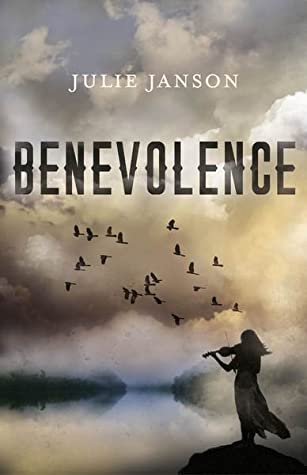
    Julie Janson, Benevolence: 1816-1842, Dharug Nation/Western Sydney: based on the author’s ancestor, tells the story of Muraging who, when around 12 years old, is handed over by her father to the Parramatta Native Institution, in the hope that she will help their people by learning British language and ways (my review).

    Anita Heiss, Dirrayawadha (Rise up): around 1824, Wiradyuri Country/Bathurst: inspired by the 1824 Bathurst War, fought between the Wiradyuri people and the British, tells the story of the Wiradjuri resistance leader Windradyne, through the eyes of his fictional sister Miinaa (my CWF 2024 post).

    Kim Scott, That deadman dance (2011): 1826-1844, Noongar Country/Southwest WA: a first contact story set in Western Australia in which the generosity of the local people, and their willingness to engage, is ultimately met by rapaciousness and violence (my review).

    Julie Janson, Compassion (2024): 1836 on, Dharug Nation/Western Sydney: sequel to Benevolence, and based on the life of another Janson ancestor, Muraging’s outlaw daughter, a horse thief and resistance fighter who took on colonial authorities (including in the courts). 

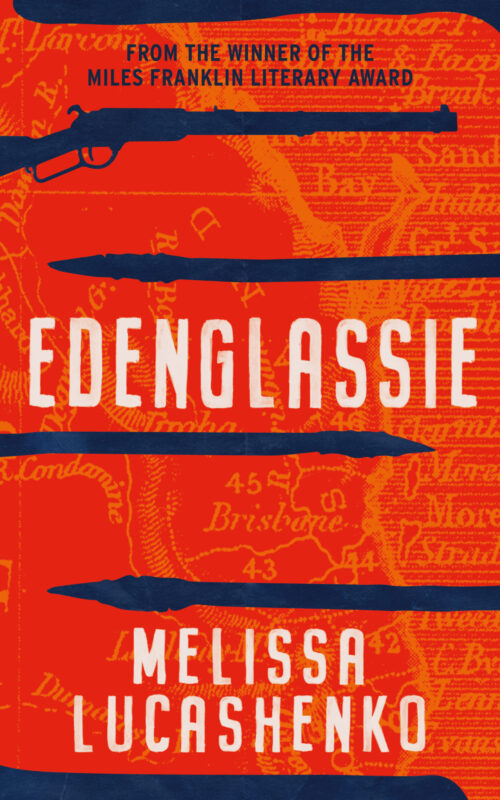
    Melissa Lucashenko, Edenglassie (2023): 1850s and 2020s, Magandjin/Brisbane: a “what if” story in which armed resistance to the dispossession, massacres and other brutalities from the colonisers is told alongside attempts from both sides to work together (my review).

    Mid to late 19th century

    By this period, the settlers had established themselves throughout Australia, with First Nations people surviving as best they could – often in the employ of the settlers and living, of course, under British law. Their lives, health and culture were severely affected by dislocation, and they lived at the mercy of the settlers. Many were separated from their Country, with culture, including language, was being lost.

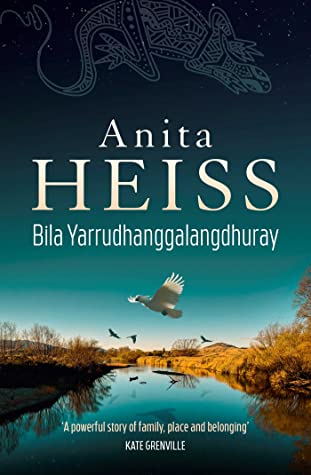
    Anita Heiss, Bila Yarrudhanggalangdhuray (River of dreams) (2021): 1852 on, Wiradjuri Country/Gundagai and Wagga Wagga: inspired by the story of the four First Nations men who, using bark canoes, saved 40-70 people during Gundagai’s 1852 flood; tells the fictionalised story of the daughter of one those men, her ending up working for one of the landowning families, and being forced to leave her country (my review).

    Ali Cobby Eckermann, Ruby Moonlight (2012): 1880s, mid-north South Australia: verse novel about a teenage girl, Ruby Moonlight, whose family is massacred by white settlers, and who meets the lonely “colourless man”, Miner Jack (my review).

    Leah Purcell, The drover’s wife (2017): 1890s, Ngarigo and Walgalu Country/Snowy Mountains: re-visioning of Henry Lawson’s classic short story, turning the drover’s wife into a First Nations woman left to fend for herself in a hostile world (my review of the film version).

    Federation to 1930s

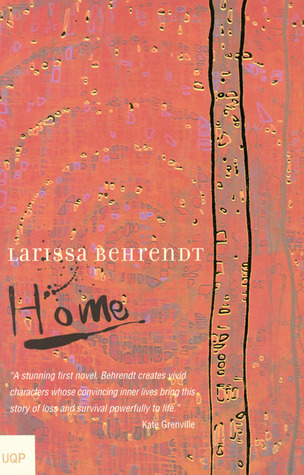
    Larissa Behrendt, Home

    While the facts of First Nations lives at this time are largely a continuation of the previous era, fiction set in this period starts to address more specifically the impact of the missions, and of government policies, on First Nations’ lives.

    Larissa Behrendt, Home (2004): 1918 through to 1980s, Eualeyai Country/North-western New South Wales: based on the story of the author’s grandmother, who was abducted from her camp in 1918, and following her seven children. (Lisa’s review)

    Post World War 2

    As we move closer to contemporary times, the fiction addresses more contemporary issues, particularly regarding government polity, while still retrieving stories from the past that are little known.

    Anita Heiss, Barbed wire and cherry blossoms (2017): 1944, Wiradyuri Country/Cowra: inspired by the 1844 breakout from the Cowra POW Camp, imagines a relationship between escaped Japanese POW Hiroshi and the daughter of a First Nations couple who offer him refuge at Erambie Mission. But, mission rules, and government protection and assimilation policies limit their choices. (Lisa’s review)

    Marie Munkara, A most peculiar act (2020): 1940s, Larrakia Nation/Darwin: follows the trials and tribulations of a 16 year-old Aboriginal fringe-camp dweller, in Darwin during the Japanese bombing raids, and her resistance to protectionist policies like the Aboriginal Ordinances Act and the “White Australia” policy (Lisa’s review).

    Dylan Coleman, Mazin Grace (2012): 1940s and 50s, Kokatha Mula Country/western South Australia: fictionalised version of the author’s mother’s childhood at the Koonibba Lutheran Mission (Lisa’s review).

    Alexis Wright, The plains of promise (1997): 1950s Gulf Country of Queensland: starts at St Dominic’s Mission in the Gulf Country of Far North Queensland, where a young Aboriginal woman is taken away from her mother, and explores the brutality of colonisation at the mission and beyond (Tony’s review).

    Book cover

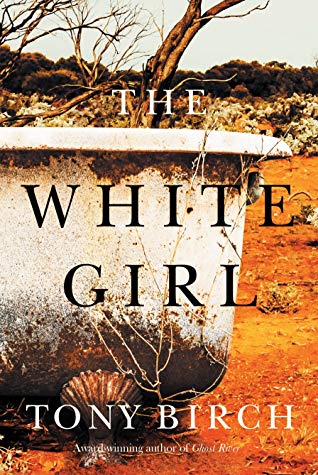
    Tony Birch, The white girl (2019): 1960s, fictional rural town: tells the story of Odette who is determined to save her granddaughter from being removed, against the backdrop of the egregious restrictions of the Aboriginal Protection Act are in force (my review).

    Karen Wyld, Where the fruit falls (2020): 1960s-70s, multiple locations: spans four generations of women, over several decades, with a focus on the 1960s and 70s, a time of rapid social change and burgeoning Aboriginal rights (Lisa’s review)

    There should be something here for everyone!

    Any thoughts? Or, do you have any historical fiction titles to add?

    Melissa Lucashenko, Edenglassie (#BookReview)

    Broadly speaking, Melissa Lucashenko’s latest novel, Edenglassie, does for southeast Queensland what Kim Scott’s That deadman dance does for Noongar country in southwest Western Australia. Both tell of the early days of their respective colonies from a First Nations perspective; both are written in a generous spirit but with absolute clarity about the dispossession that took place; and both suggest things could have been different.

    Unlike That deadman dance, however, Edenglassie, is a dual narrative story. The main storyline, featuring two young people, Mulanyin and Nita, is set around the Magandjin or Meanjin (Brisbane) region during the mid-1850s, making it just a little later than Scott’s first contact narrative. Dispossession, massacres and other brutalities from the colonisers were met with armed resistance, but there were also attempts to work together. Paralleling this historical story is a modern one, featuring Granny Eddie, Winona, and Dr Johnny, set in the same area at the time of its 2024 bicentenary. These stories, one using historical realism and the other modern humour, riff off each other to provide a complex picture of the colonial project – then and now.

    Melissa Lucashenko said much that interested me in the conversation I attended for this book, but here I’ll focus on two points she made. One is that the book’s central question is “what was going through these people’s [the colonisers’] minds?” Things could have been different then, she said, and could still be now. The other point is that she wanted to counteract the trope of the dying race. This idea has been slowly changing since Mabo, she said, but is still evident. The modern storyline, with its confident and politically involved Goorie characters, ensures that we see a vibrant, living culture in action.

    Realising these two ideas is a big ask, and in my reading group there were some equivocations, but I think Lucashenko pulls it off, through creating engaging characters who come alive on the page and narratives that ring true to their times. Mulanyin, the kippa (young initiated man) from the historical period, and Winona, the fiery young woman in modern times, represent the passion of youth. They are impatient and want things to happen – or change – now. Both, however, also have elders guiding them – in the Goorie way, which is to encourage people to work it out for themselves and to remedy their mistakes.

    “needing to endure the unendurable” (Mulanyin)

    So, what is it that these young characters must contend with? The novel starts with two pointed events. In the modern storyline, Granny Eddie trips over a jutting tree root and is ignored by passersby until two young brown faces – Malaysian students as it turns out – help her up and get her to hospital. The modern scene is set, and all is not well.

    We then flash back to 1840 where members of the Goorie Federation are looking forward to the imminent departure of the dagai, only to be told that this is now unlikely. A Goorie mother wonders what

    If life never returned to normal. If the rule of law was never restored. What would her son see as a man? … Would her daughters be subject to the terrors the dagai brought?

    What indeed?

    Having asked the question, Lucashenko then moves her historical story to 1854-1855. Mulanyin is living with his law-brother Murree north of his own saltwater Nerang/Yugambeh home. Here, he is in close contact with the colonisers, and particularly with the Petries. At this time, the Petries, particularly the young Tom Petrie, were sympathetic to, and tried in their own way to work with, the Goories on whose land they resided. Lucashenko seems to be saying that, given colonisation was happening and wasn’t going to be undone, there were ways in which it might have been made to work (or, at least, work better). Conversations between Tom, Mulanyin, and other characters, explore their differences, particularly regarding attitudes to country. Mulanyin wants to know

    what goes on in the brain of an Englishman? When he arrives in another man’s country to steal his land, and water, and game, and then with a straight face, calls those he steals from thieves? Is this how it is in Scotland? Is this why your people have fled that terrible place?’

    The ensuing discussion has Tom struggling to explain the English, but admitting that “in their ignorance, they don’t understand that the land here has its own Law. They think that only their British law exists”. However, he says, they “respect some boundaries still … Those that are well defended”.

    What did ‘well defended’ look like, Mulanyin wondered, if not like a thousand Goories assembled at the Woolloongabba pullen pullen? If not like Dundalli, leading the warriors who had willingly assembled under him, from Dugulumba to K’gari?

    Fair point, Mulanyin.

    Meanwhile, the modern-day characters are living with the fall-out from the failure of the colonisers to make it work and of the colonised to succeed in their resistance. Goories are still here, yes, but life is a struggle, and Winona wants to fight back, wants “to bite em hard onetime, while we got the chance”. She can’t understand why Granny Eddie, who grew up “with a dirt floor and empty belly” doesn’t think she deserves more. Granny, though, is two things. A pragmatist who sees that “Dagai not going away! We gotta get on with them”. And she’s an elder well-versed in her culture, so when Winona takes a hardline with Dr Johnny, who claims Aboriginal heritage, Granny says

    “You’re thinking like a whitefella when ya close him out. That’s not our way. We bring people in, we bring our Mob home, and we care about them. We teach them how to behave proper way…”

    Further, she argues,

    “We can’t be sunk in bitterness … Or stuck in the past. We need to focus on the good dagais, like Cathy and Zainab, and them Petries, and –.”

    Winona, Granny Eddie and Mulanyin all make sense, but they speak from different angles. What makes Edenglassie so interesting is the way Lucashenko gives space and respect to these angles. She certainly shows what was lost – and the utter unfairness of it. But, with the generosity of spirit we keep seeing, she also shares through her characters what living with deep connection to country means. And, she encourages everyone to think about alternative ways we can do this.

    Towards the end of the novel, Gaja (Aunty) Iris shares an important story with our modern protagonists, introducing it with

    we all know how important our stories are … People all over the world keep their stories close. Middle Eastern people believe … that by telling a story you can change the world, and nothing is as powerful as the right story at the right time.

    With ideas about truth-telling and decolonisation becoming part of modern Australian culture, now feels like the right time for stories like Edenglassie. It might be an uncomfortable time to be a settler Australian, but that’s nothing compared with what First Nations people have endured and continue to endure. The least we can do is try to understand. Books like Lucashenko’s not only help us along this path but give us a lively read at the same time.

    Melissa Lucashenko
    Edenglassie
    St Lucia: UQP, 2023
    306pp.
    ISBN: 9780702266126

    Gail Jones, Salonika burning (#BookReview)

    Australian author Gail Jones’ ninth novel, Salonika burning, is a curious but beautiful novel, curious because she fictionalises four real people for whom she has no evidence that they met or knew each other, and beautiful because of her writing and the themes she explores. The novel is set during World War 1, but its focus is firmly on the interior rather than the grand stage of battle.

    It opens dramatically with the burning of the city of Salonika (Thessaloniki). This is another curious thing, because this destructive event was caused not by an act of war but an accidental kitchen fire. Also, the novel is not set in Salonika but some 90 miles off, in and around “the field of tents that comprised the Scottish Women’s Hospital”, on the shores of Lake Ostrovo in Macedonia. It is 1917, and the novel’s narrative centre is this hospital and those working in and around it. Here, not Salonika, is where our four main characters are based — Stella, an assistant cook/hospital orderly; Olive, an ambulance driver; surgeon Grace; and Stanley, an orderly with the Royal Army Medical Corps. They are based on the Australians, writer Miles Franklin and adventurer Olive King, and the British painters, Grace Pailthorpe and Stanley Spencer. In her Author’s Note, Jones makes clear that she has fictionalised these characters, and that while all are known to have worked in the vicinity, there is no evidence that they met or even knew each other. It is “a novel which takes many liberties and is not intended to be read as a history”. This is fine with me. After all, a novel, by definition, is not history. The novel follows these characters over a few months after the burning of Salonika.

    “everything was coming apart”

    So, why Salonika? I see a few reasons. For a start, its burning sets the novel’s tone. On the first page we are presented with opposing ideas. The sight of the burning city is described as “strangely beautiful” but, on the other hand, “alarm, instant fear, the sufferings of others … were no match for excitement at a safe distance”. As the fire died, “excitement left and in its place was a murky lugging of spirit”. Throughout the novel, Salonika represents these contradictions, this tension between what is ugly, what is beautiful; between what is random, what is not; and in how to respond to, or feel about, what is being experienced.

    The Salonika fire also encompasses the idea of witness and representation. In the opening scene, Jones describes a painting made of the fire by William T. Wood. It is a “morning-after scene, brightly calm, with a floaty view from the heavens” done in his “signature pastels, remote as a child’s dream and thinly decorative”. Those who saw this painting later, she writes, “saw the pretty lies of art”, whereas “former residents and soldiers said, No, it wasn’t like that”. This tension too is played out in the characters as they think about how they might represent their experience.

    The burning of Salonika, then, embodies several ideas that are followed through in the novel. But, Salonika is also relevant to the plot. The novel’s narrative arc lies mainly in the characters and their emotional reactions to what is happening as the months wear on. Not only is there the war with its injured and dying soldiers, but malaria is rife, and the privations they experience, professionally and personally, are exacerbated by the burning of Salonika and the attendant shortage of essential provisions – food, petrol, medical supplies. However, a plot also unfolds, and it is something that happens on the way to Salonika, well into the story, which sets the novel’s final drama in motion.

    Salonika burning traverses themes that are the stuff of the best war literature – themes that expose the “idiocy of this war, of all wars” and its impact on those caught up in it – but it offers its own take. The telling feels disjointed, particularly at the start, with its constant switching between the perspectives of the four characters who interact very little with each other until well into the novel – and even then it’s often uneasy, as befits their temperaments. And yet, the novel is compelling to read, primarily because of these characters. They are beautifully individuated, so flawed, so human, so real.

    Olive, who is the first character we meet, and the one who closes the novel, is confident, tough and practical. Grace, too, is tough, doing her “duty” with a “dull vacancy”. Stella, at 38, the oldest of the four, is “cranky and wanting more”, more excitement to write about, but she believes in “chin-up and perseverance”, while the youngest, 26-year-old Stanley, is “ill-fitted … to this life of rough cynical men”.

    These are “intolerable” times, and we are privy to their struggle to maintain their sanity. Olive resorts to her German grammar to escape the emotional load, while Stanley has his mules and favourite painters, his “Holy Rhymers”. Stella, “writing jolly accounts in her diary”, thinks about what stories she will tell, while Grace has her favourite brother to think about and write to. The disjointed structure mirrors, I think, their sense of isolation. Contact and the potential for friendship is there, but Matron discourages emotional engagement. There’s “no room for emotion”, she says, just “duty”. Olive, who seems to represent the novel’s moral centre, thinks otherwise:

    It seemed another kind of duty, not to forget. Olive wanted to speak of what she had seen and known, though she suffered too much remembrance.

    This could neatly segue to that issue of representation, and the post-war work done by Stella, Grace and Stanley, but instead, I want to conclude with another idea. On a supply trip to Salonika, Olive, “driving in her safe foreign aura”, had been indulging in a dose of self-pity, but is suddenly confronted by the loss Salonika’s burning represented for its residents, “and only now understood that it was the woe of others that claimed importance”. Likewise, Stanley, Grace and Stella are confronted with the woes of others through the novel’s closing drama, and must decide where their humanity lies.

    I started this post noting some curious things about Jones’ approach to her story, but these didn’t spoil the read. Rather, they added to my interest as I read it. Ultimately, Salonika burning is a true and tenderly written novel that captures the essence of war’s inhumanity, and then goes about extracting the humanity out of it. A worthy winner of the 2023 ARA Historical Novel Prize.

    Lisa and Brona also read and enjoyed this book.

    Further reading

    Gail Jones
    Salonika Burning
    Melbourne: Text Publishing, 2022
    249pp.
    ISBN: 9781922458834

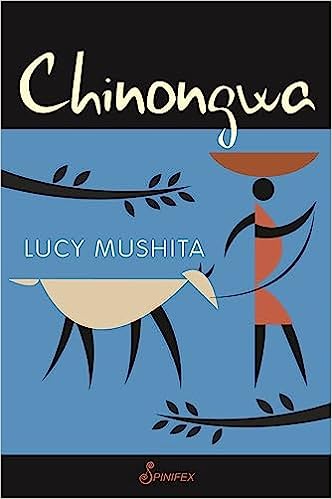
    Lucy Mushita, Chinongwa (#BookReview)

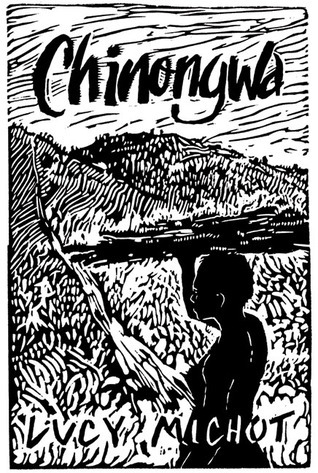
    Where to start with this complex, unusual and gorgeously written novel that manages to convey the horrors of child marriage, of colonialism, and of patriarchal cultures, without eulogising or demonising the characters involved? It’s quite a feat, and it made this book a deeply involving read.

    The place to start, I suppose, is the beginning, which is that Chinongwa is the debut novel of Zimbabwean author Lucy Mushita. Published most recently by Australia’s Spinifex Press in 2023, it was originally published in 2008 in South Africa, under the author name of Lucy Michot (which I discovered when searching for the book cover in GoodReads.) Its eponymous protagonist, Chinongwa, is 9 years old when the novel opens:

    Chinongwa Murehwa was nine, but her age was not vital. Just her virginity. Though she was not yet washing, her fruits were already protruding. That was a relief for her family. Anyway, she was the only one they could use.

    And there you have it. For a reason that soon becomes obvious, Chinongwa is to be “used”, that is, married off to save the rest of her family from starvation. The root cause of this starvation is colonialism – the arrival of the “kneeless” or vasinamabvi and the fact that Chinongwa’s family ended up with the poorest quality land in the village because her paternal grandfather had stood up to the vasinamabvi and arrived late at the place their community settled.

    So, in Book 1 of the novel, 9-year-old Chinongwa is “hawked” around neighbouring villages by her father and aunt, with little success. Can you imagine it? She is starved and thin, not one of those “juicy” nubile young women men desire and are happy to pay for with cows and grain. At last, however, a childless woman, Amai Chitsva, for reasons of her own, offers to take Chinongwa as a second wife to her own husband. Not only is this husband, Baba Chitsva, thirty nine years her elder, but he does not want a second wife. Regardless, Book 1 ends with Chinongwa about to start her new life with her new family.

    Now, before I get to Book 2, I should explain that this book is a novel, but one based on the life of a real person. I say this because a Chronology is provided at the beginning of the book. It tells us that Baba Chitsva was born in 1871, and Chinongwa in 1910, that Baba Chitsva died in 1935, and, finally, that “Chinongwa is telling all” in 1940. There are other dates, but these are the most relevant in terms of grounding the book.

    So, Book 2. Unlike Book 1, which is told from the third person voice (albeit mostly through Chinongwa’s eyes), Book 2 is told in the first person voices of Amaiguru (Amai Chitsva) and Chinongwa, with one chapter in Baba Chitsva’s voice. This shift works because in Book 1 Chinongwa is a child, so not fully aware of the ways of the adult world, whereas in Book 2 she grows up – very rapidly. It’s a heart-breaking story of a young woman who is essentially groomed to seduce a man who doesn’t want her, a young woman who subsequently has her first baby at the age of 11.

    For the first few years she and Amaiguru make it work well enough, as we hear through their individual voices. Chinongwa has no other real option, while Amaiguru tries to make work what she had started. But things turn sour when, upon her mother’s death, Chinongwa finally realises she is on her own, and that it’s time to be more independent:

    I now had to take my destiny into my own hands: I would have to return to my jail and fight for my freedom from within.

    And so she does with disastrous results.

    What makes the novel such good reading is that Mushita is able to convey the culture, how and why it tolerates the practice of child marriage and polygamy, including the economics of it all – how cows are passed back and forth between families, for example – while simultaneously recognising the humanity of those involved. These men and women – the mothers and fathers, the child-brides, the first wives and second wives, the husbands, the aunts, the villagers – are human beings with the full range of social and emotional behaviours. Some are kind and some cruel, some are envious, some are sensible, some are weak, some are manipulative, some are scared, some are wise, and so on. Chinongwa eventually recognises this truth:

    At first I refused to accept what life had dealt me. I said that my load was too heavy. But, with time, and as I look around me, I decided that one will never know the weight of one’s neighbour’s load. Maybe if I were to carry it, I might ask for mine back. Only that one who carries it knows its weight.

    In other words, people will be people. They are rarely to blame for the system in which they find themselves. Some will survive and some won’t, but that’s not the point. The point is the system, and its complex historical and cultural interconnections. The point, too, is that child marriage still happens, and that patriarchies still govern much of women’s lives. In Chinongwa, Mushita conveys the economic, social and cultural imperatives that underpin these practices while also showing the personal costs. It makes compelling reading.

    A little contribution to Bill’s Africa Project. Lisa also enjoyed this novel.

    Lucy Mushita
    Chinongwa
    Little River, Vic/Mission Beach, Qld: Spinifex Press, 2023 (orig. pub. 2008)
    235pp.
    ISBN: 9781925950816

    (Review copy courtesy Spinifex Press)

    Kim Kelly, Ladies’ Rest and Writing Room (#BookReview)

    Early in the month I reviewed the first of the two winners of Finlay Lloyd’s inaugural 20/40 Publishing Prize, Rebecca Burton’s Ravenous girls (my review). It was set in Sydney in the 1980s. Now, as promised, I bring you the other winner, Kim Kelly’s Ladies’ Rest and Writing Room. It is also set in Sydney, but in the early 1920s. Some of you will know Kim Kelly, as she has published around 12 novels, mostly historical fiction. Not only that but she was longlisted for the ARA Historical Novel Prize 2022 and shortlisted for the Viva La Novella 2021 prize with her novella, The rat catcher: A love story.

    So, she has written novellas, before. A check on her GoodReads page revealed others, including what I think is her best known book, Wild chicory. So, she, like Rebecca Burton, is comfortable with the novella form (or length).

    Finlay Lloyd describes the book on their website like this:

    Two young women, brought up to expect conventional lives, are thrown together in unexpected circumstances. Each has suffered a devastating loss that challenges their belief in life and themselves. It’s rare to come across a work of deep psychological insight conveyed with such verve and lightness of touch.

    As I said in my opening paragraph, Ladies’ Rest and Writing Room is set in 1920s Sydney. The title is explained in the first of two epigraphs. It comes from an advertisement in the Sydney Morning Herald, in 1922, for the Ladies’ Rest and Writing Room in Farmer’s department store. This “artistic room” was intended as a place of respite for busy shopping ladies. It was also where they could also write any “urgent notes” for “the very next mail”. Writing facilities were provided for the purpose. The room was, of course, intended for the well-heeled, as you paid a “nominal charge of 8d.” to avail yourself of its charming “rose shades”. The second epigraph comes from Sappho, which might or might not tell you something!

    The story is told in from alternating third person perspectives of two young women. One is the apparently entitled Dotty, who comes from a wealthy business family and who uses the Room in the opening chapter. She is introduced, however, on the street outside where she plays chicken with a tram every Tuesday on her way to Farmer’s and its titular room. Why does she do this? We soon come to understand the pain this young woman, who seems on the outside to have it all, is dealing with. And it’s to do with World War 1, if you haven’t already guessed from the time setting.

    The other young woman is down-on-her-luck Clarinda, who has just started work as the Room’s attendant. She went to school with Dotty, but Dotty, in her grief, doesn’t notice her, which doesn’t surprise Clarinda after her shooldays’ experiences with Dotty. Clarinda has her own sadness, partly stemming from losses in the War, but also from the fact that due to her father’s tragic death she and her mother are now on the proverbial hard times.

    The narrative takes place over a few weeks encompassing Christmas, and comes to a head when Dotty’s pain becomes too much for her, resulting in a crisis in the Corset Salon (next door to the Ladies Rest and Writing Room). Clarinda steps in to protect Dotty, and, through what ensues, both young women grow. Clarinda treats Dotty with compassion and forgiveness, while Dotty wakes up to sadnesses in others.

    What I most enjoyed about the book is its evocation of post WW1 1920s Sydney. Kim Kelly knows the place and the time well, and, despite the shortness of the novella form, she vividly captures a city and people in flux – the grief of wartime loss, the changing workforce as men return home after the war, the increasing migration, the excitement of change in the air, but with old social values and class structures still in place.

    Clarinda, for example, was grateful for having finally landed a decently paid job:

    It certainly beat unreliable casual waitressing at three shillings a luncheon, or three and six per dinner service, or sixty hours per week as a shop assistant at considerably less than two pounds, both of which she’d done, piecing together a living. All the better paying more respectable clerical positions for which she was qualified, were being given to returned soldiers, and that was fair enough, except that nothing fair had happened for Clarinda since her brothers were ripped from this life and …

    So much is told in these words.

    Kelly is also adept at characterisation, creating two well-differentiated characters in Dotty and Clarinda. They immediately come to life on the page, which is particularly important in a novella where there’s no time to waste. We care about them both, because we are privy to what’s going on for them, and thus to their isolation, even if those around them aren’t.

    The writing and plotting are assured. Kelly is clearly experienced in writing historical fiction where description and rhetorical language are used to create the sort of atmosphere and tone needed to drive a plot forward. Kelly does this very well, and I quickly became engrossed in these two girls’ lives. It’s a novella that wears its heart on its sleeves, and I wondered at times whether some pulling back might have challenged us readers to delve into more of the complexities, and maybe leave us with more questions than answers. But, that would have been a different book. As it is, Ladies’ Rest and Writing Room is beautifully accessible and will hopefully attract more people to the novella form. It and Ravenous Girls would make excellent stocking stuffers for busy readers in your lives. And I don’t mean this condescendingly! I am referring to their perfect stocking-stuffer size!

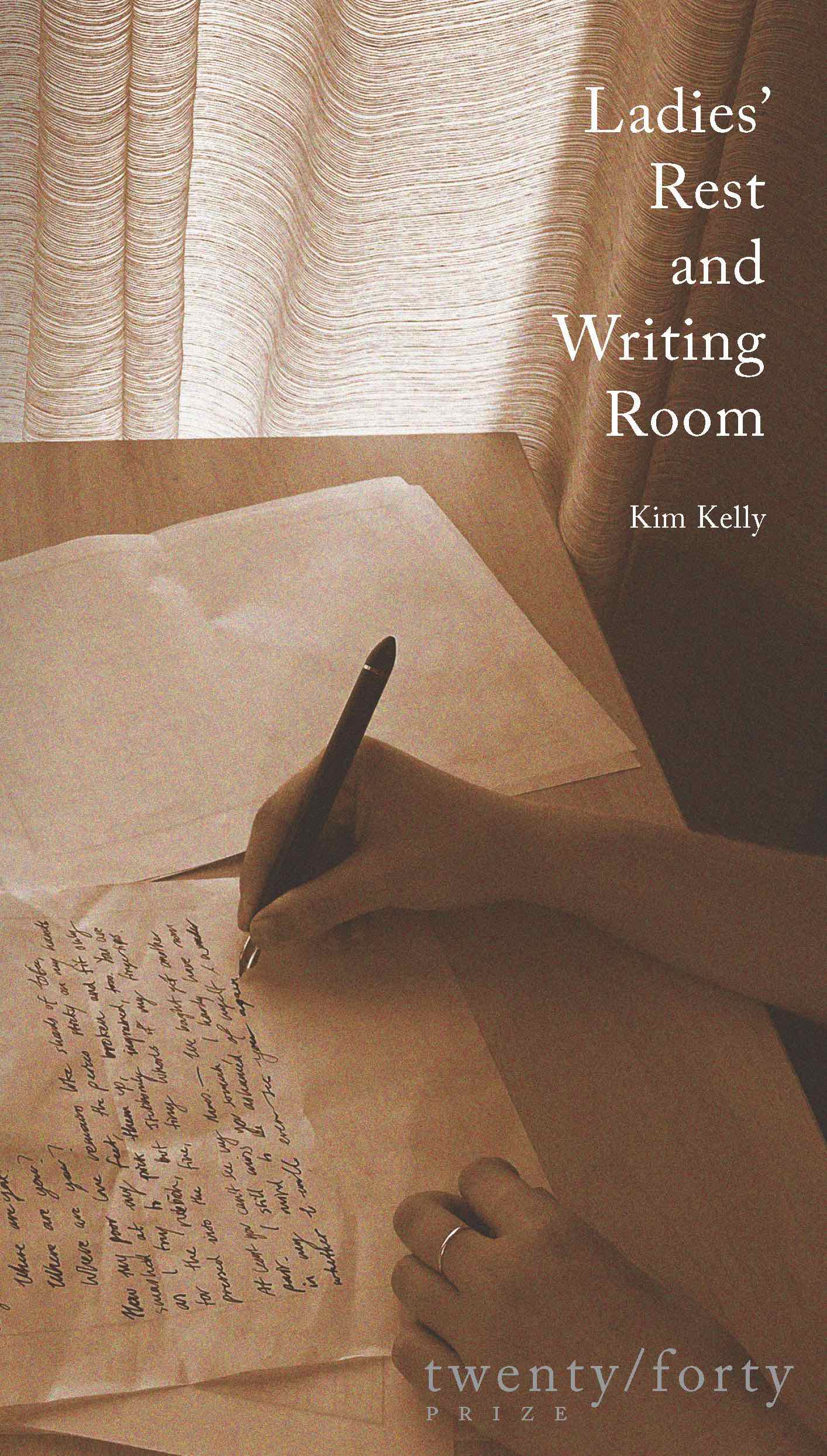
    As with all Finlay Lloyd books, the design is gorgeous, with an appealing monochromatic cover featuring a woman’s hands writing a letter. Very different to your usual historical fiction cover.

    Ladies Rest and Writing Room is a good read about a significant and complicated time in our history. Like Ravenous girls, it is a compassionate book, this one about navigating deep loss and the grief that attends it, and, even more, about the importance of generosity in dealing with others. I wish these two books well and thank Finlay Lloyd for sponsoring such an appealing, targeted prize.

    Read for Novellas in November. Lisa (ANZ Litlovers) and Theresa (Theresa Smith Writes) have reviewed both winners in one post, but I have done them separately.

    Kim Kelly
    Ladies’ Rest and Writing Room
    Braidwood: Finlay Lloyd, 2023
    122pp.
    ISBN: 9780994516596

    Pat Barker, The women of Troy (#BookReview)

    I shocked my reading group last week when I announced during our discussion of Pat Barker’s novel, The women of Troy, that I was tiring of feminist re-imaginings of historical women. This is not to say that I didn’t enjoy the novel, and it is definitely not to say that I am not interested in novels addressing feminist issues and concerns. It is simply to say that mining the past for the wrongs of the past, while perfectly valid, is starting to feel a bit repetitive, and consequently, also perhaps a bit reductive.

    In the last couple of decades, the Classics seem to have been particularly popular for authors to revisit. I can point, in my own reading, to Margaret Atwood’s The Penelopiad (my review), and more recently to authors I haven’t read like Madeline Miller and Natalie Haynes. These authors have all re-imagined women’s roles from the Greek classics. A somewhat different, because non-feminist, re-imagining is one that relates closely to Barker’s novel, David Malouf’s Ransom (my review). In it, Malouf explores the visit Priam makes to Achilles to beg for the body of his son Hector. This event occurs before Barker’s novel starts, but it – particularly how the characters interpret it – underpins Barker’s plot.

    So, let’s get to Barker’s novel. It starts with the fall of Troy but it mostly occupies the time during which the victorious Greeks, eager to return home with their spoils of war, which include the titular women of Troy, are unable to leave because they need the right weather to sail. However, it’s not coming because the gods are offended. The Trojan King Priam’s body has been brutalised and left unburied – by the now-dead-Achilles’ son Pyrrhus, who is emulating his father’s treatment of Priam’s son Hector.

    Barker evokes the scene well, detailing life at the encampment along the bay, which includes the households of Greek heroes and kings – like Agamemnon and Odysseus – and the women’s quarters where the captive Trojan women are being kept. The warriors, who are fine when they are fighting, are restive, while the women are trying to survive this nightmare. Three voices carry the story, the main one being the first-person voice of Briseis, who had been Achilles’ “prize of honour” but is now married to his trusted companion Alcimus. She tells her story from 50 years hence. Her voice is occasionally interrupted by one of two third-person male voices who speak from their present, the aforementioned Pyrrhus, and the out-of-favour seer, Calchas. In fact, it is Pyrrhus who opens the novel.

    “nobody would believe a girl capable of doing it” (Briseis)

    Barker knows how to tell a compelling tale. She unfolds the plot at a steady pace, building up the tension in the encampment through strong imagery and tight description. I particularly loved her use of birds to both convey tone and further the themes. Chief among these were the ever-present crows who, Briseis tells us partway through the story,

    were everywhere now, and they seemed so arrogant, so prosperous … Almost as if they were taking over.

    Above all, though, it’s Barker’s characterisation that engaged me, her ability to invest her characters with humanity – including the brutal Pyrrhus who at 16 years old is young, unconfident and struggling to live up to the reputation of his father Achilles. Briseis, the spoil of a previous war and now carrying Achilles’ child, is more privileged than the newly captured Trojan women, but she needs all her wits if she is to keep them as safe as she’d like, particularly the independent Amina who is determined to defy Pyrrhus and give Priam the burial he deserves.

    One of the ways Barker creates these relatable characters is to use contemporary and often highly colloquial language, which I admit I initially found off-putting. I don’t usually bother much about anachronism in historical fiction, so it tickled me that our reading group member who tends to be the most critical of anachronism was the main defender on this occasion. She argued that the language of The Iliad, for example, is poetic, rather than realistic, and that, given we don’t know the language of the time, Barker’s earthy approach – with its expressions like “poor cow”, “as you would”, and “fat lot of good” – is valid. Fair enough – and, in fact, I did find myself able to go with the flow, once I’d attuned myself.

    There were other moments, too, though, where the language felt a bit clunky, but they were not enough to spoil what was a page-turning read about the politics of war, of enslavement and of genocide, a story in which the victors take the women for their own and aim to kill all surviving Trojan males:

    They weren’t just intent on killing individual men; they meant to erase an entire people.

    It’s a grim and brutal world. As Briseis tells us near the beginning, “the only thing, the only thing, that mattered in this camp was power – and that meant, ultimately, the power to kill”. 

    But, there are some things that the victors, for all their swaggering physical power, overlook or can’t control. One is the greater power of the gods, and the other is the women. Barker shows how women, in being so ignored, so underestimated, so under the radar, can in fact exert some agency exactly because of this. It’s not an ideal way to be, but when needs must you do what you have in your arsenal.

    You don’t need to have read the first book in the trilogy to appreciate this novel. I hadn’t. And, while the kernel of a sequel can be seen in its ending, The women of Troy has enough closure to make it work as a stand-alone novel. I wouldn’t call it a must read, but for those interested in looking at Greek myths from a different angle, there is much to “enjoy” here.

    Pat Barker
    The women of Troy (Troy trilogy #2)
    Penguin Books, 2021 (Kindle ed.)
    309pp.
    ISBN: 9780241988343

    Edwina Preston, Bad art mother (#BookReview)

    Edwina Preston’s Bad art mother was my reading group’s June book, replacing our previously scheduled book because we’d heard Bad art mother was to be the featured book in the Canberra Writers Festival session, Canberra’s Biggest Book Club. This suited me, as, coincidentally, I’d just started reading it!

    Bad art mother has been shortlisted for two awards this year (so far), the Stella Prize, and the Christina Stead Award for Fiction (in the NSW Premier’s Literary Awards). Not a bad achievement for a book that was rejected by publishers over 20 times before being picked up by Wakefield Press.

    The novel is mostly set in 1960s Melbourne, which was a time of social change. While feminism was around the corner but not there yet, the city’s life was being influenced by the postwar influx of European migrants. Preston captures this well, said our Melbourne-born members. The story draws its inspiration from various Australian arts practitioners who were active in the mid-twentieth century – the Heide Circle and the artist Mirka Mora and her husband Georges, in Melbourne, and the Tasmanian poet Gwen Harwood. Bad art mother is the third book I’ve read in recent years inspired in some way by the Heide story, the others being Emily Bitto’s novel The strays (my review) and Jane Sinclair’s memoir, Shy love smiles and acid drops (my review). Interestingly, all of them focus to some degree on the damage done to children.

    I enjoyed the experience of reading Bad art mother, not only for its expressive language, but also for its intriguing, complex structure. It is told primarily from the point of view of a young boy, Owen, whose mother, Veda Grey, is struggling to make her name as a poet. However, we also get Veda’s point-of-view through letters she writes to her sister. After opening with Veda’s book launch in 1970, the novel is told in six parts, which to-and-fro in time, but it has an overall chronological trajectory, with part one telling of his parents’ meeting and his birth, and the final part being set around 2016 when Veda’s book is about to be republished in an anniversary edition. The central four parts commence with Owen as an adult in the 1980s, before returning to his childhood in the 1960s. It sounds complicated but it works. Lives, after all, are rarely simple and linear. Owen’s certainly wasn’t. Wanting to be just a kid, he had to be the grown-up more often than not.

    The other thing to mention is that Owen tells his story first person, but to a specific person, “you”, whom we soon discover is Ornella, his father’s “sister”. That is, she was the daughter of the Italian family that “adopted” his father when he came to work in their restaurant at the age of 19. Throughout his childhood, Owen is passed between his parents, the rich but dysfunctional Parishes (to whom his mother entrusts him in a deal that buys her more time for her art), and Ornella. It is Ornella who saves him when all the others fail. She is the unimaginative one, the stern one, but also the stable, reliable one, the one who picked him up “on time, every time“. Owen knows that he owes his life to her, and now, as she is failing with dementia, he visits her and tells her his story, expressing what she means to him, while also working through his feelings for his mother.

    “I will hang my anger out to dry” (Veda)

    The book spans Owen’s life from the 1960s to the 2010s, but with its focus being the 1960s, it is, essentially, a work of historical fiction. Why did Preston choose to write about this time? I like my historical fiction to have some relevance to the time in which it is written. Fortunately, Preston’s novel does – and it concerns the challenge creative women face. There are three such women in the story. Rosa, the muralist, works in Owen’s father’s restaurant, and does it her way. She is not a tortured soul, but it takes a long time for her art to be accepted. Mrs Parish is an ikebana artist who quietly finds her own way by removing herself to Japan. And, of course, Veda, the poet – the only one who is a mother. She struggles big-time with her drive to create and her role as a mother. She writes to her sister:

    How does one protect them? Sometimes I think I would throw in every hope of my own, every dream of literary prowess or success, to protect him, even for one second, from any hurt that might come to him.

    But would I, Tilde? Would I?

    If it came to it, I wonder how I would make such a choice. I should hope that if ever given that choice I would make the right one, but I know I would resent it for the rest of my life. I would never be happy. I would be a bloody, injured banshee who ruined everyone around her.

    What sort of a mother chooses a book over a child?

    Sometimes I am not sure what I am capable of at all.

    The point, then, is that it is hard for women to make art and be recognised for it, and it is especially hard when the woman is also a mother. The tension for Veda is palpable through both Owen’s story and her own letters. And this brings me to the issue which triggers the novel’s crisis, anger. When Veda shows her anger at how she and her work had been treated, things go wrong and her life falls apart. Owen’s partner Julia tells him in 2016 when Veda’s poems are being re-released, that she remains relevant because, for all the progress that had been made in the interim, “it’s still hard to be angry, if you’re a woman. It’s still not allowed”. This was a major takeaway from the book for my reading group.

    Bad art mother is an intelligent novel that offers no answers to the quandary it presents, but that asks the right questions. Good on Wakefield for taking it on.

    Lisa also enjoyed this book.

    Edwina Preston
    Bad art mother
    Mile End: Wakefield Press, 2022
    317pp.
    ISBN: 9781743059012

    Review copy courtesy Wakefield Press

    Bonnie Garmus, Lessons in chemistry (#BookReview)

    Bonnie Garmus’ debut novel Lessons in chemistry made a splash on best-of-2022 booklists last year, resulting in my reading group scheduling it this year. It is an enjoyable read, but the intriguing thing is that more than one reader I know couldn’t remember what it was about a few months after reading it. Each remembered enjoying it but could not recollect the details. Why is this? Why, in fact, are there some books that we read and enjoy but forget quickly, while others linger long after we’ve turned the last page? I will leave this for you to ponder. Meanwhile, I’ll get onto the book.

    Most of you will know the basic story, but I’m going to document it anyhow – because, you know, I might forget it down the track. It is historical fiction set in the 1960s, and tells the story of female scientist, Elizabeth Zott, whose only ambition is to be a research chemist but whose career is constantly derailed by powerful men’s determination to keep women out of the laboratory. She ends up in the most unlikely job, the host of an afternoon cooking show which, despite her best efforts not to fit the female-TV-star mould, becomes a hit.

    Everyone in my reading group thoroughly enjoyed the read, despite some reservations, to which I’ll return later. Our overall assessment was that, with its stereotyped, larger-than-life characters who don’t really change, it read like a fairytale, fantasy or, revenge comedy. But, we also recognised that it dealt with some relevant and serious topics, particularly regarding the inequitable treatment of women – in science, and in life. So, here is the question: given my earlier comment regarding readers forgetting its details not long after reading it, how effective is its light, comedic approach to making the message stick? Humour is a tricky thing. We love reading it, but does it move us to take its target seriously?

    Like all writing, some humour is more effective than others. Satire, for example, with its characteristic clever, ironic wit engages my brain and, in doing so, can help the message go down. Lessons in chemistry has some of these elements, but it felt more situational and laugh-out-loud than satiric. This is what makes it so enjoyable, but such humour can sometimes bury the message. Time will tell for me!

    And now, let’s look at its humour. Some of my favourite scenes came from the cooking show which Elizabeth Zott uses to teach her housewife audience chemistry, but more than that, to empower them. In one show, she describes different chemical bonds, one being the hydrogen bond:

    “I call this the ‘love at first sight’ bond because both parties are drawn to each other based solely on visual information: you like his smile, he likes your hair. But then you talk and discover he’s a closet Nazi and thinks women complain too much. Poof. Just like that the delicate bond is broken. That’s the hydrogen bond for you ladies — a chemical reminder that if things are too good to be true, they probably are.”

    “See?” a woman in Santa Monica demanded as she turned to her sullen seventeen-year-old daughter, the girl’s eyeliner so thick, it looked as if planes could land there. “What did I tell you? Your bond with that boy is hydrogen only. When are you going to wake up and smell the ions?”

    Her poor producer Walter Pine, whose boss is demanding sexy clothes and cocktails with the cooking, tries in vain to rein her in.

    Rowing is another topic that recurs through the novel. Obstetrician Dr Mason wants to get single-mother Elizabeth back in the boat when her baby, Mad, is just one year old. He discovers that she has a keen, helpful neighbour, and suggests that she ask this neighbour to help out:

    “At four thirty in the morning?”
    “This is what is so unsung about rowing,” Dr. Mason said, turning to leave. “It happens at a time when no one’s really that busy.”

    That made me splutter my coffee – as did so many other observations throughout the book. It is a chuckle-inducing read, replete with funny one-liners and surprising similes alongside its array of set pieces.

    But, as I said, my group did have some reservations, though they varied. One, for example, didn’t like the anthropomorphism involving the dog, Six-Thirty, while others of us appreciated his astute commentary on his human companions. Another felt it read a bit like a catalogue of issues – suicide, rape, domestic abuse, single-parenthood, and plagiarism, among others. And a couple of us found it somewhat anachronistic. I usually give historical fiction authors a lot of leeway in this regard, but the novel felt imbued with a strong 21st century sensibility. For example, Elizabeth Zott’s young daughter responds to minister Wakeley’s question about her age with “I’m not allowed to give out private information.” Most of us remember the 1960s, but we don’t remember this sort of idea being promulgated. It was just “don’t talk to strangers”.

    “Chemistry is change” (Elizabeth)

    Garmus was 65 when the book was published, making her a late-bloomer in terms of a novelistic career. However, it also means that she has a lot of life experience to share. She – through Elizabeth – believes that science has much to offer human beings. Elizabeth is infuriated that “too many brilliant minds are kept from scientific research thanks to ignorant biases like gender and race”. She believes that science can be empowering – “when women understand chemistry, they understand how things work”. Indeed, for her science encompasses

    the real rules that govern the physical world. When women understand these basic concepts, they can begin to see the false limits that have been created for them. 

    Beyond this, however, is the over-riding philosophy that life, like chemistry, is all about change. Through the book Elizabeth has to cope with a range of challenges, some of them serious, and some, in fact, tragic. It is her faith in science – plus the support of some decent people, it has to be said – that see her through.

    Lessons in chemistry is not a perfect book, but it is great fun to read and it has a big heart. I can forgive it its little failings for these.

    Brona (Brona’s books) and kimbofo (Reading Matters) both enjoyed this book too.

    Bonnie Garmus
    Lessons in chemistry
    Transworld, 2022
    391pp.
    ISBN: 9781473594531